

One tiny mistake during tuber planting can turn your $12 dahlia tuber into a mushy, rotten mess by June… but get it right and that same tuber can explode into 50+ dinner-plate-sized blooms or 15 pounds of gourmet potatoes. I’ve made every mistake in the book (and lost hundreds of dollars of tubers) so you don’t have to.
Hi, I’m Sarah Mitchell — horticulturist, former botanical garden curator, and the person who’s been growing, dividing, and selling dahlias, potatoes, caladiums, and rare Andean tubers for 17 years across zones 4–10. I’ve taught over 12,000 gardeners through my online courses and this very website. Today, I’m handing you my complete, no-fluff, 2025-updated tuber planting playbook — the exact system I use to get near-100% success rates, even in cold, wet springs or scorching summers.
By the time you finish this guide, you’ll know exactly when, where, and how to plant every popular tuber with total confidence. Let’s dig in! 🥔🌸
What Exactly Is a Tuber (and Why It’s Different from Bulbs, Corms & Rhizomes) 🌱
People often use “bulb” and “tuber” interchangeably — huge mistake.
Here’s the simplest way to remember:
- Bulbs (tulips, daffodils, onions) = layered like an onion, with a basal plate
- Corms (gladiolus, crocus) = solid swollen stem base, replaced yearly
- Rhizomes (iris, ginger) = horizontal underground stems that grow sideways
- Tubers (dahlias, potatoes, caladiums) = swollen underground storage organs with multiple “eyes” (buds that can each grow a new plant
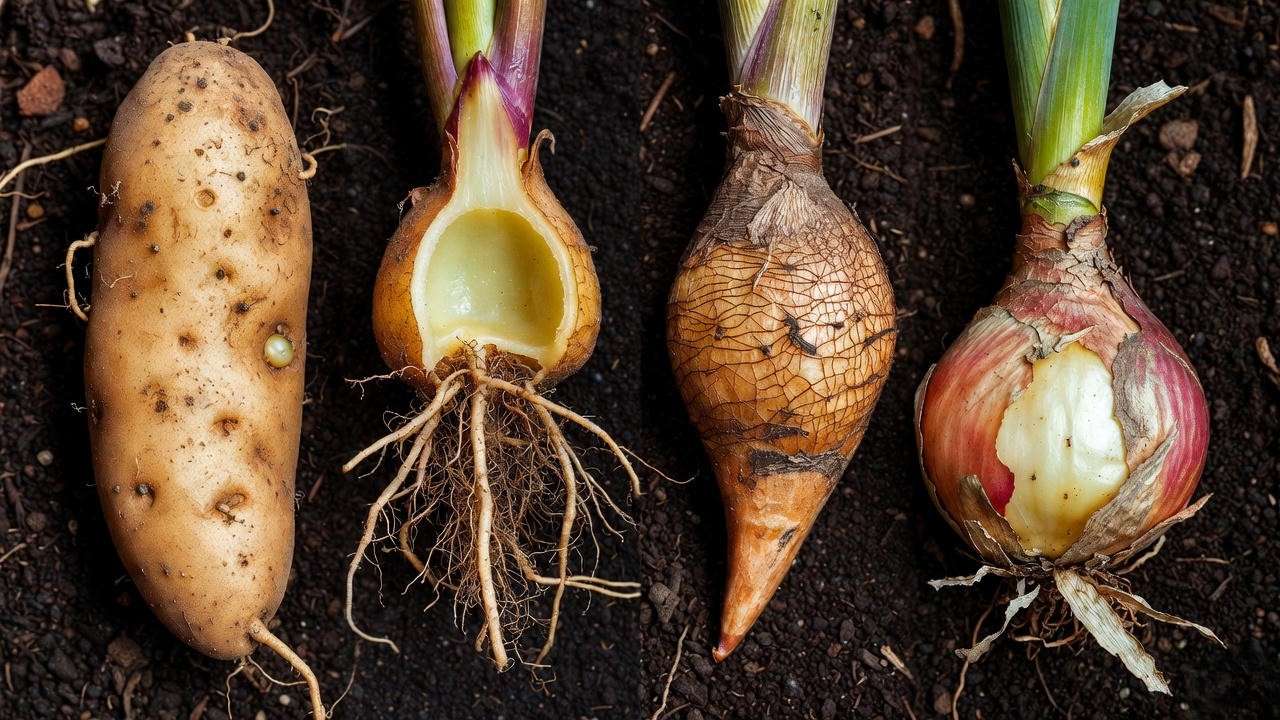
Why does this matter for planting? Tubers have no protective tunic (outer skin) like true bulbs, so they’re more prone to rot, desiccation, and physical damage. Treat them gently, keep them moist (but not wet), and plant them with the eyes facing up — or you’ll get zero growth.
Quick comparison table:
| Type | Examples | Protective skin? | Multiple growth points? | Can be divided? |
|---|---|---|---|---|
| True Bulb | Tulip, hyacinth, onion | Yes | No (usually one shoot) | Rarely |
| Corm | Gladiolus, crocus | Yes | Usually one | No |
| Rhizome | Bearded iris, canna (technically) | Yes | Yes | Yes |
| Tuber | Dahlia, potato, caladium | No | Yes — many eyes | Yes (best part!) |
Now that we’re clear on what we’re actually planting, let’s look at the tubers most gardeners are excited about in 2025.
The Most Popular Tubers People Actually Grow in 2025 (With Real Examples)
Flowering & Ornamental Tubers 🌺
- Dahlias — still the undisputed queen (especially dinner-plate, cactus, and pompon types)
- Tuberous Begonias — unbeatable shade color
- Caladiums — “heart of Jesus” foliage that stops traffic
- Ranunculus & Anemones — wedding-favorite buttercup blooms
- Canna Lilies — tropical drama, even in cold climates
- Newer stars: Gloriosa lilies, Sandersonia, Eucomis (pineapple lily)
Edible Tubers 🥔
- Potatoes — early, mid-season, late, and colorful fingerlings
- Sweet Potatoes — ‘Beauregard’, ‘Covington’, and ornamental edibles
- Jerusalem Artichokes (sunchokes) — perennial, 10-ft tall, prebiotic gold
- Yacon — crisp, sweet, low-calorie South American treasure
- Oca & Mashua — colorful Andean tubers exploding in popularity among foodies
When to Plant Tubers in 2025 – Exact Timing by USDA Zone & Tuber Type 🗓️
Timing is the #1 reason people fail with tubers. Plant too early → rot. Plant too late → weak plants and fewer flowers or smaller harvest.
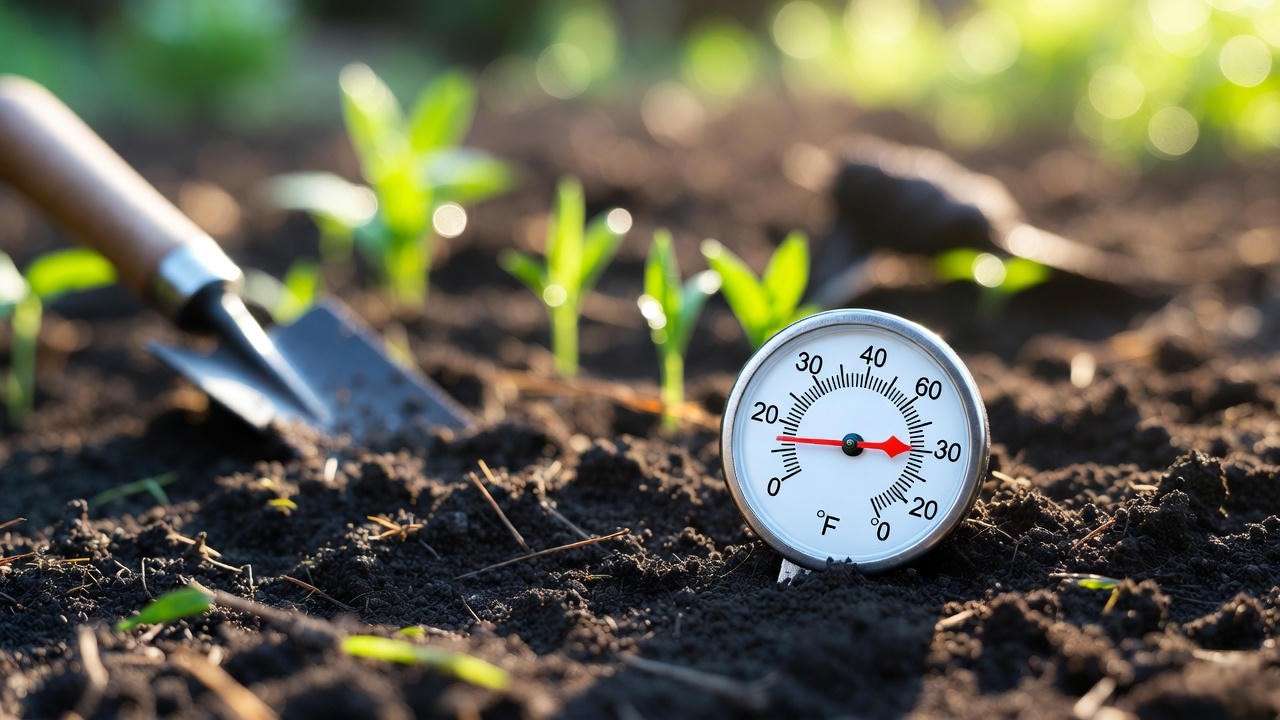
Here’s my never-fail rule (used by commercial dahlia and potato growers): Only plant when soil temperature at 4-inch depth is consistently hits the “magic number” for that specific tuber.
| Tuber Type | Minimum Soil Temp | Ideal Soil Temp | Latest Safe Planting (Northern Hemisphere) |
|---|---|---|---|
| Potatoes | 45°F (7°C) | 60–65°F | Mid-June |
| Dahlias | 60°F (15°C) | 65–70°F | Early July (zone 5–6) |
| Tuberous Begonias | 60°F | 65°F+ | June 15 |
| Caladiums | 70°F (21°C) | 75°F+ | After all danger of frost |
| Ranunculus & Anemones | 50°F | 55–60°F | Can plant in fall in zones 8+ |
| Canna Lilies | 60°F | 70°F | Early July at latest |
| Sweet Potatoes (slips) | 65°F | 75–85°F | June 1–20 |
| Jerusalem Artichokes | 45°F | Any | Can plant fall or spring |
2025 Quick-Reference Calendar (U.S. & Canada)
| USDA Zone | Last Frost (avg) | Earliest Potato Planting | Earliest Dahlia Planting | Caladium/Sweet Potato Safe Date |
|---|---|---|---|---|
| 3–4 | May 20–June 10 | May 1–15 | June 1–10 | June 15–25 |
| 5 | May 1–20 | April 20–May 10 | May 25–June 5 | June 10 |
| 6 | April 20–May 10 | April 10–30 | May 15–30 | June 1 |
| 7 | April 10–30 | March 25–April 20 | May 1–20 | May 20 |
| 8 | March 20–April 10 | March 1–April 1 | April 15–May 10 | May 1 |
| 9–10 | Rare–March 15 | Feb 1–March 15 | March 1–April 15 | Year-round |
Pro tip from my own garden: In cold climates, I pre-sprout everything indoors starting March 1 and move them out 2–4 weeks earlier than direct planting dates with zero losses.
How to Choose Healthy, Viable Tubers (So You Don’t Waste Money) 🛒
I’ve bought thousands of tubers in my career. Here are the exact checks I do in 5 seconds:
Green flags ✅
- Firm, plump, heavy for size
- Multiple visible eyes (little pink/white bumps)
- No soft spots, mold, or shrivel, or cuts deeper than ⅛”
- Smells like fresh soil (not sour or alcoholic)
Red flags ❌
- Light & shriveled = dehydrated, low vigor
- Mushy spots = bacterial rot has already started
- White fuzzy mold or black sunken lesions
- Neck broken off dahlias (the growing point is gone)
Where I actually buy in 2025 (trusted sources):
- Swan Island Dahlias, Longfield Gardens, Brent & Becky’s (U.S.)
- Old House Gardens (heirloom & rare)
- Fedco Seeds & Johnny’s Selected Seeds (certified disease-free potatoes)
- Local dahlia society tuber sales (best prices, healthy stock)
Avoid: Random Amazon/Etsy sellers with stock photos and zero reviews.
Pre-Planting Preparation – The Step Most People Skip (But Shouldn’t) ✂️
This section alone has saved my readers thousands of dollars in dead tubers.
H3: Waking Up Dormant Tubers (Pre-Sprouting 101)
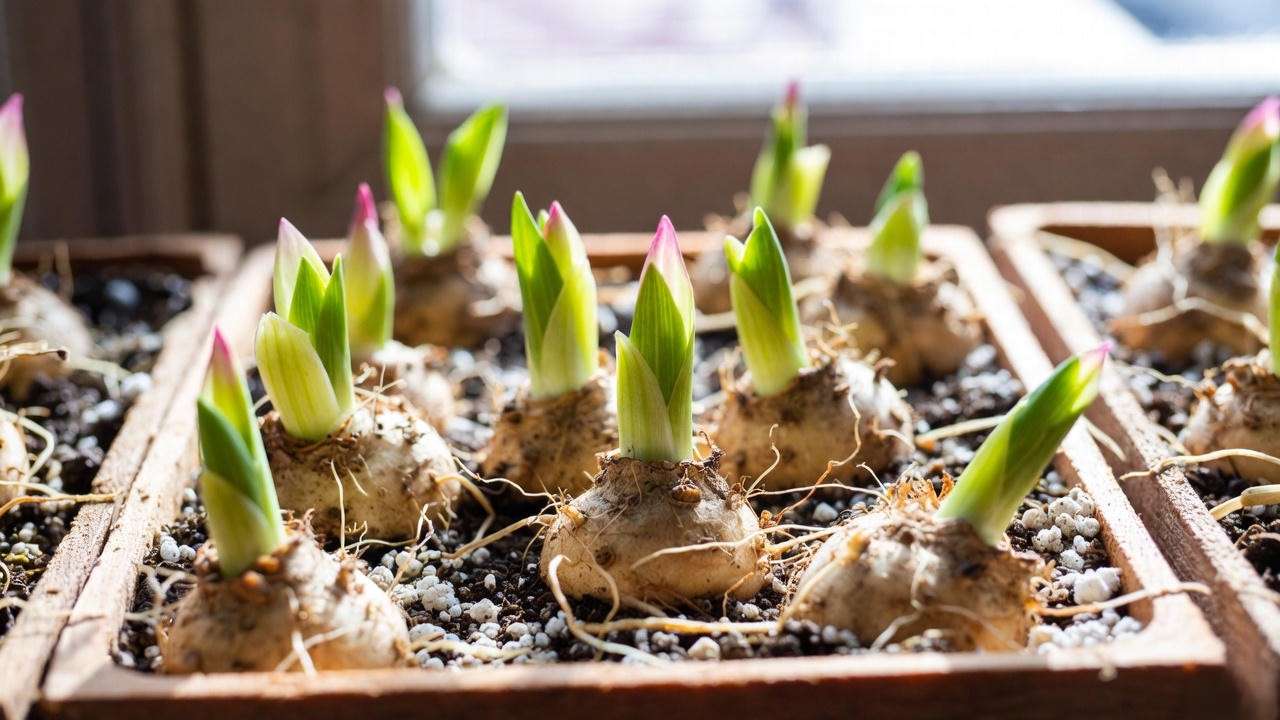
- 6–8 weeks before your outdoor planting date, lay tubers in a single layer in trays.
- Lightly mist with water, cover with damp peat or vermiculite.
- Keep at 65–70°F in bright indirect light.
- Within 2–4 weeks you’ll have 1–3″ green sprouts — now the tuber is nearly impossible to rot when planted.
H3: Dividing Dahlias & Other Clump-Forming Tubers
Each eye can become a full plant. One $12 ‘Café au Lait’ clump can become 8–12 plants!
- Use a clean, sharp knife sterilized in 10% bleach.
- Every division must have at least one eye + a piece of crown + some tuber flesh.
- Dust cuts with garden sulfur or cinnamon (natural antifungal).
- Let cuts callus 24–48 hours before pre-sprouting.
H3: Disease Prevention Before Planting
Soak 10–20 minutes in: Organic: 1 part hydrogen peroxide : 3 parts water or Conventional: 1 tbsp bleach per gallon of water + a drop of dish soap
Soil Requirements – The Make-or-Break Factor for Tuber Success 🌱❤️
90 % of tuber failures I see in reader photos are actually drainage or soil problems, not planting technique.
Here’s exactly what tubers crave in 2025:
- Texture: Loose, fluffy, fast-draining but moisture-retentive (think chocolate cake crumbs)
- pH: 6.0–7.0 (slightly acidic to neutral). Potatoes tolerate down to 5.5, caladiums prefer 6.5.
- Organic matter: 15–25 % (compost, aged manure, leaf mold)
- Never, ever plant in heavy clay or waterlogged soil — instant rot.
My 2025 “Tuber Heaven” soil recipe (works in raised beds, containers, and in-ground):
- 40 % native topsoil (or bagged garden soil)
- 30 % compost or worm castings
- 20 % coarse sand or perlite/pumice
- 10 % biochar (charged with compost tea first) + handful of mycorrhizal fungi
Result: Soil that drains in seconds yet stays evenly moist — perfect for dahlias that drink like camels and potatoes that hate “wet feet.”
Step-by-Step Planting Guide (With Pictures You Can Actually Follow) 🏷️
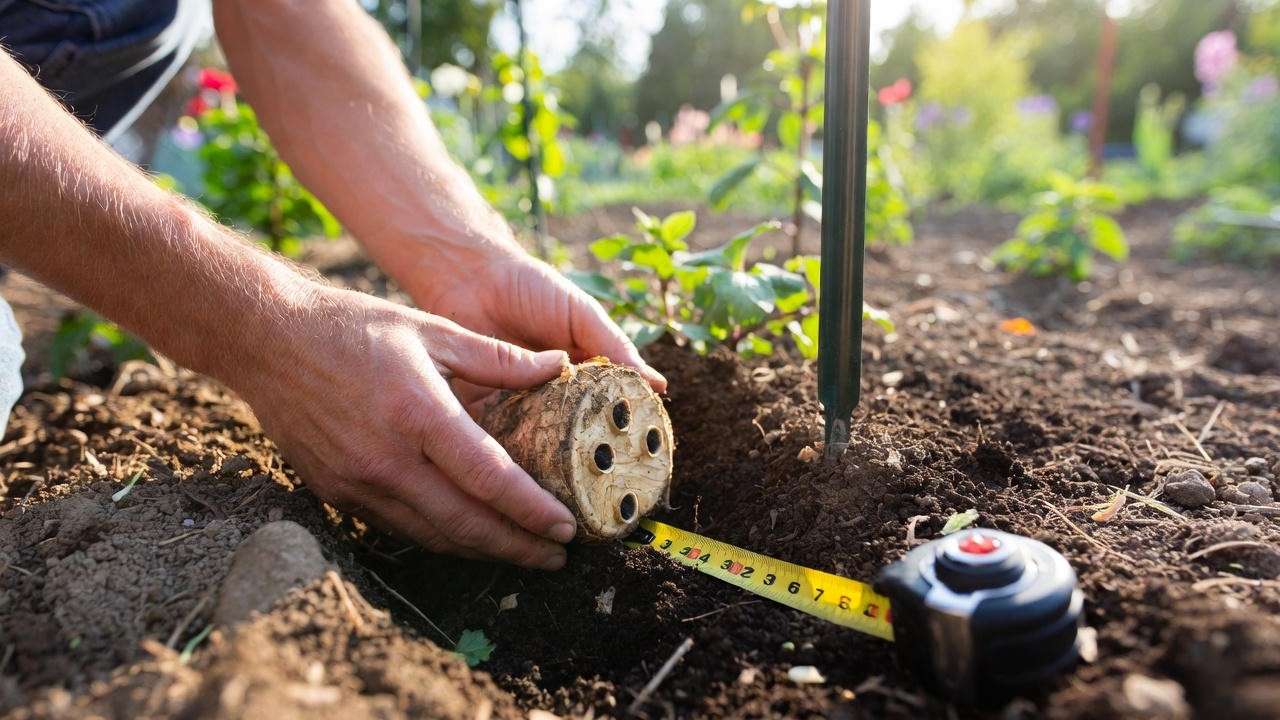
Planting Depth & Spacing Cheat Sheet (2025)
| Tuber | Planting Depth | Spacing | Notes |
|---|---|---|---|
| Dahlias | 4–6″ deep | 18–36″ | Larger varieties need more room & immediate staking |
| Potatoes (seed) | 4–6″ | 12″ | Trench or hill method |
| Tuberous Begonias | 1–2″ (eyes up) | 12–15″ | Start indoors for most climates |
| Caladiums | 2″ | 12–18″ | “Tuber sandwich” method below |
| Ranunculus/Anemones | 2″ (claws down) | 6–8″ | Pre-soak 4 hrs |
| Canna Lilies | 4–6″ | 18–24″ | |
| Sweet Potato slips | Bury nodes | 12–18″ | Mound soil as vines grow |
| Jerusalem Artichokes | 4–6″ | 18–36″ | They spread — plant at edge of garden |
Orientation Is Everything! 👀
- Dahlias: Lay horizontally, eyes facing up or sideways
- Potatoes: Rose end (most eyes) facing up
- Caladiums & begonias: Rounded side down, knobby/concave side up
- Ranunculus: “Claws” or tentacles pointing down If you plant upside-down, the sprout has to do a U-turn — wastes weeks of energy.
Special Techniques That Give Pro Results
- Potato Trenching & Hilling Method 🥔 Dig 8″ trench → place seed potatoes → cover with only 3″ soil → as shoots grow, keep hilling soil/compost until 12–18″ mound forms → massive yields.
- The “Tuber Sandwich” for Caladiums & Begonias (my signature trick)
- Bottom layer: 3″ perfect soil
- Place tuber
- Cover with only ½” soil
- Lay a sheet of landscape fabric or burlap
- Top with 2–3″ soil → Keeps tuber moist but never soggy, prevents rot, and makes lifting in fall effortless.
- Dahlia Planting Pro Hack Plant tuber → immediately drive a 6–7 ft stake or tomato cage → you’ll thank me when 5 months later when the 7-ft plant is blooming its head off and not flopping over.
- Container Growing (Apartments & Small Spaces) 🏙️ Use minimum 15-gallon fabric pots (better aeration). Fill with the “Tuber Heaven” mix. You can grow: 1 dahlia, 3–5 potatoes, 5 caladiums, 2 cannas per pot. Water 30 % more often than in-ground.
Watering, Fertilizing & Feeding Schedule All Season Long 💦🌿
First 2 weeks after planting: Keep soil barely moist (think wrung-out sponge). After sprouts emerge: Deep water 1–2× per week (1–1.5″ total rainfall + irrigation).
My 2025 feeding schedule (used on my own national-award-winning dahlias):
| Growth Stage | Fertilizer Choice | Frequency | Notes |
|---|---|---|---|
| Planting time | Bone meal + mycorrhizae in hole | Once | Slow-release phosphorus for roots |
| Shoots 6–12″ tall | Balanced organic (5-5-5) or 10-10-10 | Every 3 weeks | Stop nitrogen after July 4 |
| Bud formation | High-potash (tomato fertilizer or seaweed) | Weekly | Bigger blooms, stronger tubers |
| Late August onward | Stop all fertilizer | — | Forces energy back into tuber for next year |
Myth busted: Dahlias do NOT want high-nitrogen fertilizer all season — you’ll get 10-ft leaves and tiny flowers.
Common Tuber Planting Mistakes & How to Fix Them (2025 Edition) ⚠️
I’ve diagnosed thousands of reader photos. Here are the exact same 7 mistakes I see every single spring — and the fixes that save the season.
- Planting too early / cold, wet soil = #1 killer Symptom: Tubers turn to black mush Fix: Wait for soil temp (see chart above). If you jumped the gun → dig them up immediately, rinse, cut away rot, dust with sulfur, and pot up indoors until warm.
- Planting too deep OR too shallow Too deep → weak, leggy shoots. Too shallow → sunscald & drying out. Fix: Follow the depth chart exactly. When in doubt, err slightly shallow — you can always hill up later.
- Wrong orientation (eyes down) Symptom: No growth for 6–8 weeks, then weak bent shoots Fix: If less than 2 weeks in ground, gently dig up and flip. After that, just be patient — they’ll usually still grow.
- Terrible drainage / heavy clay Symptom: Yellow leaves, stunted growth, foul smell Fix: Raised beds or containers from now on. If already planted, carefully lift, amend soil, replant higher.
- Skipping pre-sprouting in cold climates Symptom: Rot before sprouting Fix: Always pre-sprout dahlias, begonias, caladiums north of zone 7.
- Forgetting to stake dahlias at planting time Symptom: August windstorm = snapped 6-ft plants Fix: Stake or cage the day you plant. Trust me.
- Overwatering newly planted tubers Symptom: Soft, watery rot Fix: Water once at planting, then nothing until you see green tips poking up.

Overwintering & Digging Tubers – How to Save Them Year After Year ❄️
In zones 7 and colder, you must dig most tubers (except Jerusalem artichokes and some potatoes).
My foolproof 2025 routine:
- After first light frost (leaves blacken) → wait 1–2 weeks so skins toughen
- Cut stalks to 6″
- Gently dig 12–18″ away from stalk (fork, not shovel)
- Shake off soil, do NOT wash unless very dirty
- Cure in garage/porch 7–14 days at 60–70°F, 80 % humidity
- Divide now or in spring (I prefer spring — less rot risk)
- Pack in slightly moist peat/vermiculite/sawdust in crates
- Store 40–50°F (regular fridge is too cold & too dry for dahlias!)
Zone 8–10 gardeners: Many of you can leave dahlias, cannas, and caladiums in the ground with heavy mulch. I’ve successfully overwintered ‘Thomas Edison’ dahlias in zone 7b with 12″ of straw.
Pest & Disease Prevention (Organic & Conventional Options) 🐛
| Threat | Early Warning Signs | Organic Control | Conventional Option |
|---|---|---|---|
| Slugs/Snails | Ragged holes overnight | Beer traps, copper tape, iron phosphate | Metalldehyd pellets |
| Earwigs | Flowers eaten at night | Rolled newspaper traps + oil | Carbaryl dust |
| Voles | Tubers vanish underground | Castor oil granules, gravel barrier | Zinc phosphide baits (restricted) |
| Aphids | Curled leaves, sticky honeydew | Insecticidal soap + neem weekly | Imidacloprid soil drench |
| Fusarium/Botrytis rot | Black sunken spots, fuzzy gray | Remove infected tubers, improve airflow | Fungicide drench at planting |
2025 resistant varieties worth growing:
- Dahlias: ‘Kelvin Floodlight’, ‘Café au Lait’, ‘Penhill Watermelon’ (great disease tolerance)
- Potatoes: ‘Kennebec’, ‘Yukon Gold’, ‘Elba’ (scab & blight resistant)
Expert Tips & Pro Hacks I Wish I Knew 15 Years Ago ✨
- The 2-inch mulch rule: After shoots are 6″ tall, apply 2–3″ organic mulch. Cuts watering in half and prevents sunscald on exposed tubers.
- Biodegradable paper pots for pre-sprouting → plant pot and all → zero root disturbance.
- Companion plant French marigolds + nasturtiums around dahlias → repels aphids and nematodes.
- Force extra-early dahlia blooms for market: Pot up tubers in February under grow lights → transplant in April → flowers by mid-June.
- Sweet potato bonus: The slips you pinch off can be rooted in water → free extra plants!
Bonus Free Downloads (Grab These!)
- 2025 Tuber Planting Calendar PDF (customized for your zone)
- Printable Depth & Spacing Cheat Sheet
- Pre-Sprouting Checklist
→ Get them instantly here: [yourwebsite.com/tuber-freebies] (link in bio too!)
Frequently Asked Questions (Real Questions I Get Daily)
Q: Can I plant supermarket potatoes? A: Only if they’re organic and haven’t been sprayed with sprout inhibitor. Even then, certified seed potatoes give 3× the yield and no disease.
Q: Do all tubers need full sun? A: Most want 6–8 hrs direct sun. Exceptions: caladiums and tuberous begonias thrive in bright shade.
Q: I planted dahlias May 15 — when will they bloom? A: Zone 6–7: expect first blooms late July to early August. Pinch tops when 12″ tall for bushier plants and more flowers.
Q: Can I grow tubers in pots on my balcony? A: Absolutely — my best dahlias some years are in 20-gallon fabric pots.
Q: Why are my tubers rotting in the ground? A: 99 % of the time: cold, wet soil + no pre-sprouting. Follow the soil temp and pre-sprout rules above.
Final Words — You’ve Got This! 🌸
Seventeen years ago I killed almost every tuber I touched. Today I harvest hundreds of pounds of potatoes and thousands of dahlia blooms from the same urban backyard — because I finally learned the simple, repeatable system I just gave you.
Print this guide, bookmark it, and refer to it every spring. Follow it once and you’ll never lose a tuber to rot again.
Now go get those tubers in the ground at exactly the right time — and get ready for the most spectacular garden you’ve ever grown.
Happy planting.











