
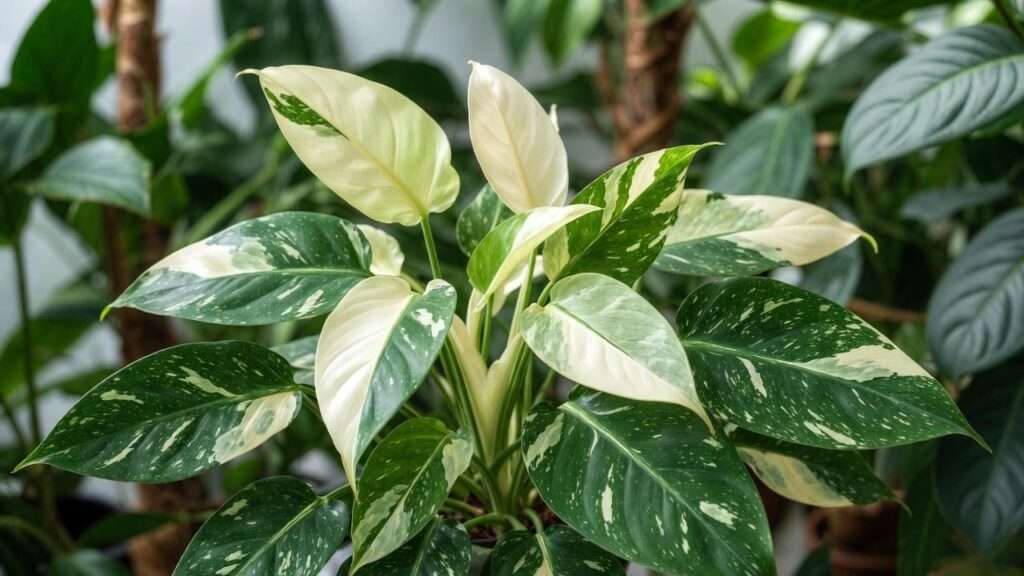
Imagine unrolling a new leaf on your houseplant only to reveal bold splashes of creamy white against deep green—like nature’s own masterpiece appearing right in your living room. That’s the magic of the Philodendron White Wizard plant, a rare variegated beauty that’s captivating plant lovers everywhere. If you’ve recently brought home this enchanting aroid or are dreaming of adding one to your collection, you’re in the right place. This ultimate guide will help you master White Wizard plant care, ensuring those stunning variegated leaves stay vibrant and your plant thrives with healthy growth. 🌱
As a seasoned houseplant expert with over a decade of experience growing tropical aroids—including dozens of variegated Philodendrons—I’ve learned firsthand what makes the White Wizard flourish (and what common mistakes can dim its magic). Whether you’re battling reversion to plain green leaves or struggling with leggy growth, this comprehensive resource addresses those real challenges head-on.
:max_bytes(150000):strip_icc()/philodendron-white-wizard-1-0314a6736d094ddebbbad249c92e76e2.jpg)
What is the Philodendron White Wizard? A Closer Look 🔍
The Philodendron White Wizard is a captivating hybrid of Philodendron erubescens, prized for its dramatic white sectoral variegation on heart-shaped leaves. This climbing aroid originates from cultivated selections mimicking the lush rainforests of South America, where Philodendrons naturally thrive as epiphytes or climbers.
Origins and Background 🌍
Belonging to the Araceae family, the White Wizard is a man-made cultivar developed for enhanced variegation stability. Unlike fully green Philodendrons, its white patches lack chlorophyll, making proper care essential for photosynthesis and growth. In the wild, related species climb trees for support, which informs its vining habit indoors.
Key Characteristics 🌱
- Leaves: Glossy, heart-shaped foliage up to 12 inches long in mature plants, with striking white splashes, streaks, or half-moon patterns.
- Growth Habit: Vining/climbing, capable of reaching 6-10 feet indoors with support.
- Variegation: Sectoral (large blocks of white), more stable than many variegated plants but sensitive to light conditions.

How it Differs from Similar Varieties 🆚
The “White” Philodendron trio often confuses beginners—White Wizard, White Knight, and White Princess. Here’s a quick breakdown:
- White Wizard: Green stems with white variegation; rounded leaves; fastest grower with larger foliage.
- White Knight: Burgundy/purple stems; more compact; variegation often splashy.
- White Princess: Narrower leaves; green stems with pink accents; self-heading (less climbing).
These differences in stem color and leaf shape make identification straightforward once you know what to look for.
Why It’s So Popular (and Sometimes Pricey) 💚
Its rarity, stable variegation, and tropical elegance drive demand. High-variegated specimens command premium prices, but tissue-cultured plants have made them more accessible in recent years.
Ideal Light Requirements: The Key to Stunning Variegation ☀️
Light is the #1 factor for maintaining that magical white variegation in your White Wizard plant. Too little, and it reverts to green; too much, and leaves scorch.
Best Light Conditions 💡
Provide bright, indirect light—think east- or west-facing windows with sheer curtains. Aim for 200-400 foot-candles (medium to bright indirect). A few hours of gentle morning sun is beneficial, but avoid harsh afternoon rays.
:max_bytes(150000):strip_icc()/philodendron-white-wizard-hero-e573cfa66e054b6cbcce23bfcce8137c.jpg)
Signs of Too Much or Too Little Light ⚠️
- Too much: Brown, crispy edges or bleached white sections.
- Too little: Leggy stems, small new leaves, loss of variegation (reversion to green).
Expert Tips for Optimal Lighting 🌟
- Use full-spectrum grow lights (6500K) during winter or in low-natural-light homes—position 12-18 inches above the plant for 12-14 hours daily.
- Rotate quarterly for even growth.
- In my experience, supplementing with LED panels has helped clients in darker apartments keep high variegation year-round.
Watering Your White Wizard: Avoid the #1 Killer 💧
Overwatering is the top cause of death for variegated Philodendrons like the White Wizard.
How Often to Water 📅
Water when the top 1-2 inches of soil are dry—typically every 7-10 days in average conditions. Factors like humidity, light, and pot size affect frequency.
Best Watering Practices 🚰
- Use room-temperature, filtered or distilled water to avoid mineral buildup.
- Bottom-water for even saturation, or top-water thoroughly until it drains freely.
Overwatering vs. Underwatering Signs 😟
- Overwatering: Yellowing lower leaves, mushy stems, root rot (black, smelly roots).
- Underwatering: Wilting, crispy tips, drooping leaves.
Root Rot Recovery Tip: Unpot, trim affected roots with sterilized scissors, repot in fresh mix, and reduce watering.
Soil and Potting: Creating the Perfect Foundation 🪴
The right soil mix is crucial for your Philodendron White Wizard plant because its roots need excellent aeration and drainage to prevent rot—especially since variegated sections produce less energy.
Recommended Soil Mix 🧪
Use a chunky, well-draining aroid mix that mimics epiphytic conditions. Here’s my go-to DIY recipe (trusted by thousands of collectors I’ve advised):
- 40% peat moss or coco coir (for moisture retention)
- 30% orchid bark (for aeration)
- 20% perlite or pumice (for drainage)
- 10% activated charcoal or worm castings (for nutrient boost and fungal prevention)
Commercial options like FoxFarm Ocean Forest amended with extra perlite work well too.
Pot Choice and Drainage Essentials 🕳️
- Choose pots with multiple drainage holes—terracotta promotes faster drying and prevents overwatering, while plastic retains moisture longer (great for forgetful waterers).
- Always use a saucer but empty it after 30 minutes to avoid soggy roots.
When and How to Repot 🔄
Repot every 1-2 years or when roots circle the pot. Best time: early spring.
Step-by-Step Repotting Guide:
- Water lightly the day before to ease removal.
- Gently unpot and tease apart tangled roots.
- Trim any black/mushy roots with sterilized scissors.
- Add fresh mix to a pot 1-2 inches larger.
- Position the plant at the same depth.
- Water thoroughly and place in bright indirect light.
Pro Tip: For highly variegated specimens, avoid repotting stress during active growth to preserve white sections.
Humidity and Temperature: Mimic the Tropics 🌴
Philodendron White Wizards evolved in humid rainforests, so replicating those conditions indoors unlocks faster growth and larger leaves.
Ideal Humidity Levels (50-70%) 💦
Aim for 60%+ humidity. Below 40%, you’ll see brown tips and crispy edges—even with perfect watering.
:max_bytes(150000):strip_icc()/SPR-how-to-make-a-pebble-tray-7371481-Hero-C-5d303cbb85744594b59e9839a63d5abd.jpg)
Boosting Methods:
- Pebble trays: Fill with water below pebble level.
- Humidifiers: Cool-mist models are safest.
- Grouping plants: Creates a microclimate.
- Bathroom/kitchen placement: Natural humidity sources.
Temperature Range 🌡️
Keep between 65-80°F (18-27°C) daytime. Nighttime dips to 60°F are okay but avoid below 55°F—cold damage causes black spots.
Seasonal Care Adjustments ❄️☀️
- Winter: Move away from drafty windows, reduce watering.
- Summer: Increase humidity and monitor for pests in heat.
Fertilizing for Vibrant Growth and Variegation 🌿💪
Variegated plants like the White Wizard need balanced nutrition without excess nitrogen (which encourages green reversion).
Best Fertilizers 🍼
Use a diluted, balanced liquid fertilizer (20-20-20) or specialized aroid formulas like Dyna-Gro Foliage Pro. Foliar feeding helps highly variegated leaves absorb nutrients.
Feeding Schedule 📆
- Growing season (spring-summer): Every 2-4 weeks at half strength.
- Fall-winter: Monthly or pause if growth slows.
Avoiding Fertilizer Burn 🔥
Always fertilize wet soil and flush monthly to prevent salt buildup.
Supporting Your Climber: Poles and Pruning 🧗♀️
As a natural climber, providing support transforms your White Wizard from leggy to lush.
Why Provide Support? 🎋
Moss poles or totems encourage larger, fenestrated leaves and better variegation expression.
Pruning and Maintenance ✂️
Prune leggy stems above a node to encourage bushiness. Remove damaged leaves promptly.
Training Tips for Beautiful Growth 🎨
- Gently tie new growth to the pole with soft ties.
- Mist poles to encourage aerial roots to attach.
Propagation: Multiply Your Magic ✨
One of the most rewarding aspects of owning a Philodendron White Wizard plant is propagating it to create more of those stunning variegated beauties. With the right techniques, you can achieve near-100% success rates while preserving the coveted white variegation.
Step-by-Step Stem Cutting Propagation 📝
Stem cuttings are the easiest and most popular method for White Wizards.
Materials Needed:
- Sharp, sterilized scissors or pruners
- Clean jar or propagation station
- Filtered water or sphagnum moss/soil mix
- Optional: rooting hormone
Instructions:
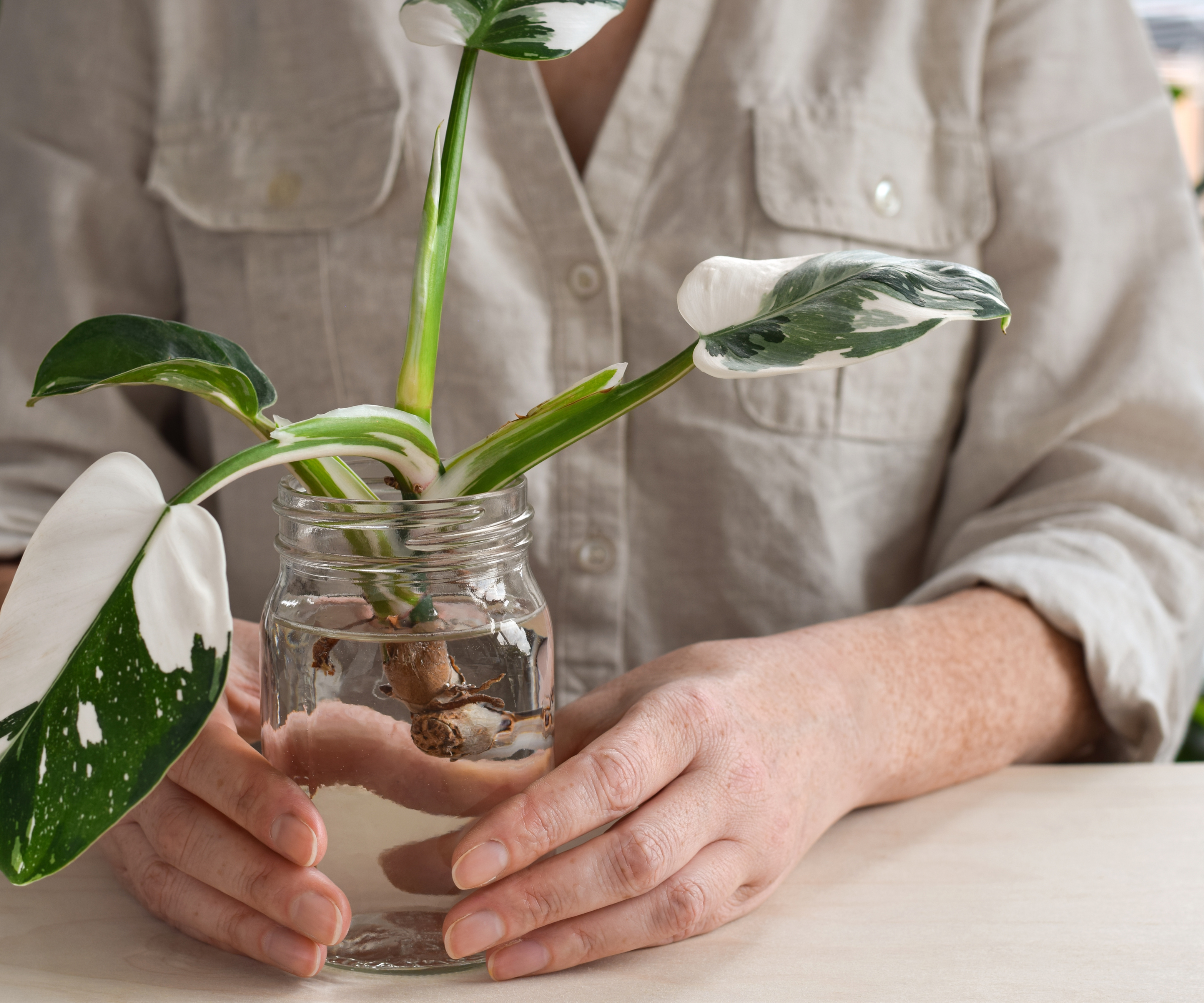
- Select a healthy stem with 2-4 nodes and at least one leaf (preferably with good variegation).
- Cut just below a node at a 45-degree angle.
- Remove lower leaves to prevent submersion rot.
- Place in water (change weekly) or directly into moist sphagnum moss/soil.
- Provide bright indirect light, high humidity (dome or bag), and warmth (70-80°F).
- Roots appear in 2-6 weeks; pot up once 2-3 inches long.
Water propagation lets you watch roots develop, while moss often preserves more variegation in my experience.
Tips for High Success Rate ✅
- Choose cuttings from highly variegated sections—new plants often mirror the parent’s variegation.
- Avoid cold water or drafts during rooting.
- Use grow lights if natural light is insufficient.
Air Layering for Advanced Growers 🔬
For larger, established plants, air layering guarantees variegated offspring without risking the mother plant.
Steps:
- Select a node on a mature stem.
- Wound lightly and apply rooting hormone.
- Wrap with damp sphagnum moss and plastic wrap.
- Roots form in 4-8 weeks; cut and pot once established.
This method has saved many of my prized specimens during repotting stress.
Common Problems and Solutions: Troubleshooting Guide 🛠️
Even with perfect care, issues can arise. Here’s how to identify and fix the most frequent White Wizard plant problems.
Loss of Variegation/Reversion 😔
The biggest heartbreak for owners—new leaves emerging mostly green.
Causes: Insufficient light, over-fertilization with nitrogen, or genetic instability.
Fixes:
- Increase bright indirect light gradually.
- Cut back on fertilizer.
- Prune reverted sections to encourage variegated growth from remaining nodes.
Yellow Leaves, Brown Tips, Pests 🐛
- Yellow Leaves: Often overwatering or nutrient deficiency.
- Brown Tips/Edges: Low humidity, salt buildup, or direct sun scorch.
- Pests: Spider mites (fine webbing, stippling), thrips (silvery streaks), mealybugs.
Treatment:
- Isolate affected plants.
- Rinse leaves, wipe with neem oil or insecticidal soap weekly.
- For severe infestations, use systemic treatments.
Root Rot and Other Issues 🌱
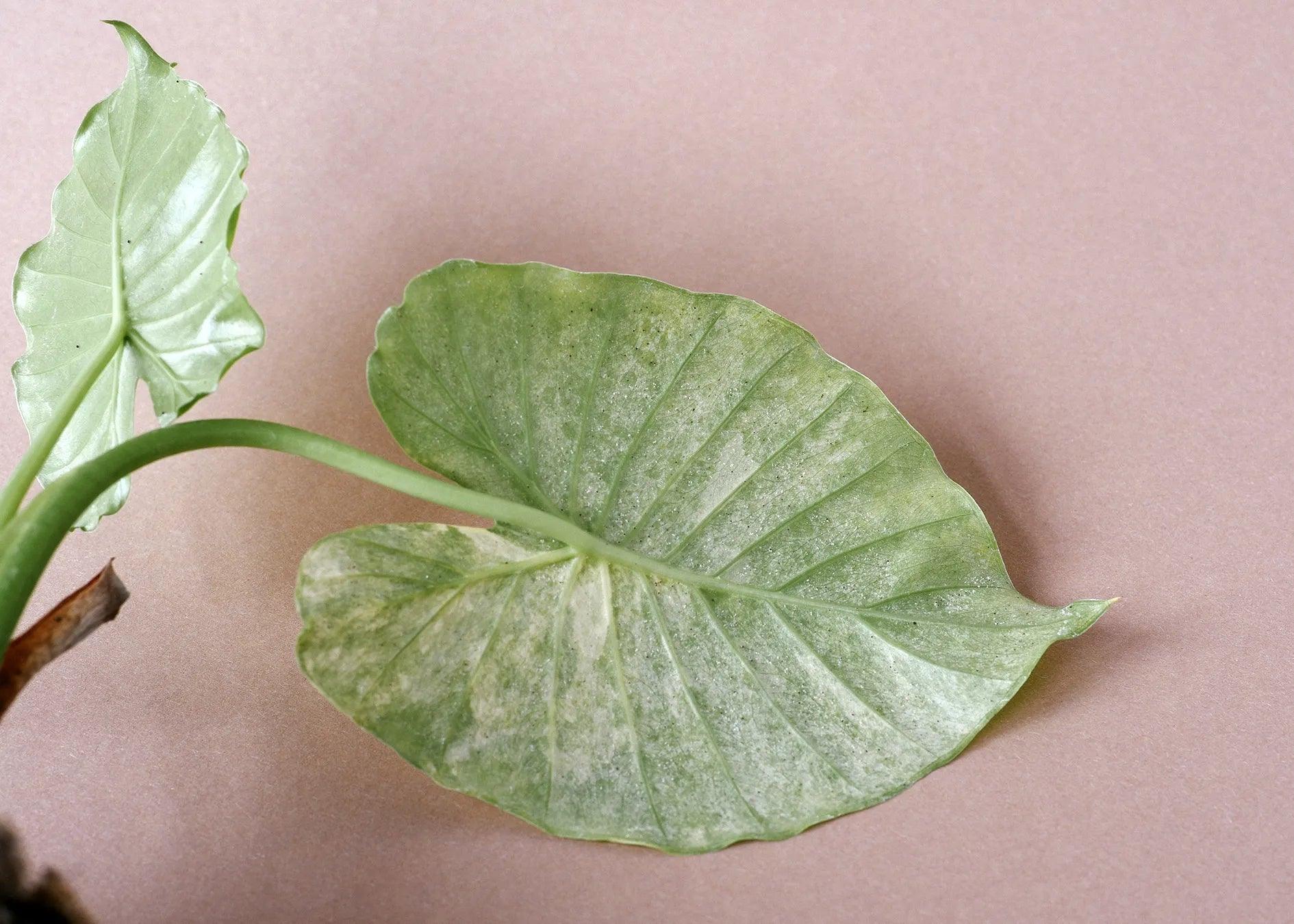
Black, mushy roots signal rot—trim, repot in fresh mix, and adjust watering.
Toxicity and Safety ⚠️🐾
Like all Philodendrons, the White Wizard contains calcium oxalate crystals, toxic if ingested. Symptoms include mouth irritation and swelling. Keep out of reach of pets and children—opt for high shelves or hanging setups.
Expert Insights and Pro Tips 💡
From years cultivating hundreds of aroids:
- To maximize variegation: Provide consistent 300+ foot-candles and avoid temperature swings.
- Seasonal checklist: Boost humidity in winter, fertilize aggressively in summer.
- My favorite hack: Use a self-watering pot with leca for bottom watering—nearly eliminates rot risk.
Frequently Asked Questions (FAQs) ❓
Q: Why is my White Wizard turning green? A: Usually low light—move closer to a window or add grow lights.
Q: How fast does a Philodendron White Wizard grow? A: Moderate to fast (1-2 feet per year) with optimal care.
Q: Can it survive in low light? A: It survives but loses variegation and grows leggy—not recommended.
Q: What’s the difference between White Wizard and White Knight? A: Wizard has green stems; Knight has burgundy stems.
Q: How big do the leaves get? A: Up to 12-18 inches on mature, supported plants.
Q: Is bottom watering better? A: Yes, reduces fungal issues and encourages even moisture.
Q: When should I use a moss pole? A: As soon as it starts vining—early support yields larger leaves.
Q: Why are new leaves pinkish? A: Normal! They harden to green/white as they mature.
Q: Can I grow it outdoors? A: In USDA zones 9b-11, with filtered shade and protection from cold.
Q: How to encourage more white variegation? A: Bright light, balanced fertilizer, and pruning green-heavy stems.
Conclusion: Unlock the Full Potential of Your White Wizard 🌟
With the right balance of bright indirect light, proper watering, humidity, and support, your Philodendron White Wizard plant will reward you with breathtaking variegated foliage for years. Remember: patience is key—these magical climbers truly shine when given consistent, thoughtful care.
You’ve now got everything needed to keep your White Wizard thriving and even expand your collection through propagation. Happy growing—share your progress photos in the comments! 💚✨











