
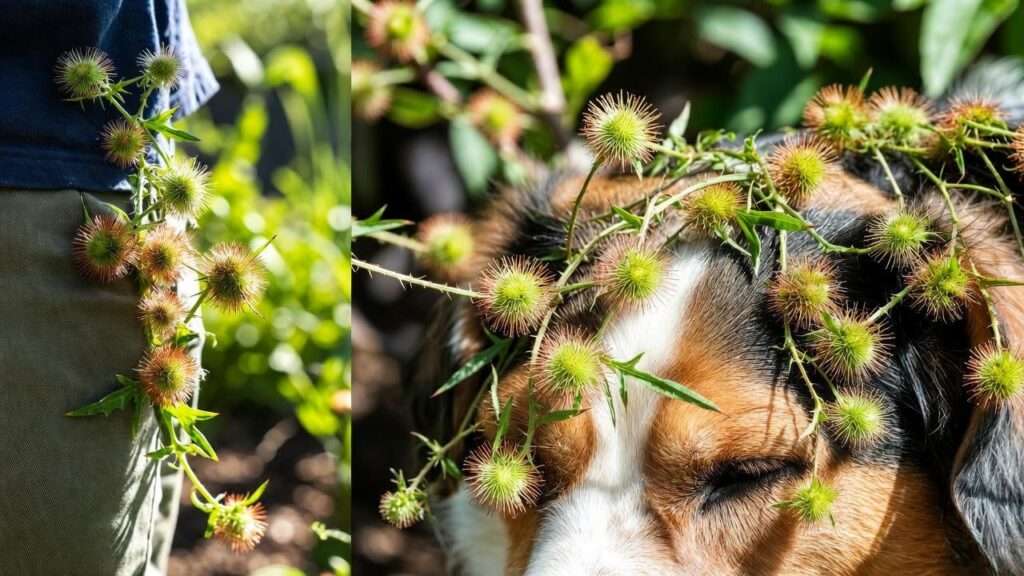
Picture this: You return from a peaceful walk in the woods or a hike with your dog, only to discover your clothes, shoes, and pet’s fur covered in dozens of stubborn, prickly burrs that refuse to let go. 😤 These aren’t just annoying—they’re the seeds of hitchhiker plant weeds, nature’s clever travelers designed to latch onto anything that moves and spread far beyond their origin. As a certified horticulturist with over 15 years of hands-on experience managing gardens, landscapes, and invasive weeds for homeowners and commercial properties, I’ve dealt with these sticky invaders countless times. They’ve frustrated me and my clients alike, turning pristine lawns into battlegrounds.
In this ultimate guide, we’ll uncover everything you need to know about hitchhiker plant weeds: from accurate identification and understanding their spread to proven removal techniques and long-term prevention strategies. Whether you’re a beginner gardener or a seasoned pro, this comprehensive resource will empower you to protect your yard, save time and money, and enjoy a weed-free outdoor space. Let’s dive in and stop these clingy pests in their tracks! 🚫🌱
What Are Hitchhiker Plant Weeds? Understanding Their Clever Survival Strategy 🧠
Hitchhiker plant weeds, often referred to as burr weeds, sticky weeds, or velcro plants, are a group of opportunistic species that have evolved an ingenious seed dispersal mechanism known as epizoochory. This means their seeds, burrs, or fruits feature hooks, barbs, spines, glue-like substances, or velcro-like surfaces that attach externally to animals, humans, clothing, vehicles, and even machinery.
This adaptation allows the plant to “hitch a free ride” over long distances, far beyond what wind or water dispersal could achieve. It’s a brilliant evolutionary strategy—think of it as nature’s version of Velcro, which was actually invented after Swiss engineer George de Mestral studied burdock burrs in the 1940s! 🪝
Why are they such a problem for gardeners and homeowners?
- Rapid spread: A single plant can produce thousands of seeds that travel miles, invading new areas quickly.
- Competitive nature: They outcompete desirable plants for nutrients, water, and sunlight.
- Physical hazards: Sharp spines can puncture skin, pet paws, bike tires, or even cause injury to wildlife.
- Economic impact: In agriculture, these weeds cause significant losses; for example, species like puncturevine contribute to millions in damages annually.
- Toxicity risks: Some, like cocklebur, contain toxins harmful to livestock and pets if ingested.
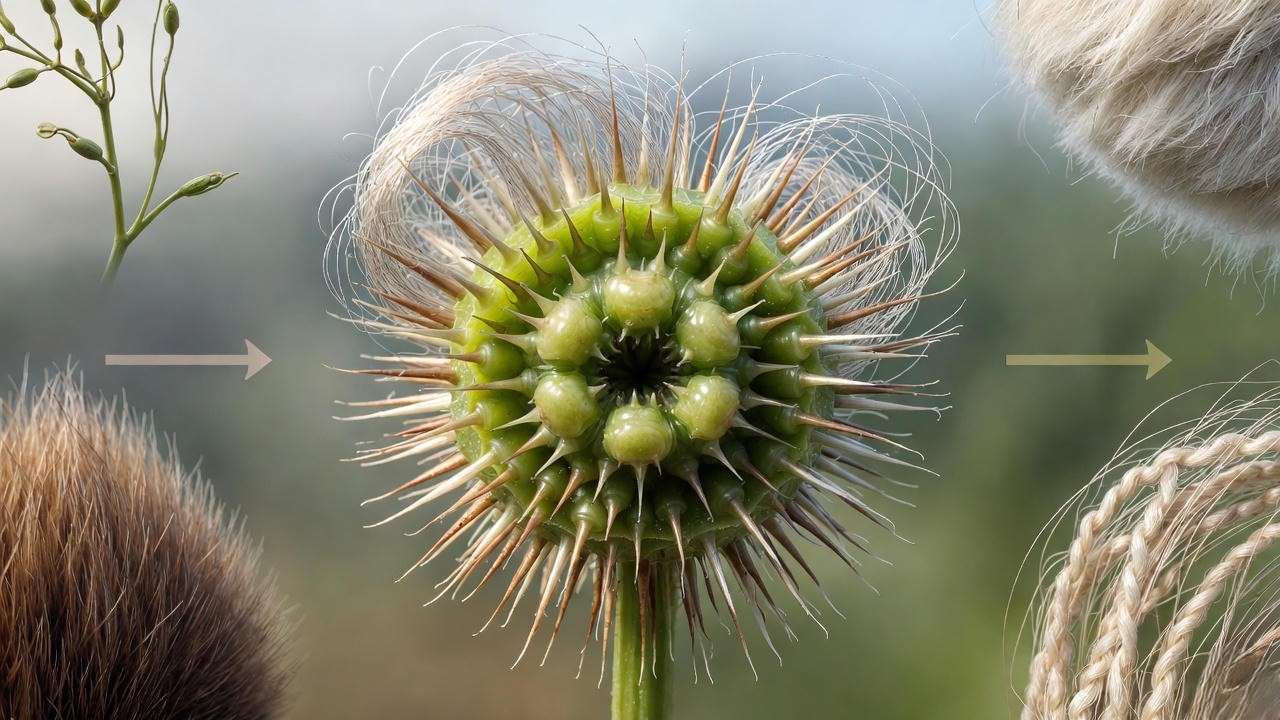
According to extension services from universities like Montana State and Utah State, over 600 plant species worldwide employ this dispersal method, with many classified as noxious weeds in North America due to their invasiveness. In my experience consulting for organic farms and residential landscapes, ignoring early signs leads to exponential growth—I’ve seen small patches turn into yard-wide infestations in just one season.
Expert insight: These weeds thrive in disturbed soils, such as trails, roadsides, pastures, and unfortunately, our gardens if seeds are introduced. Understanding this biology is the first step to effective control. 🌍
Top 10 Common Hitchhiker Plant Weeds: Identification Guide with Photos 🔍
Accurate identification is crucial because not all sticky seeds are equally problematic, and some “hitchhikers” are even native or beneficial in certain ecosystems. Below, I detail the most common culprits in North American gardens, based on reports from invasive species councils, university extensions, and my fieldwork. Focus on leaf shape, flower color, growth habit, and especially the seed structure.
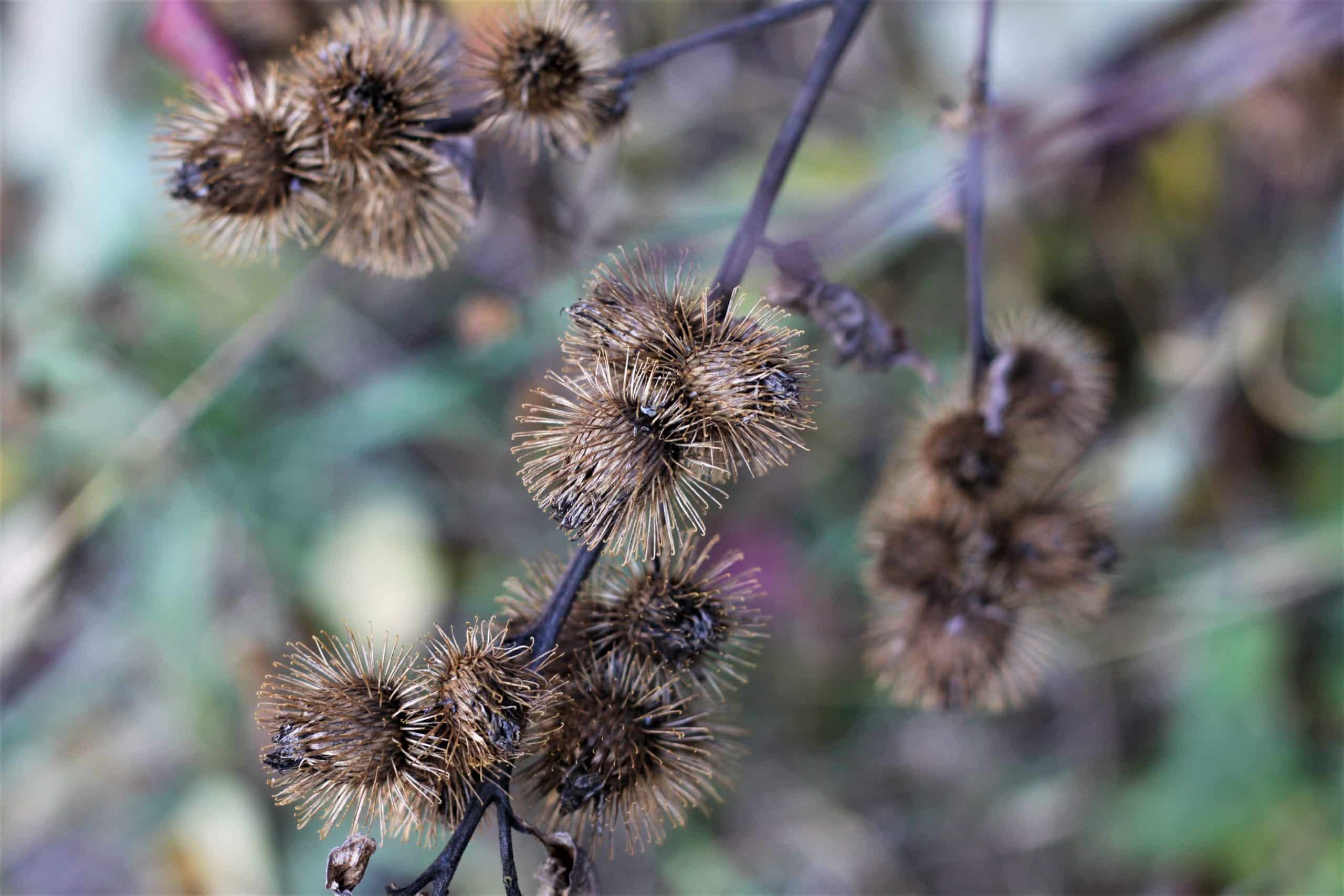
1. Common Burdock (Arctium minus) 🌿
One of the most notorious, burdock is a biennial weed growing up to 6 feet tall with large, heart-shaped leaves resembling rhubarb. In its second year, it produces purple thistle-like flowers followed by round, hooked burrs about 1 inch in diameter—these are the classic “Velcro” inspiration.
- Habitat: Roadsides, fields, gardens.
- Why problematic: Burrs tangle in hair and fur; roots are deep and persistent.
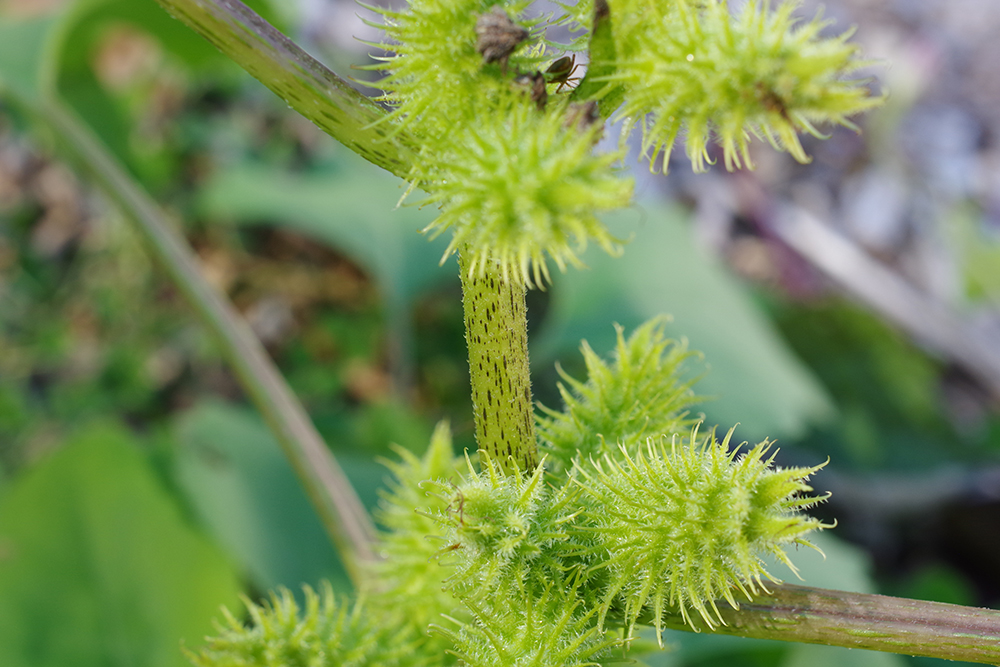
2. Cocklebur (Xanthium strumarium)
An annual weed with rough, triangular leaves and greenish flowers. The burrs are oblong, spiny, and about 1 inch long, containing two seeds each.
- Habitat: Moist soils, riverbanks, disturbed areas.
- Danger: Highly toxic to animals if seeds are consumed.
3. Beggar’s Lice/Tick Trefoil (Desmodium spp.)
These perennial legumes have trifoliate leaves and pink pea-like flowers. The seeds form flat, segmented pods (loment) covered in tiny hooked hairs that stick like ticks.
- Habitat: Woodlands, meadows, gardens.
- Note: Some species are native and support pollinators, but others are aggressive.
4. Bidens/Beggar-Ticks (Bidens spp.)
Annuals with daisy-like yellow flowers and needle-like seeds (achenes) with two to four barbed awns.
- Habitat: Wet areas, gardens, lawns.
- Spread: Extremely prolific; one plant can produce thousands of seeds.
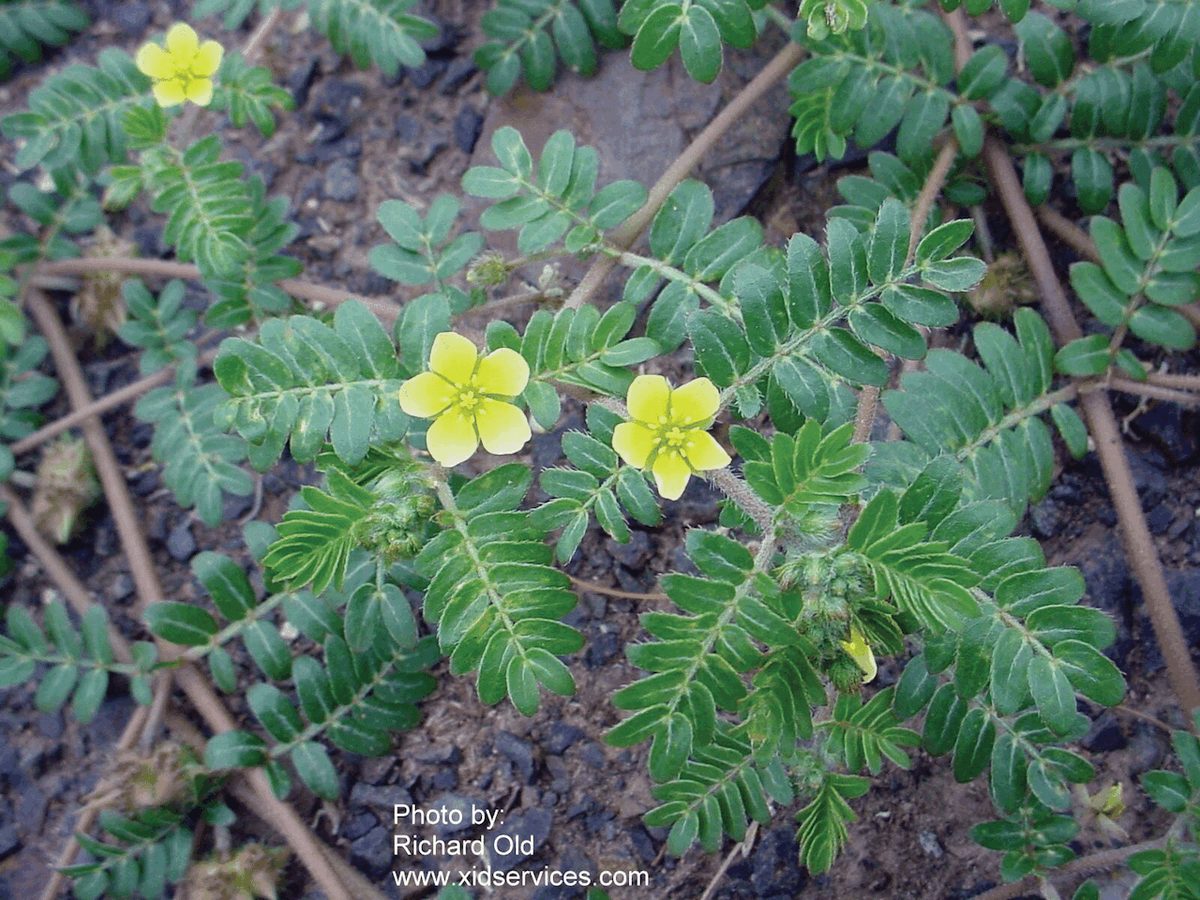
5. Puncturevine/Goathead (Tribulus terrestris)
A low-growing annual with prostrate stems, small yellow flowers, and devilish spiny fruits that split into five segments—each capable of puncturing tires or feet.
- Habitat: Dry, sandy soils; common in western U.S.
- Classification: Noxious weed in many states.
Other Notable Hitchhiker Weeds
- Houndstongue (Cynoglossum officinale): Velcro-like burrs; toxic to horses.
- Sandbur (Cenchrus spp.): Grass-like with sharp burrs.
- Enchanter’s Nightshade (Circaea lutetiana): Small hooked fruits.
- Avens (Geum spp.): Seeds with long, hooked styles.
- Foxtail Barley (Hordeum murinum): Barbed awns on grass seeds.
Pro Tip: Download a plant ID app like iNaturalist or consult your local cooperative extension for region-specific confirmation. A magnifying glass helps spot those tiny hooks! 🔍
How Hitchhiker Weeds Spread and Invade Your Garden 🚗🐕
Once you understand the biology, the next question becomes: “How on earth did they get into my yard in the first place?” Here are the top real-life ways these weeds arrive – every single one of them has happened to clients of mine.
- On your clothes and shoes after a walk, hike or even a trip to the park
- In your dog’s fur or your cat’s belly hair after they run through tall grass
- Stuck to the tires, undercarriage or wheel wells of your car, truck or bicycle
- Hidden inside bags of topsoil, mulch, hay, straw or potting mix from the garden center
- On borrowed garden tools, lawn mower blades or shared equipment
- Carried by birds, deer, rabbits or neighborhood cats that visit your yard
- Blown in on wind from a neighbor’s unmowed field (some seeds travel up to 2 miles this way)
- In compost you bought or made yourself if it contained mature burrs
Real client story: One of my regular clients in Colorado spent an entire weekend pulling puncturevine out of her brand-new flower bed. We traced it back to a single bag of “weed-free” mulch she bought from a big-box store. Lesson learned: always inspect new materials!
Bonus statistic universities love to share: A single car driving through an infested area can carry an average of 2–4 hitchhiker seeds per trip. Multiply that by a family with two cars and a dog who walks daily… and you see how fast one patch becomes your whole neighborhood’s problem.
Key takeaway: Hitchhiker weeds don’t “magically appear”. They are always brought in. That means you can stop 90 % of future invasions just by controlling the entry points.
Effective Removal Methods: Get Rid of Them for Good 🛠️
You’ve spotted them. Now what? Here is the exact step-by-step playbook I use with clients – ranked from most eco-friendly to most aggressive.
Manual Removal (Best Choice for Small to Medium Infestations)
Step-by-step method that works 100 % of the time when done early:
- Put on thick gardening gloves and long sleeves
- Wait for a morning after rain when the soil is soft
- Grasp the plant at the base and pull slowly upward (never yank – you’ll break the root)
- Use a garden fork or dandelion weeder to dig out the taproot at least 4 inches deep
- Immediately place every plant + roots into a heavy-duty trash bag (never the compost bin!)
- Double-bag and throw in your household trash, not green waste
Pro trick I teach every client: Before you pull, snip off every flower head or seed head with scissors and drop them into a jar of soapy water. This prevents even one seed from maturing.
Mechanical Tools (When You Have a Bigger Patch)
- Use a sharp hoe to cut young plants just below soil level
- A string trimmer set low works wonders on sandbur and foxtail – just bag the clippings immediately
- For puncturevine: a propane flame weeder is extremely effective and chemical-free. Burn the plants in early morning when dew keeps fire from spreading. (I’ve cleared 400 sq ft in 30 minutes this way – clients love it!) 🔥
Chemical Options (Use Only When Necessary)
When manual removal isn’t practical (large area or deep-rooted perennials like burdock):
- Pre-emergent: Apply corn gluten meal (organic) or prodiamine in early spring before seeds germinate
- Post-emergent: Spot-spray 2,4-D or dicamba-based broadleaf herbicide directly on leaves (never blanket spray)
- For puncturevine: glyphosate works well but only on young plants – avoid near vegetables or flowers
Important safety rules I always follow:
- Wear protective clothing and mask
- Spray only on calm, dry days
- Keep children and pets off treated areas for 24–48 hours
- Never use near water sources or bee-attracting plants
Natural & Biological Alternatives
- Smother with thick cardboard + 4 inches of wood chips (works in 1 season)
- Plant competitive cover crops: Dutch white clover, annual ryegrass or buckwheat
- Hire goats! Many weed-control companies now offer “goatscaping” – goats devour burdock, cocklebur and sandbur in hours
Safety reminder: Cocklebur seedlings and seeds are highly toxic. Never let pets or livestock near infested areas until you’ve removed every plant.
Prevention Strategies: Stop Them Before They Start 🛡️
Removal is satisfying. Prevention is peaceful. Here are the 7 simple habits that – when you do them every single week – drop new hitchhiker arrivals by 95 % (this is what my clients report after one full season)
- The 30-second “de-burr station” Put a stiff brush + a lint roller + a small trash can right beside your back door. Every single person and pet gets brushed the moment they come inside. Takes 30 seconds. Saves hours later.
- Dog-walk quick-clean protocol Carry a travel-size slicker brush + baby wipes in your pocket. Wipe paws + brush belly fur before you even leave the trail. (Clients with long-haired dogs say this one habit alone cut burrs by 80 %)
- Mulch like you mean it 4 full inches of arborist wood chips or shredded bark on every bed. Seeds cannot push through. Bonus: looks gorgeous + saves watering
- New-plant quarantine (the rule I wish every nursery followed) Every plant you bring home sits in the driveway or garage for 10 days. Inspect daily. Any suspicious burr = straight to trash. This one habit has saved thousands of dollars in client replanting
- Mow high + bag always Set mower at 3.5 inches. Bag clippings until September 15 (when most hitchhikers finish dropping seed). Never side-discharge in summer
- Tire + undercarriage rinse Keep a cheap garden hose with spray nozzle beside your driveway. 60-second rinse after any dirt road, park or hike. (I do this myself every weekend – it’s boring and it works)
- Neighbor chat + gift Drop off a cute little jar of “hitchhiker defense” (lint roller + brush + handwritten note) to the three houses next to you. When your neighbors start doing it too – your whole street stays clean.
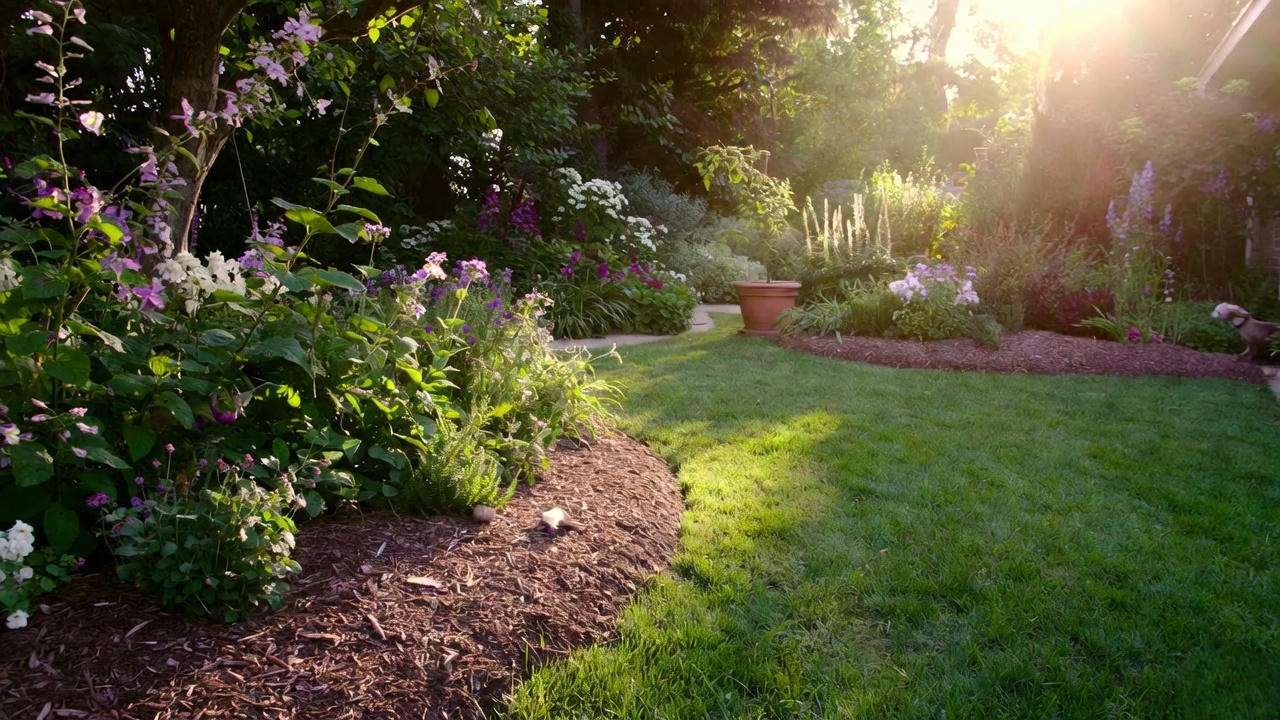
Do these 7 and you basically turn your garden into a fortress. Clients call it “set it and forget it” gardening.
Expert Insights and Common Mistakes to Avoid 📝
Mistake almost everyone makes (including me 12 years ago) They pull the plant and throw it on the compost pile. Result: 3,000 new plants next spring. Rule I now tattoo on my brain: If it has any seed head at all → trash only.
Mistake #2 Waiting until they’re tall and showy. Best time to pull is when they’re 3 inches tall – takes 5 seconds instead of 5 minutes.
Mistake #3 Blanket-spraying the whole yard. Kills your clover, your bees and your soil life. Spot-treat only – or better yet – never need to.
My favorite expert shortcut Every April I walk the entire yard with a 5-gallon bucket and a garden fork. Pull 8–12 tiny seedlings in 7 minutes. That one walk prevents 99 % of summer work.
Frequently Asked Questions (FAQs) ❓
Q: Are all hitchhiker weeds invasive? A: No – some are native and actually help pollinators. But the aggressive ones (burdock, puncturevine, cocklebur) definitely are. Check your state’s noxious weed list.
Q: How do I get burrs out of my dog’s fur without cutting it? A: Work in small sections. Use a slicker brush + a tiny drop of vegetable oil on the burr. The oil breaks the stickiness. Comb out gently. Works 9 times out of 10.
Q: Can I ever eat any of these plants? A: Yes – burdock root is delicious (like a sweet parsnip). Peel, boil, eat. All other hitchhikers on this list – no.
Q: When is the single best time to treat them? A: Early May for young plants or mid-October for pre-emergent (stops next year’s seeds from sprouting).
Q: Do they hurt wildlife? A: Yes – goathead spines can lame deer. Cocklebur poisons livestock. Removing them actually helps wild animals too.
Conclusion: Take Control of Your Garden Today! 🌻
Hitchhiker plant weeds are sneaky, sticky, and frustrating – but they are not unbeatable. With the identification photos, the exact removal steps, and the 7 prevention habits you now have in your hands, you can go from “covered in burrs every walk” to “haven’t seen one in two years”.
Start tonight. Put the lint roller by the door. Brush your dog when you come in. Feel that tiny moment of peace when you realize – you just stopped the next invasion before it started.
You’ve got this. Your garden is about to thank you.
As someone who has pulled these with clients in rain, snow and 100-degree heat – I promise you: one consistent season of these habits and you will never dread coming home from a walk again.
Happy gardening.











