
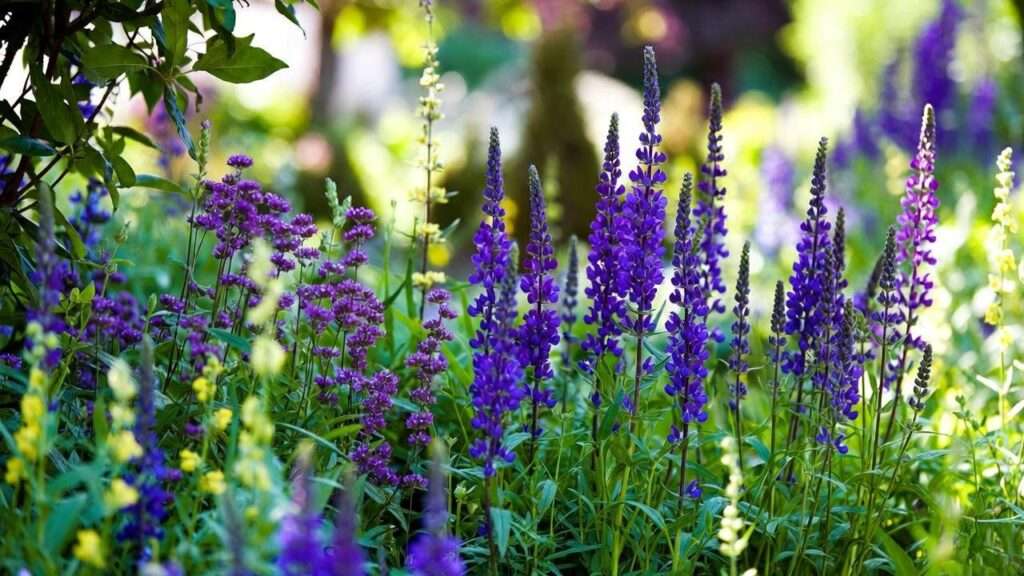
Imagine stepping into your backyard on a warm summer morning, greeted by waves of rich purple blooms swaying gently in the breeze—year after year, without the hassle of replanting or constant fussing. That’s the magic of incorporating perennial plants with purple flowers into your landscape. These reliable beauties return faithfully each season, offering vibrant color, attracting pollinators, and requiring minimal effort once established. 🌿
As a horticulturist with over 15 years of hands-on experience designing and maintaining perennial gardens across various climates, I’ve seen firsthand how purple-flowering perennials transform ordinary spaces into captivating, low-maintenance havens. Purple hues evoke a sense of luxury and tranquility, while drawing in bees, butterflies, and hummingbirds 🐝🦋. Whether you’re a busy homeowner craving curb appeal or an eco-conscious gardener aiming for a pollinator-friendly yard, these plants deliver lasting impact with little upkeep.
In this comprehensive guide, we’ll explore the 15 best perennial plants with purple flowers that thrive in low-maintenance gardens. I’ve curated this list based on real-world performance: hardiness, drought tolerance, pest resistance, extended bloom times, and adaptability to common garden conditions. By the end, you’ll have everything you need to create a stunning, effortless purple paradise.
What Makes a Perennial “Low-Maintenance”? 🌱
Perennials are plants that live for more than two years, dying back in winter and regrowing from their roots each spring—unlike annuals that need replanting yearly. Low-maintenance perennials stand out for their resilience: they tolerate neglect better than most, bouncing back from drought, poor soil, or occasional forgetting to water.
Key traits include:
- Drought tolerance once established (many need water only in extreme dry spells).
- Pest and disease resistance (fewer sprays or interventions required).
- Minimal pruning (beyond occasional deadheading for reblooming).
- Wide hardiness zones (USDA Zones 3–9 for most in this list).
- Self-sufficiency (many spread naturally or require division only every few years).
Purple-flowering perennials shine here because they often feature nectar-rich blooms that support wildlife while providing seasonal interest—from spring spikes to fall plumes. They fit perfectly into sustainable gardening practices, reducing water use and chemical inputs.
How to Choose the Right Purple Perennials for Your Garden 🏡
Selecting the best plants starts with matching them to your site. Here’s my expert advice:
- USDA Hardiness Zone: Check your zone (find it via the USDA website) to ensure survival in winter lows.
- Sun Exposure: Most purple perennials prefer full sun (6+ hours daily), but some tolerate partial shade.
- Soil and Drainage: Well-draining soil is crucial—amend heavy clay with compost to prevent root rot.
- Height and Spread: Plan for mature sizes to layer effectively (tall in back, short in front).
- Bloom Time: Mix early (spring), mid (summer), and late (fall) bloomers for continuous purple color.
Pro tip from years in the field: Start small with 3–5 plants, observe how they perform in your microclimate, then expand. Combining varieties ensures all-season interest and supports pollinators throughout the growing season.
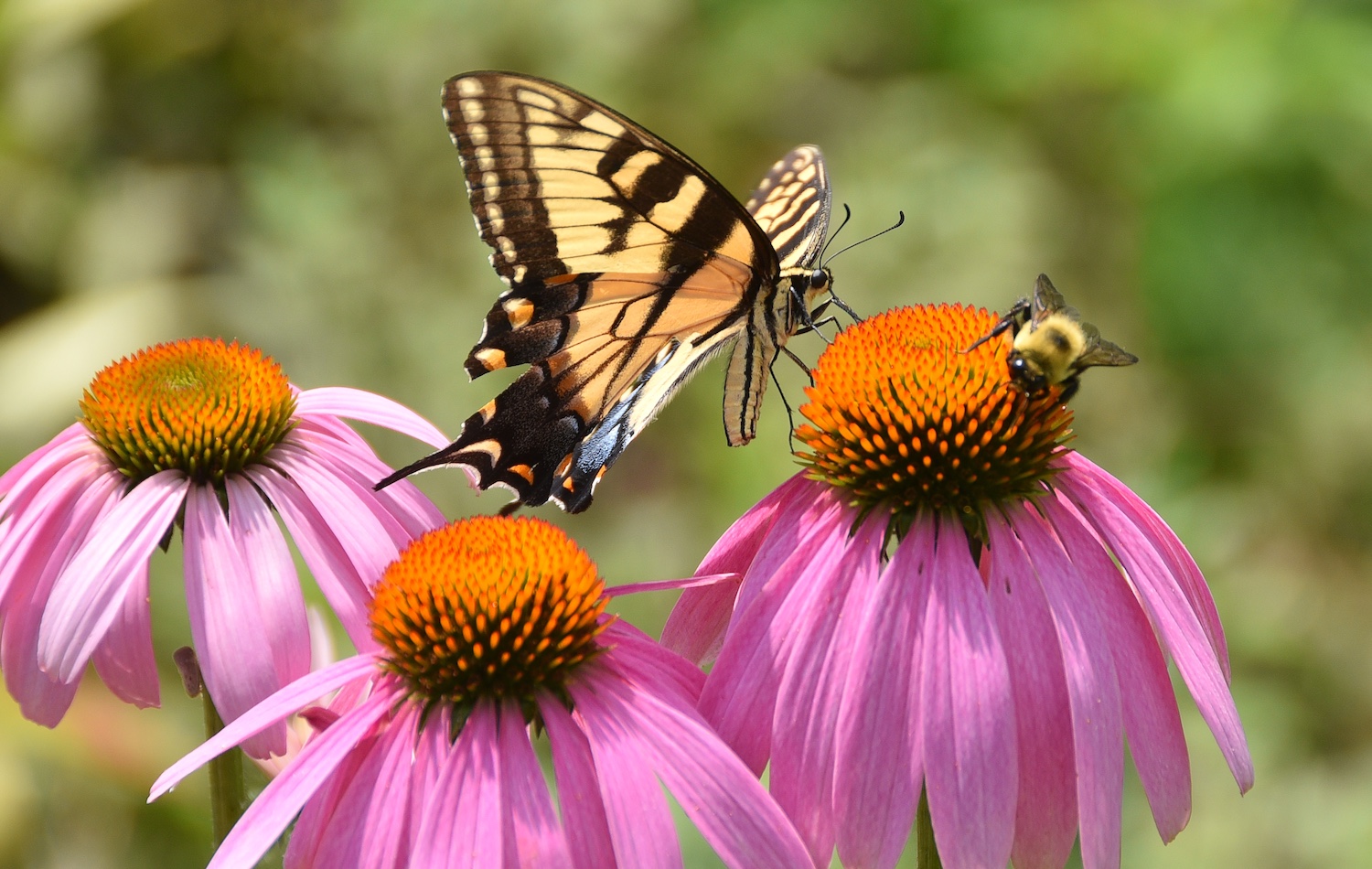
The 15 Best Perennial Plants with Purple Flowers 💜
Now, the stars of the show! Each profile includes key specs, care tips, varieties, companion ideas, and my personal insights from growing them professionally.
1. Lavender (Lavandula spp.) 🌿
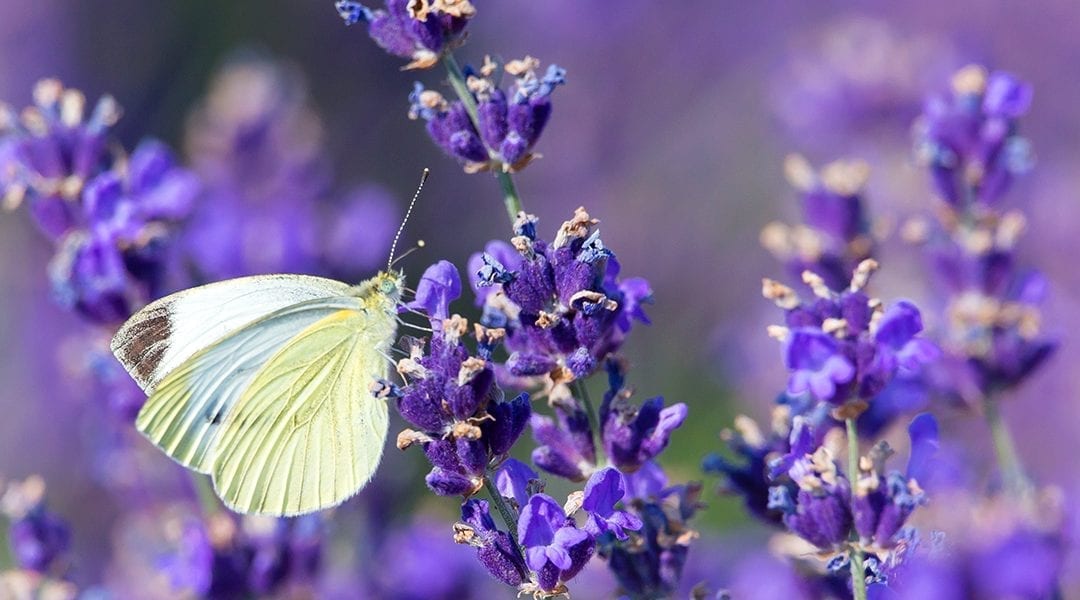
English lavender (Lavandula angustifolia) tops the list for its iconic fragrance, silvery foliage, and spikes of purple flowers from early to mid-summer. Hardy in Zones 5–9, it reaches 1–3 feet tall and wide.
Why low-maintenance? Extremely drought-tolerant, deer-resistant, and thrives in poor, gravelly soil. Once established, it needs almost no water or fertilizer.
Care tips: Full sun, excellent drainage (raised beds if soil is heavy). Prune lightly after flowering to maintain shape. Popular varieties: ‘Hidcote’ (deep purple), ‘Munstead’ (compact).
Companions: Roses, salvia, or ornamental grasses for a Mediterranean vibe.
In my experience, lavender is foolproof in hot, dry climates—I’ve used it in countless xeriscapes where it outperforms everything else.
:max_bytes(150000):strip_icc()/english-lavender-plants-2130856-hero-01-fc261dfea5d442ebb06e4844d4d674fc.jpg)
2. Salvia (Salvia nemorosa or Salvia x sylvestris) 🌺
These upright perennials produce long-lasting spikes of violet-purple flowers from late spring through summer, often reblooming if deadheaded. Zones 4–8, 18–36 inches tall.
Why low-maintenance? Deer- and rabbit-resistant, heat-tolerant, and attracts hordes of pollinators.
Care tips: Full sun, average to dry soil. Cut back in spring for bushier growth. Varieties like ‘May Night’ or ‘Caradonna’ offer deep purple stems.
Companions: Echinacea, rudbeckia for prairie-style borders.
Salvia is a workhorse—I’ve seen it bloom reliably even in neglected roadside plantings.

3. Catmint (Nepeta spp.) 🐱
Nepeta ‘Walker’s Low’ or ‘Cat’s Pajamas’ features clouds of lavender-purple flowers over aromatic gray-green foliage from spring to fall. Zones 4–9, 1–3 feet.
Why low-maintenance? Tough as nails—drought-tolerant, ignores poor soil, and self-cleans (no deadheading needed).
Care tips: Full sun to part shade. Shear mid-season for repeat bloom. Bees adore it!
Companions: Roses, daylilies, or peonies.
Catmint edges out many for sheer longevity—plants I’ve installed 10 years ago still thrive untouched.
:max_bytes(150000):strip_icc()/GettyImages-157478052-2ea19d87b7cc4172a6babc399ea36fb1.jpg)
4. Allium (Ornamental Onion) 🔮
Dramatic globe-shaped purple flower heads on tall stems make Allium a early-summer standout. Varieties like ‘Purple Sensation’ or giganteum. Zones 4–8, 2–5 feet tall.
Why low-maintenance? Bulbs naturalize, pest-free, and foliage dies back cleanly.
Care tips: Full sun, well-drained soil. Plant bulbs in fall. Leave seed heads for winter interest.
Companions: Pair with lower perennials like geranium to hide fading leaves.
Alliums add architectural drama without effort—perfect for “plant and forget” spots.
5. Coneflower (Echinacea purpurea) 🌼
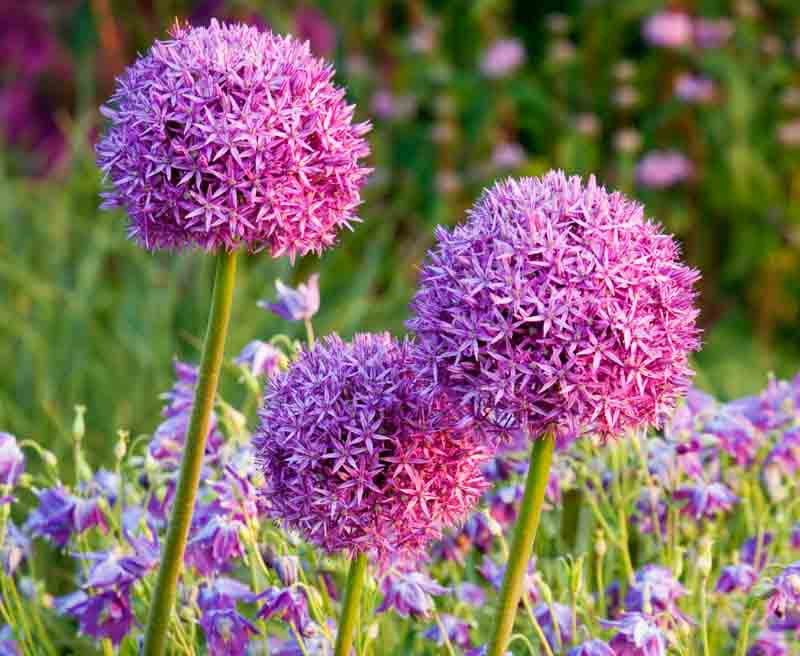
Native purple coneflowers with daisy-like petals and prominent cones bloom midsummer to fall. Zones 3–9, 2–4 feet.
Why low-maintenance? Native toughness—drought-resistant, supports birds with seeds.
Care tips: Full sun, average soil. Deadhead for more blooms or leave for wildlife.
Companions: Black-eyed Susans, grasses.
Echinacea is a pollinator magnet; butterflies flock to it in my gardens.
6. Russian Sage (Perovskia atriplicifolia) ☁️
This subshrub delivers airy, hazy clouds of lavender-blue flowers atop silvery foliage from midsummer into fall. Zones 4–9, 3–5 feet tall and wide.
Why low-maintenance? Extremely drought-tolerant, thrives in hot, dry conditions, and resists deer and rabbits. Its woody base makes it nearly indestructible once established.
Care tips: Full sun, poor to average well-drained soil (it hates wet feet). Cut back to 6–12 inches in early spring for bushier growth. Varieties like ‘Little Spire’ are more compact.
Companions: Ornamental grasses, coneflowers, or black-eyed Susans for a prairie look.
From my designs, Russian sage is unbeatable for adding texture and late-season color in challenging dry sites.

7. Veronica (Speedwell) ✨
Veronica offers upright spikes of vibrant purple-blue flowers from early summer to fall, with many varieties reblooming. Zones 4–8, 1–3 feet tall depending on type.
Why low-maintenance? Compact habits, good disease resistance, and tolerance for average soil.
Care tips: Full sun to light shade, moist but well-drained soil. Deadhead for continuous blooms. Try ‘Royal Candles’ for deep violet spikes.
Companions: Salvia, daylilies, or coreopsis.
Speedwell is a reliable mid-border filler—I’ve used it extensively for long-lasting color without fuss.

8. Astilbe (False Spirea) 🪶
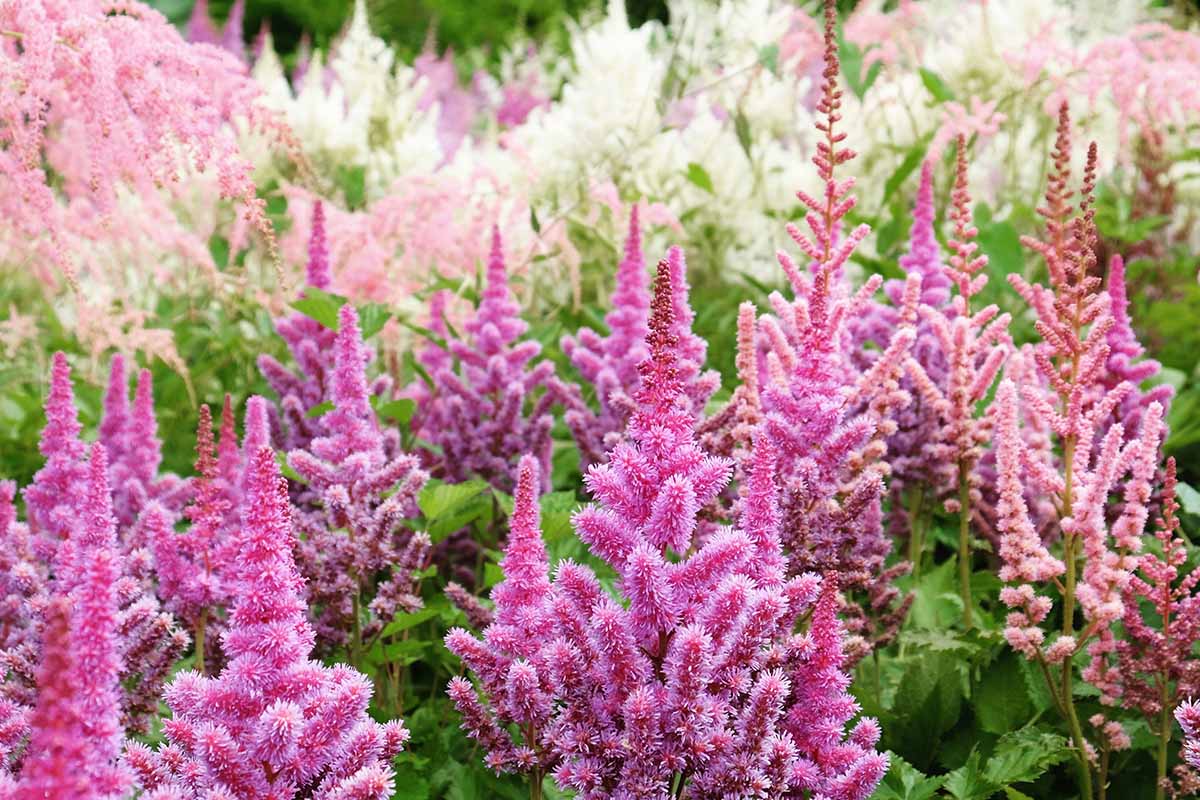
Feathery plumes in shades of lavender to deep purple rise above fern-like foliage in shade gardens. Zones 4–8, 1–4 feet tall.
Why low-maintenance? Thrives in moist shade where few flowers do, with good pest resistance.
Care tips: Partial to full shade, consistently moist rich soil. Varieties like ‘Purple Candles’ or ‘Vision in Purple’ deliver bold color.
Companions: Hostas, ferns, or heuchera for woodland vibes.
Astilbe brings elegance to shady spots—essential for balanced gardens in my northern projects.
9. Bearded Iris (Iris germanica) ⚜️
Iconic sword-like foliage and large, ruffled purple blooms in late spring to early summer. Many re-blooming varieties extend the show. Zones 3–9, 2–4 feet.
Why low-maintenance? Rhizomes multiply naturally, drought-tolerant once established.
Care tips: Full sun, well-drained soil. Divide every 3–5 years to prevent crowding. Classics like ‘Superstition’ offer near-black purple.
Companions: Peonies, poppies for spring drama.
Bearded irises provide unmatched elegance—I’ve relied on them for decades in formal borders.
:max_bytes(150000):strip_icc()/iris-plant-profile-4589585_05-f9fe9eebd31d4461b9ba193876650167.jpg)
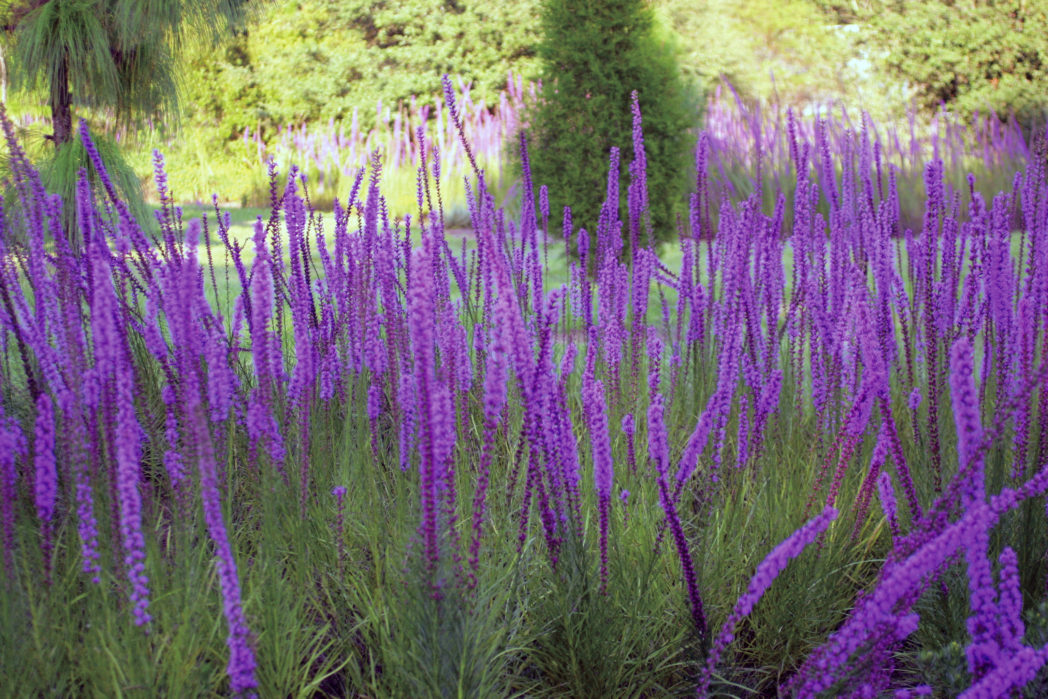
10. Liatris (Gayfeather or Blazing Star) 🔥
Tall, bottlebrush-like purple spikes bloom from top to bottom in midsummer, a unique trait. Native prairie plant. Zones 3–9, 2–5 feet.
Why low-maintenance? Extremely tough, native adaptability, attracts butterflies en masse.
Care tips: Full sun, average to dry soil. Liatris spicata ‘Kobold’ is compact and reliable.
Companions: Echinacea, rudbeckia for meadow effects.
Liatris draws pollinators like no other—I’ve seen clouds of butterflies on mature stands.
11. Monkshood (Aconitum) 👑
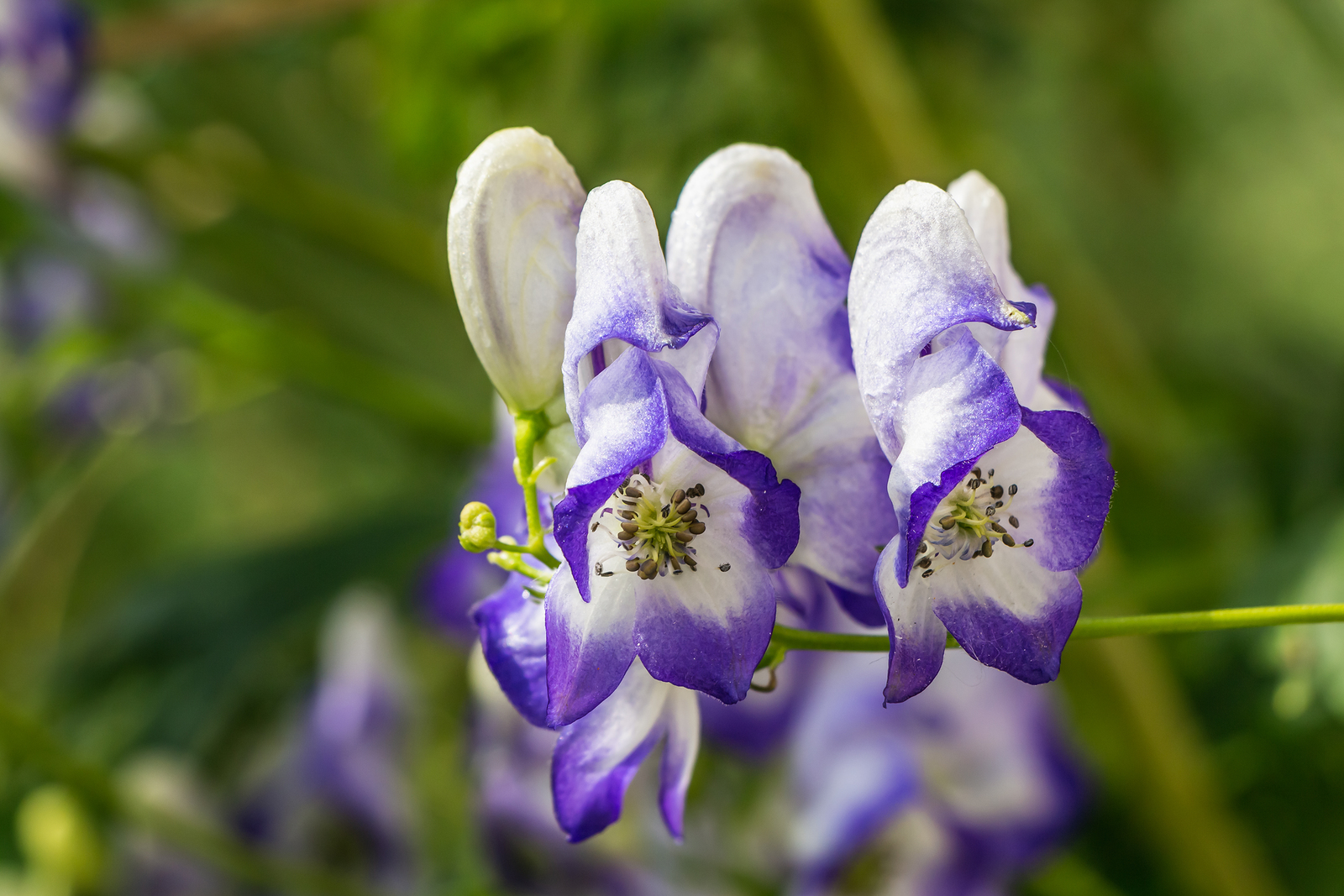
Tall, hooded deep purple flowers on sturdy stems in late summer to fall. Zones 3–7, 3–5 feet.
Why low-maintenance? Shade-tolerant, deer-resistant due to toxicity.
Care tips: Partial shade, moist rich soil. Important safety note: All parts are highly toxic if ingested—wear gloves when handling, keep away from children/pets.
Companions: Astilbe, hostas in woodland gardens.
Monkshood extends the season beautifully, but respect its potency—I’ve used it safely in shaded back borders.
12. Bellflower (Campanula) 🔔
Star-shaped or bell-like purple flowers on varieties from groundcover to tall. Zones 3–8, heights vary 6 inches to 4 feet.
Why low-maintenance? Adaptable, spreads gently, many self-seed mildly.
Care tips: Full sun to part shade. Campanula persicifolia or ‘Sarastro’ for deep purple bells.
Companions: Geraniums, lady’s mantle.
Bellflowers add delicate charm—great for softening edges in my cottage-style designs.

13. Phlox (Garden Phlox, Phlox paniculata) 🌸
Fragrant clusters of purple flowers midsummer to fall. Modern cultivars resist mildew. Zones 4–8, 2–4 feet.
Why low-maintenance? Long-blooming, attracts hummingbirds.
Care tips: Full sun, good air circulation to prevent powdery mildew (choose resistant varieties like ‘Jeana’ or ‘Purple Flame’).
Companions: Coneflowers, bee balm.
Garden phlox fills the air with scent—irreplaceable for summer evenings.
:max_bytes(150000):strip_icc()/Phlox-Dream-Girl_APJ22-4-e59b711a845c4164a70a4f7af10d5532.jpg)
14. Clematis (Late-flowering varieties) 🌿
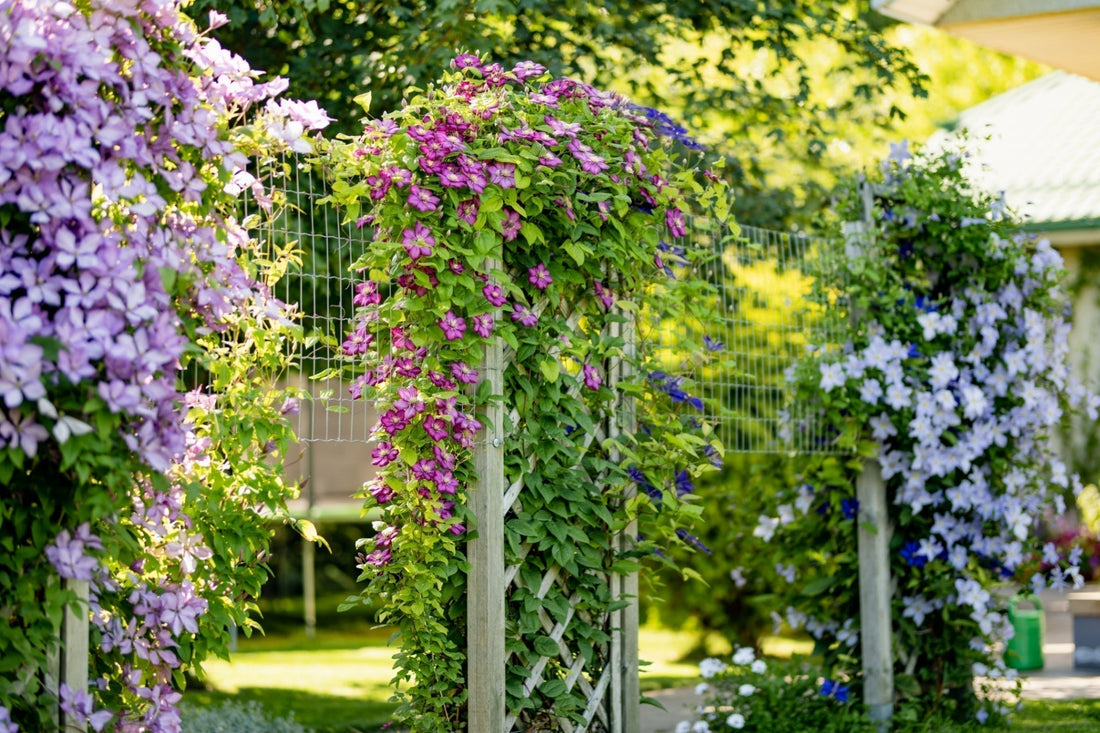
Vining clematis with large or small purple flowers for vertical interest. Group 3 types bloom on new wood. Zones 4–9, 8–12 feet vines.
Why low-maintenance? Prune hard in spring for reliable blooms.
Care tips: Full sun for tops, shaded roots. ‘Jackmanii’ is the classic deep purple.
Companions: Train on trellises with roses or over shrubs.
Clematis adds height effortlessly—transformative in small gardens.
15. Hosta (Purple-flowering cultivars) 🏮
Primarily grown for bold foliage, but varieties like Hosta ventricosa offer lavender-purple flowers in summer. Zones 3–9, 1–3 feet.
Why low-maintenance? Ultimate shade perennial, slug-resistant in many modern types.
Care tips: Shade to part shade, moist soil. Focus on foliage variegation with flower bonus.
Companions: Astilbe, ferns.
Hostas provide structure year-round—flowers are a delightful surprise.
Design Tips: Creating a Purple Perennial Garden That Wows 🌈
Layer for visual depth: Tall plants (Russian sage, liatris) at the back, mid-height (salvia, coneflower) in the middle, and shorter ones (catmint, low veronica) up front.
Contrast textures and tones: Pair airy Russian sage with bold iris foliage, or soft astilbe plumes against hosta leaves.
Enhance pollinator appeal: These plants attract bees, butterflies, and hummingbirds—cluster them for maximum wildlife activity 🦋.
Small spaces? Use containers with compact varieties like dwarf lavender or ‘Kobold’ liatris.
Year-round interest: Incorporate purple foliage (e.g., some heuchera companions) or evergreens nearby.
Common Mistakes to Avoid When Growing Purple Perennials ⚠️
- Planting in wrong conditions: E.g., lavender in wet clay leads to root rot—always prioritize drainage.
- Overwatering established plants: Most listed here prefer dry between waterings.
- Skipping zone checks: A Zone 5 plant in Zone 3 won’t return.
- Poor spacing: Crowding invites disease; follow mature sizes.
- Ignoring deadheading: For rebloomers like salvia or phlox, it extends flowering significantly.
Expert troubleshooting: Yellow leaves often signal overwatering or poor drainage. Leggy growth? Too much shade. No blooms? Insufficient sun or old clumps needing division.
Maintenance Calendar: Year-Round Care Made Simple 📅
Spring: Clean up winter debris, divide overcrowded plants (iris, hostas), apply slow-release fertilizer if soil is poor, mulch to retain moisture.
Summer: Water deeply during droughts (new plants especially), deadhead spent blooms, monitor for pests (rare, but slugs on hostas).
Fall: Plant new perennials or divisions, leave seed heads for birds/winter interest, cut back after frost.
Winter: In cold zones, mulch tender varieties lightly; enjoy evergreen foliage or structures.
Consistency over perfection—perennials forgive occasional lapses.
FAQs About Perennial Plants with Purple Flowers ❓
What are the easiest purple perennials for beginners? Catmint, lavender, and coneflower—tough, forgiving, and widely adaptable.
Do purple perennials attract bees and butterflies? Absolutely! Nectar-rich blooms on salvia, liatris, and echinacea make them pollinator favorites.
Can I grow these in containers? Yes—compact varieties like dwarf lavender, ‘Walker’s Low’ catmint, or low veronica thrive in pots with good drainage.
Which purple perennials thrive in shade? Astilbe, hostas, and monkshood—perfect for woodland gardens.
How do I extend the bloom time? Mix early (iris, allium), mid (salvia, phlox), and late (Russian sage, monkshood) bloomers, plus regular deadheading.
Are any purple perennials deer-resistant? Lavender, catmint, Russian sage, and allium top the list—strong scents or textures deter browsing.
Conclusion 🌟
These 15 perennial plants with purple flowers offer an effortless path to a vibrant, low-maintenance garden bursting with color, fragrance, and wildlife. From sun-drenched borders to shady retreats, there’s a purple perennial here for every spot.
Start with 3–5 that match your conditions, and watch your landscape evolve beautifully over the years. Perennials are an investment in future joy—they only improve with time.
What’s your favorite from the list? Share in the comments, or tag your purple garden photos—I’d love to see them! Happy planting 🌸











