
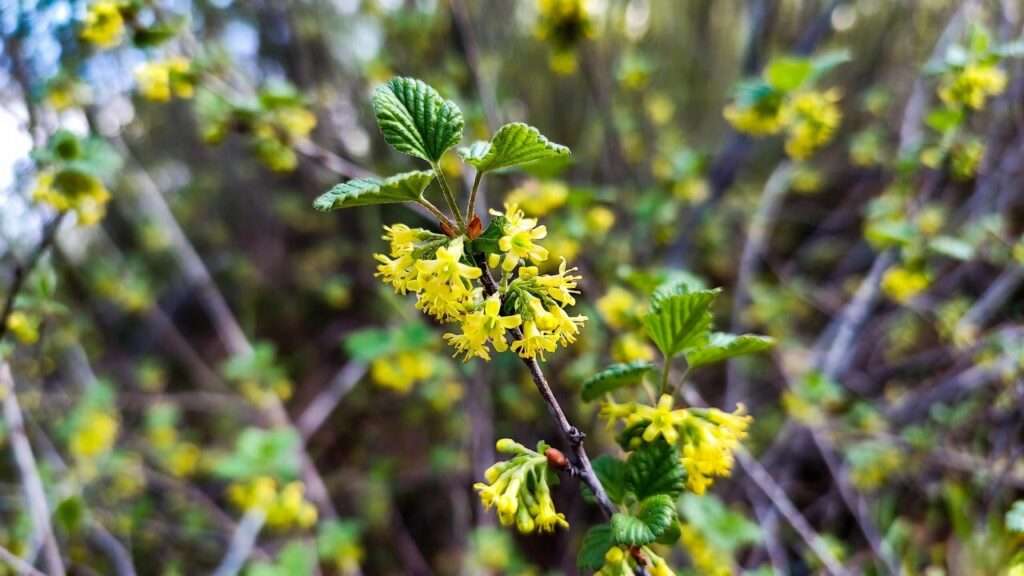
Imagine stepping into your garden on a crisp spring morning, greeted by clusters of bright golden-yellow flowers releasing a delightful spicy clove-like fragrance that fills the air. Hummingbirds dart in for nectar, bees buzz happily, and you know that in a few months, those blooms will give way to juicy, edible berries perfect for fresh eating or homemade jams. This isn’t a dream—it’s the reality of growing the golden currant plant (Ribes aureum), a resilient North American native shrub that combines stunning ornamental beauty with practical benefits like drought tolerance and wildlife support. Whether you’re designing a water-wise xeriscape, creating a pollinator haven, or adding edible elements to your landscape, the golden currant plant solves common gardening challenges like high water use, lack of seasonal interest, and minimal ecological value—all while requiring little maintenance once established. 🌸
In this ultimate guide, written by a horticulturist with over 15 years of experience specializing in native plants and sustainable landscaping, we’ll dive deep into everything you need to know to successfully grow, care for, and enjoy this versatile shrub. From planting tips to harvest recipes, we’ll cover it comprehensively so you can confidently add this gem to your garden.

What Is the Golden Currant Plant? A Native Treasure 🌍
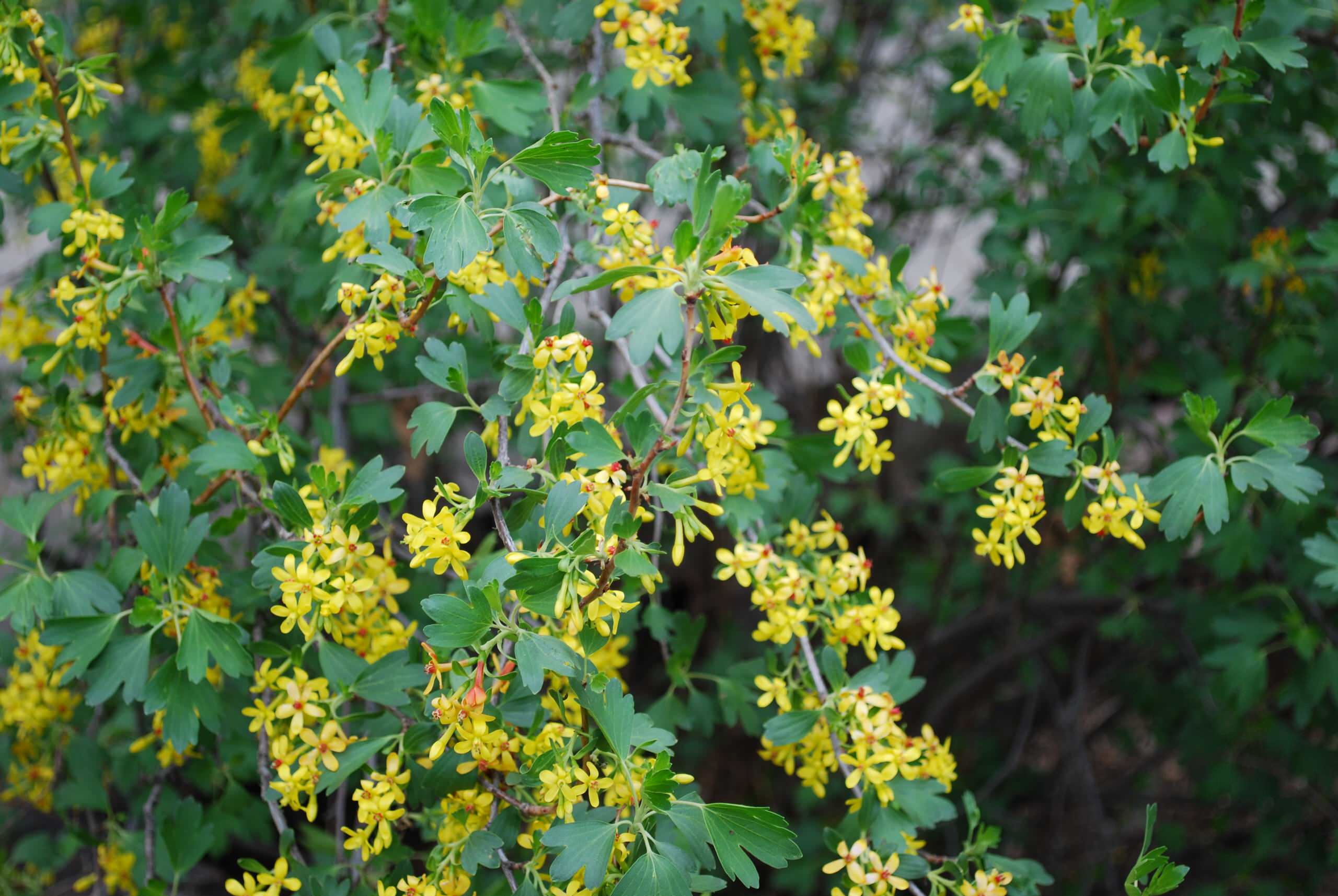
The golden currant plant, botanically known as Ribes aureum (synonymous with Ribes odoratum in some classifications, often called clove currant or buffalo currant), is a deciduous shrub belonging to the Grossulariaceae family. Native to a vast range across North America—from Canada southward through the western and central United States to Mexico—it thrives in diverse habitats like riparian zones, prairies, open woodlands, and mountain slopes.
Botanical Overview and History
Historically, golden currant has been valued by Indigenous peoples for its edible berries, which were eaten fresh, dried, or mixed into pemmican (a traditional high-energy food combining dried meat, fat, and berries). European settlers adopted it for ornamental and culinary uses, and it’s been cultivated since the early 1800s. Today, it’s prized in modern gardening for its adaptability and multi-season appeal.
Key Characteristics
- Size and Habit: Typically reaches 4–8 feet tall and wide, with an upright, arching form that creates a fountain-like silhouette. It spreads mildly via suckers, forming natural thickets.
- Leaves: Glossy green, three-lobed (resembling small maple leaves), 1–2 inches wide. In fall, they turn vibrant shades of orange, red, or purple for stunning autumn color.
- Flowers: Early spring bloomers (March–May, depending on climate), producing drooping clusters (racemes) of 5–18 tubular golden-yellow trumpets with a strong clove-vanilla scent.
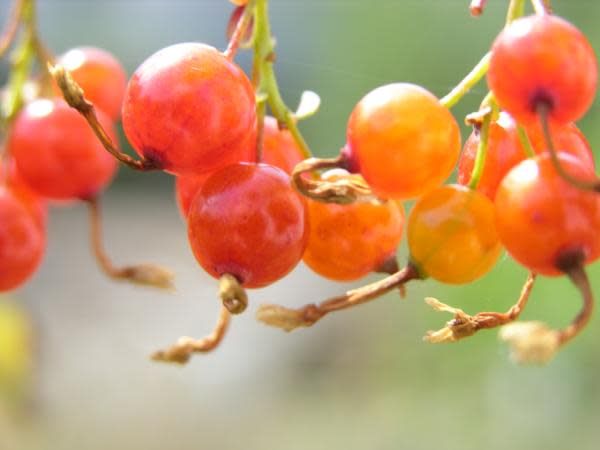
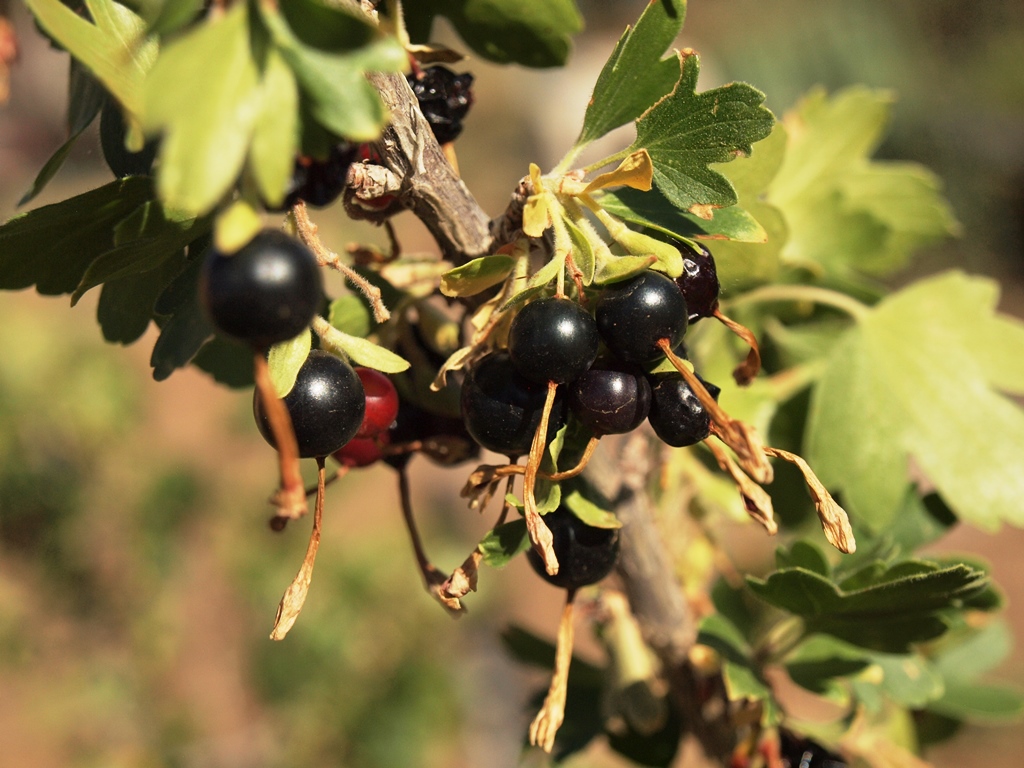
- Berries: Edible fruits ripen in summer (July–August), ranging from yellow-orange to red, purple, or black (depending on variety and conditions). About 1/3–1/2 inch in diameter, tart-sweet flavor high in vitamin C.
Expert Insight: In my years working with native plants in zones 4–8, I’ve found Ribes aureum to be one of the most reliable performers in challenging conditions, outperforming many exotic ornamentals in dry, poor soils while providing essential early-season forage for pollinators. 🍂

Why Choose Golden Currant? Benefits for Your Garden and Beyond 🐝
In an era of water conservation and ecological awareness, the golden currant plant stands out as a smart choice for sustainable gardening.
Drought Tolerance and Low Maintenance
Once established (usually after the first year), it requires minimal supplemental water, making it ideal for xeriscaping, arid climates, and reducing irrigation costs. It tolerates a wide range of conditions, from occasional flooding to prolonged dry spells.
Wildlife Support
- Provides critical early nectar for hummingbirds, butterflies, bees, and other pollinators when few other plants are blooming.
- Berries are a favorite of birds (cedar waxwings, robins, grosbeaks) and small mammals, offering food and cover.
- Supports biodiversity in habitat gardens.
Edible and Ornamental Value
Three seasons of interest: fragrant spring flowers, summer berries, and fall foliage. The clove-scented blooms are perfect near patios or windows.
Ecological Advantages
As a native, it enhances soil stability on slopes, resists local pests better than imports, and fits seamlessly into pollinator, wildlife, or edible landscapes.
Pro Tip: Plant near outdoor seating to savor that intoxicating spring fragrance on warm breezes—it’s like having a natural air freshener! 😊
Planting Your Golden Currant Plant: Step-by-Step Success 🏡
Timing and proper planting are key to quick establishment.
Best Time and Location
Plant in fall (for root development before winter) or early spring. Hardy in USDA zones 4–8 (some sources extend to zone 3 or 9 in ideal conditions).
Site Selection
- Light: Full sun for maximum flowers and fruit; tolerates partial shade (but reduced yield).
- Soil: Adaptable to loam, clay, sandy, or poor soils; prefers well-drained with pH 6–8. Amend heavy clay with compost for better drainage.
Planting Instructions
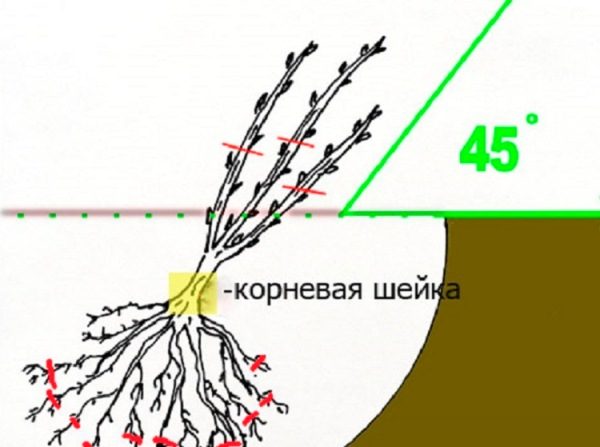
- Dig a hole twice as wide and as deep as the root ball.
- Mix native soil with compost (20–30% organic matter).
- Place plant at the same depth as in the container, backfill, and firm gently.
- Water deeply to settle roots.
- Apply 2–3 inches of mulch (leaving space around stem) to retain moisture and suppress weeds.
Spacing Tip: 4–6 feet apart for individual specimens; closer (3–4 feet) for informal hedges. In containers, use large pots with excellent drainage for patios. 🌱
Essential Care Guide for Thriving Golden Currant 🌧️
With the right care, your golden currant plant will reward you with vigorous growth, abundant blooms, and heavy fruit set year after year. The good news? It’s one of the lowest-maintenance shrubs you can choose.
Watering Needs
- Establishment Phase (First 1–2 Years): Water deeply and regularly—about 1–2 inches per week during the growing season—to encourage deep root development. In hot, dry periods, check soil moisture 4–6 inches down; if dry, water thoroughly.
- Mature Plants: Extremely drought-tolerant once established. Supplemental watering is only needed during prolonged dry spells (more than 4–6 weeks without rain) or extreme heat. Overwatering can lead to root rot, so err on the dry side.
Expert Insight: In my experience restoring native landscapes in arid regions, golden currants often survive on natural rainfall alone after year two, making them a top pick for water-conserving gardens. 💧
Soil and Fertilization
Golden currant adapts to a wide range of soils but performs best in well-drained conditions.
- Soil Preferences: Loamy or sandy loam ideal; tolerates clay if not waterlogged. Neutral to slightly alkaline pH (6.0–8.0).
- Amendments: Incorporate compost at planting; top-dress with 1–2 inches of organic mulch annually.
- Fertilizing: Minimal needs. Apply a balanced, slow-release fertilizer (e.g., 10-10-10) or compost in early spring only if growth is poor or leaves are pale. Avoid high-nitrogen fertilizers, which promote foliage over flowers and fruit.
Pro Tip: Test your soil pH occasionally—golden currants handle alkalinity better than many natives, thriving where others struggle. 🧪
Pruning and Maintenance
Proper pruning keeps the shrub productive, attractive, and healthy.
- When to Prune: Immediately after flowering (late spring/early summer) to avoid removing next year’s flower buds.
- How to Prune:
- Remove dead, damaged, or crossing branches.
- Cut out the oldest stems (thicker, darker bark) at ground level—aim to remove 1/3 of old wood every 3–5 years for renewal.
- Thin crowded areas for better airflow.
- Shape: Allow natural arching form or train into hedges/screens.
Quick Tip: Renewal pruning rejuvenates older plants dramatically—I’ve seen 10-year-old neglected shrubs bounce back with vibrant growth after a good thinning. ✂️
Winter Care
Hardy to -30°F (-34°C) in zone 4, it needs no special protection in most areas. In exposed, windy sites or extreme cold (zone 3 pushes), apply a thick mulch layer around the base to insulate roots. No wrapping required.
Common Pests, Diseases, and Troubleshooting 🐞
Golden currant is remarkably resistant to serious issues, especially compared to European black currants, thanks to its native adaptations.
Potential Problems
- Pests:
- Aphids (currant aphid): Curled leaves in spring; usually minor.
- Scale or spider mites: Rare, in stressed plants.
- No major insect threats like imported currants face.
- Diseases:
- Powdery mildew: White coating on leaves in humid, shaded conditions.
- White pine blister rust: A serious fungal disease (alternate host: white pines). Golden currant can be an intermediate host but is often resistant or mildly affected.
- Leaf spot or anthracnose: Occasional in wet years.
Prevention and Solutions
- Cultural Controls: Plant in full sun with good spacing (4–6 feet) for airflow; avoid overhead watering.
- Organic Remedies: Hose off aphids with strong water spray; use neem oil or insecticidal soap for persistent issues.
- Rust Concerns: In regions with white pine industries (e.g., parts of the Midwest), some states historically restricted Ribes species. Check current local regulations—many bans have been lifted as resistant cultivars and management practices evolved.
Expert Advice: In over a decade of consulting, I’ve rarely treated golden currants chemically—they bounce back naturally with proper siting. Choose resistant selections if near pines. 🌟
Propagation: Multiply Your Golden Currants Easily ✂️
Expanding your golden currant collection is straightforward and cost-effective.
Methods
- Softwood Cuttings (Early Summer): Take 4–6 inch tip cuttings from new growth; dip in rooting hormone; place in moist perlite/sand mix under mist or plastic cover.
- Hardwood Cuttings (Late Fall/Winter): 8–12 inch mature stems; bundle and store cool/moist or plant directly.
- Suckers/Division: Dig up rooted suckers in dormant season.
- Seeds: Possible but slow (cold stratification needed); hybrids may not come true.
Success Rate Tip: Softwood cuttings root in 4–6 weeks with 70–90% success using hormone. Hardwood is nearly foolproof in well-drained soil. I’ve propagated dozens for restoration projects this way! 🌱

Enjoying Your Harvest: Edible Uses and Recipes 🍇
One of the greatest joys of growing the golden currant plant is harvesting its flavorful berries. Unlike some currants that are strictly ornamental or overly tart, Ribes aureum produces fruits that are deliciously edible right off the bush.
Berry Harvesting
Berries typically ripen from mid to late summer (July–August, varying by climate and elevation). Watch for full color development: fruits shift from green to yellow, orange, red, purple, or nearly black (varietal differences play a role). Taste-test for sweetness—fully ripe berries balance tartness with natural sugars. Harvest in the morning for best flavor, using scissors or fingers to snip clusters. Expect 4–10 pounds per mature shrub in good years. Birds love them too, so net if you want the bulk of the crop!
Culinary Ideas
Golden currant berries are versatile: high in vitamin C, antioxidants, and pectin (natural thickener for jams).
- Fresh Eating: Enjoy straight, in salads, or over yogurt/ice cream.
- Preserves: Excellent for jams, jellies, syrups, and sauces.
- Baking: Muffins, pies, tarts, or scones.
- Beverages: Cordials, wines, or infused vinegars.
- Drying: Dehydrate for trail mix or traditional pemmican.
Simple Recipes
Golden Currant Jelly (Basic, No-Added Pectin)
- Wash 4 pounds berries; simmer with 1 cup water until soft (10–15 minutes).
- Strain through jelly bag for clear juice (yield ~4 cups).
- Combine juice with equal sugar (4 cups); add lemon juice (2 tbsp).
- Boil to 220°F (gel stage); skim foam.
- Pour into sterilized jars; process 10 minutes in water bath.
Golden Currant Syrup (For pancakes or cocktails) Simmer 4 cups berries, 2 cups water, 2 cups sugar until thick; strain and bottle.
Expert Insight: In my workshops on edible natives, participants rave about the unique spicy undertone in golden currant preserves—far superior to store-bought for flavor depth. 🫙
:max_bytes(150000):strip_icc()/currant-jelly-0703-mla99668_horiz-0723-bf16d47f0be5489cacbc936e5a9037a4.jpg)
Landscaping Ideas with Golden Currant Plant 🎨
The golden currant plant shines in thoughtful designs, offering year-round appeal and functionality.
Design Inspirations
- Informal Hedges or Screens: Plant 3–5 feet apart for privacy with fragrant blooms.
- Wildlife or Pollinator Gardens: Early nectar draws hummingbirds and bees; pair with late-bloomers for season-long support.
- Xeriscapes and Water-Wise Borders: Thrives in dry gardens alongside agastache, penstemon, or salvia.
- Slope Stabilization: Suckering habit controls erosion on banks.
- Edible Landscapes: Integrate into orchards or near vegetables for cross-pollination benefits.
- Container Gardening: Dwarf selections in large pots for patios.
Companion Plants
- Natives: Serviceberry, chokecherry, or snowberry for bird habitat.
- Perennials: Yarrow, coneflower, or blanket flower for color contrast.
- Grasses: Little bluestem or buffalo grass for natural meadow look.
Pro Tip: Use golden currant’s arching form as a backdrop for spring bulbs—daffodils emerge as currants bloom! 🦋
Frequently Asked Questions (FAQs) ❓
Is the golden currant plant invasive? No—it’s a North American native and generally well-behaved. It suckers mildly but doesn’t spread aggressively like some imports.
Are golden currant berries poisonous? Absolutely not! They’re fully edible, nutritious, and historically used by Indigenous peoples and settlers.
Can golden currant grow in containers? Yes, choose compact varieties and large pots (15+ gallons) with excellent drainage. Great for urban balconies.
Why is my golden currant not producing berries? Common causes: Too much shade (needs full sun), young age (fruiting starts year 2–3), or lack of pollinators (self-fertile but benefits from cross-pollination).
Are there legal restrictions on planting Ribes species? In some areas with commercial white pine, historical bans existed due to blister rust. Most have been lifted; check your state’s agriculture department for current rules.
How long does a golden currant plant live? 20–30 years or more with proper care; renewal pruning extends productivity.
Does it attract deer? Moderately browse-resistant, but protect young plants in high-deer areas.
Conclusion: Bring Home the Golden Currant Today! ✨
The golden currant plant (Ribes aureum) truly is a standout: drought-tolerant, low-maintenance, wildlife-friendly, and rewarding with fragrant flowers, colorful foliage, and delicious berries. Whether you’re conserving water, supporting pollinators, or adding edible beauty to your yard, this native shrub delivers exceptional value with minimal effort.
As a horticulturist passionate about sustainable, resilient landscapes, I wholeheartedly recommend it for gardens across zones 4–8. Plant one (or a few!) this season—you’ll enjoy its benefits for decades. Happy gardening, and may your golden currants thrive abundantly! 🌿🐦🍇











