

Imagine sinking your teeth into a sun-warmed peach, its golden-yellow flesh bursting with sweet, tangy juice that drips down your chin—the perfect blend of firmness and melt-in-your-mouth tenderness. 🍑✨ Now picture harvesting bushels of these flawless fruits from your own backyard tree, year after year. That’s the magic of the Red Haven peach tree, one of the most beloved and reliable peach varieties for home gardeners.
Introduced in 1940 by Michigan State University, the Red Haven (often spelled Redhaven) quickly became the gold standard for freestone peaches, prized for its exceptional flavor, heavy yields, and relative ease of growth. Whether you’re a beginner dreaming of your first home orchard or an experienced grower seeking consistent, high-quality harvests, this complete guide will equip you with everything you need to succeed. From site selection and planting to pruning, pest management, and harvesting those juicy rewards—we’ll cover it all with proven, expert-backed strategies to help you achieve bountiful, disease-resistant crops. 🌟
Why Choose the Red Haven Peach Tree? Key Characteristics and Benefits 🌟
The Red Haven peach tree stands out in the world of stone fruits for good reason. Developed at South Haven, Michigan, by professor Stanley Johnston, it was selected for its superior traits and has remained a top commercial and home-garden variety for over 80 years. Its popularity stems from a perfect combination of delicious fruit, reliable production, and built-in resilience—making it ideal for growers in a wide range of climates.
Fruit Quality and Flavor Profile 🍑
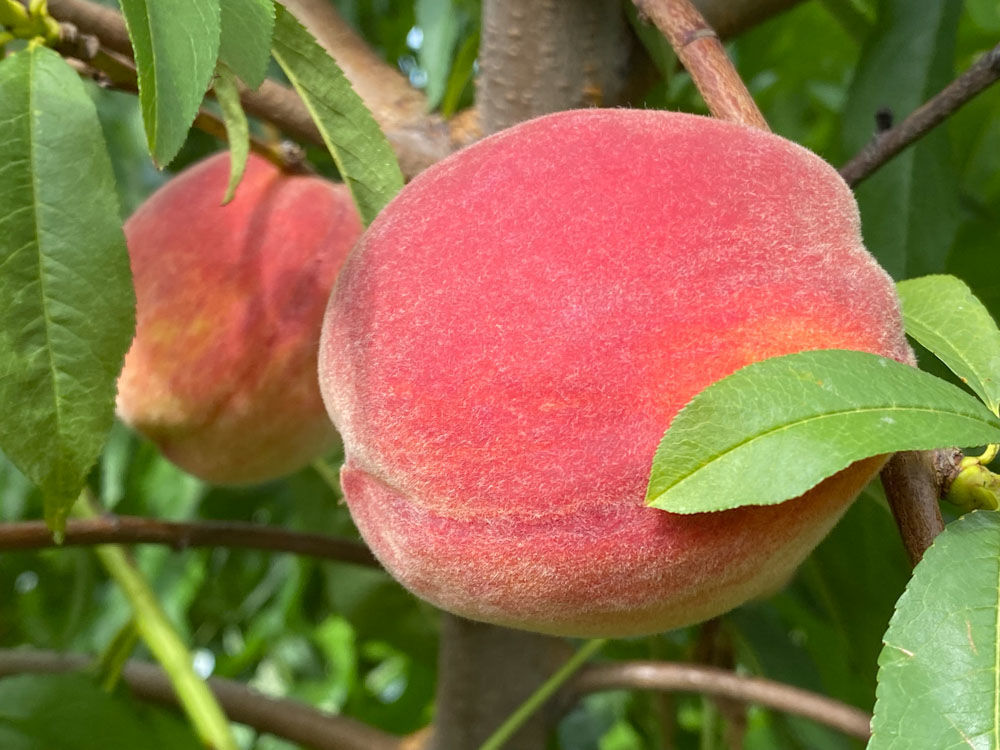
Red Haven produces medium-to-large freestone peaches (the pit separates easily from the flesh), typically 2.5–3 inches in diameter. The skin features a vibrant red blush over a golden background, while the firm yellow flesh offers an outstanding sweet-tangy balance with low acidity. These peaches excel for fresh eating, canning, freezing, baking (think peach pies and cobblers 🥧), and even drying.
Expert tip: Many describe Red Haven as having “classic peach flavor”—rich, aromatic, and juicy without being overly soft. It’s often the benchmark against which other varieties are compared.
Tree Traits 🌳
- Growth Habit: Vigorous and spreading, forming a naturally rounded canopy. Standard trees reach 12–15 feet tall and wide; semi-dwarf (on rootstocks like Citation) stay 8–12 feet; dwarf versions are perfect for small spaces or containers at 6–8 feet.
- Pollination: Fully self-pollinating (self-fertile), so one tree produces fruit. For even heavier yields, plant a companion like Elberta or Hale Haven nearby to encourage cross-pollination.
- Productivity: Known as a heavy, consistent bearer. Mature trees can yield 50–100 pounds (or more) of peaches annually under good conditions.
Hardiness and Adaptability 🗺️
Red Haven thrives in USDA Hardiness Zones 5–9, requiring 800–900 chill hours (hours below 45°F/7°C during winter dormancy) for proper fruit set. It’s cold-hardy enough for northern growers yet heat-tolerant in southern regions.
One of its biggest advantages? Excellent resistance to bacterial spot (Xanthomonas arboricola pv. pruni), a common peach scourge. While not immune to all issues, its genetic toughness reduces the need for heavy spraying compared to older varieties.
In my years working with fruit trees across various climates—from Midwest orchards to coastal home gardens—I’ve seen Red Haven outperform many others for beginners. It forgives minor mistakes while rewarding good care with spectacular harvests. 🌸
Selecting and Planting Your Red Haven Peach Tree 🕳️🌱
Success starts with choosing a healthy tree and giving it the right home. Poor site selection or rushed planting is the #1 reason new peach trees struggle.
Choosing the Right Tree 🛒
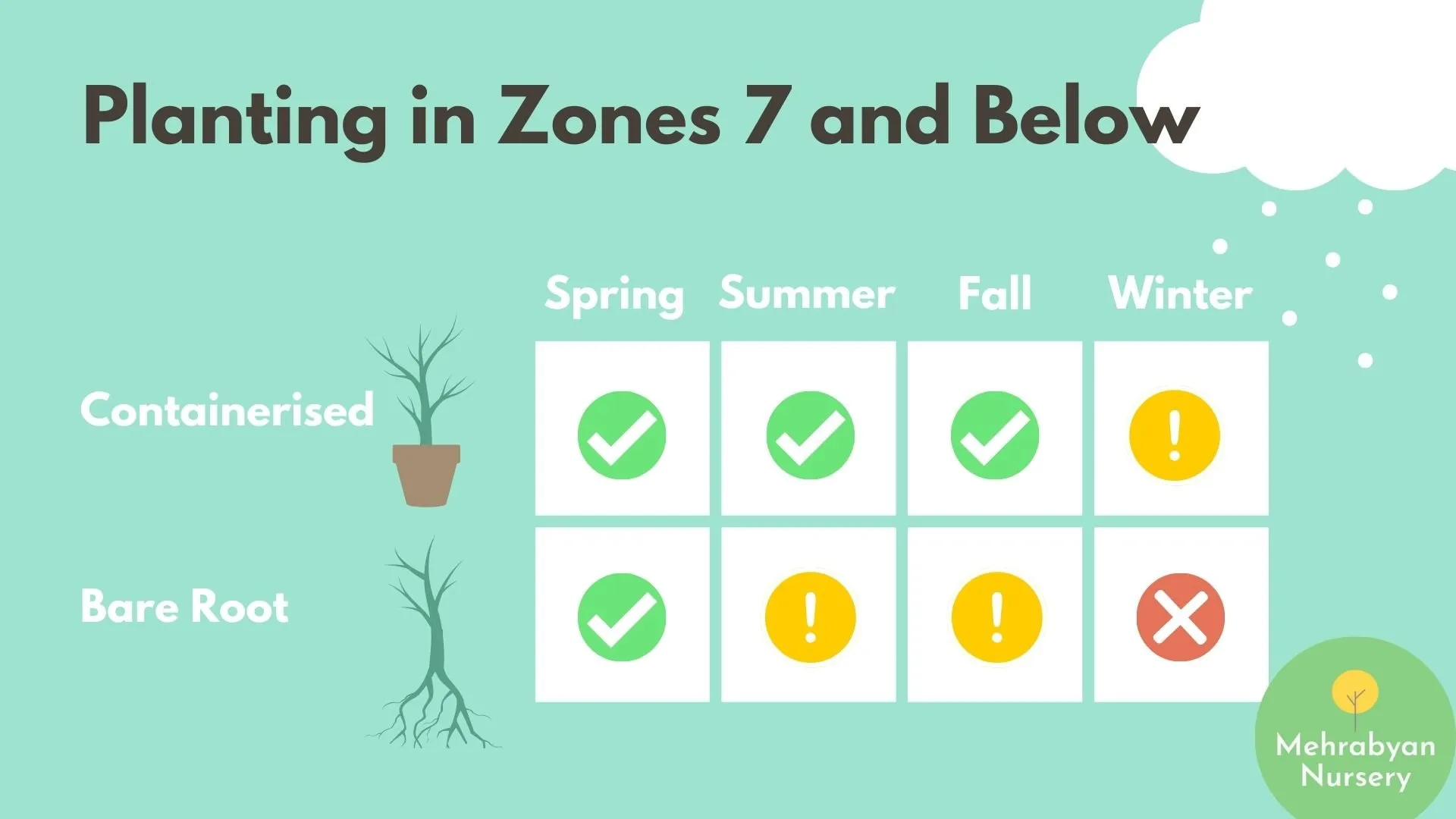
- Bare-Root vs. Container-Grown: Bare-root trees (sold dormant in winter/early spring) are cheaper and establish quickly if planted correctly. Container-grown offer flexibility for later planting but check for circling roots.
- Rootstock Matters: For disease resistance and soil adaptability, opt for trees on Lovell or Halford rootstocks (tolerant of peach tree short life). Nemaguard is great for nematode-prone soils.
- Where to Buy: Reputable nurseries like Stark Bro’s, Trees of Antiquity, or local extension-recommended sources ensure true-to-type, virus-free stock.
Look for 1-year-old whips (straight single stem) or lightly branched 2-year-olds with healthy roots and no signs of damage.
Best Planting Time and Location 📅
Plant in early spring after the last hard frost (ideal for bare-root) or anytime for potted trees, avoiding extreme heat. Full sun is non-negotiable—aim for 6–8+ hours daily to maximize fruit sweetness and prevent disease.
Soil: Well-drained, loamy with pH 6.0–7.0. Peaches hate wet feet; avoid heavy clay or low spots prone to frost pockets.
Spacing: 18–20 feet for standard, 12–15 feet semi-dwarf, 8–10 feet dwarf.
Step-by-Step Planting Guide 🔧
- Prepare the Site: Dig a hole twice as wide as the roots and as deep (about 18–24 inches). Amend poor soil with compost—never fresh manure.
- Soak Bare-Root Trees: Hydrate roots in water for 6–12 hours pre-planting.
- Position the Tree: Spread roots over a mound in the hole center. Graft union (swollen area) must sit 2–4 inches above soil level.
- Backfill and Water: Fill with native soil, gently firming to eliminate air pockets. Water deeply to settle.
- Mulch: Apply 3–4 inches organic mulch (wood chips, straw) in a 3-foot ring, keeping it away from the trunk.
- Stake if Needed: For windy areas, support young trees loosely.
Pro Tip: Test soil drainage first—dig a hole, fill with water, and ensure it drains within 24 hours. If not, plant on a raised mound or berm. 🌧️
Essential Care: Watering, Fertilizing, and Soil Management 💧🌿
Consistent, thoughtful care during the growing season is key to vigorous growth, healthy foliage, and those heavy peach crops Red Haven is famous for. Peach trees are moderately drought-tolerant once established, but inconsistent moisture—especially during fruit development—leads to issues like fruit drop, cracking, or small peaches.
Watering Schedule 🚿
Newly planted Red Haven peach trees need regular deep watering to establish strong roots. Provide 1–2 inches of water weekly for the first two years, ideally through slow, deep irrigation (soaker hoses or drip systems work wonders).
For mature trees:
- Spring (bloom to fruit set): Keep soil evenly moist.
- Summer (fruit swelling): Increase to 1.5–2 inches weekly during dry spells—critical for juicy, large peaches.
- Fall: Taper off to encourage hardening off before winter.
Signs of underwatering: Wilting leaves, premature fruit drop. Overwatering: Yellowing leaves, root rot.
Expert tip: Use a rain gauge or soil moisture probe. Water deeply but infrequently to promote deep roots—aim for soil moist 12–18 inches down.

Fertilization Best Practices 🌱
Peaches are heavy feeders, but over-fertilizing causes excessive vegetative growth at the expense of fruit. Base your program on soil tests (recommended every 2–3 years).
General guideline:
- Early spring (just before bud break): Apply a balanced fertilizer like 10-10-10 or organic equivalent. For young trees: ½–1 lb; mature: 1–2 lbs spread in a ring 2 feet from trunk.
- Post-harvest (late summer): Light application of low-nitrogen fertilizer to replenish without pushing late growth.
- Avoid late-season nitrogen—it reduces cold hardiness.
If leaves show deficiencies (e.g., yellowing between veins = iron chlorosis), use chelated micronutrients or foliar sprays.
Pro insight: Many university extensions recommend 1 lb of actual nitrogen per year for mature trees, split into applications. Always water thoroughly after fertilizing.

Mulching and Weed Control 🍂
A 3–4 inch layer of organic mulch (wood chips, shredded bark, or straw) around the base—extending to the drip line but pulled 4–6 inches from the trunk—offers multiple benefits:
- Retains soil moisture
- Moderates temperature
- Suppresses weeds
- Adds organic matter as it breaks down
Refresh mulch annually in spring. In weed-prone areas, use landscape fabric under mulch for extra control.
Caution: Avoid “volcano mulching” (piling against trunk)—it invites rot and pests.

Pruning for Health and Maximum Yields ✂️🍑
Proper pruning is non-negotiable for peach trees. Unlike apples, peaches bear fruit on one-year-old wood, so annual pruning renews fruiting branches, improves air circulation (reducing disease), and lets sunlight reach developing fruit for sweeter peaches.
Why Prune Peach Trees? 🌬️
The goal is an “open vase” or “open center” shape: No central leader, with 3–5 main scaffold branches forming a bowl. This maximizes light penetration, eases harvesting, and minimizes fungal issues.
When and How to Prune ⏰
Prune during late winter/early spring while dormant (February–March in most zones)—after danger of extreme cold but before bud swell. Summer pruning can control size but risks sunburn.
Year-by-year guide:
- Year 1: Head young tree to 24–30 inches; select 3–4 scaffolds.
- Year 2–3: Develop scaffolds, remove inward/crossing growth.
- Mature trees: Remove dead/diseased wood, thin crowded branches, shorten last year’s growth by 30–50% to encourage new fruiting wood.
Always cut to outward-facing buds, use sharp tools, and disinfect between trees if disease is present.

Thinning Fruit 👋
About 4–6 weeks after bloom (when fruit is marble-sized), thin to one peach every 6–8 inches. This prevents branch breakage, improves size/flavor, and reduces biennial bearing.
Common mistakes: Skipping thinning (small, poor-quality fruit) or over-pruning (reduced yield).

Common Pests and Diseases: Prevention and Organic Solutions 🐛🛡️
While Red Haven is notably resistant to bacterial spot compared to many older varieties, no peach tree is completely immune to pests and diseases. Proactive management—combining cultural practices, monitoring, and targeted interventions—keeps problems minimal and often eliminates the need for harsh chemicals. Here’s what I’ve learned from decades of growing peaches and advising home orchardists.
Key Diseases to Watch For 🦠
Peach Leaf Curl (Taphrina deformans)
Symptoms: Puckered, reddish-purple leaves in spring that eventually turn powdery gray and drop. Prevention: Apply a single copper-based fungicide spray in late fall/early winter (after leaf drop) or just before bud swell in spring. Good air circulation from proper pruning helps immensely. Red Haven shows moderate resistance, but in wet, cool springs, prevention is still wise.
Brown Rot (Monilinia fructicola)
Symptoms: Brown, rotting fruit with gray spores; can also cause blossom blight and twig cankers. Prevention & Control:
- Remove all mummified fruit and fallen debris (sanitation is critical).
- Thin fruit adequately for airflow.
- Apply sulfur or organic-approved fungicides during bloom and pre-harvest if pressure is high.
- Encourage beneficial fungi with compost teas.
Bacterial Spot
Red Haven’s standout trait—strong genetic resistance—means you’ll rarely see the yellow-ringed spots and shot holes common on susceptible varieties. Still, avoid overhead watering and maintain pruning for airflow.
Expert note: University extension trials consistently rank Red Haven among the top varieties for bacterial spot tolerance, often requiring no sprays where others need multiple applications.
Common Pests 🕷️
Peach Tree Borer (Synanthedon exitiosa)
The most serious pest—larvae tunnel into the trunk base, causing gumming and tree decline. Prevention:
- Keep trunk base clear of mulch and weeds.
- Apply a barrier of permethrin or wrap trunks with screening (for organic growers).
- Pheromone traps in June–August to monitor and disrupt mating.
Plum Curculio
Small weevil that leaves crescent-shaped scars and causes early fruit drop. Control: Surround (kaolin clay) sprays after petal fall, or use pyrethrin for severe infestations. Clean up dropped fruit daily.
Aphids and Mites
Cause curled leaves and sticky honeydew. Control: Strong water sprays, insecticidal soap, neem oil, or release ladybugs/lacewings.
Oriental Fruit Moth
Larvae tunnel into shoot tips and fruit. Control: Pheromone traps for timing, spinosad sprays at petal fall and later generations.
Integrated approach: Encourage birds, bats, and beneficial insects by planting diverse habitat nearby. Regular scouting (weekly during season) catches issues early when they’re easiest to manage.
Harvesting and Enjoying Your Bountiful Crop 🍑🏺
The payoff for all your care arrives in mid-to-late summer when Red Haven peaches reach peak ripeness—typically July to early August, depending on your zone and microclimate.
When Are Red Haven Peaches Ripe? ⏰
Look for:
- Full red blush over 80–90% of the skin with a golden (not green) background.
- Slight softening at the stem end.
- Gentle twist release from the branch (never pull hard).
Taste test one—Red Haven’s flavor peaks when tree-ripened. Commercial growers pick firmer for shipping, but home growers get the true sweetness! 🍯
Harvesting Techniques ✋
- Harvest in the cool morning.
- Handle gently to avoid bruising—use both hands.
- Leave a short stem if storing.
- Sort immediately: Eat perfect ones first, process slightly blemished quickly.
Storage: Ripe peaches keep 3–5 days at room temperature or up to 2 weeks refrigerated. For longer, can, freeze slices, or make jam.
Yield Expectations & Uses
Mature standard trees often produce 1–2 bushels (50–100+ pounds) annually. Dwarf trees yield ½–1 bushel—still plenty for a family.
Ideas:
- Fresh eating (nothing beats it!)
- Classic peach cobbler or pie 🥧
- Grilled peach halves with balsamic glaze
- Canned slices for winter
- Frozen for smoothies
Quick recipe tip: Peach Salsa—dice ripe Red Haven peaches, mix with red onion, jalapeño, cilantro, lime juice, and a pinch of salt. Perfect summer topping! 🌶️
Winter Care and Long-Term Maintenance ❄️🌳
Peach trees need protection in colder zones to ensure longevity (15–20+ years with good care).
- Clean up all fallen leaves and fruit to reduce disease carryover.
- Wrap trunks of young trees (first 3–5 years) with tree guards to prevent sunscald and rodent damage.
- Apply a dormant oil spray in late winter to smother overwintering insects.
- In Zone 5, consider a windbreak or site with southern exposure to moderate cold.
Late-season watering (if dry) helps trees enter dormancy well-hydrated.
Troubleshooting Common Problems 🔧
| Problem | Likely Cause | Solution |
|---|---|---|
| No fruit | Late frost, over-pruning, poor pollination | Protect blooms with frost cloth; prune moderately; plant pollinator companion |
| Small fruit | Insufficient thinning or water | Thin aggressively; maintain consistent moisture |
| Cracked fruit | Irregular watering | Deep, even watering especially during fruit swell |
| Leaf yellowing | Nutrient deficiency or poor drainage | Soil test; amend pH; improve drainage |
| Gumming at base | Borer damage or mechanical injury | Inspect for borers; treat immediately |
Frequently Asked Questions (FAQs) ❓
How long until my Red Haven peach tree bears fruit? Typically 2–4 years from planting. Some grafted trees on dwarf rootstock may fruit in year 2.
Can I grow Red Haven in a container? Yes! Choose dwarf rootstock, a 15–25 gallon pot, and excellent drainage. Repot every 3–4 years.
What are the best companion pollinators? Contender, Elberta, Reliance, or Hale Haven—all bloom around the same time.
How many chill hours does Red Haven need? 800–900 hours. Too few = poor bud break; too many (far north) = no issue.
Is Red Haven disease-resistant enough for organic growing? Yes, in most regions—its bacterial spot resistance is a game-changer for low-spray orchards.
My tree has peach leaf curl every year—what now? Apply copper fungicide preventatively; improve airflow through pruning.
Can I espalier or train Red Haven against a wall? Absolutely—its vigorous growth responds well to training.
When should I stop watering in fall? Gradually reduce after harvest; one deep watering before ground freezes is beneficial.
Conclusion 🌟
Growing a Red Haven peach tree is one of the most rewarding experiences in home fruit gardening. With its reliable heavy crops, outstanding flavor, and built-in disease resistance, it delivers juicy, sun-ripened peaches that store-bought versions simply can’t match. By following the practices in this guide—proper planting, consistent care, thoughtful pruning, and vigilant pest management—you’ll enjoy bountiful harvests for years to come. 🍑✨
Start planning your Red Haven tree today, and soon you’ll be savoring that perfect, dripping peach straight from your own branches. Happy growing!











