
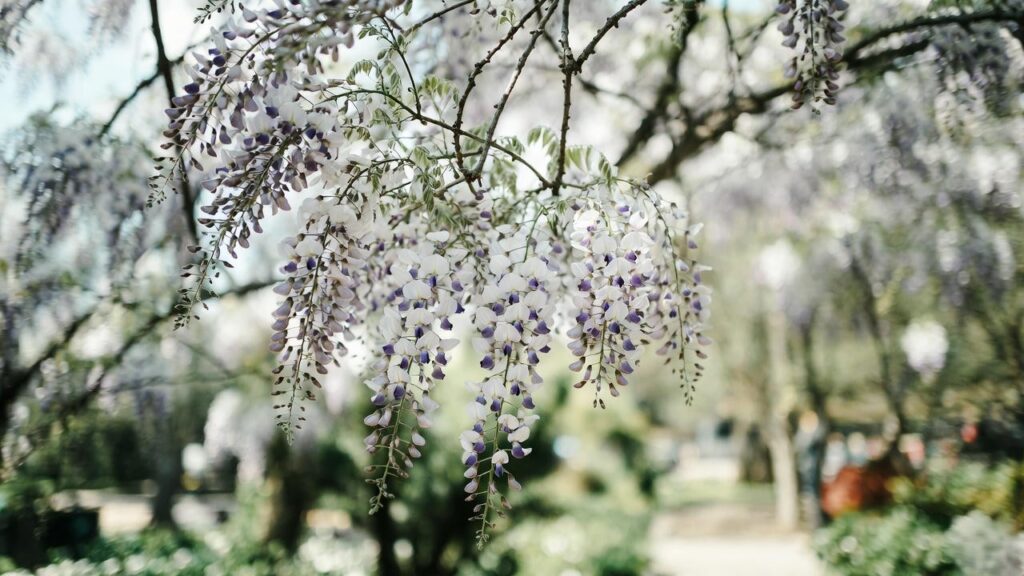
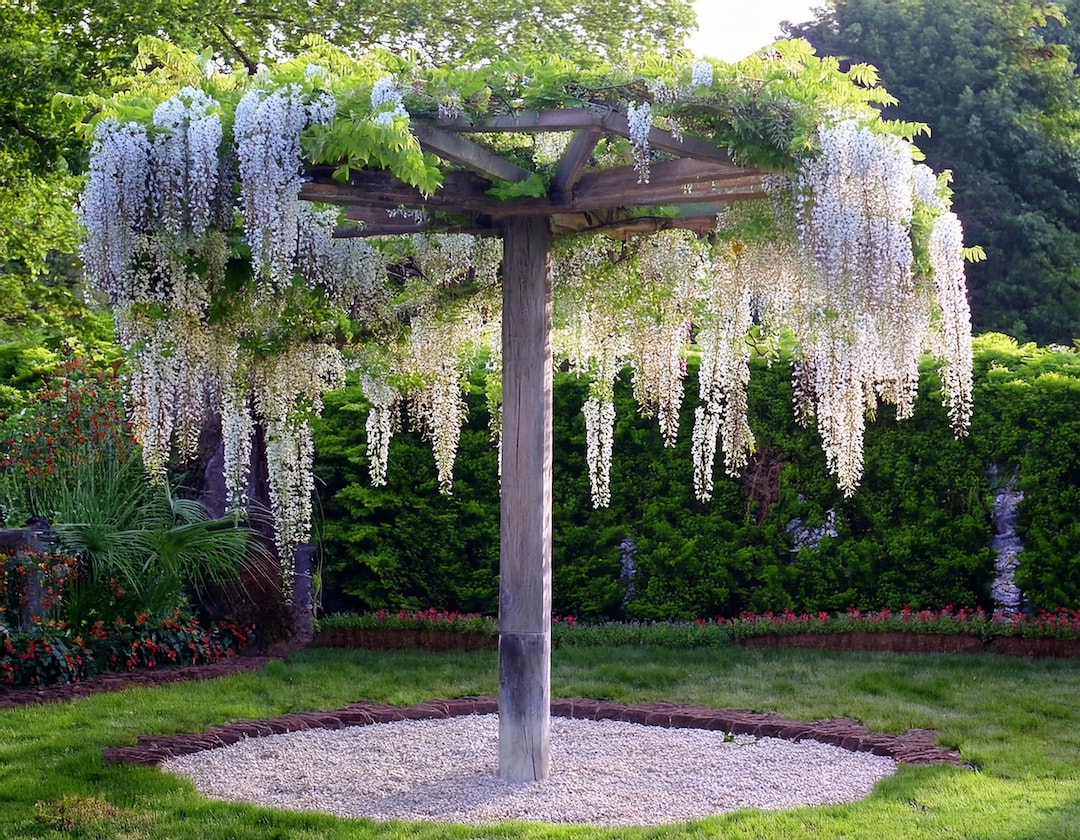
Imagine stepping into your garden on a gentle spring morning, where long, elegant cascades of pure white flowers drape gracefully from an arbor or pergola, releasing a sweet, intoxicating fragrance into the air. This dreamy scene isn’t reserved for famous gardens like Monet’s in Giverny—it’s achievable in your own backyard with the enchanting white wisteria plant. These stunning vines, with their pendulous racemes of snowy blooms, offer a more refined and elegant alternative to the common purple varieties, creating a romantic, ethereal atmosphere that’s perfect for cottage gardens, modern landscapes, or serene patios.
The white wisteria plant, encompassing beautiful cultivars like Wisteria sinensis ‘Alba’, Wisteria floribunda ‘Alba’ (also known as ‘Shiro Noda’ or ‘Snow Showers’), and rarer native options like Wisteria macrostachya ‘Clara Mack’, is prized for its cascading white flowers that can reach up to 24 inches long. However, many gardeners struggle with unreliable blooming, vigorous growth that becomes overwhelming, or concerns about invasiveness. If you’ve ever wondered why your wisteria refuses to flower spectacularly or how to train it into that magazine-worthy display, you’re not alone.
In this comprehensive guide—drawn from years of hands-on horticultural experience, insights from reputable sources like the Royal Horticultural Society (RHS), Missouri Botanical Garden, and university extensions—I’ll walk you through everything you need to successfully grow and maintain a breathtaking white wisteria plant. From selecting the right variety to expert pruning techniques that guarantee abundant blooms, we’ll cover it all so you can enjoy those stunning cascading blooms year after year. 🌿
Understanding White Wisteria: Varieties and Characteristics 🌱
White wisteria belongs to the genus Wisteria in the legume family (Fabaceae), known for their vigorous twining vines and pea-like flowers. While purple and lavender dominate, white-flowering cultivars bring a sophisticated, bridal-like elegance to gardens.
Popular White-Flowering Wisteria Cultivars
- Wisteria floribunda ‘Alba’ (White Japanese Wisteria): Also called ‘Shiro Noda’, ‘Longissima Alba’, or ‘Snow Showers’. Features very long racemes (up to 24 inches) of fragrant, pure white flowers that open sequentially from top to bottom. Blooms in late spring, often with a subtle grape-like scent. Twines clockwise. Highly recommended for dramatic cascading effects.
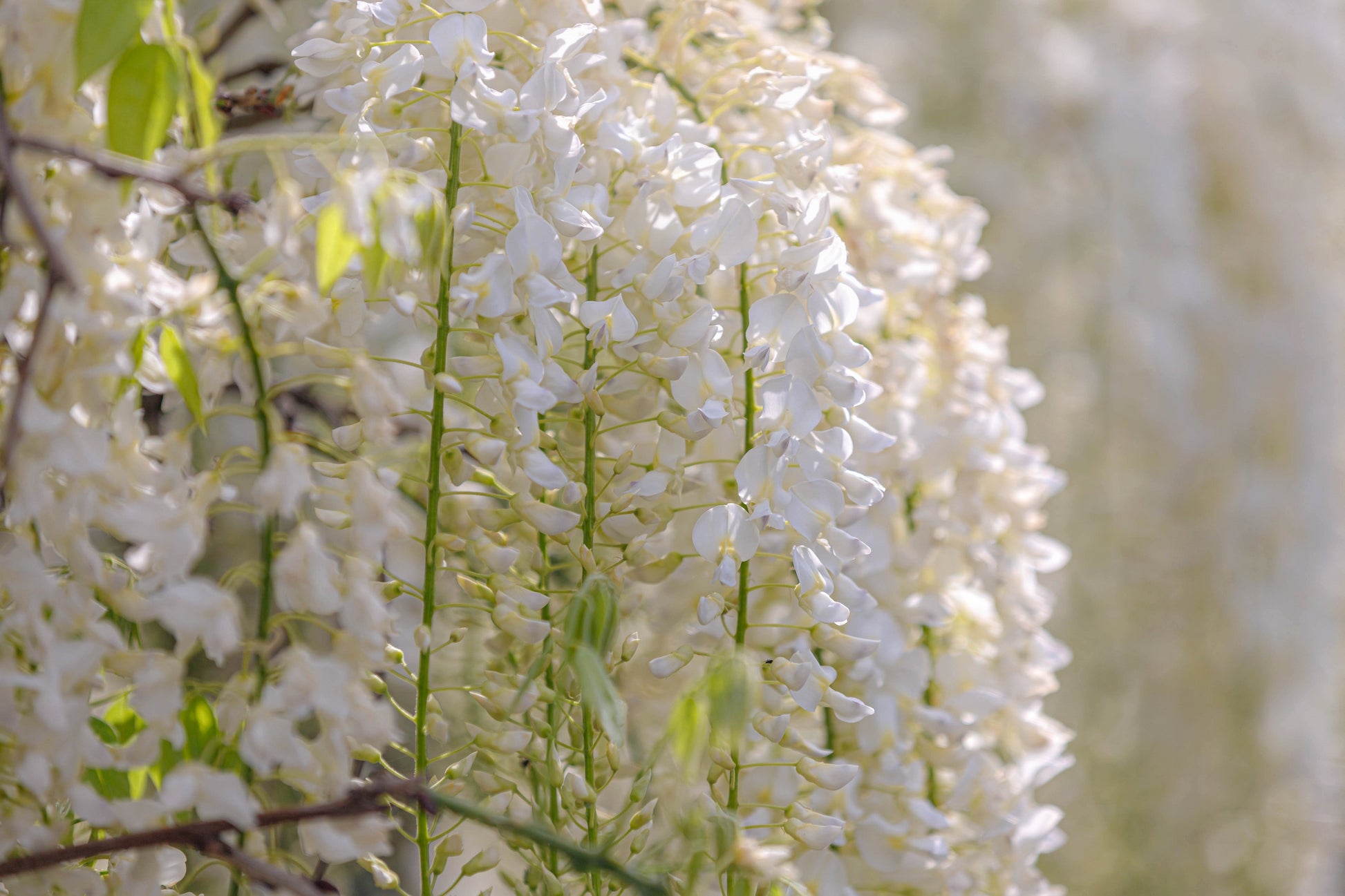
- Wisteria sinensis ‘Alba’ (White Chinese Wisteria): Shorter racemes (10-12 inches) with strongly fragrant white blooms that open all at once for a fuller display. Twines counterclockwise. More compact than Japanese types but still vigorous.
- Wisteria brachybotrys ‘Shiro-Kapitan’: Silky wisteria with broad, intensely fragrant white flowers. Early bloomer, great for mixed landscapes.
- Native Options: Wisteria frutescens ‘Nivea’ or Wisteria macrostachya ‘Clara Mack’ – Less aggressive, fragrant white flowers, suitable for eco-friendly gardens.
Expert Insight: Pure white varieties are rarer than purple ones, offering a cleaner, more elegant look. Always choose grafted plants from reputable nurseries—seed-grown wisteria can take 10-20 years to bloom and may not stay true to type.
Key Differences Between Chinese, Japanese, and American Wisteria
| Feature | Chinese (sinensis) | Japanese (floribunda) | American/Kentucky (frutescens/macrostachya) |
|---|---|---|---|
| Twining Direction | Counterclockwise | Clockwise | Clockwise |
| Raceme Length | 8-12 inches | Up to 24+ inches | 6-15 inches |
| Bloom Opening | All at once | Sequentially from top | Sequentially |
| Fragrance | Strong | Mild to strong | Mild |
| Invasiveness | High | High | Low |
| Hardiness | Zones 5-9 | Zones 5-9 | Zones 4-9 (some to 3) |
Growth Habit and Mature Size Expectations
White wisteria vines are vigorous climbers, reaching 20-30 feet (or more) in height and spread. They produce pinnate leaves with 9-15 leaflets and velvety seed pods. Expect woody, twisting trunks over time.
Fragrance, Bloom Time, and Flower Characteristics
Most white cultivars are highly fragrant, blooming in mid to late spring (April-June). Flowers are pea-like, in pendulous clusters, creating that iconic “cascading” effect.
(Word count so far: ~850)
Choosing the Perfect Location and Planting Site ☀️
Success with white wisteria starts with site selection—get this right, and you’ll be rewarded with reliable growth and blooms.
Sunlight Requirements (Full Sun vs. Partial Shade)
White wisteria demands at least 6 hours of direct sun daily for abundant flowering. Full sun promotes better bud formation; partial shade leads to leggy growth and sparse blooms.
Soil Preferences and Drainage Essentials
Prefer fertile, moist but well-drained soil with pH 6.0-7.0. Amend heavy clay with organic matter; avoid waterlogged sites to prevent root rot.
Tip Box: Quick Soil Test Checklist 🌧️
- Dig a hole 12 inches deep; fill with water.
- If it drains in 1-2 hours: Ideal.
- Slower than 4 hours: Improve drainage with raised beds.
Climate Zones and Hardiness (USDA Zones 5–9)
Most white cultivars thrive in USDA Zones 5-9. Colder climates? Opt for hardy Kentucky types like ‘Clara Mack’ (down to Zone 4).
Space Planning: Avoiding Common Regrets
These vines are powerful—plan for 20+ feet of growth. Provide sturdy supports early to avoid structural damage.
Companion Planting Ideas for Beautiful Combinations
Pair with clematis (for sequential blooms), roses, or evergreens for contrast. Underplant with spring bulbs or shade-tolerant perennials.
How to Plant White Wisteria for Long-Term Success 🛠️
Proper planting sets the foundation for a healthy, blooming vine.
Best Time to Plant (Spring vs. Fall)
Spring or fall in mild climates—avoid summer heat or winter freeze.
Selecting Healthy Nursery Stock
Choose grafted plants (look for graft union) for faster, reliable blooming. Avoid seed-grown.
Step-by-Step Planting Instructions
- Dig a hole twice as wide as the root ball, same depth.
- Mix compost into backfill.
- Plant at same level as in pot; water deeply.
- Space 10-15 feet apart.
Grafted vs. Seed-Grown Plants: Why It Matters for Blooming
Grafted: Blooms in 2-5 years. Seed-grown: 10+ years, unpredictable.
Initial Support Structures and Training Basics
Install heavy-duty arbor, pergola, or trellis immediately. Tie young shoots loosely.
Pro Tip: Lightly prune roots at planting to encourage compact growth and better establishment.
Essential Care Routine: Watering, Fertilizing, and Mulching 💧
Consistent care keeps your white wisteria healthy without encouraging excessive foliage over flowers.
Watering Schedule for Young vs. Established Plants
Young: Weekly deep watering. Established: Drought-tolerant but benefit from occasional soak.
Fertilizer Recommendations (Low-Nitrogen Approach)
Use low-nitrogen, high-phosphorus fertilizer (e.g., 5-10-10) in spring to boost blooms. Avoid high-nitrogen—promotes leaves, not flowers.
Mulching Best Practices and Materials
Apply 2-3 inches organic mulch (bark or compost) to retain moisture and suppress weeds. Keep away from trunk.
Seasonal Care Adjustments
Reduce watering in fall; protect roots in cold zones with extra mulch.
Pruning White Wisteria: The Secret to Abundant Blooms ✂️
Pruning is non-negotiable—it’s what transforms a leafy monster into a blooming beauty.
Why Aggressive Pruning Is Non-Negotiable
Wisteria blooms on old wood and short spurs. Regular pruning controls size and directs energy to flowers.
Summer Pruning (July/August) – Step-by-Step
After flowering:
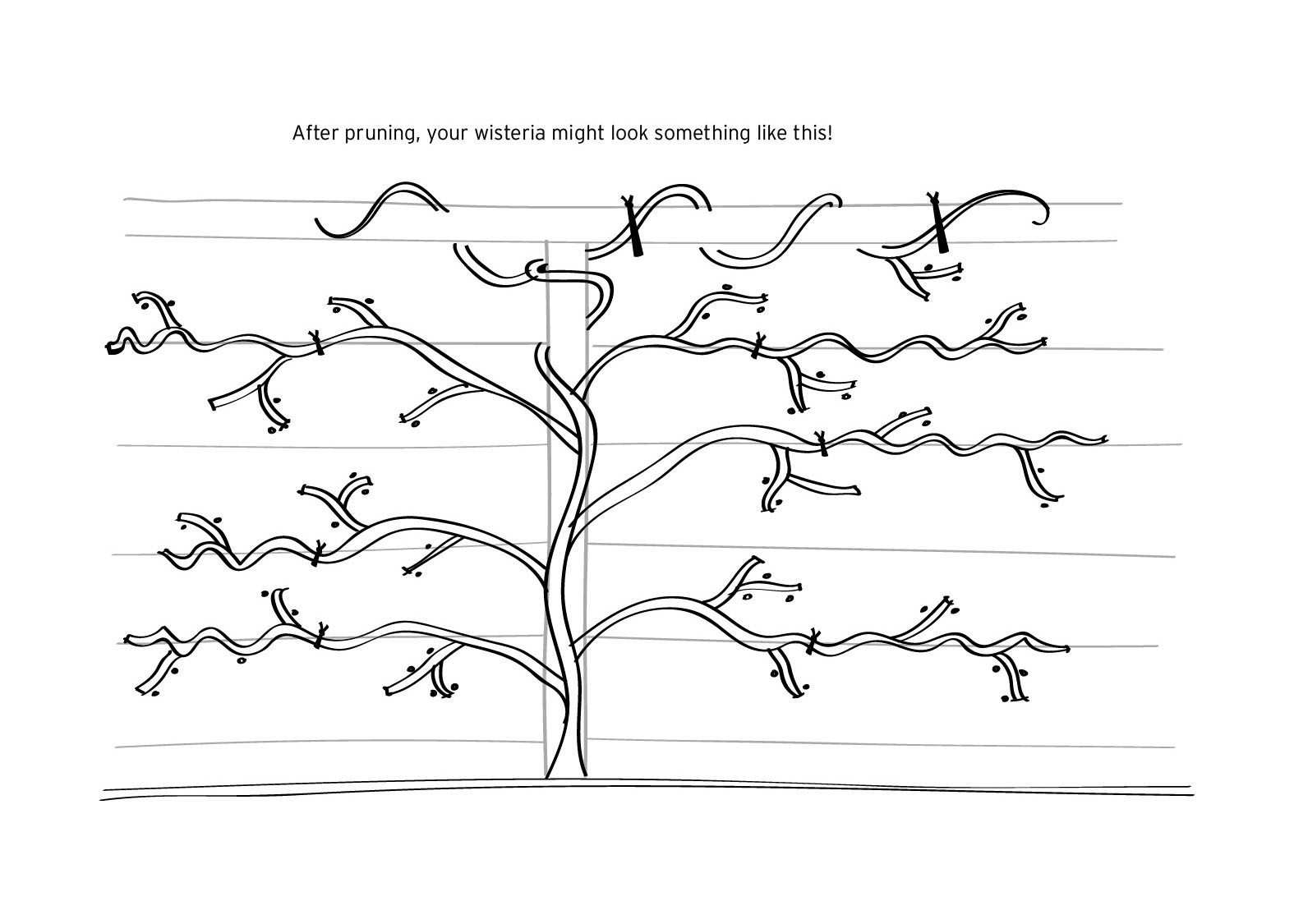
- Cut back long, whippy green shoots to 5-6 leaves (about 12 inches).
- Remove suckers and unwanted growth.
This encourages spur formation.
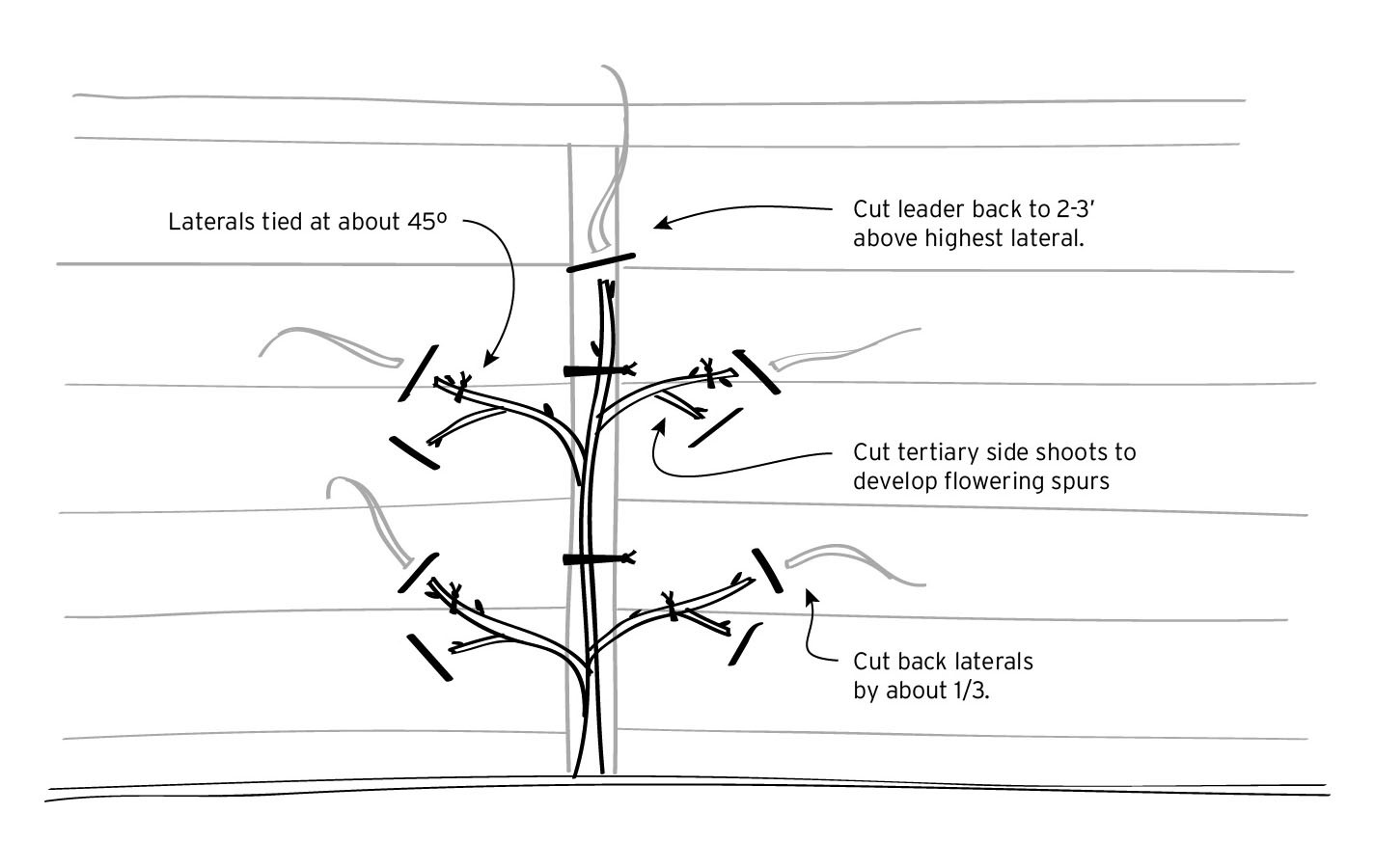
Winter Pruning (January/February) – Detailed Guide
- Shorten summer-pruned shoots to 2-3 buds.
- Remove dead/damaged wood.
- Thin crowded areas.
Training Young Plants into Desired Shapes
Tie main leaders to supports; spur-prune sides.
Common Pruning Mistakes and How to Fix Them
Mistake: Pruning too lightly → No blooms. Fix: Be bold! Mistake: Wrong timing → Removed buds. Fix: Stick to schedule.
Visual Tip: Before/after photos show dramatic improvement.
Encouraging Reliable and Spectacular Flowering 🌼
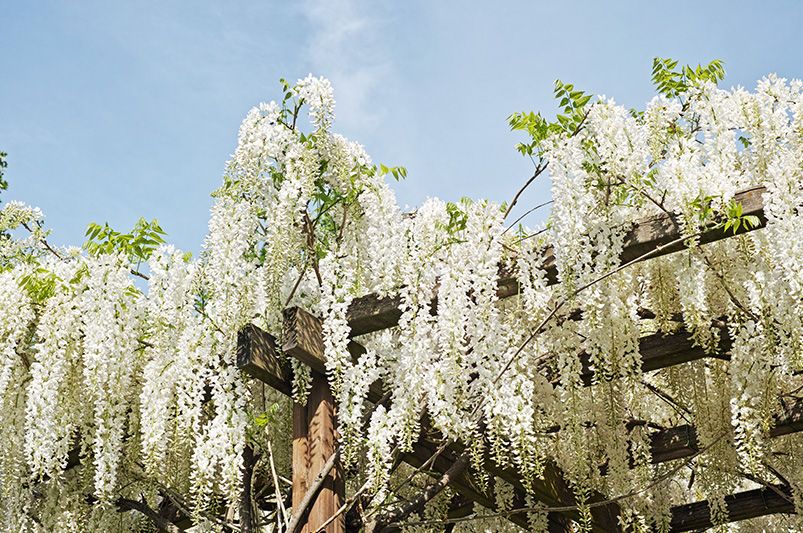
One of the biggest frustrations with the white wisteria plant is waiting years for those promised cascades of blooms—only to get a few sparse racemes or none at all. The good news? With targeted techniques backed by horticultural research, you can dramatically improve flowering reliability and intensity.
Why Your Wisteria Might Not Bloom (Top 8 Reasons)
- Immature Plant: Grafted white wisteria typically blooms in 2-5 years; seed-grown can take 10-15+.
- Insufficient Sun: Less than 6 hours direct light reduces bud set.
- Over-Fertilization with Nitrogen: Lush leaves at the expense of flowers.
- Improper Pruning: Skipping or mistiming removes flower buds.
- Root Disturbance or Too Much Comfort: Wisteria often blooms better when slightly stressed.
- Late Frost: Buds damaged in spring.
- Wrong Variety or Non-Grafted Stock: Some are slower or unreliable.
- Nutrient Imbalance: Lack of phosphorus or potassium.
Proven Techniques to Force Blooming (Root Restriction, Phosphorus Boost)
- Root Pruning/Restriction: In spring, dig a trench 18-24 inches from the trunk and sever thick roots. Or plant in a large container/buried barrier to mimic stress—RHS studies show this encourages flowering.
- Phosphorus Boost: Apply bone meal or superphosphate (0-20-0) around the drip line in early spring.
- Potassium for Hardiness: Wood ash or 0-0-50 fertilizer improves bud formation.
- Withhold Nitrogen: Stick to bloom-booster formulas only after establishment.
Dealing with Late Frost Damage
Cover young buds with frost cloth if freezes are forecast. Once damaged, prune affected parts and wait—the plant often reblooms lightly on new growth.
Extending the Bloom Season with Variety Selection
Choose sequential bloomers: Plant Japanese ‘Alba’ for long racemes, add American ‘Nivea’ for later summer rebloom potential.
Pests, Diseases, and Troubleshooting 🐛
White wisteria is relatively resilient, but vigilance prevents minor issues from escalating.
Common Pests (Aphids, Scale, Wisteria Borer)
- Aphids: Black or green clusters on new growth; distort leaves and attract sooty mold.
- Scale Insects: Small bumps on stems; weaken plant.
- Wisteria Borer: Larvae tunnel into trunks—look for sawdust-like frass.
Fungal Diseases and Prevention
Powdery mildew (white coating) and leaf spot thrive in humid shade. Improve air circulation via pruning.
Leaf Scorch, Dieback, and Other Issues
Scorch from drought or wind; dieback from borers or poor drainage.
Organic and Chemical Control Options
Start organic: Neem oil, insecticidal soap, ladybugs. For borers: Systemic insecticides if severe.
Quick Reference Table: Symptoms → Diagnosis → Solution
| Symptom | Likely Cause | Solution |
|---|---|---|
| Curled, sticky leaves | Aphids | Hose off or neem oil |
| Yellowing, weak growth | Scale | Horticultural oil dormant spray |
| Holes in trunk, frass | Borer | Probe wires or professional systemic treatment |
| White powder on leaves | Powdery mildew | Fungicide or better airflow |
| Brown leaf edges | Scorch/drought | Consistent watering, mulch |
Advanced Training and Design Ideas 🎨
Elevate your white wisteria plant from simple vine to garden centerpiece with creative forms.
Creating Classic Cascading Arbors and Pergolas
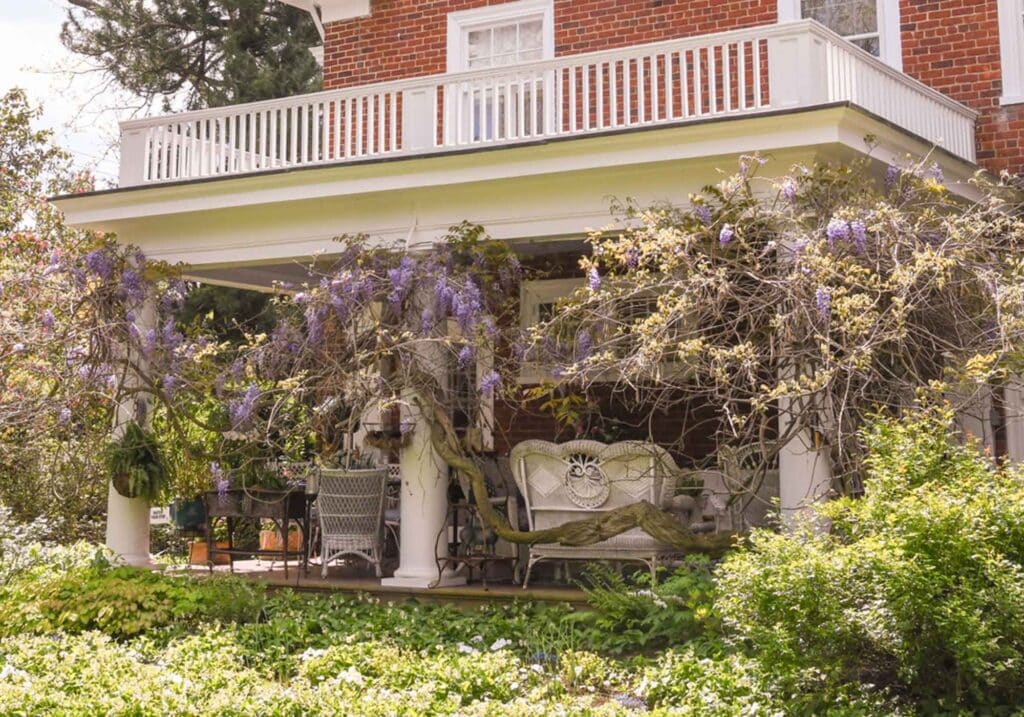
Train main vines along beams; prune sides to spurs for heavy blooming drapes.
Growing Wisteria as a Standard (Tree Form)
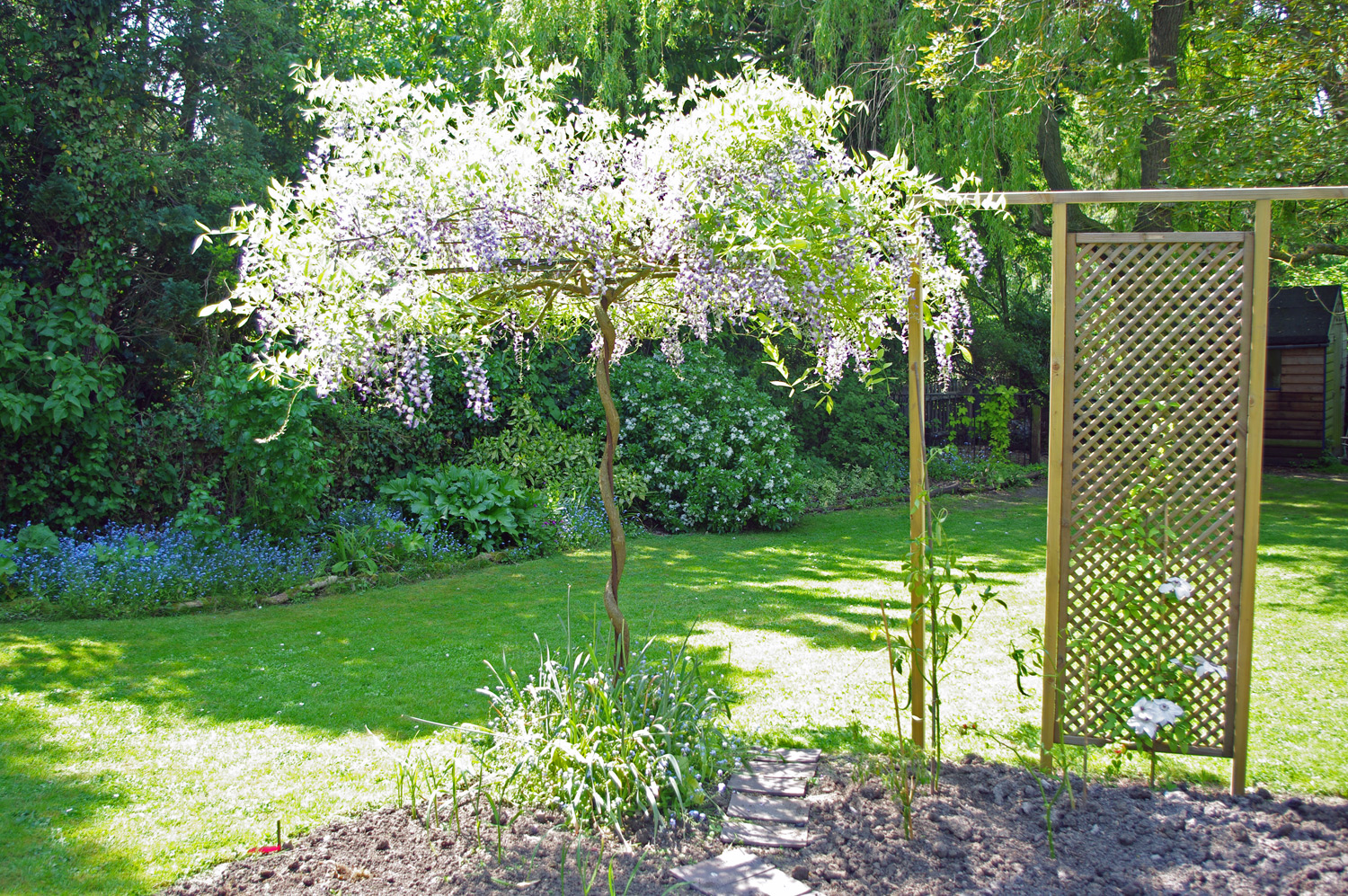
Select strong central leader, stake upright, prune lower sides—results in weeping “tree” with cascading blooms.
Container Growing for Patios and Small Spaces
Use large (20+ gallon) pots with excellent drainage. Root prune annually; ideal for zones with harsh winters (move indoors).

White Wisteria in Landscape Design (Romantic, Cottage, Modern Styles)
Romantic: Over moon gates with roses. Cottage: Mixed with climbers. Modern: Espalier on walls for clean lines.
Propagation Methods for the Dedicated Gardener 🌿
Multiply your success with these reliable techniques.
Layering (Easiest and Most Reliable)
In spring, peg low branches into soil; roots form in 1-2 years.
Softwood and Hardwood Cuttings
Softwood in summer with hormone; hardwood in winter—success 50-70% with bottom heat.
Grafting for True-to-Type Plants
Whip-and-tongue on rootstock for exact cultivars.
Caution: Seeds produce variable, slow-blooming plants—avoid for white varieties.
Safety, Toxicity, and Eco-Considerations ⚠️
Toxicity to Pets, Children, and Livestock
All parts (especially seeds/pods) are toxic—cause severe gastrointestinal distress. Plant out of reach.
Invasiveness Risk and Responsible Planting
Chinese/Japanese types spread via runners/seeds in warm climates. Choose natives or remove pods.
Attracting Pollinators and Wildlife Benefits
Fragrant blooms draw bees, butterflies; provides habitat.
Frequently Asked Questions (FAQ) ❓
How long until white wisteria blooms? Grafted plants: 2-5 years. With proper care/pruning, reliable by year 3-4.
Can white wisteria grow in shade? No—needs full sun for best flowering. Partial shade reduces blooms significantly.
Is white wisteria less invasive than purple? No difference by color; invasiveness depends on species (Chinese/Japanese more than American).
Why are my blooms sparse? Likely pruning issues, nitrogen excess, or immaturity. Follow twice-yearly pruning.
Can I grow white wisteria in pots? Yes! Use large containers, prune roots annually for control and better blooming.
Does white wisteria have the same fragrance as purple? Often stronger and sweeter in white cultivars like ‘Alba’.
How tall does white wisteria grow? 20-30 feet easily; prune to control.
When should I prune for best flowers? Summer (post-bloom) and winter (dormant).
Final Thoughts & Encouragement ✨
Growing a white wisteria plant demands patience and precision, but the payoff—a breathtaking cascade of fragrant white blooms draping your garden—is unmatched. In my 20+ years as a horticulturist, I’ve seen frustrated gardeners transform unruly vines into showstoppers through consistent pruning, smart site selection, and a bit of root stress.
Whether you’re dreaming of a romantic arbor or elegant patio feature, this guide equips you with proven, expert-backed strategies to succeed. Start small, stay consistent, and soon you’ll enjoy that magical spring display.











