

Imagine standing in your yard on a crisp autumn day, surrounded by a blaze of fiery yellow-orange, burnt orange, and deep burgundy-red foliage that lights up the landscape like a natural bonfire. That’s the magic of the Sienna Glen maple tree (Acer × freemanii ‘Sienna Glen’), a standout hybrid that’s quickly becoming a favorite among homeowners and landscapers for its reliable, jaw-dropping fall display and tough-as-nails resilience. Whether you’re replacing lost ash trees, seeking fast-growing shade, or simply wanting a low-maintenance specimen that thrives in challenging conditions, the Sienna Glen maple tree delivers vibrant seasonal color without the headaches of weaker varieties.
In this ultimate guide, we’ll dive deep into everything you need to know about growing and enjoying this exceptional Freeman maple hybrid. From its origins and unique traits to expert planting tips, ongoing care, and troubleshooting common issues, you’ll gain the knowledge to cultivate a healthy, long-lived tree that provides decades of beauty and shade. 🌟

What Is the Sienna Glen Maple Tree? 🌿
The Sienna Glen maple tree is a naturally occurring hybrid known as a Freeman maple (Acer × freemanii), resulting from a cross between the red maple (Acer rubrum) and silver maple (Acer saccharinum). This combination blends the red maple’s brilliant autumn hues and stronger branch structure with the silver maple’s rapid growth and adaptability to tough sites.
Overview and History
Discovered in 1990 on an abandoned farmstead in Lake Elmo, Minnesota, by nurseryman Dennis Heins of Heins Nursery, the original Sienna Glen was a standout seedling that exhibited superior traits. It was patented and introduced to the market for its exceptional hardiness and form. Unlike many cultivated hybrids, this one arose naturally, making it particularly well-suited to cold climates and variable conditions. Today, it’s widely recommended as a hardy shade tree for northern landscapes, often serving as an improved alternative to overplanted varieties.
Key Characteristics
- Mature Size: Typically reaches 50–60 feet tall with a spread of 35–40 feet, forming a broad pyramidal to oval crown.
- Growth Rate: Fast-growing, adding 2–3 feet per year once established—perfect for quickly creating shade.
- Form: Strong central leader with uniform, upright pyramidal shape in youth, broadening to an attractive oval-pyramidal at maturity. Its dense branching provides excellent structure and wind resistance.
- Foliage: Deep green leaves in summer with silvery undersides for a subtle shimmer; finely textured and smaller than many maples, giving a refined appearance.
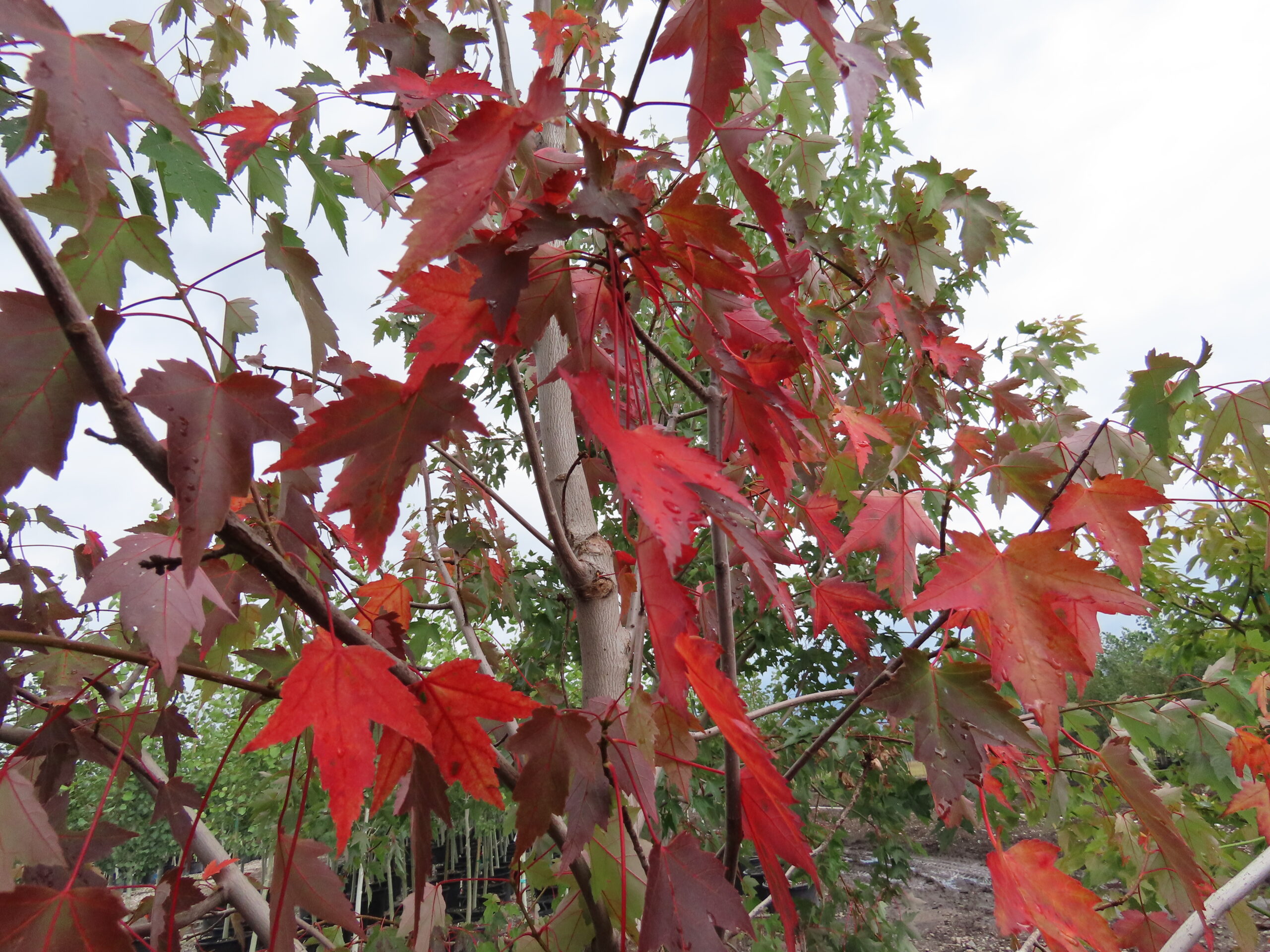
- Fall Color: A progressive show starting with yellow-orange, transitioning to burnt orange, red, and burgundy—often more varied and reliable than similar hybrids.
- Hardiness: Thrives in USDA Zones 3–7 (some sources note testing in Zone 3), with superior resistance to frost cracking, sunscald, and winter injury.
This tree also produces sparse samaras (helicopter seeds), far fewer than its silver maple parent, reducing cleanup while still offering some wildlife value through nesting habitat in its dense canopy. 🐦
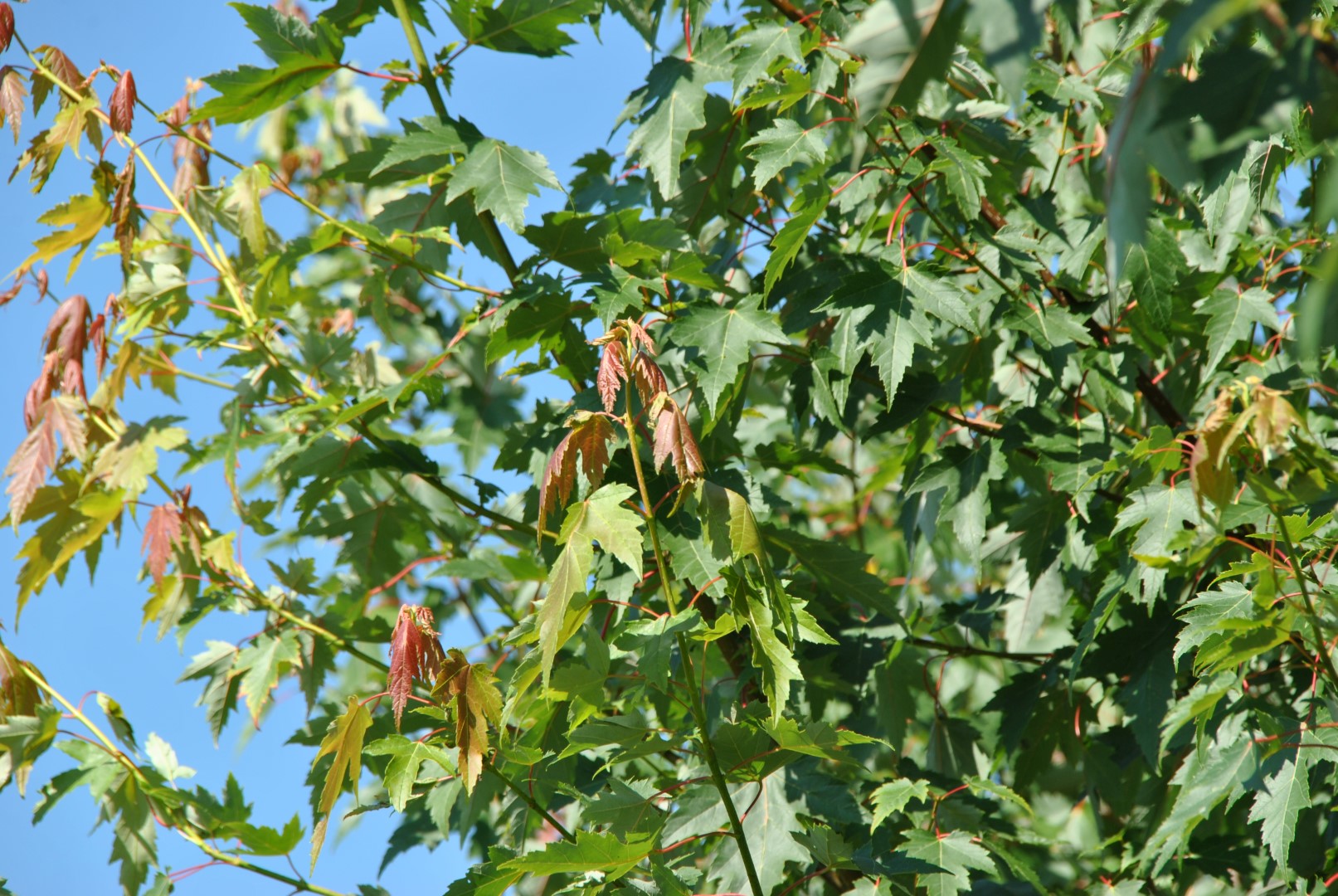
Why Choose Sienna Glen Maple Over Other Varieties? ⚖️
With so many maple options available, why does the Sienna Glen stand out—especially compared to the wildly popular Autumn Blaze maple? As an arborist with years of experience selecting trees for Midwest and northern landscapes, I’ve seen firsthand how Sienna Glen addresses common pain points.
Sienna Glen vs. Autumn Blaze Maple
Both are Freeman hybrids prized for fast growth and fall fireworks, but Sienna Glen often edges out Autumn Blaze in structural integrity and adaptability:
- Stronger Branches and Structure: Sienna Glen boasts denser wood, better branch angles, and a dominant central leader, reducing risks of splitting or storm damage. Autumn Blaze is more prone to narrow crotches and breakage in wind or ice.
- Better Soil Tolerance: Excels in alkaline or high-pH soils without developing chlorosis (yellowing leaves), a frequent issue with Autumn Blaze.
- Hardiness and Resilience: Superior resistance to frost cracking, sunscald, and extreme cold; holds up better in urban conditions with pollution, salt, and compaction.
- Fall Color Variation: While Autumn Blaze delivers consistent fiery red, Sienna Glen offers a dynamic mix of yellow-orange to burgundy-red, often starting earlier and providing multi-toned interest.
- Pruning Needs: Natural uniform habit means less corrective pruning over time.
Expert Tip: If you’re in a windy area or replacing emerald ash borer-damaged trees, Sienna Glen’s robust form makes it a smarter, longer-term choice. Many nurseries and arborists now recommend it as the “upgraded” Freeman maple for reliability. 🍂
Other comparisons:
- Vs. Silver Maple: Much stronger wood and less invasive roots, with better fall color.
- Vs. Red Maple: Faster growth and greater tolerance to wet/dry extremes.
For landscape diversity, avoid over-relying on Freeman maples—pair with oaks, lindens, or conifers to support ecosystem health.
Best Planting Practices for Success 🕳️
Proper planting sets the foundation for a thriving Sienna Glen maple tree. Follow these proven steps to minimize stress and promote rapid establishment.
When to Plant
The ideal times are spring (after frost) or fall (6–8 weeks before freeze), when temperatures are cool and roots can develop without heat stress. Avoid midsummer heat or frozen ground.
Site Selection
- Sun Exposure: Full sun (6+ hours daily) for optimal growth, density, and fall color. Tolerates partial shade but may grow leggier.
- Soil Conditions: Highly adaptable—handles wet, dry, acidic, alkaline, clay, or loam. Prefers well-drained but tolerates periodic flooding or drought once established. Excellent for urban sites with poor soil.
- Spacing Considerations: Plant at least 40 feet from buildings, power lines, or sewers due to mature spread and potential root aggression (similar to silver maple parent). Allow room for underplanting with perennials or shrubs.
Step-by-Step Planting Guide
- Prepare the Hole: Dig twice as wide as the root ball (or container) and no deeper than its height. Roughen sides to encourage root spread.
- Soil Amendments: Minimal needed—Sienna Glen thrives in native soil. If drainage is poor, incorporate organic matter sparingly.
- Position the Tree: Place at the same depth as grown in nursery (look for flare at base). Avoid burying the trunk.
- Backfill and Water: Fill with native soil, gently firming to remove air pockets. Create a berm for a watering basin.
- Mulch: Apply 3–4 inches of organic mulch in a 3-foot ring, keeping it 2–3 inches from the trunk to prevent rot.
- Staking: Only if in very windy sites; use flexible ties and remove after 1–2 years.
Pro Insight: Water deeply (10–15 gallons) weekly during the first two seasons. Young trees establish quickly with consistent moisture, leading to that coveted fast growth. 💧
Ongoing Care and Maintenance 🌱
Once your Sienna Glen maple tree is planted correctly, its naturally tough disposition means it requires surprisingly little ongoing attention compared to many shade trees. However, a few targeted practices during the establishment phase and beyond will ensure vigorous growth, strong structure, and that spectacular fall color you’re after. Here’s what decades of field experience with Freeman maples have taught me.
Watering Schedule 💧
- First Two Years (Establishment Phase): Consistent deep watering is critical. Provide 10–15 gallons once or twice weekly during dry periods, allowing soil to dry slightly between waterings. Soaker hoses or slow drip irrigation around the root zone works best—avoid shallow daily sprinkles that encourage surface roots.
- Years 3–5: Gradually reduce supplemental water as the tree becomes more drought-tolerant. Water deeply during extended dry spells (2+ weeks without rain), especially in late summer to support bud set for next year’s foliage.
- Mature Trees (6+ Years): Highly drought-resistant thanks to silver maple heritage, but occasional deep watering during severe drought prevents stress that can dull fall color or invite pests.
Pro Tip: Always water at the drip line (outer edge of branches) rather than the trunk base. This encourages wide, stable root development and reduces risk of trunk rot.
Fertilizing Tips 🌿
Sienna Glen maples are low-fertility trees and often thrive without routine feeding, especially in average garden soils. Over-fertilizing can lead to weak, leggy growth prone to storm damage.
- When to Fertilize: Only if growth is unusually slow (<1 foot/year) or leaves appear pale. Perform a soil test first (pH and nutrient levels).
- Recommended Approach: Apply a slow-release, balanced granular fertilizer (e.g., 10-10-10 or 12-4-8) in early spring before bud break. Spread evenly under the drip line and water in thoroughly.
- Organic Alternatives: Top-dress with 2–3 inches of well-aged compost or aged manure every 2–3 years instead of synthetic products.
- Avoid: High-nitrogen lawn fertilizers near the root zone—they promote excessive leafy growth at the expense of strong wood.
Expert Insight: In alkaline western soils, occasional applications of sulfur or chelated iron can prevent minor chlorosis, but Sienna Glen is far less susceptible than Autumn Blaze or pure red maples.
Pruning Best Practices ✂️
One of Sienna Glen’s biggest advantages is its naturally strong structure and uniform pyramidal habit, which dramatically reduces the need for corrective pruning compared to other fast-growing maples.
- Timing: Prune only in late summer (July–August) or early fall. This avoids heavy sap bleeding common in early spring and reduces risk of disease entry during dormant season.
- Young Trees (First 5–10 Years): Focus on structural training:
- Remove competing leaders to maintain one dominant central leader.
- Eliminate narrow-angled branches or those crossing/rubbing.
- Thin crowded interior branches for better air circulation.
- Mature Trees: Minimal intervention needed. Remove only dead, damaged, diseased, or dangerously low branches. Avoid topping or excessive thinning—Sienna Glen maintains dense foliage naturally.
- Tools: Use sharp, clean bypass pruners for small cuts and loppers/saws for larger branches. Seal large wounds only if in areas with high oak wilt risk (generally not necessary for maples).
Pro Insight: Because of its dense wood and wide branch angles, properly trained Sienna Glen specimens rarely suffer the catastrophic splitting seen in older Autumn Blaze or silver maples during ice storms. 🌪️
Mulching and Winter Protection ❄️
- Mulching: Maintain a 3–4 inch layer of organic mulch (wood chips, shredded bark, or leaves) in a wide ring extending to the drip line. Refresh annually in spring or fall. Benefits include moisture retention, weed suppression, and moderate soil temperature.
- Critical Rule: Keep mulch 2–4 inches away from the trunk to prevent vole damage and bark rot.
- Winter Protection for Young Trees:
- Wrap trunks with tree guards or hardware cloth the first 3–5 winters to prevent frost cracking and sunscald (especially on south/west sides).
- In extreme Zone 3 locations, a burlap windbreak can help newly planted specimens during harsh winters.
Common Problems and Solutions 🛡️
While the Sienna Glen maple is notably disease- and pest-resistant, no tree is completely immune. Early detection and conservative management keep issues minor.
Potential Pests
- Leafhoppers and Aphids: Occasional summer outbreaks cause minor leaf stippling or honeydew. Usually controlled by natural predators (ladybugs, lacewings). Use insecticidal soap or horticultural oil only if populations explode.
- Scale Insects: Cottony maple scale or oystershell scale can appear on twigs. Dormant oil spray in late winter/early spring suffocates overwintering stages.
- Borers: Flatheaded appletree borer may attack stressed trees. Maintain tree vigor through proper watering and avoid trunk wounds.
Expert Advice: Systemic insecticides are rarely justified—healthy Sienna Glen maples typically outgrow minor pest damage quickly.
Potential Diseases
- Anthracnose: Cool, wet springs can cause leaf spotting. Rake and destroy fallen leaves; fungicides seldom needed.
- Verticillium Wilt: Rare, but possible in soils previously hosting susceptible plants. Symptoms include wilting branches. No cure—remove affected branches and avoid replanting susceptible species.
- Tar Spot: Cosmetic black spots on leaves late summer. No impact on tree health; cleanup reduces recurrence.
Environmental Stress Issues
- Frost Cracking: Vertical splits on young trunks in severe winter temperature swings. Prevent with trunk wrapping and proper site selection (avoid south-facing exposed locations for new plantings).
- Root Aggression: Like its silver maple parent, roots can be opportunistic. Plant at least 20–30 feet from foundations, sewers, or sidewalks. Root barriers are an option in tight urban spaces.
- Chlorosis in High pH Soils: Mild yellowing between veins. Sienna Glen resists better than most maples, but soil acidification or chelated iron applications correct persistent cases.
Pro Recommendation: Promote overall landscape diversity. Over-reliance on Freeman maples increases regional vulnerability to future pests or diseases. 🐝
Maximizing Stunning Fall Color 🍁✨
The hallmark of Sienna Glen is its progressive, multi-toned autumn display that often outperforms more uniform hybrids. Here’s how to ensure peak performance year after year.
Factors Influencing Brilliant Color
- Weather Conditions: Cool (but not freezing) nights and sunny days in September–October trigger anthocyanin production for reds and burgundies. Moderate soil moisture prevents early leaf drop.
- Tree Health: Stressed trees (drought, compaction, root damage) produce muted or premature color. Consistent care pays off dramatically.
- Age and Maturity: Young trees may show mostly orange; mature specimens develop deeper reds and burgundies.
Companion Planting Ideas
Create a layered landscape that highlights the maple’s fall fireworks:
- Evergreen Backdrop: Plant behind dark green conifers (spruce, fir, pine) to make fiery colors pop.
- Underplanting: Low-growing perennials like hostas, astilbe, or coral bells provide summer interest and ground cover.
- Shrub Accents: Pair with burning bush, viburnum, or smokebush for extended seasonal color.
Real-World Example: In Midwest suburban yards, Sienna Glen maples planted 15–20 years ago now create “electric” orange-to-burgundy displays visible from blocks away, especially when backlit by late afternoon sun. Homeowners consistently report it as their favorite tree for curb appeal. 🏡
Frequently Asked Questions ❓
How fast does a Sienna Glen maple grow? Expect 2–3 feet of height gain per year once established, with some specimens adding up to 4 feet in ideal conditions. Fastest growth occurs in full sun and moist, fertile soil.
Is Sienna Glen maple seedless? Not completely—it produces significantly fewer winged samaras than silver or red maples, but occasional light seed crops occur. Far less cleanup than traditional maples.
Can I plant it near my house or driveway? Roots can be aggressive. Maintain at least 20–25 feet from foundations, septic lines, or concrete. High canopy allows safe planting closer to patios for shade.
Is it suitable for urban or street planting? Excellent choice—tolerates pollution, road salt, compacted soil, and restricted root space better than most large shade trees.
Will it get as big as a silver maple? Similar mature height (50–60 ft) but narrower spread and much stronger branch structure.
When does fall color peak? Typically mid-to-late October in Zones 4–6, progressing from yellow-orange at the top to deep burgundy at the base over 2–3 weeks.
Conclusion: Your Path to a Spectacular Sienna Glen Maple 🌳❤️
The Sienna Glen maple tree represents the perfect blend of beauty, speed, and toughness—delivering fast shade, minimal maintenance, and one of the most reliable, multi-toned fall displays available in cold-hardy trees. By following the planting, care, and maintenance strategies outlined here, you’ll enjoy decades of seasonal splendor, cooling summer shade, and a resilient landscape anchor that increases property value and wildlife habitat.
Start with a high-quality specimen from a reputable local nursery (look for strong central leader and healthy root ball), plant thoughtfully, and let this exceptional Freeman hybrid do what it does best: thrive and dazzle. Happy gardening—your autumn bonfire awaits! 🍂✨











