
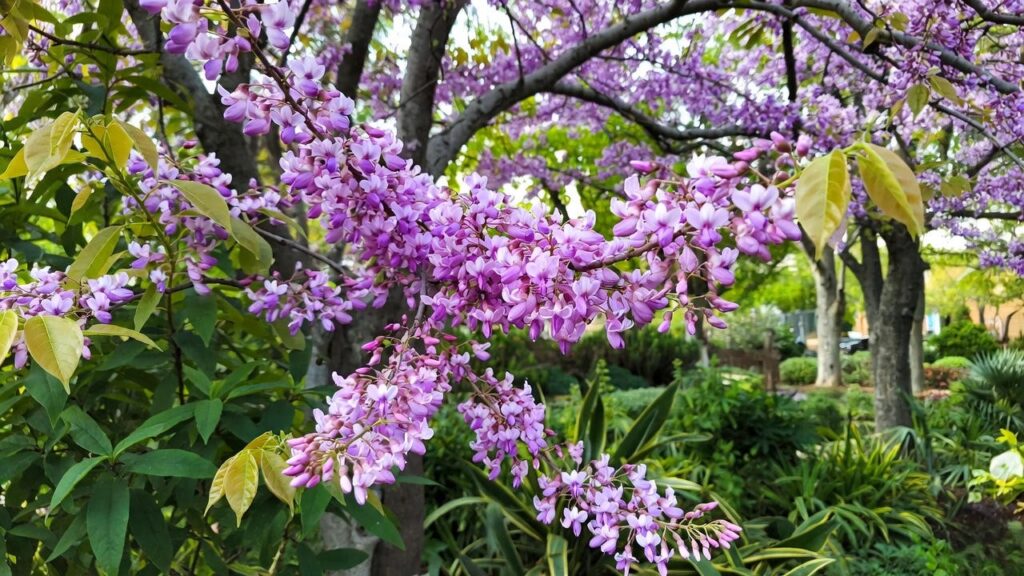
Imagine stepping into your garden and being greeted by a breathtaking canopy of vibrant purple blossoms, turning your outdoor space into a magical paradise 😍. If you’ve ever spotted a tree with purple bloom and wondered what it was or how to grow one yourself, you’re not alone—this is one of the most common questions gardeners ask when seeking to add dramatic color and elegance to their landscapes.
From the iconic Jacaranda’s lavender “purple rain” showers to the delicate heart-shaped leaves of the Eastern Redbud bursting with magenta-pink flowers, purple-flowering trees offer unforgettable seasonal displays that attract pollinators, provide shade, and boost curb appeal. In this comprehensive guide, written by a certified arborist with over 15 years of hands-on experience in ornamental tree care, you’ll discover how to identify popular varieties, select the perfect one for your climate, plant it correctly, and maintain it for abundant, healthy blooms year after year. Whether you’re a beginner dreaming of a low-maintenance focal point or an experienced gardener troubleshooting lackluster flowering, this ultimate resource will equip you with expert insights to create stunning results 🌿.
Top 10 Most Popular Trees with Purple Blooms in 2025 🌟
Purple-flowering trees remain timeless favorites for their rarity and visual impact—purple hues are uncommon in nature, making these specimens true standouts. Here’s an updated list of the top 10 most sought-after varieties in 2025, based on popularity among homeowners, landscapers, and nursery sales. Each offers unique bloom times, sizes, and benefits to suit different gardens.
Jacaranda mimosifolia – The Classic “Purple Rain” Tree 💜
Known for its spectacular lavender-blue trumpet flowers that carpet the ground in spring, the Jacaranda is a fast-growing tropical beauty reaching 25-50 feet tall. Fern-like foliage adds texture year-round. Best in warm climates; iconic in cities like Los Angeles and Pretoria.
Eastern Redbud (Cercis canadensis) – Native Beauty with Heart-Shaped Leaves ❤️
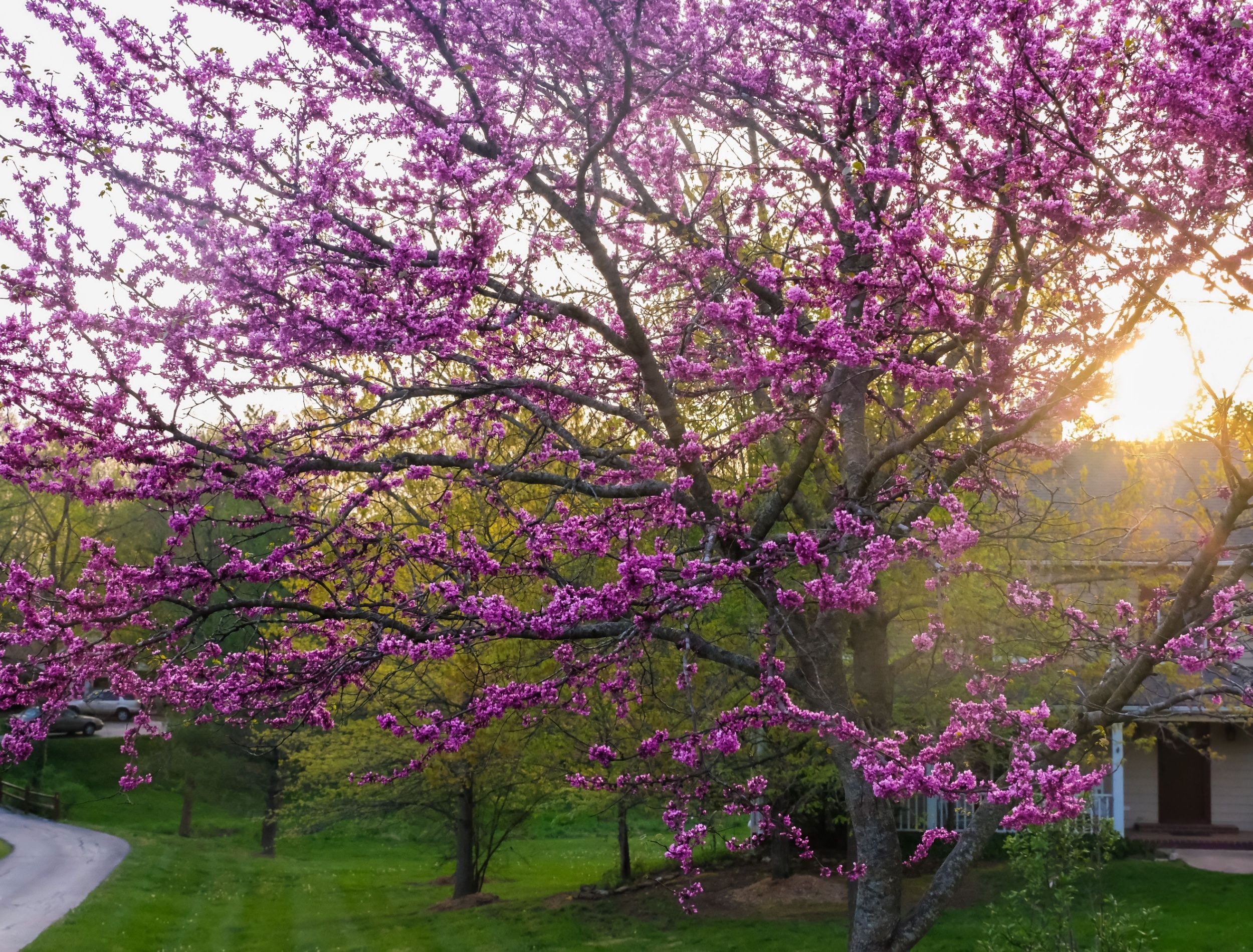
This native North American gem explodes with rose-purple pea-like flowers directly on bare branches in early spring. Grows 20-30 feet with a spreading crown; heart-shaped leaves turn yellow in fall. Excellent for pollinators and wildlife gardens.
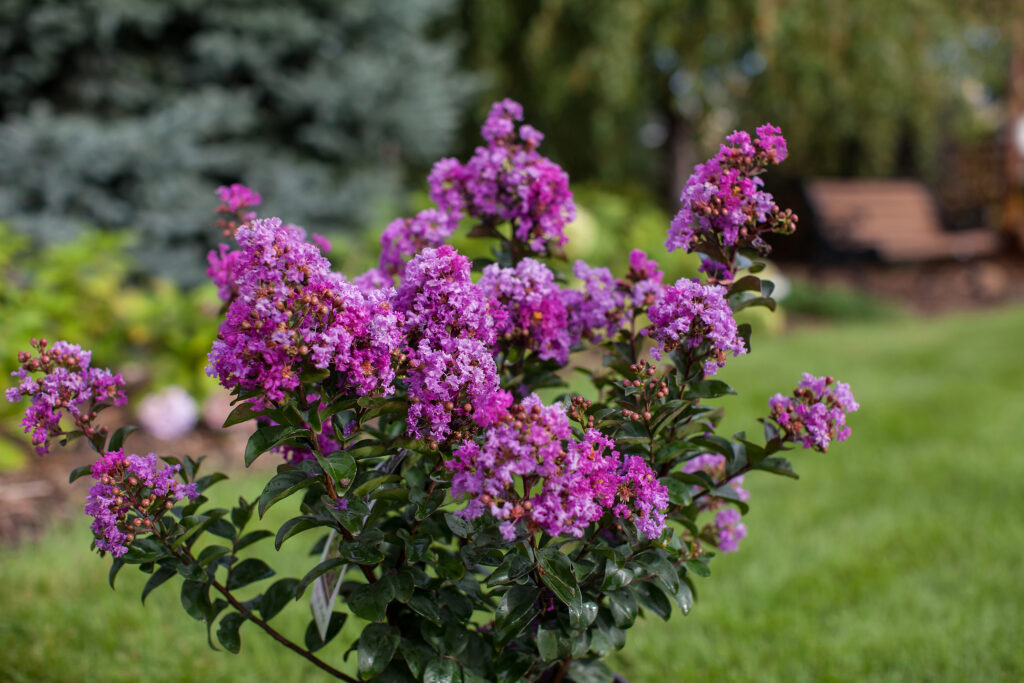
Crape Myrtle (Lagerstroemia indica) – Long-Blooming Summer Showstopper ☀️
Available in stunning purple shades like ‘Catawba’ (deep violet) or ‘Muskogee’ (lavender), these heat-loving trees bloom profusely from summer to fall. Sizes range from dwarf (3-5 feet) to tall (20-30 feet); exfoliating bark adds winter interest.
Purple Robe Locust (Robinia pseudoacacia ‘Purple Robe’) – Fast-Growing Purple Wonder 🌸
Fragrant, pendulous purple flower clusters in spring, followed by thornless growth in this cultivar. Reaches 30-50 feet quickly; nitrogen-fixing roots improve soil. Edible flowers add a bonus for culinary gardeners!
Chaste Tree (Vitex agnus-castus) – Drought-Tolerant Purple Spikes 🐝
Aromatic lavender-purple flower spikes attract bees and butterflies from summer to fall. Grows 10-20 feet as a multi-stemmed tree or large shrub; highly adaptable and medicinal history.
Royal Purple Smoke Tree (Cotinus coggygria ‘Royal Purple’) – Dramatic Foliage + Blooms 💨
Deep burgundy-purple leaves paired with smoky pink-purple “puffs” in summer. Compact at 10-15 feet; stunning fall color shifts to scarlet.
Purple Orchid Tree (Bauhinia variegata) – Tropical Stunner 🌺
Orchid-like purple blooms in winter-spring; grows 20-35 feet in frost-free areas. Butterfly magnet with unique twin-lobed leaves.
Empress Tree (Paulownia tomentosa) – Fastest-Growing Purple Bloomer 🚀
Massive lavender foxglove-like flowers in spring; can grow 15 feet per year to 40-50 feet. Heart-shaped leaves up to 2 feet wide. Note: Can be invasive in some regions—check local guidelines.
Purple Leaf Sand Cherry (Prunus × cistena) – Compact Ornamental 🍒
Pink-purple spring flowers on purple foliage; 6-10 feet tall. Great for small spaces; attracts birds with dark fruit.
Wisteria Tree (Wisteria sinensis or floribunda, trained as standard) – Romantic Cascade 💕
Cascading purple racemes up to 1 foot long; trained into tree form for patios. Fragrant and vigorous—needs strong support.
These varieties dominate searches and sales due to their reliability, beauty, and adaptability to modern landscapes.
How to Identify Your Tree with Purple Bloom in 3 Easy Steps 🔍
Misidentifying a mystery tree is common—many purple bloomers look similar from afar. Follow this expert step-by-step process for accurate ID:
Step 1: Look at Bloom Shape and Season
- Trumpet-shaped panicles in late spring? Likely Jacaranda.
- Pea-like clusters on bare branches in early spring? Eastern Redbud.
- Crinkled crepe-paper petals in summer? Crape Myrtle.
- Spikes or racemes? Chaste Tree or Wisteria.
Step 2: Examine Leaf Shape and Bark
- Fern-like bipinnate leaves: Jacaranda.
- Heart-shaped: Redbud or Empress Tree.
- Opposite, elliptic: Crape Myrtle (smooth, peeling bark is a giveaway).
- Compound with thorns (or thornless in cultivars): Locust.
Step 3: Check Tree Size and Growth Habit
- Tall, umbrella canopy: Jacaranda or Empress.
- Multi-stemmed shrub/tree: Crape Myrtle or Chaste.
- Weeping or rounded: Smoke Tree or trained Wisteria.
Expert Insight: Use a comparison chart for quick reference:
| Tree Variety | Bloom Season | Flower Type | Leaf Shape | Mature Height | USDA Zones |
|---|---|---|---|---|---|
| Jacaranda | Late Spring | Trumpet panicles | Fern-like | 25-50 ft | 9-11 |
| Eastern Redbud | Early Spring | Pea-like clusters | Heart-shaped | 20-30 ft | 4-9 |
| Crape Myrtle | Summer-Fall | Crinkled panicles | Elliptic | 3-30 ft | 6-10 |
High-quality photos and apps like iNaturalist can confirm your findings.
Best Growing Conditions for Purple-Flowering Trees 🌞
Success with any tree with purple bloom starts with matching the variety to your local environment. Many gardeners fail here, planting a tropical Jacaranda in a cold climate or a drought-tolerant Chaste Tree in soggy soil. Drawing from years of consulting on ornamental trees across diverse zones, here’s what you need for thriving purple blooms.
USDA Hardiness Zones for Each Variety
Use the USDA Plant Hardiness Zone Map (updated regularly) to confirm compatibility:
- Jacaranda: Zones 9b-11 (frost-sensitive; protect below 25°F)
- Eastern Redbud: Zones 4-9 (excellent cold tolerance)
- Crape Myrtle: Zones 6-10 (some cultivars hardy to Zone 5)
- Purple Robe Locust: Zones 4-8
- Chaste Tree: Zones 6-9
- Royal Purple Smoke Tree: Zones 4-9
- Purple Orchid Tree: Zones 9-11
- Empress Tree: Zones 5-9 (but monitor for invasiveness)
- Purple Leaf Sand Cherry: Zones 3-8
- Wisteria Tree: Zones 5-9
:max_bytes(150000):strip_icc()/GettyImages-1310705034-6dda0dadc66841468b2909d03cd0607e.jpg)
Sunlight Requirements – How Much Is Too Much?
Most purple-blooming trees crave full sun (6+ hours daily) for maximum flowering:
- Optimal: Jacaranda, Crape Myrtle, Chaste Tree, and Purple Orchid Tree need intense sun.
- Partial shade tolerant: Eastern Redbud and Smoke Tree (morning sun, afternoon shade in hot climates prevents leaf scorch).
- Avoid deep shade—reduces blooms dramatically.
Ideal Soil Type and pH
Well-draining soil is non-negotiable to prevent root rot:
- Loamy, fertile soil preferred by most.
- Jacaranda and Crape Myrtle: Slightly acidic to neutral (pH 6.0-7.5).
- Redbud and Locust: Adaptable, even to poor soils.
- Chaste Tree: Tolerates alkaline and sandy soils.
- Test your soil (kits available at garden centers) and amend with compost for nutrients.
Watering Needs – From Establishment to Mature Trees
- First year: Deep weekly watering to establish roots.
- Mature: Drought-tolerant options like Chaste Tree and Crape Myrtle need infrequent deep soaks.
- Avoid overwatering—purple bloomers hate “wet feet.”
Step-by-Step Planting Guide (Plant It Right the First Time) 🛠️
Planting correctly can add years to your tree’s life and boost bloom production. I’ve overseen hundreds of installations—follow these pro tips for 100% success rate.
When to Plant (Best Seasons by Region)
- Cool climates (Zones 4-7): Early spring or fall.
- Warm climates (Zones 8-11): Fall or winter for root establishment before heat.
- Container-grown trees: Anytime, but avoid extreme heat/cold.
Choosing the Perfect Spot
- Space for mature size (e.g., 50 ft for Jacaranda).
- Away from power lines, sidewalks (roots can lift pavement).
- Good air circulation to reduce disease.
Soil Preparation Secrets
- Dig hole 2-3x wider than root ball, same depth.
- Mix native soil with 30% organic compost.
- For clay soils: Add perlite or sand for drainage.
Planting Depth and Technique
- Remove tree from container; gently loosen roots.
- Place root flare (where roots meet trunk) at soil level—never bury deep!
- Backfill, tamp gently, water thoroughly.
- Mulch 3 inches deep, keeping away from trunk.
Aftercare for the First Year
- Stake if needed (remove after 1 year).
- Water deeply 2-3 times/week initially.
- No fertilizer first year—let roots establish.

Expert Care Tips for Maximum Blooms Every Year 🌟
Consistent care transforms good trees into spectacular ones. These tips come from real-world experience troubleshooting client gardens.
Pruning Techniques for Different Species
- Timing: Late winter/early spring for most (post-bloom for summer bloomers like Crape Myrtle—”crape murder” avoidance!).
- Redbud/Jacaranda: Minimal—remove dead/crossing branches.
- Crape Myrtle: Prune for shape; cut back to encourage blooms.
- Wisteria: Aggressive twice-yearly pruning for tree form.
- Tools: Sharp, clean bypass pruners; disinfect between trees.
:max_bytes(150000):strip_icc()/pruning-lilacs-how-and-when-to-prune-lilacs-1403004-54afb9e47ba24ab5ab043cfba8700e75.png)
Fertilizing Schedule – What, When, and How Much
- Spring: Balanced slow-release (10-10-10) for growth.
- Avoid high-nitrogen on bloomers—promotes leaves over flowers.
- Organic options: Compost tea or bone meal for phosphorus boost.
Watering and Mulching Best Practices
- Deep, infrequent watering encourages deep roots.
- 3-4 inch organic mulch ring retains moisture, suppresses weeds.
Pest and Disease Prevention (Common Problems + Organic Solutions)
- Aphids/powdery mildew: Neem oil spray.
- Scale on Crape Myrtle: Horticultural oil.
- Borers in stressed trees: Maintain health; use beneficial nematodes.
- Fungal issues: Improve airflow; copper fungicide if needed.
Winter Care for Cold Climates
- Wrap young trunks; mulch roots heavily.
- Anti-desiccant spray for evergreens like Smoke Tree.
How to Make Purple Blooms Last Longer 🌺
Want your tree with purple bloom to put on an extended show rather than a fleeting display? Many gardeners are disappointed when blooms fade quickly, but with these proven techniques—honed from decades of managing ornamental landscapes—you can prolong the magic for weeks or even encourage reblooming.
- Deadheading and Deadwood Removal Spent flowers drain energy. For Crape Myrtle and Chaste Tree, regularly snip faded panicles just above new growth—this redirects energy to fresh buds and can trigger a second flush in summer. Jacaranda and Redbud are self-cleaning, but removing dead branches improves airflow and aesthetics.
- Companion Planting Ideas for Extended Color Layer your garden for continuous purple tones: Pair early-spring Redbud with mid-season Chaste Tree and late-summer Crape Myrtle. Underplant with perennials like salvia, catmint, or alliums for ground-level purple echoes.
- Encouraging Reblooming in Summer-Flowering Varieties Crape Myrtles are reblooming champions—light pruning after the first wave, combined with phosphorus-rich fertilizer, often yields blooms into fall. Consistent moisture (without sogging) and full sun are key.

Landscape Design Ideas with Purple-Blooming Trees 🏡
Purple-flowering trees aren’t just plants—they’re living art. Here are professional design strategies to make yours the star of your yard, perfect for sharing on social media or inspiring Google Discover features.
Front Yard Focal Point Ideas
Plant a single specimen like Jacaranda or tall Crape Myrtle centered in the lawn for dramatic symmetry. Frame with low evergreens or ornamental grasses for contrast. In suburban settings, this creates instant curb appeal and seasonal wow-factor.
Small Yard and Patio Solutions
Opt for compact varieties: Dwarf Crape Myrtle (3-5 ft), Purple Leaf Sand Cherry, or container-grown Chaste Tree. Train Wisteria as a patio standard for overhead cascades. Use raised beds or large pots with excellent drainage for mobility and root control.

Pollinator-Friendly Garden Layouts
Purple blooms are bee and butterfly magnets. Cluster Redbud or Chaste Tree with native wildflowers, add a water feature, and include host plants like milkweed. This creates an eco-friendly haven while extending visual interest.
Pairing with Other Colors for Stunning Contrast
- Purple + yellow/gold (forsythia, coreopsis) for vibrant pop.
- Purple + white (dogwood, hydrangea) for elegant sophistication.
- Purple + silver foliage (lamb’s ear, dusty miller) for modern cool tones.
Common Mistakes to Avoid When Growing a Tree with Purple Bloom ⚠️
Even experienced gardeners slip up—here are the top pitfalls I’ve corrected in countless consultations, plus how to avoid them for healthier, more floriferous trees.
- Overwatering or Poor Drainage → Leads to root rot, especially in Jacaranda and Orchid Tree. Solution: Plant high and amend heavy soils.
- Wrong Pruning Timing → “Crape murder” (severe topping) weakens trees and reduces blooms. Always prune post-bloom for summer types.

- Insufficient Sunlight → Sparse flowers and leggy growth. Ensure 6+ hours direct sun.
- Ignoring Mature Size → Planting large varieties too close to structures. Plan for full growth.
- Over-Fertilizing → Excess nitrogen = leaves, no flowers. Stick to balanced or bloom-booster formulas.
- Neglecting Soil pH → Acid-loving varieties suffer in alkaline soils—test and adjust.
Frequently Asked Questions (FAQs) ❓
- What is the most beautiful tree with purple bloom? Beauty is subjective, but Jacaranda often tops lists for its ethereal lavender canopy, followed closely by Eastern Redbud for delicate spring charm.
- Are purple-blooming trees messy? Some yes—Jacaranda drops flowers profusely (but creates a stunning carpet!). Choose cleaner options like Redbud or Smoke Tree.
- How long do Jacaranda trees live? 50-100+ years with proper care in suitable climates.
- Can I grow a purple-flowering tree in a container? Absolutely—dwarf Crape Myrtle, Chaste Tree, and Purple Leaf Sand Cherry thrive in large pots.
- Why didn’t my tree bloom this year? Common causes: Too young (many need 3-5 years), insufficient sun, improper pruning, nutrient imbalance, or winter damage.
- Are purple-blooming trees safe for pets? Most are (Redbud, Crape Myrtle), but Wisteria seeds/pods are toxic—keep away from dogs.
- Which purple tree is best for hot, dry climates? Chaste Tree or Crape Myrtle—extreme drought tolerance once established.
Conclusion – Bring the Magic of Purple to Your Yard 💜
A tree with purple bloom transforms ordinary spaces into extraordinary ones, offering seasonal joy, wildlife support, and lasting beauty. With the identification tools, growing conditions, planting steps, and expert care tips in this guide, you’re now equipped to select, plant, and maintain the perfect purple-flowering tree for your landscape—whether it’s a majestic Jacaranda showering lavender petals or a compact Crape Myrtle bursting with summer color.
Start small if you’re new: Choose a hardy variety suited to your zone, plant correctly, and watch it reward you with decades of stunning displays. Your garden deserves that pop of purple magic! Which tree are you adding first? Drop a comment below—I’d love to hear your plans 🌳✨.











