

Picture this: A mesmerizing miniature ecosystem right on your windowsill or desk, where jewel-like carnivorous plant terrarium displays vibrant sundews glistening with sticky dew, elegant butterworts luring prey onto their greasy leaves, and tropical pitcher plants dangling intricate traps—all actively hunting insects while thriving in a humid, bog-like paradise. These aren’t just plants; they’re nature’s ingenious predators, turning your home into a captivating display of evolution in action. 🕷️🌱
As a dedicated plant care specialist with over a decade of hands-on experience cultivating exotic carnivores indoors—from rescuing failing Venus flytraps to maintaining lush collections of Nepenthes and Drosera—I’ve seen beginners transform their spaces with stunning carnivorous plant terrariums. This guide is born from those successes (and a few early failures!) to help you avoid common pitfalls like mineral buildup from tap water or suffocating mold in sealed enclosures.
In the following sections, we’ll dive deep into creating a thriving carnivorous plant terrarium that mimics natural bog habitats: high humidity, nutrient-poor soil, pure water, and bright light. Whether you’re drawn to these plants for their insect-trapping allure, natural pest control around houseplants, or simply their otherworldly beauty, this comprehensive step-by-step resource will equip you to build and maintain a healthy, long-lasting setup. By the end, you’ll have a self-sustaining mini-bog that’s not only easy to care for but also a conversation starter that brings joy for years. Ready to unleash your inner bog builder? Let’s get started! 🚀
Understanding Carnivorous Plants: The Basics You Need to Know 🌱🦟
Carnivorous plants have fascinated botanists and hobbyists for centuries, including Charles Darwin, who dedicated years to studying their adaptations. These remarkable species evolved in nutrient-poor environments like bogs, swamps, and rocky seeps, where soil lacks essential elements like nitrogen and phosphorus. To survive, they’ve developed sophisticated traps to capture and digest insects (and occasionally small animals), supplementing their diet with prey-derived nutrients.
There are over 600 known carnivorous plant species across genera like Drosera (sundews), Pinguicula (butterworts), Nepenthes (tropical pitcher plants), Sarracenia (North American pitcher plants), and the iconic Dionaea muscipula (Venus flytrap). Common trapping mechanisms include:
- Sticky tentacles (sundews): Dew-like mucilage attracts and glues insects.
- Slippery pitchers (pitcher plants): Lured prey falls into digestive fluid.
- Adhesive leaves (butterworts): Greasy surfaces trap small bugs.
- Snap traps (Venus flytrap): Rapid closure on triggered hairs.
Importantly, carnivorous plants still photosynthesize like regular houseplants—they don’t “eat” for energy but for nutrients. This makes them perfect for indoor growing, as long as we replicate their acidic, low-nutrient bog conditions.
What Makes Carnivorous Plants Unique?
Unlike typical plants that absorb minerals through roots, carnivores are sensitive to fertilizers and rich soils, which can cause root burn or death. They thrive in distilled or rainwater (low in dissolved solids) and peat-based mixes. Feeding is optional indoors; bright light drives healthy growth, while prey boosts color and vigor.
Why Terrariums Are Ideal (With Caveats) 🏺
A well-designed carnivorous plant terrarium excels at maintaining the high humidity (50-80%) and stable moisture these bog-dwellers crave, creating a captivating enclosed (or semi-enclosed) ecosystem. Glass containers trap evaporation, reducing watering frequency and mimicking tropical or subtropical habitats.
However, not all setups are equal. Open terrariums (like fish tanks without lids) are strongly recommended for most species, providing essential airflow to prevent fungal outbreaks and mold—common killers in stagnant environments. Closed terrariums can work for ultra-high-humidity lovers like certain Nepenthes, but they risk overheating or rot without ventilation.
Expert Insight: From my collections and community observations, open setups with optional fans yield the healthiest growth and fewest issues. Closed ones often lead to “greenhouse effect” disasters, especially for beginners. Always prioritize circulation! 🌬️

These images showcase thriving mixed carnivorous plant terrariums with sundews, butterworts, and pitchers—note the open designs and layered substrates for inspiration.
Choosing the Best Carnivorous Plants for Your Terrarium 🪴❤️
Selecting compatible species is crucial for a harmonious carnivorous plant terrarium. Mixing temperate plants requiring winter dormancy (like most Venus flytraps or Sarracenia) with tropical non-dormant ones leads to failure—one group dies from constant warmth, the other from cold stress.
Focus on tropical or subtropical species that stay compact, tolerate high humidity, and skip dormancy. These are proven winners for indoor terrariums based on grower experiences and specialist recommendations.
Top Beginner-Friendly Recommendations:
- Tropical Sundews (Drosera spp., e.g., Drosera capensis ‘Cape Sundew’, Drosera adelae, or Drosera spatulata) 🌞: Rosette-forming with sparkling tentacles that catch gnats effortlessly. Compact (4-8 inches), colorful, and prolific—perfect ground cover or focal points. They propagate easily from leaves.

Close-ups of sundews highlighting their dew-covered traps.
- Mexican Butterworts (Pinguicula spp., e.g., Pinguicula moranensis or Pinguicula esseriana) 🦋: Succulent-like rosettes with sticky, buttery leaves. Forgiving, pest-controlling powerhouses that flower beautifully. Stay small and handle slight drying better than others.

Butterworts in bloom—elegant and easy.
- Tropical Pitcher Plants (Nepenthes hybrids, e.g., Nepenthes ventrata or Nepenthes x ventrata) 🏺: Vining or compact hybrids with hanging pitchers. Thrilling traps; prune to control size. Love humidity but need airflow.
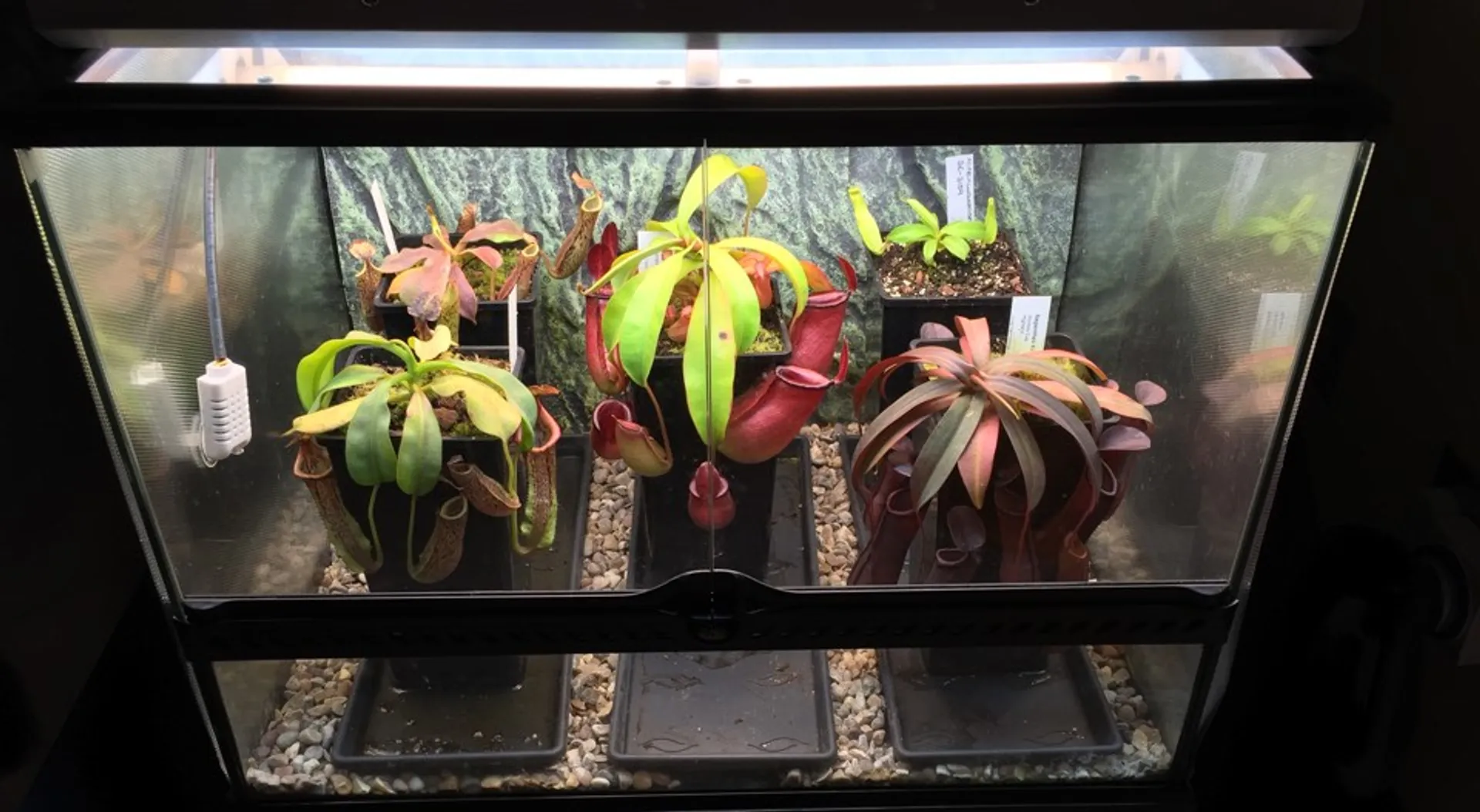
Nepenthes in humid setups—stunning pitchers!
- Bonus: Bladderworts (Utricularia spp.) 🌼: Tiny suction traps underground; delicate flowers above. Excellent as fillers.
Plants to Avoid for Beginners:
- Venus Flytrap (Dionaea muscipula): Iconic but tricky in terrariums—needs lower humidity, intense light, and dormancy. Often fails indoors without special care.
Though tempting, flytraps are better in open pots.
- North American Pitchers (Sarracenia spp.): Tall growth and dormancy make them unsuitable; they outgrow containers quickly.
Pro Tip: Start with 3-5 plants from the same biotype (e.g., all tropical) for compatibility. Source from reputable nurseries like California Carnivores or specialist growers to ensure healthy stock. 🐞
Essential Supplies: What You’ll Need to Get Started 🛠️
Building a successful carnivorous plant terrarium requires specific, bog-mimicking materials. Avoid standard potting soil or tap water—they’re lethal due to minerals and nutrients.
- Container: Open glass tank (10-60 gallons recommended for longevity; e.g., standard aquarium). Clear sides for light; avoid fully sealed lids.
- Substrate: Nutrient-free mix—50/50 sphagnum peat moss and perlite (or silica sand). Pre-mixed carnivorous soil from specialists is ideal.
- Top Dressing: Live or dried long-fibered sphagnum moss for humidity and aesthetics.
- Water: Only distilled, rainwater, or reverse osmosis (RO)—critical to prevent mineral toxicity.
- Lighting: Full-spectrum LED grow lights (6500K, 20-40W) or bright indirect window. 12-14 hours daily.
- Optional Extras: Activated charcoal layer for freshness, small fan for circulation, hygrometer/thermometer, springtails for mold control.
Budget Tip: Basic 20-gallon setup: $100-300. Invest in quality light and water source for long-term success. 💰
Step-by-Step Guide to Building Your Carnivorous Plant Terrarium 🔨🌿
Follow these proven steps for a professional, thriving setup.
Step 1: Prepare the Container
Thoroughly clean with vinegar/water (no soap). Add optional 1-inch drainage layer of pumice or charcoal.
Step 2: Layer the Substrate
Fill with 4-6 inches moistened peat-perlite mix. Top with 1-2 inches live sphagnum moss.
Step 3: Plant Your Carnivores
Rinse roots gently. Plant at original depth, spacing for growth. Higher mounds for pitchers, lower for sundews.
Step 4: Add Decor and Finishing Touches
Incorporate bog wood, rocks (inert only), or accents. Create varied heights for visual drama.
Step 5: Initial Watering and Placement
Saturate with distilled water via tray method. Position in bright, indirect light or under grow lights.
Visual Tip: Design like a natural bog—foreground sundews, midground butterworts, background pruned Nepenthes. 🏞️

Inspiring layered terrarium examples.
Daily and Long-Term Care: Keeping Your Terrarium Thriving 💧☀️
Once your carnivorous plant terrarium is built, the real magic begins with consistent, thoughtful care. These plants are surprisingly low-maintenance when their bog-like conditions are met, but neglect in key areas—like water quality or light—quickly leads to decline. Drawing from years of maintaining dozens of setups, here’s the proven routine that keeps plants vibrant and trapping actively.
Lighting Requirements
Carnivorous plants are light-hungry due to their bog origins in open, sunny wetlands. Insufficient light causes weak growth, pale colors, and failure to form traps.
- Natural Light: Place near a south- or east-facing window with bright, indirect sunlight. Avoid direct midday sun in summer to prevent scorching.
- Artificial Light: For most indoor setups, full-spectrum LED grow lights (6500K daylight bulbs, 20-50 watts depending on tank size) are essential. Position 8-12 inches above plants for 12-16 hours daily.
- Intensity Tip: Aim for 2000-5000 lux (use a phone app to measure). Nepenthes pitchers develop best colors under higher light.
Expert Insight: I use timers for automated 14-hour cycles—plants respond with faster growth and more dew/pitchers than erratic natural light. 🌞
Watering and Humidity
Pure water and consistent moisture are non-negotiable—tap water’s minerals accumulate and burn roots fatally within months.
- Water Type: Exclusively distilled, rainwater, or RO/deionized. Collect rain or invest in a small RO unit for reliability.
- Watering Method: Tray system is best—place tank in a saucer with 1-2 inches of water; plants wick moisture as needed. Top-water sparingly to avoid compacting soil.
- Frequency: Keep substrate damp but not waterlogged. Refill tray when dry (every 3-10 days depending on humidity and season).
- Humidity: Target 50-80%. Open terrariums naturally hold higher humidity; mist daily if below 50% or use a humidifier nearby.
Pro Tip: Flush the entire substrate with excess pure water monthly to leach any stray minerals. 🚰
Temperature
Most recommended tropical species thrive in typical home conditions:
- Day: 70-85°F (21-29°C)
- Night: Slight drop to 55-70°F (13-21°C)
- Avoid: Below 50°F or above 90°F for prolonged periods.
Highland Nepenthes prefer cooler nights, but beginner hybrids like ventrata are forgiving.
Feeding Your Plants
Contrary to myth, carnivorous plants don’t require bugs to survive—photosynthesis provides energy, and prey supplies nutrients. Indoors, natural insects are scarce, but feeding is optional.
- Natural Feeding: Leave near open window in summer or introduce fruit flies/gnats.
- Manual Feeding: Use freeze-dried bloodworms, flightless fruit flies, or betta fish pellets (rehydrated). Feed 1-2 traps per plant monthly—overfeeding causes rot.
- Never Use: Fertilizer, meat, or human food.
Observation: Well-lit plants grow fine without feeding, but occasional prey enhances color, size, and pitcher production. 🪰
Maintenance Routine
- Daily: Quick visual check for moisture and pests.
- Weekly: Remove dead traps/leaves (prevents mold), top up tray, mist if needed.
- Monthly: Flush soil, clean glass, prune overgrown vines.
- Seasonal: Repot every 1-2 years in fresh substrate; propagate divisions.
Consistency here prevents 90% of problems I see in struggling terrariums shared online. 📅
Common Mistakes and How to Avoid Them ⚠️😩
Even experienced growers slip up—here are the top pitfalls I’ve encountered (and committed early on) with carnivorous plant terrariums, plus fixes.
- Using Tap Water or Fertilizer: Minerals build up, causing blackened roots and death. Fix: Switch immediately to pure water; flush thoroughly.
- Overwatering or Poor Drainage: Constant saturation leads to root rot. Fix: Use tray method and well-aerated substrate; never let plants sit in stagnant water.
- Closed Terrarium with No Ventilation: Heat and mold skyrocket. Fix: Keep open or add small fan; monitor daily.
- Mixing Dormancy-Requiring Plants: Venus flytraps or Sarracenia die in constant warmth. Fix: Stick to tropical non-dormant species only.
- Insufficient Light: Plants stretch, lose color, stop trapping. Fix: Upgrade to proper grow lights—results visible in weeks.
- Ignoring Mold or Algae: Small patches explode quickly. Fix: Introduce springtails (tiny beneficial detritivores) or manually remove.
Prevention Tip: Start small and observe—early intervention saves entire setups! 🛡️
Troubleshooting Problems: Expert Solutions 🛠️🔍
When issues arise, quick diagnosis prevents total loss. Here are common symptoms and targeted remedies.
Yellowing or Browning Leaves
- Causes: Mineral buildup, low light, or old age.
- Solutions: Flush substrate repeatedly with distilled water, increase light duration/intensity, trim affected parts.
Mold, Fungus, or Algae Growth
- Causes: Stagnant air, excess moisture on leaves, decaying matter.
- Solutions: Improve airflow (fan), reduce misting, remove dead material, add springtails or physan 20 (diluted) as last resort.
No New Traps or Dew Production
- Causes: Low light, insufficient humidity, lack of nutrients.
- Solutions: Boost lighting to 14+ hours, raise humidity, feed occasionally.
Pests (Aphids, Spider Mites, Scale)
Ironically common on carnivores!
- Solutions: Rinse gently under lukewarm distilled water, use insecticidal soap (diluted, rinse after), or introduce ladybugs.
Pitchers Drying or Blackening (Nepenthes)
- Causes: Low humidity, sudden environment change.
- Solutions: Increase humidity gradually, remove dried pitchers to encourage new growth.
Expert Insight: Most problems trace back to water quality or light—fix those first before anything else. 🔍
Advanced Tips for a Show-Stopping Terrarium 🌟
Once basics are mastered, elevate your carnivorous plant terrarium to gallery-level.
- Automated Systems: Use smart plugs for lights and small misting pumps for consistent humidity.
- Multi-Level Design: Create “highland” and “lowland” zones with slight temperature/humidity gradients using fans or heaters.
- Propagation: Take leaf pullings from sundews or butterworts—roots form in weeks on moist sphagnum.
- Summer Outdoors: Move terrarium outside in dappled shade for natural feeding and robust growth (acclimate slowly).
- Companion Species: Add live sphagnum, Utricularia, or mosses for biodiversity and aesthetics.
These tweaks turn good setups into breathtaking, self-sustaining ecosystems. ✨
Frequently Asked Questions (FAQs) ❓
Q: Do carnivorous plants really need to eat insects? A: No—they survive perfectly on light alone. Feeding boosts vigor and color but isn’t mandatory indoors. 🪰
Q: Can I use a fully closed terrarium? A: Only for very high-humidity Nepenthes hybrids, and even then, monitor closely for mold and heat. Open is safer for beginners.
Q: How often should I repot or refresh soil? A: Every 1-2 years, or when plants become crowded or substrate breaks down. Use fresh peat mix.
Q: Are carnivorous plants safe around pets and children? A: Completely non-toxic! However, keep out of reach to avoid damage from curious paws or hands. 🐶👶
Q: What’s the average lifespan in a terrarium? A: With proper care, many species live 5-20+ years. Sundews often self-propagate indefinitely!
Q: Can I grow Venus flytraps in the same terrarium? A: Not recommended—they need lower humidity and winter dormancy, conflicting with tropical species.
Conclusion: Start Your Carnivorous Adventure Today! 🚀🪴
Creating and maintaining a thriving carnivorous plant terrarium is one of the most rewarding projects in indoor gardening. You’ve now got every tool—from species selection and setup steps to long-term care and troubleshooting—to build a lush, insect-trapping mini-bog that brings wonder to your space year-round.
These fascinating plants not only look extraordinary but also teach us about adaptation, patience, and the delicate balance of ecosystems. With pure water, bright light, and a little attention, your terrarium will reward you with sparkling dew, colorful pitchers, and the quiet satisfaction of watching nature’s tiny hunters at work.
Ready to get started? Pick up a few beginner-friendly sundews or butterworts, grab that glass tank, and dive in. Your future self (and all the houseplant gnats) will thank you! 🌱🪤✨
Happy growing—feel free to share your progress or questions in the comments. I can’t wait to see your carnivorous creations flourish! ❤️











