
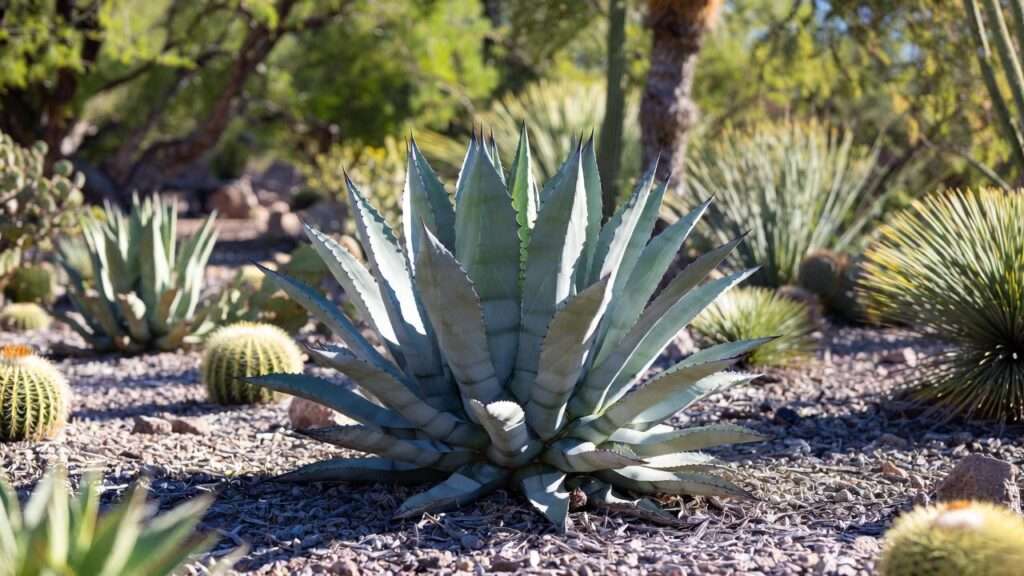
Imagine a majestic succulent rising like a living sculpture in your garden—a massive rosette of thick, sword-shaped leaves that commands attention with its bold, architectural form. This is the centennial plant, better known as the century plant or Agave americana, a drought-tolerant powerhouse that thrives on neglect yet delivers dramatic beauty. Often misunderstood due to its name suggesting a 100-year lifespan, this resilient succulent typically blooms after just 10–30 years, producing a towering flower stalk before gracefully passing the torch to its offsets. If you’ve struggled with high-maintenance plants or live in a dry climate, the centennial plant could be your perfect low-effort star. In this ultimate guide, we’ll cover everything from selection and planting to troubleshooting pests, ensuring your Agave americana not only survives but thrives for decades. 😊
Whether you’re designing a xeriscape, adding texture to a rock garden, or growing in containers, this comprehensive resource draws from horticultural expertise and real-world growing experiences to help you succeed.

What Is the Centennial Plant? A Closer Look at Agave americana 🔍
The centennial plant, scientifically named Agave americana, is a striking perennial succulent native to Mexico and parts of the southern United States, particularly Texas. It’s part of the Asparagaceae family and has been cultivated worldwide for centuries as an ornamental, medicinal, and utilitarian plant. Historically, indigenous peoples used its fibers for ropes, its sap for sweeteners (aguamiel, the precursor to agave nectar), and even its sharp spines as needles.
Origins and History 🗺️
Originating from arid regions, Agave americana has naturalized in many warm climates, including the Mediterranean, Africa, and Australia. Introduced to Europe in the 16th century, it quickly became a staple in botanical gardens for its exotic appearance.
Why “Centennial” or “Century” Plant? ⏳
The common names “century plant” or “centennial plant” stem from early observations that it seemed to take forever to flower. In reality, most specimens bloom after 10–30 years (faster in warmer climates, slower in cooler ones). This monocarpic nature—flowering once before the main rosette dies—adds to its mystique, but offsets (pups) ensure the plant’s legacy continues.
Key Characteristics ✨
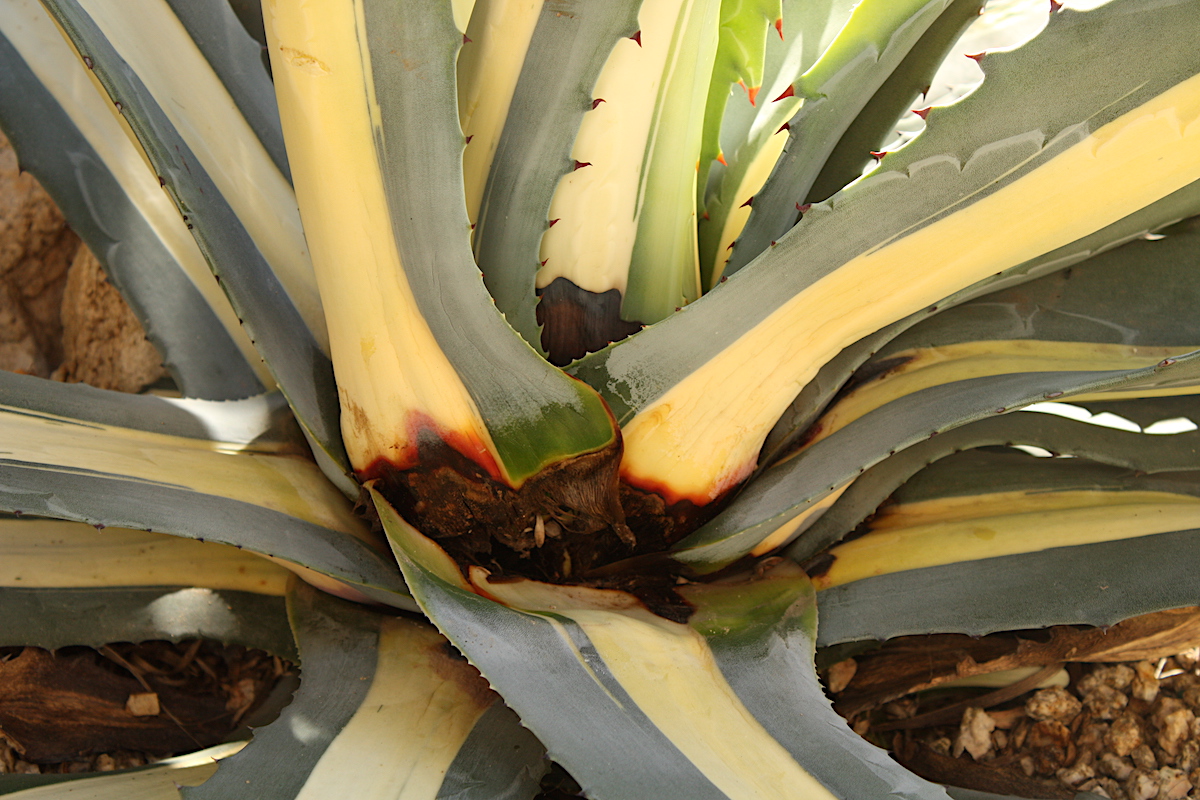
Mature plants form enormous rosettes up to 6–10 feet tall and 10–13 feet wide, with gray-green or blue-tinged fleshy leaves measuring 3–5 feet long. Leaves are lance-shaped, edged with sharp, curved teeth and tipped with a formidable spine. Variegated forms add cream or yellow stripes for extra visual appeal.
Benefits of Growing the Centennial Plant in Your Garden 🌞
Agave americana is a favorite among xeriscape enthusiasts and low-maintenance gardeners for good reason.
Drought Tolerance and Low Maintenance 💧
Once established, it requires minimal water—perfect for water-restricted areas or forgetful owners. Its thick leaves store water efficiently, making it one of the most forgiving succulents.
Architectural Appeal and Wildlife Support 🐝
As a focal point, it adds bold texture and structure. During its rare bloom, the massive stalk attracts bats, birds, and insects with nectar-rich flowers.
Versatility in Landscapes 🏡
Thrives in desert gardens, coastal plantings (salt-tolerant), rockeries, or as a dramatic container specimen. It’s deer-resistant due to spines and tough foliage.
Choosing the Right Centennial Plant Variety 🛒
While the classic gray-green form is iconic, cultivars offer variety in size, color, and suitability.
Popular Cultivars 🌈
- Classic Agave americana: Large, blue-gray leaves; ideal for big spaces.
- ‘Mediopicta Alba’: Compact (3–4 feet), with a creamy white central stripe—stunning contrast.
- ‘Marginata’ (or ‘Variegata’): Yellow or cream-edged leaves; slightly smaller than the species.
- ‘Mediopicta Aurea’: Golden central stripe for brighter gardens.
Smaller varieties suit containers or tighter spots, while variegated ones may need more protection from intense sun to prevent scorch.
Where to Buy and What to Look For 👀
Purchase from reputable nurseries or succulent specialists. Seek healthy plants with firm leaves, no soft spots, and visible roots if potted. Avoid overly mature specimens unless you want a quick impact—pups are easier to establish.

Ideal Growing Conditions for Your Centennial Plant ☀️
Success starts with mimicking its native arid habitat.
Light Requirements 🌞
Full sun is essential—6–8+ hours daily. Insufficient light causes etiolation (stretched, weak growth) and dull colors.
Temperature and Hardiness Zones ❄️
Hardy in USDA Zones 8–11; tolerates down to 15–20°F briefly. In colder areas, grow in pots for winter protection.
Soil Needs 🪴
Excellent drainage is non-negotiable. Use sandy, gritty cactus/succulent mix or amend native soil with pumice/perlite. Poor drainage leads to fatal root rot.
Planting Your Centennial Plant: Step-by-Step Guide 🚀
Timing and technique prevent common failures.
Best Time to Plant 📅
Spring or early fall, allowing roots to establish before extremes.
Outdoor Planting Tips 🌍
Dig a hole twice as wide as the root ball but no deeper. Space 10+ feet apart. Place away from walkways—spines are hazardous!
Growing in Containers 🪣
Choose large, heavy pots with drainage holes. Use cactus mix; repot infrequently as they prefer being root-bound.
Indoor Growing Considerations 🏠
Possible with bright south-facing windows; supplement light if needed. Rotate for even growth; take outdoors in summer.
Watering and Feeding: The Low-Maintenance Secrets 💦
The centennial plant’s superpower is its extreme drought tolerance, thanks to its CAM (Crassulacean Acid Metabolism) photosynthesis, which allows it to open stomata at night to minimize water loss. Overwatering is the #1 killer of Agave americana—far more plants die from kindness than neglect.

Watering Schedule 📆
- Established outdoor plants: Water deeply every 2–4 weeks during the hot growing season (spring–fall), allowing soil to dry completely between waterings. In winter, reduce to once a month or less—rainfall often suffices in mild climates.
- Newly planted or young specimens: Water weekly for the first summer to encourage root establishment, then taper off.
- Container-grown: Check soil moisture by sticking a finger 2–3 inches deep; water only when bone-dry. Ensure pots drain freely to avoid soggy roots.
- Pro Tip: Use the “soak and dry” method—thoroughly saturate the root zone, then forget about it until dry.
Signs of Overwatering vs. Underwatering ⚠️
- Overwatering symptoms: Soft, mushy leaves at the base; yellowing or blackening; foul odor from roots (root rot). Act fast—remove affected parts and repot in fresh, dry mix.
- Underwatering symptoms: Leaves shrivel or curl inward; tips brown and crisp. A deep watering usually revives them quickly.
- Expert Insight: In humid climates, err on the dry side; fungal issues thrive in moisture.
Fertilizing Tips 🍽️
Agave americana grows fine in nutrient-poor soil and rarely needs feeding. Over-fertilizing causes leggy growth and weakens spines.
- Feed sparingly: Once or twice in spring/summer with a half-strength, low-nitrogen succulent fertilizer (e.g., 5-10-10).
- Organic options: Compost tea or worm castings top-dressed annually.
- Avoid: High-nitrogen fertilizers that promote soft, pest-prone growth.
Pruning, Maintenance, and Safety 🛡️
Maintenance is minimal, but safety comes first with this spiky beauty.
Pruning Dead Leaves and Spines ✂️
- Remove dried lower leaves only when completely brown—use long-handled pruners or a saw for thick bases.
- Technique: Wear thick gloves, eye protection, and long sleeves. Cut close to the base without damaging the core.
- Frequency: As needed, usually every 1–2 years.
Handling Sharp Spines and Toxicity 🛑
The terminal spines and serrated edges can cause deep punctures; sap may irritate skin or eyes (contains calcium oxalate crystals). Keep away from paths, play areas, and pets/kids. First aid: Rinse sap irritation with water; seek medical help for embedded spines.
Winter Care and Protection 🧣
In marginal zones, mulch roots with gravel; cover with frost cloth during freezes. Potted plants: Move indoors or to shelter below 20°F.
Propagation: Multiply Your Centennial Plants Easily 🍼
One of the joys of growing Agave americana is free plants from offsets!

Removing and Planting Pups (Offsets) 👶
Pups appear at the base after 3–5 years.
- Best time: Spring.
- Steps: Dig around pup, sever connecting rhizome with a sharp knife. Let cut callus 3–7 days. Plant in well-draining mix; water sparingly until rooted (4–6 weeks).
Seed Propagation (Advanced) 🌱
Collect seeds from spent flower pods (rare for home growers). Sow fresh in gritty mix; germination takes weeks to months at 70–80°F.
Division Tips for Clumps 🔄
For clumping varieties, divide overcrowded rosettes carefully.
Common Problems and Solutions: Troubleshooting Guide 🛠️
Early detection keeps your centennial plant healthy.
Pests (Agave Snout Weevil, Mealybugs) 🐛
- Agave snout weevil: Devastating—larvae bore into core, causing sudden collapse. Signs: Soft center, sawdust-like frass. Prevention: Systemic insecticides in spring; remove infested plants immediately.
- Mealybugs/scale: Cottony clusters; treat with neem oil or insecticidal soap.
Diseases (Root Rot, Leaf Spots) 🤕
Mainly from poor drainage/overwatering. Prevent with proper soil; treat by removing rot and applying fungicide.
Environmental Issues 🌧️
Cold damage: Blackened leaves—prune affected parts. Sun scorch (variegated forms): Gradual acclimation.
The Epic Bloom: What to Expect and How to Prepare 🌸
The highlight of a centennial plant’s life!

Signs Your Plant Is Ready to Flower 🚨
After 10–30 years, a central asparagus-like stalk emerges rapidly (up to 1 foot/day!), reaching 15–40 feet with yellow-green flowers.
Caring During and After Bloom 🎉
Support tall stalk if needed. Post-bloom, the mother rosette dies—harvest pups beforehand.
Expert Insight: Extending Lifespan Without Forcing Bloom ⏰
Remove early stalk to delay flowering (controversial—some say it weakens plant).
Design Ideas: Incorporating Centennial Plant in Your Landscape 🎨
The centennial plant’s bold, sculptural form makes it a standout in any setting. Thoughtful placement elevates your entire garden design.
Xeriscape and Desert Gardens 🏜️
Pair with other succulents like barrel cacti, yuccas, aloe, and red-hot poker plants. Use gravel mulch and boulders for a natural, water-wise look that mimics its native habitat.
Container and Patio Features 🪴
A single large specimen in a terracotta or modern concrete pot creates instant drama on patios or entryways. Group with smaller agaves or echeverias for layered texture.
Companion Plants 👥
Safe choices include:
- Sedum, sempervivum, and dasylirion (spineless options nearby)
- Ornamental grasses like blue fescue for contrast
- Lavender, salvia, or penstemon for pollinator-friendly color
Avoid planting tender annuals too close—spines can damage neighboring foliage.
Expert Tips for Long-Term Success from a Plant Care Specialist 💡
As a horticulturist with over 15 years specializing in succulents and arid landscaping, here are my top pro insights:
- Seasonal Checklist:
- Spring: Inspect for pests, remove winter debris, optional light feed.
- Summer: Deep water during extreme heat waves only.
- Fall: Prepare cold protection if needed.
- Winter: Hands off—let it rest.
- Myths Debunked:
- Myth: It takes exactly 100 years to bloom → Reality: 10–30 years depending on conditions.
- Myth: All agaves are tequila sources → Only Agave tequilana is used for tequila.
- Pro Advice for Variegated Varieties: Provide afternoon shade in hottest climates to prevent leaf scorch; they grow slightly slower but offer superior aesthetics.
- Bonus Tip: Rotate container plants quarterly for symmetrical growth and even sun exposure.
Frequently Asked Questions (FAQs) ❓
How long does a centennial plant really live? The main rosette lives 10–30 years until it flowers and dies, but offsets create a colony that can persist indefinitely with proper care.
Is the centennial plant safe around pets and kids? 🌿🐶 No—sharp spines pose injury risk, and sap can cause irritation. Place in low-traffic areas or use barriers.
Can I grow a centennial plant indoors permanently? Possible in very bright spaces (south-facing windows or grow lights), but it prefers outdoor conditions. Expect slower growth indoors.
Why is my centennial plant not growing? Common causes: Insufficient sun, overwatering, or poor drainage. Move to full sun and adjust watering.
What happens after the centennial plant flowers? The mother rosette dies over months, but pups thrive. Remove the spent stalk once dry.
How often should I repot a container-grown centennial plant? Every 3–5 years or when root-bound; they tolerate crowding.
Will cold weather kill my centennial plant? Brief dips to 15–20°F are okay; prolonged freezes below 10°F can be fatal without protection.
Can I prevent my centennial plant from flowering? Cutting the emerging stalk early may delay bloom by years, though it stresses the plant.
Are there smaller centennial plant varieties for small gardens? Yes—look for ‘Mediopicta Alba’ or hybrid agaves like Agave ‘Blue Glow’ for more manageable sizes.
How do I deal with agave snout weevil infestation? Prevention is key—apply systemic insecticide in early spring; destroy heavily infested plants to protect others.
Does the centennial plant need pruning regularly? Only remove dead leaves; no shaping needed.
Can I use centennial plant pups as gifts? Absolutely! Potted pups make excellent, long-lasting presents for fellow plant lovers.
Conclusion: Start Your Centennial Plant Journey Today! 🚀
The centennial plant (Agave americana) is more than just a succulent—it’s a living testament to resilience, beauty, and patience. With its minimal care requirements, extreme drought tolerance, and jaw-dropping architectural presence, it’s the ideal choice for busy gardeners, water-conscious landscapes, or anyone seeking a dramatic, low-maintenance focal point.
By following this comprehensive guide—from selecting the right variety and providing perfect drainage to troubleshooting issues and preparing for that once-in-a-lifetime bloom—you’re equipped to grow a thriving, stunning specimen that will reward you for decades.
Whether you’re transforming a dry yard into a xeriscape paradise or adding bold texture to containers, your centennial plant will become a cherished part of your garden story. Start small with a pup, watch it grow, and enjoy the journey. Happy growing! 🌵✨











