
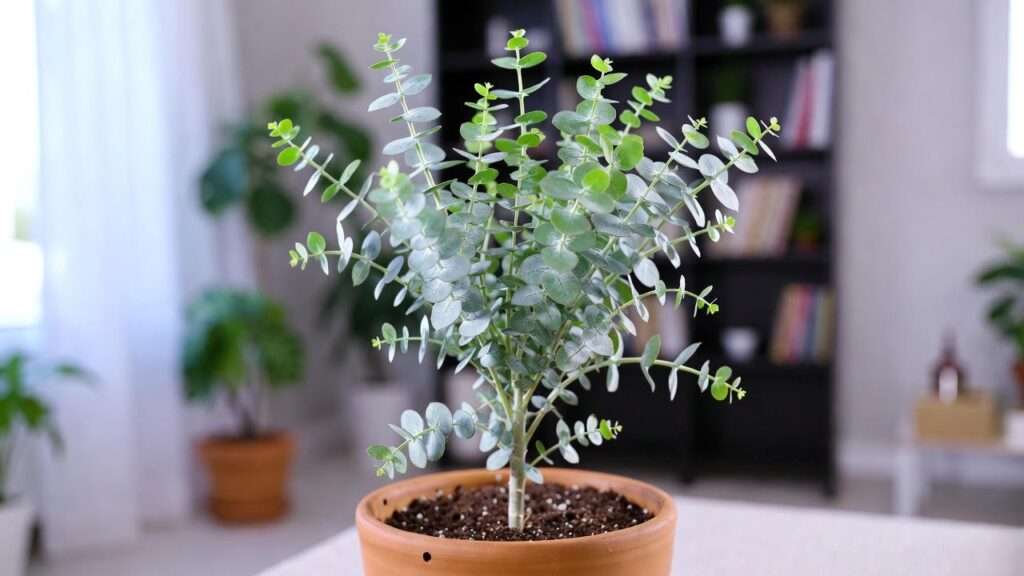
You finally brought home that gorgeous potted eucalyptus plant, enchanted by its silvery leaves and refreshing, spa-like aroma filling your home. But just a few weeks later, the leaves start turning brown, curling, or dropping off entirely 😩. If this scenario sounds all too familiar, you’re not alone—many plant lovers struggle with keeping eucalyptus thriving indoors.
The good news? With the right knowledge and care, your potted eucalyptus plant can become a long-term, fragrant houseplant that purifies the air and adds stunning texture to your space. In this comprehensive guide, we’ll dive deep into proven techniques to help you successfully grow and maintain indoor eucalyptus, avoiding common pitfalls that cause most failures. Whether you’re a beginner or experienced plant parent, these expert tips—drawn from horticultural best practices and real-world successes—will empower you to enjoy a healthy, vibrant potted eucalyptus plant for years.
Why Choose a Potted Eucalyptus Plant for Indoors? 🌱
Eucalyptus isn’t just a trendy houseplant—it’s a powerhouse with real benefits. The aromatic oils in its leaves release a fresh, menthol-like scent that acts as a natural decongestant, insect repellent, and air purifier, helping to neutralize odors and improve indoor air quality. Studies show eucalyptus can reduce airborne bacteria and even support respiratory health.
Visually, the silvery-blue foliage (especially in popular varieties) provides year-round interest, making it a perfect statement plant for modern, boho, or minimalist interiors. Unlike many houseplants, eucalyptus offers versatile uses: harvest leaves for eucalyptus showers, DIY potpourri, or natural remedies.
However, a common misconception is that eucalyptus is “impossible” to grow indoors. While it’s true that these Australian natives crave sun and space, selecting container-friendly varieties and mimicking their natural conditions makes success achievable. Dwarf or compact species are key for long-term indoor growing, as full-sized trees quickly outgrow homes.
Best Species for Potted Indoor Growing:
- Eucalyptus gunnii (Cider Gum): One of the hardiest and most popular for pots. Compact cultivars like ‘Azura’ or ‘Silver Drop’ stay manageable (2-4 feet indoors) with beautiful silvery leaves.
- Eucalyptus cinerea (Silver Dollar or Argyle Apple): Iconic round, blue-green leaves—perfect for arrangements. Grows slower indoors.
- Eucalyptus pulverulenta ‘Baby Blue’: Highly ornamental with dense, silvery foliage; ideal for containers and stays compact with pruning.
Expert tip: Always opt for slow-growing or dwarf varieties when buying a potted eucalyptus plant. Fast-growers like Eucalyptus globulus will demand frequent repotting and pruning, leading to stress.

Choosing the Right Potted Eucalyptus Plant 🛒
Starting with a healthy specimen sets the foundation for success.
What to Look for When Buying
- Healthy signs: Firm, upright stems; vibrant, waxy leaves without spots; even growth; moist (but not soggy) soil.
- Red flags: Yellowing or dropping leaves, leggy/spindly growth (indicates low light stress), pests (webbing or sticky residue), or tightly root-bound pots (roots circling visibly).
Recommended Varieties for Indoor Growing
Here’s a quick comparison:
| Variety | Growth Rate | Max Indoor Height | Scent Strength | Leaf Shape/Color | Notes |
|---|---|---|---|---|---|
| Eucalyptus gunnii ‘Azura’ | Slow | 3-6 feet | Mild | Lance-shaped, silvery | Cold-hardy, compact |
| Eucalyptus cinerea | Moderate | 4-8 feet | Strong | Round, blue-green | Classic “silver dollar” look |
| Eucalyptus pulverulenta ‘Baby Blue’ | Slow | 2-5 feet | Moderate | Small, rounded, silvery | Bushy, great for pots |
Starter Sizes: Seedling vs. Established Plant
Beginners often fare better with established plants (6-12 inches tall) from reputable nurseries—these adapt quicker indoors. Seedlings or cuttings are cheaper but require more patience and ideal conditions to root and establish.
Essential Requirements for Indoor Eucalyptus Success ☀️💧
Eucalyptus evolved in bright, arid Australian environments, so replicating high light and good airflow is crucial indoors.
Light Requirements
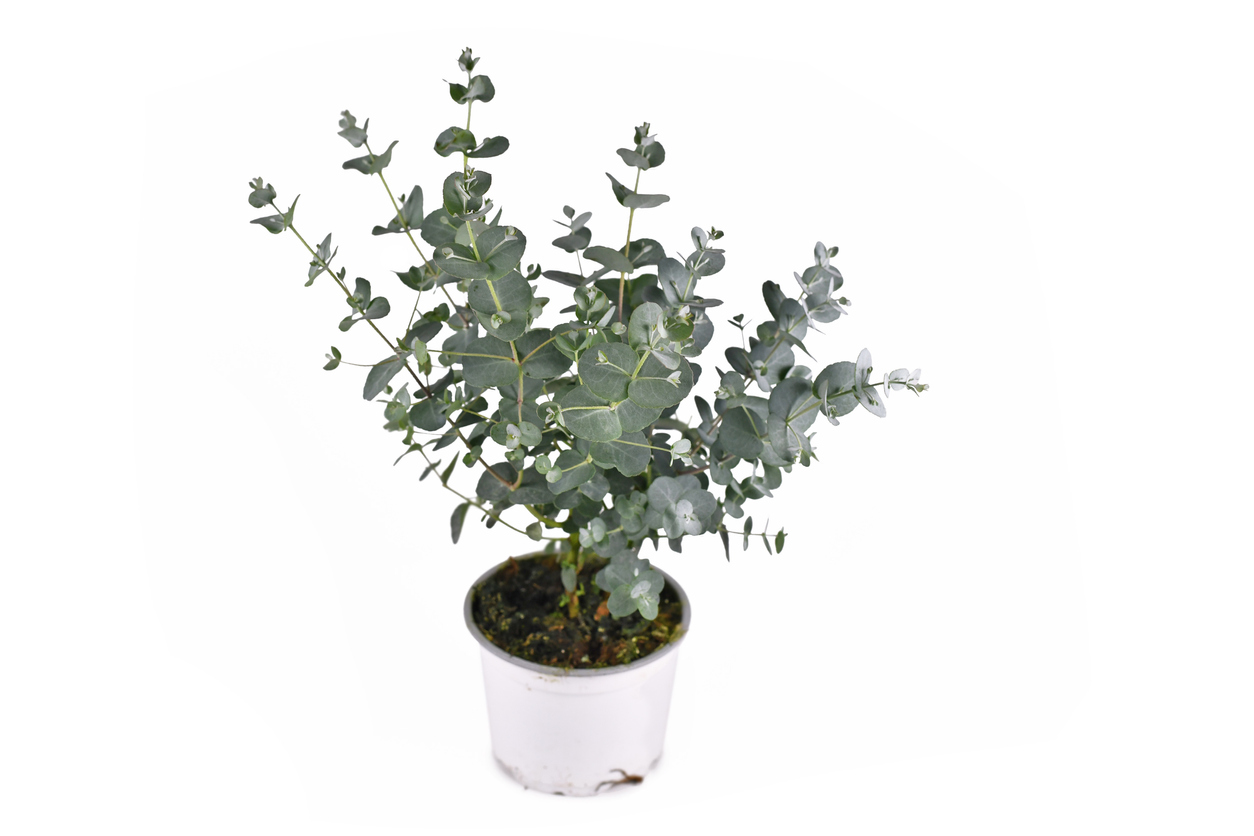
Your potted eucalyptus plant needs at least 6-8 hours of direct sunlight daily to prevent leggy growth and leaf drop. A south-facing window is ideal.
- In low-light homes: Supplement with full-spectrum LED grow lights (10,000-20,000 lumens, 12-16 hours/day). Position lights 12-18 inches above the plant.
- Tip: Rotate the pot weekly for even growth.
Temperature and Humidity
- Optimal: 60-75°F (15-24°C) day; cooler nights (50-60°F) encourage dormancy in winter.
- Avoid drafts, heaters, or AC vents—sudden changes cause leaf curl/drop.
- Humidity: Moderate (40-60%). Increase with pebble trays, grouping plants, or a humidifier; misting helps but isn’t essential.
Air Circulation
Good airflow mimics windy native habitats, preventing fungal issues. Use a gentle fan on low or place near an open window (in summer).
Potting and Soil Essentials 🪴
Poor drainage is the #1 killer of indoor eucalyptus—roots hate sitting wet.
Choosing the Perfect Pot
- Size: Start 2-4 inches wider than the root ball; repot every 1-2 years.
- Must-have: Multiple drainage holes!
- Materials: Terracotta (breathable, dries faster—great for overwaterers); plastic/ceramic (retains moisture longer).
Best Soil Mix for Potted Eucalyptus
Standard potting soil is often too heavy and retains water, leading to root rot. Use a well-draining, slightly acidic mix (pH 5.5-6.5).
Recommended DIY Recipe (equal parts):
- 1 part quality potting soil
- 1 part perlite or coarse sand
- 1 part peat moss or coco coir
This creates airy, fast-draining conditions while holding just enough moisture. Commercial alternatives: Cactus/succulent mix amended with extra perlite.
Pro tip: Add a layer of gravel or hydroton at the pot bottom for extra drainage, but never let the pot sit in water.
Watering Your Potted Eucalyptus the Right Way 💦
Overwatering causes 90% of indoor eucalyptus failures—roots rot quickly in soggy soil.
How Often to Water
Adopt the “soak and dry” method: Water thoroughly when the top 2-3 inches of soil feel dry (finger test or moisture meter).
- Summer/active growth: Every 7-10 days.
- Winter/dormancy: Every 2-4 weeks (reduce significantly).
Signs of Overwatering vs. Underwatering
- Overwatering: Yellow lower leaves, mushy stems, foul soil smell, root rot.
- Underwatering: Wilting, dry/crisp leaves, browning tips.
Expert Watering Tips
- Use room-temperature rainwater or distilled water (tap water’s chlorine/fluoride can build up).
- Bottom-water occasionally: Place pot in a saucer of water for 30 minutes to encourage deep roots.
- Always empty saucers after 30 minutes—no standing water!
Feeding and Fertilizing Schedule 🍽️
Eucalyptus thrives in nutrient-poor soils outdoors, but potted plants benefit from light feeding.
- Fertilize only during spring-summer growth.
- Use low-nitrogen, slow-release formula (e.g., 10-10-10 or potassium-high for houseplants) at half strength, monthly.
- Signs of deficiency: Pale leaves, slow growth—fix with balanced feed.
Avoid high-nitrogen fertilizers; they promote weak, leggy growth prone to pests.
Pruning and Shaping Your Eucalyptus ✂️
Regular pruning is essential indoors to control size, encourage bushiness, and maintain juvenile foliage (the pretty, rounded leaves).
Why Regular Pruning is Crucial Indoors
Unpruned eucalyptus becomes tall/leggy, losing lower leaves and aesthetic appeal.
Step-by-Step Pruning Guide
- Tools: Sharp, sterilized pruners.
- Timing: Late winter/early spring (before new growth).
- Technique: Pinch tip growth regularly for bushiness; cut back leggy stems by 1/3-1/2 above a leaf node.
- Severe prune: If overgrown, cut to 12-18 inches—most recover vigorously.
Propagating from Cuttings (Bonus Skill!)
Take 4-6 inch tip cuttings in spring, dip in rooting hormone, plant in moist perlite mix. Roots form in 4-6 weeks—easy way to multiply!
Common Problems and How to Fix Them 🛠️
Even with perfect care, issues arise—here’s how to troubleshoot.
Leaf Drop and Browning
- Causes: Low light, over/underwatering, drafts, low humidity.
- Solutions: Increase light, adjust watering, stabilize environment.
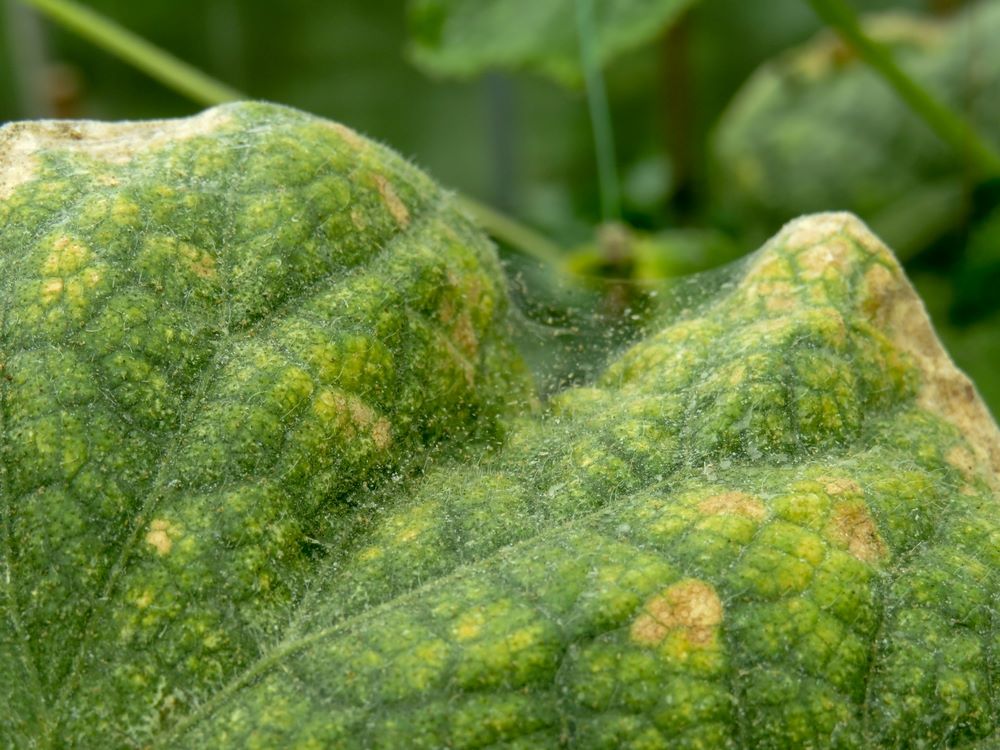
Pests (Spider Mites, Aphids, Scale)
- Identification: Webbing/tiny dots (spider mites), sticky honeydew (aphids/scale).
- Treatments: Hose off leaves, neem oil sprays, insecticidal soap. Isolate plant.
Leggy Growth and Weak Stems
- Prevention: Max light + regular pruning.
Root Rot Recovery Steps
- Unpot, trim black/mushy roots, repot in fresh mix, reduce water.
Long-Term Care: Repotting and Lifespan Expectations 🔄
- Repot every 1-2 years in spring, sizing up gradually.
- Summer outdoors: Harden off gradually for boost.
- Realistic lifespan: 3-10+ years indoors with excellent care—many thrive indefinitely with pruning.
Creative Ways to Enjoy Your Eucalyptus Indoors 🎨
- Aromatherapy: Hang bunches in showers for steam-infused scent.
- Decor: Fresh/dried leaves in vases or wreaths.
- Natural remedies: Infuse leaves for teas or sachets (consult experts for safe use).
Expert Insights & Pro Tips 🌟
- Maximize juvenile foliage with frequent tip-pinching.
- Winter dormancy: Cooler spot, minimal water—no fertilizer.
- Pet safety note: Eucalyptus is toxic to cats and dogs if ingested—keep out of reach.
- Seasonal checklist: Spring—repot/prune/fertilize; Summer—max water/light; Fall—reduce feeding; Winter—dry/cool rest.
FAQs ❓
Can eucalyptus survive indoors year-round? Yes, with bright light and proper care—many do for years.
Why is my potted eucalyptus plant dying? Usually overwatering/root rot or insufficient light—check both first.
How big will my indoor eucalyptus get? 3-8 feet typically, controlled by pruning/pot size.
Is eucalyptus toxic to pets? Yes—leaves and oils are toxic to cats/dogs; symptoms include vomiting, drooling.
How often should I mist my eucalyptus? Occasionally for humidity boost, but not necessary if air circulates.
Best grow light for eucalyptus indoors? Full-spectrum LED, 200-400 PPFD.
Can I grow eucalyptus from seed in a pot? Yes, but slower—cuttings are easier.
Conclusion 🌿
Mastering care for your potted eucalyptus plant indoors comes down to bright light, well-draining soil, mindful watering, and regular pruning. Follow these steps, and you’ll enjoy a thriving, aromatic centerpiece that enhances your home’s air and ambiance for years. Happy growing—your eucalyptus journey starts now! Share your progress in the comments below.











