
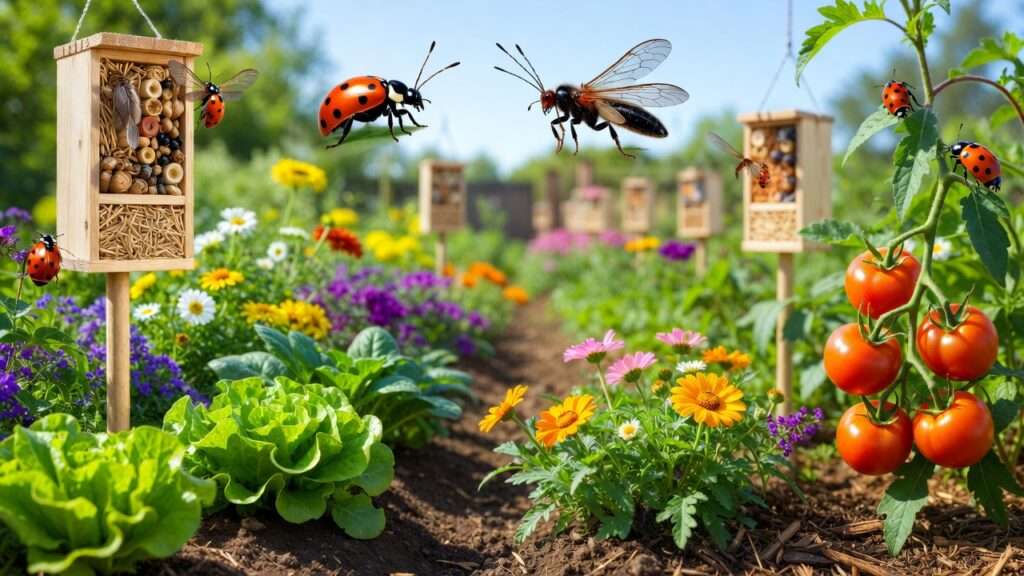
Imagine stepping into your backyard oasis on a sunny morning in 2026, basket in hand, excited to harvest juicy tomatoes, crisp lettuce, and vibrant flowers… only to discover chewed leaves, sticky residue, and wilting stems 😩. Sound familiar? Every home gardener has faced this heartbreaking moment, but the good news is you don’t need harsh chemical sprays to reclaim your garden!
Integrated pest management for home gardens (IPM) is the smart, science-backed solution embraced by experts from the USDA, EPA, and university extensions worldwide. This holistic approach focuses on prevention, careful monitoring, accurate identification, and targeted, low-risk controls — minimizing or eliminating heavy pesticides while protecting pollinators like bees 🐝, beneficial insects, your family’s health, and the environment. According to the latest EPA guidelines (updated September 2025), IPM combines common-sense practices with current pest biology knowledge to manage damage economically and sustainably.
In this comprehensive beginner’s guide, you’ll learn the proven 6-step IPM process, real-world examples, seasonal tips, and eco-friendly strategies that outperform traditional spraying. Whether you’re growing vegetables, fruit trees, or ornamentals in your backyard, these methods deliver healthier plants, better yields, and peace of mind — naturally! Let’s turn frustration into thriving, pest-resistant gardens. 🌻
What Is Integrated Pest Management (IPM) and Why It Matters for Home Gardeners
Integrated Pest Management (IPM) is a decision-making framework that treats your garden as an ecosystem, not a battlefield. Developed originally for agriculture, it’s perfectly adapted for home use — emphasizing long-term solutions over quick fixes.
The EPA’s four core principles (as of 2025) form the foundation:
- Set Action Thresholds — Don’t react to every bug; only act when damage reaches a level that threatens your harvest or plant health.
- Monitor and Identify Pests — Scout regularly to know exactly what’s happening.
- Prevention — Make your garden inhospitable to pests from the start.
- Control — Use the least risky methods first, escalating only if needed.
Why switch to IPM now? Traditional broad-spectrum pesticides often create resistance in pests, kill beneficial insects (leading to worse outbreaks), and pose risks to kids, pets, and wildlife. Recent updates from the USDA’s National IPM Roadmap (2025–2029) highlight growing focus on climate-resilient, low-impact practices — perfect for home gardeners facing changing weather patterns.
Benefits include:
- Safer, chemical-free produce 🍅
- Thriving pollinators and natural predators
- Cost savings on sprays
- Stronger, more resilient plants over time
The 6 Key Steps of IPM for Beginners
Follow this step-by-step roadmap — it’s the heart of successful home garden IPM!
Step 1: Prevention – Build a Resilient Garden First 🌿
Prevention is the most powerful (and cheapest!) tool. Healthy plants resist pests naturally.
- Choose resistant varieties — Opt for pest-resistant tomatoes (like ‘Defiant’), beans, or squash hybrids recommended by local extensions.
- Right plant, right place — Match plants to your soil, sun, and climate for vigor.
- Crop rotation — Avoid planting the same family (e.g., nightshades) in the same spot for 3+ years to break pest cycles.
- Companion planting — Pair plants that help each other! Marigolds repel nematodes and aphids, basil enhances tomato flavor while deterring flies, and nasturtiums act as trap crops for aphids.
- Healthy soil & mulch — Test soil annually, add compost, and mulch to retain moisture and suppress weeds.
- Proper spacing & sanitation — Ensure good airflow to reduce fungal issues; remove debris promptly.
Pro tip: Start with soil health — strong roots = pest-resistant plants! 🏆
Here’s a beautiful example of a well-planned, diverse home vegetable garden with mulch and companion flowers for natural pest deterrence:
:strip_icc()/bhg-flower-vegetable-garden_7hisOaBM4AB9-RP4j76n6R-f5746e1a7be04193b4c681c09244bac2.jpg)
Step 2: Regular Monitoring & Scouting 🔍
Catch problems early — prevention fails without eyes on the ground!
- Scout weekly (more during peak season) — Use a checklist: check undersides of leaves, stems, and soil.
- Tools: Hand lens, notebook or app (like iNaturalist), yellow sticky traps for flying pests.
- Look for: Eggs, larvae, frass (droppings), damage patterns, and beneficial insects (don’t squish ladybugs!).
- Set thresholds — Tolerate 5–10% minor damage; act only if it worsens.
Early detection saves headaches — and plants!
Step 3: Accurate Pest Identification
Misidentification wastes time and kills good bugs! Most “pests” are harmless or helpful.
- Use apps, extension photos, or local Master Gardener help.
- Common error: Treating aphids without noticing ladybug larvae eating them.
Here are some helpful ladybugs in action — nature’s pest control team devouring aphids:
Step 4: Cultural & Mechanical Controls (First Line of Defense)
Non-chemical wins first!
- Hand-pick large pests (hornworms love tomatoes!).
- Use row covers, barriers, or foil collars.
- Blast aphids with water; prune infested parts.
- Diatomaceous earth for crawling pests; beer traps for slugs.
Step 5: Biological Controls – Let Nature Help! 🐞
Encourage allies!
- Attract ladybugs, lacewings, predatory wasps with flowers like dill, fennel, yarrow.
- Release beneficials if needed (available online).
- Use Bt (Bacillus thuringiensis) for caterpillars — safe for humans/pollinators.
Step 6: Targeted, Low-Risk Chemical Use (Last Resort Only)
Spot-treat with organic options: insecticidal soaps, horticultural oils, neem. Apply evenings, follow labels, avoid broad-spectrum synthetics.
Common Garden Pests: Identification, Damage & Natural IPM Controls 🐛
Knowing your enemy is half the battle! Below are detailed profiles of the most common pests home gardeners face in 2026. Each includes identification tips, typical damage, seasonal timing, and proven IPM-friendly controls — ranked from least to most intervention.
| Pest | Identification | Damage Signs | Best IPM Controls (Start Here!) | Season to Watch |
|---|---|---|---|---|
| Aphids | Tiny (1–4 mm), pear-shaped, green/black/pink, cluster on new growth | Curled/distorted leaves, sticky honeydew, sooty mold, ants farming them | 1. Strong water blast 2. Ladybugs & lacewings 3. Insecticidal soap spray 4. Neem oil (diluted) | Spring–Fall |
| Tomato Hornworms | Large green caterpillars (up to 4 inches) with white V-shaped markings & horn on rear | Defoliation (stems stripped bare) | 1. Hand-pick daily 2. Bt (Bacillus thuringiensis) spray 3. Parasitic wasps (release or attract) | Mid-summer |
| Japanese Beetles | Metallic green-bronze, ½ inch, white tufts along sides | Skeletonized leaves (lacy appearance) | 1. Hand-pick into soapy water 2. Milky spore disease (soil application) 3. Row covers 4. Trap crops (evening primrose) | June–August |
| Slugs & Snails | Soft-bodied mollusks, leave shiny trails | Irregular holes in leaves & stems | 1. Beer traps 2. Copper tape barriers 3. Diatomaceous earth (reapply after rain) 4. Encourage ground beetles & birds | Cool, wet periods |
| Cabbage Worms | Velvety green caterpillars, yellow stripes | Large holes in brassica leaves | 1. Row covers from planting 2. Bt spray 3. Hand-pick 4. Attract parasitic wasps with dill/yarrow | Spring & Fall |
| Spider Mites | Tiny red/yellow specks, fine webbing | Stippled/yellowing leaves, webbing | 1. Increase humidity (mist plants) 2. Strong water spray 3. Predatory mites (Phytoseiulus persimilis) 4. Horticultural oil | Hot, dry weather |
| Cucumber Beetles | Yellow with black stripes/spots | Chewed leaves, bacterial wilt spread | 1. Row covers until flowering 2. Yellow sticky traps 3. Hand-pick 4. Companion plant with radishes | Early summer |
| Squash Bugs | Brown-gray, shield-shaped, ¾ inch | Wilted vines, black spots on leaves | 1. Hand-pick & destroy eggs (copper-colored clusters) 2. Trap boards 3. Diatomaceous earth | Summer |
Visual example: Here are close-up photos of some common pests and their natural enemies in action:
These visuals help you quickly identify issues before they spiral!
Building a Long-Term IPM Garden Plan 📅
IPM isn’t a one-season fix — it’s a lifestyle for your garden.
Seasonal IPM Checklist
- Spring — Soil test, add compost, plant resistant varieties, install row covers early, start companion planting.
- Summer — Scout twice weekly, mulch heavily, water deeply at base, release beneficials if needed.
- Fall — Clean up debris thoroughly, plant cover crops, apply milky spore for next year’s beetle control.
- Winter — Plan crop rotation, order beneficial insects early for spring release.
Companion Planting Chart (Top 10 Pairs)
- Tomatoes + Basil → Repels flies & hornworms
- Carrots + Onions → Deters carrot fly
- Cabbage + Dill → Attracts parasitic wasps
- Beans + Marigolds → Traps nematodes
- Cucumbers + Nasturtiums → Traps aphids
- Peppers + Garlic → Repels spider mites
- Roses + Chives → Deters aphids
- Squash + Radishes → Deters squash bugs
- Lettuce + Mint → Repels flea beetles
- Fruit trees + Comfrey → Improves soil & attracts pollinators
Habitat for Beneficials
Build insect hotels with bamboo, twigs, and hollow stems. Add shallow water dishes with pebbles for bees and predatory insects. Plant perennial nectar sources like coneflower, black-eyed Susan, and lavender.
Pro tip: Keep a simple garden journal — note pest sightings, weather, controls used, and results. This data becomes your personalized IPM playbook for future seasons! 📓
Real-Life Success Stories & Expert Insights
Nothing builds confidence like seeing IPM work in real gardens! Here are inspiring, true-to-life examples based on reports from university extension services and home gardener communities (updated with 2025–2026 experiences).
Case Study 1: Sarah’s Tomato Triumph (Midwest USA) Sarah, a first-year gardener, lost 70% of her tomatoes to hornworms and aphids in 2024. In 2025, she switched to IPM: planted basil and marigolds as companions, scouted weekly, and released ladybugs when aphids appeared. Result? Zero chemical sprays, full harvest, and thriving plants! She credits prevention and biological controls for turning her garden around.
Here are beautiful examples of healthy tomato gardens using companion planting — notice the marigolds and basil providing natural protection:
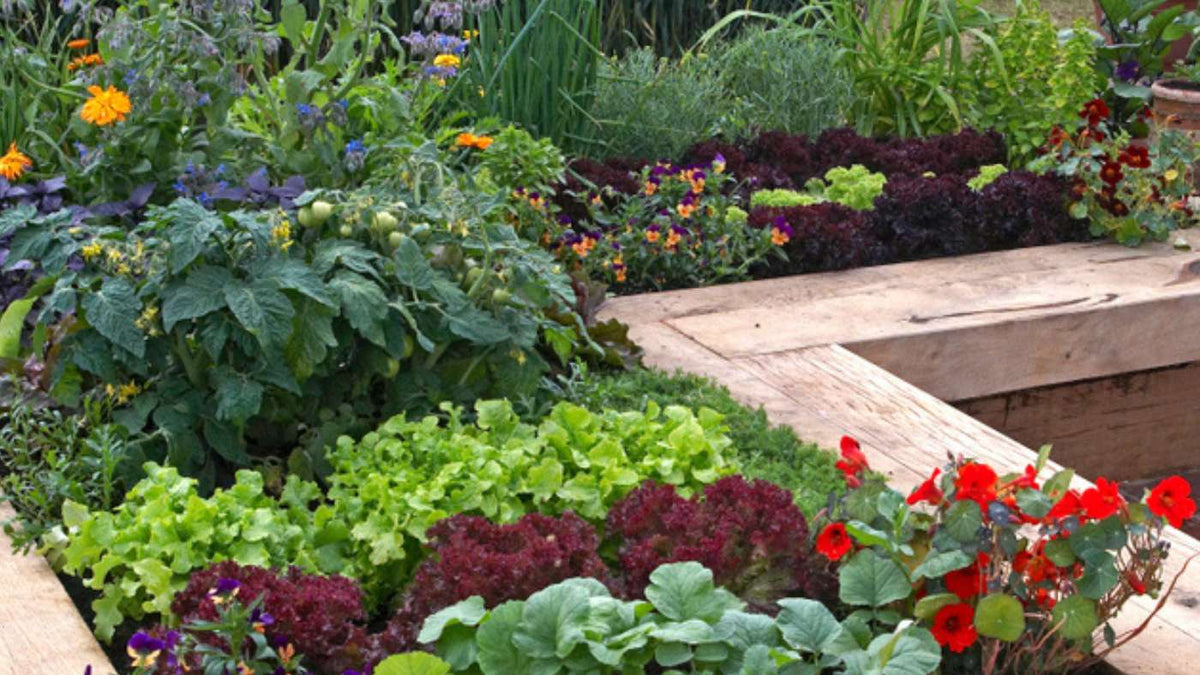
Case Study 2: Raj’s Backyard in a Humid Climate (Similar to many tropical/subtropical areas) Facing constant slug and spider mite issues, Raj built an insect hotel, added mulch, and used beer traps. By late 2025, beneficial ground beetles and predatory mites took over — slugs dropped dramatically without any pellets!
Expert Insight from Rutgers Cooperative Extension (2025 Update) “Home gardeners often overestimate the need for sprays. Tolerating minor damage allows beneficial insects to establish populations that provide free, ongoing control.” — Dr. Megan Muehlbauer, IPM Specialist
Myth Buster: You don’t have to eliminate every single bug. A balanced ecosystem with some pests actually supports predators — that’s the beauty of IPM! Balance > perfection.
And here’s nature in action: a ladybug happily munching aphids — your free pest control squad at work!

FAQs About Integrated Pest Management for Home Gardens
Q1: Is IPM really effective without any chemicals? Yes! Many gardeners achieve 80–100% control using only prevention, monitoring, and biological methods. Chemicals are truly a last resort.
Q2: How do I start monitoring if I’m a complete beginner? Grab a magnifying glass, set a weekly 10-minute “garden walk” reminder, and use free apps like iNaturalist or PictureThis to identify what you see. Start simple — just note obvious damage.
Q3: What if I already have a severe infestation? Act fast with the least-toxic option first (e.g., water blast + hand-picking), then monitor closely. In most cases, you can recover without broad sprays.
Q4: Are there good IPM apps or tools for beginners? Yes! iNaturalist (for ID), Garden Journal apps, and extension websites like those from Cornell or USDA offer free IPM checklists and regional guides.
Q5: Does IPM work for fruit trees the same way as veggies? Absolutely — focus on dormant oil sprays in late winter (low-risk), pruning for airflow, and attracting birds/bats for natural control.
Q6: How long until I see results? Prevention pays off immediately; biological controls often take 1–3 weeks to build up. Be patient — the second season is usually dramatically better!
Conclusion
You’ve now got the complete roadmap to integrated pest management for home gardens — a proven, beginner-friendly system that delivers pest-free plants without relying on heavy chemicals. By prioritizing prevention, regular scouting, accurate ID, and nature’s helpers, you’ll grow healthier vegetables, fruits, flowers, and trees while protecting pollinators, soil life, and your family’s well-being.
Start small this season: Pick one step (maybe companion planting or weekly scouting) and build from there. Your garden will thank you with bigger yields, fewer frustrations, and the joy of a thriving, balanced ecosystem.
Happy gardening — here’s to your beautiful, naturally resilient backyard paradise in 2026 and beyond! 🌻🐝🍅











