
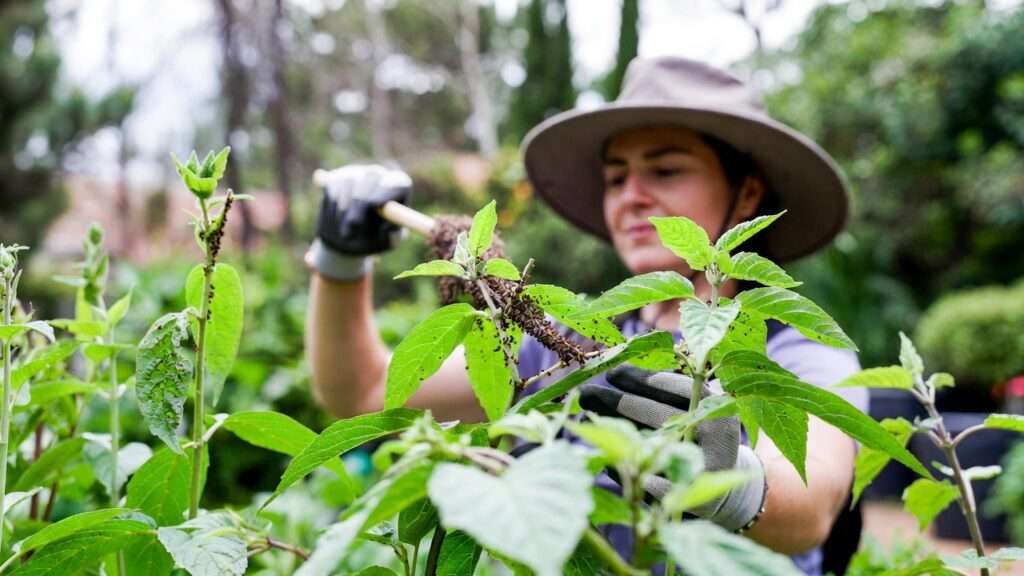
Imagine stepping into your garden on a crisp morning, coffee in hand, only to discover your favorite rose bush completely covered in tiny green aphids, or your young mango tree’s tender leaves curled and sticky from whiteflies. 😱 Your first instinct might be to grab the nearest insect spray… but what if you could win this battle without any chemicals, protect pollinators, keep your soil healthy, and still save your plants?
The good news? Manual pest removal techniques are powerful, immediate, completely safe, and surprisingly effective — even for moderately sized infestations on both houseplants and garden trees.
In over 15 years of working with home gardeners, small orchards, and urban tree care projects, I’ve seen time and time again that the most successful plant lovers are the ones who master simple, hands-on pest control methods before ever considering sprays.
In this comprehensive guide, you’ll discover:
- The most effective manual pest removal techniques ranked by pest type
- Step-by-step instructions with real-world pro tips
- Essential tools (most of which you already own!)
- Seasonal timing secrets that make a huge difference
- How to combine methods for long-term success without harming beneficial insects 🐞
Let’s dive in and equip you with a complete chemical-free pest-fighting toolkit! 💪🌱
Why Choose Manual Pest Removal Techniques? (The Real Benefits & When They Shine Brightest) 🌍
More and more gardeners are moving away from synthetic pesticides — and for excellent reasons:
- Protecting pollinators — bees, butterflies, hoverflies, and ladybugs are suffering worldwide
- Preserving soil biology — beneficial microbes and earthworms stay happy
- Pet & child safety — no worrying about toxic residues
- No resistance buildup — pests can’t become immune to your fingers or a hose! 😄
- Immediate results — you see the impact right away
- Extremely low cost — most methods are literally free
Manual techniques work best when:
- You catch infestations early (the #1 success factor)
- You’re dealing with small to medium gardens/houseplant collections
- You’re growing edible plants, fruit trees, or ornamentals you want to keep 100% organic
- You follow Integrated Pest Management (IPM) principles — using manual removal as Level 1 defense
When infestations become extremely heavy or pests are hidden deep inside trunks (like certain borers), manual methods may need to be combined with other organic strategies. But for 80–90% of everyday garden pest problems — hand-picking, water blasting, pruning, and wiping win the day.
Essential Tools & Safety Gear for Effective Manual Pest Control 🛠️🐛
You don’t need expensive equipment. Here’s the practical toolkit most experienced gardeners rely on:
Must-have basics
- Thick nitrile or latex gardening gloves (protects from irritating hairs & spines)
- Small bucket + dish soap (for soapy water dunking)
- Sharp bypass pruners (sterilize between cuts!)
- Fine-tipped tweezers or forceps
- Magnifying glass or 10x hand lens
- Strong spray nozzle for garden hose
Very helpful extras
- Soft artist’s paintbrush or makeup brush
- Rubbing alcohol (70–91%) + cotton swabs
- Handheld shop vac (great for indoor/outdoor flying pests)
- Yellow sticky traps (monitoring & mass trapping)
- Tree wrap or tanglefoot sticky bands
Safety reminders
- Always wear gloves when handling tomato hornworms, giant water bugs, or hairy caterpillars
- Work in the cool morning or evening — pests move slower
- Never dump live pests on the ground (they’ll crawl right back!)
- Dispose of collected insects in soapy water, then bury or trash them
Pro tip: Keep your “pest bucket” ready near the garden door — it becomes a habit very quickly! 🪣
Step-by-Step Manual Pest Removal Techniques (The Core Arsenal) 📋🔥
1. Hand-Picking (Still the Gold Standard for Many Pests) ✋💥
Best for:
- Tomato/potato hornworms
- Colorado potato beetles
- Japanese beetles
- Large caterpillars
- Slugs & snails
- Leaf-footed bugs
How to do it right
- Inspect plants early morning or late evening (pests are sluggish)
- Look under leaves, along stems, in leaf axils
- Pick gently and drop directly into soapy water
- Check daily during outbreaks — most serious infestations collapse in 3–7 days of consistent picking
Expert tricks
- Hornworms love to hide along the main stem — feel for their droppings (frass) first
- Japanese beetles are easiest to collect in the early morning when they’re too cold to fly
- Use a headlamp for evening slug hunts — they love damp nights! 🌙
Many gardeners report removing 50–200 hornworms per night from just a few tomato plants — and the plants recover beautifully.
2. Water Blasting / Strong Hose Spray (Quick, Satisfying & Super Effective for Soft-Bodied Pests) 💦🚀
This is one of the fastest and most satisfying manual pest removal techniques — especially for early-season outbreaks!
Best for
- Aphids (all colors!)
- Spider mites
- Whiteflies
- Thrips
- Psyllids
- Many young soft-scale crawlers
Step-by-step technique
- Attach a strong adjustable nozzle to your garden hose (jet or sharp stream setting works best)
- Go out early in the morning so leaves dry quickly (reduces fungal risk)
- Hold the nozzle 12–24 inches away and blast the undersides of leaves first — that’s where most pests hide
- Work from the top down so dislodged insects fall to the ground
- Repeat every 2–4 days for 1–2 weeks — most colonies collapse quickly
Here are some real-life examples of this method in action:
Here’s a clear shot of blasting aphids off rose buds with a strong hose stream — notice how the water knocks them right off!

Pro tips
- Use a fine mist follow-up to wash off honeydew (sticky residue)
- Avoid doing this on very hot afternoons — it can scorch delicate leaves
- Works beautifully on fruit trees, shrubs, and even tall perennials up to about 10–12 feet with a good hose extension
Many gardeners see 70–90% reduction in aphid numbers after just 2–3 consistent blasts!
3. Pruning & Sanitation Cutting (The Surgical Strike for Localized & Woody Pests) ✂️🌳
When pests are clustered on stems, branches, or galls — pruning is often the cleanest, most permanent fix.
Best for
- Scale insects (armored & soft)
- Mealybugs on woody stems
- Gall makers (wasp galls, mite galls)
- Twig borers
- Heavily infested branch tips (aphids, caterpillars, etc.)
- Fire blight or other diseased/pest-damaged wood
How to prune safely & effectively
- Sterilize pruners between every cut (dip in 10% bleach solution or 70% alcohol for 30 seconds)
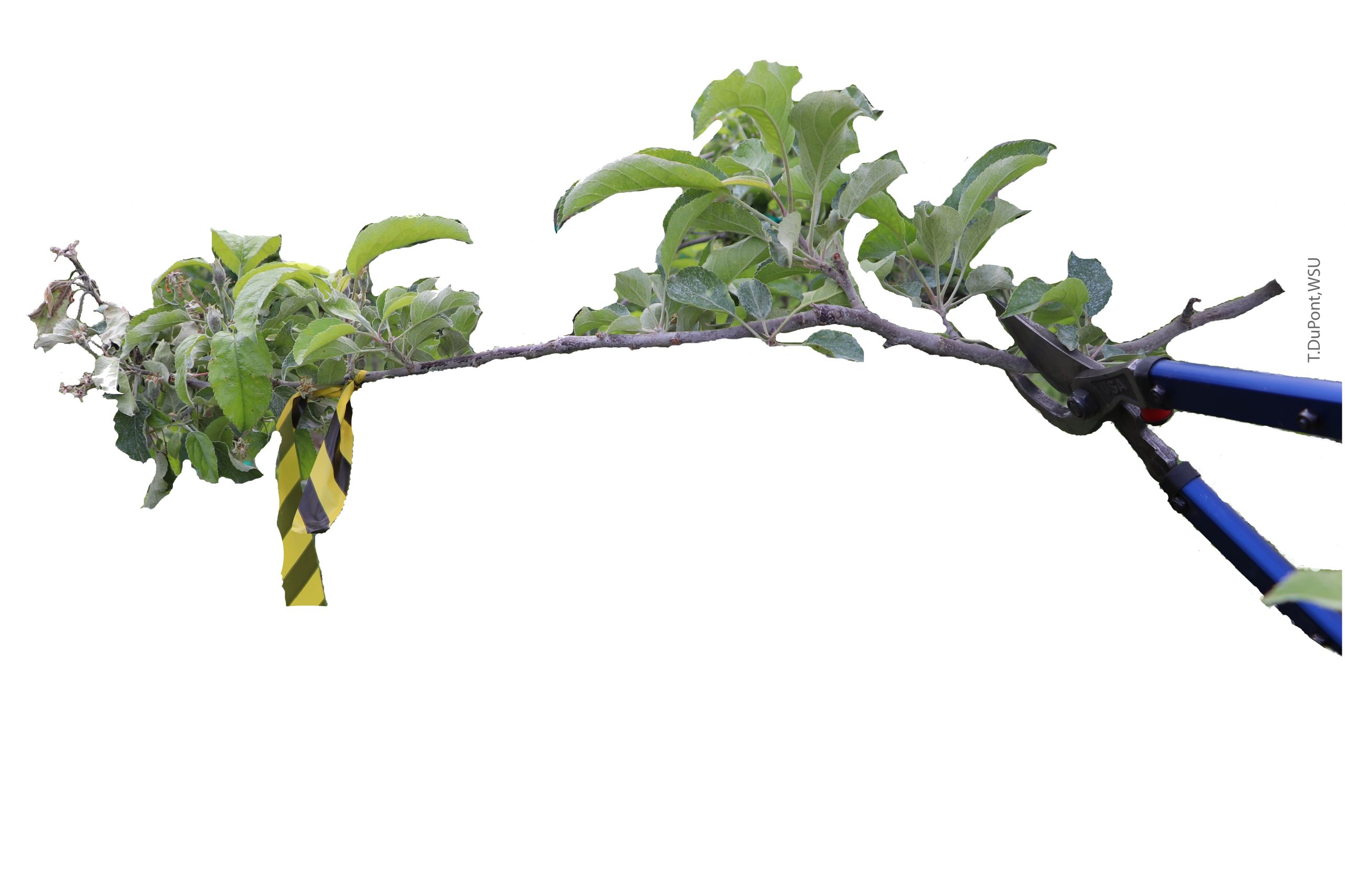
- Cut at least 6–12 inches below the visible infestation into healthy wood
- For trees: Follow the “3-cut method” to avoid tearing bark (undercut first, then top cut, final cut outside branch collar)
- Immediately bag and dispose of clippings — do NOT compost infested material
- Follow up with tree wound dressing only if required by local guidelines (most experts now say skip it for small cuts)
Visual example: Here’s proper pruning technique to remove fire blight (a similar principle applies to pest-heavy branches):
And another showing the clean removal zone after cutting out infected/pest-damaged tissue:

Timing tip — For most deciduous trees, prune during late winter/early spring dormancy when pests are less active and wounds heal fastest.
4. Wiping, Swabbing & Vacuuming (Perfect for Houseplants & Delicate Specimens) 🧽🍃
Indoor plants and prized ornamentals deserve gentler treatment — these methods shine here.
Best for
- Mealybugs
- Scale on leaves/stems
- Aphids on tender new growth
- Whiteflies & fungus gnats (vacuum)
Methods
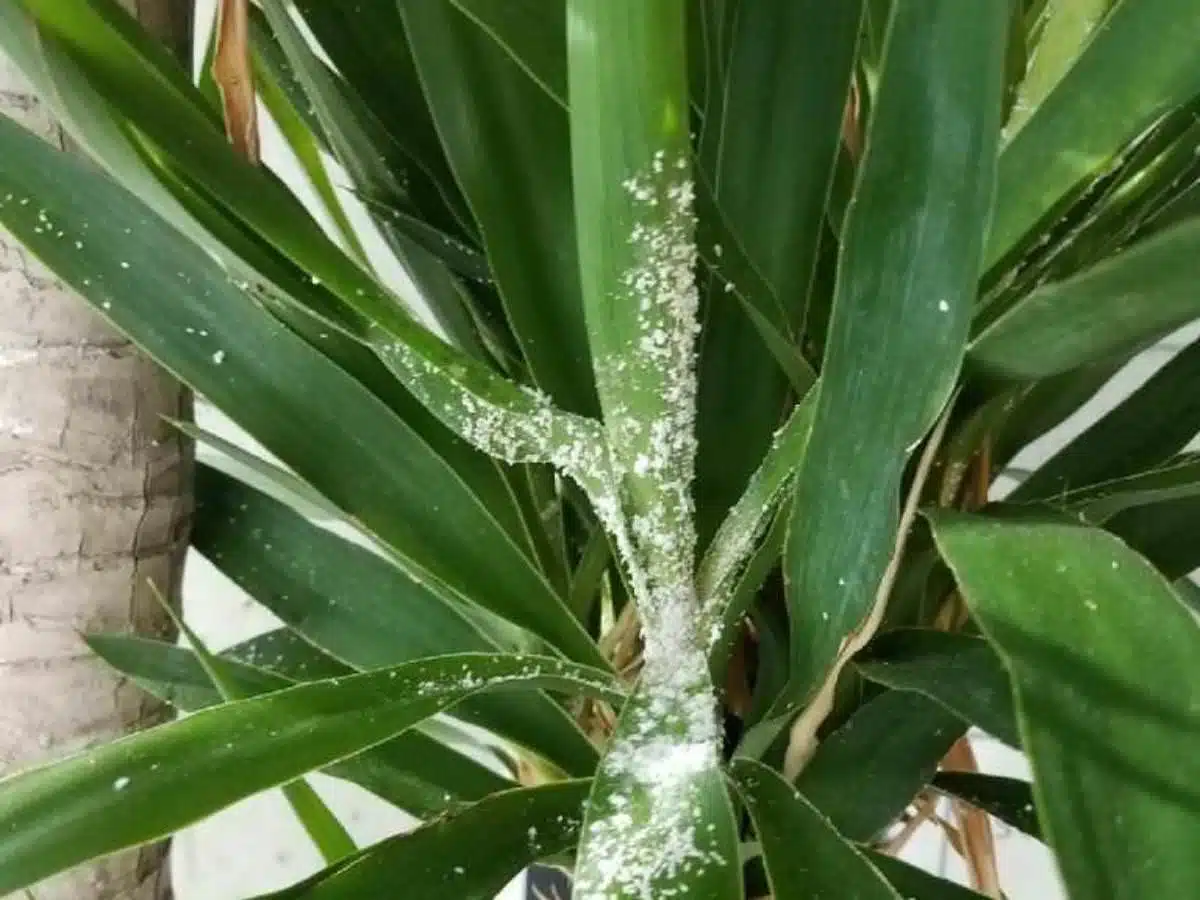
- Alcohol swab: Dip cotton swab or Q-tip in 70% isopropyl alcohol → dab directly on mealybugs/scale → they die quickly and wipe off easily
- Soft brush + soapy water: Use a makeup brush dipped in mild dish soap solution to gently scrub clusters
- Handheld vacuum: On low suction, vacuum flying adults off leaves (empty bag/canister outside immediately)
Here’s a practical close-up of using alcohol swabs to remove mealybugs from a houseplant stem:
And another showing the before/after effect on infested foliage:
Houseplant bonus — Repeat every 5–7 days for 3–4 weeks to catch hatching crawlers. Combine with better airflow and less overwatering to prevent recurrence.
5. Barriers, Traps & Physical Exclusion (Prevention + Passive Control) 🛡️🪤
Sometimes the best manual removal happens before pests even reach your plants. These methods block, trap, or confuse pests without any direct contact.
Best for
- Crawling insects (ants, caterpillars, weevils, earwigs)
- Flying pests on young crops (whiteflies, flea beetles, cabbage worms)
- Tree trunk invaders (borers, scale crawlers, spongy moths)
Key techniques
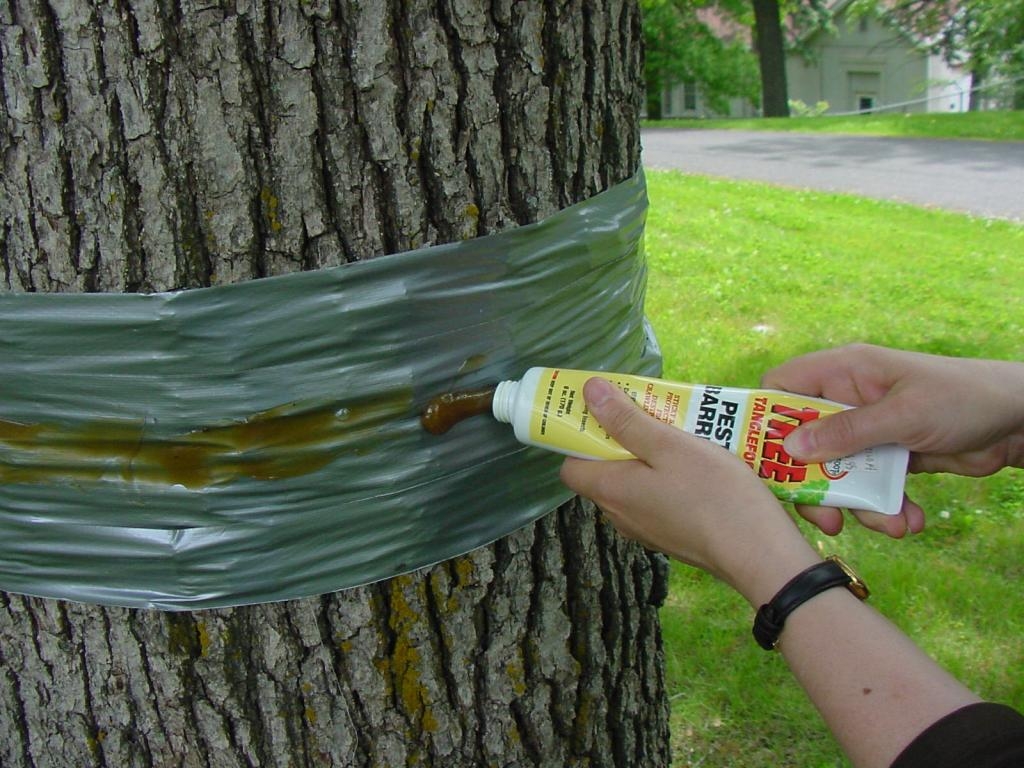
- Sticky barrier bands — Apply horticultural glue, tanglefoot, or petroleum jelly on a band of fabric/duct tape wrapped around tree trunks. Crawling pests get stuck trying to climb up. Here are some practical examples of sticky barrier bands in action on trees:
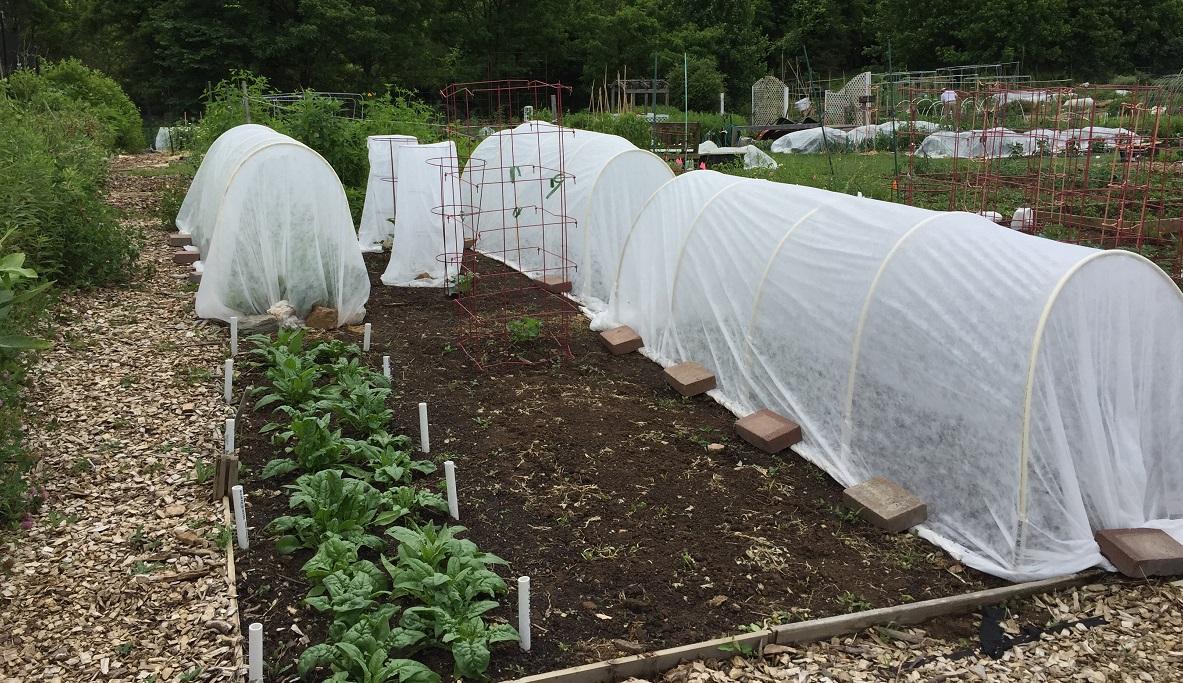
- Floating row covers — Lightweight fabric draped over young vegetables, berries, or small trees. Lets light/water through but blocks insects completely. Remove for pollination when flowering. Real-world setup examples:
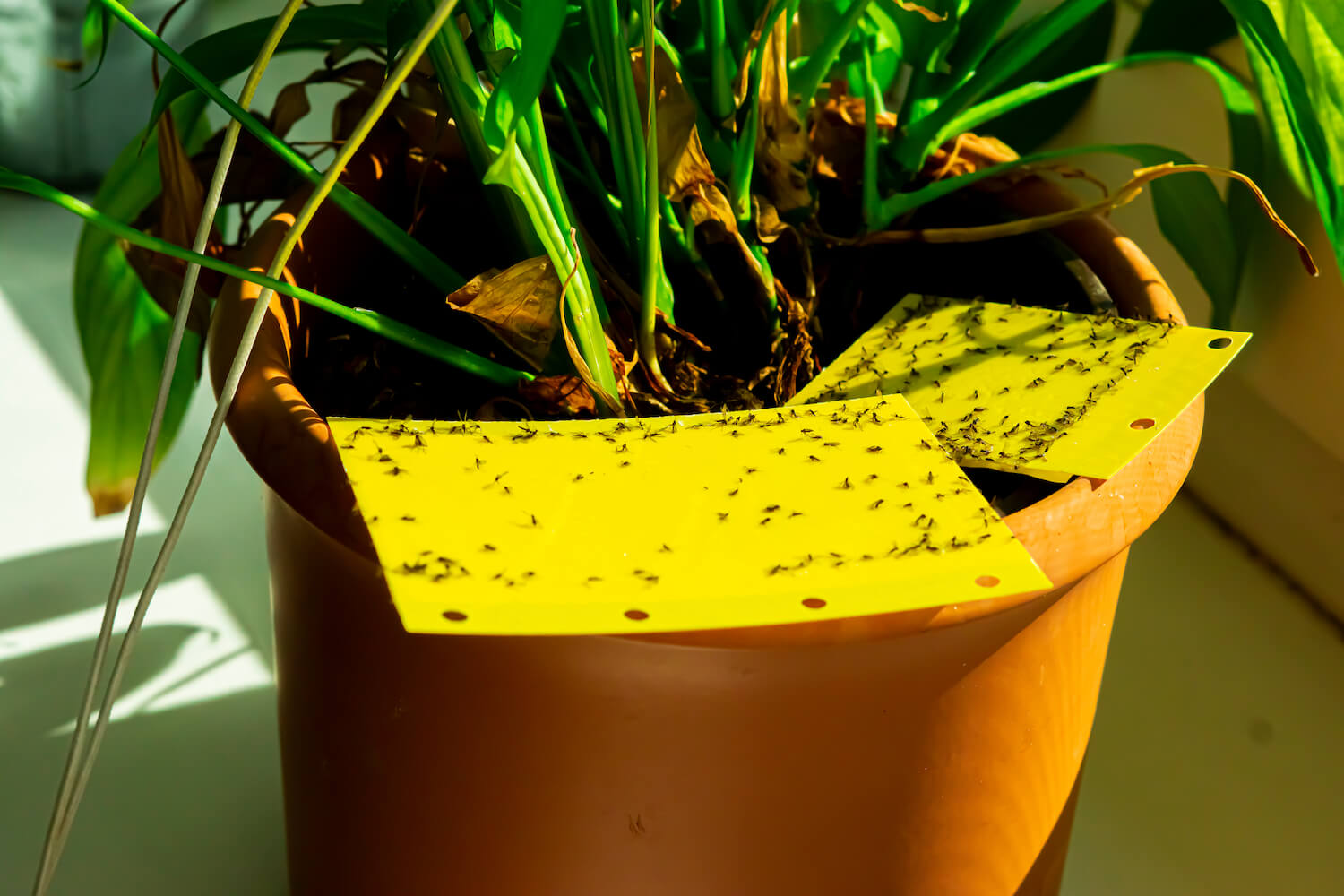
- Yellow sticky traps — Hang near plants to monitor & mass-trap flying pests like whiteflies, fungus gnats, aphids. Here’s how effective they can look after just a week:
Pro tips
- Renew sticky bands every 4–6 weeks or after rain
- Place row covers immediately after planting/transplanting
- Check traps weekly — high catches = early warning to intensify other manual methods
These passive tools often reduce pest pressure by 60–90% when used consistently from the start of the season.
Pest-Specific Manual Removal Strategies (Real-World Examples) 🐛🌳
Different pests respond best to different manual techniques. Here’s a quick, practical guide based on years of observation:
- Aphids & soft-bodied suckers → Water blasting (primary) + hand-wiping for stragglers + ladybug encouragement
- Caterpillars & leaf-eaters (e.g., tomato hornworms) → Hand-picking is king! Look for their signature black droppings first. Here are close-up examples of successful hand-picking in progress:
:max_bytes(150000):strip_icc()/ms-tomato-hornworm-2ca8a8ac42d744c296a3a965a10e793a.jpg)
- Scale & mealybugs on trees/shrubs → Pruning heavily infested parts + alcohol swabbing on remaining stems
- Spider mites & thrips → Strong hose spray (undersides!) every 3 days + increase humidity around plants
- Borers & trunk pests → Probe visible holes with wire + prune affected branches + use sticky bands to block egg-laying adults
- Slugs/snails → Evening hand-picking with headlamp + copper tape barriers + beer traps (as a last resort)
Tailoring the method to the pest saves time and gives faster results!
Timing & Frequency — When & How Often to Act ⏰🔍
Success with manual pest removal techniques depends heavily on timing. Pests are most vulnerable at certain times of day and seasons — strike when they’re slow or exposed!
Daily/Short-Term Rhythm
- Early morning (dawn to 9 AM) — Best for hand-picking (caterpillars, beetles, slugs are cold and sluggish) and water blasting (leaves dry fast, low fungal risk)
- Late evening — Ideal for slug/snail hunts (they’re active and easy to spot with a headlamp)
- Frequency tip — For active outbreaks (e.g., aphids, spider mites): Act every 2–3 days for 1–2 weeks. Consistency is more important than perfection!
Seasonal Calendar Guide (Northern Hemisphere focus — adjust for your zone)
- Early Spring — Scout dormant buds/branches for overwintering scale, eggs, or pupae. Prune heavily infested tips now.
- Late Spring / Early Summer — Peak soft-bodied pest season (aphids explode!). Daily checks + water blasts work wonders.
- Midsummer — Hornworms, Japanese beetles, caterpillars peak. Hand-pick every morning/evening.
- Late Summer / Fall — Sanitation cleanup: Remove fallen fruit, debris, and infested leaves to reduce next year’s population.
- Winter — Dormant pruning for trees (scale, borers, galls) — best time to cut without stressing plants.
Early detection is the real superpower — a 5-minute weekly inspection in May can prevent a July disaster!
Combining Manual Methods with Prevention for Long-Term Success 🔄🌱
Manual removal treats symptoms beautifully, but prevention stops problems before they start. The strongest gardens use both!
Key Prevention Boosters
- Build plant health — Healthy plants resist pests better. Focus on: proper watering (avoid stress), balanced organic soil, mulch, and correct spacing.
- Attract beneficial insects — Ladybugs, lacewings, hoverflies, and parasitic wasps eat aphids, caterpillars, and scale. Plant dill, fennel, yarrow, cosmos, and alyssum. Here are some vibrant examples of companion flowers thriving in vegetable gardens, drawing in helpful predators while looking beautiful:

- Sanitation habits — Rake fallen leaves/fruit, remove weeds (many host pests), sterilize tools.
- Choose resistant varieties — Many modern fruit trees, roses, and veggies have built-in pest resistance — check local extension recommendations.
- Rotate crops — Especially for veggies — breaks pest life cycles.
When manual methods + prevention work together, many gardeners report cutting pest issues by 70–90% year over year.
Common Mistakes to Avoid & Troubleshooting Tips ⚠️🛑
Even experienced gardeners slip up sometimes. Here are the top pitfalls and quick fixes:
- Mistake #1 — Spreading pests with dirty tools → Always sterilize pruners between plants!
- Mistake #2 — Dumping live pests on the ground → They crawl right back. Use soapy water bucket.
- Mistake #3 — Overlooking undersides of leaves → 80% of aphids/spider mites hide there.
- Mistake #4 — Giving up too soon → Most outbreaks need 2–4 weeks of consistent effort.
- Mistake #5 — Ignoring beneficials → Don’t blast ladybugs! Learn to ID them (and their larvae — they look like tiny alligators 🐊).
Quick troubleshoot — If manual methods alone aren’t winning after 3 weeks: Re-evaluate for hidden pests (e.g., root aphids, borers), check for ants farming aphids, or consider safe escalation like horticultural oil (still organic!).
Real Gardener Stories & Expert Insights 📖🌟
- Sarah’s Peach Tree Rescue (Zone 7 gardener): “My young peach was loaded with scale. I pruned 40% of branches in late winter, then swabbed the rest with alcohol weekly. No sprays — the tree fruited beautifully the next summer!”
- Mike’s Tomato Triumph (Urban balcony grower): “Hornworms destroyed my tomatoes last year. This season I checked every evening with a flashlight — removed 120+ worms over 10 days. Plants recovered and produced 50+ fruits!”
- Extension Expert Note — University programs (e.g., Cornell, UC IPM) consistently rank hand-picking + water sprays as first-line defenses in home gardens for their efficacy and safety.
These real stories prove: Patience + consistency = chemical-free victory!
Here are some inspiring shots of healthy, thriving plants after dedicated manual pest management — proof that it works!

Conclusion (Your Chemical-Free Pest-Fighting Future Starts Now) 🌈
Manual pest removal techniques empower you to protect your plants and trees safely, sustainably, and effectively — no toxins, no guilt, just healthier gardens and happier pollinators.
Start small: Grab a bucket of soapy water, put on gloves, and do a 10-minute inspection tomorrow morning. You’ll be amazed at how quickly you gain control.
Your plants (and the planet) will thank you! 🌱🐝











