
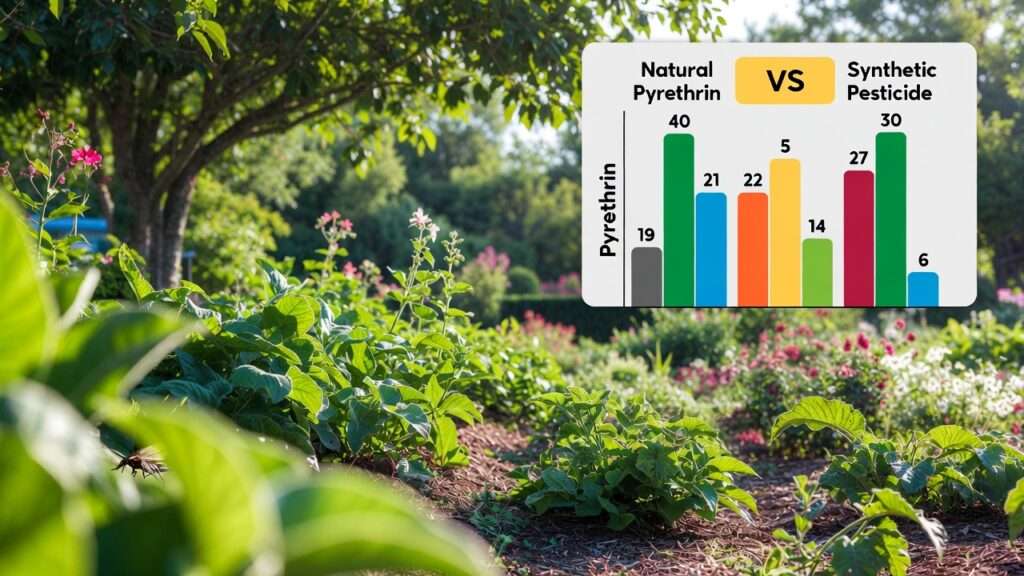
🌿 Picture this: It’s a beautiful spring morning in your garden, but overnight, aphids have swarmed your rose bushes, and caterpillars are munching away at the leaves of your fruit trees. Frustrating, right? As a plant and tree care enthusiast, you want effective pest control that safeguards your beloved greenery without risking harm to pollinators 🐝, pets 🐶, beneficial insects, or the environment.
The good news? You’re not limited to harsh chemicals. The ongoing debate between pyrethrin (the natural extract from chrysanthemum flowers) and synthetic pesticides (especially synthetic pyrethroids like permethrin, cypermethrin, and deltamethrin) centers on finding that perfect balance of effectiveness, safety, and sustainability. In 2026, with heightened awareness of biodiversity loss, climate stressors amplifying pesticide risks, and stricter eco-regulations, choosing the right option matters more than ever.
This in-depth guide compares pyrethrin vs. synthetic pesticides head-to-head — covering how they work, real-world effectiveness on garden and tree pests, safety profiles, environmental impacts, and best practices. Drawing from EPA reviews, university extension resources, and the latest 2025-2026 research, we’ll help you make informed decisions that protect your plants, trees, and the planet. Whether you’re maintaining an organic vegetable patch, nurturing ornamental shrubs, or caring for backyard fruit trees, you’ll discover which approach best fits your needs — and how to integrate them responsibly. Let’s dive in! 🌱
What Are Pyrethrins? Understanding the Natural Powerhouse 🌼
Pyrethrins are a group of six naturally occurring insecticides extracted from the dried flowers of Chrysanthemum cinerariifolium (also known as pyrethrum daisy). Humans have used pyrethrum powder for centuries, but modern refined pyrethrins have been registered since the 1950s.
These compounds act as powerful neurotoxins to insects: they excite voltage-gated sodium channels in the nervous system, leading to rapid paralysis and death — often within minutes (quick “knockdown” effect). Pyrethrins target a broad spectrum of pests, including aphids, whiteflies, thrips, beetles, caterpillars, and mosquitoes — making them ideal for many garden and tree pests.
Most commercial products combine pyrethrins with synergists like piperonyl butoxide (PBO) to boost potency by inhibiting insect enzymes that break them down. Pure or minimally synergized formulations remain available for stricter organic use.
A huge plus in 2026? Many pyrethrin-based products (such as PyGanic Gardening, EverGreen Pyrethrum Concentrate, and others) are OMRI Listed® — certified for use in certified organic production by the Organic Materials Review Institute. This makes them a go-to for eco-conscious gardeners who want natural pest control without compromising organic standards.
Pyrethrins shine in their rapid environmental breakdown: they degrade quickly in sunlight (half-life often under 12 hours on plant surfaces) and by microbes in soil, minimizing long-term buildup.

What Are Synthetic Pesticides? (Focusing on Pyrethroids) ⚗️
Synthetic pyrethroids are lab-created versions designed to mimic pyrethrins’ structure and action but with key improvements. Developed in the 1970s, pyrethroids like permethrin, bifenthrin, cyfluthrin, lambda-cyhalothrin, deltamethrin, and esfenvalerate offer enhanced photostability (they last longer in sunlight) and greater persistence in the environment.
This stability translates to longer residual control — often weeks instead of hours or days — making them popular in commercial agriculture, mosquito control, and tough landscape pest scenarios. Pyrethroids also disrupt sodium channels in insects, but their modifications make them more potent against certain pests and sometimes more toxic overall.
While pyrethroids dominate modern pest management due to cost-effectiveness and broad-spectrum action, they aren’t approved for organic production (unlike natural pyrethrins). They fall under broader synthetic pesticide categories, which also include neonicotinoids or organophosphates as alternatives — but here we’ll focus on pyrethroids as the closest comparison.
In 2026, EPA’s ongoing registration reviews continue to highlight pyrethroids’ high toxicity to aquatic life and the need for drift/runoff mitigation, especially as climate change adds synergistic stresses.
Head-to-Head Comparison: Pyrethrin vs. Synthetic Pesticides (Pyrethroids) 📊
Effectiveness and Speed of Control ⚡
Both deliver fast knockdown — pyrethrins often within minutes, pyrethroids slightly slower but with superior residual action. Pyrethrins excel at quick control of flying and crawling pests like aphids on roses or caterpillars on fruit trees, but their short persistence (hours to a few days) means reapplication may be needed for ongoing infestations.
Pyrethroids provide weeks of protection, making them better for severe or persistent tree pests (e.g., bark beetles or leaf miners). Studies show pyrethroids achieve 90%+ control in many cases, compared to pyrethrins’ 85% range — but pyrethrins’ natural variability (six esters) helps slow resistance development compared to single-molecule pyrethroids.
In real gardens? Pyrethrins work beautifully for light-to-moderate issues; synthetics shine in heavy outbreaks.
Safety for Humans, Pets, and Children 🏡🐶
Both have low mammalian toxicity — pyrethrins and pyrethroids are about 2,250 times more toxic to insects than humans due to differences in sodium channels and rapid metabolism. Brief exposure might cause skin tingling, eye irritation, or respiratory issues, but severe effects are rare at label rates.
Pyrethrins edge out slightly for pets and kids — they’re less persistent and break down faster. Pyrethroids (especially Type II like deltamethrin) can cause more prolonged symptoms in overexposure cases. Always follow re-entry intervals (often 12-24 hours) and use PPE. For edible crops, pyrethrins allow shorter pre-harvest intervals.
EPA data confirms no major human health concerns at typical use levels, but caution is key around children and pets.
Environmental Impact and Persistence 🌍
Here’s the big difference: Pyrethrins degrade rapidly in sunlight and soil (half-life <1 day in light), with low groundwater risk and minimal long-term buildup.
Synthetic pyrethroids persist longer (7-30+ days), bind to sediments, and pose greater risks to aquatic organisms — highly toxic to fish, invertebrates, and amphibians. Recent 2025-2026 research shows climate stressors (heat + food deprivation) amplify pyrethroid harm up to 70x in mixtures. Runoff from urban/residential areas remains a concern per EPA monitoring.
Pyrethrins win for eco-friendliness — lower persistence and biodegradability make them better for sensitive habitats.
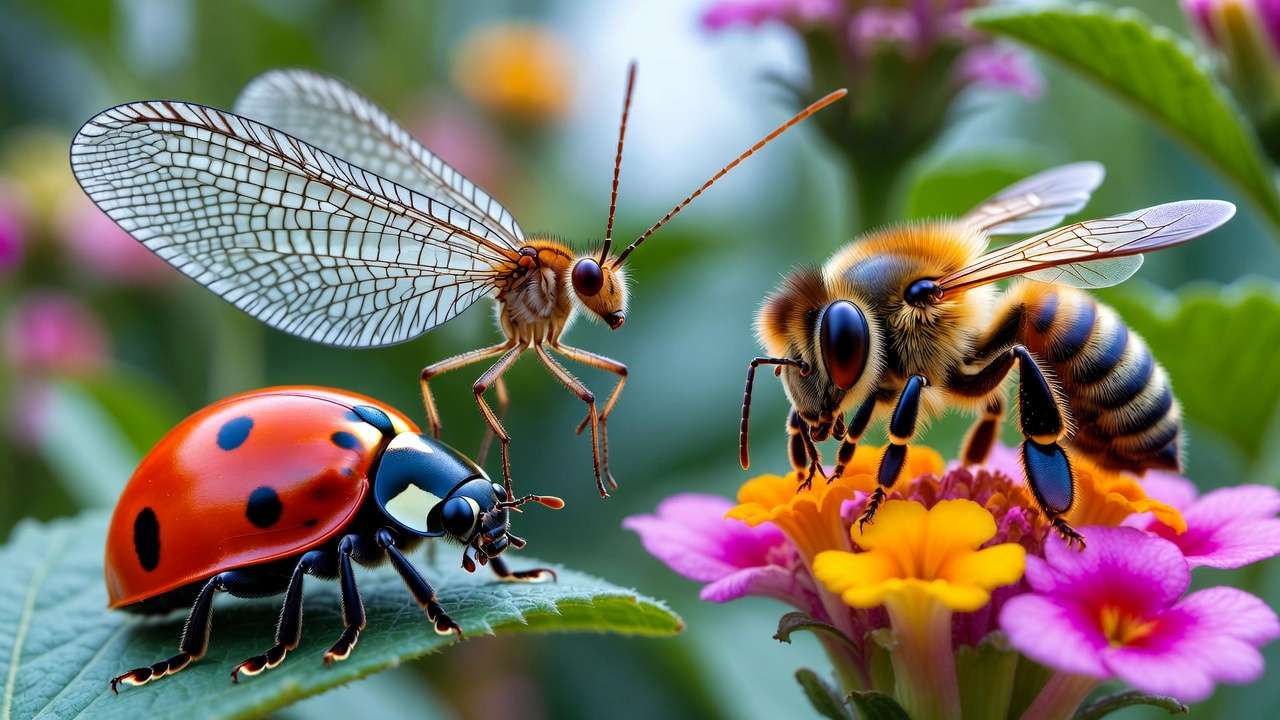
Impact on Pollinators and Beneficial Insects 🐝🪲
Both are highly toxic to bees if directly exposed — EPA labels warn against application during bloom. However, pyrethrins’ quick breakdown, slight repellent effect, and short residual give them an edge: risk drops sharply after a few hours.
Pyrethroids linger, increasing sublethal impacts on bee learning, navigation, and colony health. Recent studies (e.g., Nature Sustainability 2024-2025) link rising pyrethroid/neonic use to widespread wild bee declines (up to 43% in high-use areas).
To minimize harm: Apply at dusk/dawn, avoid flowering plants, and integrate with IPM. Pyrethrins are often preferred in pollinator-friendly gardens.
Cost, Availability, and Organic Certification 💰
Pyrethrins cost more ($30-90/ha) due to natural sourcing but are widely available as concentrates (e.g., PyGanic, EverGreen — many OMRI-listed in 2026). Shelf life is shorter.
Pyrethroids are cheaper ($20-80/ha), longer-lasting, and easier to find — but not organic-approved.
When to Choose Pyrethrin: Best Scenarios for Natural Control 🌱
For most home gardeners, organic enthusiasts, and those prioritizing pollinator-friendly landscapes 🐝, pyrethrin stands out as the superior choice in 2026. Its natural origin, rapid degradation, and OMRI-listed status make it ideal for sensitive environments.
Key scenarios where pyrethrin excels:
- Organic vegetable gardens and edible crops — Short pre-harvest intervals (often 0-1 day) and no synthetic residues ensure safe harvesting. Products like PyGanic Gardening (1.4% pyrethrins, OMRI-listed) or Bonide Pyrethrin Garden Spray provide fast knockdown of aphids, thrips, and whiteflies on tomatoes, peppers, and herbs without compromising organic certification.
- Pollinator-friendly yards and native plantings — Apply at dusk/dawn to minimize bee exposure; quick breakdown reduces lingering risks.
- Light to moderate infestations on trees and shrubs — Effective against caterpillars on fruit trees (e.g., apple maggots) or scale on ornamentals. The “flushing” effect drives pests out of hiding for better control.
- Integrated Pest Management (IPM) programs — Pairs well with beneficial insects, neem oil, or soaps for sustainable, resistance-delaying control.
In 2026, with rising demand for biodiversity support, pyrethrin’s eco-profile aligns perfectly with USDA NOP standards and helps gardeners meet pollinator conservation goals.
When Synthetic Pesticides Might Be the Better Choice (With Caveats) 🔧
Synthetic pyrethroids (e.g., permethrin, bifenthrin, lambda-cyhalothrin) offer advantages in tough situations, but they come with trade-offs. Use them responsibly — only when necessary — and follow EPA mitigation guidelines to reduce runoff and drift.
Ideal scenarios:
- Severe or persistent pest outbreaks — Longer residual (weeks vs. days) controls bark beetles on trees, leaf miners on shrubs, or heavy aphid colonies on ornamentals.
- Large-scale or commercial tree/landscape care — Cost-effective for orchards or nurseries needing extended protection.
- Mosquito or vector control in non-sensitive areas — Broad-spectrum, fast action for public health.
Important caveats in 2026: EPA registration reviews emphasize aquatic toxicity and runoff risks. Avoid near water bodies, blooming plants, or during bee foraging hours. Rotate with other modes of action to prevent resistance, and consider pyrethroids only when pyrethrin or IPM fails.
Integrated Pest Management (IPM): The Smarter Long-Term Strategy 🛡️
True plant and tree health starts with prevention — not just reaction. IPM combines cultural, mechanical, biological, and chemical controls for sustainable results.
- Monitor early — Scout plants/trees weekly for pests (e.g., sticky traps for aphids, visual checks for caterpillars).
- Cultural controls — Choose resistant varieties, maintain healthy soil, prune for airflow, and water properly to reduce stress.
- Mechanical/physical — Hand-pick pests, use row covers, or hose off aphids.
- Biological — Release ladybugs, lacewings, or predatory mites; plant companion flowers to attract beneficials.
- Chemical (last resort) — Start with pyrethrin for organic needs; escalate to pyrethroids only if required. Rotate classes (e.g., with spinosad or neem) to delay resistance.
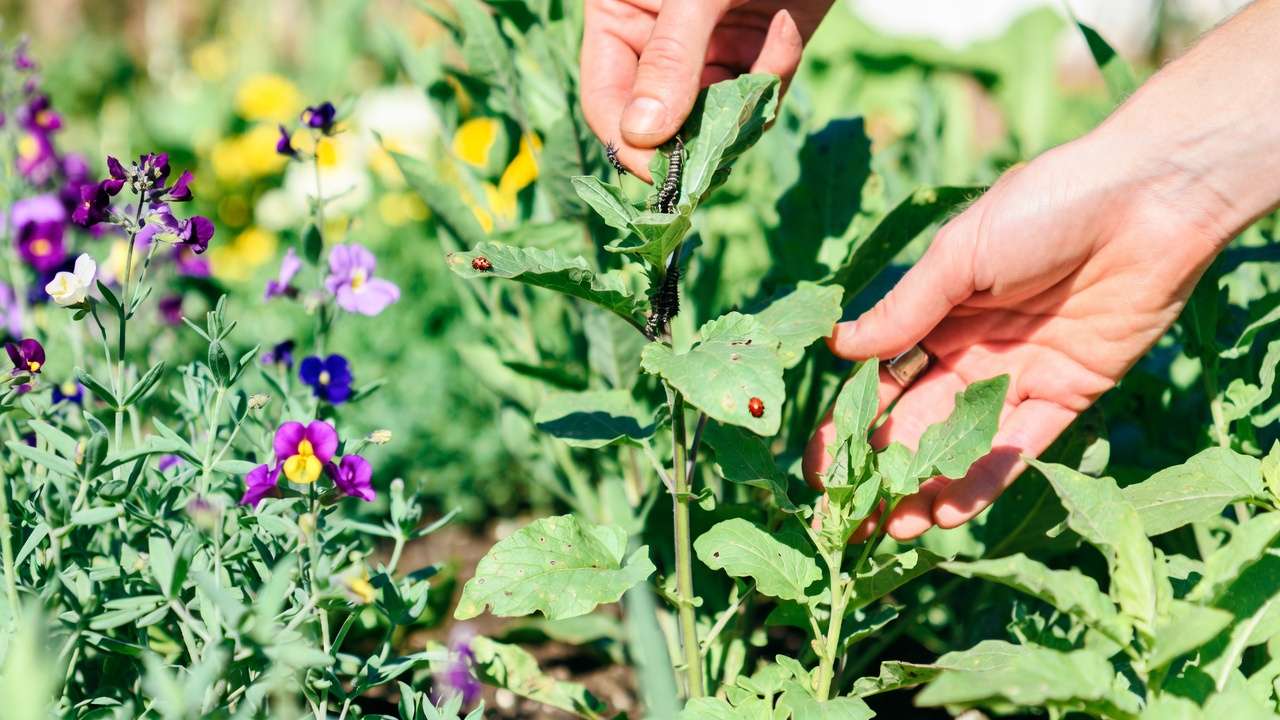
Example IPM plan for common tree pests (e.g., aphids on fruit trees):
- Encourage natural predators.
- Apply horticultural oil in dormant season.
- Use pyrethrin at first sign of infestation.
- Monitor and reapply as needed.
This approach reduces pesticide reliance by 70-90% in many gardens, per university extension studies.
Application Best Practices for Maximum Safety and Results ✂️
Proper use maximizes efficacy while minimizing risks.
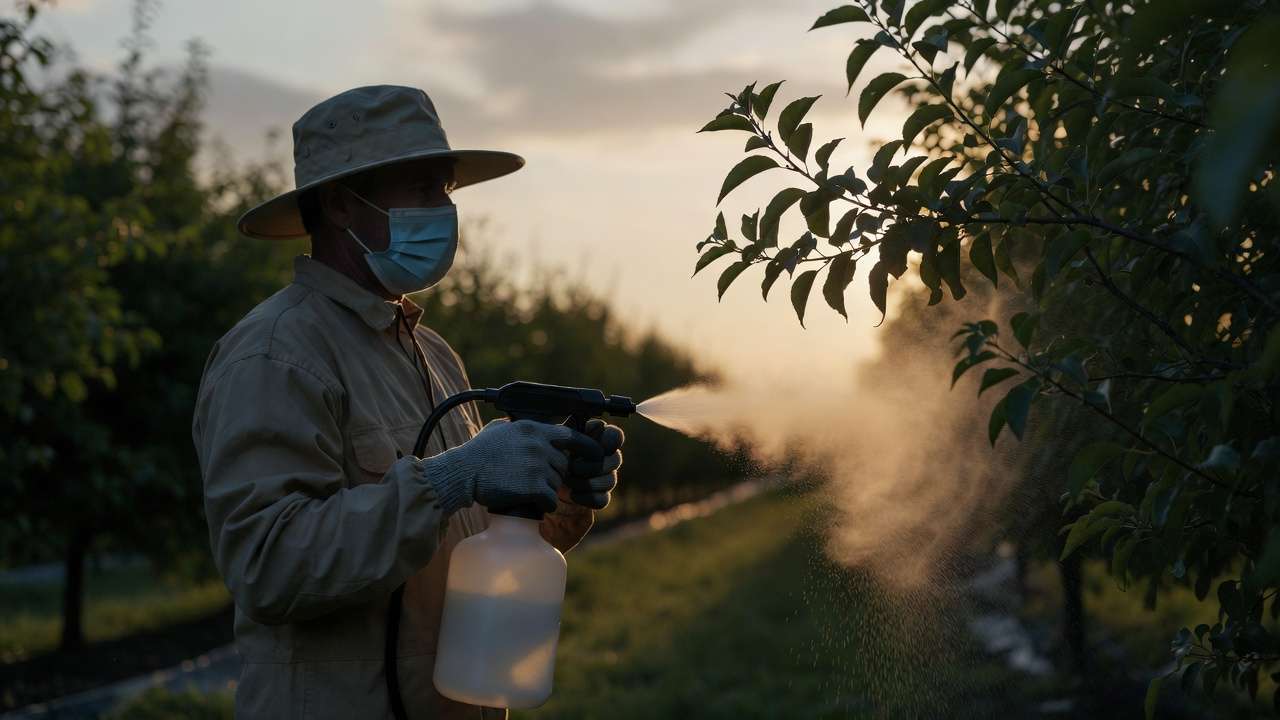
- Timing — Apply at dawn or dusk when bees are less active and wind is calm. Avoid bloom periods.
- Dilution & coverage — Follow label rates exactly; use fine mist for thorough leaf undersides. Add spreader-sticker for better adhesion.
- Weather — No rain for 24 hours post-application; avoid high winds to prevent drift.
- Equipment — Clean sprayers after use; calibrate for even coverage.
- Storage & disposal — Keep in cool, dark place; triple-rinse containers and dispose per local regulations.
For pyrethrin: Reapply every 3-7 days if needed due to short residual. For pyrethroids: Longer intervals (7-14 days) suffice.
Expert Insights and Real Gardener Stories 📝
As a horticulturist with over 15 years in extension services and organic certification consulting, I’ve seen pyrethrin transform gardens. University of California IPM experts note: “Pyrethrins provide quick, low-residue control ideal for home use.”
Case study: Apple orchard in the Pacific Northwest — Switching to PyGanic reduced synthetic applications by 60%, boosted beneficial insect populations, and maintained fruit quality.
Gardener testimonial (from 2025 forums): “I used pyrethrin on my roses — aphids gone overnight, bees unharmed the next day! No more worries about my pollinator patch.”
In 2026, trends favor pyrethrin as regulations tighten on synthetics.
Frequently Asked Questions (FAQs) ❓
Is pyrethrin truly organic and safe for vegetables? Yes — OMRI-listed products are NOP-compliant with short pre-harvest intervals. Safe when used as directed.
How toxic are pyrethroids to earthworms and soil life? Moderately toxic; they bind to soil but can affect beneficials. Pyrethrins degrade faster with less impact.
Can I use both in rotation to prevent resistance? Yes — rotate modes (pyrethrin/pyrethroids with others) to delay resistance.
What are the latest regulations in 2026? EPA continues runoff/drift mitigation for pyrethroids; pyrethrins remain low-risk with organic approval.
Conclusion: Making the Right Choice for Your Garden & Planet 🌳
Pyrethrin vs. synthetic pesticides boils down to priorities: pyrethrin offers natural, rapid, eco-friendly control with minimal environmental persistence — perfect for most home gardeners, organic setups, and pollinator-safe spaces. Synthetic pyrethroids provide longer residual for severe cases but demand caution due to higher aquatic and beneficial insect risks.
Quick decision guide:
- Organic/pollinator priority? → Pyrethrin + IPM
- Severe infestation? → Pyrethroids (with mitigation)
- Best overall? → Pyrethrin first, synthetics as backup
Protect your plants, trees, and the planet sustainably — start with pyrethrin today! Share your success stories below. 🌿🐝🚀











