
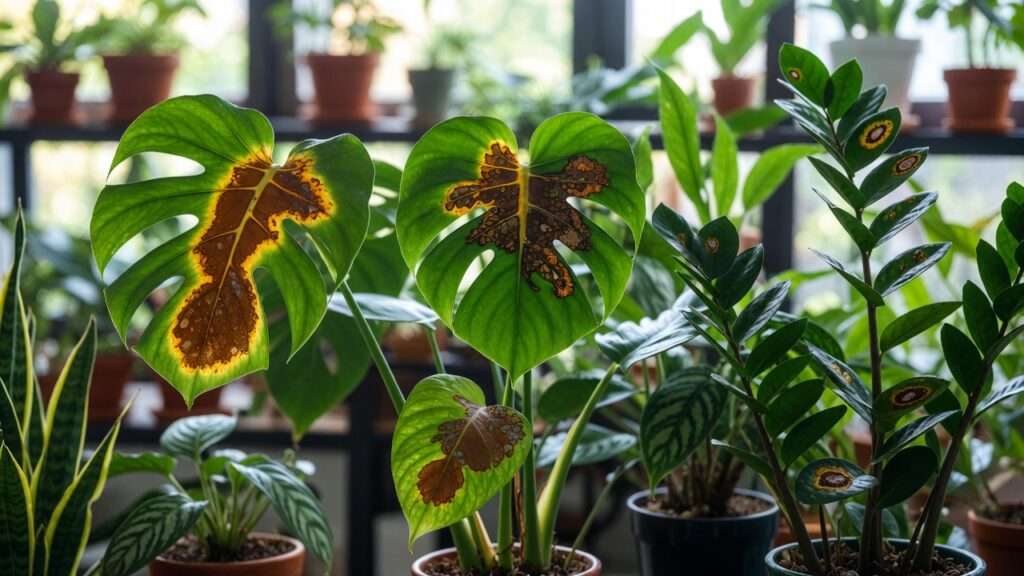
Picture this: You walk past your favorite Monstera deliciosa one morning and notice small, ugly brown spots dotting the beautiful, glossy leaves you’ve nurtured for months. 😱 Your heart sinks. Is it dying? Did you do something wrong?
Leaf spot diseases on houseplants are one of the most common yet heartbreaking problems indoor plant lovers face in 2026. These frustrating spots — ranging from tiny tan flecks to large black lesions with yellow halos — can turn your lush indoor jungle into a sad collection of damaged foliage almost overnight.
The good news? In the vast majority of cases, leaf spot is completely manageable — and often fully reversible — when you catch it early and act correctly.
As plant care specialists who have helped thousands of houseplant enthusiasts rescue their collections over the past decade (and who stay updated with the latest university extension research and grower reports through 2026), we’ve created this ultimate, up-to-date guide to help you:
- Quickly and confidently identify what type of leaf spot you’re dealing with
- Understand the real causes (spoiler: it’s almost never just “bad luck”)
- Apply the most effective treatments — from gentle natural remedies to stronger options when needed
- Build bullet-proof prevention habits so your plants never suffer again 🌱💪
Whether you’re battling spots on your precious Fiddle Leaf Fig, your dramatic Calathea, your classic Pothos, or your trendy Alocasia, this comprehensive guide will arm you with everything you need to become the confident plant doctor your green babies deserve.
Let’s save those leaves — together! 🍃❤️
What Exactly Are Leaf Spot Diseases? 🕵️♀️
Leaf spot is not one single disease — it’s an umbrella term for several different foliar diseases that cause visible lesions (spots) on plant leaves.
The two main categories are:
- Fungal leaf spots (by far the most common indoors)
- Bacterial leaf spots (more aggressive and trickier to control)
These pathogens infect the leaf tissue, killing cells in localized areas and creating the characteristic spots you see. Unlike nutrient deficiencies or pest damage, true leaf spot diseases usually start as small, defined spots that gradually enlarge, merge, or develop distinctive features (rings, halos, fuzzy centers, etc.) over time.
Important: Leaf spot is not the same as:
- Sunburn (large bleached patches)
- Edema (blister-like bumps from overwatering + high humidity)
- Cold damage (darkened translucent areas after cold exposure)
- Spider mite damage (tiny stippling + webbing)
Correct identification is the foundation of successful treatment — guess wrong, and you’ll waste time and possibly harm your plant further.
Common Types of Leaf Spot on Houseplants 🍄🦠
Fungal Leaf Spot (Most Frequent Indoors)
Appearance
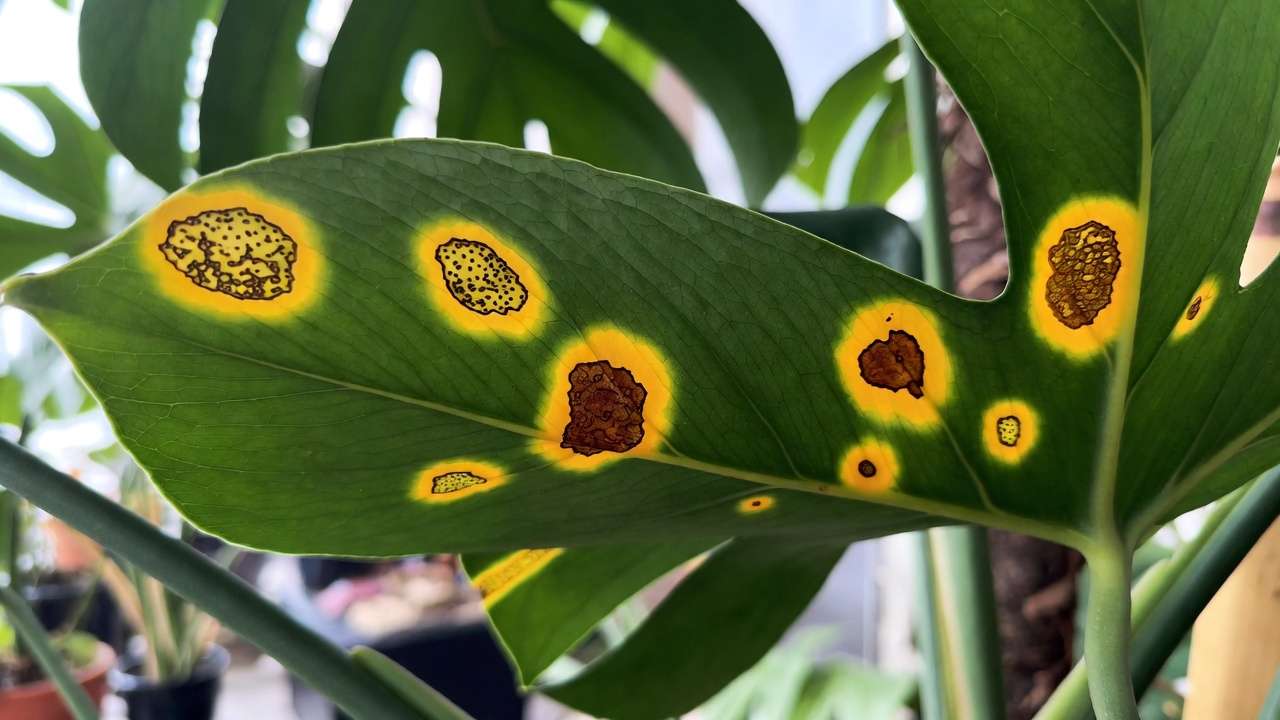
- Small to medium circular or irregular spots
- Colors: tan, brown, reddish-brown, purple-black
- Often surrounded by a bright yellow halo
- May develop tiny black dots (fungal fruiting bodies/pycnidia) inside older spots
- Spots frequently start on lower/older leaves and move upward
- In severe cases, leaves yellow, wither, and drop prematurely
Common fungal pathogens (2026 houseplant reality):
- Alternaria spp.
- Septoria spp.
- Cercospora spp.
- Phyllosticta spp.
- Colletotrichum spp. (anthracnose group — especially devastating on some tropicals)
Bacterial Leaf Spot
Appearance
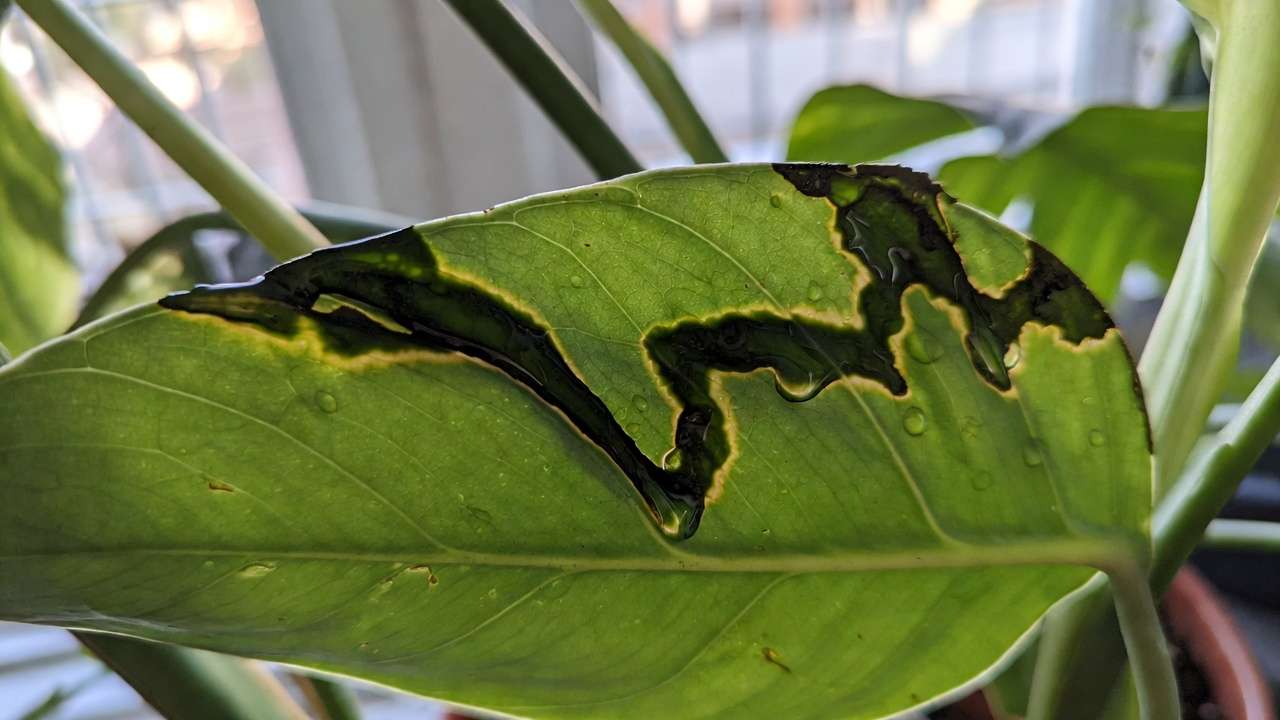
- Water-soaked, dark green to black spots at first
- Often angular (limited by leaf veins) rather than round
- Yellow halos usually present
- Spots may appear greasy or shiny when wet
- In humid conditions, you might see bacterial ooze (sticky droplets) on the underside
Common bacterial culprits:
- Pseudomonas spp.
- Xanthomonas spp. (very common on begonias, peperomias, and some aroids)
Quick Comparison Table: Fungal vs Bacterial Leaf Spot
| Feature | Fungal Leaf Spot | Bacterial Leaf Spot |
|---|---|---|
| Spot shape | Usually round/circular | Often angular/irregular |
| Edges | Defined, sometimes zoned | Blurred, water-soaked look |
| Halo | Bright yellow common | Yellow halo frequent |
| Fruiting bodies | Tiny black dots often visible | Usually absent |
| Ooze | Rare | Common in wet conditions |
| Spread speed | Moderate | Often faster |
| Best treatment | Fungicides + cultural control | Copper-based + strict isolation |
Pro tip: If you see both round spots with black specks and angular greasy spots on the same plant — it’s very possible you have both fungal and bacterial infections happening simultaneously. This is increasingly common in 2025–2026 due to the explosion of high-humidity tropical collections kept in typical home environments.
Houseplants Most Prone to Leaf Spot Diseases 😟
Some houseplants seem to attract leaf spot pathogens like magnets, especially in the warm, humid home environments many of us create for our tropical beauties in 2026. These plants often have dense foliage, thin leaves, or growth habits that trap moisture — the perfect storm for fungal and bacterial outbreaks.
Here are the top culprits we see most frequently (based on reports from university extensions, grower forums, and diagnostic clinics through early 2026):
- Philodendrons & Monsteras 🌿 — Especially heart-leaf philodendron, Monstera deliciosa, and ‘Thai Constellation’. Their large, lush leaves hold onto water droplets easily, making them prime targets for both fungal (Alternaria, Phyllosticta) and bacterial (Xanthomonas, Pseudomonas) spots. Bacterial infections are particularly notorious in Philodendron collections right now.
Here are some real-life examples of what fungal leaf spot looks like on a Monstera:

Notice the classic brown spots with bright yellow halos — a strong sign of fungal activity!
- Pothos, Calatheas & Prayer Plants — These humidity lovers suffer badly when airflow is poor. Calatheas often show bacterial spots first (angular, water-soaked), while Pothos gets more circular fungal lesions.
- Orchids (especially Phalaenopsis & Cattleya) & Begonias — Bacterial leaf spot thrives in the moist microclimates orchid growers create. Spots start small but spread quickly on thin petals and leaves.
- Fiddle Leaf Figs & Peace Lilies — Fiddle Leaf Figs are prone to fungal anthracnose-type spots (Colletotrichum), while Peace Lilies often develop bacterial issues from overhead watering.
- Dracaena, Dieffenbachia & Peperomia — Dracaenas frequently show tip/edge browning that progresses into full leaf spots; Dieffenbachia is highly susceptible to bacterial soft rot and spots.
Pro tip from 2026 trends 🚨: Many trendy tropicals (Alocasias, Anthuriums, Philodendron ‘Pink Princess’) arrive from nurseries already carrying latent infections. Always quarantine new plants for 3–4 weeks!
How to Identify Leaf Spot Early 🔍
Catching leaf spot before it explodes across your collection is key to saving your plant (and your sanity!). Follow this step-by-step visual guide:
- Inspect regularly — Check undersides and older/lower leaves first (pathogens often start there).
- Look at spot characteristics:
- Round/circular with concentric rings or tiny black dots? → Likely fungal ⭐
- Angular/irregular, water-soaked/greasy appearance? → Bacterial (limited by leaf veins)
- Yellow halo present? → Common in both, but brighter in fungal
- Progression — Does it start small and enlarge/merge? Does it cause yellowing then drop? Yes → leaf spot.
- Location & pattern — Spots on tips/edges only? Could be fertilizer burn or dry air. Random across leaf? More likely disease.
Here’s an example of bacterial leaf spot’s telltale angular, water-soaked look:
Differential diagnosis quick checklist:
- Overwatering → Soft, mushy yellow leaves (no defined spots)
- Underwatering → Crispy brown tips/edges
- Spider mites → Tiny stippling + fine webbing
- Cold damage → Translucent dark patches after cold exposure
- Sunburn → Large bleached/white areas
If spots spread rapidly to stems or new growth appears — act fast!
Causes & Risk Factors (Why Your Plant Got Spots) ⚠️
Leaf spot doesn’t just “happen.” These are the real triggers we see over and over:
- Overwatering & wet foliage 💦 — The #1 cause. Splashing water spreads spores/bacteria.
- Poor air circulation — Stagnant air + high humidity = pathogen paradise.
- High humidity without ventilation — 60–80% RH is great for tropicals but deadly without fans.
- Temperature swings — Cool nights + warm days create condensation.
- Contaminated tools, water, or soil — Dirty scissors, reused pots, or tap water with chlorine issues.
- Infected new plants — Nurseries often ship with latent disease.
In 2026, rising home heating (dry winters) followed by humid summers creates perfect conditions for outbreaks in collections.
Effective Treatment Strategies 🛠️
Once you’ve correctly identified leaf spot (fungal or bacterial), swift action is crucial. The goal is to stop the spread, remove infected tissue, and create conditions where the pathogen can’t thrive anymore.
Immediate First Aid (H3)
- Isolate the affected plant immediately 🚫 — Move it at least 3–5 feet away from your other plants (ideally to a separate room). Leaf spot spreads via water splash, air currents, and contact.
- Remove infected leaves — Use clean, sharp scissors or pruning shears sterilized with 70% isopropyl alcohol between each cut. Cut off any leaf with more than 25–30% spotting. Dispose of clippings in the trash (not compost!).
- Clean the area — Wipe down nearby surfaces, pots, and tools. If the plant is in a cluster, gently clean adjacent leaves with a damp cloth.
Natural & Organic Treatments (H3) 🌱
These are our first-line recommendations for mild to moderate cases — especially if you prefer pet-safe, eco-friendly options.
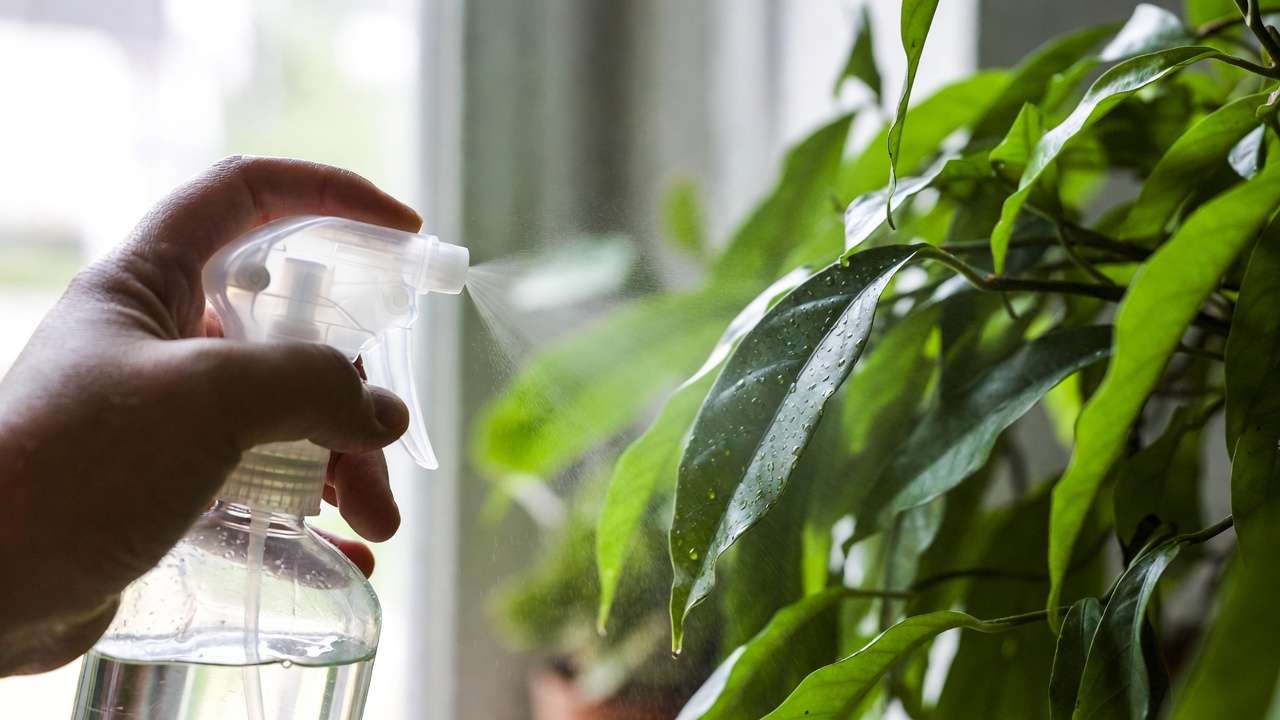
- Neem oil — One of the most effective organic choices for both fungal and bacterial leaf spot. Mix 1–2 tsp pure neem oil + 1 tsp mild dish soap (like Castile) per quart of lukewarm water. Spray thoroughly on all surfaces (top & bottom of leaves) every 7–10 days for 3–4 applications. Here are some examples of proper neem oil application on houseplant leaves:
Note: Apply in the evening or low light to avoid leaf burn. Test on one leaf first.
- Baking soda + horticultural oil — For fungal spots: 1 tsp baking soda + ½ tsp horticultural oil + 1 quart water. Spray every 5–7 days.
- Hydrogen peroxide solution (3%) — Dilute 1 part 3% H₂O₂ with 3 parts water. Use as a soil drench or light foliar spray to kill surface pathogens.
- Copper-based products (e.g., Bonide Liquid Copper) — Excellent for bacterial leaf spot; apply sparingly indoors with good ventilation.
Chemical & Stronger Options (H3) ⚗️
For severe or rapidly spreading cases (especially bacterial):
- Systemic fungicides — Products containing myclobutanil, thiophanate-methyl, or propiconazole (check labels for indoor/houseplant approval).
- Chlorothalonil-based fungicides — Broad-spectrum and very effective against most fungal leaf spots.
- Bio-fungicides — Bacillus subtilis or Trichoderma-based products offer safer, preventive protection.
Always:
- Read and follow label instructions exactly.
- Wear gloves and ventilate the area.
- Test on a small area 24 hours before full application.
- Rotate products if treating repeatedly to prevent resistance.
Recovery Timeline & Monitoring (H3)
- Week 1–2: New spots should stop appearing if treatment is effective.
- Week 3–4: Healthy new growth often emerges spot-free.
- Monitor weekly. If spots return → reassess environment or consider stronger intervention.
Here’s a healthy, recovered Monstera with lush, spot-free leaves after proper treatment — proof that recovery is possible!

Prevention: Keep Leaf Spot Away Forever! 🛡️
Prevention is 80% of the battle. Adopt these habits to make your home inhospitable to leaf spot pathogens:
- Water wisely 💧 — Bottom-water when possible. Use room-temperature water. Let the top 1–2 inches of soil dry before watering again. Never let leaves stay wet overnight.
- Boost airflow — Use small oscillating fans on low. Space plants 12–18 inches apart.
- Humidity balance — Aim for 50–70% RH for tropicals, but always pair with ventilation (avoid stagnant wet air).
- Quarantine new plants — 3–4 weeks minimum. Inspect daily.
- Sterilize everything — Pots, tools, stakes — soak in 10% bleach solution or use alcohol wipes.
- Choose resistant varieties — When available, opt for cultivars bred for disease resistance (e.g., some newer Monstera hybrids show better tolerance).
- Seasonal adjustments — Reduce watering in winter; increase airflow in humid summers.
These simple changes dramatically reduce outbreaks — many of our readers report going years without spots after implementing them.
Expert Insights & Pro Tips 💡
After helping hundreds of plant parents troubleshoot leaf spot issues (and staying current with 2025–2026 university extension reports, grower forums, and new research), here are the real-world lessons that make the biggest difference:
Most Common Mistakes We See Plant Parents Make
- Misting too aggressively — While many tropicals love humidity, constant leaf misting (especially in low-airflow homes) is one of the fastest ways to spread fungal and bacterial spores. → Switch to pebble trays, humidifiers, or grouping plants instead.
- Over-relying on overhead watering — Water droplets left sitting on leaves overnight are basically an invitation for pathogens.
- Skipping quarantine — The number-one source of new infections in 2026? Trendy plants bought online or at big-box stores that arrive already carrying latent disease.
- Treating symptoms but not the environment — You can spray all the fungicide in the world, but if airflow stays poor and leaves stay wet, the problem will return.
2026 Reality Check With more people building high-humidity indoor jungles (thanks to popular TikTok/Instagram trends), leaf spot cases have noticeably increased in the last 12–18 months — especially bacterial infections on aroids (Monsteras, Philodendrons, Alocasias). Home heating systems in winter also create big swings between dry air and sudden humid microclimates, stressing plants and opening doors for disease.
When Is It Time to Say Goodbye? (Honest Expert Advice) In rare cases, yes — a plant may be too far gone:
- More than 70–80% of foliage is affected
- Infection has reached the stem/main growing point
- New growth emerges already spotted
If you’re dealing with a very expensive or sentimental plant, try one last aggressive treatment round (copper + strict isolation + fresh soil). But if the plant is declining fast despite everything, it’s kinder (and safer for your collection) to discard it and start fresh with a healthy specimen.
Bonus: Companion Care Routine for Spot-Prone Plants Create a simple weekly checklist:
- Sunday: Bottom-water all plants
- Tuesday: Check airflow & rotate plants for even light
- Thursday: Quick leaf inspection + wipe dust
- Saturday: Apply preventive neem oil spray (diluted, every 2–3 weeks)
This routine alone prevents the majority of outbreaks.
Frequently Asked Questions (FAQs) ❓
Is leaf spot contagious to other plants? Yes — very much so, especially bacterial types. Spores and bacteria spread through water splash, air currents, shared tools, and even your hands/clothes. Always isolate first!
Can I save a heavily affected plant? Often yes — if you catch it before the stem is compromised. Remove all infected tissue, treat aggressively, and fix the environment. Many of our readers have fully recovered Monsteras and Fiddle Leaf Figs that looked hopeless.
Do homemade remedies really work? Some do for mild cases: neem oil, diluted hydrogen peroxide, and baking soda sprays can suppress early fungal spots. But for moderate-to-severe infections (especially bacterial), they’re usually not strong enough alone.
Are fungicides safe for pets and kids indoors? It depends on the product. Many copper-based and bio-fungicides (Bacillus subtilis) are considered low-risk when used as directed. Avoid broad-spectrum synthetics in homes with pets/children — opt for natural options first and always ventilate well.
How long does full recovery take? Typically 3–8 weeks for new, healthy growth to appear, depending on the plant’s vigor, season, and how quickly you acted. Patience is key!
Conclusion
Leaf spot diseases on houseplants can feel devastating when you first spot those ugly brown or black marks on your beautiful foliage. But here’s the truth we want every plant parent to remember:
Your plants are far more resilient than most people realize.
With early identification, the right treatment (natural or targeted), and — most importantly — consistent prevention habits, you can stop leaf spot in its tracks and keep your indoor jungle thriving for years to come. 🌿✨
You now have the complete roadmap:
- Know exactly what you’re looking at
- Understand why it happened
- Treat it effectively
- Prevent it forever
Your green friends are counting on you — and with this guide, you’re officially equipped to be their expert plant doctor. 💚
We’d love to hear from you! Have you battled leaf spot before? Drop a comment with your before-and-after story, which plant gave you the most trouble, or any questions that came up while reading.
Happy growing, and here’s to spot-free leaves in 2026 and beyond! 🍃🌱











