
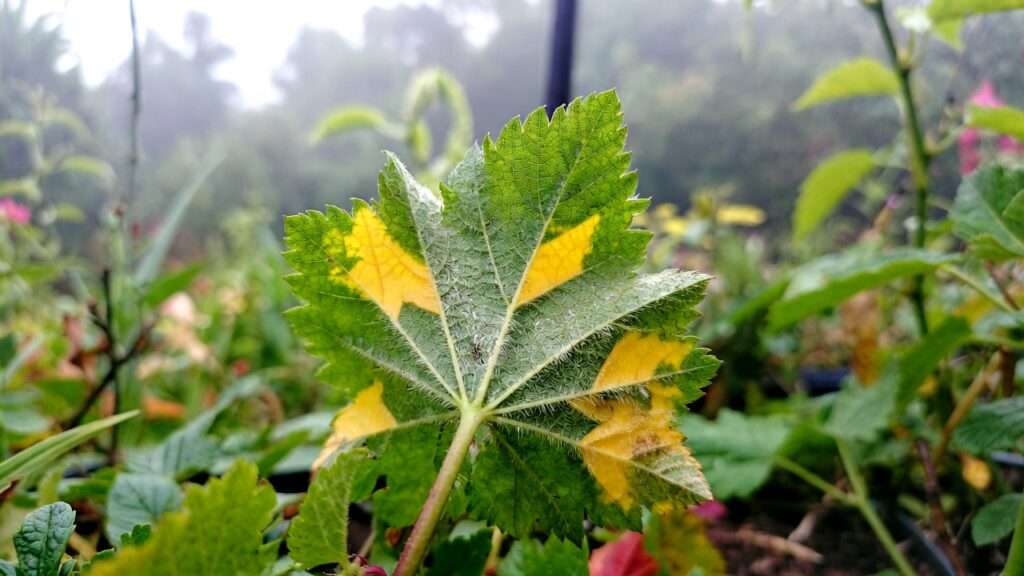
Imagine stepping into your garden one cool, misty morning, coffee in hand, only to discover your once-vibrant cucumber vines or cherished rose bushes dotted with strange yellow patches and a suspicious fuzzy coating underneath the leaves. 😱 Your heart sinks—what started as a minor eyesore could spiral into total defoliation and lost harvests in just days if ignored!
This is the sneaky reality of downy mildew identification—a critical skill every gardener needs. Downy mildew, caused by oomycete pathogens (water molds, not true fungi), strikes fast in humid, cool weather, often mimicking nutrient deficiencies or other diseases. Early spotting can mean the difference between a thriving garden and a heartbreaking wipeout.
In this comprehensive guide, we’ll draw from trusted university extension resources (like Wisconsin Horticulture, University of Minnesota, Purdue, and UMD) to arm you with expert-level knowledge. You’ll learn precise symptoms, plant-specific examples, foolproof ways to distinguish it from look-alikes like powdery mildew, environmental triggers, and confirmation tips. By the end, you’ll be a true downy mildew detective, ready to protect your vegetables, ornamentals, and landscape plants! 🌱 Let’s dive in and save those leaves before it’s too late. 🚀
What Is Downy Mildew? Understanding the Culprit 🧬
Downy mildew isn’t caused by a true fungus—it’s an oomycete, often called a water mold, from genera like Pseudoperonospora, Peronospora, and Plasmopara. These obligate parasites need living plant tissue to survive and reproduce.
Different strains are highly host-specific: Pseudoperonospora cubensis devastates cucurbits (cucumbers, squash, melons), Peronospora sparsa targets roses, and others hit brassicas, grapes, or ornamentals like impatiens and viburnum.
The life cycle is rapid and devastating under the right conditions. Spores (sporangia) land on wet leaves, germinate (often releasing swimming zoospores in some species), penetrate through stomata, and establish haustoria to feed on plant cells. Within 4–10 days (typically 7), new sporangiophores emerge through leaf undersides as fluffy growth, releasing more wind- or splash-dispersed spores.
This polycyclic nature means epidemics explode quickly—especially with prolonged leaf wetness from rain, dew, fog, or overhead watering. Cool temperatures (40–70°F or 4–21°C) and humidity over 85–90% are ideal; dry, hot weather halts spread. 💧
Why care so much? Untreated downy mildew causes rapid yellowing, browning, defoliation, stunted growth, reduced yields, and even plant death. In vegetables, it slashes edible production; in ornamentals and trees/shrubs, it ruins aesthetics and weakens plants for winter. Early downy mildew identification stops the cycle—knowledge truly is power here! 🌟
Key Symptoms of Downy Mildew: What to Look For 👀
Spotting downy mildew early relies on recognizing its signature patterns. Symptoms almost always start on leaves, progressing from subtle to severe.
Early Warning Signs on the Upper Leaf Surface
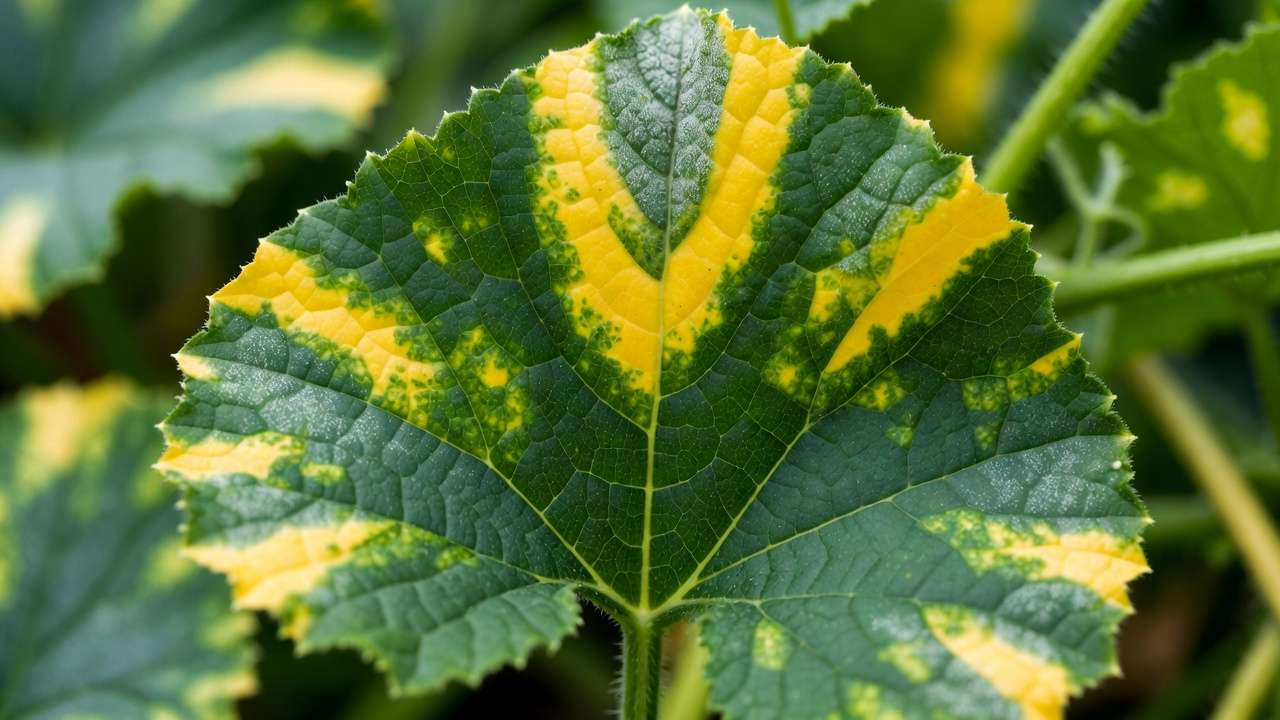
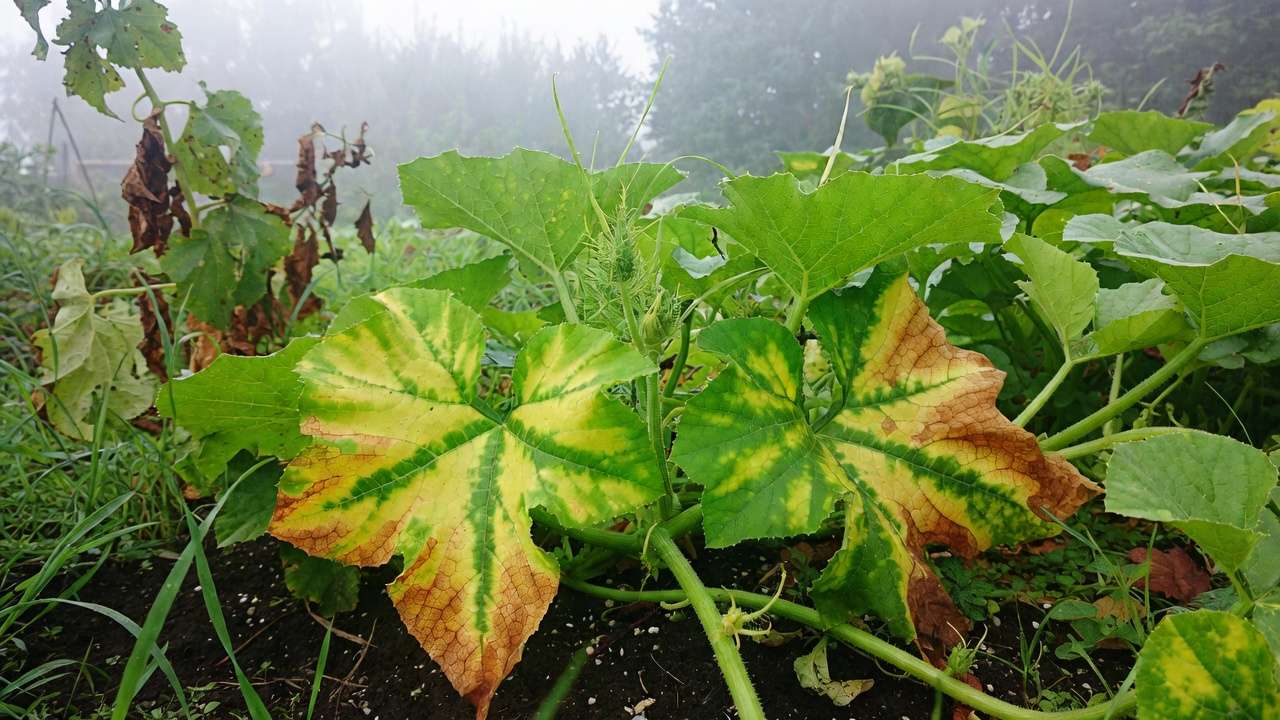
The first clues appear on the top side: small, translucent, water-soaked spots that shift to pale green or yellow chlorotic areas. These enlarge into distinctive angular lesions—blocky, yellow patches sharply bounded by leaf veins, giving a “quilted” or mosaic look. This angularity is especially pronounced in cucumbers and some cucurbits due to restricted pathogen spread between major veins.
As infection advances, spots turn tan, brown, bronze, or necrotic (dead tissue). Leaves may curl downward, distort, wilt prematurely, or drop entirely. In severe cases, entire vines or bushes defoliate rapidly. Older leaves near the plant center often show signs first, but it spreads outward.
Pro tip: Inspect in morning light—early symptoms can resemble nutrient burn or bacterial spots, but the angular borders and progression set downy mildew apart. 🔍
The Telltale Sign – Underside Growth
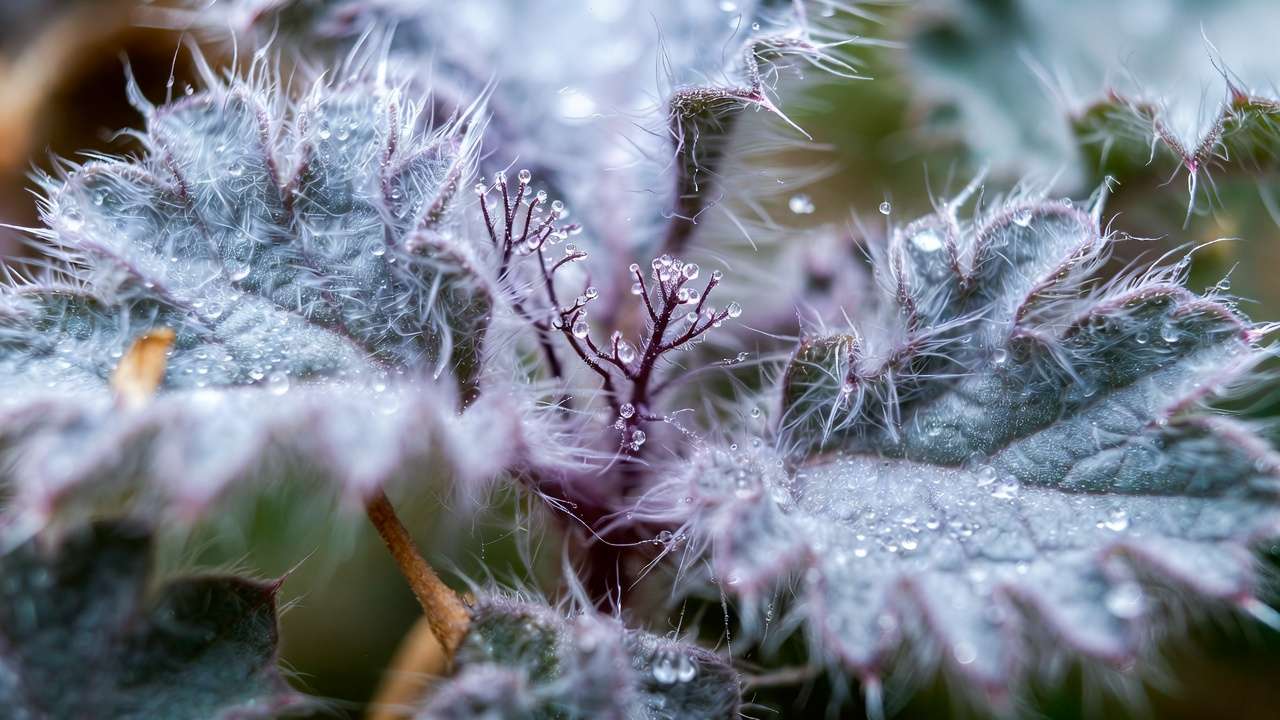
Flip the leaf! This is your golden diagnostic clue: a fluffy, downy fuzz or sporulation on the underside, directly opposite upper spots. The mold appears white, gray, purplish, violet, or bluish-gray (depending on the pathogen and host).
Best seen during high humidity or early mornings with dew—use a 10x hand lens to reveal branched sporangiophores resembling tiny trees. This “downy” appearance gives the disease its name and confirms it’s not powdery mildew (which shows superficial white powder mostly on top). In wet weather, sporulation can be profuse and visible from afar. 🌫️
Symptoms on Other Plant Parts
While primarily foliar, advanced infections hit stems (oily/purplish streaks), flowers (distortion, browning), and fruits (spots, rot). Systemic cases (rare) cause overall stunting or discoloration in young shoots.
Regular scouting: Check lower, shaded, or inner foliage first—symptoms often hide there before exploding outward.
Plant-Specific Identification Examples
- Cucurbits (cucumbers, squash, melons, pumpkins) 🥒: Classic angular yellow spots on upper surface (bright halos sometimes), turning brown; purplish-gray to dark fuzzy underside. Starts centrally on older leaves—devastating for late-season crops.
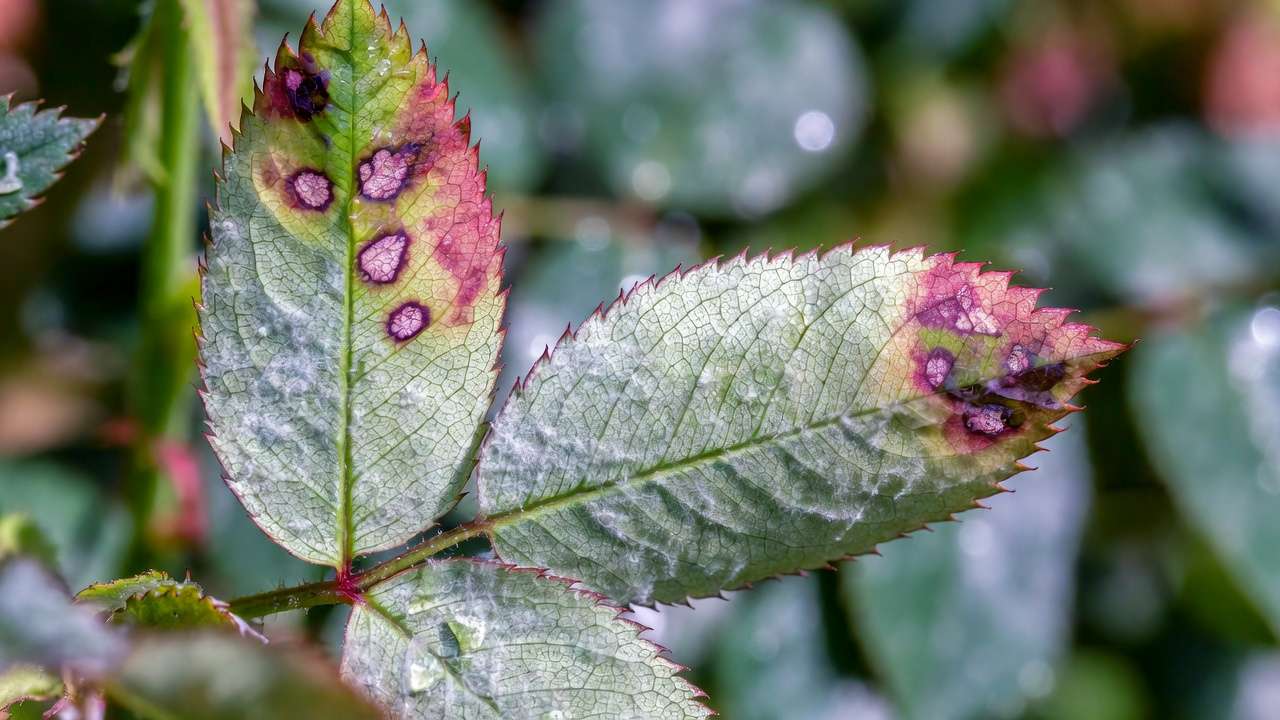
- Roses & Ornamentals 🌹: Oily purplish-reddish spots (less angular), gray-white fuzz underneath; new growth distorts or reddens. Common on leaves, can defoliate bushes.
- Brassicas (cabbage, broccoli, kale): Irregular gray-black lesions, white to gray mold below.
- Grapes & Vines 🍇: Oily angular spots, downy purple growth; leads to bunch rot and defoliation.
- Other veggies (lettuce, spinach, onions, basil): Yellow angular/tan spots, purplish or gray fuzz—basil often shows purplish-gray spores prominently.
Visualize: Angular yellow upper + corresponding downy fuzz lower = downy mildew alert! Add high-quality close-up photos here for readers (e.g., cucumber leaf top/bottom comparison). 📸
Downy Mildew vs. Powdery Mildew: Don’t Get Confused! ⚖️
One of the most common pitfalls in downy mildew identification is mistaking it for powdery mildew—the two share a name but couldn’t be more different in appearance, biology, and impact. Getting this wrong can lead to ineffective treatments and wasted time, so let’s break it down clearly with a side-by-side comparison.
H2: Side-by-Side Comparison Table
| Feature | Downy Mildew | Powdery Mildew |
|---|---|---|
| Pathogen Type | Oomycete (water mold, not a true fungus) | True fungus (Erysiphales order) |
| Primary Appearance | Angular yellow/brown/tan spots on upper surface; fluffy downy fuzz (white/gray/purple) mostly on underside | Circular or irregular white/gray powdery coating, often on both sides (looks like flour dusted on) |
| Growth Location | Sporulation almost always on leaf underside; lesions bounded by veins (angular shape) | Superficial growth on upper surfaces, stems, flowers; not vein-limited |
| Color of “Mold” | Gray, purplish, violet, bluish, or white fuzzy growth | Bright white to grayish powder |
| Conditions Favored | Cool (40–70°F/4–21°C), wet/high humidity (>85–90%), prolonged leaf wetness (rain, dew, overhead watering) | Warm, dry days with high humidity at night; shaded, crowded areas |
| Plant Parts Affected | Primarily leaves (can spread to stems, flowers, fruit); often starts on older/lower leaves | Leaves, stems, buds, flowers, young shoots; often starts on new growth |
| Severity & Impact | Highly destructive—rapid defoliation, plant death possible in days/weeks under ideal conditions | Mostly cosmetic; weakens plants but rarely kills outright |
| Spread Mechanism | Wind/splash-dispersed spores; requires free water for germination | Wind-dispersed conidia; no free water needed |
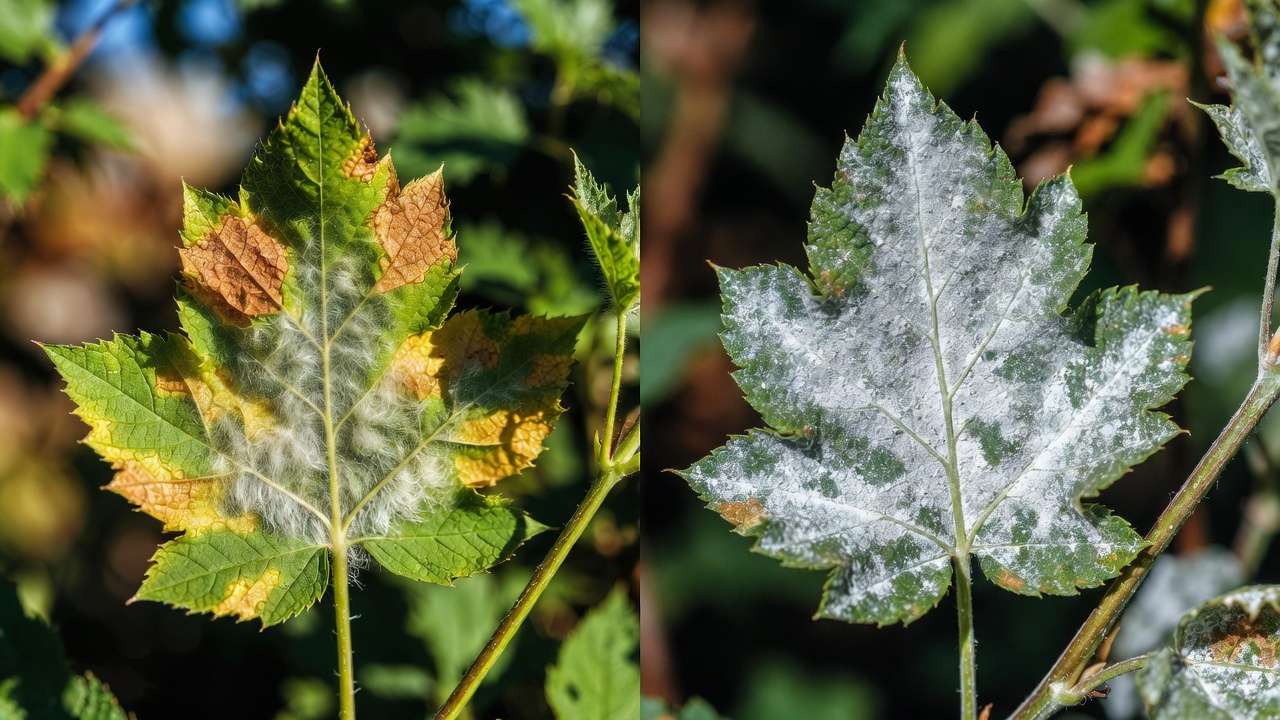
Expert insight: If you see white powder mostly on the top like someone sprinkled talcum powder → it’s powdery mildew. If it’s fuzzy/downy growth underneath opposite angular yellow patches → downy mildew every time! Use a hand lens to confirm—downy mildew sporangiophores look like tiny branched trees, while powdery mildew produces chains of spores.
Other frequent misdiagnoses include:
- Nutrient deficiencies (yellowing without angular borders or fuzz).
- Bacterial leaf spots (water-soaked, often with yellow halos but no downy underside).
- Gray mold (Botrytis)—fuzzy gray but usually on decaying tissue, not healthy leaves.
By mastering this distinction early, you’ll avoid panic treatments and target the real issue—saving your plants and your sanity! 😅
When & Where Downy Mildew Thrives: Environmental Triggers 🌧️
Downy mildew doesn’t strike randomly; it explodes under specific weather patterns that gardeners in humid or temperate regions know all too well.
The pathogen loves cool, moist conditions:
- Optimal temperatures: 40–70°F (4–21°C) for infection and sporulation.
- High relative humidity: ≥85–90%, often >95% at night.
- Prolonged leaf wetness: 6–12+ hours from rain, heavy dew, fog, overhead irrigation, or poor airflow.
These triggers are common in spring and fall (or during rainy summers), especially in shaded, crowded gardens where leaves stay wet longer. Spores need free water on foliage to germinate—dry spells halt spread almost immediately.
Regional notes for gardeners:
- In areas like the northeastern U.S., Midwest, or humid tropics/subtropics (including parts of South Asia like Bangladesh), downy mildew epidemics hit cucurbits hard mid-to-late season.
- Greenhouses and high tunnels amplify risks due to trapped humidity.
Why early identification matters so much: One infected leaf can produce millions of spores, spreading via wind or splashing water. A single overnight dew can turn a minor spotting into widespread defoliation. Monitor forecasts for cool, wet stretches—scout vigilantly during those windows! ⏰
How to Confirm Downy Mildew: Pro Tips & Tools 🔬
Suspect downy mildew? Don’t guess—confirm to act confidently.
- Hand Lens Inspection (your best friend!): Grab a 10x–20x jeweler’s loupe or hand lens. Look at the leaf underside for sporangiophores—branched structures like miniature trees bearing sporangia (spores). This microscopic view distinguishes it from superficial powdery growth or other fuzz.
- DIY Humidity Test: Place a suspect leaf in a sealed plastic bag with a damp paper towel overnight. In the morning, check for increased fluffy sporulation—downy mildew loves the moisture boost.
- Photo Comparison: Take clear top/bottom shots in good light. Compare to reliable sources like university extensions (Wisconsin Horticulture, Purdue, UMD, UF/IFAS). Many offer photo galleries for exact matches.
- Lab Confirmation (when in doubt): For valuable plants, new varieties, or if symptoms are ambiguous (e.g., no visible sporulation yet), send samples to your local cooperative extension or plant diagnostic lab. They use microscopy and sometimes molecular tests (PCR) for precise pathogen ID—especially useful for host-specific strains.
Pro tip: Always scout in the early morning when dew highlights the fuzz. Regular weekly checks during risky weather prevent surprises. 📸
What to Do Next: Quick Action Steps After Identification (Teaser) 🚨
Once confirmed:
- Prune and destroy infected parts immediately (bag and trash—don’t compost!).
- Improve airflow: Space plants, prune dense foliage.
- Switch to soil-level watering to keep leaves dry.
- (For full management strategies—including organic and cultural controls—check our companion guide on downy mildew prevention and treatment!)
FAQs About Downy Mildew Identification ❓
Gardeners frequently have the same burning questions when they first encounter this disease. Here are the most common ones, answered with clarity and backed by extension service expertise:
Is downy mildew the same as powdery mildew? No — they are completely different pathogens with opposite requirements! Downy mildew needs wet, cool conditions and shows fuzzy growth mostly underneath leaves with angular yellow spots on top. Powdery mildew thrives in warm, dry weather and appears as white powder mainly on the upper surfaces. Mixing them up is the #1 identification mistake. ⚖️
Can downy mildew affect trees and woody shrubs? Yes, though it’s less common than on vegetables and annuals. Certain oomycetes target landscape plants like viburnum (Plasmopara viburni), oak (Plasmopara obducens in some regions), roses, and even some conifers. Symptoms are similar: angular spotting, downy underside fuzz, and premature leaf drop. In trees, it usually weakens rather than kills outright, but repeated defoliation stresses the plant. 🌳
What if I see fuzzy growth on the underside but no obvious yellow spots yet? This is often the very early stage! Sporulation can appear before upper-surface chlorosis becomes prominent, especially in high humidity. Inspect closely with a hand lens — if you see branched sporangiophores, act immediately even if the top looks mostly normal. Early intervention is easiest at this point. 🔍
Does downy mildew occur on indoor houseplants or in greenhouses? Rarely on typical houseplants (they prefer outdoor humidity swings), but greenhouses and high tunnels are perfect breeding grounds due to consistent high humidity and poor ventilation. Basil, impatiens, and some orchids are particularly vulnerable indoors or under cover. Use fans, space plants, and avoid misting foliage to prevent outbreaks. 🪴
How fast can downy mildew actually spread? Extremely fast under ideal conditions — a single infected leaf can release thousands to millions of spores per day. With overnight dew or rain, you can see new lesions appearing on adjacent plants within 4–7 days. In epidemics (common in cucurbit fields during wet summers), entire rows can become defoliated in 1–2 weeks. Time is critical! ⏰
Will downy mildew kill my plant completely? It depends on the host, timing, and weather. In vegetables like cucumbers or melons, severe infections often lead to total vine collapse and zero harvest. In perennials, roses, or shrubs, it usually causes heavy defoliation and stress but the plant can regrow if conditions improve and you remove infected tissue promptly. Repeated years of infection can weaken woody plants long-term. 💪
Is it safe to eat vegetables that had downy mildew? Yes — downy mildew does not produce toxins harmful to humans. Affected leaves are unpalatable and should be removed, but fruit from mildly infected plants is generally safe after thorough washing. However, severe infections reduce yield and quality, so prevention is still key. 🥗
These answers address the real confusion and anxiety gardeners feel when spotting symptoms — you’re not alone!
Conclusion: Become a Downy Mildew Detective Today! 🕵️♂️🌱
You’ve now got the full toolkit for downy mildew identification: the signature angular yellow lesions on top, the unmistakable fluffy downy fuzz underneath, plant-specific examples, clear distinctions from powdery mildew and other look-alikes, environmental red flags, and pro confirmation techniques.
The single most powerful takeaway? Regular, proactive scouting saves gardens. Make it a habit: every few days during cool, damp weather, flip a few leaves — especially lower, older, or shaded ones — and look for those telltale signs. Catch it in the first 1–2 leaves affected, and you can often stop an epidemic before it starts.
With sharp eyes, a simple hand lens, and this guide drawn from decades of university research and real-world extension experience, your vegetables, roses, ornamentals, and even landscape trees stand a much better chance of thriving all season long.
Your garden is worth protecting — and now you have the knowledge to do it confidently. 🌟
Have you battled downy mildew before? Drop a comment below with your plant, what symptoms you saw first, or a photo (we love seeing real examples!). Subscribe for more in-depth plant care guides, seasonal alerts, and prevention tips tailored to gardeners just like you.
Happy gardening — and may your leaves stay spot-free! 🍃✨











