
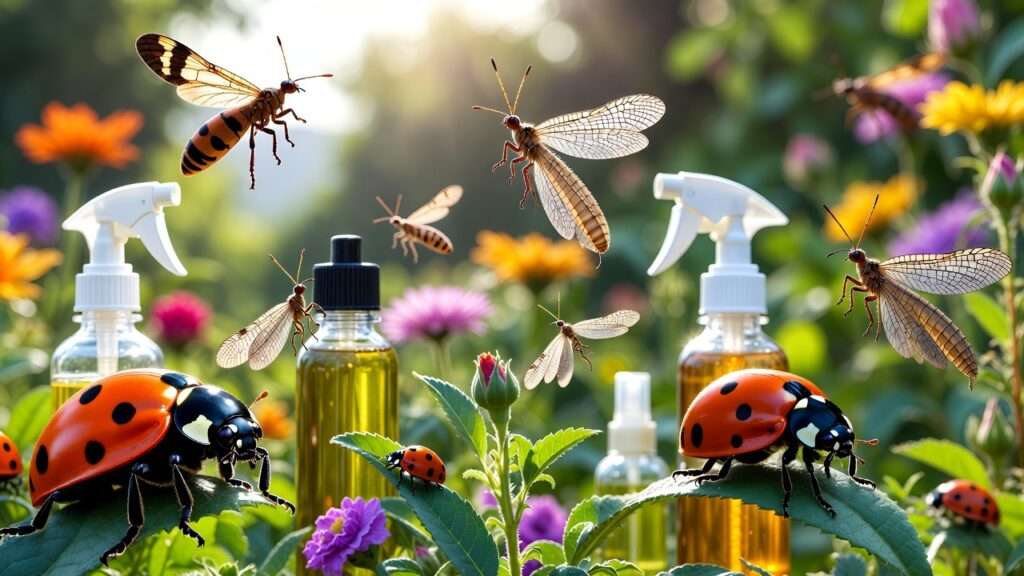
Imagine walking into your garden at dawn, roses covered in aphids, fruit trees dotted with tiny caterpillars, and your precious citrus leaves curling from scale insects… only to watch ladybugs, lacewings, and parasitic wasps arrive like tiny superheroes ready to save the day 🍃✨.
But then — one hasty spray of the wrong product — and your helpful allies disappear overnight. 😢
If this heartbreaking scenario sounds all too familiar, you’re not alone. Thousands of organic gardeners and tree care enthusiasts face the same dilemma every season: how to control pests effectively without destroying the very natural predators that keep your garden balanced long-term.
That’s exactly why integrating beneficial insects with organic sprays has become the gold-standard approach in modern, sustainable plant protection. This powerful combination gives you fast knockdown when needed and lasting, self-sustaining control — all while protecting pollinators, beneficials, soil life, and your family’s health.
In this ultimate, expert-level guide, you’ll discover the proven strategies, exact timing rules, safest product choices, habitat secrets, and real-world case studies that top entomologists, certified organic growers, and experienced backyard orchardists use to create thriving, nearly pest-resistant ecosystems.
Let’s build your chemical-free fortress — step by beautiful step. Ready? 🌱🚀
What Are Beneficial Insects and Why Do They Matter So Much? 🐞💚
Beneficial insects are nature’s pest control army. They fall into three main categories:
- Predators — actively hunt and eat pests (ladybugs 🐞, lacewing larvae, hoverfly larvae, predatory mites, ground beetles)
- Parasitoids — lay eggs inside or on pests, eventually killing the host (Trichogramma wasps, Aphidius wasps, tachinid flies)
- Pollinators & incidental helpers — bees 🐝, syrphid flies, and others that also consume some pest species
Here’s why they deserve VIP status in your garden:
- A single ladybug can devour up to 5,000 aphids during its lifetime (University of California IPM Program)
- Parasitic wasps can reduce caterpillar populations by 60–90% when released at the right moment (Cornell University research)
- Predatory insects provide continuous, free control — unlike sprays that wear off after days or weeks
- They help break pest life cycles before outbreaks become severe
- They improve overall biodiversity → healthier soil → stronger plants
Bottom line: Beneficial insects are the cornerstone of long-term, low-maintenance pest management in organic gardens, orchards, and tree care. Learning to protect and recruit them is one of the smartest investments you’ll ever make. 🌍
Understanding Organic Sprays: Your Safe Arsenal Options 💦🌿
Not all “organic” sprays are created equal — especially when beneficial insects are part of the plan. Here are the most commonly used, OMRI-listed (or equivalent) options, ranked by general safety to beneficials:
| Organic Spray | Target Pests | Mode of Action | Residual Activity | Safety to Most Beneficials | Notes & Cautions |
|---|---|---|---|---|---|
| Bt (Bacillus thuringiensis kurstaki / israelensis) | Caterpillars, some beetles, mosquito larvae | Stomach poison (very specific) | 3–7 days | ★★★★★ (Excellent) | Extremely selective — bees, ladybugs, lacewings safe |
| Insecticidal Soap | Aphids, whiteflies, spider mites, soft scales | Disrupts cell membranes (contact) | Hours | ★★★★ (Very Good) | Short-lived, safest when used at dusk/dawn |
| Horticultural (Superior) Oil | Scale, mites, aphid eggs, some larvae | Smothers / suffocates | Days | ★★★ (Good) | Dormant season = safest; avoid hot weather |
| Neem Oil (cold-pressed) | Aphids, whiteflies, thrips, some caterpillars | Repellent, anti-feedant, growth regulator | 3–10 days | ★★ (Moderate risk) | Can harm larvae/eggs if contacted directly |
| Spinosad | Caterpillars, thrips, leafminers | Neurotoxin (stomach/contact) | 1–7 days | ★★–★★★ (Variable) | Toxic to many beneficials — use very selectively |
| Diatomaceous Earth (food grade) | Crawling insects (slugs, ants, small larvae) | Abrades exoskeleton | Until washed off | ★★★ (Good) | Avoid breathing dust; reapply after rain |
Pro tip: Always choose the most selective product first. Bt is usually the superstar when caterpillars are the problem — it rarely harms anything else. 🌟
The Big Compatibility Challenge: Protecting Your Tiny Allies ⚖️🛡️
Here’s the hard truth most articles skip: No spray is 100% safe for beneficial insects when applied directly or during their vulnerable life stages (eggs, larvae, pupae).
The Xerces Society for Invertebrate Conservation (the global gold standard for pollinator & beneficial protection) and university extension services consistently emphasize three golden rules for compatibility:
- Selectivity — Choose products with narrow-spectrum action
- Timing — Spray when beneficials are least active or absent
- Application method — Spot-treat instead of blanket spraying
Quick Compatibility Cheat Sheet (based on field research & extension trials):
- Safest choices → Bt, insecticidal soap (evening application), dormant horticultural oil
- Moderate risk → Summer oils, spinosad (only if no parasitoids/larvae present)
- Highest risk → Neem oil, pyrethrins, broad-spectrum botanicals during active beneficial seasons
Understanding these differences is the single biggest factor that separates frustrated gardeners from those who enjoy nearly pest-free seasons year after year. 🌸
Step-by-Step: How to Integrate Beneficial Insects with Organic Sprays Like a Pro 📋✨
1. Scout & Monitor First — Never Spray Blindly 🔍
- Walk your garden 2–3 times per week
- Use yellow sticky traps for flying pests
- Check undersides of leaves with a 10x hand lens
- Know action thresholds (e.g., 5–10 aphids per rose shoot before intervention)
Only act when pests actually threaten plant health. This single habit can reduce your spray use by 70%+.
2. Build Habitat — Recruit Free Help Year-Round 🏡🌼
The best way to integrate is to make your garden irresistible to beneficials:
- Plant insectary strips: dill, fennel, cilantro, yarrow, alyssum, cosmos, buckwheat
- Allow small “wild” patches — leave leaf litter and hollow stems for overwintering
- Provide shallow water dishes with pebbles
- Install insect hotels for solitary bees & lacewings 🏨
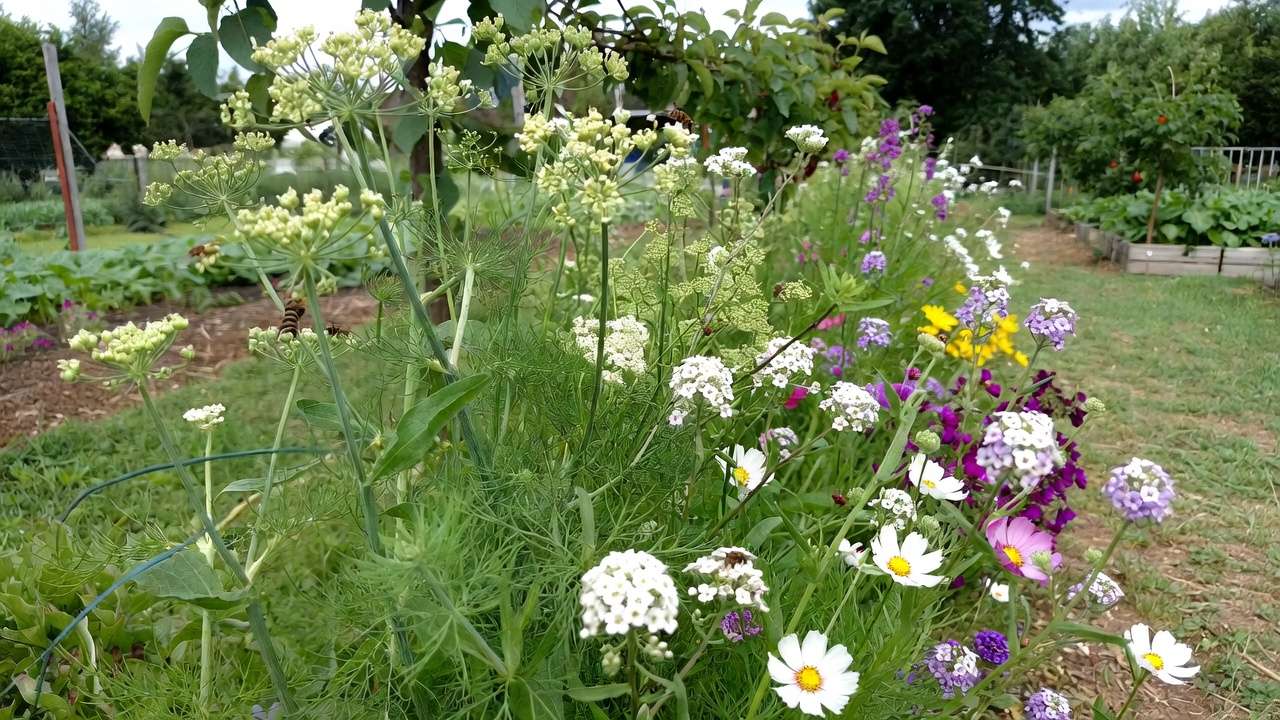
Gardens with diverse flowering plants host 3–5× more natural enemies (USDA research).
Here are some stunning examples of ladybugs in action, devouring aphids on rose leaves — proof that these tiny heroes are nature’s perfect pest controllers!
Here are a few beautiful close-ups of ladybugs feasting on aphids
These images show just how effective ladybugs can be when protected and given the right conditions! 🐞❤️
3. Release Beneficial Insects Strategically 📅🦋
Once your habitat is ready and pests are at low-to-moderate levels:
- Best timing: Release early in the pest cycle (preventive) rather than waiting for heavy infestations
- Top choices for common problems:
- Aphids → Convergent ladybugs (Hippodamia convergens) or green lacewings
- Caterpillars → Trichogramma wasps (egg parasitoids) + Bt
- Spider mites → Predatory mites (Phytoseiulus persimilis)
- Scale/whiteflies → Parasitic wasps (Encarsia formosa or Metaphycus)
- Release best practices:
- Do it in the evening or on cloudy, cool days (below 85°F/29°C)
- Mist plants lightly first — beneficials need hydration
- Release near infestations but not directly on sprayed areas
- Start small: Test 500–1,000 ladybugs per 1,000 sq ft

4. Use Organic Sprays Wisely — The Safe Integration Rules (The Heart of Success!) ⚠️💡
Follow these expert-derived rules (backed by Xerces Society, UC IPM, and extension research) to avoid harming your allies:
- Rule #1: Scout rigorously — only spray when economic/action thresholds are exceeded (e.g., 10–20 aphids per shoot on roses)
- Rule #2: Prioritize ultra-selective products first — Bt for caterpillars is the safest (zero impact on ladybugs, lacewings, bees)
- Rule #3: Timing is everything — Apply sprays at dusk or dawn when beneficials are roosting and less exposed 🌅🌙
- Rule #4: Spot-treat only — Target infested leaves/branches; avoid blanket applications that drift onto flowers or habitat
- Rule #5: Respect waiting periods — After soap/oil: 24–48 hours safe for adults; after neem: wait 3–7 days (longer for larvae); after spinosad: 7–14 days
- Rule #6: Test small areas — Always trial on one plant/branch first to observe effects
Insecticidal soaps and horticultural oils break down quickly (hours to days), making them excellent partners for biological control when used judiciously.
5. Monitor & Adjust — The IPM Feedback Loop 🔄📊
- Re-scout weekly: Count pests vs. beneficials
- Adjust: If ladybugs/lacewings increase → reduce sprays
- Celebrate wins: Fewer interventions = healthier ecosystem
Here are gorgeous examples of insectary strips — flowering plants like dill, fennel, and yarrow that attract and sustain beneficial insects year-round:

Plant these borders around your trees and veggies — your garden will thank you! 🌸
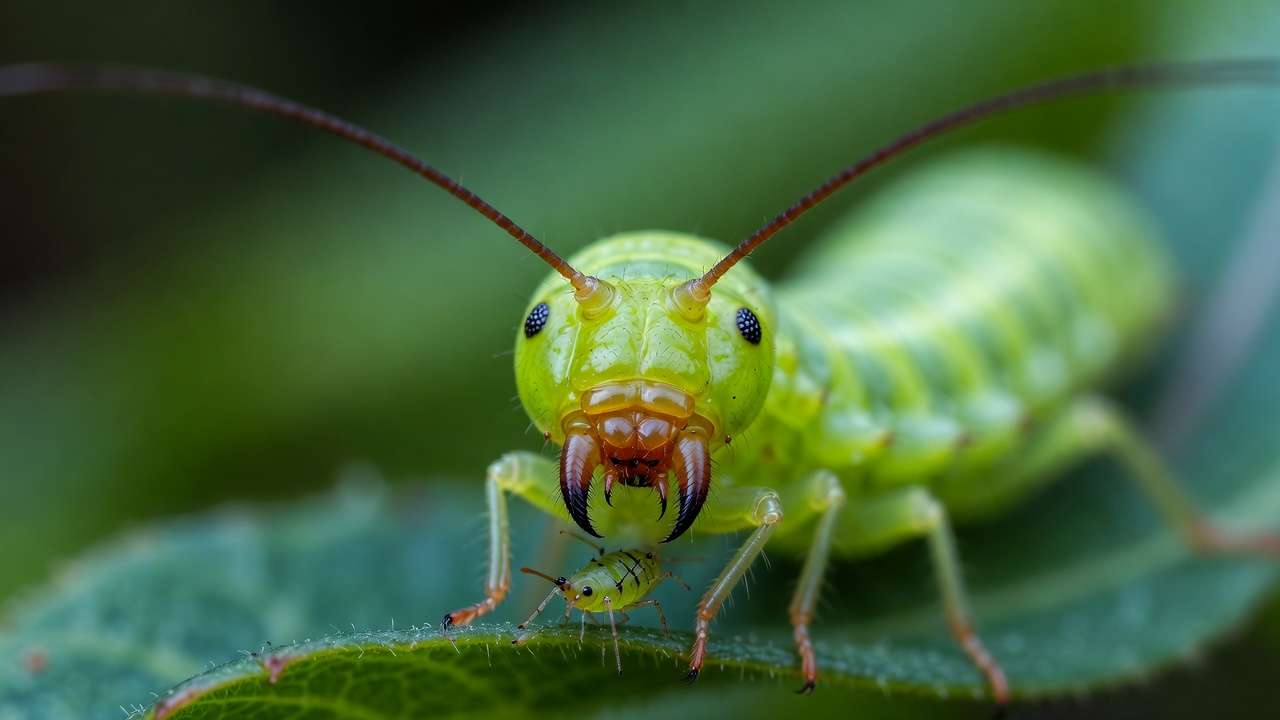
And don’t forget the ferocious lacewing larva — often called the “aphid lion” for good reason!
Here are some macro shots of these incredible predators in action:
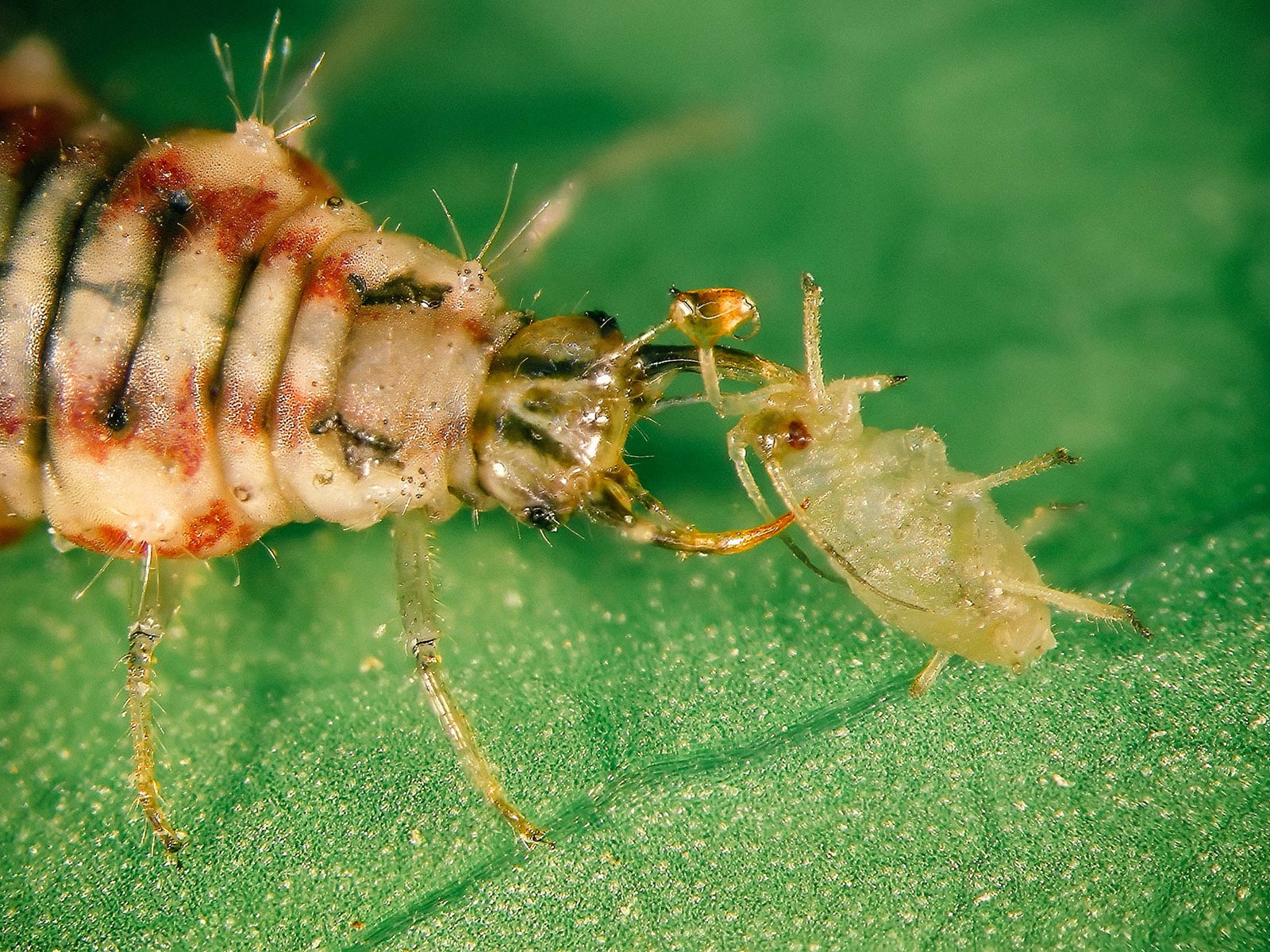
These little monsters eat hundreds of aphids — protect them at all costs! 🦁🐛
Real-World Examples & Case Studies 🌳🍎
- Aphid control on fruit trees (e.g., apple, citrus in home orchards): Release ladybugs early spring when aphids appear; spot-treat severe clusters with insecticidal soap at dusk. University of California IPM trials show 70–90% reduction without harming predators.
- Caterpillar outbreaks on vegetables (tomatoes, brassicas): Apply Bt (e.g., Dipel) preventively + release Trichogramma wasps. Organic growers report near-elimination of damage with minimal sprays.
- Scale on ornamentals/trees: Dormant horticultural oil in late winter smothers eggs; follow with predatory beetles (e.g., Chilocorus) in spring. Xerces-guided farms see sustained control after 2–3 seasons.
Common mistakes to avoid: Spraying neem midday when ladybugs are foraging, broad-casting spinosad during beneficial activity, or releasing after recent broad sprays — these lead to resets and frustration.
Expert Tips & Pro Secrets from Seasoned Gardeners & Entomologists 💡🧠
- “Tolerate low pest levels — they keep your predators fed and prevent outbreaks!” (Xerces Society motto)
- Habitat hacks: Add shallow pebble water dishes; leave hollow stems/leaf litter for overwintering
- Seasonal calendar tip (adapt to your region — e.g., Barisal-like tropical/subtropical climates): Release lacewings year-round; ladybugs in cooler months; Bt during monsoon caterpillar spikes
- Pro move: Alternate sprays (soap one week, Bt next) to prevent resistance and give beneficials recovery time
Frequently Asked Questions (FAQs) ❓
Does neem oil kill ladybugs? Adults usually survive light exposure (they don’t eat treated leaves), but it harms eggs/larvae on contact. Use cautiously, apply evenings, and wait 3–7 days before releases (per extension research).
How long after spraying can I release beneficials? Soap/oil: 24–48 hours safe; neem: 72+ hours; Bt: immediate (super safe!); spinosad: 7–14 days.
What if pests return after integration? Re-scout, boost habitat, release more allies — true IPM builds stronger balance over seasons.
Is Bt safe for bees/butterflies? Yes — extremely specific to caterpillars; no impact on bees, ladybugs, or adult butterflies.
Conclusion: Build Your Balanced, Thriving Ecosystem Today! 🌍💚
Integrating beneficial insects with organic sprays isn’t just pest control — it’s creating a living, breathing garden where nature does most of the work. Start with scouting + habitat, add selective biology, use organics only as backup, and watch your trees, veggies, and flowers flourish chemical-free.
Your plants (and the planet) will thank you! 🍃🐝











