
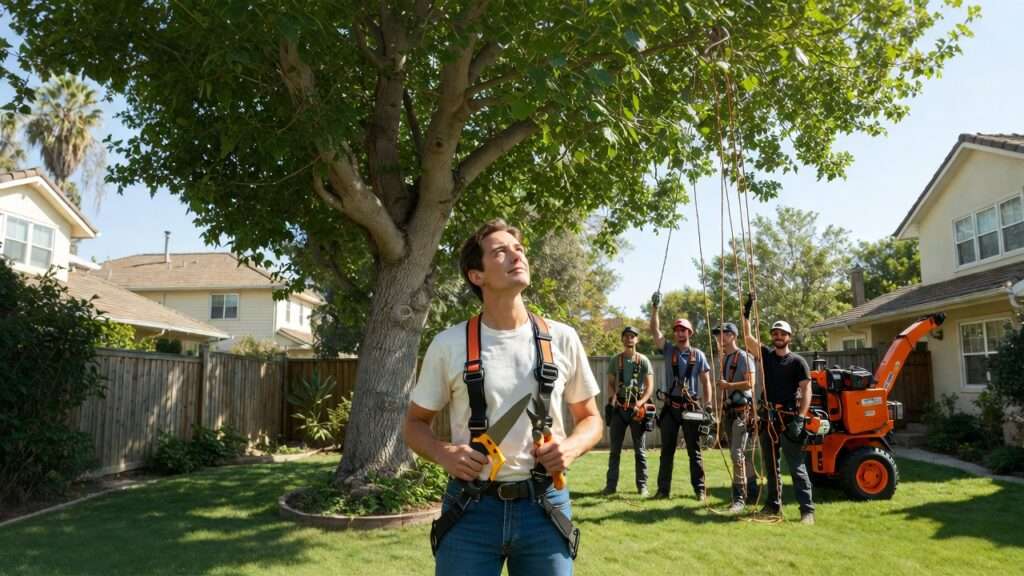
Imagine stepping into your backyard after a windy night and seeing thick branches scraping against your roof, dangling dangerously close to power lines, or blocking sunlight from your favorite garden plants. 😱 Your beautiful shade tree that once felt like a peaceful sanctuary now looks overgrown, unbalanced, and maybe even a little threatening.
This exact scenario plays out for thousands of homeowners every year — and it usually ends with the same question: “Can I handle this tree trimming myself and save some money, or should I call in the professionals?”
DIY vs. professional tree trimming is one of the most common dilemmas in home landscape care. On one hand, doing it yourself promises big savings and the satisfaction of a job well done. On the other hand, one wrong cut can weaken (or even kill) a valuable tree, create safety hazards, or lead to expensive repairs down the road. ⚠️
As someone who has worked alongside certified arborists, trained homeowners in basic pruning techniques, and seen far too many “DIY disasters” that required emergency interventions, I can tell you this decision is not just about money — it’s about tree health, personal safety, long-term property value, and peace of mind. 🌿
In this comprehensive guide, we’ll break down:
- The real differences between trimming and pruning
- When DIY is genuinely safe and smart
- The hidden risks and costs most homeowners overlook
- Why professional arborists often deliver dramatically better long-term results
- Clear decision checklists, seasonal timing charts, red-flag warnings, and ISA-aligned best practices
By the end, you’ll know exactly which path is right for your trees — and how to protect both your landscape investment and your family. Let’s get started. 🌱
Understanding Tree Trimming vs. Pruning: Key Differences 📏
Before we dive into the DIY vs. pro debate, it’s critical to understand two terms people often use interchangeably — but which mean very different things.
Tree trimming generally refers to the removal of branches to:
- Create clearance from buildings, roofs, power lines, or sidewalks
- Shape the tree for aesthetics or to reduce wind resistance
- Remove overhanging or hazardous limbs
Pruning, by contrast, is a more precise, health-focused practice recommended by the International Society of Arboriculture (ISA) and ANSI A300 standards. Pruning removes:
- Dead, diseased, damaged, or rubbing branches (the “3 Ds + R”)
- Suckers, water sprouts, and crossing limbs that interfere with structure
- Branches that compromise the tree’s natural form and long-term stability
Quick rule of thumb: Trimming = mostly cosmetic and clearance-focused Pruning = structural and health-focused
Poor trimming (especially “topping” — cutting large branches back to stubs) often masquerades as pruning and can severely damage trees by creating large wounds that invite decay, insects, and disease. ❌
Understanding this distinction is the foundation of making an informed DIY vs. professional decision.
What Is Tree Trimming, and Why Do Trees Need It? 🌳
Regular, proper trimming and pruning deliver multiple benefits:
Tree Health Benefits
- Improves air circulation and sunlight penetration → reduces fungal diseases
- Removes deadwood → prevents pathogen spread
- Corrects poor structure early → prevents future splitting or failure
Safety & Property Protection
- Eliminates branches that could fall during storms ⛈️
- Prevents roof/gutter damage and foundation issues from root competition
- Keeps power lines clear (a major cause of utility complaints and outages)
Aesthetic & Value Benefits
- Enhances curb appeal and landscape symmetry
- Well-maintained trees can increase home resale value by 5–15% (according to multiple real estate studies)
- Creates usable outdoor space under the canopy
Most experts recommend inspecting and performing maintenance pruning every 3–7 years depending on species, age, and location — with more frequent attention for young or fast-growing trees.
Trimming vs. Pruning: Don’t Confuse the Two! 🔍
Many service quotes list “tree trimming” when what the tree actually needs is targeted pruning. A reputable arborist will explain the difference and recommend the appropriate work.
Common homeowner confusion examples:
- “I just want it shaped nicely” → usually trimming + light pruning
- “There are dead branches everywhere” → primarily pruning
- “The tree is touching the house” → clearance trimming
Knowing which service your tree truly needs helps you evaluate quotes accurately and avoid paying for unnecessary work (or worse — approving harmful practices like topping).
DIY Tree Trimming: Pros, Cons, and Realistic Expectations 🛠️
Many homeowners are naturally drawn to the DIY route — and for good reason in certain situations. Let’s look at both the appealing side and the sobering realities.
The Appeal of Going DIY 🌟
Major Pros
- Significant cost savings 💰 — Professional trimming often ranges from $200–$1,200+ per tree (depending on size, location, and complexity), while DIY mainly costs tools, time, and perhaps a ladder or pole pruner.
- Immediate convenience — No waiting for quotes, scheduling, or crew availability. You can tackle small jobs on a sunny weekend.
- Personal satisfaction 😊 — There’s something deeply rewarding about caring for your own landscape and seeing the before-and-after transformation.
- Learning opportunity — You gain hands-on knowledge about your trees’ growth habits, which helps with future care.
Essential Tools for Safe DIY Trimming (What You Actually Need) 🔧
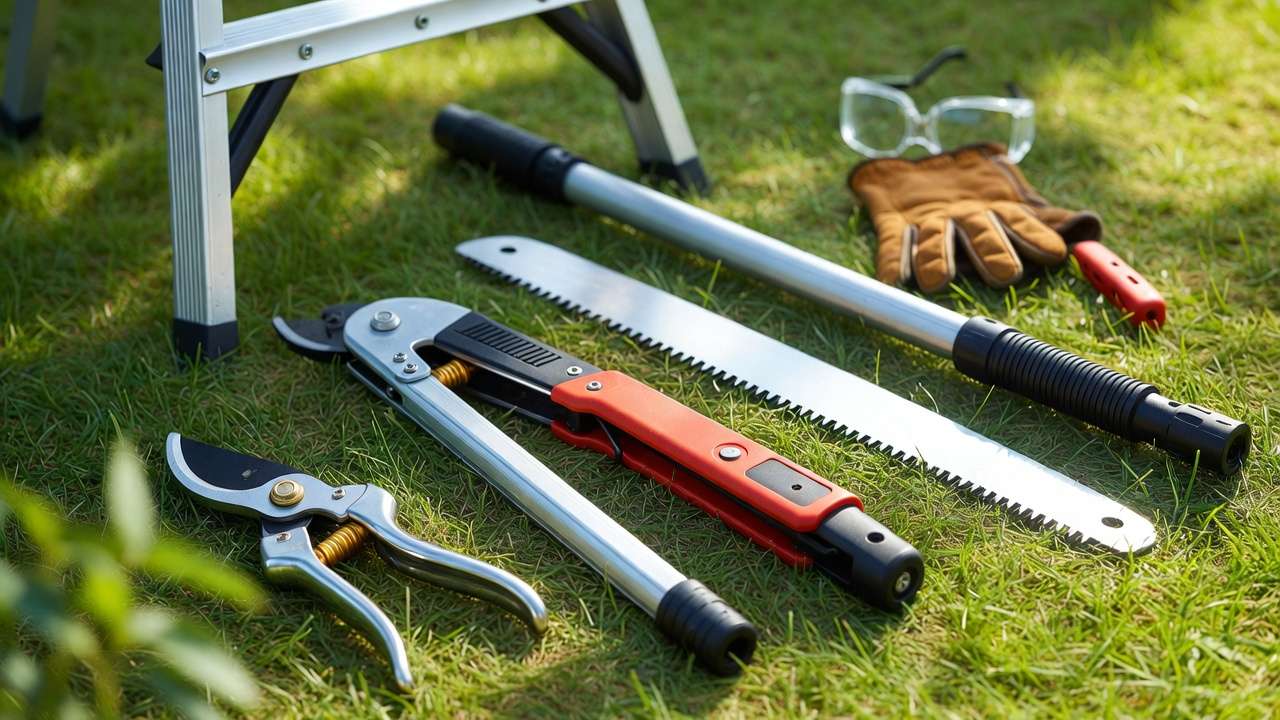
If you decide to proceed with DIY, invest in quality tools — cheap ones are dangerous and frustrating. A solid beginner/intermediate kit includes:
- Hand pruners (bypass style for clean cuts up to ¾ inch diameter)
- Loppers (extendable handles for 1–2 inch branches)
- Pruning saw (curved or folding for larger limbs)
- Pole pruner/saw combo (for reaching 10–15 ft without climbing)
- Sturdy ladder (rated for your weight + tools)
- Safety gear — gloves, safety glasses, hard hat, chainsaw chaps (if using a chainsaw), ear protection
- Optional but recommended — telescoping water-fed pole for very high cuts (safer than ladders)
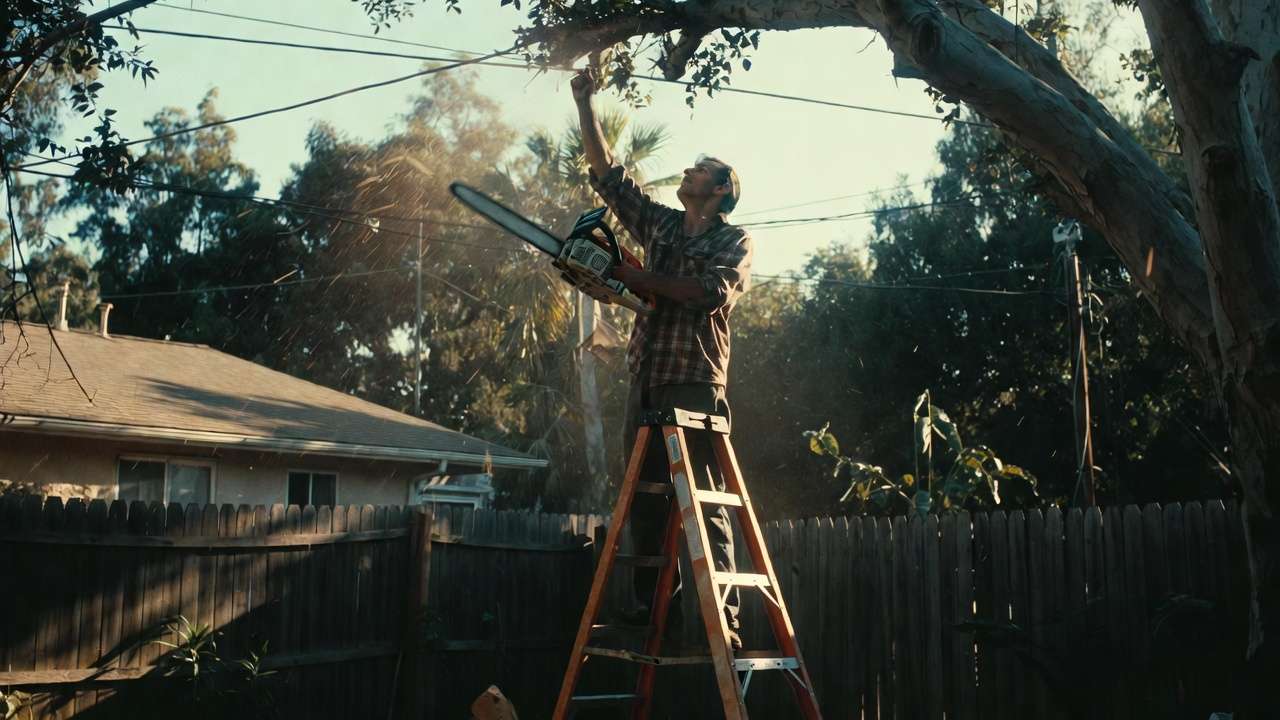
Important note: Never use a chainsaw while standing on a ladder. If the job requires climbing or a chainsaw at height, it’s no longer safe DIY territory.
The Hidden Dangers and Downsides ⚠️💥
This is where many homeowners get surprised — sometimes painfully.
Safety Risks Tree work is consistently ranked among the most dangerous homeowner activities. According to U.S. Consumer Product Safety Commission data and emergency room statistics:
- Thousands of ladder-related injuries occur annually from tree trimming attempts
- Chainsaw injuries send over 36,000 people to ERs each year in the U.S.
- Electrocution is a leading cause of death in tree-related incidents when branches contact overhead lines
Even a “small” job can turn serious quickly if balance is lost or a branch falls unexpectedly.
Potential Damage to Your Trees 🌿🚫 Common DIY mistakes include:
- Flush cuts or leaving stubs — both invite decay
- Topping (cutting large branches back to stubs) — creates weak regrowth and accelerates decline
- Lion-tailing (stripping inner branches, leaving tufts at ends) — weakens structure and increases wind sail effect
- Over-thinning — removes too much live foliage, stressing the tree and making it vulnerable to sunscald and pests
These errors can shorten a tree’s lifespan by decades or make it more likely to fail in future storms.
Hidden Costs 💸
- Tools ($150–$500 for a decent set)
- Time (a job that takes pros 1–2 hours can take homeowners all day)
- Corrective work later if mistakes are made
- Potential insurance claims if property damage or injury occurs without proper coverage
When DIY Tree Trimming Makes Sense (Realistic Scenarios) ✅
DIY is reasonable and often smart when:
- The tree is young or small (under 15–20 ft mature height)
- All work can be done from solid ground or a very stable, low ladder
- You’re only removing branches ≤ 2 inches in diameter
- No power lines, roofs, or structures are within 10 feet
- You’re removing clearly dead, damaged, or rubbing branches (the “3 Ds + R”)
- You follow proper pruning technique (more on this later)
Golden rule many arborists use: “If you can’t do the work with both feet firmly on the ground and without using a chainsaw, call a professional.”
Professional Tree Trimming: Pros, Cons, and What to Expect 👷♂️
Hiring a qualified tree care professional — ideally a certified arborist — often delivers results that are safer, healthier for the tree, and more cost-effective in the long run. Here’s a clear-eyed look at both sides.
Why Experts Often Deliver Better Results 🌟
Key Advantages
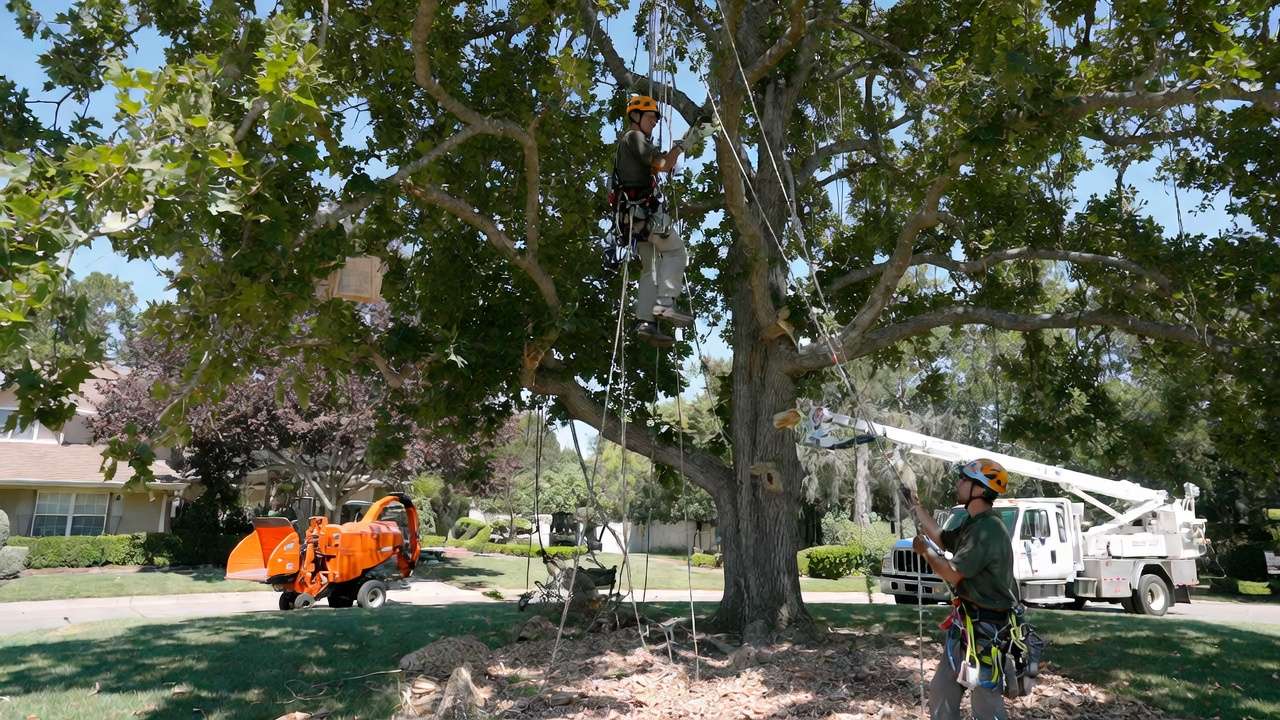
- Specialized knowledge & training 🏆 — ISA Certified Arborists (the gold standard) complete rigorous coursework, pass comprehensive exams, and maintain continuing education credits. They understand tree biology, species-specific needs, structural pruning, and disease identification far beyond most homeowners.
- Proper equipment & techniques — Professionals use sharp, sanitized tools, rigging systems for safe branch removal, aerial lifts or climbing gear rated for tree work, and advanced methods like natural target pruning (cutting just outside the branch collar).
- Safety protections — Full liability insurance, workers’ compensation, and OSHA-compliant safety protocols protect you from financial responsibility if something goes wrong.
- Tree preservation focus — Pros prioritize long-term tree health over quick aesthetics. They avoid harmful practices (topping, excessive thinning) that many untrained people unknowingly perform.
- One-and-done quality — A well-executed professional job often means you won’t need major follow-up work for 5–10+ years (vs. frequent DIY touch-ups to fix mistakes).
Long-Term Benefits for Tree Health and Property Value 📈
- Properly pruned trees develop stronger branch unions and better storm resistance.
- Healthy, well-structured trees live longer, provide more shade/energy savings, and add significantly more to home resale value.
- Many municipalities and HOAs require professional work near property lines or utilities — hiring pros avoids future fines or disputes.
Potential Drawbacks of Hiring Pros 🤔
Upfront Cost Factors Average costs in the U.S. (2024–2025 data, adjusted for inflation trends):
- Small trees (up to 30 ft): $150–$450
- Medium trees (30–60 ft): $300–$900
- Large or hazardous trees: $800–$2,500+ per tree
- Factors that increase price: height, proximity to structures/power lines, number of branches, debris haul-away, emergency/storm work
Scheduling and Finding Trustworthy Services
- Reputable companies book 2–8 weeks in advance during peak seasons (late winter/early spring or late fall).
- Quality varies widely — low-ball “$99 tree trimming” ads often indicate topping crews or uninsured operators.
Red Flags to Avoid When Hiring (How to Spot Quality Pros) 🔍
Protect yourself with this quick vetting checklist: ✅ ISA Certified Arborist on staff (check isa-arbor.com/find-an-arborist) ✅ Full liability insurance + workers’ comp (ask for certificate of insurance) ✅ Written, detailed estimate (no “per hour” vagueness) ✅ No topping, lion-tailing, or “hat-racking” promises ✅ References and recent local photos of similar work ✅ Clean, marked vehicles and uniformed crews ❌ Avoid: Cash-only deals, no insurance proof, immediate high-pressure sales, topping guarantees
Head-to-Head Comparison: DIY vs. Professional Tree Trimming ⚔️
Here’s a clear side-by-side look at the most important factors (perfect for a comparison table in the final article):
| Category | DIY Tree Trimming | Professional Tree Trimming |
|---|---|---|
| Upfront Cost | Low ($50–$500 tools) | Medium to High ($200–$2,000+) |
| Long-Term Cost | Can be high (mistakes, tree replacement) | Usually lower (fewer follow-ups, longer tree life) |
| Safety | High personal risk | Very low personal risk for homeowner |
| Tree Health Outcome | Often poor to moderate (common errors) | Excellent (proper technique, biology-based) |
| Time Required | High (days for what pros do in hours) | Low (1–2 days max for most jobs) |
| Risk of Mistakes | High | Very low |
| Best For | Small, low branches, ground-level work | Medium/large trees, height work, complex jobs |
Bottom line from the comparison: For simple, low-risk jobs → DIY can be smart and satisfying. For anything involving height, power lines, large limbs, or valuable/mature trees → professionals almost always win on safety, tree longevity, and total cost of ownership.
Key Decision Factors: When to Choose Professional Help 🧐
The single most important question isn’t “Can I afford a pro?” — it’s “Can I safely and effectively do this job without harming the tree, my property, or myself?”
Clear Signs You Should Call a Professional ASAP 🚨
Call an arborist immediately if any of these apply:
- The tree is taller than 20–25 feet at maturity
- Branches are within 10 feet of power lines, roofs, chimneys, or structures
- You see large dead limbs (>4 inches diameter), cracks, cavities, or signs of decay/fungal growth 🍄
- The tree has storm damage, lean, or root plate heaving
- You need to remove branches over 3–4 inches in diameter
- The work requires climbing, ropes, cranes, or bucket trucks
- The tree is a high-value specimen (heritage, fruit/nut-bearing, or sentimental)
- Local laws, HOA rules, or utility company clearance requirements are involved
Quick printable Decision Checklist ✅
- Can I reach every cut I need to make while standing firmly on the ground?
- Are all branches ≤ 2 inches thick?
- Is there zero chance of the branch falling onto a structure, person, pet, or power line?
- Do I have sharp, clean tools and know exactly where to make each cut (branch collar, no flush cuts/stubs)?
- Am I 100% confident I won’t injure myself or the tree?
If you answered No to any question → Hire a professional.
Best Practices for Safe and Effective Tree Care (ISA/ANSI Guidelines) 📜
The International Society of Arboriculture (ISA) and ANSI A300 pruning standards are the globally recognized benchmarks. Here are the most important rules every homeowner should know — whether DIY or hiring.
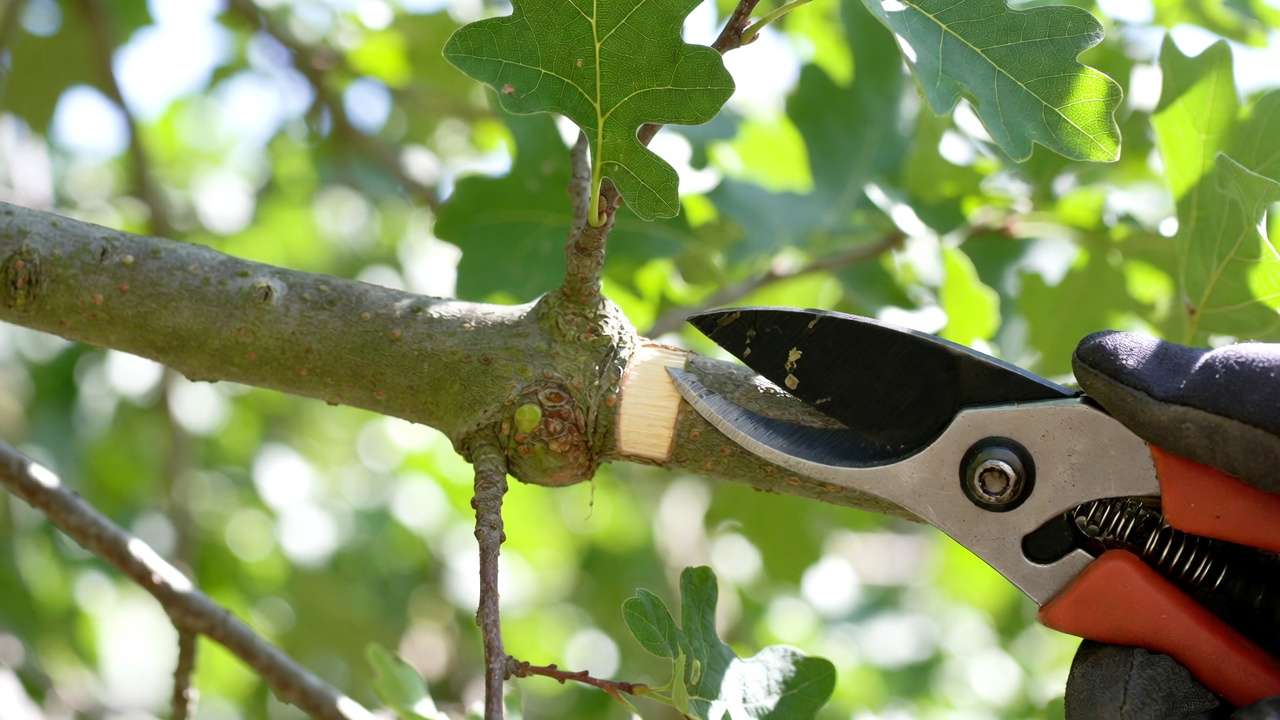
Proper Pruning Techniques — Where & How to Cut 🌿
- Identify the branch collar (swollen area where branch meets trunk/stem)
- Make cuts just outside the collar — never flush, never leave long stubs
- Use the 3-cut method for large limbs:
- Undercut 12–18 inches out (prevents bark tearing)
- Top cut farther out to remove weight
- Final cut just outside collar
- Angle cuts so water sheds away from the wound
Timing Matters — Best Seasons for Trimming by Tree Type ⏰
- Late winter/early spring (before buds swell): Most deciduous trees (maple, oak, ash, birch)
- Late spring/early summer (after full leaf-out): Flowering trees (dogwood, crabapple, redbud) to avoid removing next year’s buds
- Late fall/winter: Conifers, evergreens, and structural pruning on most species
- Avoid major pruning during active spring growth (sap bleeding) or fall leaf drop (wounds heal slowly)
Avoid These Common (and Harmful) Mistakes ❌
- Topping — Never cut large branches back to stubs; it creates weak regrowth and accelerates decline
- Lion-tailing — Removing lower/inner branches, leaving foliage only at branch ends — weakens structure
- Over-thinning — Removing >25% of live canopy in one season stresses the tree
- Tipping — Shearing branch tips like a hedge — destroys natural form and encourages weak sprouts
Real-World Examples and Case Studies 📖
Success Story #1 — Smart DIY 🌟 A young red maple (18 ft tall) had several low, crossing branches rubbing and one dead limb over a walkway. The homeowner used pole pruners and hand tools from the ground, followed ISA cut guidelines, and removed only problem branches. Result: Healthy tree, no regrowth issues, saved ~$350.
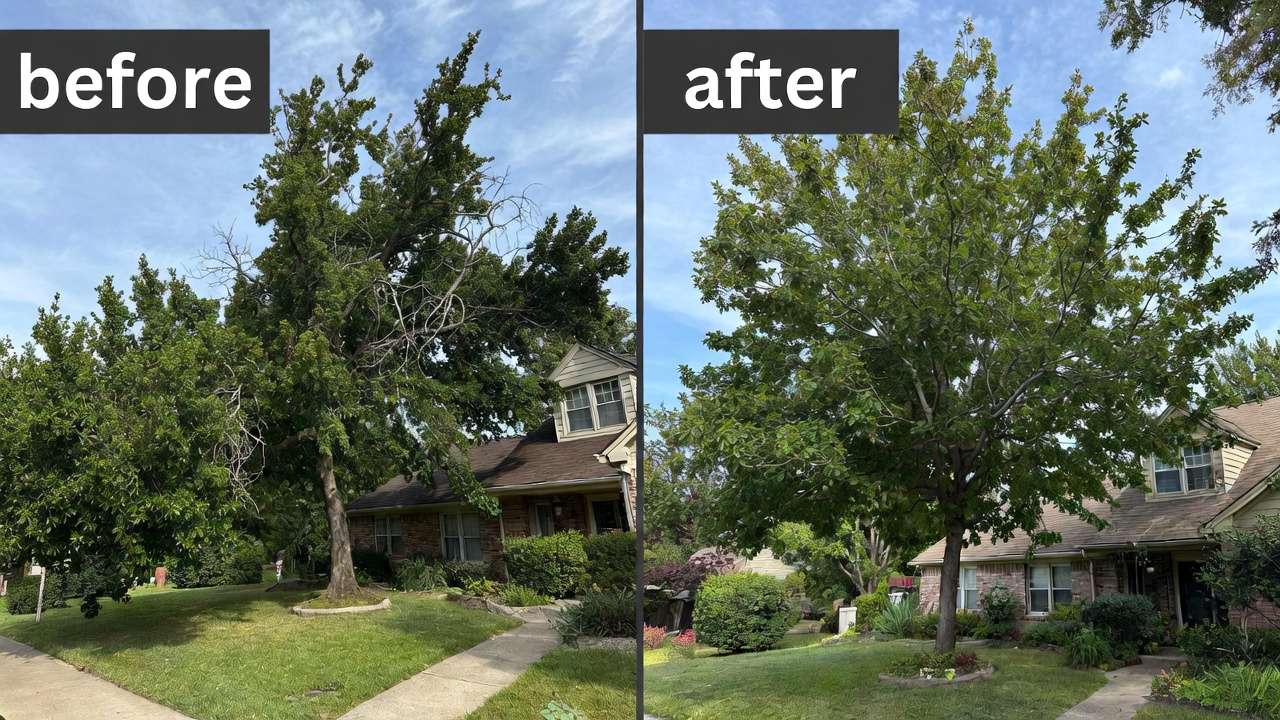
Success Story #2 — Professional Save 🌟 A 45-ft live oak had multiple large limbs hanging over a garage roof after a storm. An ISA arborist used rigging to lower 8–12 inch limbs safely. The tree retained 90% of its canopy structure and gained 15+ years of life expectancy.
Cautionary Tale #1 — DIY Disaster 😔 A homeowner attempted to “shape” a 35-ft silver maple by climbing a ladder with a chainsaw. A branch fell the wrong way, striking the ladder — broken arm, torn rotator cuff, $18,000 in medical bills, plus the tree developed severe decay at multiple flush-cut wounds.
Cautionary Tale #2 — Cheap “Pro” Mistake 😔 A low-bid crew “trimmed” several mature elms by topping them. Within 3 years, heavy regrowth failed in wind, causing $9,000 in roof/gutter damage and requiring full tree removal.
Tips for Maintaining Your Trees Year-Round 🌱
Seasonal Tree Care Calendar 📅
- Winter — Major structural pruning, remove deadwood, inspect for damage
- Spring — Monitor new growth, remove broken limbs from storms, fertilize if soil test shows deficiency
- Summer — Water deeply during drought (especially first 2–3 years after planting), watch for pests/disease
- Fall — Light cleanup pruning, mulch ring maintenance, final watering before freeze
Simple (Safe) Homeowner Maintenance Tasks 🏡
- Rake and remove fallen leaves/branches to reduce fungal spores
- Keep mulch 2–4 inches deep, pulled back from trunk (no “volcano” mulching)
- Water new trees 1–2 times/week during dry periods
- Annual visual inspection from the ground for cracks, cankers, or leaning
How Often Should Trees Be Trimmed?
- Young trees (1–10 years): Every 2–3 years to establish structure
- Mature trees: Every 5–10 years (or as needed for clearance/health)
- Fast-growing species (willow, poplar): Every 3–5 years
- Slow-growing or old trees: Every 7–15 years
Frequently Asked Questions (FAQ) ❓
Here are the most common questions homeowners ask when deciding between DIY and professional tree trimming — answered with practical, expert-backed insight.
1. How much does professional tree trimming usually cost? In 2025–2026 U.S. averages (prices vary by region, tree size, and complexity):
- Small/young trees: $150–$450
- Medium (30–50 ft): $400–$1,000
- Large or hazardous: $800–$2,500+ per tree Emergency/storm work or crane usage adds significantly. Always get 2–3 written quotes from insured, certified companies.
2. Can improper trimming or pruning actually kill a tree? Yes — especially topping, lion-tailing, or removing more than 25–30% of the live canopy in one go. These practices create large wounds that decay spreads from, weaken branch attachments, and stress the tree so severely it becomes vulnerable to pests, disease, drought, or windthrow. Many “killed” trees actually die 3–10 years after bad pruning.
3. Is tree trimming tax-deductible? Usually no for routine maintenance. However, costs may be deductible if:
- The work is required by an insurance claim (casualty loss)
- It directly relates to a medical condition (e.g., removing hazardous branches to prevent falls)
- You’re a landlord and the trimming is for rental property upkeep Always consult a tax professional — rules vary by country and situation.
4. What basic tools do I really need for safe DIY trimming? Start with: bypass hand pruners, extendable loppers, folding pruning saw, pole pruner/saw combo (up to ~15 ft reach), sturdy ladder, gloves, safety glasses, and hard hat. Never skimp on quality — dull or poorly designed tools increase injury risk dramatically.
5. When is the absolute worst time to trim trees?
- Spring (while buds are swelling/breaking) — heavy sap flow slows healing and invites borers/fungi
- Summer (during active leaf-out and heat stress) — excessive foliage removal causes sunscald and drought shock
- Fall (during leaf drop) — fresh wounds are slow to compartmentalize before winter
6. Do I need a permit to trim or remove a tree? It depends on your location. Many cities, counties, and HOAs require permits for:
- Removing trees over a certain diameter (often 6–12 inches)
- Work near protected species or heritage trees
- Any trimming near public rights-of-way or power lines Check your local municipality website or call before starting.
7. How can I tell if a tree service is legitimate and not going to top my trees? Look for:
- ISA Certified Arborist credential (verify at treesaregood.org)
- Proof of liability insurance and workers’ comp
- Detailed written proposal (no verbal “we’ll figure it out” pricing)
- References and recent photos of similar jobs
- No mention of “topping,” “hat-racking,” or “rounding off” Reputable companies educate you about proper pruning — they don’t pressure for maximum removal.
8. Can I trim branches touching power lines myself? Never. Utility companies have exclusive rights to vegetation near lines for safety reasons. Contact your local utility — most offer free or low-cost clearance trimming by trained crews.
9. How do I help my tree recover after bad pruning?
- Avoid further cuts for at least 2–3 years
- Water deeply during dry periods
- Apply organic mulch (3–4 inches, kept away from trunk)
- Fertilize only if soil test shows deficiency (over-fertilizing stresses damaged trees)
- Have an arborist evaluate — sometimes corrective pruning or cabling/bracing can save it
10. Is it better to trim a little every year or wait and do a big job less often? For most trees, smaller, more frequent pruning (every 3–7 years) is healthier than infrequent heavy cuts. Gradual removal preserves photosynthetic capacity and reduces stress/shock.
Conclusion: Making the Smart Choice for Your Trees 🌳❤️
After weighing the real costs, risks, benefits, and long-term outcomes, the answer to “DIY vs. professional tree trimming?” is rarely black-and-white — but it almost always comes down to three priorities:
- Safety first — your personal safety and your family’s
- Tree health second — protecting a living investment that can outlive you
- Value third — balancing short-term savings against long-term expenses and property protection
Quick final takeaway guide:
- Small, low branches + confident technique + both feet on the ground → DIY is often smart, satisfying, and economical 😊
- Height, power lines, large limbs, mature trees, or any doubt → Call an ISA-certified arborist every time 🏆
Your trees aren’t just landscape decoration — they’re living assets that clean air, cool your home, increase property value, and bring joy for decades. Treating them with informed care (whether by your hands or a pro’s) is one of the best investments you can make in your home and yard.
Have you recently tackled a tree trimming project — DIY or pro? Share your experience (and any photos!) in the comments below — I’d love to hear your story and answer any follow-up questions. 🌿
And if you found this guide helpful, consider subscribing for more practical, expert-backed plant care and tree maintenance articles delivered straight to your inbox. Your trees (and your peace of mind) will thank you! 📩
Thanks for reading — stay safe out there, and happy tree caring! 🌱✨











