
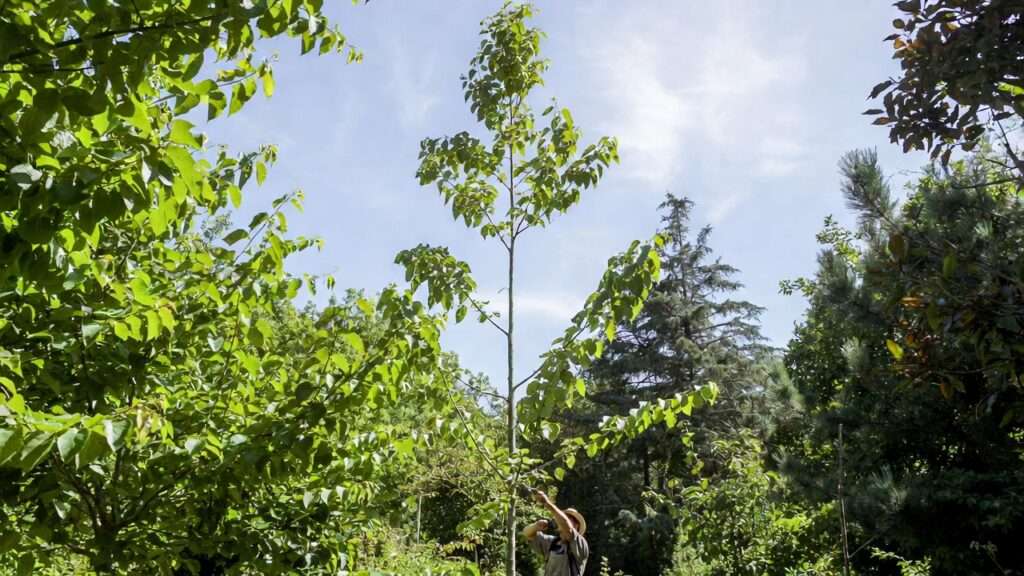
Imagine planting a gorgeous young tree in your yard, dreaming of the shade and beauty it will provide for decades—only to watch it develop weak, splitting branches, lopsided growth, or devastating storm damage years later. 😩 All because of simple early mistakes (or worse—no pruning at all!). The good news? How to prune young trees for strong growth is one of the most powerful things you can do right now to prevent those heartbreaks. Proper structural pruning in the first 3–10 years builds a resilient framework, promotes vigorous upward and outward development, and saves you thousands in future corrective work or tree removal.
As a passionate tree care enthusiast drawing from decades of university extension research (like Iowa State, University of Maryland, Purdue, Oklahoma State, and International Society of Arboriculture guidelines), I’ve seen firsthand how thoughtful early training transforms fragile saplings into sturdy, long-lived giants. 🌱 This comprehensive guide walks you through every step—when, why, how, and what to avoid—so your young trees thrive with balanced canopies, strong trunk taper, and storm-resistant branch unions. Let’s build that healthy structure together! 💪
Why Pruning Young Trees Matters for Strong, Healthy Growth 🌿💪
Young trees aren’t just smaller versions of mature ones—they’re actively developing the architecture that will define their entire life. In a forest, trees compete for light by racing upward, but in our yards and landscapes, they need our help to avoid poor habits like multiple competing leaders or weak attachments.
Key biological reasons early pruning drives strong growth:
- Apical dominance — The tip (apical bud) of the main leader produces hormones that suppress side branches from outgrowing it. Preserving a single dominant leader channels energy into height and trunk strength, creating better taper (thicker base, narrower top) for wind resistance.
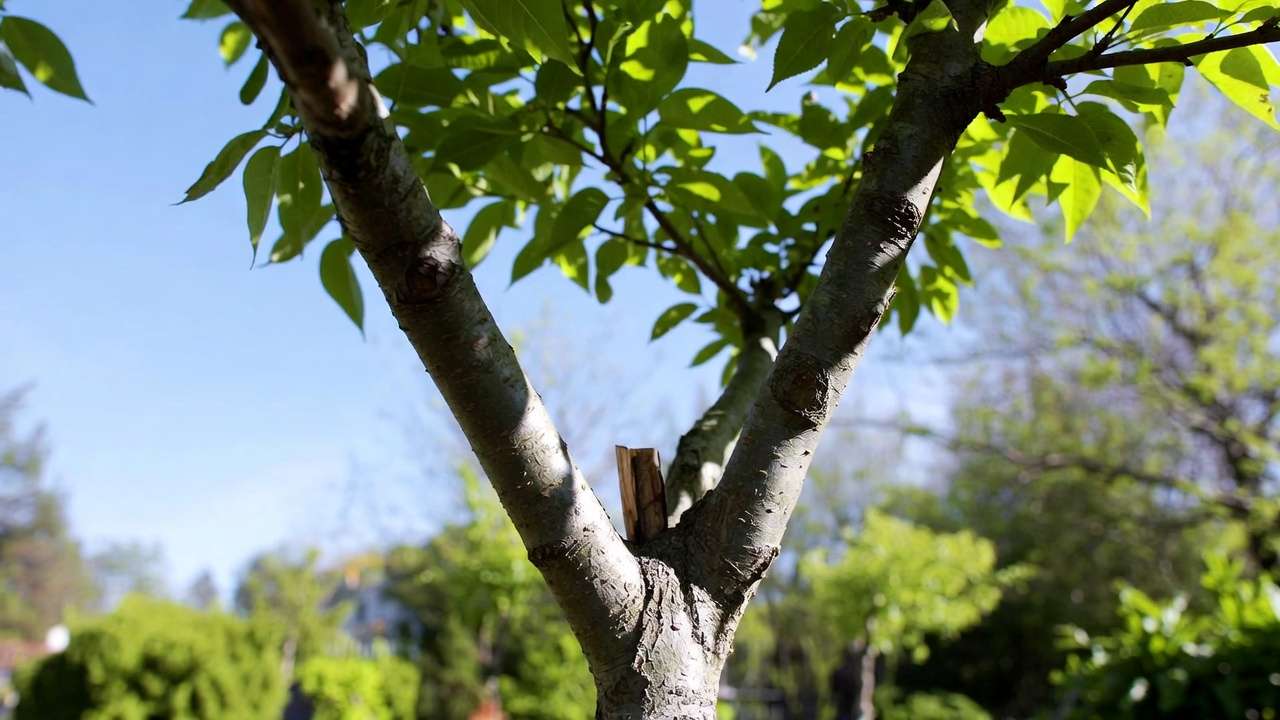
- Preventing structural defects — Codominant stems (two or more equal-height leaders) form weak V-shaped unions prone to splitting under snow, wind, or ice. Early subordination or removal avoids included bark and future failure.
- Balanced energy distribution — Removing crossing, rubbing, inward-growing, or excessive low branches improves airflow, reduces disease risk (like fungal issues in humid climates), and directs resources to healthy growth.
- Long-term payoff — Trees trained young often need minimal maintenance later. Studies from extension services show properly pruned young trees have up to 80% fewer structural issues in maturity, meaning safer yards and lower costs.
Without intervention, many urban-planted trees develop “lion’s tailing” (bare lower trunk with tuft at top) or unstable forks—problems that compound over time. Pruning young isn’t about making the tree smaller; it’s about sculpting a stronger, more beautiful future! 🌟
When to Prune Young Trees: Timing for Maximum Benefit ⏰🍂
Timing is everything—prune at the wrong time, and you risk stressing the tree, slowing establishment, or inviting pests/disease.
- Best overall time: Late winter to early spring (dormant season) — Before buds swell but after extreme cold passes. Wounds heal quickly as growth resumes, pests are dormant, and the branch structure is easy to see without leaves. Ideal for most deciduous shade and ornamental trees (maple, oak, elm, etc.).
- Exceptions and special cases:
- Spring-blooming trees (dogwood, cherry, crabapple): Prune right after flowering to avoid cutting off next year’s buds.
- Conifers (pine, spruce, fir): Pinch new “candles” (soft spring growth) in late spring/early summer for denser form—never cut old wood.
- Summer pruning: Limited to removing dead/diseased branches or light thinning; heavy cuts can sunburn trunks or stress trees during heat.
- When to start — Minimal at planting: Only remove damaged, broken, diseased, or circling roots. Wait 1 year for establishment (roots need foliage for energy). Then light annual training from years 2–5, tapering off by year 8–10.
- Signs it’s time — Competing leaders emerging, branches rubbing, suckers/water sprouts exploding, or low limbs shading future permanent branches.
Pro tip: In regions like Barisal Division (warm, humid subtropical), aim for January–February dormant pruning to dodge monsoon-related fungal risks. Always check local weather—no pruning during freezes! ❄️
Essential Tools and Safety Gear You Need 🛠️🪚
Quality tools make clean cuts that heal fast—dull or wrong tools tear bark, inviting decay.
Must-haves for young tree pruning:
- Bypass hand pruners — For branches up to ¾ inch (sharp bypass blades slice cleanly, unlike anvil types that crush).
- Loppers — For ¾–1½ inch branches (long handles for leverage).
- Pruning saw — Folding or curved for 1½–3 inch limbs (pull-cut teeth work best).
- Pole pruner/saw — For reaching higher without ladders on trees 10–15 ft tall.
- Safety gear — Sturdy gloves, safety glasses, closed-toe shoes, long pants. Never prune near power lines—call professionals!
Maintenance tip: Sharpen blades after every few uses and disinfect with alcohol between trees to prevent disease spread. Clean cuts = faster callus formation = stronger growth! 🔪✨
Step-by-Step: How to Prune Young Trees for Strong Structure (Core Guide) 📋🌲
This is the heart of the guide—where we turn knowledge into action. Follow these proven techniques, based on decades of research from university extensions (Iowa State, University of Maryland, Purdue, Colorado State, UF/IFAS, and ISA standards), to train your young tree into a resilient, beautiful specimen. The goal? A single dominant leader, well-spaced branches with wide crotches, and no weak defects that could lead to breakage later. 🌟
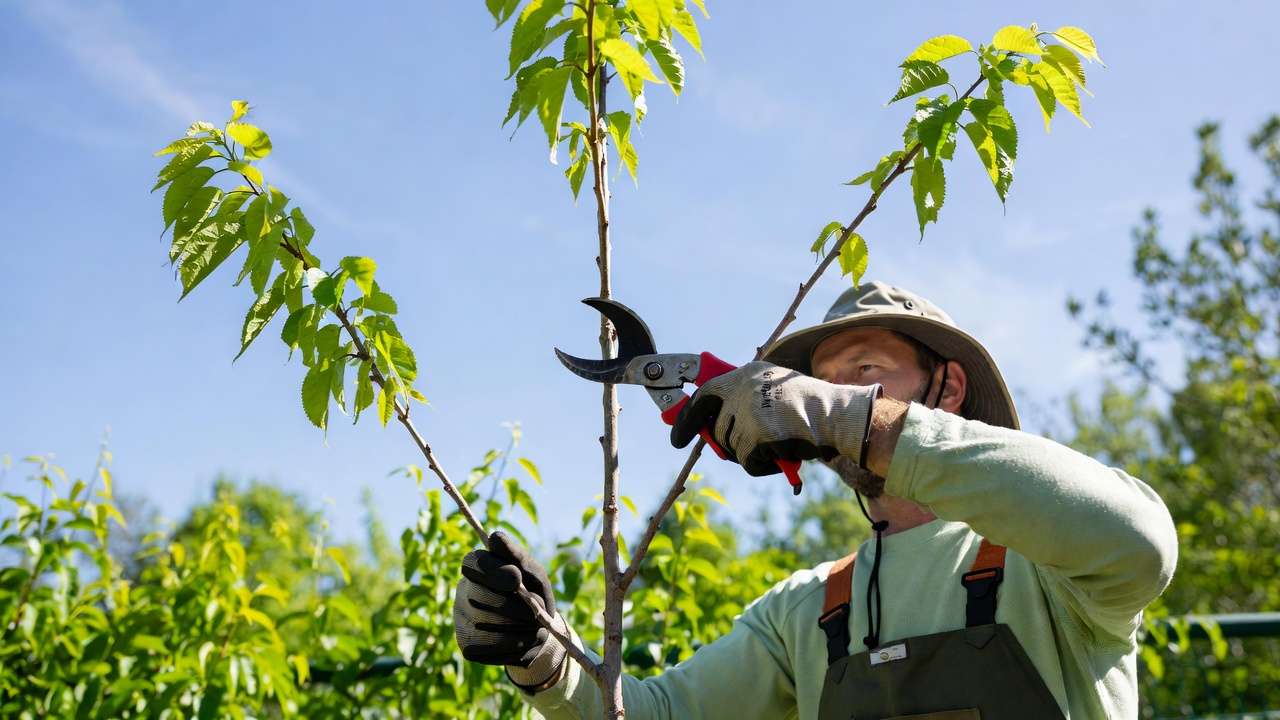
Understanding Key Pruning Principles First (H3)
Before making any cuts, master these fundamentals—they prevent harm and promote healing:
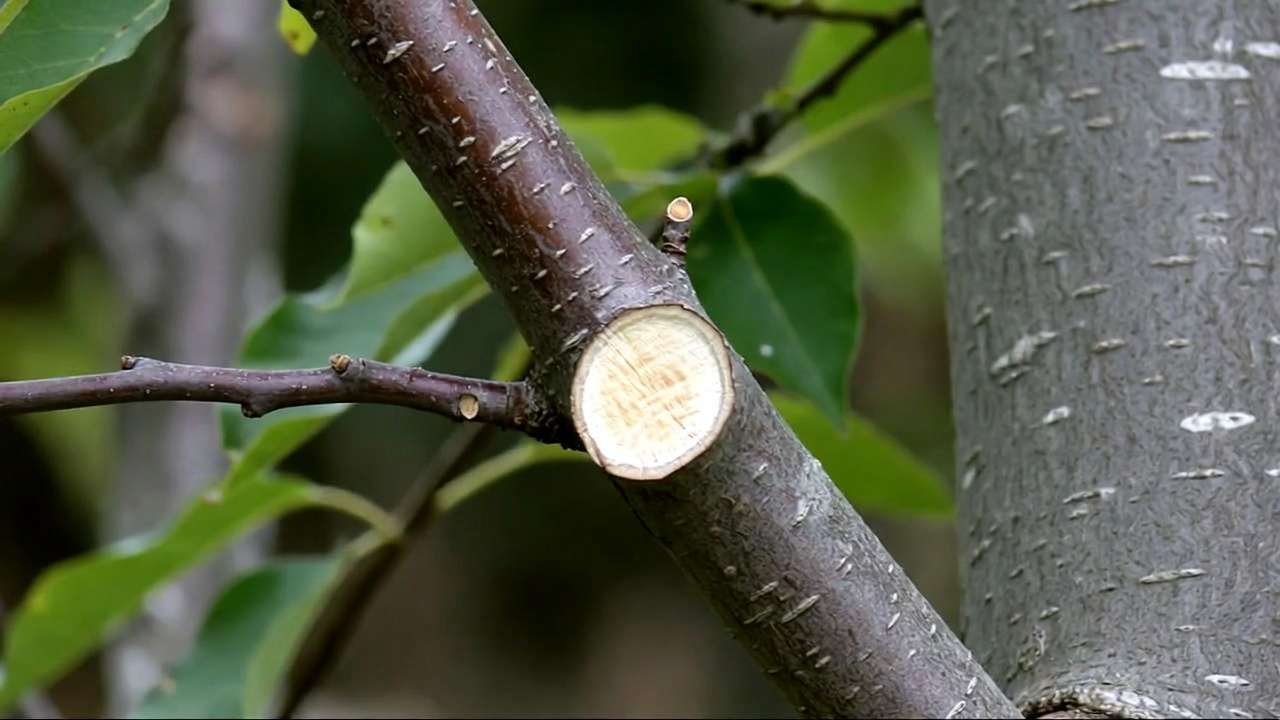
- Proper cut technique — Always cut just outside the branch collar (the swollen area where branch meets trunk, full of callus-generating cells). Never make flush cuts (they remove protective tissue and invite decay) or leave stubs (they die back and attract pests).
- Three-cut method for larger branches (over ~1 inch): 1) Undercut 6–12 inches out to prevent tearing bark downward. 2) Top cut slightly farther out to remove the branch. 3) Final cut just outside the collar. This protects the tree from bark ripping.
- Never top or head back the leader — Cutting the tip removes apical dominance, causing bushy, weak regrowth and ruining structure.
- Rule of thirds (or 25–30% max removal) — Never remove more than about 25–30% of live foliage in one year (less if the tree is stressed). Heavy pruning shocks the tree, reduces photosynthesis, slows root growth, and invites suckers/water sprouts.
- Aspect ratio awareness — Keep lateral branches smaller than ½–⅓ the diameter of the trunk or parent branch at the union for strong attachments (smaller aspect ratio = stronger union).
These principles ensure clean healing, minimal stress, and directed energy toward strong growth. Always prioritize removal of dead, damaged, diseased (the “3 Ds”), then structural issues.
Year-by-Year Pruning Timeline & Goals (H3) 📅
Pruning young trees is progressive—light and annual in the early years, focusing on training rather than drastic shaping. Here’s a practical roadmap:
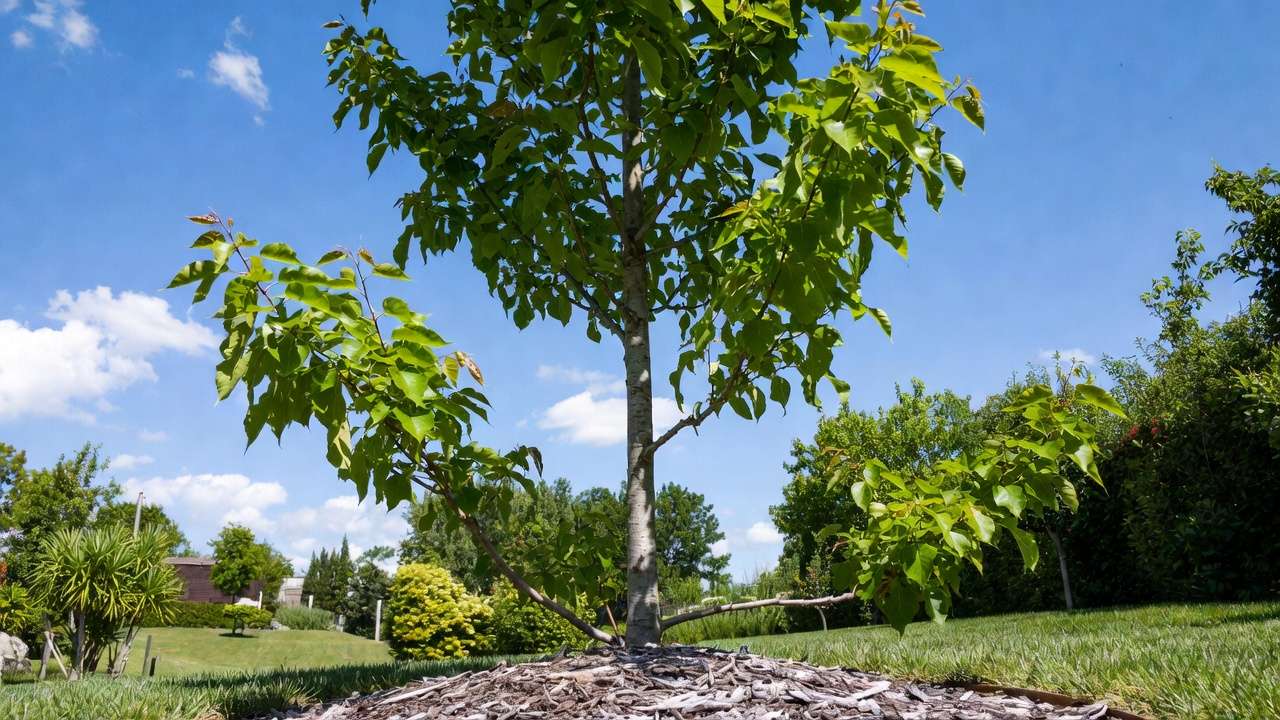
- At planting / Year 1 — Keep it minimal! Remove only broken, damaged, diseased, or circling/girdling roots. Do not heavily prune to “balance” root loss—leaves fuel root regrowth. Retain low temporary branches (they shade the trunk to prevent sunscald, build taper/caliper, and protect from lawn equipment). Shorten any excessively long laterals that compete with the leader, but keep most foliage intact for energy production.
- Years 2–4 (Establishment phase) — Focus on single dominant leader training. Identify the straightest, most vertical stem as the central leader. Subordinate or remove competing leaders/codominant stems (prune back to a lateral at least ⅓ the diameter, or remove entirely if small). Space scaffold branches: Select 3–5 permanent ones with wide (45–60°+) angles, spaced 8–18 inches vertically and radially around the trunk. Remove suckers at base, water sprouts (vigorous upright shoots), inward/crossing/rubbing branches, and any growing straight up or down.
- Years 5+ (Refinement phase) — Gradually raise the crown: Remove lower temporary branches in stages (no more than ⅓ tree height at once to avoid sunscald/stress). Ensure permanent branches are well-spaced (no clusters), subordinate any that approach leader size. Thin selectively for light/air penetration, but maintain ~50–60% live crown ratio. By year 8–10, most structural training is done—future pruning is mostly maintenance.
This gradual approach prevents shock and builds strength over time. In your warm, humid Barisal climate, watch for fungal entry—prune in dry January–February windows!
Specific Techniques to Build Strength (H3) 🔍
- Promoting the central leader — If a side branch threatens to outgrow the leader, reduce it with a reduction cut back to a smaller lateral (never tip the leader itself!).
- Handling codominant stems — Zero tolerance for equal competing leaders! Choose the healthier, straighter one; reduce the other by ⅓–½ its length annually until it’s subordinated or safe to remove. Early action prevents included bark (bark trapped in the union, leading to splits).
- Removing problem branches — Cut out suckers (from roots/base), water sprouts (vigorous vertical shoots on trunk/branches), crossing/rubbing (choose the healthier one), inward-growing (toward center), and narrow V-crotch attachments (weak unions).
- Temporary vs. permanent branches — Keep low laterals short (<half trunk diameter) as “sacrificial” for taper and protection—remove gradually as the tree matures.
- Crown thinning vs. raising — Thin by removing select branches inside the canopy for better light/air (reduces disease). Raise by removing lower limbs progressively for clearance (under sidewalks, mowing).
- Special cases: Conifers — Pinch candles (new spring growth) by ½–⅔ when soft in late spring for denser form. Never cut into old wood—no new buds there!
- Multi-stem/natural forms (e.g., some birches, serviceberry) — Allow multiple if species-appropriate, but subordinate weaker ones for balance.
Common Pruning Mistakes to Avoid (And How to Fix Them) 🚫😱
Even well-intentioned homeowners can unintentionally harm young trees. Here are the most frequent errors I see (drawn from thousands of extension service case studies and arborist reports), why they cause problems, and how to correct or prevent them:
- Over-pruning / “lion-tailing” — Removing too many lower and inner branches leaves a bare trunk with a tuft of foliage at the top. This stresses the tree (less photosynthesis), causes sunscald on the trunk, weakens wind resistance, and promotes water sprouts. Fix: Never remove more than 25–30% live foliage at once. Keep lower temporary branches for several years. If you’ve already lion-tailed, gradually restore lower growth by light thinning higher up and protecting the trunk with mulch/shade.
- Topping or heading back the leader — Cutting off the top of the main stem to “control height” triggers explosive, weakly attached regrowth and destroys apical dominance. Fix: Always preserve the central leader. If height is a real concern (rare for young trees), use reduction cuts to laterals farther down instead.
- Flush cuts or stub cuts — Cutting too close to the trunk removes the branch collar; leaving stubs invites rot and insects. Fix: Learn to identify the branch collar and cut just outside it. If damage has already occurred, monitor for decay and consult a certified arborist if decay pockets form.
- Ignoring weak attachments early — Allowing codominant stems or narrow V-crotches to grow equally creates included bark and inevitable splitting (especially dangerous in storm-prone areas like Barisal Division during cyclones). Fix: Subordinate or remove competing leaders in years 2–5. Prevention is far easier (and cheaper) than corrective surgery later.
- Pruning too much at once or during active growth — Heavy summer cuts remove food-making leaves when the tree needs them most, leading to stress, dieback, and pest attraction. Fix: Stick to dormant-season pruning for structural work. Limit summer cuts to deadwood only.
- Using dull or dirty tools — Crushed, torn cuts heal slowly and invite pathogens (common fungal issues in humid Bangladesh climates). Fix: Sharpen after every few uses; disinfect blades with 70% alcohol between trees.
Avoid these pitfalls, and your pruning efforts become an investment rather than a risk. 🌟
Tree Species-Specific Tips & Examples 🌳🍎
Not all young trees respond the same way—species traits guide the approach. Here are tailored tips for common trees planted in Bangladesh and similar subtropical/tropical regions:
- Shade trees with strong central leader tendency (e.g., Neem/Azadirachta indica, Mango when young-trained, Rain tree/Samanea saman, Mahogany): Focus heavily on maintaining one dominant leader. Subordinate side shoots early. These species reward single-leader training with excellent wind resistance.
- Trees that naturally form multiple stems or rounded canopies (e.g., Jackfruit/Artocarpus heterophyllus, Jamun/Syzygium cumini, some Bauhinia varieties): Allow 2–4 co-dominant stems if desired for natural form, but space them evenly and subordinate weaker ones to prevent future splitting.
- Flowering ornamentals (e.g., Krishnachura/Delonix regia, Radha-Chura/Caesalpinia pulcherrima, Jarul/Lagerstroemia speciosa): Prune lightly after flowering to shape and encourage next year’s blooms. Avoid heavy dormant pruning that removes flower buds.
- Fruit trees in early years (e.g., Guava, Citrus, Papaya if trained as single-stem): Similar to shade trees—establish strong leader and well-spaced scaffolds. Balance growth for future fruit production rather than maximum height.
- Conifers / evergreens (e.g., Christmas pine if planted ornamentally, Thuja in some gardens): Pinch candles in spring rather than cutting old wood. This keeps dense, compact form without bare spots.
Quick reference tip: For most Bangladeshi urban/residential plantings, prioritize single-leader training unless the species is naturally multi-stemmed. Observe your tree’s growth habit in the first 2 years and adjust accordingly!
Aftercare: Helping Your Pruned Tree Thrive Post-Pruning 💧🌞
Pruning is only half the story—proper aftercare ensures your young tree recovers quickly, grows vigorously, and builds on the strong structure you’ve just created. Neglect here can undo your hard work!
- Watering wisely — Young trees need deep, infrequent watering to encourage deep roots (not shallow, lawn-like ones). In Barisal Division’s warm, often humid climate, aim for 20–30 liters per session (depending on tree size) every 5–7 days during the first two dry seasons after planting/pruning. Water slowly at the drip line (outer edge of canopy), not just at the trunk. Reduce frequency as roots establish (usually after 1–2 years). Mulch helps retain moisture—see below.
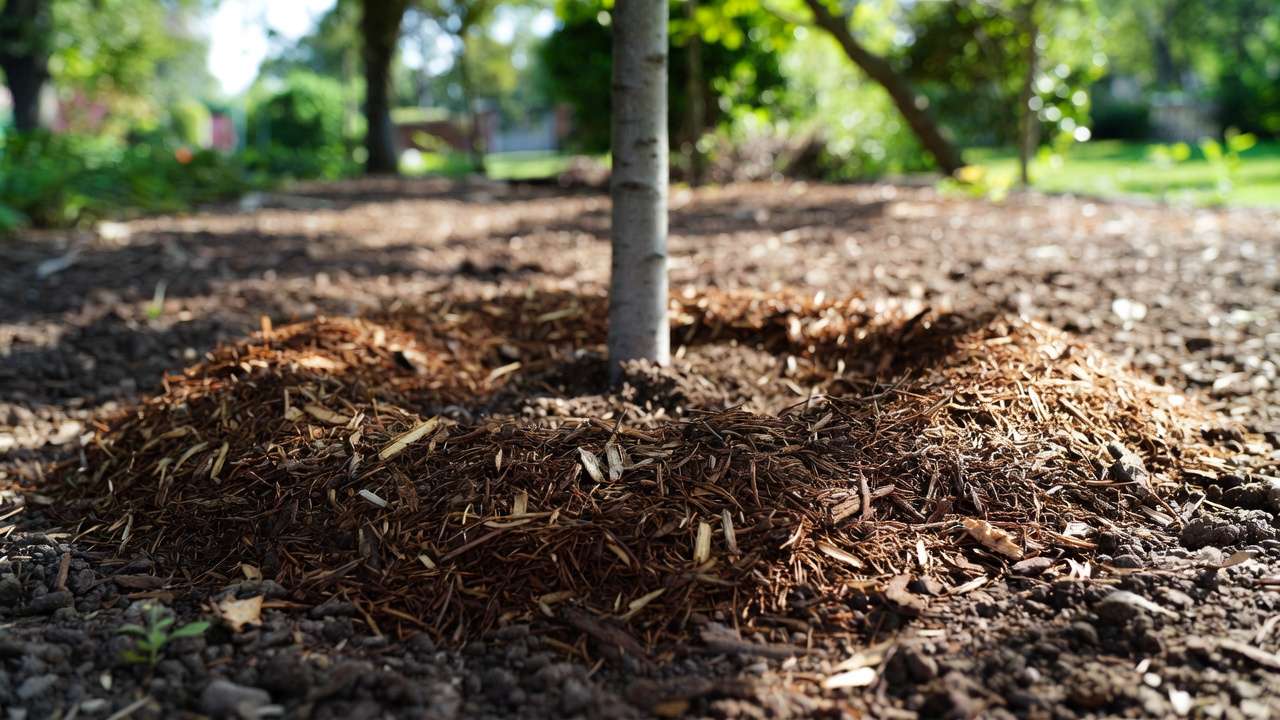
- Mulching correctly — Apply 7–10 cm (3–4 inches) of organic mulch (dry leaves, rice straw, wood chips, or coconut coir—abundant locally) in a wide ring around the base, extending to the drip line. Keep mulch 5–10 cm away from the trunk to prevent rot and rodent issues. No mulch volcanoes! Proper mulching suppresses weeds, moderates soil temperature, retains moisture, and slowly feeds the tree. Replenish annually.
- Fertilization — Most young trees in decent garden soil don’t need fertilizer in the first 1–2 years—excess nitrogen especially promotes weak, leggy growth. If growth is poor (yellow leaves, stunted), get a simple soil test (available through local agriculture offices or kits). If needed, use balanced slow-release organic fertilizer (e.g., compost, well-rotted manure, or NPK 10-10-10 at half strength) in early spring. Avoid heavy feeding right after pruning.
- Protection & monitoring —
- Stake only if necessary (e.g., very top-heavy or windy site) — use loose ties and remove after 1 year max to prevent weak trunks.
- Watch pruning wounds for signs of oozing, discoloration, or pests. In humid conditions, fungal entry is possible—clean cuts usually heal fine, but if issues appear, consult local experts.
- Protect trunk from sunscald/lawnmower damage with tree guards or retained lower temporary branches.
Consistent aftercare turns your pruning investment into decades of healthy, low-maintenance growth. 🌿
Frequently Asked Questions (FAQs) ❓
Here are answers to the questions I hear most often from homeowners just like you in Bangladesh and similar climates:
- How much can I safely prune a young tree at once? No more than 25–30% of the live canopy in any single year. Less is better for stressed or newly planted trees. Gradual training is key!
- Should I prune my newly planted tree heavily to “balance” the top with the roots? No! At planting, only remove clearly damaged or broken branches. The leaves are essential for producing energy to regrow roots. Heavy pruning at planting often sets the tree back.
- What’s the difference between thinning and topping? Thinning removes entire branches back to their origin, improving light/air without changing overall shape—good! Topping cuts branch tips arbitrarily, creating weak regrowth and ugly form—bad!
- Will pruning make my tree grow faster? Not directly. Proper structural pruning directs energy into stronger, healthier growth rather than weak, excessive shoots. The tree often looks “fuller” and more vigorous long-term.
- When will my pruned tree look “normal” again after heavy structural work? Usually 1–2 growing seasons. The tree fills in nicely as new shoots develop from remaining buds. Patience pays off!
- Can I prune during the rainy season? Avoid major pruning during active growth or heavy monsoon periods—wounds stay wet longer, increasing fungal risk. Stick to January–February in Barisal Division.
- Do I need to seal pruning cuts with paint or wound dressing? No—modern research (and ISA guidelines) shows most trees heal best naturally. Sealants can trap moisture and encourage decay in humid climates.
- My tree has two main trunks—should I remove one? Usually yes, if they are codominant and close in size/height. Choose the straighter, healthier one and reduce/remove the other over 1–3 years to avoid future splitting.
Final Thoughts & Expert Checklist ✅
Pruning young trees for strong growth isn’t about drastic shaping—it’s gentle, consistent training that gives your tree the best possible start in life. By establishing a dominant leader, well-spaced strong branches, and eliminating weak defects early, you’re investing in safety, beauty, and longevity for decades to come. 🌳💚
Quick Printable Young Tree Pruning Roadmap Checklist
- Year 1: Remove only dead/damaged/diseased; keep low temporary branches
- Years 2–4: Select & protect single central leader; subordinate codominants
- Annually: Eliminate suckers, water sprouts, crossing/rubbing branches
- Gradually raise crown (no more than ⅓ height at a time)
- Never top, flush cut, or remove >25–30% live foliage
- Prune late winter/early spring (Jan–Feb in Barisal)
- Aftercare: Deep water, mulch properly, monitor wounds
Thank you for caring about your trees! If you’re working on a young Neem, Mango, Krishnachura, or any other favorite right now—share a photo or your progress in the comments below. I’d love to see your results and answer any specific questions!
Happy pruning, and here’s to strong, beautiful trees for generations! 🌱✨











