
Have you ever walked into your backyard in Dhaka and noticed strange, vigorous shoots suddenly exploding from the base of your favorite mango tree — or thin, straight-up branches shooting skyward like rockets from the middle of the canopy? 😲
These fast-growing troublemakers are suckers and watersprouts, and most home gardeners unfortunately ignore them… until they realize their tree is producing far fewer juicy mangoes, smaller guavas, or weaker overall growth year after year.
The importance of removing suckers and watersprouts cannot be overstated — especially for fruit trees in our tropical climate. These energy thieves silently rob your tree of vital resources, weaken its structure, invite diseases, and can even ruin the quality of the fruit you’ve worked so hard to grow.
As someone who has spent over a decade advising home gardeners, small-scale orchard owners, and urban tree enthusiasts across Bangladesh (and helped rescue hundreds of stressed mango, jackfruit, citrus, and guava trees), I can confidently say: regular sucker and watersprout removal is one of the single most powerful, low-cost practices you can do to dramatically improve tree health, increase fruit yield, and extend the productive life of your trees. 🌟
In this in-depth guide, you’ll discover:
- Exactly what suckers and watersprouts are (and why they’re different)
- The 7 major reasons you must remove them
- The real causes behind their appearance in Dhaka’s challenging growing conditions
- Step-by-step removal techniques (with photos in mind)
- Prevention strategies that actually work long-term
- Special tips tailored for Bangladesh’s hot, humid, monsoon-heavy climate
Let’s dive in and give your trees the care they truly deserve! 🍋✨
What Are Suckers and Watersprouts? Key Differences Explained 🤔🌱
Understanding the enemy is the first step to winning the battle. While both suckers and watersprouts are unwanted vigorous shoots, they originate from completely different parts of the tree and behave differently.
Defining Suckers – The Root-Level Trouble Makers ⚡
Suckers (also called root suckers or basal shoots) are vigorous shoots that emerge from the root system or from the trunk below the graft union (in grafted trees).
In most fruit trees commonly grown in Bangladesh — mango, citrus (lemon, malta, orange), guava, jackfruit, lychee, sapota — the desirable variety is grafted onto a different, more vigorous rootstock.
When suckers appear from the rootstock, they are genetically different from the fruiting variety you actually want. These suckers grow extremely fast because rootstocks are often selected for their strong, aggressive root systems.
Classic signs of suckers:
- Emerge from the soil line or very low on the trunk
- Leaves often look slightly different (smaller, different shape/color)
- Grow very upright and fast
- Usually appear after stress events (drought, flooding, root injury, heavy pruning)
Fun fact: In some older mango orchards, I’ve seen rootstock suckers completely overtake the desirable scion variety within 2–3 years if left unchecked! 😱
Understanding Watersprouts – The Vertical Canopy Invaders 🚀
Watersprouts are vigorous, upright shoots that emerge from larger branches, the main trunk, or even older scaffold limbs — usually higher up in the canopy.
They are the tree’s emergency response to severe stress — think of them as the tree desperately trying to produce new leaves quickly to recover from damage.
Classic signs of watersprouts:
- Very straight, vertical growth (almost 90° to the branch they come from)
- Thin, smooth bark and large, soft, light-green leaves
- Appear after heavy pruning, storm damage, topping, drought stress, or sudden exposure to full sun after shade
- Grow extremely fast — sometimes 1–2 meters in a single season!
Quick Comparison Table: Suckers vs Watersprouts
| Feature | Suckers | Watersprouts |
|---|---|---|
| Location | Base of tree / below graft union | Higher up on trunk/branches |
| Origin | Root system or rootstock | Existing branches or trunk |
| Common triggers | Root stress, graft issues, injury | Canopy stress, heavy pruning, topping |
| Growth habit | Upright & very vigorous | Extremely upright & fast |
| Threat to variety | Can overtake grafted variety | Doesn’t change variety but weakens tree |
| Disease risk | High (close to soil) | High (poor air circulation) |
| Typical appearance | Often different leaves | Soft, light green, large leaves |
Knowing the difference helps you decide the urgency and method of removal — and prevents you from accidentally removing desirable new growth! 🌿
The Importance of Removing Suckers and Watersprouts (Core Value Section) 🔥
Now that you can spot them, let’s talk about why the importance of removing suckers and watersprouts is so critical — especially for fruit trees in tropical climates like Dhaka’s hot, humid, monsoon-drenched environment.
Ignoring these shoots isn’t just a cosmetic issue; it’s a major drain on your tree’s resources and long-term productivity. Here are the 7 most powerful reasons you should make removal a regular part of your tree care routine:
- They Divert Vital Energy Away from Fruit Production 🍑 Suckers and watersprouts are the fastest-growing parts of the tree — they act like little nutrient vacuums, pulling water, sugars, and minerals away from developing flowers, fruit, and even roots. In mango trees (very common in Bangladesh yards), heavy sucker growth can reduce fruit set by 30–50% in a single season according to observations from local extension services and my own client gardens.
- They Weaken Overall Tree Structure and Increase Breakage Risk 🌪️ Watersprouts grow straight up with weak wood and narrow attachment angles — they snap easily in strong winds or monsoon storms (which we get plenty of!). Repeated watersprout growth also creates dense, shaded pockets that make branches more prone to dieback.
- They Reduce Light Penetration and Air Circulation → Higher Disease & Pest Pressure 🦟🍄 Thick clusters of watersprouts create a jungle-like canopy. Poor airflow leads to fungal issues like anthracnose (very common on mango and guava in humid Dhaka), powdery mildew, and sooty mold. Pests love the tender new growth too!
- They Make Trees Look Messy and Overgrown 😖 Aesthetic matters — a clean, well-shaped tree is a joy in any home garden. Overgrown suckers and watersprouts give even mature trees an unkempt, neglected appearance.
- On Grafted Trees: Rootstock Suckers Can Completely Overtake the Desired Variety 🚫 This is the biggest danger in grafted fruit trees. If rootstock suckers are left to grow, they can dominate and produce small, poor-quality fruit (or none at all) while the grafted scion weakens and dies.
- They Signal & Worsen Underlying Tree Stress Heavy sucker/watersprout production is often the tree’s SOS — drought, overwatering, compacted soil, root damage from construction, or nutrient imbalance. Removing them helps, but addressing the root cause is key.
- Long-Term: They Shorten Tree Lifespan and Lower Harvest Quality Chronic energy drain leads to smaller fruit, lower sugar content, biennial bearing (heavy crop one year, almost none the next), and premature decline. Healthy, sucker-free trees consistently produce better-quality fruit for 20–40+ years.
Here are some real visual examples to help you see the difference:
Here are close-up views of suckers emerging from the base of fruit trees:
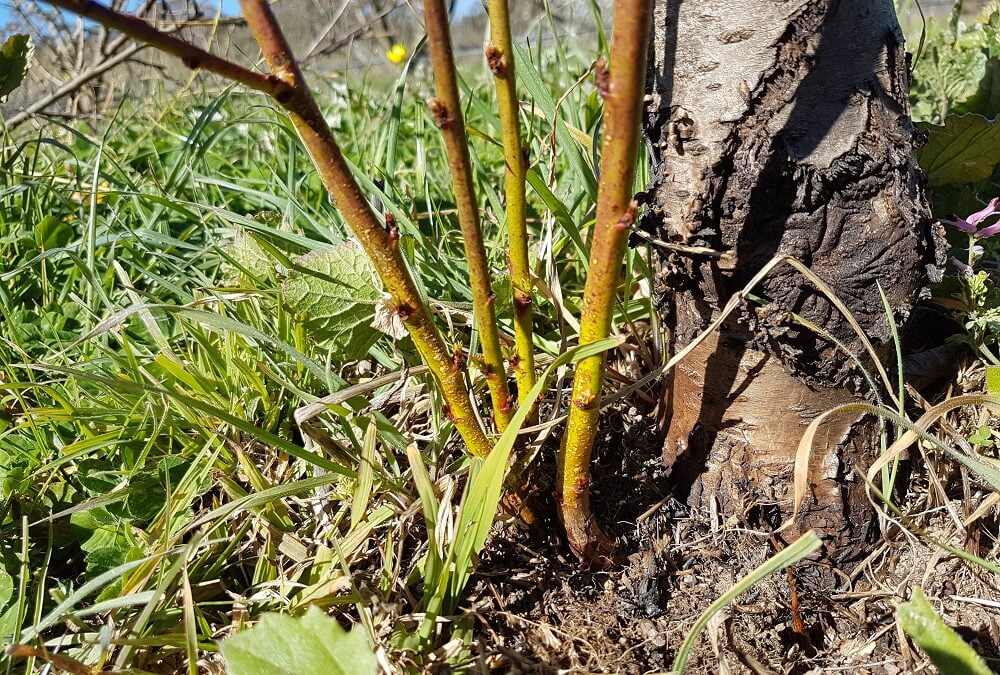
These photos show why early removal makes such a huge difference — the longer they stay, the more energy they steal! 😩
Common Causes: Why Your Trees Produce Suckers & Watersprouts in the First Place 🧐
Suckers and watersprouts don’t appear randomly — they’re almost always the tree’s response to stress. In Dhaka’s challenging urban and tropical environment, several common triggers make them especially frequent:
- Environmental Stress ☀️💧: Prolonged dry spells (common pre-monsoon), sudden heavy flooding during rains, or inconsistent watering cause the tree to push out emergency shoots.
- Improper or Excessive Pruning ✂️: Topping trees (cutting off the top) or heavy, poorly timed cuts trigger massive watersprout response as the tree tries to regrow canopy quickly.
- Mechanical Injury 🚜: Lawn mowers, weed trimmers, or construction work nicking roots or bark stimulates suckers from below the damage point.
- Grafting & Rootstock Issues 🌱: Vigorous rootstocks (common in commercial mango and citrus) naturally produce lots of suckers, especially if the graft union is stressed or partially failed.
- Nutrient Imbalance — Especially excess nitrogen from over-fertilizing or rich compost near the base — encourages soft, rapid growth like watersprouts.
- Tropical Climate Factors 🌧️: Our intense heat, humidity, and monsoon deluges create perfect conditions for stress-induced sprouting. Urban soil compaction and poor drainage in city yards make it worse.
Special Note for Dhaka & Tropical Gardeners: During the monsoon (June–September), avoid heavy pruning — it invites fungal diseases through fresh cuts. Many of my clients see the biggest sucker flushes right after the dry April–May period or after storm damage.
Identifying the cause helps you not only remove the current problem but prevent future ones — turning a frustrating issue into better long-term tree health! 🌿
Step-by-Step Guide: How to Safely Remove Suckers and Watersprouts ✂️🛠️
Removal is simple, quick, and rewarding — but doing it the right way prevents damage and stops regrowth. Here’s your expert, foolproof method tailored for home gardeners in tropical climates like ours.
Best Tools & Timing for Removal 📅
Recommended tools (keep them sharp and clean!):
- Sharp bypass pruners or loppers for small-to-medium shoots
- Hand saw or pruning saw for thicker watersprouts (>2 cm)
- Garden gloves and safety glasses
- Rubbing alcohol or bleach solution to sterilize tools between cuts (prevents disease spread — very important in humid Dhaka!)
Best timing:
- Remove small suckers/watersprouts anytime you see them — the sooner, the less energy lost!
- For larger growth or major work: Late dry season (February–March) or early monsoon onset — avoid peak rainy months (July–August) when fresh cuts can invite fungal infections like anthracnose.
- Never remove more than 20–25% of the canopy in one go to avoid shocking the tree.
Pro tip: Many small suckers can be rubbed off by hand when they’re just 5–10 cm tall — quick and no tools needed! 🌱
How to Remove Suckers (Root-Level) – Step by Step
- Locate the sucker — Trace it down to where it emerges from the soil or trunk base (often below graft union).
- Gently clear soil if needed — Expose the base without damaging main roots.
- Cut or pull — For small ones: Grip firmly and pull/twist downward (many come out with roots). For thicker: Cut as close to the origin as possible with sharp pruners.
- Check for more — Look around the base; suckers often come in clusters.
- Dispose — Don’t compost suckers from grafted trees (they can root and spread unwanted rootstock).
Here are excellent before-and-after examples of sucker removal on fruit trees (notice how clean and healthy the base looks afterward):
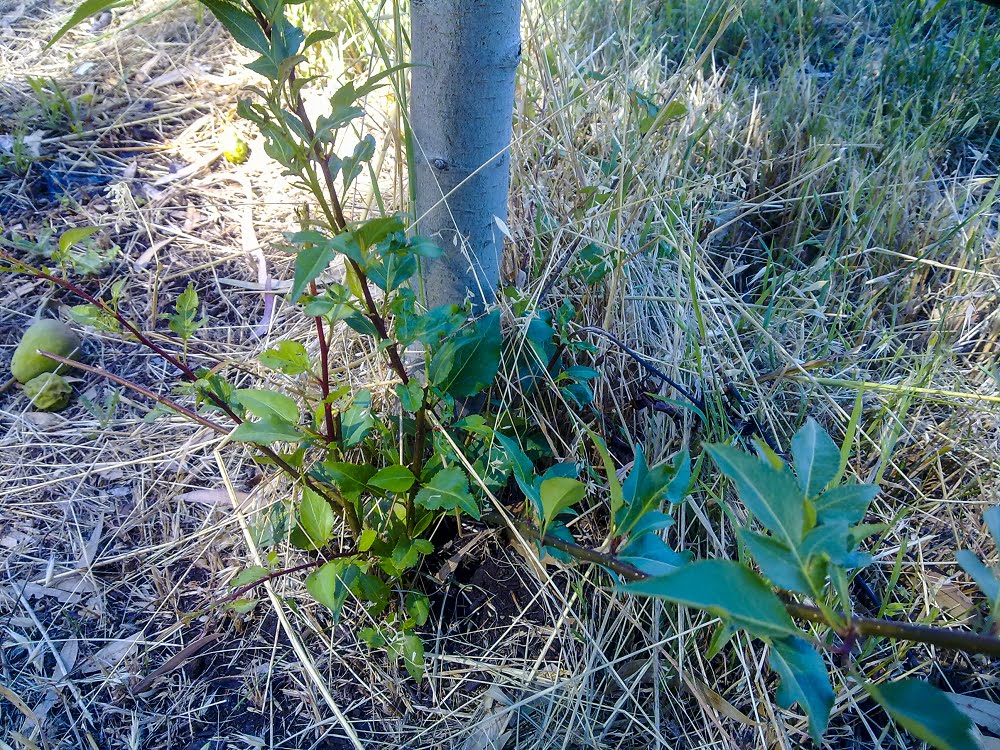
These show real results — trees recover fast and put energy back into fruit!
How to Remove Watersprouts (Canopy-Level) – Step by Step
- Identify — Look for thin, vertical, vigorous shoots growing straight up from branches or trunk.
- Assess attachment — Find the branch collar (swollen area where shoot meets parent branch).
- Make the cut — Use sharp pruners/loppers to cut flush to the branch collar — never leave stubs (they invite rot). Angle the cut slightly away from the trunk.
- Work from top down — Start with highest watersprouts to avoid damaging lower branches.
- Sterilize — Wipe tools after each tree.
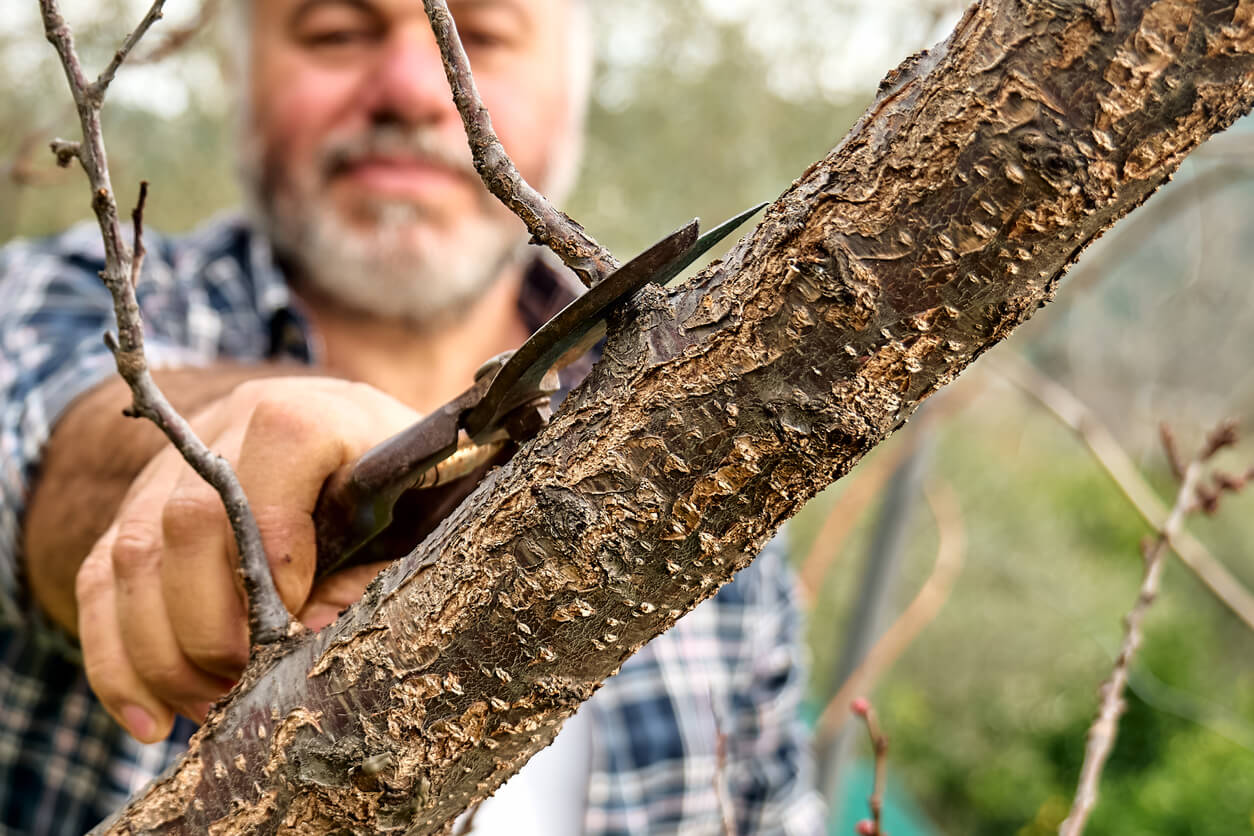
Here are close-up visuals of the proper pruning cut at the branch collar (key to fast healing):
And step-by-step action shots of watersprout removal in progress:
Prevention Strategies: Stop Them Before They Start! 🛡️🌿
The best long-term solution isn’t just removing suckers and watersprouts — it’s preventing them from appearing in the first place. Here are 10 practical, expert-recommended prevention tips that work especially well for fruit trees in Dhaka’s hot, humid, urban-tropical conditions:
- Plant at the Correct Depth Never bury the graft union (the swollen bump where scion meets rootstock). Keep it 5–10 cm above soil level — this dramatically reduces rootstock suckers.
- Choose the Right Location & Improve Soil Drainage Avoid waterlogged spots. Add organic matter and raised beds if your Dhaka yard has heavy clay soil. Good drainage = less root stress = fewer suckers.
- Water Deeply but Infrequently Deep, infrequent watering encourages strong deep roots instead of shallow stress-induced suckers. In dry months (March–May), water every 7–10 days deeply rather than daily shallow sprinkling.
- Mulch Generously (But Not Against the Trunk) Apply 8–10 cm of organic mulch (rice straw, dry leaves, coconut coir) in a wide ring around the tree — keep it 10 cm away from the trunk to prevent rot and excess moisture at the base.
- Fertilize Smart — Avoid Excess Nitrogen Too much nitrogen (especially urea or poultry manure in large amounts) triggers soft, vigorous watersprout growth. Use balanced NPK fertilizers (e.g., 10-10-10 or fruit tree blends) 2–3 times per year, and prefer slow-release or organic options.
- Prune Properly & Lightly — Never Top Trees Use correct pruning techniques: thin out crowded branches, remove crossing limbs, and open the canopy gradually over years. Avoid “topping” (cutting flat across the top) at all costs — it’s the #1 cause of watersprout explosions!
- Protect the Trunk & Roots from Mechanical Damage Install tree guards around young trunks to prevent string-trimmer or mower injury — every nick can trigger suckers below the wound.
- Monitor & Manage Stress Proactively Watch for early signs of drought, overwatering, or nutrient deficiency. Healthy, unstressed trees produce far fewer emergency shoots.
- Use Root Barriers for Problematic Rootstocks (Advanced Tip) For trees that are notorious suckerer-producers (some citrus and older mango varieties), install a physical root barrier 30–40 cm deep around the tree when planting.
- Regular Inspections — Make It a Habit Walk your garden weekly during growing season (March–October). Rub off tiny suckers by hand before they get big — prevention is 10× easier than removal!
Follow these habits and you’ll notice a huge drop in sucker and watersprout production within 1–2 seasons. Your trees will reward you with better fruit, stronger branches, and a much tidier garden! 🍋✨
Frequently Asked Questions (FAQs) ❓
Q1: Can I leave watersprouts on ornamental or shade trees? A: Yes — on non-fruiting trees (like rain tree or mahogany), watersprouts are less harmful and can even help fill canopy gaps after damage. For fruit trees, always remove them.
Q2: Will removing suckers kill my tree? A: No — proper removal is safe and beneficial. Only avoid removing more than 20–25% of the canopy at once on very stressed trees.
Q3: How often should I check for suckers and watersprouts? A: Once every 2–4 weeks during the growing season (March–October in Dhaka). Quick checks take just 5 minutes per tree!
Q4: What’s the difference between suckers, watersprouts, and normal new branches? A: Normal new growth appears gradually, at natural angles, with mature-looking leaves. Suckers and watersprouts are fast, upright, thin, and aggressive.
Q5: Are suckers from mango trees in Bangladesh especially bad? A: Yes — many local mango varieties are grafted onto vigorous rootstocks. Unchecked suckers can completely take over within 2–3 years.
Q6: Can I use chemicals to stop suckers? A: Avoid strong herbicides. Some gardeners use auxin-based pastes on fresh cuts, but hand removal + prevention is safer and more effective.
Q7: My guava tree has tons of watersprouts after monsoon storms — what should I do? A: Remove them promptly (February–April is ideal), improve drainage, and avoid over-fertilizing. Guava responds very well to light annual thinning
Conclusion 🌟🍎
The importance of removing suckers and watersprouts goes far beyond simple garden tidiness — it’s one of the most effective, low-effort ways to dramatically improve the health, structure, fruit production, and longevity of your trees.
In our Dhaka climate — with its intense heat, seasonal monsoons, urban soil challenges, and frequent stress events — these vigorous shoots appear quickly and can do real damage if ignored. By understanding what they are, why they form, how to remove them safely, and most importantly, how to prevent them, you’re giving your mango, guava, jackfruit, citrus, lychee, or any other fruit tree the best possible chance to thrive.
A clean, well-pruned tree isn’t just more productive — it’s more beautiful, more resilient to storms and diseases, and will reward you with bigger, sweeter, more abundant harvests year after year.
Your simple action plan for this weekend:
- Walk around your garden and inspect every fruit tree
- Rub off or snip any small suckers and watersprouts you find
- Schedule a proper late-winter/early-spring pruning session (February–March)
- Start mulching, watering deeply but infrequently, and fertilizing smartly
Your trees will thank you — and so will your family when the next mango season brings a record harvest! 🌿🍋











