
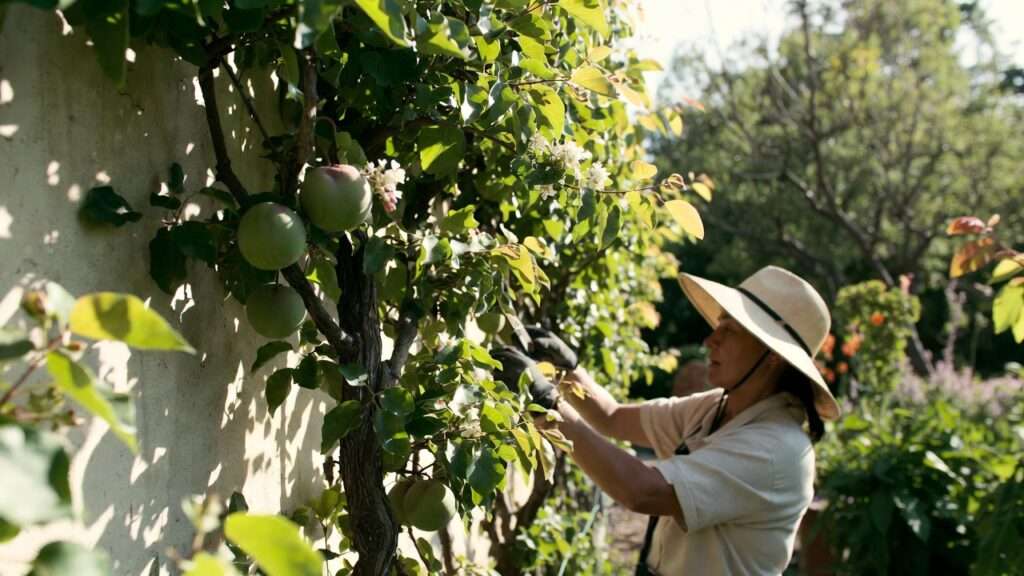
Imagine stepping into your garden and being greeted by a living masterpiece: elegant horizontal branches hugging a sunny wall, adorned with delicate spring blossoms 🌸, vibrant summer leaves, and clusters of ripe, juicy fruit ready for picking in autumn 🍏. Espalier fruit trees turn ordinary fences or blank walls into stunning, space-saving features that deliver homegrown harvests without demanding acres of land.
Yet many gardeners discover a hidden challenge after the initial planting thrill: without proper espalier fruit tree maintenance, those graceful tiers can quickly become overgrown, misshapen, or disappointingly unproductive 😩. Vigorous shoots take over, fruit becomes sparse, diseases creep in from poor airflow, and the artistic form you dreamed of starts looking more like a wild bush.
As a passionate horticulturist with years of hands-on experience training and caring for espaliered apples, pears, and more (drawing from time-tested methods endorsed by the Royal Horticultural Society and university extension experts), I’ve seen how consistent, thoughtful care transforms these trees into reliable, beautiful performers that thrive for 20+ years. This in-depth guide covers everything you need for successful espalier fruit tree maintenance — from seasonal routines and precise pruning to pest strategies and troubleshooting — so you can enjoy healthier trees, better shapes, and truly abundant harvests, even in compact urban or suburban spaces. Let’s turn your espalier into the garden highlight it deserves to be! ✨
Why Espalier Maintenance Matters More Than You Think
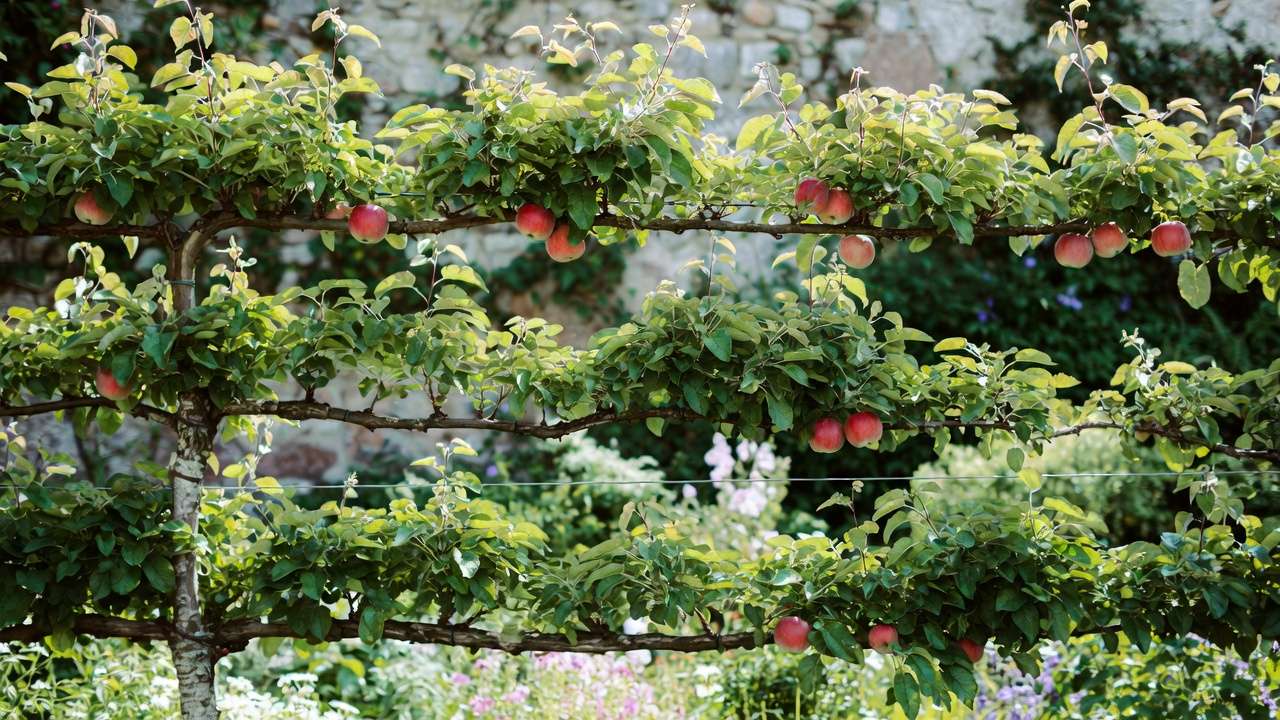
Espalier isn’t just decorative; it’s a high-reward system that relies on disciplined care to succeed. Unlike free-standing fruit trees, espaliers direct energy into limited branches, creating intense productivity per square meter while maximizing light exposure and airflow.
Key benefits of dedicated maintenance include:
- Higher fruit quality and quantity — Open structure ripens fruit evenly and boosts yields 🍐
- Disease prevention — Excellent circulation reduces risks of powdery mildew, fire blight, and fungal issues
- Preserved artistic form — Horizontal tiers stay flat and symmetrical against supports
- Longevity and ease — Well-maintained espaliers produce reliably for decades with easier harvesting (no ladders needed!)
Skip regular tasks, and problems arise fast: top tiers dominate, lower branches weaken, fruit set drops, or the tree reverts to upright, bushy growth. The good news? A structured routine makes maintenance straightforward and rewarding. 🌿
Choosing the Right Foundation for Long-Term Success
Strong espalier fruit tree maintenance starts before the first prune — with smart variety, rootstock, and support choices that make ongoing care easier.
Ideal Fruit Tree Varieties for Espalier
Apples and pears excel thanks to flexible young wood and spur-bearing habits (fruit forms on short, long-lived spurs rather than branch tips).
Top recommendations:
- Apples 🍎: Spur-bearing cultivars like ‘Golden Delicious’, ‘Jonagold’, ‘Liberty’, ‘Discovery’, or ‘Charles Ross’ — forgiving, disease-resistant, and productive. Avoid strong tip-bearers like ‘Bramley’s Seedling’.
- Pears 🍐: ‘Conference’, ‘Concorde’, or self-fertile options like ‘Conference’ — naturally pliable and reliable.
- Others: Quince for warmer spots; limited use of peaches or plums (better as fans due to less flexible wood).
Select spur-bearing types for simplest spur renewal and shape control.
Rootstock and Size Considerations
Rootstock controls vigor — crucial for espalier success.
- Apples: M26 (smaller 3-4 tier espaliers in fertile soil), MM106 (balanced semi-vigorous, most common), or M9 (dwarf for containers/pots, needs staking).
- Pears: Quince A (ideal standard) or Quince C (smaller spaces).
Dwarf/semi-dwarf options keep growth manageable, preventing excessive vigor that complicates training.
Support System Essentials
A sturdy framework prevents sagging and eases tying:
- Use 12-14 gauge galvanized wires stretched taut between posts or wall anchors.
- Space wires 35–45 cm (14–18 in) apart, starting 40 cm (16 in) from ground.
- Keep tree 10–15 cm (4–6 in) from wall for airflow and maintenance access.
- Ties: Soft twine, rubber ties, or adjustable Velcro — check and loosen annually to avoid girdling as branches thicken 🔧.
Pro Tip: Install supports before planting — it’s much easier!
Seasonal Maintenance Calendar: Your Year-Round Roadmap 📅
Espalier care aligns with the tree’s natural cycle. Follow this expert schedule (adapted from RHS guidelines and extension services) for consistent results.
Winter (Late Dormant Season — January to Early March ❄️)
Trees are leafless — perfect for structural work without stress.
- Major pruning: Shorten overly long arms, thin crowded spurs, remove dead/diseased/crossing wood.
- Renew spurs: Cut back older spurs on one side of a branch every 2–3 years to stimulate fresh fruiting wood.
- Inspect and repair wires, anchors, and ties.
- Apply dormant oil spray to smother overwintering pests like scale or mites.
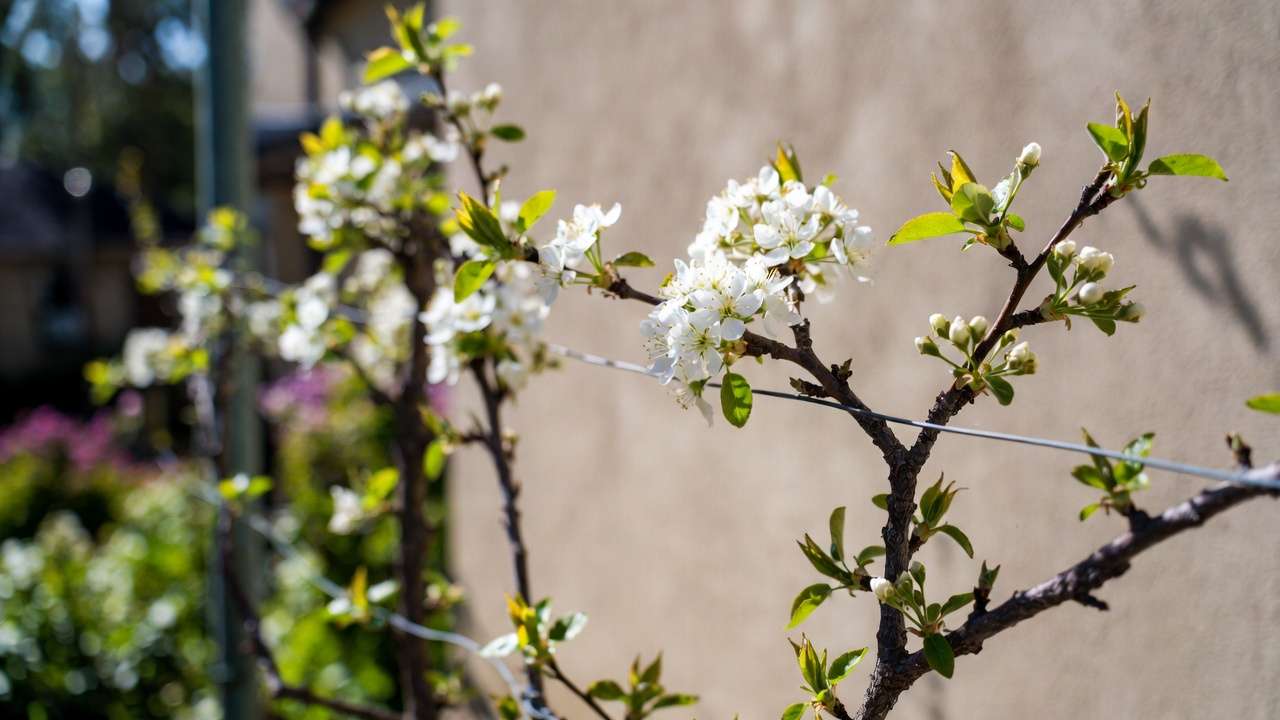
Spring (Bud Break to Flowering — March to May 🌷)
Growth explodes — act early to guide it.
- Thin excess shoots: Remove weak or poorly placed ones when 10–15 cm long.
- Fertilize: Apply balanced organic fertilizer (higher potassium/phosphorus for fruiting, e.g., 5-10-10 or fish emulsion).
- Mulch: Add 5–10 cm organic layer (compost, bark) around base — keep away from trunk to prevent rot.
- Monitor: Watch for aphids, caterpillars, or codling moth; introduce beneficial insects or use organic sprays early.
Summer (Growing Season — June to August ☀️)
The most critical period for shape and fruit quality!
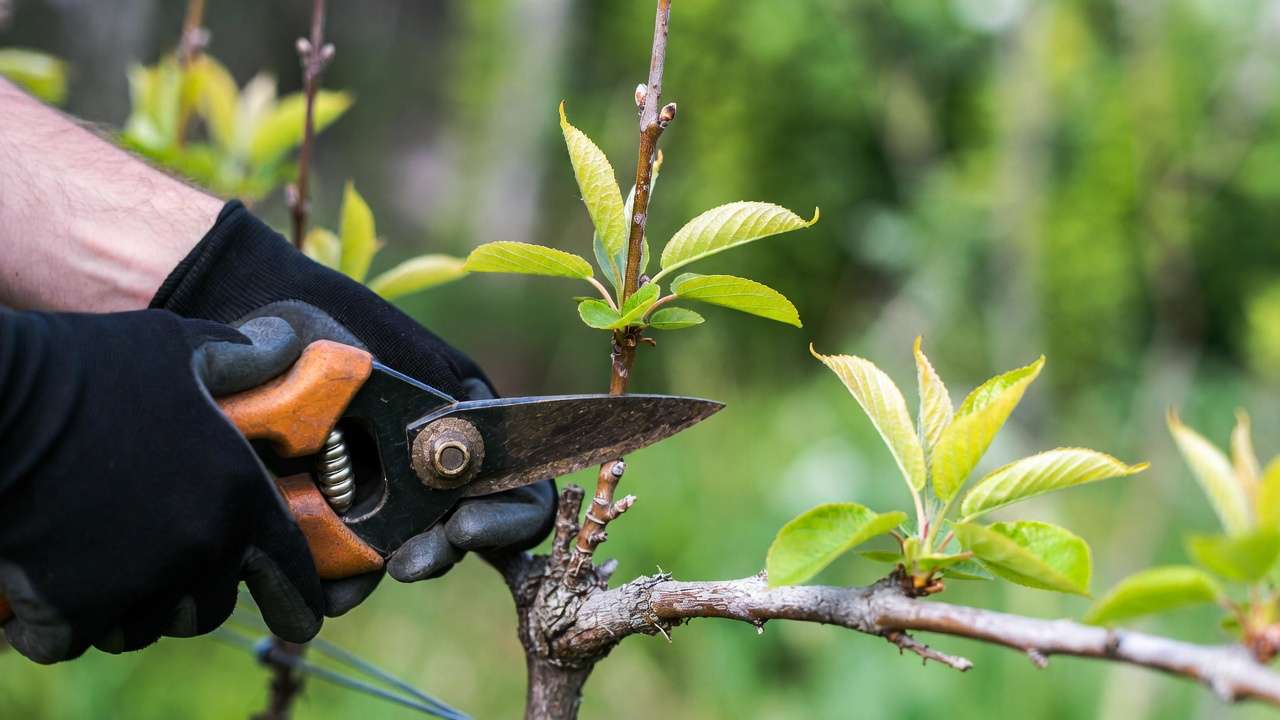
- Summer pruning (key to espalier!): Late July (pears) to mid-August (apples) — when lower third of new shoots woody. Cut laterals back to 3 leaves above basal cluster; remove upright water shoots entirely.
- Train & tie: Gently bend and secure new growth to wires as it lengthens.
- Water: Deep, consistent moisture during dry spells (esp. fruit swelling) — drip irrigation ideal.
- Thin fruit: If overloaded, remove excess to prevent branch strain and improve size/quality.
Fall (Harvest to Leaf Drop — September to November 🍂)
Wrap up the season gently.
- Harvest carefully: Pick ripe fruit to avoid bruising branches.
- Clean up: Rake fallen leaves/debris to minimize overwintering diseases.
- Light pruning: Only if needed (avoid heavy cuts that stimulate soft growth).
- Protect: In cooler climates, add fleece or mulch for young trees against early frosts.
Detailed Pruning Techniques for Espalier Perfection ✂️
Pruning accounts for roughly 80% of successful espalier fruit tree maintenance — get this right, and the rest of care becomes much easier. The goal is always the same: restrict excessive vegetative growth, encourage short fruiting spurs, maintain the flat tiered shape, and promote even light and air distribution.
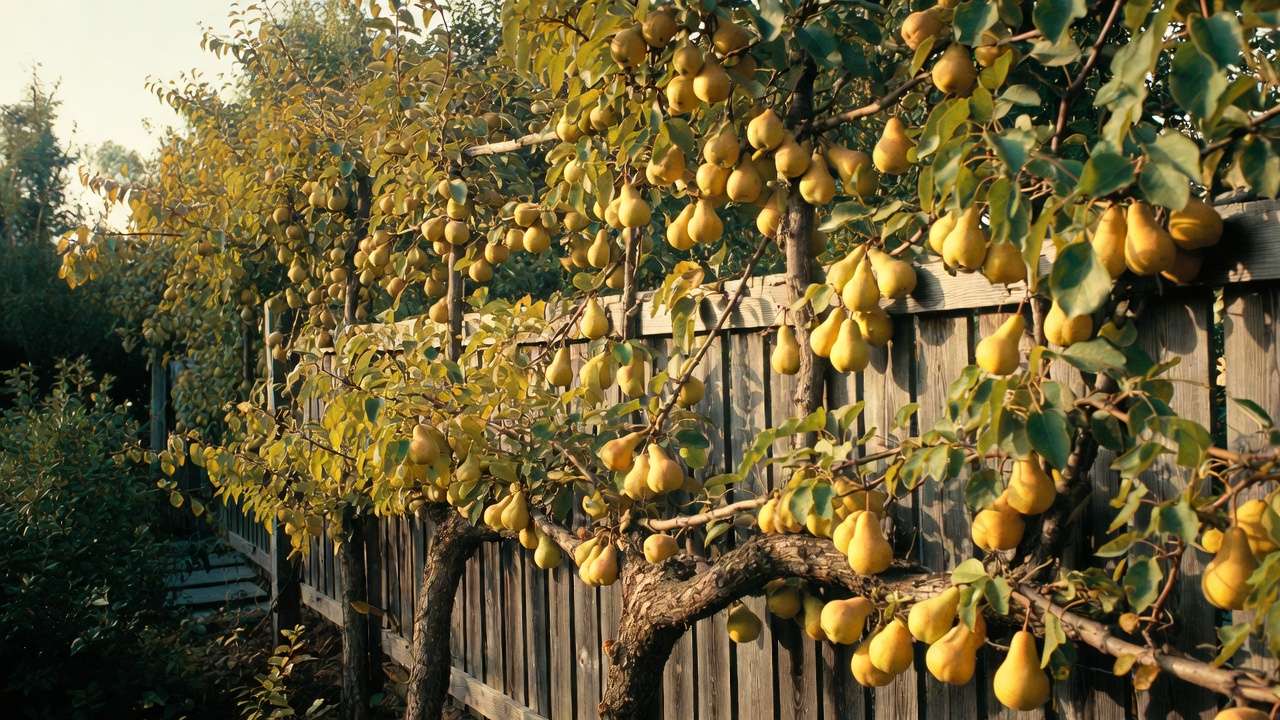
Summer Pruning (The Single Most Important Step for Shape and Fruiting)
Timing is everything here. Summer pruning (also called “regulatory” or “restriction” pruning) happens when the tree’s energy is focused on ripening rather than new shoot extension.
- When to prune:
- Pears: Late July (northern hemisphere)
- Apples: Early to mid-August
- Look for the lower third of new lateral shoots turning woody (brownish) while tips remain green — that’s your window.
- How to do it:
- Identify new laterals (side shoots growing from the main horizontal arms).
- Count back from the tip: Cut just above the third fully formed leaf (leaving 3–5 leaves total above the basal cluster where next year’s fruit buds will form).
- Remove any upright “water shoots” (vigorous vertical growth) completely at their base — these steal energy and ruin the flat profile.
- Thin overcrowded laterals: Keep only well-spaced shoots pointing in the desired direction.
- Why it works so well: Summer cuts reduce leaf area immediately, slowing regrowth and channeling energy into fruit buds instead of long shoots. Done correctly, you’ll see fat, pointed fruiting spurs develop by autumn 🍎.
Winter Pruning for Long-Term Structure and Spur Renewal
Winter pruning shapes the skeleton while the tree is dormant.
- Key tasks:
- Shorten any overly long horizontal arms back to a strong outward-facing bud.
- Thin spurs: On mature branches, remove every other spur on one side every 2–3 years (alternate sides annually) to prevent overcrowding and encourage fresh, vigorous spur replacement.
- Maintain tier balance: If the top tier grows faster (it usually does), prune it harder than lower tiers.
- Remove dead, diseased, damaged, or crossing wood — standard winter clean-up.
- Spur renewal cycle (expert technique): Year 1: Remove older spurs on the left side of a branch. Year 2: Remove older spurs on the right side. Year 3: New spurs have formed — repeat. This keeps fruit production consistent without bare patches.
Common Pruning Mistakes to Avoid (and How to Fix Them) ❌
- Pruning too early in summer → stimulates soft, frost-vulnerable regrowth
- Skipping summer pruning entirely → tree becomes a bushy mess within 1–2 seasons
- Leaving too many leaves on laterals → excessive vigor continues
- Using blunt secateurs → ragged cuts invite disease (always sharpen tools!)
- Over-thinning spurs → dramatically reduces next year’s crop
Pro Tip: Keep a simple pruning journal or take dated photos each season — you’ll spot patterns and improve faster.
Watering, Feeding, and Soil Care Essentials 💧
Espaliers grow against walls or fences, so roots often compete with building foundations or dry out faster — thoughtful watering and nutrition are non-negotiable.
- Watering schedule:
- Young trees (first 2–3 years): Consistent moisture — about 20–30 liters per week during dry spells.
- Established trees: Deep soak every 7–10 days in summer when no rain (check soil 10 cm down — if dry, water).
- Best method: Drip irrigation or soaker hose along the base — avoids wet foliage and fungal issues.
- Feeding program:
- Early spring (March–April): Apply balanced organic fertilizer (e.g., 5-5-10 or fish/blood/bone) at 50–70 g per square meter.
- Late spring (after flowering): High-potassium feed (tomato fertilizer or wood ash) to support fruit development.
- Avoid high-nitrogen feeds after June — they push leafy growth at the expense of fruit.
- Mulching magic: Apply 5–10 cm layer of compost, well-rotted manure, or bark chips in spring. Keep mulch 5–10 cm away from the trunk to prevent rot. Benefits: moisture retention, weed suppression, cooler roots, gradual nutrient release 🌱.
- Soil pH and testing: Ideal range: 6.0–7.0. Test every 2 years — most fruit trees struggle in very acidic or alkaline soil. Amend with lime (to raise pH) or sulfur/peat (to lower) as needed.

Pest and Disease Management: Proactive Protection 🛡️
The open, flat structure of espaliers actually helps with prevention — but vigilance is still essential.
Common Pests
- Aphids: Cluster on new shoots in spring — blast with strong water jet or use insecticidal soap/neem oil.
- Codling moth: Larvae tunnel into fruit — hang pheromone traps in May, use grease bands on trunk, or spray approved organic insecticides at petal fall.
- Scale insects & mites: Dormant oil spray in late winter smothers overwintering stages.
- Birds: Netting just before fruit colors up is often the only reliable protection 🍒.
Common Diseases
- Powdery mildew: White powdery coating on leaves/shoots — improve airflow, avoid overhead watering, apply sulfur-based sprays early.
- Fire blight (pears especially): Blackened shoots look scorched — prune out 30 cm below infection (sterilize tools between cuts!), choose resistant varieties.
- Apple scab: Olive-green spots on leaves/fruit — rake leaves in fall, use resistant cultivars (‘Liberty’, ‘Discovery’), apply copper-based sprays at green tip stage if severe.
Proactive habits: Weekly inspections May–August, clean tools with alcohol between cuts, encourage beneficial insects (ladybugs, lacewings) with companion flowers.
Troubleshooting Common Espalier Problems and Fixes 🔧
Even with the best intentions, espalier fruit trees can run into issues. Here are the most frequent problems gardeners face during espalier fruit tree maintenance, along with proven, practical solutions based on real-world experience and extension service recommendations.
- Poor or no fruit set Causes: Insufficient pollination, too much shade, excessive nitrogen, young tree still establishing, or not enough winter chill hours. Fixes:
- Plant compatible pollinator varieties nearby (many apples and pears need cross-pollination).
- Hand-pollinate with a soft brush during bloom if bees are scarce.
- Reduce high-nitrogen fertilizer; switch to high-potassium feeds.
- Ensure at least 6–8 hours of direct sunlight daily — prune neighboring plants if shading occurs.
- For low-chill climates (like parts of warmer regions), choose low-chill cultivars (‘Anna’, ‘Dorsett Golden’ apples).
- Overly vigorous growth / tree “reverting” to bushy form Causes: Skipping or delaying summer pruning, too vigorous rootstock, or excessive nitrogen. Fixes:
- Be ruthless with summer pruning — cut back laterals aggressively every year.
- Check rootstock; if too vigorous (e.g., MM111 instead of M26), consider root pruning in late winter (dig trench and sever some roots).
- Reduce feeding; focus on potassium rather than nitrogen after spring.
- Weak or dying lower branches / bare lower tiers Causes: Top dominance (apical dominance), poor light penetration, or competition from weeds/mulch issues. Fixes:
- Prune upper tiers harder than lower ones each winter to balance vigor.
- Remove shading branches above.
- Thin spurs selectively on upper arms to let more light reach lower parts.
- Renew spurs systematically as described earlier.
- Branch dieback or black tips (especially pears) Causes: Fire blight infection, winter cold damage, or drought stress. Fixes:
- Prune out affected shoots 30–60 cm below visible symptoms on a dry day; sterilize tools with 10% bleach or alcohol between cuts.
- Plant resistant varieties (‘Harrow Sweet’, ‘Moonglow’ pears).
- Protect young trees from late frosts with horticultural fleece.
- Small, sparse, or poorly colored fruit Causes: Over-cropping, inadequate thinning, poor nutrition, or insufficient light/airflow. Fixes:
- Thin fruitlets in late spring/early summer to 1–2 per cluster, spaced 10–15 cm apart.
- Improve potassium levels and ensure consistent watering during fruit swell.
- Summer prune diligently to open canopy for better ripening.
Advanced Tips from Experienced Growers 🌟
Once you’ve mastered the basics, these pro-level techniques take your espalier to the next level:
- Alternating spur renewal for continuous production Divide each horizontal arm into sections. Renew spurs on one section every 2–3 years while leaving adjacent sections untouched — ensures no year without fruit.
- Creating multi-variety espaliers Graft 2–4 compatible varieties onto one tree for staggered ripening and better pollination (e.g., early, mid, late-season apples). Use whip-and-tongue grafting in early spring.
- Espalier in containers Perfect for patios or balconies: Use 45–60 cm wide pots with excellent drainage, dwarf rootstocks (M9 or Quince C), and repot every 3–4 years. Water more frequently and fertilize lightly but often.
- Layered underplanting for beauty & function Plant low-growing herbs (thyme, chives), spring bulbs (crocus, daffodils), or strawberries beneath — they suppress weeds, attract pollinators, and hide bare soil for a polished look 🌼.
- Training cordons & fans as variations Once comfortable with classic horizontal espalier, try single/double cordons (diagonal or vertical single stems) or fan shapes for stone fruits — same maintenance principles apply.
Frequently Asked Questions (FAQs) ❓
How often should I prune my espalier fruit tree? Twice is essential: major structural pruning in winter, plus regular summer pruning (1–3 sessions from July–August) to control shape and encourage fruiting.
Can I espalier stone fruits like peaches, plums, or cherries? Yes, but use fan shapes rather than horizontal tiers — stone fruits have less flexible wood and fruit mostly on one-year-old growth, so pruning is more renewal-focused.
Why isn’t my espalier producing much fruit even though it looks healthy? Most common reason: too much vegetative (leafy) growth from skipped summer pruning. Prioritize those cuts — you’ll often see dramatic improvement the following season 🍎.
How long does it take for an espalier to reach full maturity and peak production? Basic form: 3–5 years. Peak consistent yields: 5–8 years with diligent care. After that, well-maintained espaliers can produce reliably for 20–40+ years.
Is espalier really worth all the extra effort compared to a regular fruit tree? For small gardens, patios, or decorative spaces — absolutely. You get easier picking (no ladders), stunning visual impact, higher yield per square meter, and better fruit quality from improved light/ripening. Many gardeners say it’s addictive once you see the results!
By committing to this structured espalier fruit tree maintenance approach — seasonal routines, precise pruning, proactive care, and a little patience — you’ll cultivate not just a tree, but a living piece of garden art that delivers beauty, fragrance, and delicious homegrown fruit year after year. Your wall, fence, or patio is about to become the envy of every gardener who sees it.











