
Imagine sinking your teeth into a perfectly ripe, sun-kissed peach straight from your backyard tree—juicy, flavorful, and free from spots or rot. 😍 Now picture the disappointment when your harvest is small, diseased, or hidden in dense foliage, with branches snapping under heavy fruit loads. For many home gardeners growing stone fruits like peaches, nectarines, apricots, plums, and cherries, this is all too common.
The good news? The open-center pruning method (also known as vase pruning or open-vase system) is the gold-standard solution recommended by university extensions worldwide. This technique shapes your tree into a classic “vase” form with an open center, allowing maximum sunlight penetration, excellent air circulation, and even fruit distribution. 🌳
In this comprehensive guide, we’ll walk you through why this method excels for stone fruits, the ideal timing to avoid devastating diseases like bacterial canker and brown rot, essential tools, detailed step-by-step instructions for young and mature trees, species-specific tweaks, common pitfalls to dodge, and aftercare tips. By mastering the open-center pruning method for stone fruits, you’ll enjoy bigger yields, healthier trees, easier harvesting, and fewer problems—turning your home orchard into a productive paradise! 🍒
Why the Open-Center Method Is Ideal for Stone Fruits 🌳
Stone fruits (peaches, nectarines, apricots, plums, cherries) belong to the Prunus genus and naturally grow in a spreading, vase-like habit. Unlike pome fruits (apples, pears) that thrive with a central leader system, stone fruits bear most fruit on one-year-old wood and are prone to fungal issues in dense canopies.
The open-center (vase) system removes the central leader early, developing 3–5 strong scaffold branches radiating outward like a bowl. This creates:
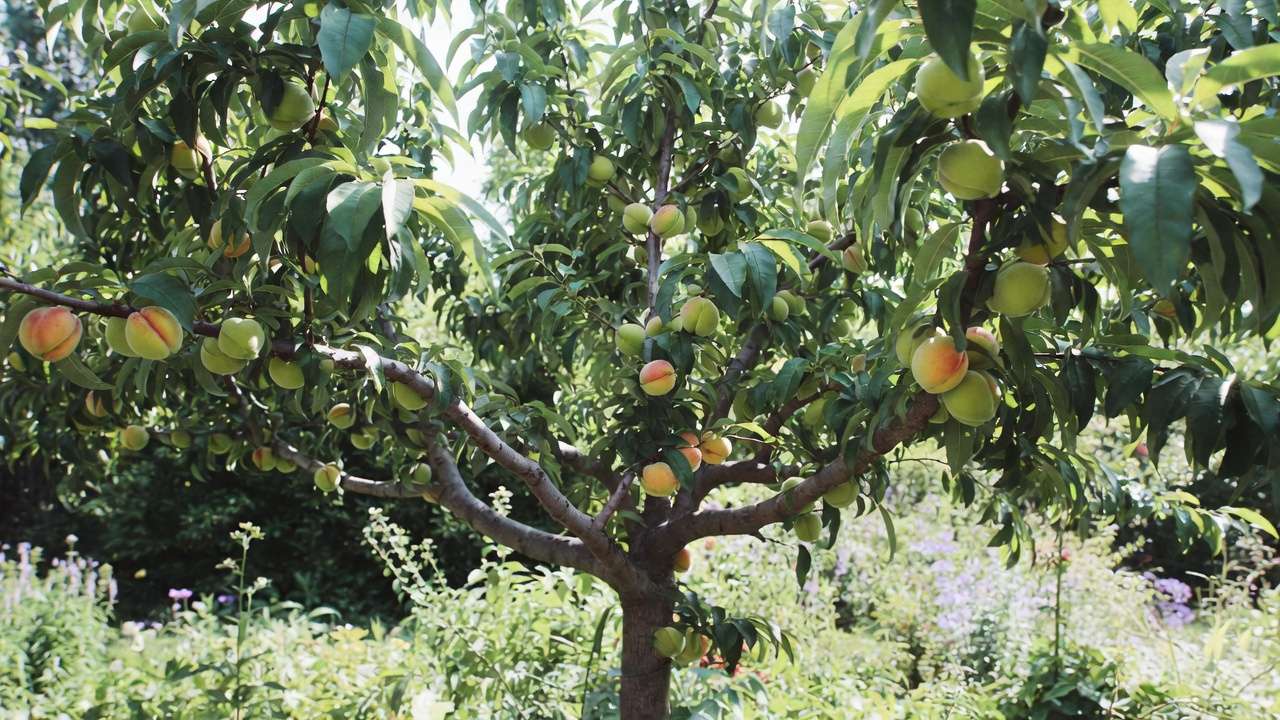
- Superior light exposure → Even ripening, higher sugar content, better color, and larger fruit size 🍑
- Improved airflow → Dramatically reduces brown rot (Monilinia fructicola), peach leaf curl, shothole disease, and bacterial canker (Pseudomonas syringae) 🍂
- Better load distribution → Prevents limb breakage from heavy crops, a common issue with peaches and nectarines
- Easier management → Keeps fruiting wood low (8–10 ft max), no tall ladders needed for thinning, picking, or pest control
- Disease prevention → Open structure minimizes humidity pockets where pathogens thrive
Quick comparison table:
| Aspect | Open-Center (Vase) for Stone Fruits | Central Leader (for Apples/Pears) |
|---|---|---|
| Canopy Structure | Open middle, spreading scaffolds | Tall pyramid with central trunk |
| Light/Air Penetration | Excellent | Moderate to poor in center |
| Disease Risk | Low (better circulation) | Higher (dense foliage) |
| Fruit Quality/Yield | High, even ripening | Uneven, shaded lower fruit |
| Best For | Peaches, nectarines, apricots, plums, tart cherries | Apples, pears, some sweet cherries |
Experts from Penn State Extension, University of Maryland, and others emphasize this method as essential for home orchards, especially in humid or variable climates.
Best Time to Prune Stone Fruit Trees Using the Open-Center Method ⏰
Timing is critical—prune too early in deep winter, and you risk inviting cytospora canker or bacterial canker through fresh cuts when trees can’t heal quickly. Stone fruits are highly susceptible!
Recommended windows:
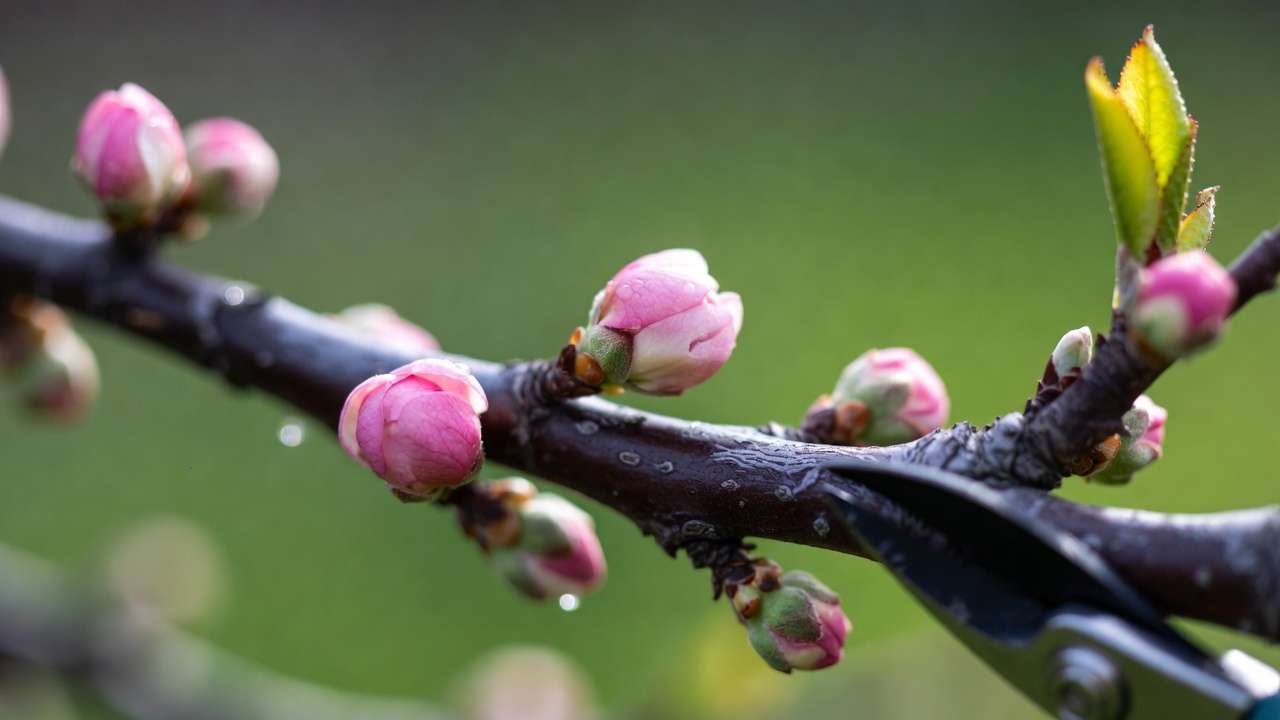
- Primary (dormant/late winter/early spring): Just before bloom to 2 weeks after petal fall (typically late February to early April in temperate zones). This allows cuts to dry and callus before wet conditions. In milder climates like parts of South Asia, aim for late winter dry spells.
- Avoid: January–March in colder areas (deep dormancy increases infection risk); rainy or misty days.
- Summer pruning (light touch-ups): For vigorous trees or disease control—after harvest for sweet cherries (early July), or June/July for plums/apricots to pinch tips and reduce vigor. Summer cuts heal fast in dry weather.
Pro tip: 🌡️ Always prune on dry, sunny days above freezing. Disinfect tools (alcohol wipe or 10% bleach solution) between trees to prevent spreading pathogens 🍷.
Tools and Safety Essentials for Perfect Pruning 🛠️
Quality tools make clean cuts that heal quickly and reduce disease entry.
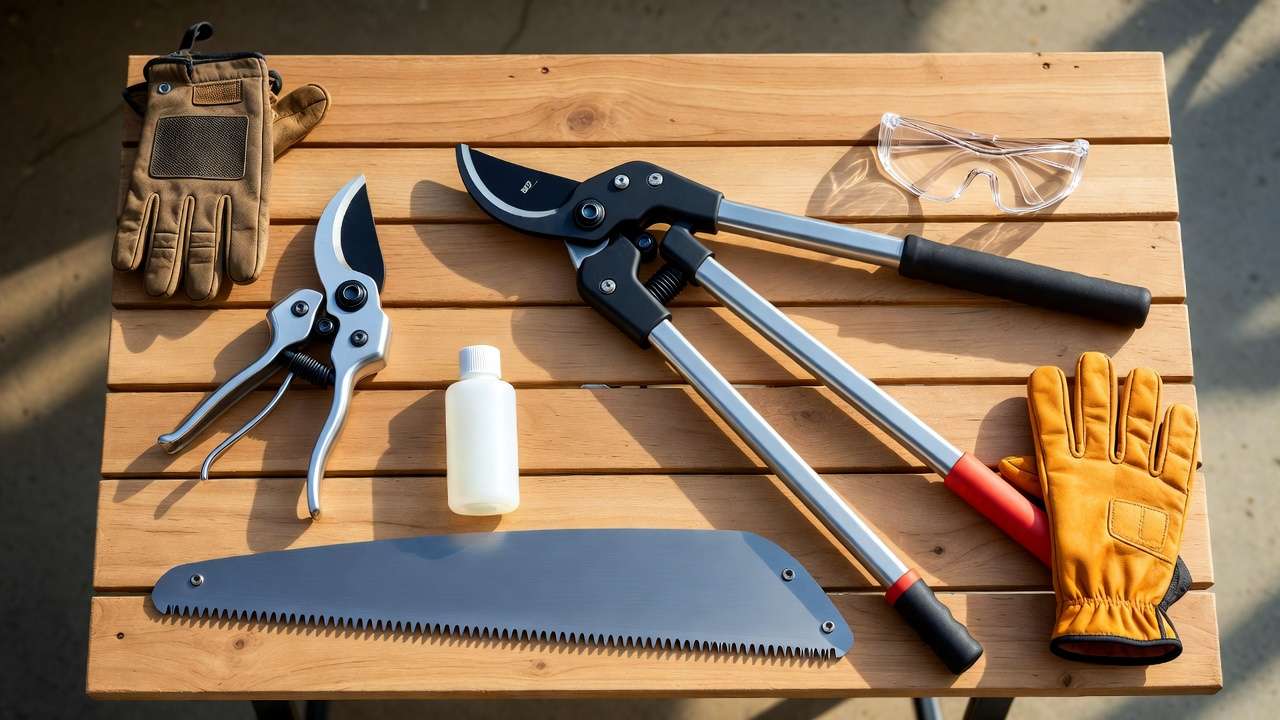
Must-have tools:
- Sharp bypass pruners (for branches up to ¾ inch)
- Loppers (for ¾–2 inch branches)
- Pruning saw (for larger limbs)
- Pole pruner (for high reaches)
- Gloves, safety glasses, sturdy ladder
Maintenance tips: Sharpen blades regularly; disinfect after each use. Never use anvil pruners—they crush tissue and invite infection.
Safety first: Use stable ladders, avoid windy/rainy conditions, wear protective gear, and never prune alone if high up.
Step-by-Step Guide: How to Train Young Stone Fruit Trees to Open-Center (Years 1–3) 🌱
Starting right sets up a strong, productive tree for decades.
Year 1 (Planting):
- At planting (bare-root or container), head the whip (trunk) at 24–36 inches above ground to encourage low scaffolds.
- Remove any side branches below 18–24 inches.
- Select 3–4 strong shoots as future scaffolds—spaced evenly around trunk, 60–90° angles from vertical, 6 inches apart vertically. Remove all others.
Year 2:
- Strengthen scaffolds: Head each back by ⅓–½ to outward-facing buds, encouraging side branching.
- Remove competing upright shoots, suckers, and inward growth.
- Maintain open center—no branches crossing or in the middle.
Year 3:
- Finalize vase: Thin crowded areas; head scaffolds lightly to balance.
- Establish fruiting wood: Allow some laterals for early fruit (but thin heavily).
Dos & Don’ts: Do select wide-angled branches (strong unions). Don’t leave narrow crotches—they split under load.
Step-by-Step: Annual Open-Center Pruning for Mature Stone Fruit Trees (Year 4+) 🍑
Once your tree reaches maturity (usually year 4–5), the goal shifts from training to renewal and maintenance. Mature stone fruit trees can produce heavily on one-year-old wood, so the focus is aggressive thinning to stimulate fresh, fruitful growth while keeping the open-vase shape intact.
Step-by-step annual pruning routine (late dormant to early spring):
- Stand back and assess the whole tree 🌳 Walk around and look from multiple angles. Identify the 3–5 main scaffold branches that form your vase. The center should be completely open—no vertical leader or crowded central growth. Note dead, diseased, damaged, crossing, or rubbing branches first—these get priority removal.
- Remove problem branches (the “three Ds” + more) ❌
- Dead, diseased (blackened tips, cankers, gummy ooze), damaged (broken or split).
- Suckers (from roots or trunk base)
- Watersprouts (vigorous upright shoots in the center or on scaffolds)
- Crossing/rubbing branches (choose the weaker or less ideally angled one to remove)
- Any inward-growing or vertical shoots that fill the vase center.
- Thin last year’s fruiting wood ✂️ This is where the magic happens for bigger harvests:
- Peaches & nectarines — Remove 50–70% of last season’s growth. Cut back to 12–18 inches of new wood or to strong laterals. Leave pencil-thick shoots spaced 6–8 inches apart along scaffolds.
- Apricots — Lighter thinning (remove 30–50%). Apricots fruit on spurs and one-year wood; avoid over-pruning or you’ll lose next year’s crop.
- Plums —
- Japanese plums: Moderate thinning similar to peaches.
- European plums: Lighter—focus on renewal of older wood every 3–4 years.
- Cherries —
- Tart/sour cherries: Treat like peaches (open-center works well).
- Sweet cherries: Prefer modified central leader or summer pruning; if using open-center, prune very lightly to avoid bacterial canker risk.
- Head back (tip) the scaffolds 🔧 Reduce overall height to 8–10 feet max for home gardens. Cut back the longest scaffolds by ⅓–½ to an outward-facing bud. This keeps the tree compact, encourages lower fruiting, and maintains strong wide-angled crotches.
- Balance the canopy ⚖️ Ensure scaffolds are evenly spaced (like spokes on a wheel). Remove any dominant branch that shades others. Aim for 45–60° angles from the trunk—too narrow = weak unions that split; too flat = poor sap flow.
Visual cues to aim for:
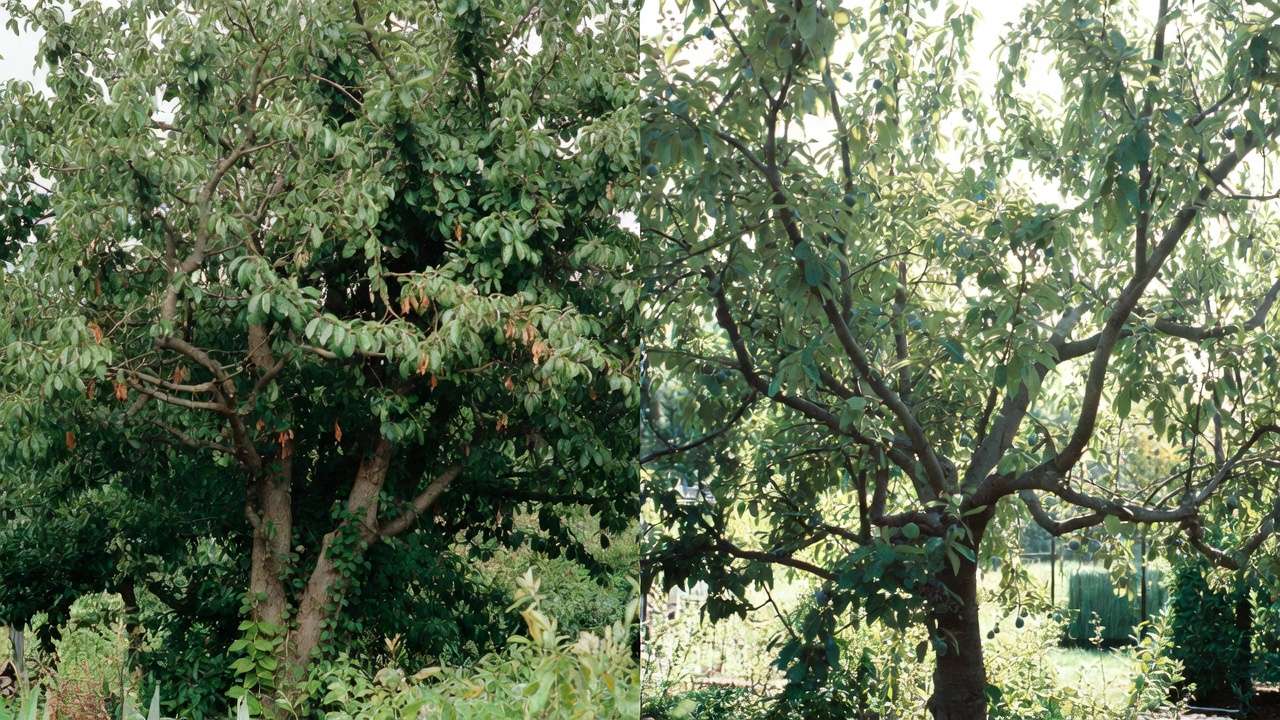
- Center looks like a bowl or vase
- Sunlight reaches almost every branch
- Fruiting wood is mostly horizontal or slightly angled
- No more than 2–3 layers of branches vertically
Pro tip: 🍒 Take “before” photos each year. Compare with “after” shots—it’s incredibly satisfying to see the transformation!
Common Mistakes to Avoid in Open-Center Pruning 🚫
Even experienced gardeners slip up. Here are the top errors and how to fix them:
- Pruning too early in deep winter → Fresh cuts in January–February (in colder zones) invite cytospora canker and bacterial canker. Fix: Wait until buds swell or just before bloom.
- Over-thinning young trees → Removes too much potential fruiting wood → delayed bearing. Fix: Be conservative in years 1–3.
- Leaving watersprouts and upright growth → Creates dense center, poor light/airflow, disease haven. Fix: Ruthlessly remove anything growing straight up in the middle.
- Using dull or dirty tools → Crushed bark tears, disease spreads. Fix: Sharpen weekly; disinfect between trees.
- Ignoring species differences → Heavy peach-style pruning on apricots or sweet cherries → crop loss or dieback. Fix: Adjust intensity per fruit type (see above).
- Neglecting summer touch-ups → Excessive vigor in humid climates leads to crowding by next winter. Fix: Pinch tips or remove watersprouts lightly in June/July.
- Leaving narrow-angled crotches → Branches split under fruit load. Fix: Select wide-angled shoots early; spread young branches with clothespins or stakes if needed.
Aftercare: Maximizing Results Post-Pruning 💚
Pruning is only half the battle—good follow-up care turns good cuts into great harvests.
- Wound care: Modern research (including from UC Davis and Cornell) shows pruning wounds on stone fruits usually don’t need sealant. Let them dry naturally.
- Fertilization: Apply balanced fertilizer (e.g., 10-10-10) lightly after bloom, not before pruning. Too much nitrogen early = excessive vegetative growth.
- Watering & mulching: Deep, infrequent watering during fruit development. Add 2–4 inches of organic mulch (keep away from trunk) to retain moisture and suppress weeds.
- Fruit thinning: Essential for bigger fruit! Thin peaches/nectarines to 6–8 inches apart when marble-sized. Plums/apricots to 4–6 inches.
- Pest & disease monitoring: Open-center makes scouting easier—watch for peach tree borers, plum curculio, brown rot. Better airflow already reduces fungal pressure.
Expert Insights & Real-World Tips from Seasoned Growers 🌟
“Open-center pruning is non-negotiable for peaches and nectarines in home orchards. We’ve seen brown rot drop by 70–80% in well-ventilated trees.” — Adapted from Penn State Extension fruit specialists.
“Many gardeners fear cutting too much, but peaches laugh at heavy pruning—they reward you with huge, juicy fruit on fresh wood.” — University of Georgia backyard grower forums summary.
Home orchard hacks:
- Use wooden spreaders or clothes hangers to train young scaffolds to wider angles.
- In humid climates (like parts of Bangladesh 🌧️), combine dormant pruning with light summer cuts to keep vigor in check.
- Tag branches with colored tape to track which ones produced best fruit—remove the weakest producers next season.
Frequently Asked Questions (FAQs) ❓
Is the open-center pruning method suitable for all stone fruits? Yes for peaches, nectarines, apricots, tart cherries, and most plums. Sweet cherries do best with modified central leader or summer pruning due to canker sensitivity, but open-center can work with very light cuts.
How much should I prune a mature peach tree each year? Remove 50–70% of last year’s growth, plus all problem wood. A mature peach should lose about ⅓–½ of its canopy volume annually to stay vigorous and fruitful.
Can I prune stone fruits in summer? Light summer pruning is excellent—especially after harvest for cherries or to control vigor on peaches/plums. Avoid heavy cuts in summer as they can sunburn exposed wood.
What if my tree is overgrown and neglected? Renovate gradually over 2–3 years: Year 1 remove dead/diseased and open the center heavily; Year 2 balance scaffolds; Year 3 fine-tune fruiting wood. Never remove more than 50% in one season on old trees.
Does dwarf vs. standard size change anything? Dwarf trees need the same technique but less aggressive height reduction. They fruit earlier and require heavier thinning to prevent over-cropping.
Why do my peaches stay small even after pruning? Likely insufficient thinning of fruit or poor pollination/soil nutrition. Open-center helps, but you still need to thin aggressively and feed properly.
Conclusion 🌳🍒
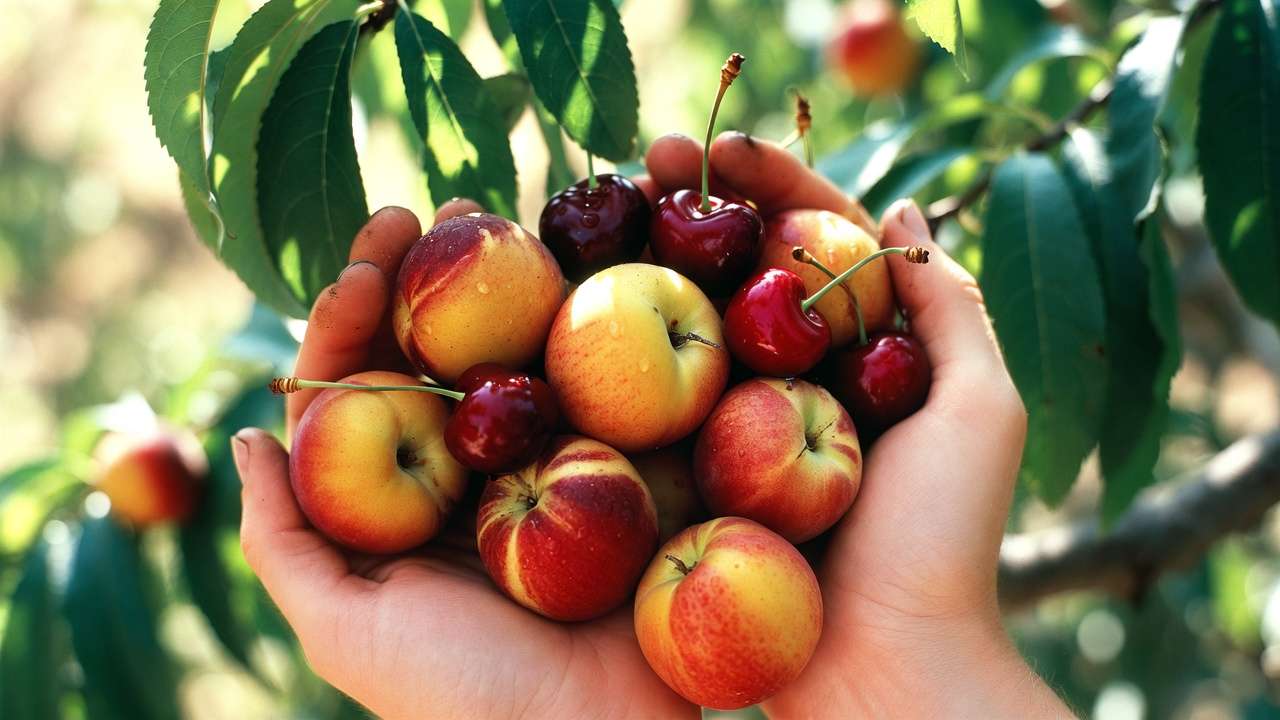
Mastering the open-center pruning method for stone fruits is one of the single most powerful things you can do as a home gardener to transform mediocre trees into reliable, high-yielding producers of delicious, disease-resistant fruit. By creating that classic open-vase shape, you’re not just cutting branches—you’re engineering better sunlight distribution, superior air movement, balanced fruit loads, and easier long-term care. The result? Bigger, sweeter, more abundant peaches 🍑, nectarines, apricots, plums, and cherries that actually reach your kitchen table instead of rotting on overcrowded limbs.
Throughout this guide, we’ve covered everything you need to succeed:
- Why open-center beats other systems for stone fruits
- The precise timing windows that protect against devastating diseases like brown rot, bacterial canker, and cytospora
- Tool selection, safety, and technique fundamentals
- Detailed year-by-year training for young trees
- Aggressive yet thoughtful annual renewal for mature trees
- Species-specific adjustments so you don’t accidentally over-prune apricots or under-prune peaches
- The most common (and costly) mistakes—and how to sidestep them forever
- Post-pruning care that maximizes your results
- Real expert-backed insights and practical backyard hacks
Whether you’re in a temperate zone with cold winters or a milder subtropical area like Dhaka and surrounding regions (where late January to early March is often your sweet spot for dormant pruning), the principles remain the same: prune thoughtfully, prune annually, and prune with purpose.
Now it’s your turn. Grab your sharp bypass pruners, put on those gloves, and head out to your trees this season. Start with observation, make those clean cuts, step back and admire the open bowl shape you’ve created. In a few months when the fruit starts swelling—and especially next summer when you’re harvesting armloads of perfect, flavorful stone fruits—you’ll know the effort was worth it.
Have you tried open-center pruning before? What results did you see? Drop a comment below with your before-and-after stories, any challenges you faced, or photos if you’d like—I’d love to hear how it goes for you and help troubleshoot if needed!
Happy pruning, and here’s to bigger, healthier harvests from your own backyard orchard! 🌸🍑✂️











