
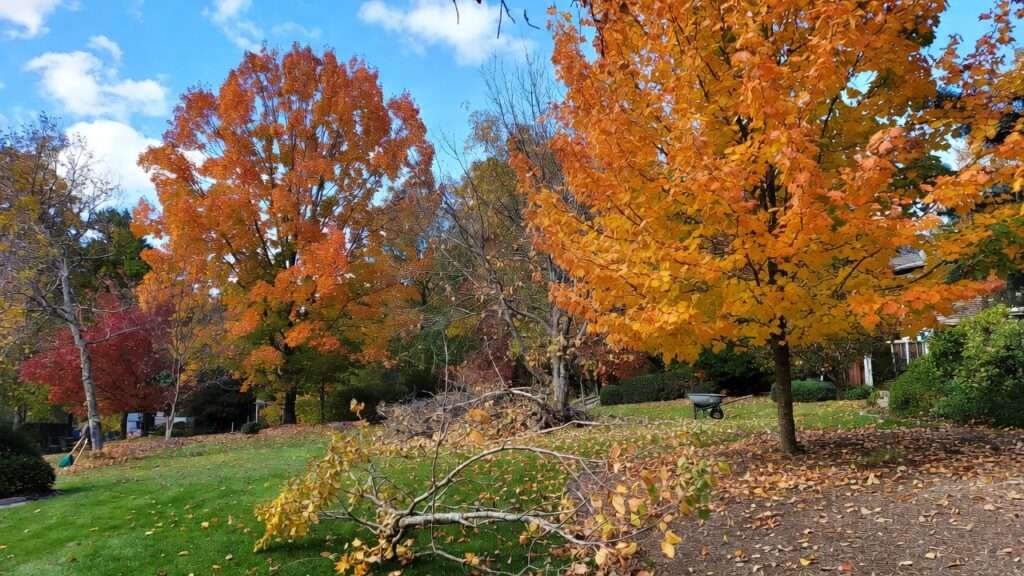
Picture this: golden leaves swirling in the crisp autumn breeze, your yard glowing with fiery reds and oranges… but beneath that beauty lurks a hidden risk. ❄️ Heavy snow, freezing winds, and winter drought can turn strong trees into hazards if they’re not prepared. As temperatures drop, trees shift into dormancy, storing energy and hardening off for the cold months ahead. This makes fall tree maintenance and cleanup one of the most important seasonal tasks for any homeowner or gardener who wants healthy, resilient trees year after year.
Neglecting these steps can lead to broken branches from ice storms, root stress from dry soil, fungal diseases from piled leaves, or even long-term decline. The good news? With the right approach, fall becomes your trees’ superpower season—building strength for explosive spring growth while keeping your yard safe and tidy. 🌳💚
In this in-depth guide, we’ll walk you through every essential step, backed by recommendations from university extensions (like Purdue, UMN, and CSU), certified arborists, and proven best practices. Whether you have majestic oaks, delicate maples, or hardy evergreens, these tips will help you avoid common pitfalls and give your trees the winter protection they deserve. Let’s get your landscape winter-ready!
Why Fall Tree Maintenance and Cleanup Matters
Fall is prime time for trees. After a summer of growth, they redirect energy to roots and reserves rather than new shoots. Proper care now:
- Prevents winter breakage from snow/ice accumulation on weak limbs
- Reduces fungal diseases and pests overwintering in leaf litter
- Protects against desiccation (especially for evergreens facing dry winds)
- Promotes vigorous root development before the ground freezes
- Saves you time, money, and headaches come spring
Skipping fall tree maintenance often results in visible stress next year—wilted foliage, dieback, or costly removals. Investing a few weekends now pays off in healthier trees and a more beautiful property. 🍁
Step 1: Inspect Your Trees Thoroughly
Fall’s dropping leaves reveal the tree’s structure—perfect for spotting issues! Grab binoculars or a good pair of eyes and walk around each tree on a clear day.
What to Look For
- Dead, diseased, or damaged branches (dry, brittle, discolored, or hanging loosely)
- Signs of pests: holes from borers, scale insects, webbing, or mushrooms at the base indicating root rot 🍄
- Structural weaknesses: co-dominant stems (two leaders competing), crossing/rubbing branches, or narrow V-crotches prone to splitting
- Bark issues: cracks, splits, cankers, animal damage from rodents, or sunscald on thin-barked species
- Overall lean or instability, especially near structures/power lines
Expert Tip — Take dated photos 📸 and note locations. This helps track changes over time or share with a certified arborist if something looks serious. Early detection prevents small problems from becoming emergencies.

Step 2: Pruning in Fall – Dos and Don’ts
Pruning removes hazards before winter storms hit, but fall timing requires caution to avoid stimulating tender new growth that won’t harden before frost.
Dos ✅
- Remove dead, dying, diseased, or broken branches anytime—safety first!
- Clear hazard limbs overhanging roofs, driveways, or power lines
- Perform light structural pruning once leaves drop (easier to see branch unions)
- Make clean cuts just outside the branch collar (swollen area where branch meets trunk), angled to shed water
- Use sharp, clean tools to minimize disease spread
Don’ts ❌
- Avoid heavy pruning on most trees—save major shaping for late winter/dormancy
- Never prune spring-flowering shrubs/trees (lilacs, forsythia, crabapples)—you’ll remove next year’s buds
- Skip pruning sealers; modern research shows trees heal best naturally
- Don’t prune when branches are wet to prevent fungal spread
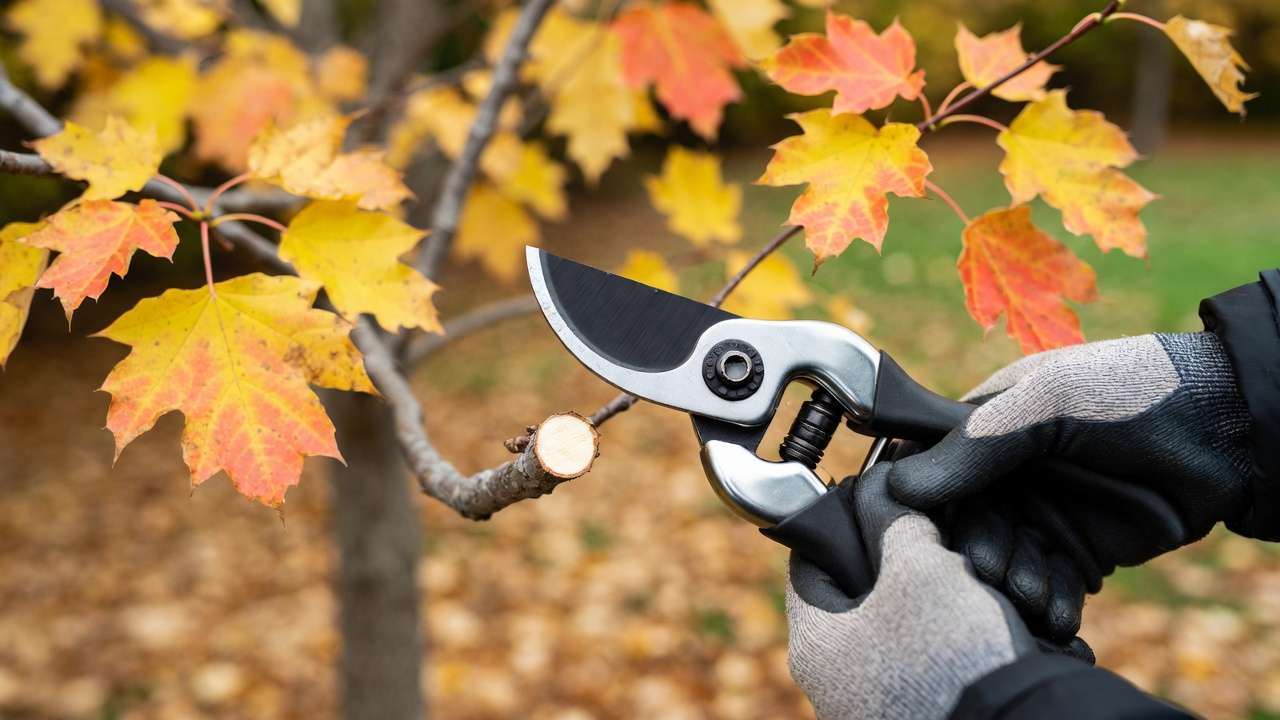
When to Call a Pro — For branches >4 inches, near utilities, or high up, hire an ISA-certified arborist. They use proper techniques and equipment for safety. 🪚 Safety always trumps DIY ambition!
Step 3: Effective Leaf and Debris Cleanup
Those colorful leaves are stunning… until they mat down, smother grass, block sunlight, and create moist pockets for pests and fungi.
Best Practices
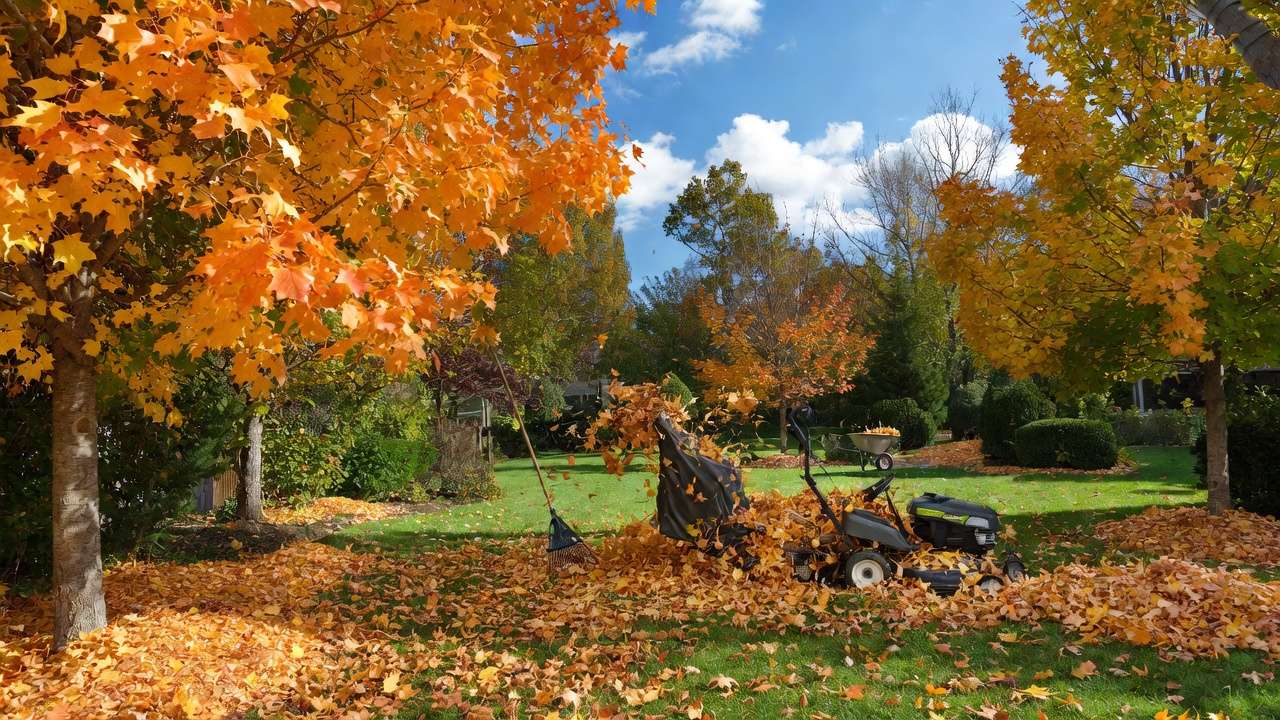
- Rake or mulch-mow regularly to prevent thick layers
- Shred leaves with a mower and use as nutrient-rich mulch or compost ♻️
- Remove diseased leaves (black spot, tar spot) from lawns and beds—don’t compost them
- Clear debris from gutters, tree bases, and around trunks to avoid moisture buildup and rodent habitats
Eco-Friendly Hack — Spread a thin layer of shredded leaves around trees (not against trunks) for natural insulation and slow-release nutrients. Your trees will thank you! 🍂
Step 4: Watering Your Trees in Fall
Even with cooler temps, trees need deep moisture—especially after dry summers—to avoid winter desiccation. Roots continue absorbing until the ground freezes.
Guidelines
- Provide 1–2 inches of water per week if rainfall is low (check soil 6–8 inches deep—if dry, water!)
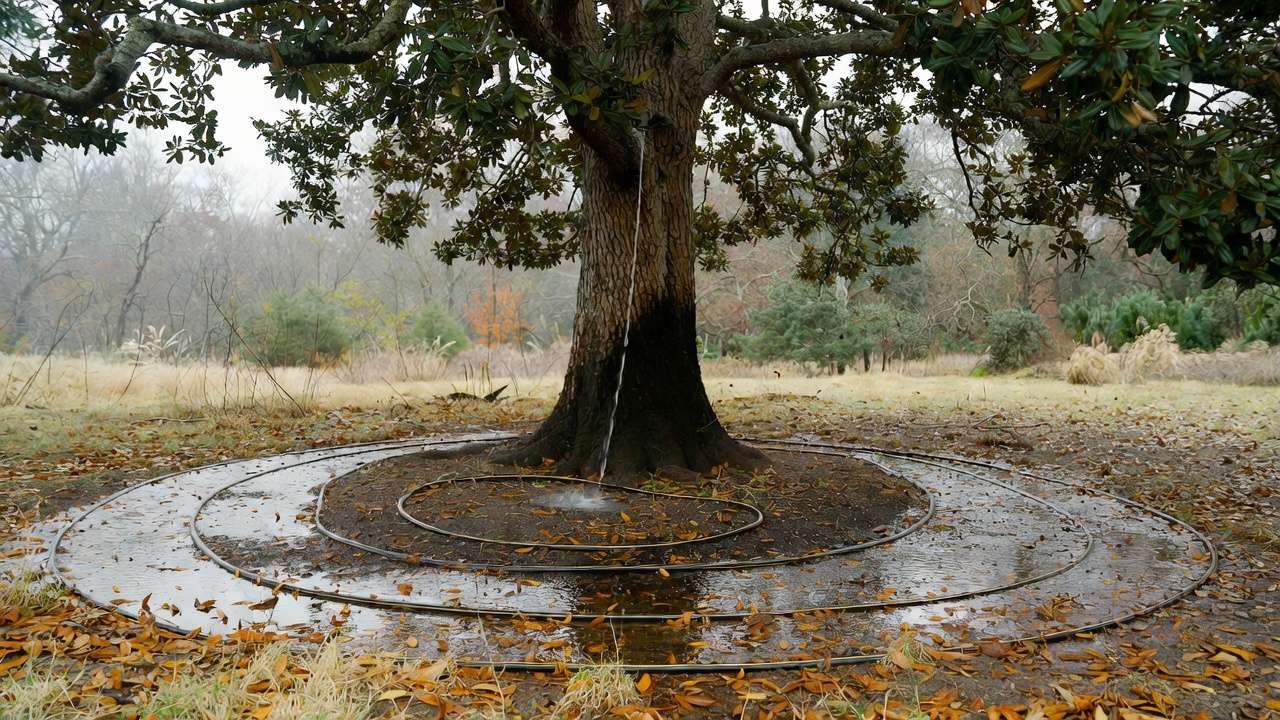
- Focus on the drip line (outer edge of canopy) where feeder roots thrive
- Use slow, deep watering: soaker hoses, drip systems, or slow-running hose for 30–60 minutes
- Evergreens need extra attention—they transpire year-round and risk needle burn without stored moisture
- Deciduous trees: reduce watering after leaf drop but give a final deep soak before freeze-up
- Stop when soil freezes or consistent temps drop below 40°F (4°C)
Tool Recommendation — A moisture meter or simple screwdriver test (slides in easily = moist enough). 💧 Deep roots = resilient trees!
Step 5: Fertilizing for Winter Strength
Fall is actually one of the best times to feed trees—contrary to the old “spring-only” myth. Roots remain active and continue growing in cool soil long after leaves drop, making this the perfect window to deliver nutrients that support root development and energy storage rather than leafy top growth.
How to Fertilize Correctly in Fall
- Choose a slow-release, low-nitrogen fertilizer (look for N-P-K ratios like 10-10-10, 16-4-8, or organic equivalents) to avoid pushing soft new shoots that could freeze
- Apply after most leaves have fallen but before the ground freezes—typically late October through early December in most zones
- Spread granules evenly around the drip line (not at the trunk!) and lightly rake into the topsoil
- Water thoroughly after application to help nutrients reach the roots
- Follow package rates based on tree diameter—over-fertilizing can burn roots or pollute groundwater
- Soil test first if possible (many university extensions offer affordable kits) to avoid unnecessary applications
Organic Alternatives — Compost, well-rotted manure, or slow-release organic granular fertilizers provide gentle, long-term nutrition while improving soil structure. 🌱
Expert Insight — Research from Cornell University and the International Society of Arboriculture shows fall fertilization leads to significantly better root mass and overall tree vigor the following spring. Think of it as giving your trees a nutrient “savings account” for winter survival and rapid spring recovery!
Step 6: Mulching – The Ultimate Winter Blanket
Mulch is like a cozy comforter for tree roots: it moderates soil temperature, retains moisture, suppresses weeds, and slowly adds organic matter as it decomposes. Done right, fall mulching is one of the highest-ROI tree care steps you can take.
Proper Mulching Technique
- Use organic materials: aged wood chips, shredded bark, pine needles, or shredded leaves (avoid fresh grass clippings or dyed mulches)
- Apply 2–4 inches deep (deeper in colder climates, lighter in warmer ones)
- Create the classic “mulch donut” — keep mulch 2–6 inches away from the trunk to prevent moisture buildup, rot, and rodent nesting 🚫🌲
- Extend the mulch ring out to at least the drip line (ideally farther for young trees)
- Refresh or top up every fall as the material breaks down
Common Mistakes to Avoid
- “Mulch volcanoes” — piling mulch against the trunk is one of the leading causes of stem girdling and tree death
- Too thin — less than 2 inches offers minimal benefit
- Plastic or landscape fabric under mulch — these block water and air
Bonus Benefit — Mulch reduces soil compaction from foot traffic and lawn equipment, helping roots breathe and expand. Your trees will show their gratitude with healthier foliage next year! 🍂
Step 7: Protecting Trees from Winter Threats
Winter brings wind, heavy wet snow, ice, sunscald, rodents, and deer. Proactive protection now prevents heartbreak later.
Key Winter Protection Strategies
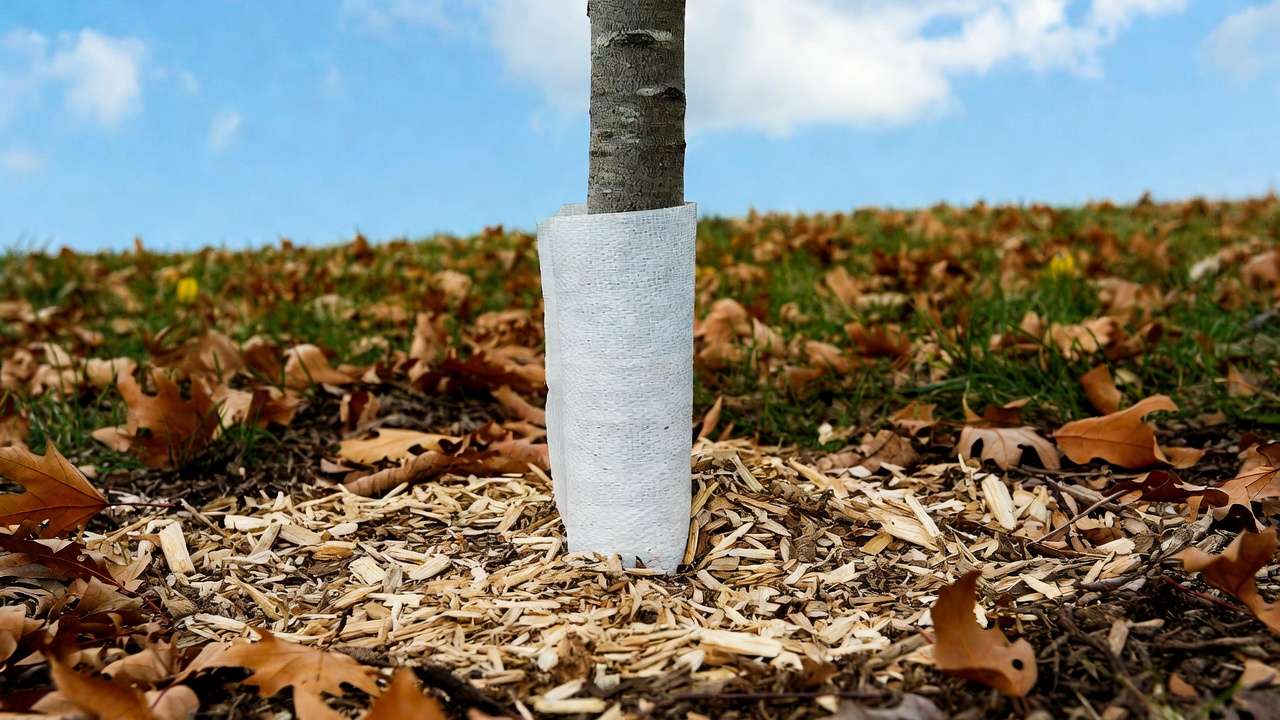
- Trunk Protection — Wrap young or thin-barked trees (maples, fruit trees, dogwoods) with plastic tree guards, hardware cloth, or burlap to deter rodents and prevent sunscald (southwest bark cracking from winter sun + freeze cycles)
- Staking — Only stake newly planted or loose-rooted trees—and only if they’re rocking excessively. Most established trees develop stronger trunks without support. Remove stakes after 1–2 years
- Snow & Ice Management — Gently brush heavy, wet snow from branches with a broom (never shake or hit!). Avoid climbing ladders in icy conditions—call a pro
- Deer & Rabbit Deterrents — Install fencing, use commercial repellents, or plant deer-resistant species if browsing is chronic 🦌
- Anti-Desiccation Sprays — For evergreens in exposed/windy locations, apply anti-desiccant products in late fall to reduce winter needle/leaf burn
Pro Tip — Monitor weather forecasts. If a major ice storm is coming, prioritize clearing hazards beforehand.
Common Mistakes to Avoid in Fall Tree Maintenance
Even experienced gardeners slip up sometimes. Here are the top pitfalls—and how to dodge them:
- Pruning too heavily or at the wrong time → stimulates weak growth
- Volcano mulching → invites rot and pests
- Ignoring fall watering → leads to winter drought damage
- Leaving diseased leaves piled up → spreads fungi and overwinters pathogens
- Planting trees too deep or in poor sites in fall → poor establishment
- Waiting until spring to address structural issues → missing the clear-view window
Avoid these, and you’ll dramatically reduce long-term tree problems. ⚠️
Seasonal Checklist: Your Fall Tree Maintenance Quick Reference
Print this out or save it to your phone—check off as you go! 📋
- Thoroughly inspect all trees for damage, disease, pests, and structural issues
- Prune only dead/diseased/hazard branches (hire pro for big jobs)
- Rake, shred, and manage fallen leaves properly
- Deep-water trees during dry spells until freeze-up
- Apply slow-release fertilizer around drip line (if needed)
- Mulch correctly—donut shape, no volcano!
- Install trunk guards/wraps on vulnerable young trees
- Clear snow/ice hazards near structures if forecast calls for it
- Schedule certified arborist visit if major concerns appear
FAQs About Fall Tree Maintenance and Cleanup
Q: Is it safe to prune fruit trees in fall? A: Light pruning of dead/damaged branches yes; major fruit tree pruning is best in late winter to avoid disease entry and encourage strong spring growth.
Q: Should I leave fallen leaves under my trees? A: Shredded leaves yes—as mulch. Whole leaves no—if they’re diseased or will smother lawn/grass.
Q: How do I know if my tree needs water in fall? A: Dig down 6–8 inches near the drip line. If soil is dry and crumbly, water deeply.
Q: Can I plant new trees in fall? A: Absolutely! Fall planting gives roots months to establish with less heat stress—often better than spring in many climates.
Q: When is the best time to fertilize trees? A: Late fall (after leaf drop) is ideal for root uptake without pushing new shoots.
Q: Do all trees need winter wrapping? A: No—only young, newly planted, or thin-barked species in harsh climates.
Conclusion
Fall tree maintenance and cleanup is far more than a seasonal chore—it’s a powerful act of stewardship that protects your investment, enhances your property’s beauty, and supports local ecosystems. By inspecting carefully, pruning wisely, watering deeply, mulching properly, and guarding against winter threats, you’re setting your trees up for decades of health and vigor.
The crisp air, vibrant colors, and satisfying work of preparing your landscape for winter can actually become one of the most rewarding parts of the gardening year. 🌳💚
Grab your gloves, rake, and pruning tools, breathe in that autumn magic, and give your trees the care they’ve earned. Your future self (and your trees!) will thank you when spring arrives with lush, strong growth.
If you encounter anything unusual or want personalized advice for your specific tree species and region, reach out to a local ISA-certified arborist—they’re the gold standard for tree health.
Happy fall caring, and here’s to trees that thrive through every season! 🍁🌲











