
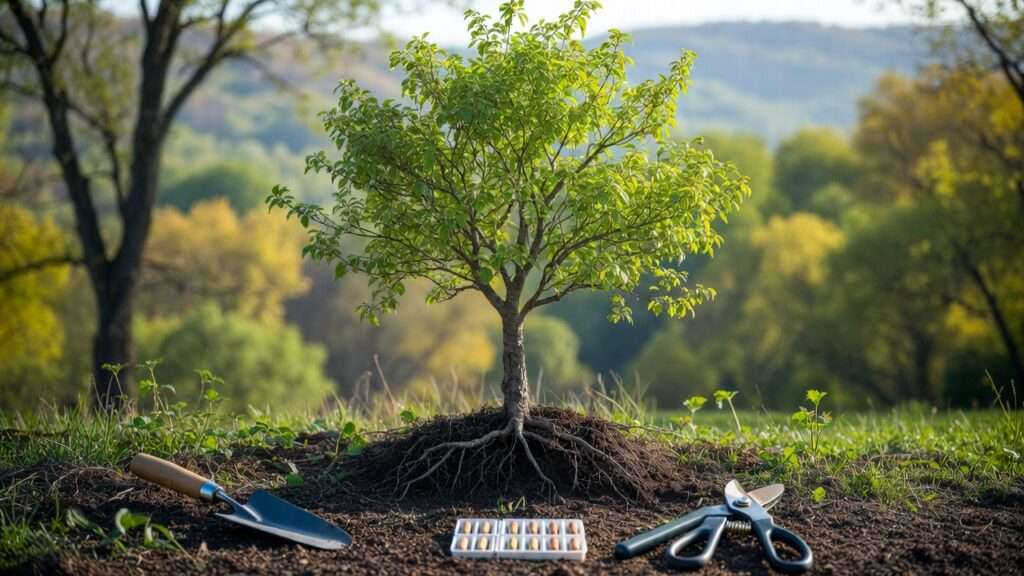
Imagine this: It’s early spring, your maple finally pushes out those beautiful fresh leaves… only to have them look pale, undersized, and drop prematurely by midsummer. Or worse — your prized oak survives a brutal summer drought, yet next spring it barely wakes up. 😔
The difference between a thriving, resilient tree and one that merely survives often comes down to one surprisingly debated decision: when to fertilize.
For decades, most homeowners reached for the fertilizer bag in spring, assuming that’s when trees “need the boost most.” But modern arborists, university extension services, and soil science research increasingly point to a different conclusion: fertilizing trees in spring vs. fall is not a tie — late fall frequently delivers superior long-term results for root health, winter hardiness, and spectacular spring performance. 🍂➡️🌸
In this in-depth guide, we’ll break down the science, compare both seasons head-to-head, reveal exactly when (and how) to fertilize for different tree types and climates, and help you avoid the most common — and costly — mistakes. Whether you care for young saplings, mature shade trees, fruit orchards, or evergreens, you’ll leave here knowing precisely which season gives your trees the best boost.
Let’s dig in! 🧑🌾
Why Do Trees Actually Need Fertilizer? (And When They Don’t) 🤔
Trees are not like annual flowers — most established trees growing in decent suburban or rural soil can survive (and even look okay) for many years without added fertilizer.
However, modern landscapes often create hidden nutrient deficiencies:
- Construction/compaction removes topsoil
- Repeated lawn mowing removes clippings (and nutrients)
- Nearby concrete & asphalt limit root exploration
- Urban pollution & poor drainage accelerate nutrient leaching
Common visual signs your tree may benefit from fertilizer ⚠️
- Smaller-than-normal leaves
- Pale or yellow-green foliage (chlorosis), especially on older leaves
- Shortened twig growth (less than 6–12 inches per year on most species)
- Thinning canopy or excessive early leaf drop
- Increased susceptibility to pests/diseases
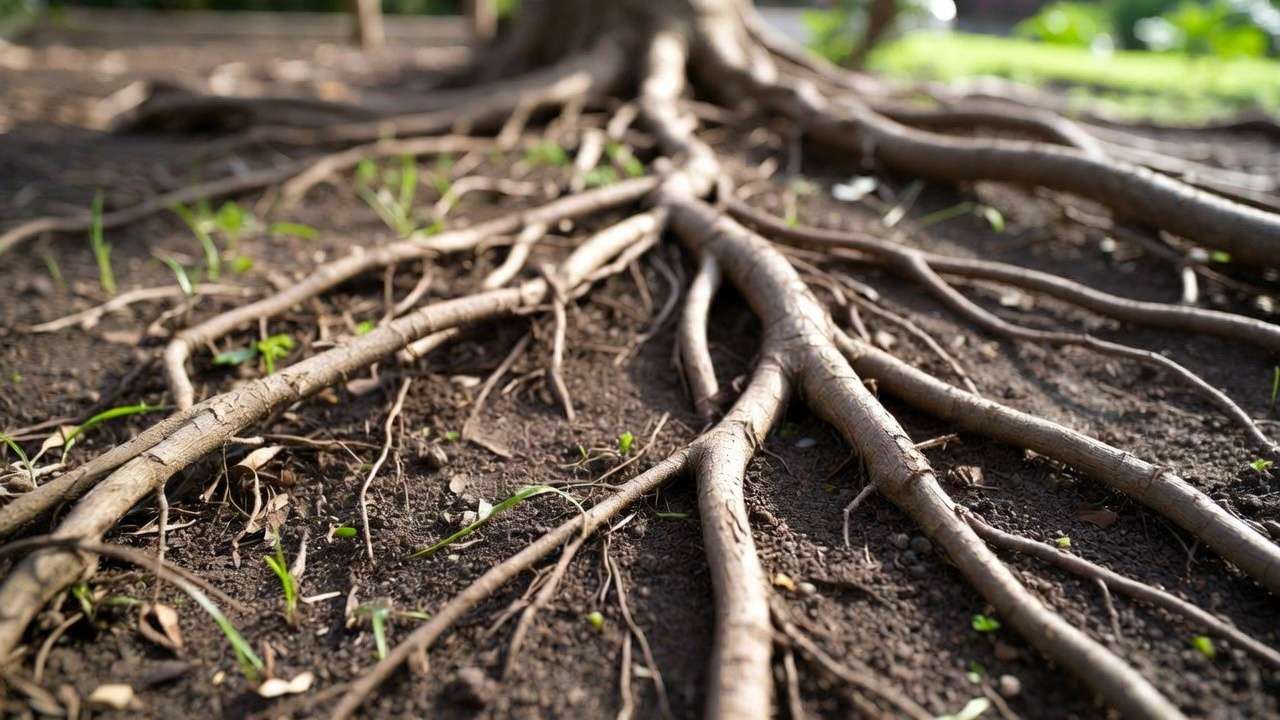
Important: When you should NOT fertilize 🚫
- Newly planted trees (first 1–2 years — focus on root establishment, not top growth)
- Trees showing vigorous, dark-green growth and good annual extension
- Trees diagnosed with root rot, girdling roots, or severe mechanical damage
- Over-fertilized lawns surrounding the tree (excess nitrogen already present)
The golden rule every expert follows Always start with a professional soil test before applying any fertilizer. 🧪 Most university extension labs (or private labs like those recommended by your local Cooperative Extension) analyze pH, organic matter, and macro/micro-nutrients for $15–40. Without this data, you’re basically guessing — and guessing is one of the top reasons trees get burned or show no improvement.
Understanding Tree Growth Cycles: The Real Secret Behind Timing 🌿
To choose between spring and fall fertilization, you must first understand how trees actually grow throughout the year.
Spring
- Trees wake from dormancy using stored carbohydrates and nutrients from the previous season
- Bud break → rapid shoot elongation & leaf expansion
- High demand for nitrogen (N) to support leafy growth
- Roots are also active, but the priority is canopy development
Summer
- Photosynthesis peaks → trees manufacture and store energy
- Roots continue growing (often more than in spring)
- Heat, drought, and pests create stress
Fall
- After leaf drop (deciduous) or slowed activity (evergreens), roots keep growing — sometimes until the soil temperature drops below ~40°F (4°C)
- Trees translocate nutrients downward to store in roots, trunk, and branches for next spring’s flush
- This is nature’s “savings account” period
Winter
- Full dormancy — minimal activity above and below ground
Key takeaway Because root growth continues strongly in late fall (and sometimes early winter in mild climates), applying nutrients during this window allows trees to store them efficiently — exactly where they’ll be most useful next spring. 🌱➡️🌳
Fertilizing Trees in Spring: Pros, Cons, and Best Practices 🌸
Advantages of spring fertilization
- Provides immediate fuel for rapid leaf-out and shoot extension
- Quickly corrects visible deficiencies (yellowing, stunted growth)
- Excellent for young, establishing, or recently transplanted trees
- Boosts flowering and fruit set in ornamental and fruit trees (when timed carefully)
Disadvantages & risks
- Encourages succulent new growth that may be damaged by late frosts (especially in zones 5–7)
- High nitrogen can make trees more attractive to aphids, Japanese beetles, and other pests
- In areas with heavy spring rainfall, soluble nutrients leach before roots can fully absorb them
- Can delay hardening-off, making trees less winter-hardy
Best timing for spring fertilization (Northern Hemisphere)
- Zone 3–5: Mid-April to early June (after soil warms above 50°F/10°C)
- Zone 6–7: Late March to mid-May
- Zone 8+: February to early April
Recommended products
- Slow-release granular (8–12 month) or polymer-coated fertilizers (e.g., 18-6-12 or 20-10-10)
- Organic options: composted manure, fish emulsion + kelp, or slow-release organic blends (Espoma Tree-Tone, Jobe’s Organics)
- Avoid quick-release lawn fertilizers high in nitrogen — they burn roots easily
Application tips
- Measure tree diameter at 4.5 ft (DBH) → use 2–4 lbs actual nitrogen per 1,000 sq ft of root zone
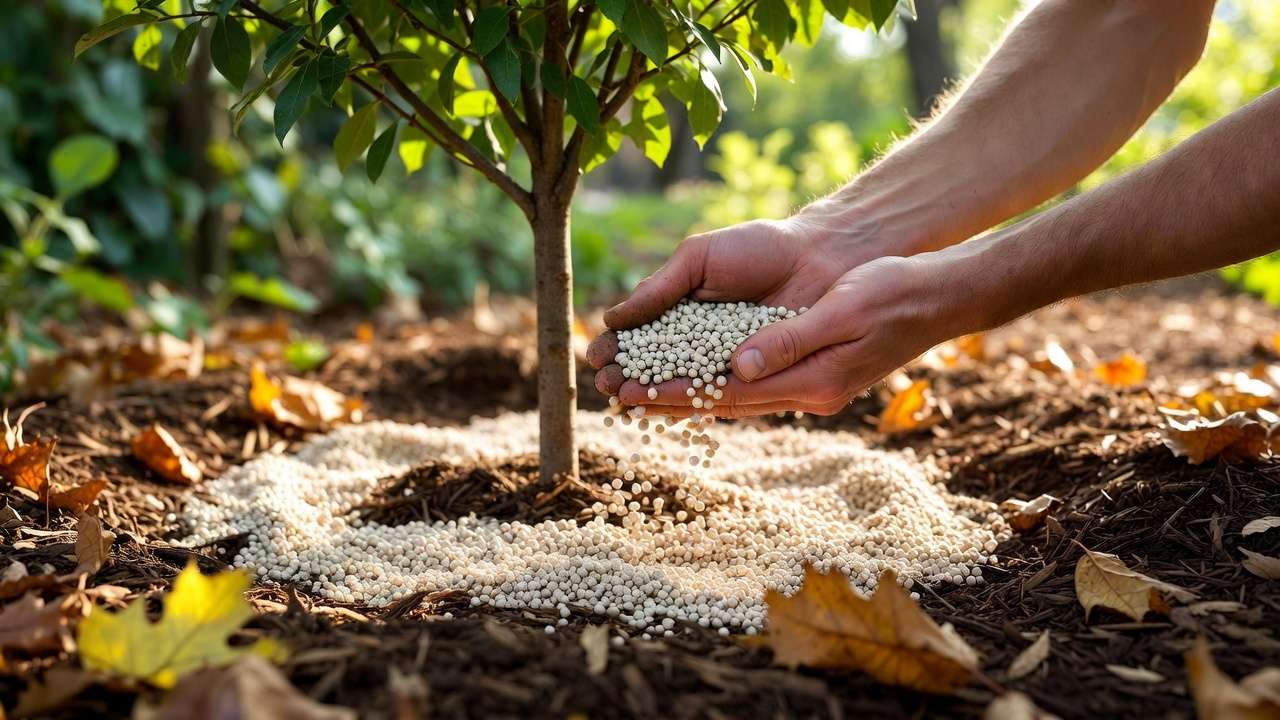
- Spread evenly from trunk to dripline (never pile against trunk!)
- Water thoroughly after application
- Top with 2–3 inches of organic mulch (keep 3–4 inches away from trunk)
Spring feeding gives fast, visible results — perfect when your trees are clearly struggling right now. But is it the best long-term strategy? Let’s look at the season many experts now prefer… 🍂
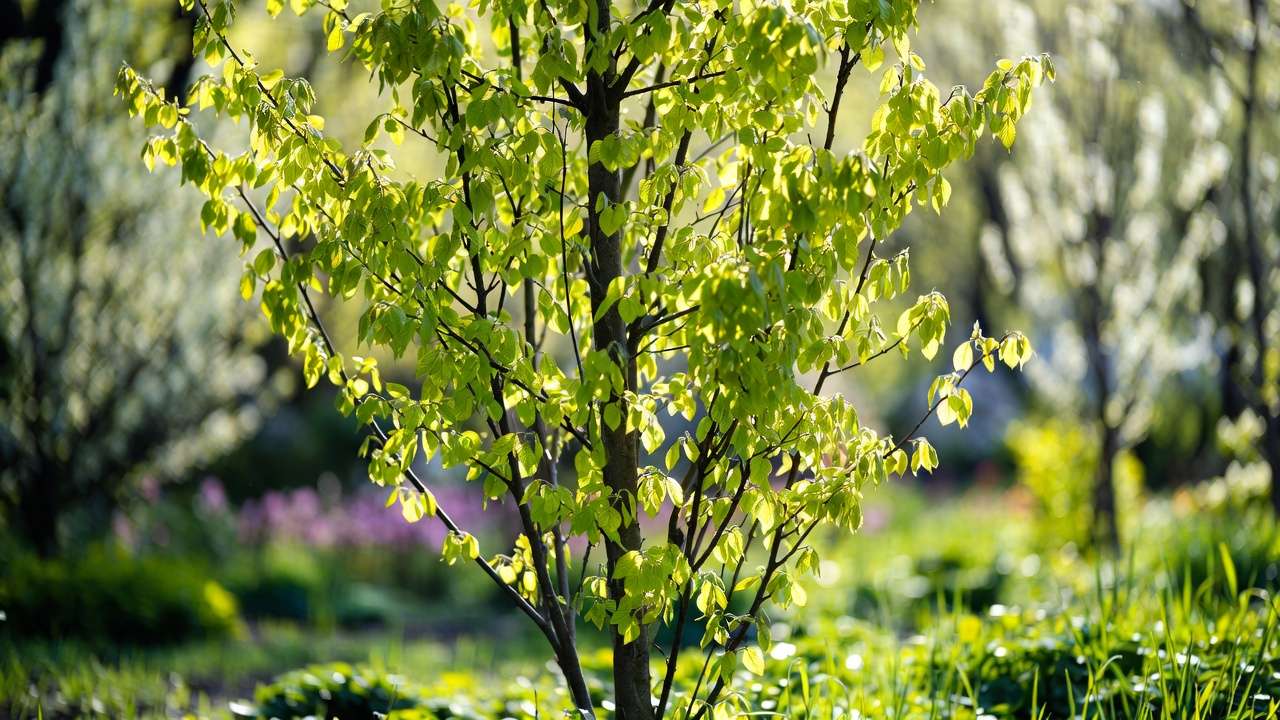
Fertilizing Trees in Fall: Pros, Cons, and Why Many Experts Now Prefer It 🍂
While spring feeding delivers that quick “wow” factor with lush new growth, a growing number of certified arborists, university extension specialists, and tree care professionals (including sources like The Morton Arboretum, University of Maryland Extension, and Davey Tree experts) are shifting their recommendation toward late fall for most established trees. Here’s why this timing often wins for long-term tree health.
Advantages of fall fertilization
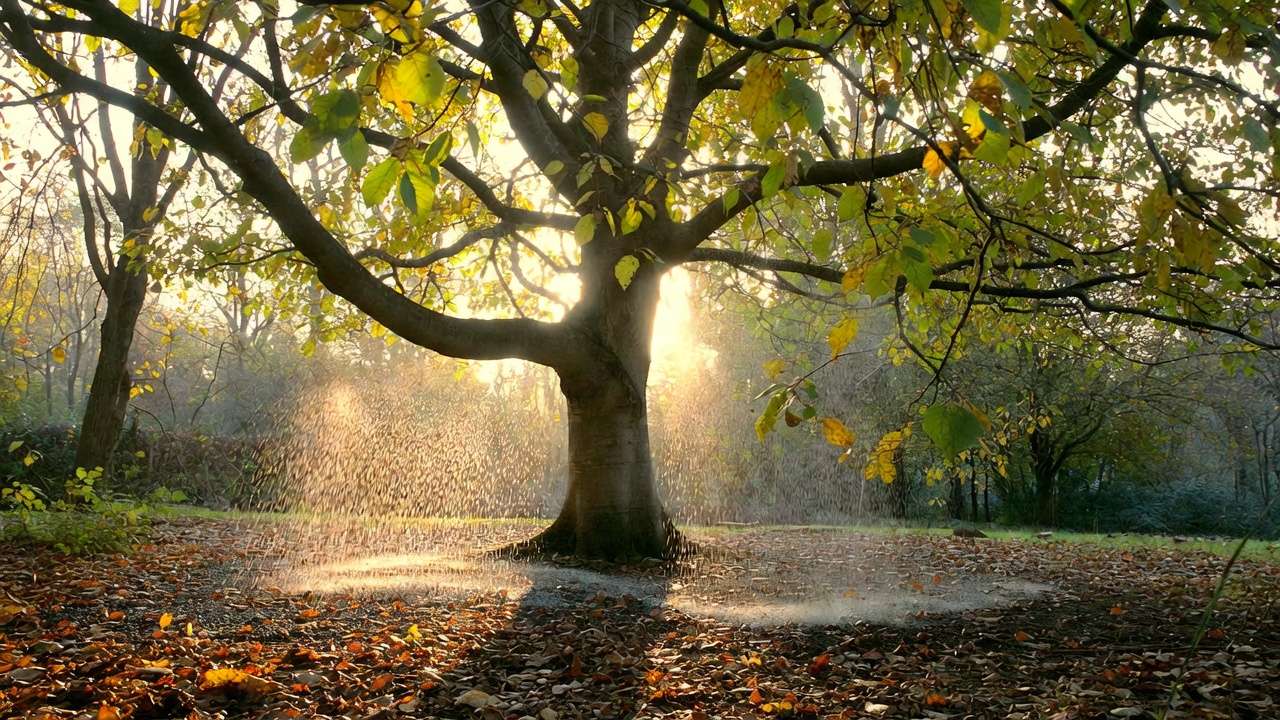
- Superior root development — Roots continue active growth well after leaves drop (often until soil cools below ~40°F/4°C). Nutrients applied now get stored efficiently in roots, trunk, and branches — exactly what’s needed for a strong, early spring flush 🌱
- Builds winter hardiness — Proper fall feeding helps trees produce compounds that resist freezing damage and recover faster from winter stress
- Lower risk of problems — No chance of stimulating tender new shoots that could get zapped by early frosts or attract late-season pests
- Mimics natural nutrient cycling — Think of fallen leaves breaking down; fall fertilizer supports this underground party 🎉
- Leads to healthier, more vibrant trees next year — Better nutrient reserves mean deeper green leaves, stronger branches, and improved resistance to drought, pests, and diseases
Potential disadvantages
- Results are invisible until next spring (patience required! ⏳)
- If applied too early (while leaves are still green and growth active), it can trigger unwanted late-season shoots
- In very cold climates, nutrients must go in before the ground freezes solid
- Not ideal for all fruit trees (some prefer early spring to avoid excess vegetative growth over fruiting)
Best timing for fall fertilization (Northern Hemisphere, 2025–2026 guidelines)
- Ideal window: After leaf drop + first killing frost, but before soil freezes — typically mid-October through November/early December
- Zones 3–5: Mid-October to mid-November
- Zones 6–7: Late October to early December
- Zones 8+: November to mid-December (milder winters allow longer root activity)
- Pro tip: Aim for about 4–6 weeks after the first hard frost in your area — this is when roots are hungry but top growth has stopped
Recommended products for fall
- Slow-release granular formulas with balanced or higher phosphorus/potassium (e.g., 10-20-10, 16-20-0, or tree-specific blends) — these support root strength without pushing excessive leafy growth
- Organic favorites: Composted manure, bone meal (for P), or specialized tree/shrub organics like Espoma Tree-Tone or Dr. Earth Tree & Shrub
- Avoid high-nitrogen quick-release products late in the season
Application best practices
- Use the same root-zone calculation as spring (2–4 lbs actual N per 1,000 sq ft, adjusted down for fall)
- Spread evenly, water in if soil is dry, and mulch afterward
- Many experts now say: If you can only fertilize once a year, make it late fall for established shade and ornamental trees
This shift toward fall isn’t just trendy — it’s backed by decades of observation showing trees store and utilize fall-applied nutrients more efficiently for future resilience. 🍁
Head-to-Head Comparison: Spring vs. Fall – Which Wins for Your Trees? ⚔️
Here’s a clear, at-a-glance breakdown to help you decide:
| Aspect | Spring Fertilization 🌸 | Fall Fertilization 🍂 | Winner for Most Trees? |
|---|---|---|---|
| Visible results | Fast (greener leaves same season) | Delayed (better performance next spring) | Spring |
| Root growth benefit | Good | Excellent (primary storage period) | Fall |
| Risk of frost damage to new growth | Higher (tender shoots vulnerable) | Very low | Fall |
| Pest/disease encouragement | Can increase (succulent growth) | Minimal | Fall |
| Best for young/new trees | Yes — quick establishment | Good, but split if possible | Spring/Split |
| Best for established shade trees | Solid | Superior long-term health | Fall |
| Best for fruit trees | Often preferred (supports bloom/fruit) | Careful — avoid very late for some | Spring or Split |
| Nutrient leaching risk | Higher in wet springs | Lower (cooler, slower movement) | Fall |
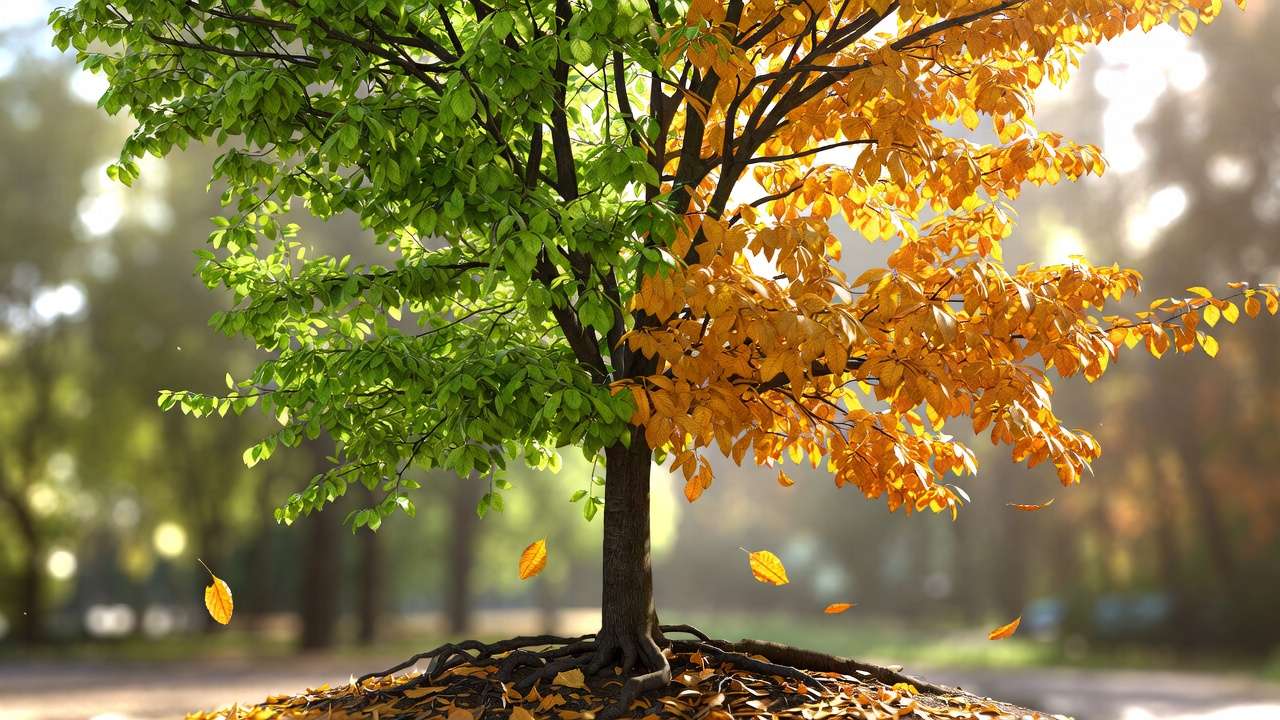
Quick decision guide
- Young, newly planted, or visibly struggling trees → Lean toward spring (or split applications) for immediate support
- Mature shade, ornamental, or evergreen trees → Fall usually gives the best overall boost
- Fruit/nut trees → Early spring or split (avoid very late fall to prevent soft growth)
- Both seasons? Many pros recommend splitting the annual dose (half in spring, half in late fall) for balanced benefits
In 2025 expert consensus (from sources like Morton Arboretum, UMD Extension, and arborist blogs), late fall edges out for the majority of landscape trees when only one application is made.
Special Considerations by Tree Type & Region 🌍
Not all trees respond the same way to fertilization timing — your local climate, soil type, and tree species play huge roles. Here’s how to tailor your approach for maximum benefit.
Deciduous vs. Evergreen Trees
- Deciduous (maple, oak, birch, fruit trees): Fall shines here because roots store nutrients post-leaf drop for explosive spring growth. Spring works well too, especially if deficiencies show early.
- Evergreens (pine, spruce, holly): These keep growing roots longer into fall/winter in milder areas. Fall feeding is often preferred, but use lower rates — evergreens are more sensitive to excess nitrogen (which can cause burn or weak winter needles).
Fruit & Nut Trees (mango, jackfruit, citrus, apple — common in tropical/subtropical areas like Bangladesh)
- Many experts recommend early spring or split applications (half early spring, half late fall/early winter) to support blooming and fruit set without encouraging soft vegetative growth that attracts pests or reduces fruit quality.
- Avoid very late fall in fruit trees — it can delay hardening and increase frost sensitivity (though less issue in warm climates).
Regional Adjustments (especially relevant for tropical/subtropical zones like Barisal Division, Bangladesh 🇧🇩)
- In cooler temperate zones (USDA 3–7): Strict late fall (after leaf drop) or early spring windows apply, as winter freezes halt root activity.
- In warmer subtropical/tropical climates like Bangladesh: Seasons blur — there’s no true “dormancy” for many species. Root growth continues year-round with monsoon support. Best times often align with:
- Post-monsoon / early dry season (October–December) — similar to “fall” — for root strengthening before cooler/drier months.
- Pre-monsoon / early wet season (February–April) — like “spring” — to fuel vigorous growth during rains.
- Avoid peak summer heat (May–September) when stress is high and nutrients leach fast.
- Bangladesh-specific tip: Many local fruit trees (mango, jackfruit) benefit from fertilizers applied in installments — e.g., after flowering (Feb/March), post-harvest (May/June), and late monsoon (Sept/Oct) — using balanced organics mixed with compost to build soil health in often-flood-prone, nutrient-leached delta soils. Always prioritize organic matter (cow dung, compost) over synthetics to improve water retention in clay-heavy Barisal soils! 🌧️
Soil Type Notes
- Sandy soils (fast-draining): Fall preferred — less leaching risk.
- Clay/heavy soils: Split applications work best — nutrients release slowly.
- Flood-prone areas (common in Bangladesh): Use slow-release or organics to prevent runoff during monsoons.
Common Mistakes to Avoid + Pro Tips from Arborists 🛠️
Even experienced gardeners slip up — here are the top pitfalls and expert fixes:
- Skipping the soil test → Biggest mistake! Always test pH and nutrients first (local ag extension labs in Bangladesh can help).
- Over-fertilizing → Leads to root burn, weak growth, pest attraction, or pollution. Stick to 1–3 lbs actual nitrogen per 1,000 sq ft max per year.
- Applying too early/late → Early fall = unwanted new shoots; too late = frozen/ineffective.
- Piling against trunk → Causes rot. Spread to dripline only.
- Using lawn fertilizer → Too high nitrogen; opt for tree/shrub formulas.
Top 10 Pro Tips (from ISA-certified arborists & extension services)
- 🌟 Use slow-release always — safer and more efficient.
- 🍂 Mulch first (2–4 inches organic mulch) — retains moisture & nutrients.
- 💧 Water deeply after applying — especially in dry spells.
- 🐛 Go organic when possible — builds soil biology long-term.
- 🚫 Never fertilize stressed/diseased trees without fixing the cause first.
- 📏 Measure DBH accurately for correct dosing.
- 🌱 Young trees? Fertilize lightly & more frequently.
- 🍎 Fruit trees? Time for bloom/fruit needs, not just growth.
- 📍 In warm climates like Bangladesh — focus on soil building over heavy synthetics.
- 👩🔬 Consult local experts — Barisal ag offices or nurseries for region-specific advice.
Step-by-Step Guide: How to Fertilize Your Trees Like a Pro 📋
- Test your soil — Get pH & nutrient report.
- Choose the right product — Slow-release, tree-specific, or organic.
- Calculate amount — Use DBH (diameter at 4.5 ft): e.g., 1–2 lbs N per inch DBH for most trees (adjust per test).
- Prepare the area — Clear weeds, add mulch ring if needed.
- Apply — Broadcast evenly under dripline (avoid trunk). For drill method: Make shallow holes every 2–3 ft.
- Water in — Deep soak to activate.
- Monitor — Watch for improvement next season. Re-test soil in 1–2 years.
Tools needed: Gloves, spreader or cup, watering can/hose, soil probe (optional).
Frequently Asked Questions (FAQ) ❓
Can I fertilize both spring and fall? Yes — many experts recommend splitting the annual dose for balanced benefits, especially in variable climates.
What’s the best fertilizer brand/type? Slow-release 10-10-10 or tree-specific (e.g., Espoma Tree-Tone, Jobe’s). In Bangladesh, try balanced NPK with organics like cow dung/compost.
Do mature trees ever need fertilizer? Only if showing deficiency signs — most healthy mature trees in good soil get enough naturally.
Is organic better than synthetic? Often yes — slower, safer, builds soil health. Synthetics work fast but risk burn/pollution.
What if my tree is in a fertilized lawn? Usually no extra needed — lawn fertilizer reaches roots.
Conclusion: Give Your Trees the Boost They Deserve! 💚
After weighing the science, expert consensus, and real-world results: Late fall (or post-monsoon in tropical areas like Bangladesh) often gives established trees the superior long-term boost — stronger roots, better resilience, and spectacular spring performance. Spring remains great for quick fixes, young trees, or fruit support, and splitting applications covers all bases beautifully.
The key? Start with a soil test, choose wisely based on your tree type and local conditions, and apply thoughtfully. Your trees will reward you with vibrant leaves, sturdy branches, and years of beauty. 🌿
Ready to give your trees that perfect boost this season? Grab that soil test kit, share your tree types in the comments below, and subscribe for more expert tree care guides! Happy fertilizing — here’s to healthier, happier trees! 🌳🍃✨











