
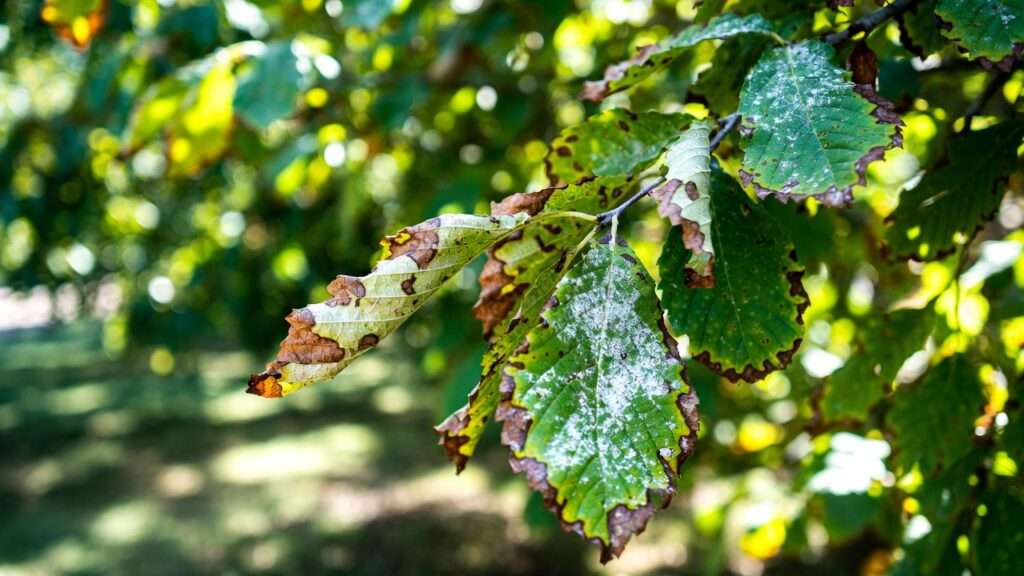
Picture this: It’s a scorching July afternoon, and your prized backyard maple or oak — the one that provides glorious shade all summer — suddenly looks like it’s been hit by a blowtorch. Leaves are curling, turning brown at the edges, or sporting eerie white powdery patches. Is it just the heat wave? Or could common summer tree diseases be sneaking in while the tree is stressed and vulnerable? 😟
Summer is prime time for tree health challenges. High temperatures, humidity spikes, drought periods, and heavy rains create the perfect storm for fungal pathogens to thrive. Heat stresses trees by limiting water uptake and weakening natural defenses, making them more susceptible to infections that might otherwise stay dormant. Common summer tree diseases like anthracnose, powdery mildew, leaf scorch, and Verticillium wilt can turn a vibrant landscape into a worrying one if ignored. The good news? Early identification, targeted treatment, and smart prevention can save most trees — and often prevent expensive removals down the line. 🌳💪
In this comprehensive guide, we’ll dive deep into the most prevalent summer tree issues, backed by expert insights from arborists and extension services. You’ll learn exact symptoms (with tips to avoid common misdiagnoses), proven treatment steps, and a practical prevention plan to keep your trees thriving through the hottest months and beyond.
Why Trees Are Extra Vulnerable in Summer 🌞
Trees face intense environmental pressure during summer. Prolonged heat waves cause transpiration stress, where leaves lose water faster than roots can replace it, especially in compacted urban soils or during drought. High humidity fosters fungal spore germination, while poor airflow in dense canopies traps moisture on leaves — ideal for diseases to spread.
Stress weakens a tree’s immune response: It diverts energy from defense mechanisms to survival basics like closing stomata or producing protective compounds. This makes trees prone to opportunistic pathogens. For example, what starts as minor drought stress can open doors for fungal entry through tiny wounds or natural openings.
Regional differences matter too — humid Southeast areas see more foliar fungi like powdery mildew, while drier Southwest summers amplify physiological issues like leaf scorch. Homeowners often mistake these for simple “summer burn,” delaying action until damage escalates. Proactive monitoring during peak heat (June–August) is key to catching problems early.
The Most Common Summer Tree Diseases: Identification Guide 📸
Here are the top culprits that spike in summer, with clear symptoms and affected species.
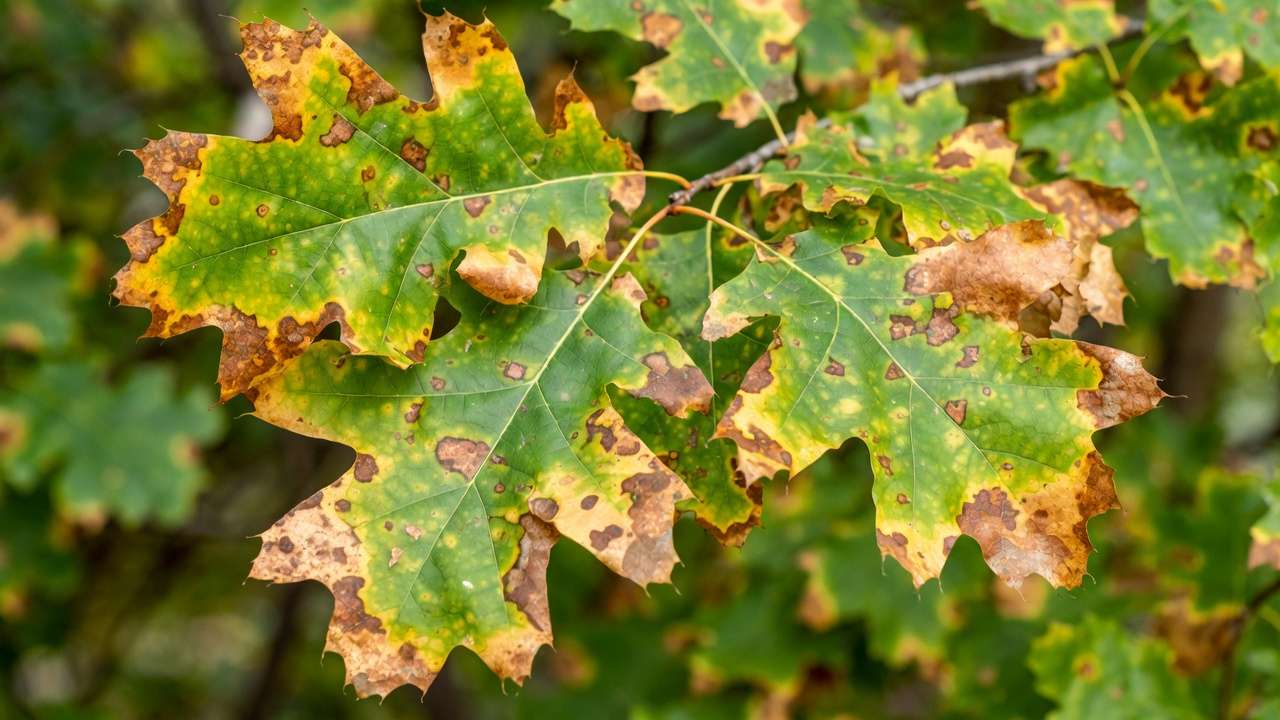
Anthracnose 🍂 This fungal disease (caused by species like Discula or Gloeosporium) loves cool, wet springs followed by warm summers. Symptoms appear as irregular tan-to-brown blotches on leaves, often following veins (veinal necrosis), leading to curling, distortion, and premature drop. Twigs may show dieback or cankers in severe cases. Common hosts: sycamore, oak, maple, ash, dogwood. Peak timing: Late spring into summer after rainy spells. Differentiate from scorch: Anthracnose spots start mid-leaf or along veins, not just margins. Severe cases cause “scorched” appearance but with re-leafing possible by midsummer.
Powdery Mildew ⚪ A white or grayish powdery coating covers leaves, shoots, and buds — classic sign of fungi like Erysiphe or Podosphaera. Leaves may distort, yellow, or drop early. It thrives in warm days (70–85°F) with cool nights and high humidity, but dry leaf surfaces (no overhead watering helps). Hits maples, oaks, crabapples, dogwoods hardest mid-to-late summer. Unlike other spots, the powder wipes off easily.
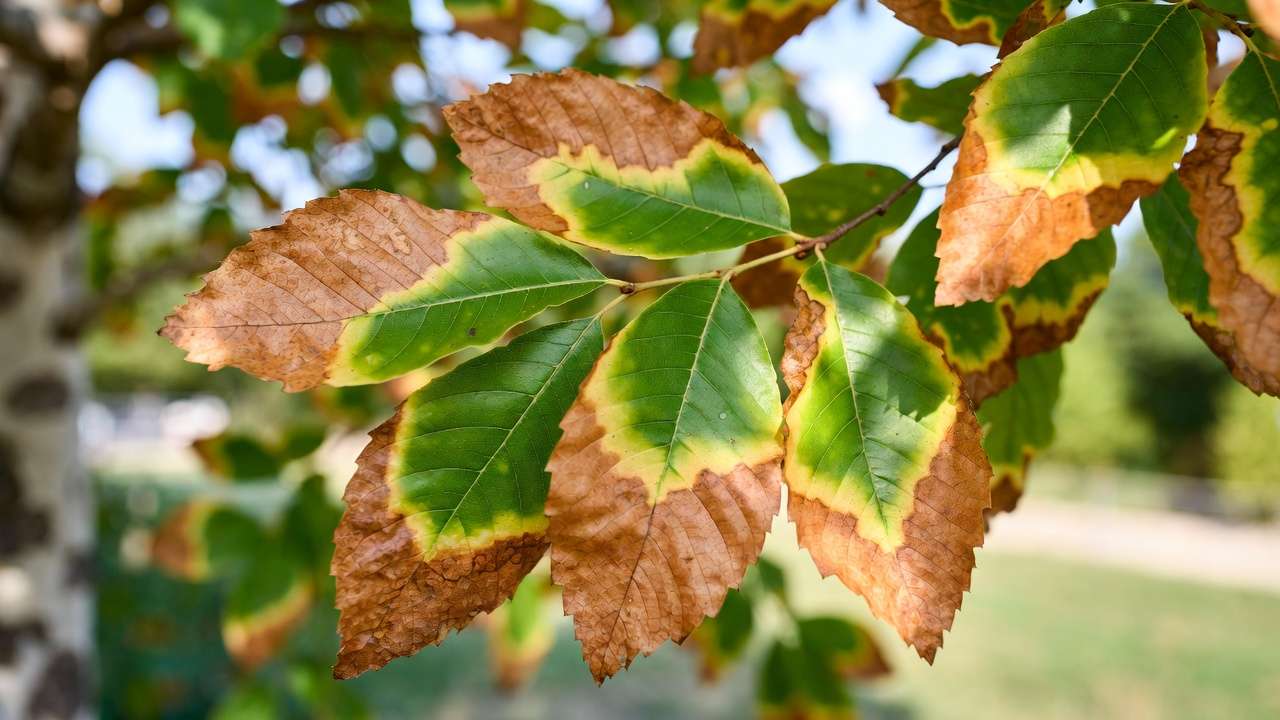
Leaf Scorch (Physiological + Bacterial) 🔥 Brown, scorched margins with a sharp line separating dead from green tissue; leaves wilt despite soil moisture. Physiological scorch stems from drought/heat blocking water flow; bacterial leaf scorch (Xylella fastidiosa) clogs xylem vessels, worsening in hot weather. Hosts: Maples (especially red/silver), oaks, elms. Often one-sided or branch-specific in bacterial cases.
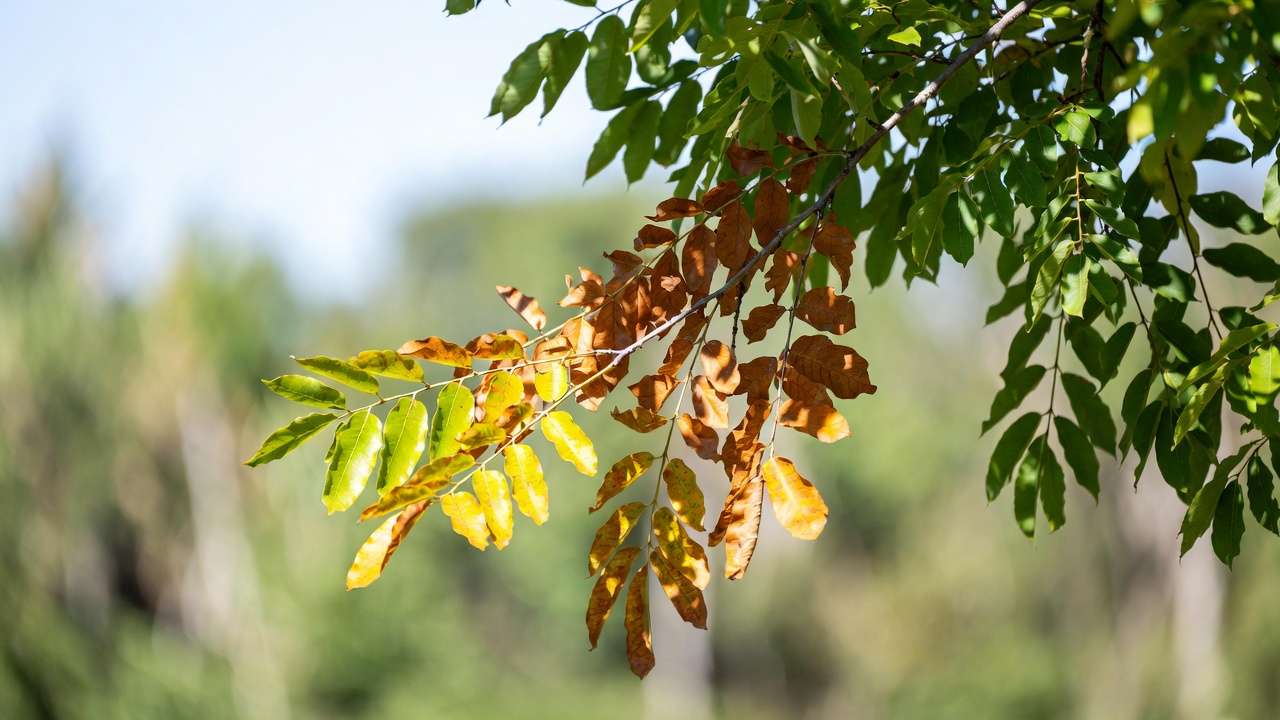
Verticillium Wilt 🌀 Sudden wilting on one branch or side (“flagging”), yellowing leaves turning brown, vascular streaking (brownish streaks under bark when cut). Soil-borne fungus (Verticillium dahliae or albo-atrum) invades roots and blocks water transport; summer heat accelerates visible symptoms. Common in maples, ashes, elms, tomatoes (cross-host!). No full cure once advanced.
Other Notable Summer Threats
- Apple scab/cedar-apple rust on fruit trees: Olive-green/black spots on leaves/fruit.
- Root rots (e.g., Armillaria): Wilting despite watering, mushrooms at base in wet summers.
- Cankers/blights: Sunken dead areas on branches, flare-ups in heat-stressed trees.
(Pro tip: Always take close-up photos of symptoms from multiple angles and note progression over days — invaluable for accurate diagnosis!)
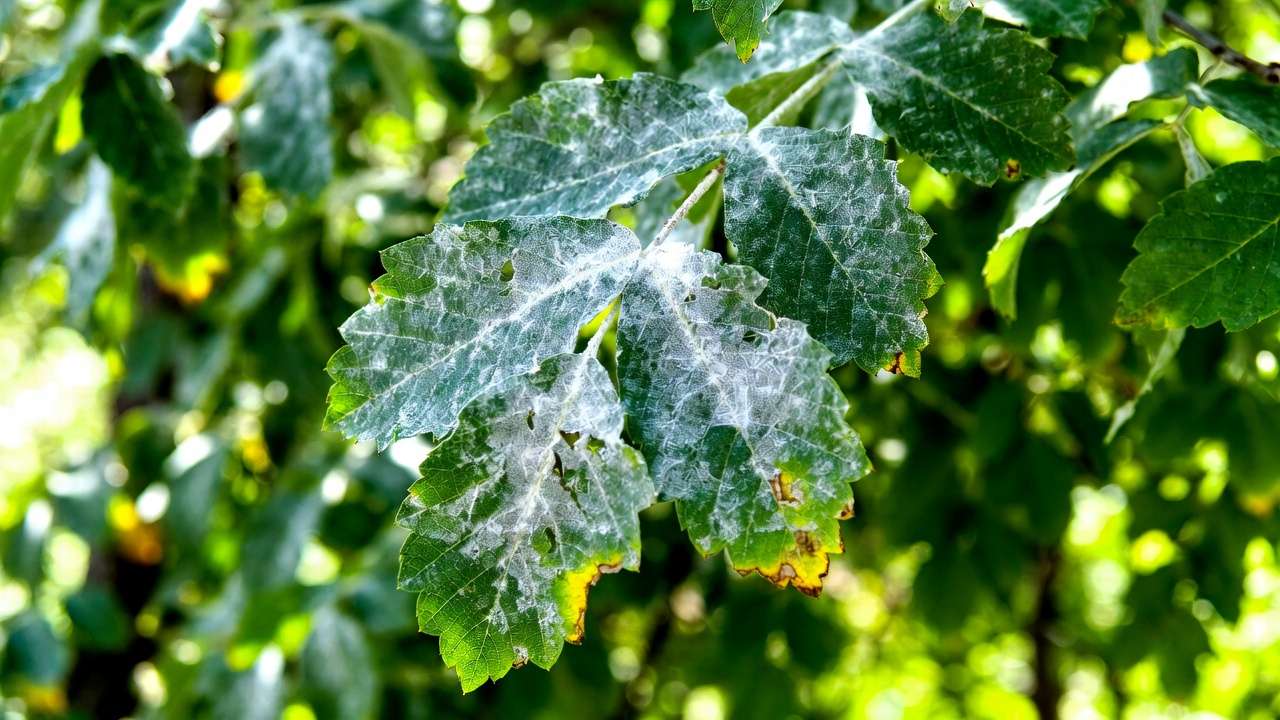
Step-by-Step: How to Accurately Identify Summer Tree Diseases 🔍
- Inspect systematically — Start at the top canopy, work down to trunk/roots. Check leaves (both sides), twigs, branches, bark for spots, wilting, oozing, or fungi.
- Note patterns — Uniform vs. one-sided? Whole tree or scattered branches? Recent weather?
- Rule out mimics — Drought stress looks like scorch but improves with deep watering; insects cause holes/chewing; nutrient issues show uniform yellowing.
- Tools needed — Magnifying glass, sharp knife for vascular checks, gloves.
- Red flags for pros — Rapid spread, trunk cankers, mushrooms at base, or >50% canopy affected — call a certified arborist ASAP. Lab tests (e.g., for bacterial scorch or Verticillium) confirm tough cases.
Don’t guess — misdiagnosis wastes time and money!
Treatment Strategies: What Actually Works (and When to Act) 🛠️
Act fast: Many foliar diseases are cosmetic but repeated defoliation weakens trees long-term, inviting secondary pests.
General principles — Prioritize cultural fixes over chemicals. Improve tree vigor to boost natural resistance.
- Cultural/organic first — Prune infected parts (sanitize tools with 10% bleach), rake/destroy fallen debris (prevents spore overwintering), enhance airflow.
- Chemical options — Fungicides preventive (e.g., for powdery mildew/anthracnose); systemic for wilts. Apply per label, time correctly (e.g., before symptoms peak). Eco-tip: Choose low-impact options; protect pollinators. 🌼
Disease-specific
- Anthracnose: Sanitation key; fungicides (chlorothalonil/copper) if recurring severe — apply at bud break/leaf expansion.
- Powdery Mildew: Neem oil, horticultural oils, or potassium bicarbonate sprays — repeat every 7–14 days.
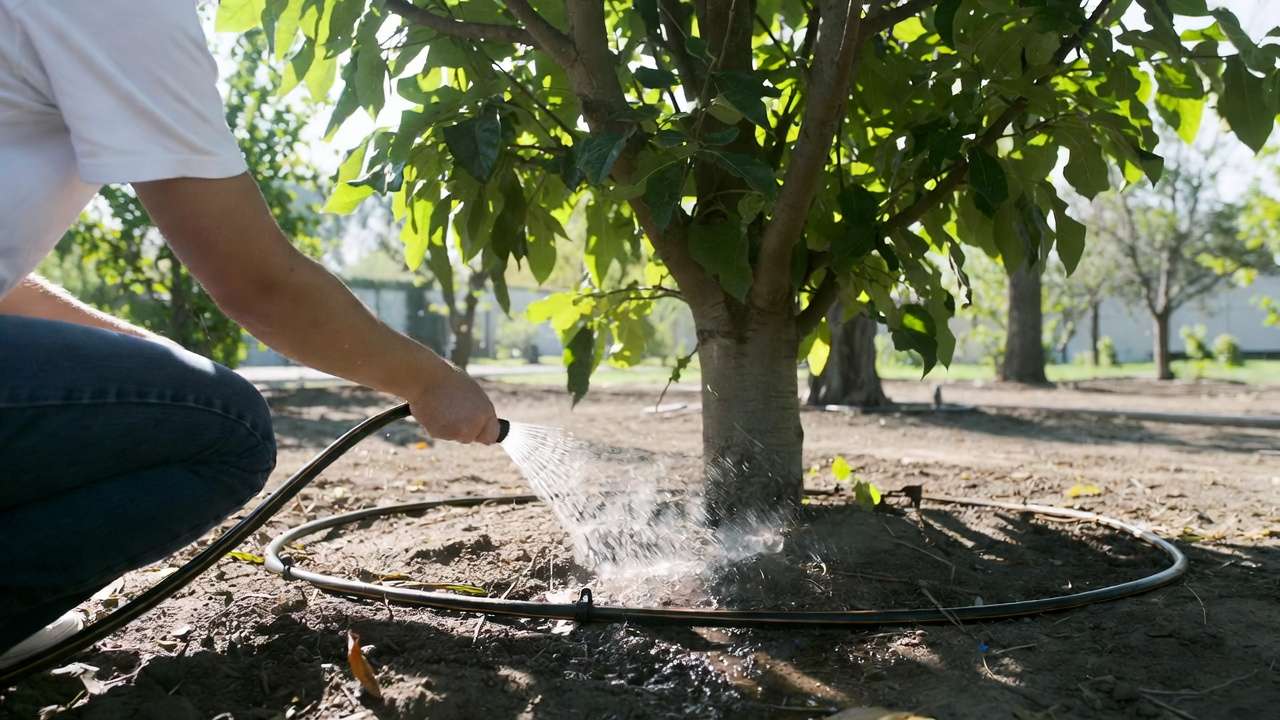
- Leaf Scorch: Deep/soak watering (slow drip 1–2x/week), mulch to retain moisture; bacterial cases need pro trunk injections.
- Verticillium Wilt: No cure — reduce stress, prune dead branches, remove severely affected trees to limit soil spread. Plant resistant varieties next time.
Safety always: Follow local regs, wear PPE, avoid bee-active times.
Prevention: Your Summer Tree Defense Plan (Best Practices) 🛡️
Build resilience before problems hit!
- Water wisely — Deep, infrequent (1–2 inches/week base-directed during dry spells); avoid evenings/overhead to cut humidity/fungal risk.
- Mulch properly — 2–4 inches organic (wood chips/bark), donut shape away from trunk — retains moisture, moderates temps, suppresses weeds.
- Prune smart — Remove dead/diseased in dry weather; thin canopy for airflow (avoid heavy summer cuts — stresses trees).
- Fertilize thoughtfully — Slow-release spring only; excess N in summer promotes soft growth prone to disease. Soil test first!
- Choose resistant varieties — Plant disease-tolerant cultivars (e.g., Verticillium-resistant maples).
- Monitor regularly — Weekly walks during hot/humid spells; early catch = easy fix.
- Integrated approach — Combine with proper planting (right depth/space), avoid wounds, encourage beneficial insects.
Consistent care turns vulnerable trees into tough survivors.
Real-Life Examples & Case Studies 🌍
Nothing drives the point home like seeing real trees — and real people — successfully battle (or unfortunately lose to) summer diseases. Here are a few anonymized but typical scenarios drawn from extension service reports, arborist consultations, and homeowner experiences over the past decade.
Case 1: The Powdery Mildew Comeback on a Mature Red Maple A homeowner in the mid-Atlantic noticed a white dusting on new growth in late June, followed by curled and yellowing leaves by mid-July. Initial thought: “Just dry weather.” After consistent neem oil sprays every 10 days (plus better morning watering at the drip line), the tree pushed out fresh, clean foliage in August. Key lesson: Powdery mildew rarely kills outright but repeated defoliation over years reduces stored energy, making the tree more vulnerable to winter damage or secondary pests. With three seasons of diligent organic management and improved mulch, the tree now looks better than it did pre-outbreak. 🍁✨
Case 2: Bacterial Leaf Scorch on a Street-Side Pin Oak In an urban neighborhood with restricted root space, a 30-year-old pin oak began showing classic marginal browning and one-sided wilting each July. Soil tests showed compaction and low organic matter; lab confirmation revealed Xylella fastidiosa. The city arborist applied oxytetracycline trunk injections in spring (a common management tactic for bacterial scorch in high-value trees), combined with deep root-zone watering via soil aeration tubes. While the tree still shows some scorch each summer, canopy density has stabilized and decline has slowed dramatically. Moral: Bacterial issues are chronic, but proactive stress reduction buys years of life.
Case 3: Verticillium Wilt Tragedy Averted (Barely) on a Young Japanese Maple A landscape contractor planted a prized ‘Bloodgood’ Japanese maple in what turned out to be infested soil (previous ash tree had died of Verticillium). By the second summer, half the canopy flagged and wilted. Immediate action: Heavy pruning of affected branches, aggressive soil solarization attempts, generous mulch, and switching to drought-tolerant companion plants to reduce competition. The tree lost about 40% of its structure but survived and has slowly regained vigor over four years with strict stress avoidance. Takeaway: Never replant the same susceptible genus in known Verticillium soil — switch to resistant species like ginkgo, honey locust, or certain oaks.
Regional Spotlight
- Humid Southeast (e.g., coastal Carolinas, Georgia): Anthracnose and powdery mildew dominate wet summers; cedar-apple rust explodes on apples/crabapples if nearby red cedars are present.
- Dry Southwest (e.g., Arizona, inland California): Physiological leaf scorch and root rots from poor drainage + extreme heat are far more common than foliar fungi.
- Midwest/Northeast: Verticillium wilt shows dramatic summer flare-ups after wet springs followed by hot, dry spells.
These stories highlight a universal truth: Early, consistent action usually wins, while waiting often turns manageable issues into permanent damage.
FAQs: Quick Answers to Common Questions ❓
What’s the main difference between physiological leaf scorch and anthracnose? Physiological scorch shows even brown margins with a clear line to green tissue and improves quickly with deep watering. Anthracnose creates irregular blotches, often vein-centered, with twig dieback and tends to cause early leaf drop even when soil is moist.
Can I save a tree diagnosed with Verticillium wilt? Not fully — there is no cure once the fungus is in the vascular system. However, many trees live for years (even decades) with careful stress management: consistent deep watering, mulching, avoiding root disturbance, and removing only dead wood. Severely declining specimens should be removed to prevent soil contamination for future plantings.
Are fungicides safe for pets, kids, and beneficial insects? Many modern options (especially organic ones like neem, horticultural oils, and potassium bicarbonate) are low-risk when applied according to label directions — avoid spraying during bee-foraging hours (mid-morning to afternoon). Always keep pets and children off treated areas until dry. For stronger synthetic fungicides, choose products labeled “bee-safe” or “reduced-risk” whenever possible.
How much water does my tree really need during 100°F+ heat? Established trees generally need 10–20 gallons per inch of trunk diameter per week during prolonged dry spells (e.g., 50–100 gallons for a 5-inch DBH tree). Deliver slowly via soaker hose or drip system at the drip line, early morning, 1–2 times per week rather than daily shallow sprinkles.
When should I call a professional arborist instead of DIY? Call immediately if: symptoms spread rapidly, you see oozing cankers or mushrooms at the base, more than 50% of the canopy is affected, vascular streaking is present, or the tree is near structures/power lines. A certified arborist (ISA credential) can perform diagnostic tests, trunk injections, or safe removals that homeowners shouldn’t attempt.
Conclusion: Take Action Before Summer Ends! 🚀
Summer tree diseases don’t have to spell disaster. By learning to spot the early warning signs of anthracnose, powdery mildew, leaf scorch, Verticillium wilt, and other heat-fueled threats, you can intervene before irreversible damage sets in. Combine sharp observation with smart cultural practices — deep watering, proper mulching, thoughtful pruning, and resistant plant choices — and most trees will reward you with many more seasons of shade, beauty, and wildlife habitat.
This week, grab your camera, walk your property, and do a quick health check. Look for odd spots, wilting, or powdery coatings. Act on anything suspicious using the steps outlined here, and don’t hesitate to consult your local cooperative extension office or a certified arborist for tough cases.
Your trees work hard for you all year — give them the summer support they need to stay strong. 🌳❤️











