
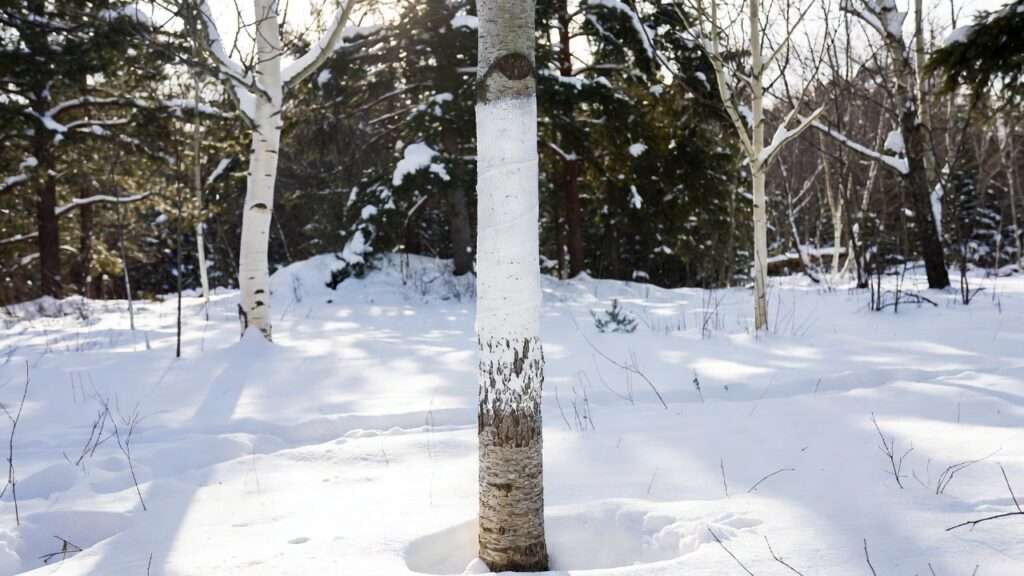
Imagine stepping into your yard on a crisp spring morning, only to discover ugly vertical cracks, peeling bark, and sunken patches scarring the trunk of your beautiful young maple or favorite fruit tree. 😢 This heartbreaking damage isn’t from pests, disease, or drought—it’s sunscald (also known as southwest injury or winter bark injury), a silent killer that strikes during sunny winter days followed by freezing nights. Thousands of homeowners, gardeners, and orchard enthusiasts lose valuable trees every year to this preventable condition.
The good news? Preventing sunscald on trunk bark is straightforward with the right strategies. As a tree care expert with years of experience consulting university extension services, arborist research, and hands-on work in diverse climates, I’ve helped countless people save their trees from this common threat. In this in-depth guide, we’ll cover everything you need to know—from understanding why sunscald happens to step-by-step prevention methods, recovery tips, and seasonal checklists—so your trees stay healthy, strong, and beautiful for decades. Let’s protect those precious trunks! 🌿💚
What Is Sunscald and Why Does It Happen?
Sunscald, often called southwest injury or winter sunscald, is a physiological disorder caused by extreme temperature fluctuations on a tree’s trunk bark. During winter, the low-angled sun heats the south or southwest side of the trunk (especially on clear, sunny days), sometimes raising bark temperatures by 20–30°F (11–17°C) above air temperature. Dormant cambium cells “wake up” and become active. When clouds roll in, the sun sets, or night falls, temperatures plummet rapidly—often back to freezing or below. These active cells freeze and die, resulting in dead tissue, cracking, and eventual bark sloughing. ❄️→☀️→❄️
In summer, a less common variant called summer sunscald occurs from direct intense heat on exposed young bark, especially after heavy pruning suddenly exposes previously shaded areas.
Reflective surfaces like snow-covered ground, light-colored buildings, fences, or walls amplify the problem by bouncing extra sunlight onto the trunk. Without intervention, repeated damage weakens the tree, invites borers, fungi, canker diseases (like Cytospora), and can lead to girdling or structural failure over time. Prevention is far easier—and more effective—than treatment!
Which Trees Are Most Vulnerable to Sunscald?
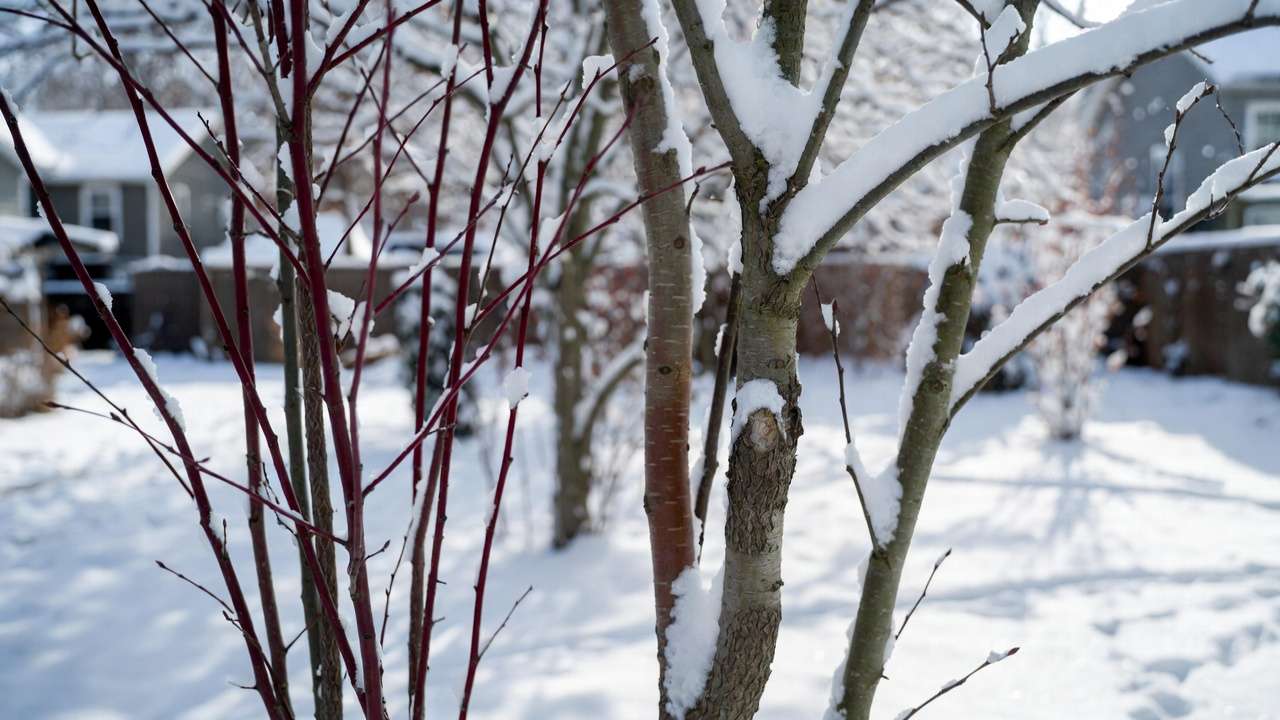
Young trees (typically under 5–10 years old) with thin, smooth bark suffer the most because they lack natural insulation. As trees mature and develop thicker, corky, or furrowed bark, they become much more resistant. Certain species remain vulnerable longer due to persistently thin or dark bark.
High-risk trees include:
- Maples (especially red, sugar, silver, Japanese, and hybrids) 🍁
- Fruit trees (apple, peach, cherry, plum, pear) 🍎🍑
- Ash (Fraxinus species)
- Birch (paper birch and river birch)
- Linden (basswood)
- Honeylocust
- Crabapple
- Mountain ash
- Oak (young specimens)
- Willow, poplar, cottonwood, and tuliptree
Evergreens like pines or spruces are rarely affected because their needles provide year-round shade. If your landscape features any of these thin-barked species—especially newly planted ones—act early to provide protection!
Early Signs and Symptoms of Sunscald Damage
Sunscald often hides until warmer weather reveals the damage. Watch for:
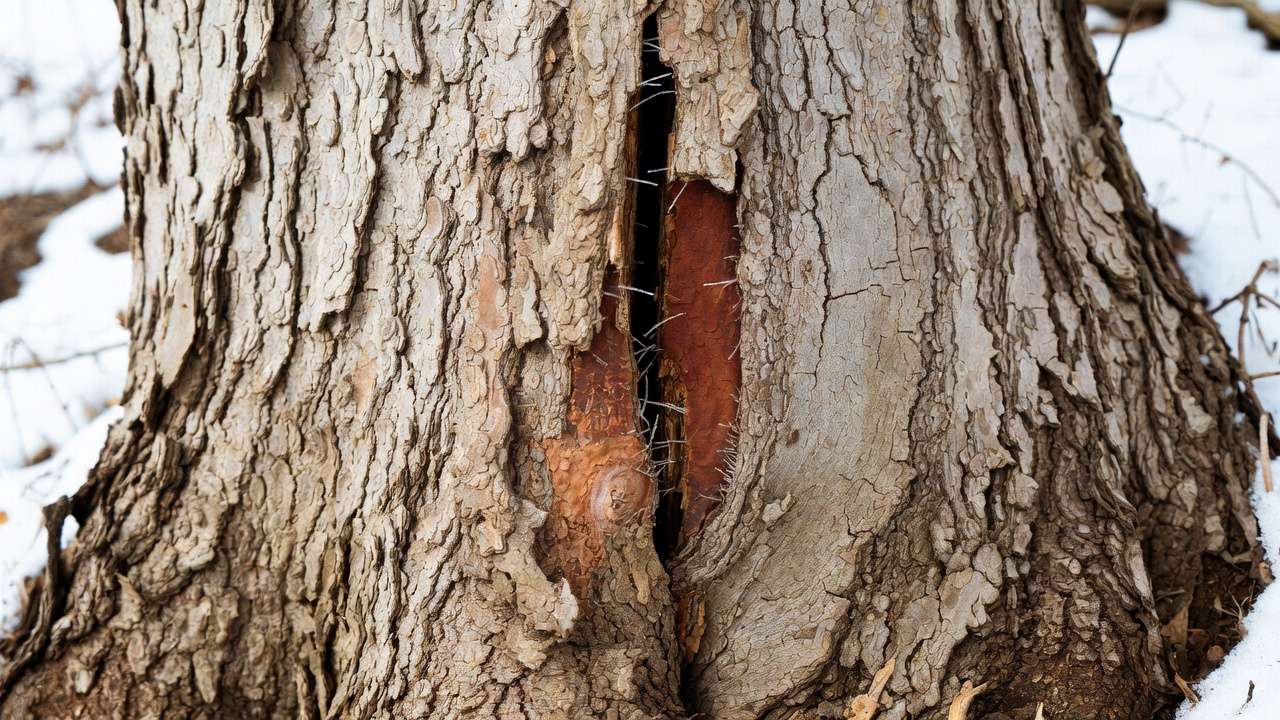
- Elongated, sunken, reddish-brown, or grayish discolored patches on the south or southwest trunk side
- Vertical cracking, splitting, or peeling bark (sometimes deep frost cracks)
- Loose, flaking bark that sloughs off, exposing dead wood underneath
- Sap oozing or bleeding in spring from active wounds
- In severe cases, cankers, insect entry points, or fungal growth
Damage may circle 25–50% or more of the trunk circumference. Early detection lets you intervene before secondary issues (borers, decay) set in. Regular winter trunk checks (even from a distance) can spot subtle color changes. 🔍🌲
The Best Ways to Prevent Sunscald on Trunk Bark
University extension services (like those from Colorado State, University of Minnesota, Arkansas, Utah State, and others) and arborist research consistently recommend these proven methods. Here’s a ranked, practical guide based on efficacy, ease, and cost:
1. Apply Protective Tree Wraps or Guards (The Gold Standard) 🎀
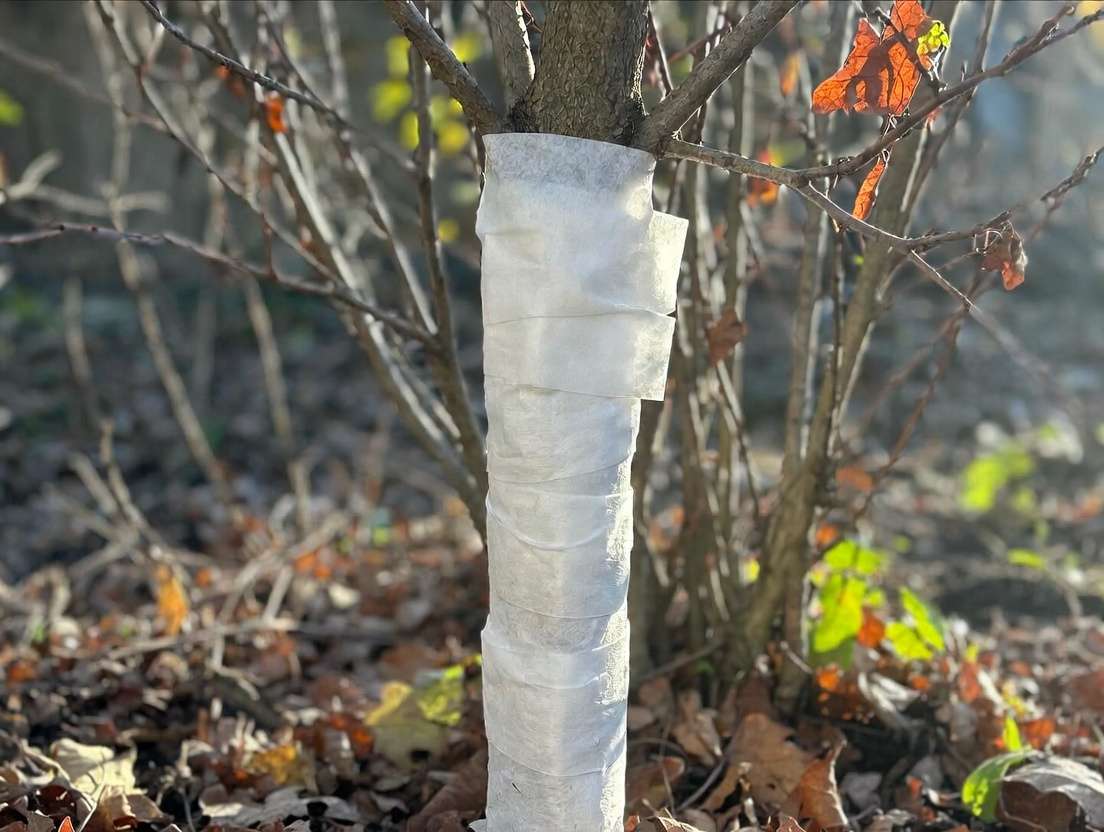
Light-colored, breathable wraps reflect sunlight, insulate against temperature swings, and prevent rapid heating/freezing cycles.
Recommended materials:
- White or light-colored crepe-paper tree wrap (elastic, sheds water)
- Commercial breathable fabric wraps (polyester or similar)
- Ventilated white plastic tree guards/tubes (reusable)
- Avoid dark plastic, burlap, or non-breathable materials—they trap heat and moisture! ❌
Step-by-step application:
- Wait until late fall (after leaf drop, before hard freezes—typically November in northern climates).
- Start at the soil line (or 2 inches below ground level for extra protection).
- Wrap upward, overlapping each layer by about 1/3 to 50% for full coverage.
- Continue up to the lowest branches or 4–5 feet high (whichever is higher).
- Secure loosely with tape attached only to the wrap (never tight bands around bark to avoid girdling).
- Remove in early spring (mid-April to May, after last frost) to prevent moisture buildup, insects, or disease.
Reapply annually for 2–5 winters until bark thickens naturally. This method is backed by decades of extension research showing significant temperature stabilization. 🌡️
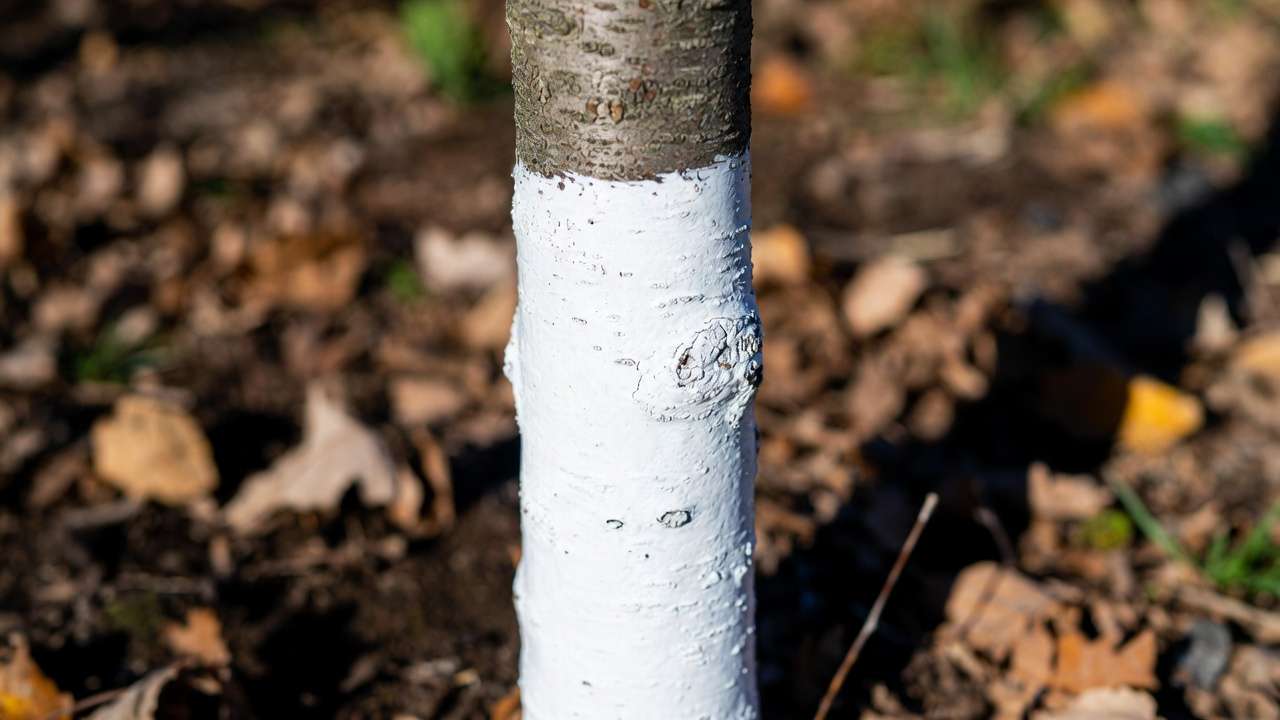
2. Paint the Trunk with White Latex Paint (Popular for Orchards and Fruit Trees) 🎨
A simple, affordable, long-lasting option that reflects sunlight without physical wrapping.
- Use white exterior/interior latex paint (non-toxic, water-based).
- Dilute 50/50 with water for better penetration.
- Apply to the south/southwest side (or full trunk) in late fall using a brush or sprayer.
- Reapply every 1–2 years as weathering occurs.
Research (including studies on cherry and apple trees) shows white paint keeps trunks 8–17°C cooler on sunny winter days compared to unpainted controls. Great for aesthetics in orchards, though less ideal in formal landscapes. Bonus: It’s inexpensive and easy for DIYers!
3. Provide Natural or Artificial Shade
Block direct winter sun without materials:
- Plant shade-tolerant shrubs, perennials, or low evergreens on the south/southwest side.
- Install temporary light-colored boards, snow fencing, or shade cloth angled to cast shadows.
- Avoid heavy pruning that suddenly exposes trunks—keep lower branches on young trees for natural shade.
This eco-friendly approach reduces the need for wraps over time as the tree establishes.
4. Maintain Optimal Tree Health Year-Round
Stressed trees are more prone to damage:
- Deep, consistent watering in fall until soil freezes—drought-stressed bark cracks easier. 💧
- Mulch with 2–4 inches of organic material (wood chips, bark) in a donut shape—keep it away from the trunk to prevent rot.
- Proper planting—choose species suited to your climate and avoid full-sun sites for thin-barked trees.
- Avoid mechanical injury—protect trunks from lawnmowers, string trimmers, and rodents with guards.
Healthy trees compartmentalize damage better and recover faster.
5. Advanced or Alternative Methods
For gardeners who want extra layers of protection or live in particularly harsh winter zones (with frequent clear, sunny days and sub-zero nights), consider these research-supported enhancements:
- DIY insulated cylinders: Surround the trunk with a loose cylinder of chicken wire or hardware cloth (about 12–18 inches in diameter), then fill the gap with dry leaves, straw, or pine needles. This creates a natural insulating buffer against temperature swings. Secure the top to prevent animals from nesting. Remove in spring to avoid moisture issues.
- Reflective barriers: Some commercial products use Mylar or foil-backed wraps on the sunny side only. Small-scale studies (e.g., from fruit tree research stations) have shown they can reduce peak bark temperatures by an additional 5–10°F compared to white paint alone. Test on a small section first, as over-reflection can sometimes cause uneven heating.
- Trunk shelters for very young trees: In windy, exposed sites, use rigid, white, vented plastic tree shelters (often sold for wildlife protection). These double as sunscald guards and rodent deterrents.
Important reminder: Never use black plastic, duct tape, or non-breathable materials. These trap heat and moisture, often causing worse damage than leaving the trunk bare! ❌
What to Do If Your Tree Already Has Sunscald Damage
Discovering sunscald damage can feel alarming, but most trees are remarkably resilient. Here’s the expert-recommended recovery protocol:
- Assess the extent — Measure how much of the trunk circumference is affected. If damage covers less than 25–30%, the tree has a good chance of full recovery. Over 50% may compromise vascular tissue long-term.
- Clean the wound carefully (early spring is ideal):
- Use clean, sharp pruning shears or a knife to gently remove only loose, dead, or peeling bark.
- Do not cut into living tissue or try to “shape” the wound.
- Never apply wound dressings, tree paint, pruning sealers, or tar — modern arborist consensus (ISA, university extensions) shows these materials trap moisture, promote fungal growth, and slow natural compartmentalization.
- Support recovery —
- Water deeply during dry spells (especially the first two growing seasons after damage).
- Maintain a 3–4 inch mulch ring (no volcano mulching against the trunk!).
- Fertilize lightly only if soil tests show deficiency — over-fertilizing stresses damaged trees.
- Monitor for secondary invaders: flatheaded borers, bronze birch borer, Cytospora canker, or opportunistic fungi often enter through sunscald wounds.
- When to call a certified arborist —
- Damage girdles >40% of the trunk.
- Deep cracks extend into the wood.
- The tree shows dieback in the canopy, leaning, or instability.
- You suspect internal decay or structural compromise.
Many young trees callus over sunscald wounds within 2–4 years if secondary issues are prevented. Patience + proper care = success in most cases! 🌱❤️
Seasonal Prevention Checklist (Printable & Practical)
Use this easy-to-follow timeline to stay ahead of sunscald every year:
Late Fall (October–December, before ground freezes) 🍂
- Deeply water the root zone (especially if autumn was dry).
- Apply mulch ring.
- Install tree wraps, paint trunks, or set up shade structures.
Winter (December–February) ❄️
- Check wraps for wind damage or animal chewing (re-secure if needed).
- Observe trunks on sunny days for early color changes (prevention is still possible).
Early Spring (March–May, after last hard freeze) 🌷
- Remove all wraps and guards to prevent moisture buildup and insect habitat.
- Inspect for cracks, peeling, or discoloration.
- Clean minor wounds if needed.
- Resume normal watering and light fertilization.
Summer & Early Fall ☀️
- Water consistently during drought.
- Avoid lawn equipment injury to trunks.
- Plan next winter’s protection strategy.
Following this checklist year after year dramatically reduces sunscald incidence.
Common Myths About Preventing Sunscald Debunked
Misinformation still circulates widely — here are the facts:
Myth #1: Wrapping trees year-round is best. Reality: Year-round wrapping traps moisture, encourages fungal growth, and can girdle young trees as they grow. Remove in spring!
Myth #2: Dark-colored wraps or black plastic provide better protection. Reality: Dark colors absorb heat and make temperature swings worse — always choose white/light-colored materials.
Myth #3: Painting wounds or applying pruning sealer helps healing. Reality: Trees naturally compartmentalize wounds. Sealers trap pathogens and slow recovery (per International Society of Arboriculture guidelines).
Myth #4: Sunscald only happens in very cold climates. Reality: It occurs anywhere with clear winter days + cold nights — reported in California, Texas, the Midwest, Northeast, and even parts of the South.
Myth #5: Mature trees never get sunscald. Reality: Rare, but sudden heavy pruning, storm damage, or bark loss can expose sensitive tissue on older trees.
FAQs About Preventing Sunscald on Trunk Bark
Q: How many winters should I protect my tree? A: Most experts recommend 2–5 winters (sometimes up to 7–10 for very slow-bark-developing species like Japanese maple or certain fruit trees) until the bark naturally thickens and roughens. 🌳
Q: Can I use aluminum foil instead of commercial wrap? A: It’s better than nothing in a pinch, but commercial breathable wraps or white paint are far superior — foil can crinkle, tear, and create hot spots.
Q: Is summer sunscald prevention different? A: Yes — focus on gradual pruning (never remove more than 25% of canopy at once), using shade cloth on newly exposed trunks, and watering consistently during heat waves.
Q: Are there organic or eco-friendly alternatives to wraps and paint? A: Absolutely! Strategic planting of shade-providing understory plants, deep mulching, proper siting, and selecting thicker-barked cultivars reduce (or eliminate) the need for physical barriers over time. 🌍
Q: My tree already has cracks — will it die? A: Not necessarily. Many trees recover fully if damage is limited and you prevent borers/decay. Monitor closely and boost overall health.
Q: What’s the cheapest effective method? A: Diluted white latex paint — a single quart covers multiple small trees for under $10 and lasts 1–2 seasons.
Protecting your trees from sunscald on trunk bark is one of the highest-return investments you can make in your landscape. A few hours of prevention each fall can add decades to a tree’s life and thousands in replacement value.
Have you dealt with sunscald before? Which method worked best for you? Drop a comment below — I’d love to hear your experiences and answer any specific questions! Together we can keep our trees safe and thriving. 🌲✨
Conclusion: Small Effort, Lifelong Rewards
Sunscald may be one of the most common (and most preventable) causes of young tree decline, but it doesn’t have to be a yearly heartache. By understanding the science behind winter bark injury, recognizing vulnerable species, applying proven protective measures like breathable tree wraps or white trunk paint, maintaining excellent overall tree health, and following a simple seasonal checklist, you can dramatically reduce — or eliminate — the risk.
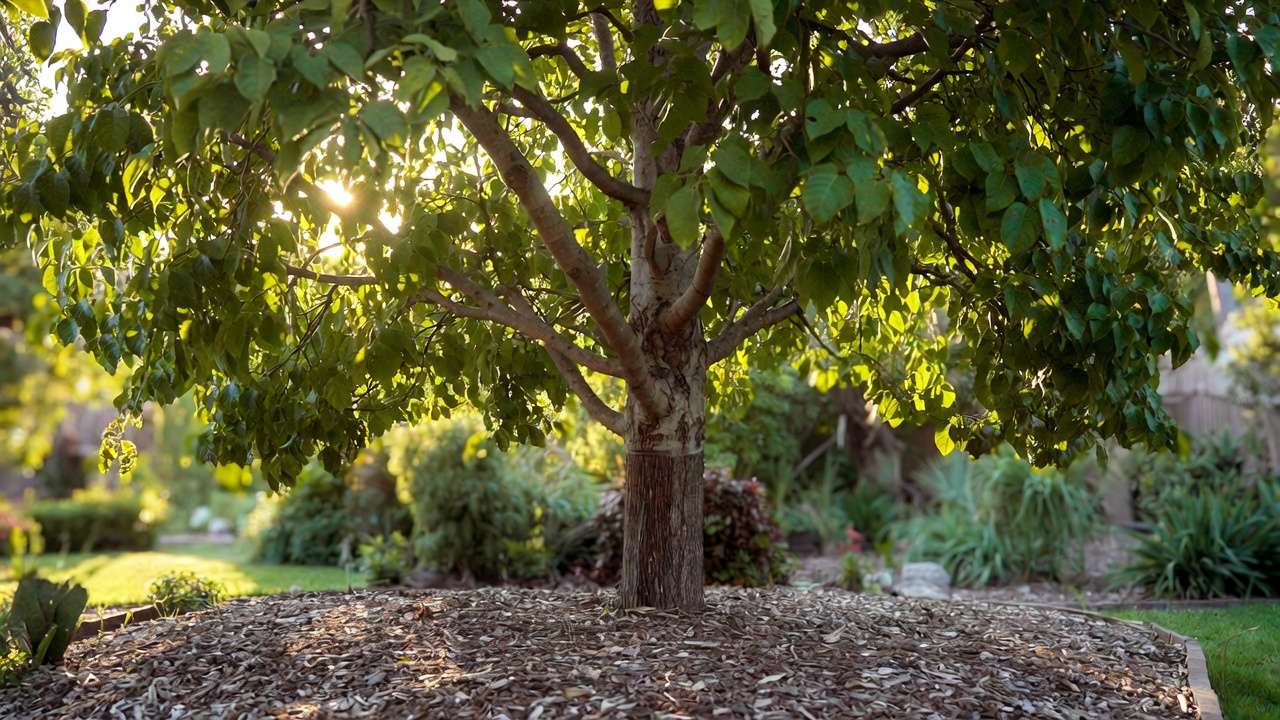
The trees you protect today will reward you with beautiful shade, spring blooms, fall color, fruit, wildlife habitat, and increased property value for generations. Your small investment of time and materials this fall could be the difference between a thriving legacy tree and one lost too soon.











