
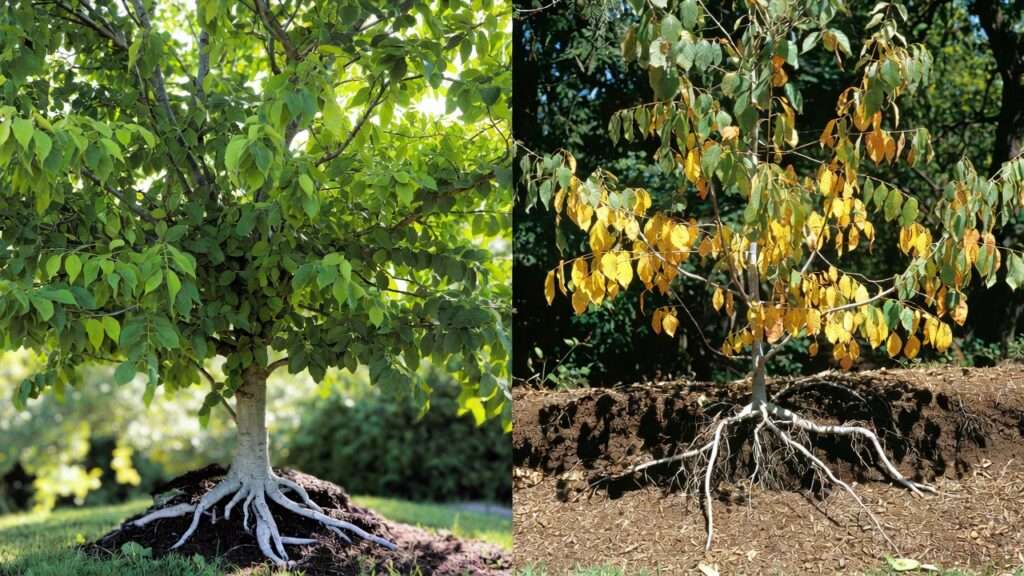
Have you ever walked past your favorite backyard tree and felt a pang of worry? 😟 The leaves look a little droopy, the branches seem thinner than last year, or maybe the bark has some unusual cracks. You’re not alone—millions of homeowners notice these subtle changes but aren’t sure if it’s normal or a sign that their tree is quietly struggling. The good news? Signs of a healthy vs. stressed tree are often clear once you know what to look for, and catching issues early can save your tree from decline—or even removal. As a tree care enthusiast with years of observing landscapes from urban yards to rural groves, I’ve seen countless trees bounce back with simple interventions. In this in-depth guide, we’ll break down the key differences, provide a side-by-side comparison, explore common causes, and share pro-level steps to help your trees thrive. Let’s turn you into a confident tree guardian! 🌿💚
Why Tree Health Matters More Than Ever 🌍❤️
Trees are more than just pretty scenery—they’re silent heroes in our environment. They cool our homes (reducing energy bills by up to 25%), clean the air, support birds and pollinators, increase property values by 10-20%, and even help combat climate change by sequestering carbon. But modern challenges like prolonged droughts, compacted urban soils, invasive pests, extreme weather, and improper planting make trees more vulnerable than ever. Spotting signs of tree stress early prevents small problems from escalating into costly hazards like falling branches or full tree loss. Regular checks take only 10-15 minutes but can add decades to a tree’s life. Think of it as preventive healthcare for your landscape! ⏰🛡️
What Does a Truly Healthy Tree Look Like? (The Gold Standard Baseline) 🌱👍
Before diving into warning signs, establish what “healthy” means. Healthy trees vary by species (e.g., a pine looks different from an oak), age, and region, but these core traits are universal.
Visible Signs of a Healthy Tree
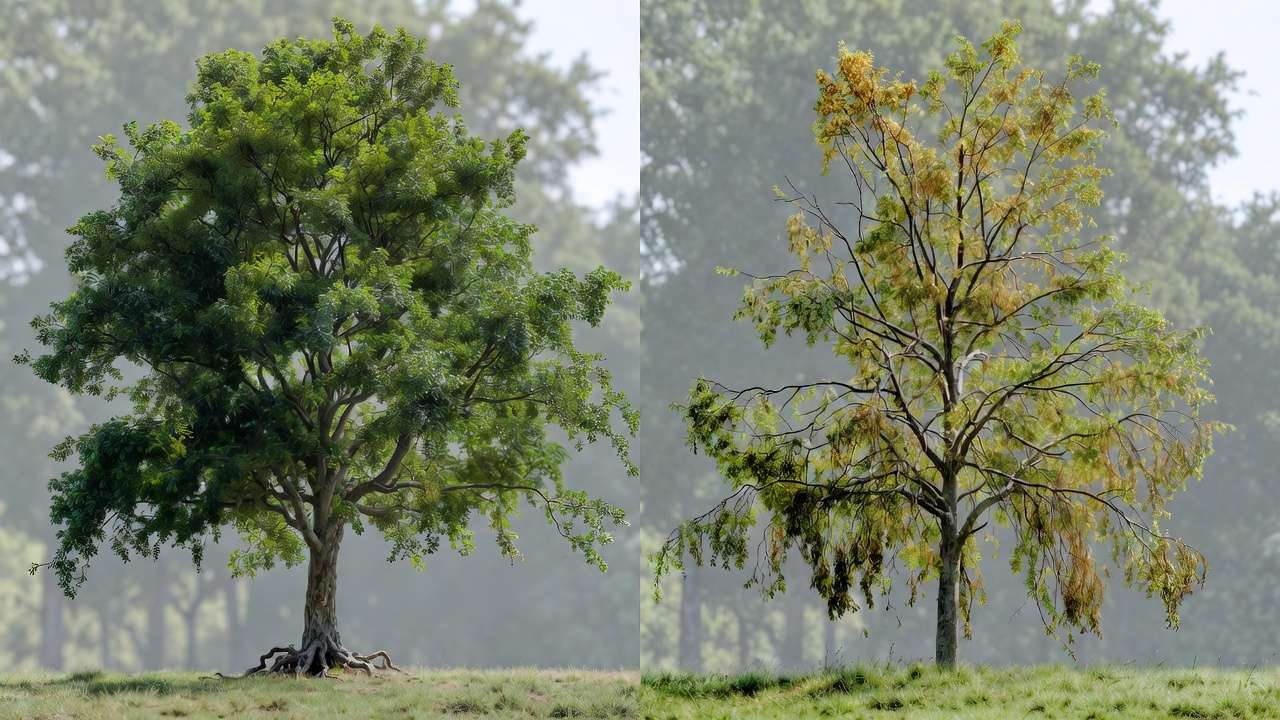
- Vibrant, Full Canopy – During the growing season, expect dense, evenly spread foliage with rich, species-appropriate green color (deep emerald for maples, bright needles for pines). No large bare patches or thinning. 🌿
- Strong Annual Growth – Look for noticeable new shoots, buds, and branch tips extending each spring. Measure twig elongation from last year’s bud scars—healthy trees add consistent length yearly.
- Intact, Supple Bark – Bark should be smooth or appropriately textured (e.g., furrowed in oaks, papery in birches), with minimal cracking, splitting, or peeling beyond natural shedding. No large wounds or oozing.
- Visible Root Flare – At the base, the trunk should gently widen where it meets the ground (like a subtle flare or buttress roots). This is crucial—no soil or mulch burying it!
- Minimal Deadwood – Only small, natural twig shedding; no clusters of dead branches.
- Seasonal Sync – The tree leafs out and changes color in rhythm with similar species nearby—no early dormancy or odd timing.
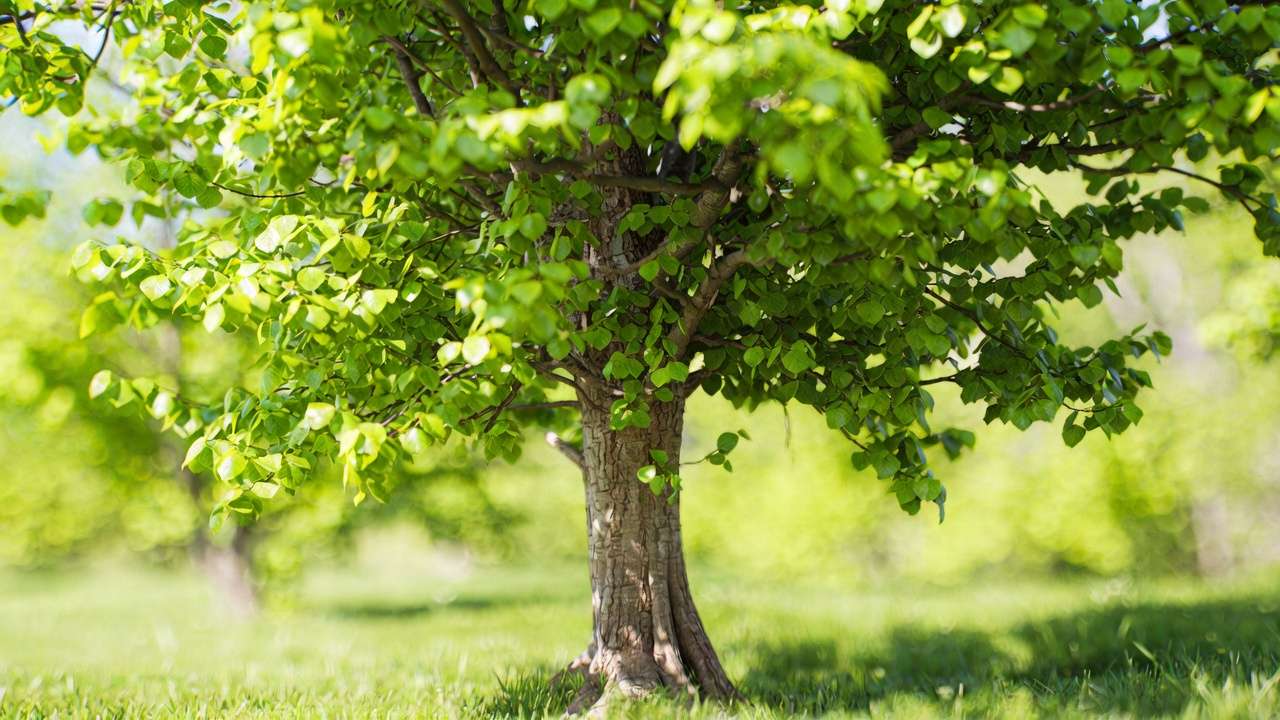
Bonus Healthy Indicators
- Good resistance to pests and diseases (minor issues resolve naturally).
- Balanced structure: No severe leans, tight V-crotches between co-dominant stems, or major defects that could lead to failure.
A tree hitting most of these marks is likely vigorous and resilient. 🌳✨
Key Signs of a Stressed Tree: Red Flags You Can’t Ignore ⚠️😓
Tree stress often creeps in gradually from environmental factors, but the symptoms are telltale. Compare these to the healthy baseline above.
Foliage & Leaf Problems 🍂
- Wilting or drooping leaves, especially during midday heat (doesn’t recover by morning = serious water deficit).
- Discoloration: Yellowing (chlorosis), brown crispy edges (scorch), premature red/orange fall color, or dull/off-green tones.
- Early/excessive leaf drop—even green leaves falling in summer.
- Smaller, sparse, or distorted leaves; curling, spotting, or holes from pests.
- Thinning canopy: More sky visible through branches than previous years.
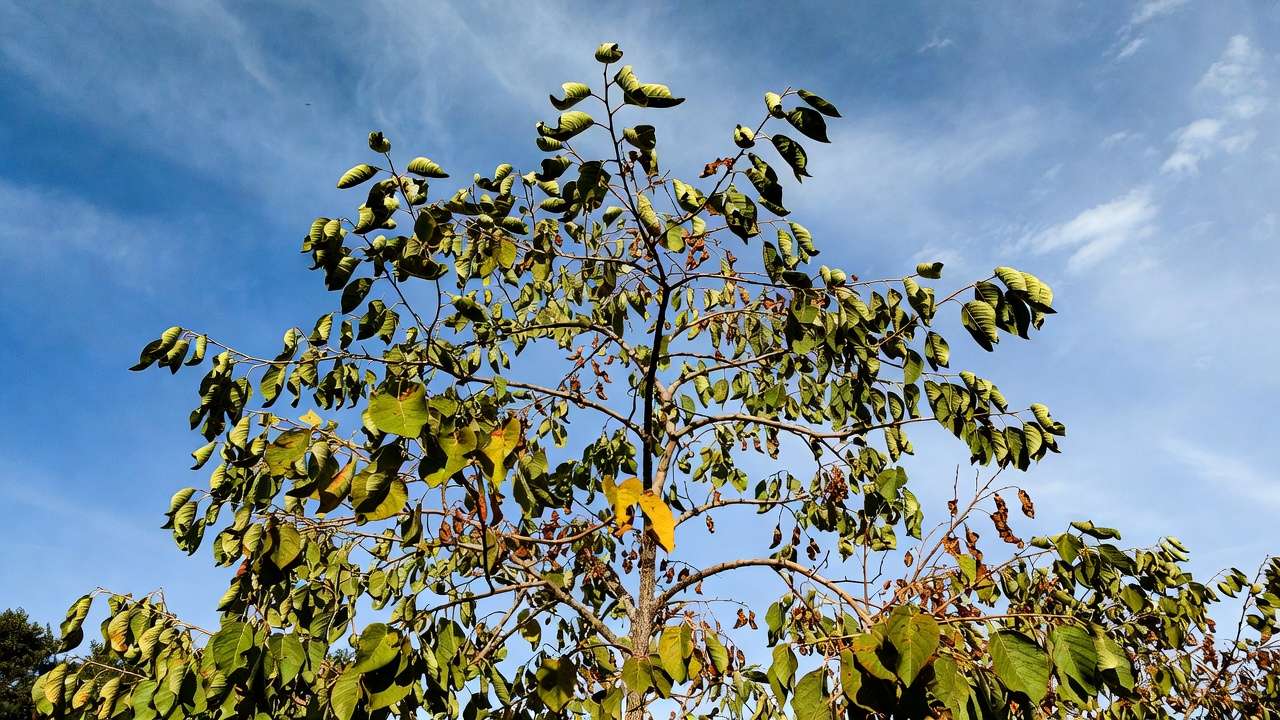
Branch & Canopy Issues 🌿🪵
- Dieback: Dead tips and branches, often starting at the top or outer edges (classic drought or root issue sign).
- Uneven or sparse canopy compared to past seasons.
- Epicormic shoots (water sprouts or suckers erupting low on trunk/branches)—the tree’s desperate attempt to produce new foliage.
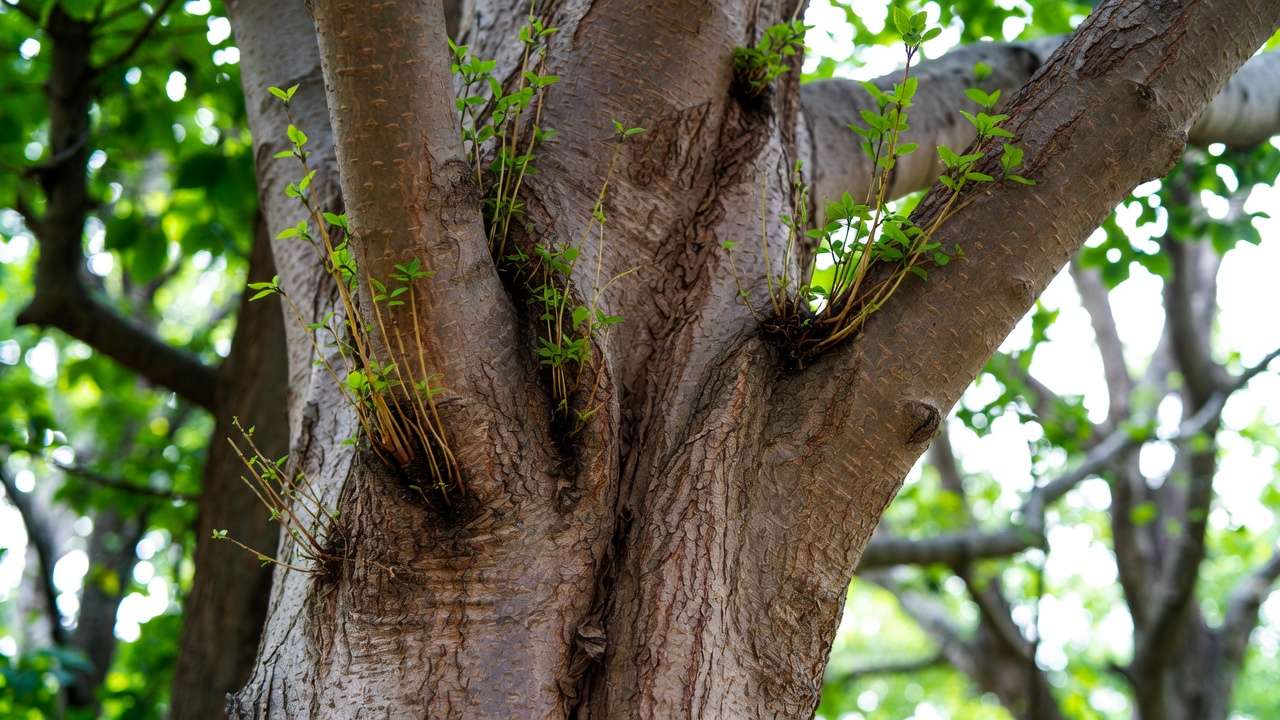
Trunk & Bark Warning Signs
- Vertical cracks, deep splits, or large wounds (risk decay entry).
- Peeling, flaking, or loose bark in abnormal patterns.
- Fungal growth: Mushrooms, conks, or bracket fungi at base or on trunk (root rot or decay indicator).
- Sudden or severe leaning (structural instability).
Root Zone & Base Problems
- No visible root flare (buried by mulch/soil = girdling roots risk, slowly strangling the tree).
- Compacted soil, poor drainage, standing water, or circling surface roots.
- Mushrooms near base or soil heaving.
These signs often appear in clusters—multiple symptoms mean urgent attention! 📸
Healthy vs. Stressed Tree: Side-by-Side Comparison Table 📊🔍
Use this quick checklist during your next yard walk!
| Feature | Healthy Tree 🌟 | Stressed Tree 😟 | Action if Stressed |
|---|---|---|---|
| Leaves | Vibrant green, full size, even | Yellow/brown edges, wilted, scorched, small/distorted | Check watering & soil |
| Canopy Density | Thick, even, full coverage | Thin, patchy, dieback from top/edges | Inspect roots & pests |
| New Growth | Strong shoots/tips yearly | Stunted, absent, or epicormic sprouts | Improve conditions |
| Bark | Intact, species-normal | Cracks, splits, peeling, fungi | Call arborist if severe |
| Branches | Mostly alive, balanced | Dead tips, water sprouts, leaning | Prune deadwood only |
| Root Flare | Visible flare at base | Buried, girdled, circling roots | Excavate & correct |
| Seasonal Behavior | On-time leaf-out & color change | Early drop, premature fall color | Monitor trends |
Print this out or save it on your phone—it’s your tree health cheat sheet! ✅
Common Causes of Tree Stress (And Prevention Strategies) 🛡️🌧️
Knowing why trees stress helps you fix and prevent issues.
- Drought & Water Issues – Insufficient deep watering or poor drainage leads to wilting/scorch. Prevent: Water deeply (to 12-18 inches) infrequently during dry spells.
- Environmental Extremes – Heat, cold snaps, compacted soil from foot traffic/construction. Prevent: Mulch properly and avoid soil disturbance.
- Pests & Diseases – Borers, aphids, fungal infections (anthracnose, root rot) attack weakened trees first. Prevent: Promote vigor; early ID key. 🐛🍄
- Mechanical Damage – Lawn equipment wounds, girdling roots from improper planting, buried flares. Prevent: Plant correctly, keep mower away from base.
- Nutrient Imbalances – Chlorosis from poor iron/manganese uptake in alkaline soils. Prevent: Soil test before fertilizing.
- Urban Stress – Pavement restricting roots, pollution, salt from roads. Prevent: Choose tolerant species and provide extra care.
Stress is cumulative—fix one factor, and the tree often rebounds!
Step-by-Step: How to Inspect Your Trees Like a Pro 🔍🌳
Regular inspections are your best defense against hidden problems. Follow this simple routine 2–3 times a year (early spring, peak summer, and late fall) plus after major storms or construction nearby.
- Observe from a Distance First – Stand back 20–30 feet to assess overall shape, canopy density, and any obvious leans or dead zones. Compare to nearby similar trees for seasonal timing.
- Walk the Full Circle – Circle the tree slowly, checking all sides. Look up into the canopy for thinning or dieback, then down to the base.
- Examine the Canopy & Leaves – Note leaf color, size, wilting (especially on hot afternoons), spotting, or premature drop. Shake a branch gently—healthy leaves stay attached.
- Inspect Trunk & Bark – Run your hand over the bark (gloves recommended!); feel for loose areas, cracks, or oozing. Look for fungal brackets or insect holes.
- Check the Root Zone – Clear away any mulch/soil buildup to expose the root flare. Avoid digging deeply—just reveal the base. Check for mushrooms, heaving soil, or circling roots.
- Document Trends – Take dated photos from the same angles each time. Over months/years, you’ll spot gradual changes early. 📸
- Listen & Smell – Sometimes you’ll hear woodpecker drilling (pest sign) or smell fermentation (internal decay).
Pro tip: Do inspections in morning light for better color accuracy and midday for wilting visibility. 🌞
Here’s a beautiful example of a healthy tree with a vibrant green canopy and clear visible root flare:

What to Do When You Spot Stress: Actionable Recovery Tips 💪🌱
Many stressed trees recover beautifully with prompt, targeted care. Here’s a prioritized action plan:
- Address Water First – Most common issue. Water deeply (slow drip for 30–60 minutes) once or twice weekly during dry periods, aiming for 10–15 gallons per inch of trunk diameter. Avoid shallow daily sprinkling—it encourages weak surface roots.
- Mulch Properly – Apply 2–4 inches of organic mulch (wood chips, bark) in a wide ring (to the drip line if possible), keeping it 2–3 inches away from the trunk (no “mulch volcanoes”!). This retains moisture, moderates soil temperature, and suppresses weeds.
Proper mulching example:
- Improve Soil Health – Aerate compacted areas gently (avoid damaging roots). Add compost around the drip line annually. Get a professional soil test before adding fertilizers—over-fertilizing stresses trees more.
- Prune Wisely – Remove only dead, damaged, or crossing branches. Do major pruning in late winter/early spring (dormant season) to minimize stress. Never “top” a tree—it creates weak, hazardous regrowth.
- Monitor & Treat Pests/Diseases – Use insecticidal soap or horticultural oil for soft-bodied pests early. For fungal issues, improve airflow and avoid overhead watering. Never guess—consult extension services or arborists for accurate ID.
- Protect the Base – Keep lawn equipment away; install barriers if needed. Correct girdling roots by careful excavation (best left to pros).
Consistency is key—many trees show improvement within one growing season!
When to Call a Professional Arborist (Don’t Wait!) 📞🧑🌾
Some signs mean DIY fixes aren’t enough—call a certified arborist (look for ISA certification) immediately if you see:
- Large vertical cracks, splits, or cavities in the trunk
- Mushrooms/conks or extensive fungal growth at base or higher up
- Significant lean (>15–20 degrees) or soil heaving on one side
-
25–30% canopy dieback in one season
- Sudden major changes after storms, lightning, or nearby construction
- Oozing slime flux, bleeding cankers, or insect bore holes with sawdust
- Any safety concern (branches over roofs, power lines, or walkways)
Arborists use tools like resistographs and sonic tomography for internal decay assessment—far better than guessing.
FAQs: Your Most Common Tree Health Questions Answered ❓🌿
Q: Can a stressed tree fully recover? A: Absolutely—especially if caught early! Many trees rebound strongly with corrected watering, mulching, and root zone care. Older or severely declined trees may stabilize but not return to peak vigor.
Q: Is early fall color or leaf drop always a bad sign? A: Not necessarily—some species (e.g., certain maples) show color early naturally. But widespread, out-of-season changes across the canopy usually indicate stress from drought, root damage, or disease. Compare to nearby trees.
Q: What’s the difference between environmental stress and disease/pests? A: Stress is often reversible (fix water/soil → tree improves). Diseases/pests show specific patterns: spots, powdery coating, oozing, frass, or exit holes. Stressed trees are more susceptible, so address root causes first.
Q: How often should I inspect my trees? A: At minimum: spring (leaf-out check), midsummer (peak stress period), and fall (color/drop patterns). After big weather events or yard work, do a quick walk-around.
Q: Are some tree species more prone to stress? A: Yes—non-native or poorly sited trees (e.g., pin oaks in alkaline soil, willows in dry spots) struggle more. Choose species matched to your site for best resilience.
Final Thoughts: Be Your Tree’s Best Advocate 🌳❤️
Your trees can’t text you when they’re thirsty or cramped, but they communicate clearly through signs of a healthy vs. stressed tree—if you’re paying attention. By learning these visual cues, performing regular checks, and acting promptly, you’re not just saving one tree; you’re preserving shade, wildlife habitat, beauty, and safety for years to come. Start your first inspection today—grab your phone for photos, walk the yard, and give your trees the care they deserve.
Have you spotted any of these signs on your trees? Drop a comment or photo below—I’d love to help you interpret them! Together we can keep our landscapes thriving. 🌱😊











