
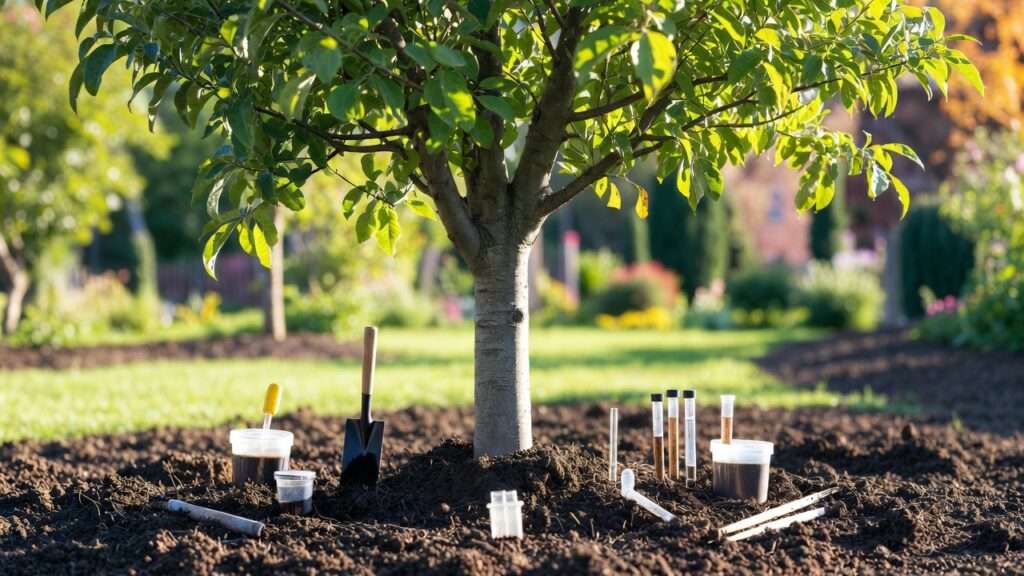
Picture this: You’ve carefully selected a stunning maple or majestic oak, dug the perfect hole, watered it lovingly… only to watch it struggle with yellowing leaves, slow growth, or brittle branches year after year. 😔 The heartbreaking truth? Most tree problems start underground—in the soil.
Soil testing for optimal tree growth is the single most powerful step you can take to ensure your trees thrive, not just survive. By revealing pH levels, nutrient availability, organic matter content, and hidden issues like compaction or poor drainage, a simple soil test empowers you to create the ideal environment for vigorous roots, lush foliage, and long-term resilience. 🌱
In this in-depth, expert-level guide, we’ll cover everything from why testing is non-negotiable to step-by-step sampling, result interpretation, smart amendments, and species matching. Drawing from university extension research (like NC State, Penn State, UMN, and more), arborist best practices, and real-world tree care insights, this resource goes beyond basic advice to deliver skyscraper-level value. Whether you’re a homeowner planting a backyard grove, a gardener adding fruit trees, or a landscape enthusiast aiming for decades of beauty, you’ll walk away ready to give your trees the foundation they deserve. Let’s get digging! 🔍💚
Why Soil Testing Is Critical for Tree Success
Trees aren’t annual flowers—they’re lifelong investments that can live 50–200+ years. Getting the soil wrong early leads to chronic stress, vulnerability to pests/diseases, and premature decline. Proper soil testing for optimal tree growth prevents these issues and maximizes potential.
Key benefits include:
- Spotting nutrient deficiencies early (e.g., low phosphorus stunts root development, low potassium weakens drought resistance).
- Avoiding over-fertilization, which burns roots, pollutes waterways, and wastes money.
- Matching species to site conditions for 90%+ survival rates instead of guesswork.
- Uncovering problems like extreme pH causing nutrient lockout, compaction limiting oxygen, or poor drainage inviting root rot.
Expert Insight 🌟: University extensions (e.g., Penn State, UMN) and ISA-certified arborists emphasize soil testing before any major planting or when trees show decline. Skipping it is like diagnosing a health issue without bloodwork—treatments become trial-and-error. Reliable data leads to targeted fixes and healthier, faster-growing trees!
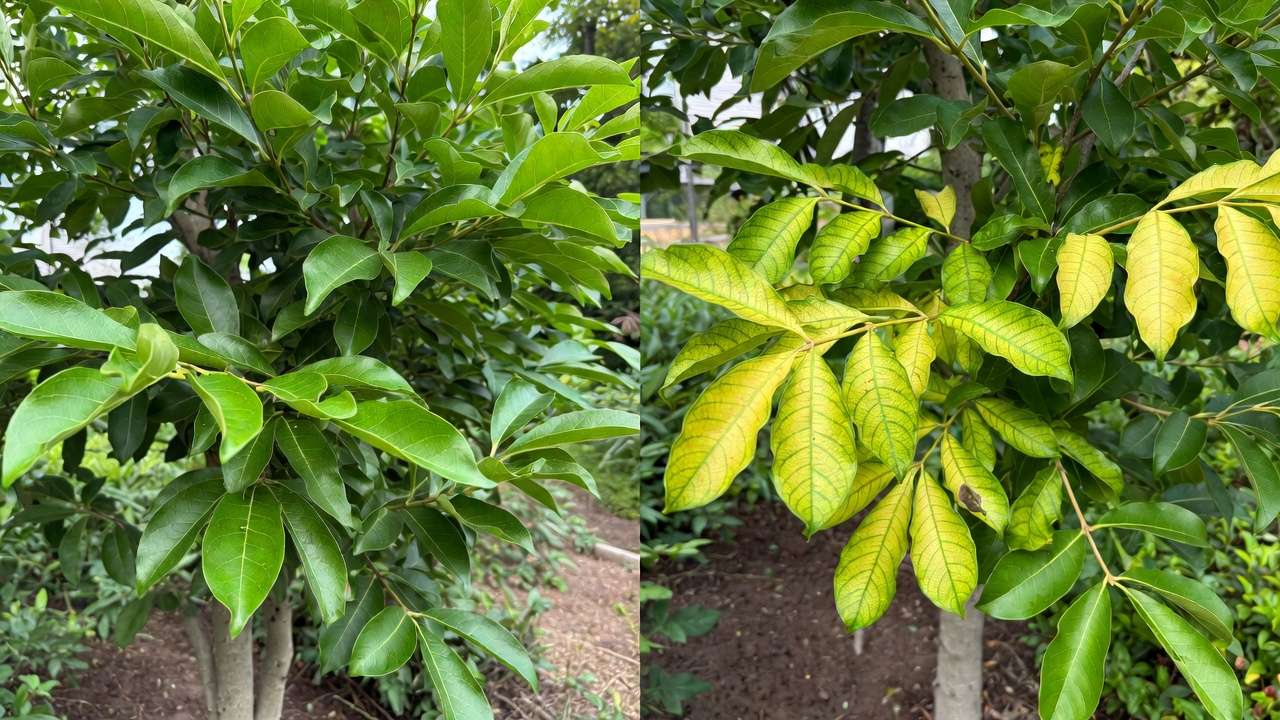
Common signs your trees need testing: leaf chlorosis (yellowing between veins), stunted growth, dieback, sparse canopy, or frequent pest attacks. These often trace back to imbalanced soil rather than surface symptoms alone.
Understanding Key Soil Factors That Influence Tree Growth
Healthy tree growth depends on balanced physical, chemical, and biological soil properties. Here’s what matters most:
Soil pH: The Master Controller 🔬
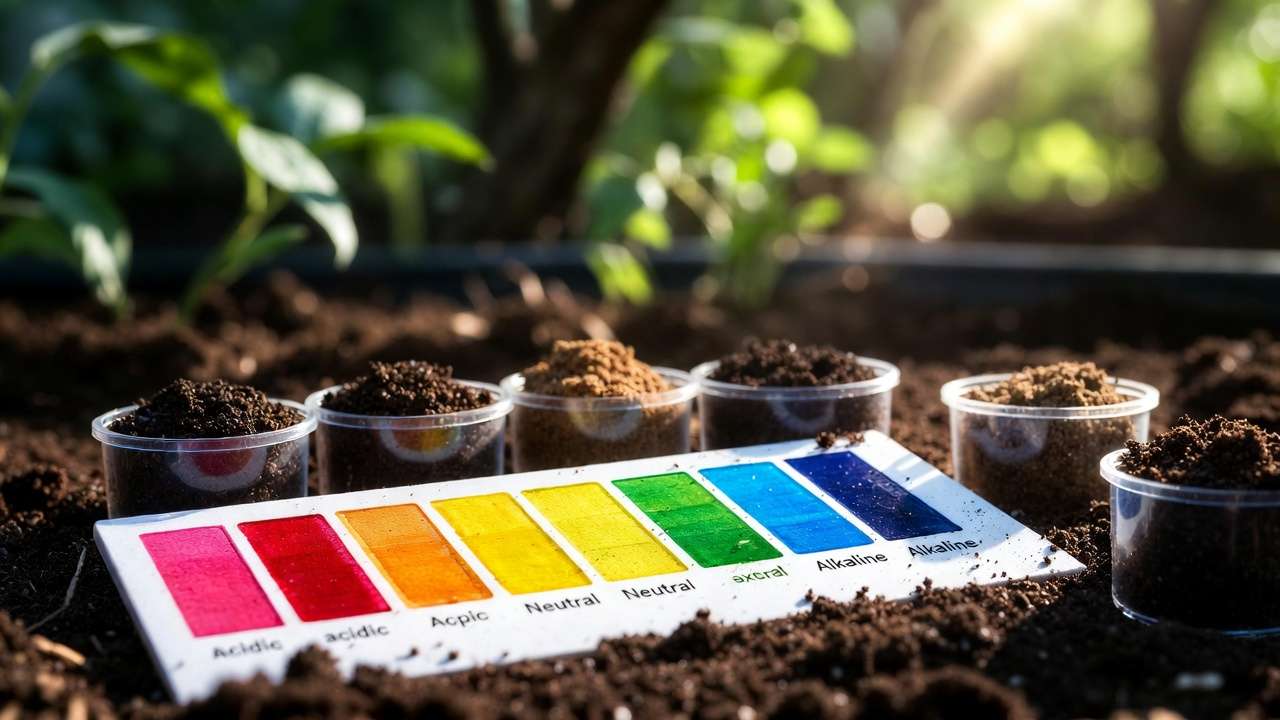
Soil pH measures acidity/alkalinity (scale 0–14; 7 is neutral). It controls nutrient availability—most trees prefer slightly acidic to neutral conditions (pH 6.0–7.0) where essential elements are readily absorbed.
- Too acidic (pH <5.5): Aluminum/manganese toxicity, phosphorus lockup → stunted roots, poor establishment.
- Too alkaline (pH >7.5): Iron, manganese, zinc deficiencies → interveinal chlorosis (yellow leaves with green veins), especially in acid-loving species.
Quick Reference Table: Preferred pH Ranges for Popular Trees (based on extension services like Mississippi State, Penn State, UF/IFAS)
- Acid-loving (4.5–6.0): Pines (loblolly, longleaf, white), spruces, dogwoods, magnolias, blueberries (as understory) 🌲
- Slightly acidic to neutral (6.0–7.0): Red maple, northern red oak, cherrybark oak, fruit trees (apples 5.5–6.5, pears/peaches 6.0–7.0), serviceberry
- Tolerant of neutral/alkaline (6.5–7.5+): Live oak, post oak, eastern redcedar, hackberry, lindens
Many trees tolerate wider ranges, but optimal growth occurs in preferred zones. Test first—don’t assume!
Essential Nutrients for Strong Tree Development
Trees need a balanced diet:
- Macronutrients (N-P-K): Nitrogen for foliage and vigor, Phosphorus for root establishment/energy, Potassium for stress resistance (drought, disease).
- Secondary nutrients: Calcium (cell walls), Magnesium (chlorophyll), Sulfur (proteins/enzymes).
- Micronutrients: Iron (chlorophyll production), Zinc, Manganese, Boron, Copper—small amounts, big impact.
Organic matter (aim 3–6%+) improves nutrient holding, water retention, and microbial life. Cation Exchange Capacity (CEC) indicates how well soil retains nutrients—higher in clay/organic soils.
Other Vital Soil Properties
- Texture (sand/silt/clay): Sandy drains fast (risk drought), clay holds water (risk rot). Loam is ideal.
- Compaction: Urban soils often suffer—roots can’t penetrate, oxygen limited → reduced growth, stress susceptibility.
- Drainage & structure: Poor drainage causes root rot; good porosity supports mycorrhizal fungi partnerships.
Addressing these holistically via testing sets trees up for success.
How to Properly Collect Soil Samples for Trees
Accurate results start with proper sampling. Follow these arborist-recommended steps (from UMN Extension, OSU, UConn):
- Timing — Best in fall (for spring planting) or 2–8 weeks before major work. Avoid right after rain/fertilizer. ⏰
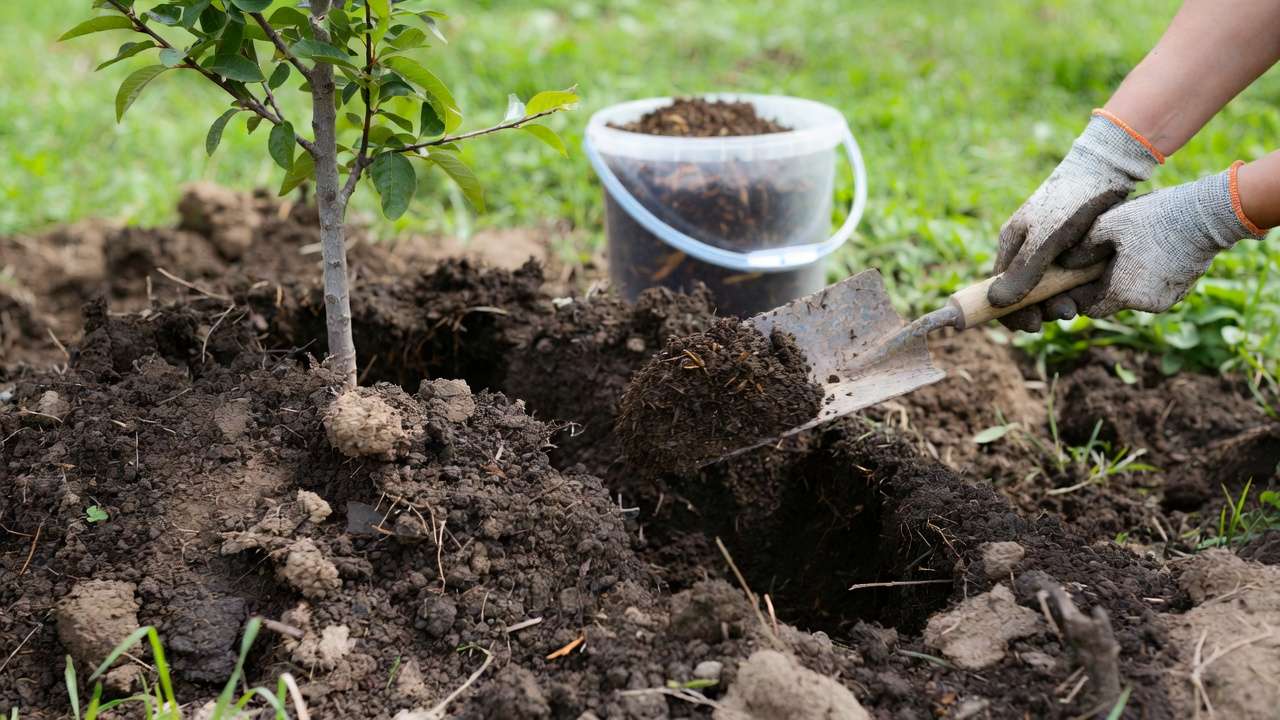
- Tools — Clean spade/trowel/auger (no metal contamination), plastic bucket, gloves.
- Depth — 6–12 inches (feeder root zone); 8–10 inches common for trees/shrubs.
- Method
- Zigzag or grid pattern across planting area (future root zone, not just hole).
- Collect 10–20 subsamples, mix thoroughly in bucket.
- Remove debris, rocks, roots.
- Take 1–2 cups composite in clean bag/box.
- For multiple zones — Separate samples (e.g., lawn vs. bed, front vs. back). Label clearly!
Pro Tip ✅: Use extension-provided boxes/kits for best accuracy. Avoid areas near roads, buildings, or recent disturbances.
Choosing the Right Soil Testing Method
Not all tests are created equal—choose based on your goals, budget, and precision needs.
Option 1: Home Soil Test Kits
These are fast, affordable tools (often $10–30) available at garden centers or online (e.g., Rapitest, Luster Leaf, or digital probes).
- Pros: Instant results for pH, basic N-P-K, sometimes moisture/EC. Great for quick checks or small-scale monitoring.
- Cons: Limited accuracy for micronutrients, organic matter, or CEC. Results can vary by user error or kit quality.
Best for: Preliminary screening or established trees showing minor issues.
Option 2: Professional Lab Testing (Highly Recommended)
Send samples to university extension labs (e.g., University of Minnesota Soil Testing Lab, NC State, Rutgers, UConn, UNH, or state ag departments) or certified private labs.
- Pros: Comprehensive analysis including pH, macro/micro nutrients, organic matter %, CEC, texture (sometimes), and—crucially—customized amendment recommendations tailored to trees/shrubs. Reports often include lime/fertilizer rates in lbs/1000 sq ft or per tree.
- Cost: Typically $15–40 per sample (many extensions offer discounted homeowner rates; some free in off-peak seasons).
- Turnaround: 1–4 weeks.
Expert Recommendation 🌟: For new plantings, major landscaping, or diagnosing decline, always go lab. Home kits miss subtle imbalances that cause long-term tree stress. Check your local cooperative extension office—they often provide kits, instructions, and interpretation help at low or no cost!
Bonus: Many labs now offer “urban/landscape” or “tree/shrub” specific packages.
Interpreting Your Soil Test Results Like a Pro
Lab reports can look intimidating at first, but they follow a standard format: results, interpretations (low/optimum/high), and recommendations. Here’s how to read them confidently (drawing from guides like OSU Extension EC-1478, UMD Extension, and others):
- pH & Buffer pH/Lime Recommendation — Shows current pH and how much lime (to raise) or sulfur (to lower) is needed to reach target range. Apply gradually—lime takes 3–12 months to fully react.
- Nutrient Levels — Listed as ppm (parts per million) or lbs/acre, with ratings:
- Low/Deficient → Add fertilizer (e.g., low P → bone meal or rock phosphate for roots).
- Optimum → Maintain only.
- High/Excess → Avoid adding; risk of toxicity or imbalance.
- Organic Matter % — Target 3–6% for trees (higher = better water/nutrient holding, microbial activity). Low? Add compost annually.
- CEC (Cation Exchange Capacity) — Measures nutrient-holding power (meq/100g). Sandy soils <5–10; loamy/clay >15–20. Low CEC needs frequent light feeding.
- Red Flags — High soluble salts (>2–4 mmhos/cm), excessive sodium, heavy metals (urban sites), or extreme pH causing lockout.

Real-World Example 📊: Test shows pH 5.2 (too low), low magnesium, medium phosphorus, low potassium.
- Recommendation: Apply dolomitic lime (adds Mg + raises pH) at 50–80 lbs/1000 sq ft.
- Add potassium sulfate for K boost.
- Wait 6 months, re-test before planting acid-sensitive maples.
Use the report’s built-in calculator or extension advisor for exact rates—over-applying harms more than helps!
How to Amend Your Soil Based on Test Results
Amendments should be targeted, gradual, and tree-friendly. Focus on organics for long-term health.
Adjusting pH
- To raise pH (acidic → neutral): Calcitic lime (Ca only) or dolomitic lime (Ca + Mg). Apply in fall; incorporate lightly or top-dress under mulch.
- To lower pH (alkaline → neutral): Elemental sulfur (slow-acting, microbial conversion), iron sulfate (faster but risk burn), or acidifying organics (pine needles, peat, coffee grounds in moderation).
Apply in zones around drip line, not against trunk.
Adding Nutrients
- Nitrogen — Slow-release organics (composted manure, blood meal, feather meal) or tree-specific fertilizers (e.g., 10-10-10 or 16-4-8 balanced). Avoid high-N quick-release on young trees (promotes weak, leggy growth).
- Phosphorus — Bone meal, rock phosphate (slow), or superphosphate. Crucial for new root growth.
- Potassium — Greensand, wood ash (also raises pH), or sulfate of potash. Boosts drought/disease resistance.
- Micronutrients — Chelated iron sprays for chlorosis in high-pH soils; foliar zinc/manganese if deficient.
Best Practice ✅: Use organic sources first—build biology over chemistry. Trees form mycorrhizal partnerships; harsh synthetics can disrupt them.
Improving Structure & Biology
- Incorporate 2–4 inches compost or aged manure into top 6–12 inches (avoid deep tilling—damages structure).
- Mulch 3–4 inches deep (wood chips, bark) in wide rings—retains moisture, moderates temperature, feeds microbes.
- Avoid compaction: No heavy equipment near roots; aerate if needed.
- Encourage earthworms/mycorrhizae: Minimal disturbance, diverse plantings.
Timeline Tip ⏳: Major amendments (lime, heavy organics) 6–12 months before planting. Nutrient tweaks closer to planting or as top-dress for established trees.
Common Mistakes to Avoid When Soil Testing for Trees
Even experts slip up—here are pitfalls to dodge:
- Sampling too shallow (misses subsoil compaction/nutrients).
- Collecting from one spot only (soil varies wildly—even 10 ft apart!).
- Testing wet/muddy soil (distorts readings).
- Ignoring drainage: Do a percolation test (dig hole, fill with water—should drain 1 inch/hour).
- Planting immediately after heavy lime/sulfur (wait for reaction).
- Over-fertilizing based on “low” ratings without considering tree age/species.
- Using lawn/veggie recommendations for trees—they need less N, more patience!
Tree Species Selection Based on Your Soil Test
The best “fix” is often choosing the right tree for your soil—no amendment beats genetic fit!
Examples (from UConn, Old Farmer’s Almanac, extension charts):
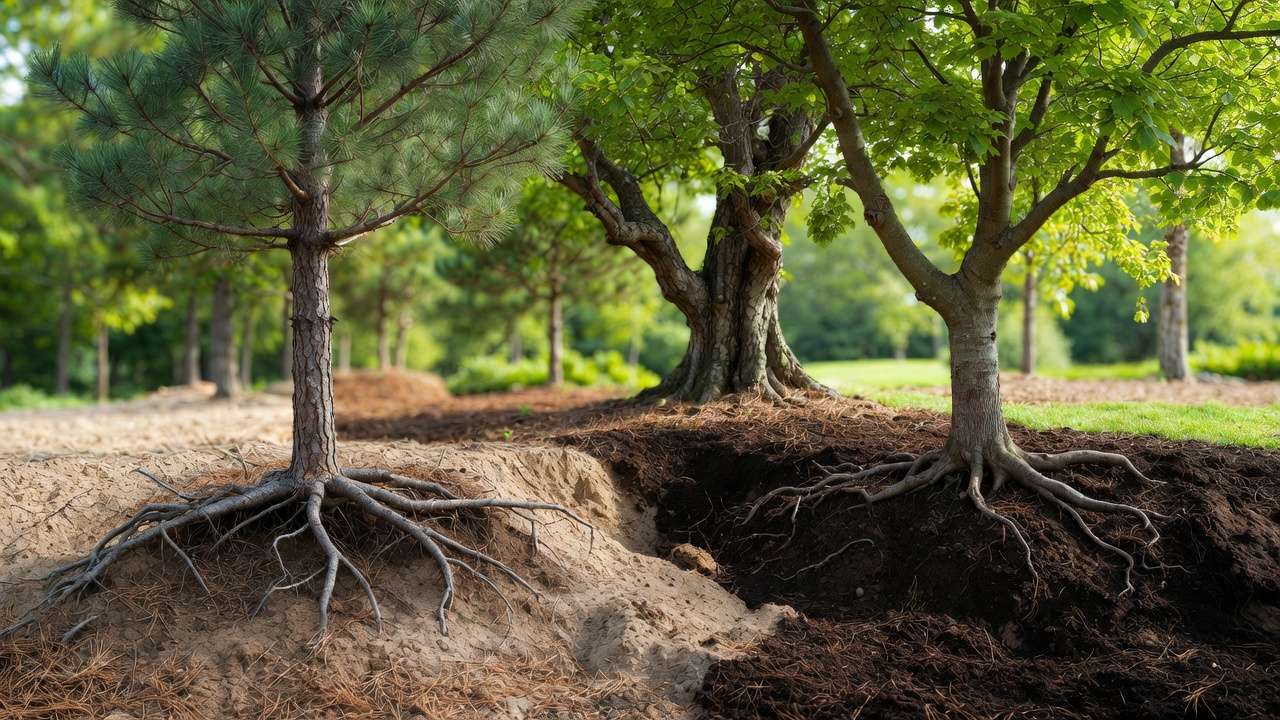
- Acid soils (pH 4.5–6.0): Eastern white pine, Colorado blue spruce, flowering dogwood, southern magnolia, river birch, pin oak.
- Neutral (6.0–7.0): Red maple, northern red oak, sugar maple, serviceberry, crabapple, most fruit trees (apples 6.0–6.5, cherries/peaches 6.0–7.0).
- Alkaline-tolerant (6.5–7.5+): Bur oak, white oak, eastern redcedar, hackberry, honey locust, linden, ginkgo.
If soil is poor/drained badly: Bald cypress, willow, red maple (adaptable). Test first, then select—success rates soar!
Maintaining Optimal Soil After Planting
Trees keep growing—so soil care continues:
- Re-test every 3–5 years (or sooner if decline appears).
- Maintain mulch rings (keeps roots cool/moist, suppresses weeds).
- Water deeply/infrequently to encourage deep roots; avoid overwatering (leaches nutrients).
- Monitor leaves seasonally: Yellowing? Vein patterns? → Possible imbalance—re-test.
- Minimal fertilization after year 2–3 unless test shows need; established trees often get enough from organics.
Frequently Asked Questions (FAQs) ❓
How often should I test soil for established trees? Every 3–5 years, or immediately if you see yellowing, sparse growth, dieback, or after major site disturbance.
Can I use the same test for fruit vs. shade trees? Yes—the basics apply—but fruit trees often benefit from slightly higher P/K for blooms/fruit set.
What if my soil is terrible (e.g., heavy clay, very sandy, contaminated)—should I give up? Never! Amend gradually, choose tolerant species, or use raised mounds/berms. Many urban trees thrive despite challenges.
Is compost enough instead of synthetic fertilizer? Compost is fantastic for biology and slow nutrients, but test first—pure compost may not correct severe deficiencies quickly enough for new plantings.
Do urban soils need special tests? Yes—request heavy metals/lead screening if near old homes/roads. Many extensions offer it.
Final Thoughts: Invest in Soil Testing for Lifelong Tree Rewards
Mastering soil testing for optimal tree growth transforms guesswork into science-backed success. You’re not just planting a tree—you’re building a resilient, carbon-sequestering, wildlife-supporting legacy that beautifies your space and fights climate change for generations. 🌍💚
Start small: Order a kit from your local extension today, collect samples this season, and apply the insights. Your future self (and your towering, healthy trees) will thank you!
Have you tested your soil recently? Drop your results, tree species, or success stories in the comments—we’re here to help troubleshoot and celebrate wins! 🚀🌿











