
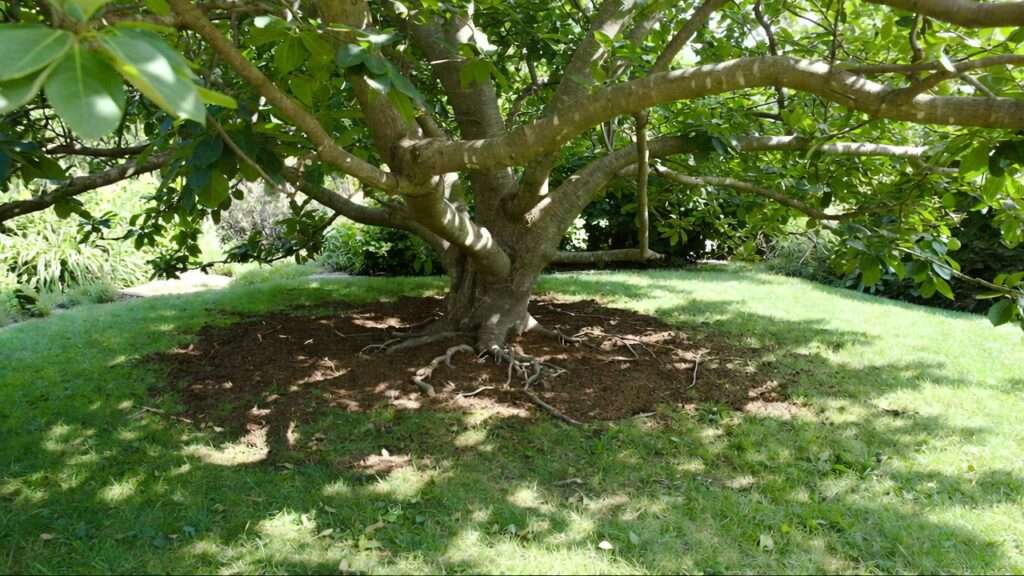
Have you ever looked at your beautiful old oak, maple, or pine and noticed those gnarled surface roots snaking across the lawn, bare patches where grass refuses to grow, or slight dips and bumps that make mowing a nightmare? 😩 You’re not alone — many homeowners with mature trees face this exact dilemma. You want to improve the soil, level the ground, cover those exposed roots, and give your tree a health boost… but the thought of accidentally harming those precious roots (or worse, killing the tree!) stops you cold. ⚠️
The good news? Topdressing soil around large trees is not only possible — it’s one of the smartest, most gentle ways to enhance soil health, improve moisture retention, reduce compaction, and create a thriving landscape under your tree’s canopy. When done correctly, it supports the tree’s long-term vitality without risking suffocation, rot, or stress. Done incorrectly? It can lead to oxygen-starved roots, fungal issues, and decline over time. 😔
In this in-depth guide — drawing from arborist best practices, university extension recommendations, and decades of real-world tree care experience — I’ll walk you through everything you need to know to topdress safely and effectively. Whether you’re dealing with a 50-year-old shade tree or a cluster of large natives, you’ll learn the right materials, precise techniques, common pitfalls to dodge, and long-term care tips to keep your trees happy and your yard gorgeous for decades. Let’s protect those giants while giving them the TLC they deserve! 💚
Why Topdress Around Large Trees? The Real Benefits 🌱
Topdressing isn’t just about aesthetics — it’s a proven, low-impact way to rejuvenate the soil environment around mature trees, where roots often struggle due to years of compaction, nutrient depletion, foot traffic, or mower damage.
Here are the key advantages:
- Boosts soil organic matter and microbial life 🦠 — Adding high-quality compost introduces beneficial microbes, fungi, and earthworms that break down organic material, improving nutrient cycling and soil structure over time.
- Gently covers exposed surface roots 🛡️ — Thin layers hide tripping hazards and protect roots from lawn mower blades, string trimmers, and drying out.
- Levels minor uneven areas 📏 — Smooths out shallow depressions or mounds for easier mowing and a tidier look without major excavation.
- Enhances nutrient availability naturally 🌿 — Organic materials release slow-release nutrients, reducing the need for chemical fertilizers that can harm root systems.
- Improves water infiltration and retention 💧 — Better soil structure means less runoff and more moisture available during dry spells — crucial for large trees with extensive but shallow feeder roots.
- Reduces soil compaction 🚜 — Organic additions help loosen hard-packed ground caused by years of foot traffic or equipment, allowing roots to breathe and grow.
University extension services (like those from Penn State, Texas A&M, and others) consistently highlight that gradual organic topdressing supports healthier root zones compared to heavy soil fills or synthetic amendments. Your large tree is a long-lived investment — topdressing helps it thrive rather than just survive. 🌟
Understanding Tree Roots: Why “Safe” Matters Most ⚠️
Before you grab a shovel, let’s talk tree biology — because knowledge here prevents disaster.
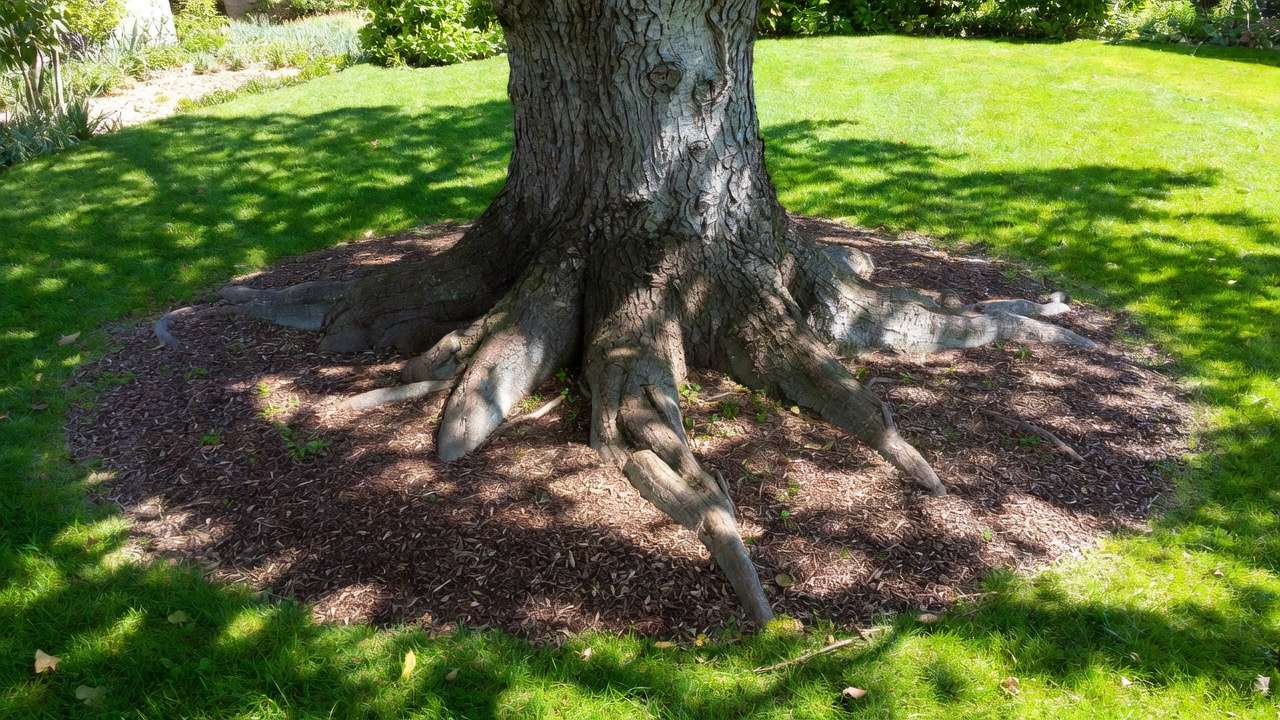
Most feeder roots (the tiny ones that absorb water and nutrients) live in the top 12–18 inches (30–45 cm) of soil. These roots need oxygen to function, which is why heavy, compacted, or overly deep additions can suffocate them. Large trees also have a critical trunk flare (or root collar) — the widened area where the trunk transitions into major roots. Burying this flare with soil or mulch invites rot, girdling roots, and decay. 🍂
Common risks of improper topdressing:
- Reduced oxygen exchange → weakened tree vigor and increased disease susceptibility.
- Excess moisture trapped against the trunk → fungal infections and stem decay.
- Encouraging circling/girdling roots → long-term structural instability.
- Stress signs appearing years later: thinning canopy, dieback, yellowing leaves, or premature leaf drop. 😷
Myth busted: You don’t have to avoid all soil additions around mature trees. Thin, organic-focused layers are safe and beneficial — as long as you never cover the trunk flare and limit depth to ½–1 inch per application. Less really is more! 🚫
Best Materials for Topdressing Large Trees (Ranked & Compared) 🏆
Choosing the right material is half the battle. The goal: improve soil without compacting it or introducing poor-draining elements.
Top recommendations:
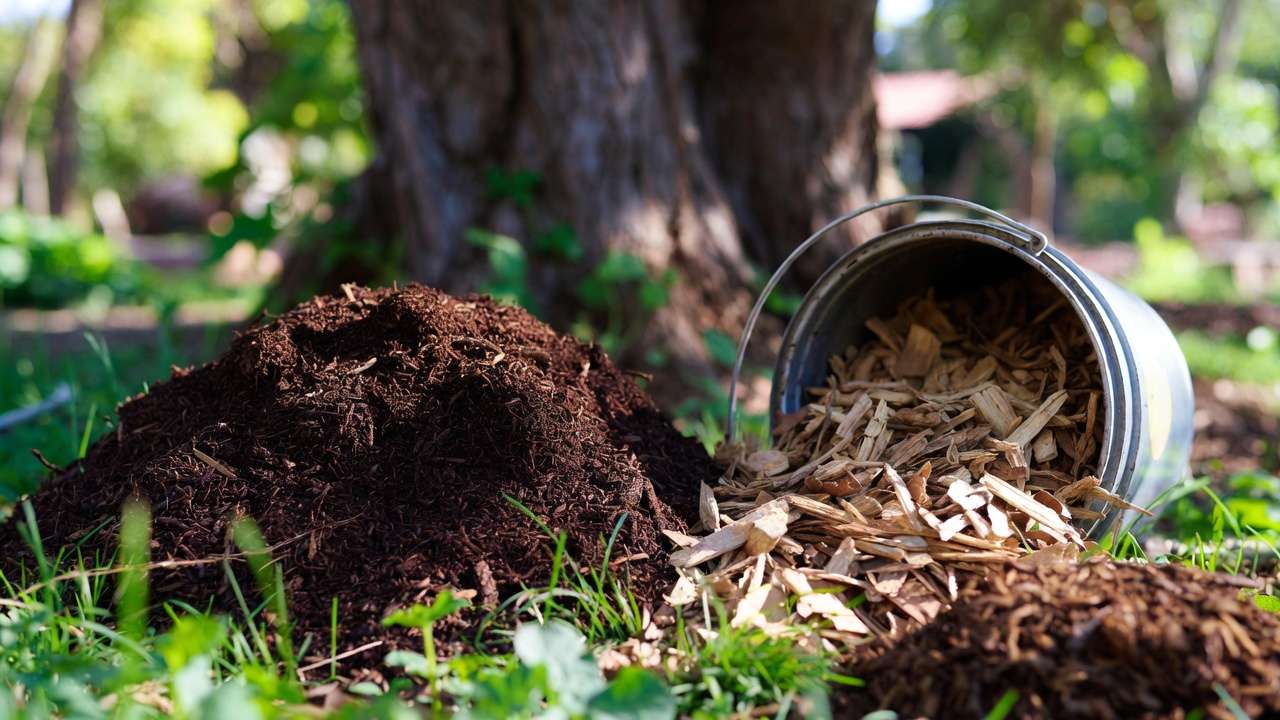
- High-quality, well-decomposed compost 🌟 — The gold standard. Look for screened, dark, earthy-smelling compost (no fresh manure odor). Rich in microbes and nutrients, it enhances structure without smothering.
- Compost + sand/loam blend ⚖️ — Ideal for lawns under trees. A 70/30 or 50/50 mix (compost with coarse sand or topsoil) settles well, levels gently, and improves drainage on clay soils.
- Fine arborist wood chips or shredded bark 🌲 — Excellent as a follow-up mulch layer after compost. Slow nutrient release, suppresses weeds, and retains moisture.
- Leaf mold or aged fallen leaves 🍁 — Free backyard option! Decomposed leaves add organic matter without introducing foreign materials.
- Aged manure (if composted properly) — Nutrient boost, but ensure it’s fully broken down to avoid burning roots.
Materials to strictly avoid ❌:
- Heavy clay topsoil (worsens compaction).
- Fresh manure or unfinished compost (burns roots, attracts pests).
- Pure sand (poor nutrient holding).
- Anything that forms a crust or blocks water/air.
Pro tip: Test a small batch first. Source from local nurseries, municipal composting programs, or make your own for the best quality and sustainability. ♻️
Step-by-Step Guide: How to Safely Topdress (Detailed Process) 📋
Preparation Phase 🛠️
- Assess your tree — Locate the trunk flare (use a trowel to gently remove soil until you see the flare). Check for compaction (try pushing a screwdriver into the soil — hard resistance means it’s compacted).
- Define the area — Work out to the drip line (canopy edge) or at least a 6–10 ft radius for best results.
- Clear the zone — Rake away leaves, twigs, old mulch, and debris by hand. Avoid power tools near roots.

Application Steps (Safe Technique) 🏗️
- Apply thin layers only — Start with ½ inch maximum (about 1–2 cm). You can add another light layer next year if needed — never more than 1 inch at once.
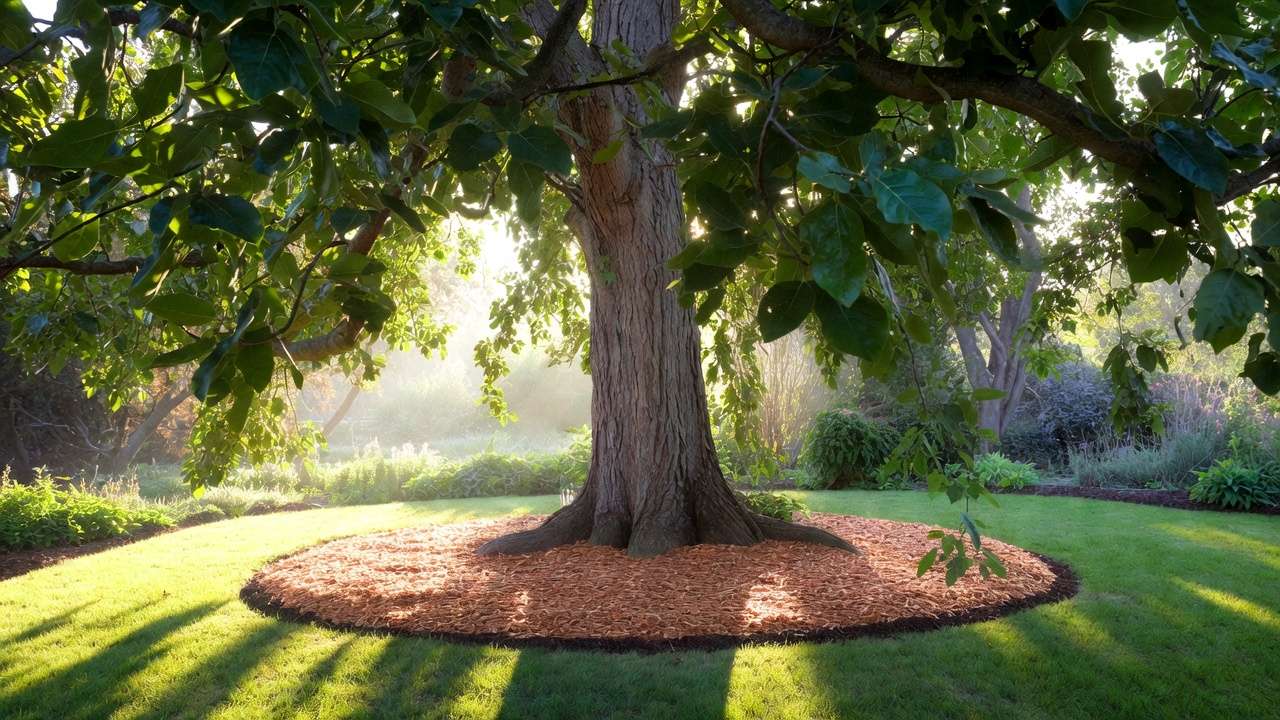
- Keep the trunk flare clear — Maintain a 6–12 inch (15–30 cm) mulch/soil-free zone around the base to prevent rot.
- Spread evenly — Use a shovel or rake to broadcast material lightly over the root zone. Work it gently between roots with the back of a rake — no tilling!
- Cover exposed roots gradually — Add just enough to hide them partially (½ inch max per go). Roots will adjust upward slowly.
- Water lightly — A gentle soak helps settle the material without washing it away. 💦
- Finish with mulch — Apply 2–3 inches of wood chips over the compost (again, keeping it away from the trunk). This locks in moisture and protects the new layer.
Advanced Options for Tough Cases 🔧
- Severe compaction? Try vertical mulching: Drill or auger small holes (6–12 inches deep) in the root zone, fill with compost, and cover. This aerates without broad disturbance. 🕳️
- Need more leveling? Build up gradually over 2–3 seasons rather than all at once.
Common Mistakes to Avoid (With Real-World Examples) ❌
Even experienced gardeners can slip up when topdressing around large trees. Here are the most frequent (and costly) errors — plus how to sidestep them entirely.
- Adding too much material at one time 📏 The #1 killer mistake. Dumping 2–4 inches of soil or compost in one go smothers feeder roots by cutting off oxygen. Real-world example: A homeowner in a suburban neighborhood added 3 inches of topsoil to level their yard under a 60-year-old maple — within two seasons the tree showed severe canopy thinning and branch dieback. Recovery took years of careful root-zone aeration.
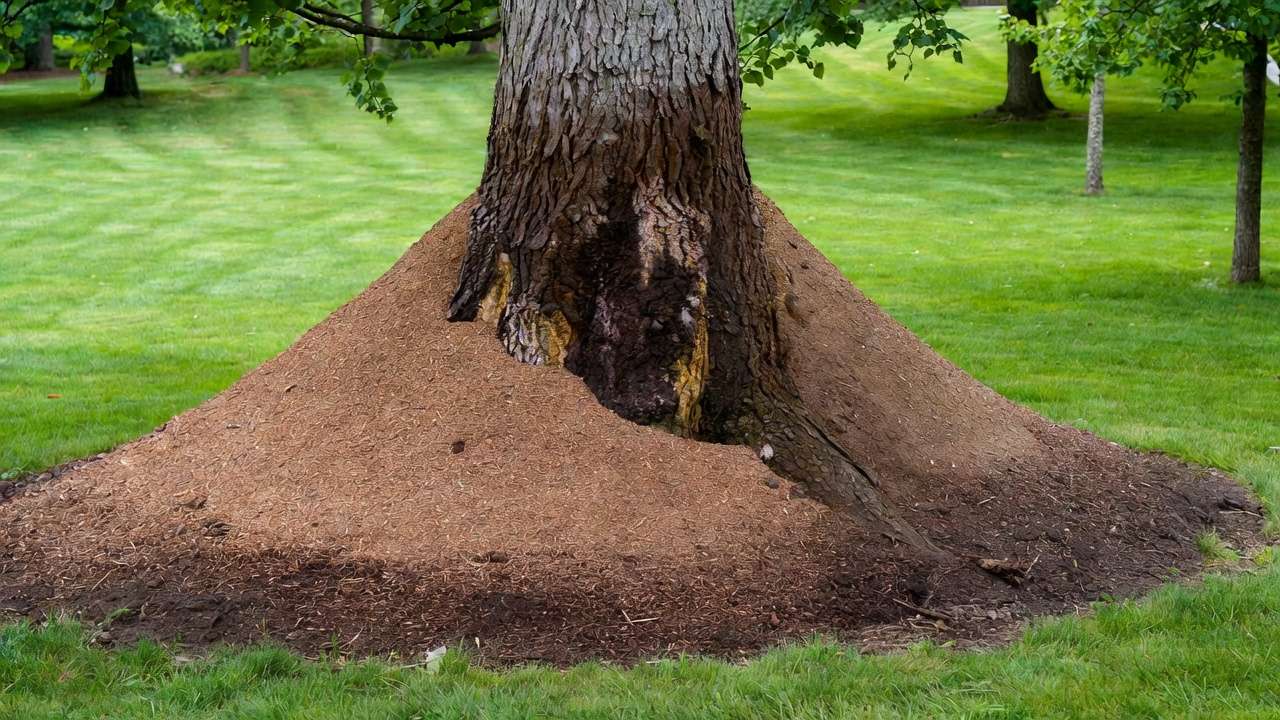
- Creating a “volcano” around the trunk 🌋 Piling material against the trunk flare (or even worse, mounding it like a volcano) traps moisture and invites decay fungi. This is one of the most photographed mistakes arborists see. Always keep the flare completely exposed — think “donut hole” in the center.
- Using heavy, poorly draining materials 🪨 Straight clay topsoil, construction fill, or dense bagged “garden soil” compacts quickly and blocks water/air movement. Example: A client used inexpensive bagged topsoil under live oaks in Texas — within 18 months the soil had hardened into a concrete-like layer, and root decline followed.
- Ignoring or burying the trunk flare 😷 Many people don’t even realize the flare exists until it’s too late. Once buried, moisture collects and rot begins silently. Signs appear years later as the tree becomes unstable.
- Topdressing thick turf without preparation 🌿 Spreading compost over dense grass often results in uneven settling and smothered turf. Solution: Lightly aerate or dethatch first, or accept that grass may thin temporarily while the tree benefits.
- Doing it during drought or extreme heat ☀️ Freshly added material can dry out quickly and stress already thirsty roots. Best timing is early spring (before full leaf-out) or fall (after leaf drop).
Expert consensus from ISA-certified arborists and extension services: “When in doubt, do less.” Thin applications over multiple years almost always outperform a single heavy one.
Aftercare & Long-Term Maintenance Tips 🌿
Topdressing is not a one-and-done task — it’s the beginning of smarter tree care. Follow these practices to maximize benefits and spot trouble early.
- Water wisely after application 💧 Give a gentle, deep watering immediately after spreading (about ½–1 inch), then return to infrequent, deep watering (1–2 inches every 7–14 days during dry periods). This encourages roots to grow downward rather than staying shallow.
- Monitor for stress signals 🌡️ Watch for wilting leaves (even with adequate water), smaller-than-normal leaf size, early fall color, branch dieback, or mushrooms/fungi near the base. Any of these warrant a closer look — or a call to a certified arborist.
- Refresh annually or biennially 🔄 Once you’ve established the routine, plan to add another light ¼–½ inch layer every 1–2 years, always paired with fresh mulch. This gradual approach mimics natural forest floor buildup.
- Maintain mulch properly 🌲 Keep 2–4 inches of wood chips or shredded bark over the topdressed area (replenish yearly). Mulch moderates soil temperature, suppresses weeds, and slowly adds more organic matter as it breaks down.
- Consider complementary strategies 🌸
- Plant shade-tolerant groundcovers (pachysandra, vinca, sweet woodruff, or native ferns) instead of fighting grass under dense canopies.
- Reduce foot traffic with stepping stones or paths.
- Avoid string-trimmer damage by maintaining a mulch ring.
- When to call a professional 👩🔧 If the tree is very large (>30-inch trunk diameter), shows decline, has major exposed roots, or if you’re unsure about compaction severity — bring in an ISA Certified Arborist. They can use tools like air spades for safe de-compaction or root-zone diagnostics.
FAQs: Topdressing Soil Around Large Trees ❓
Can I topdress in any season? Best times are early spring (March–May, before full leaf-out) or fall (September–November, after leaves drop). Avoid summer heat/drought and frozen winter ground.
How much material does a large tree need? Rough estimate: For a 20–30 ft canopy diameter, 1 cubic yard of compost covers about ½ inch deep over the root zone. Start with half that amount and observe.
Will topdressing kill my lawn? It may temporarily thin grass (especially if >½ inch is added), but healthy turf usually recovers. Use a compost/sand blend and overseed with shade-tolerant grass varieties if needed.
Is topdressing the same as mulching? No — topdressing adds soil-improving material directly to the soil surface; mulching places protective organic cover on top. Most experts do both: compost first, then mulch.
What if roots are very raised or exposed? Cover gradually (¼–½ inch per year). Never attempt to bury large structural roots — they need to stay near the surface. Consider building a shallow raised bed around (but not touching) the trunk flare if aesthetics are a priority.
Can I use regular garden soil from a bag? Avoid it unless it’s specifically a compost-heavy topdressing blend. Most bagged “topsoil” is too dense and compacts easily.
Conclusion: Transform Your Yard While Protecting Your Trees 🌟
Topdressing soil around large trees — when done with care, thin layers, high-quality organics, and respect for the trunk flare — is one of the kindest, most effective ways to repay these gentle giants for the shade, beauty, and property value they provide.
You don’t need heavy equipment, expensive treatments, or risky grading. Just patience, the right materials, and a light touch. Start small this season: assess one tree, apply a thin ½-inch layer of good compost, top with mulch, and watch how the soil (and the tree) responds over the coming months and years.
Your large trees have likely stood watch over your home for decades — with this gentle approach, they can thrive for decades more. Happy topdressing, and enjoy the healthier, more vibrant landscape you’re helping create! 🌳💚











