
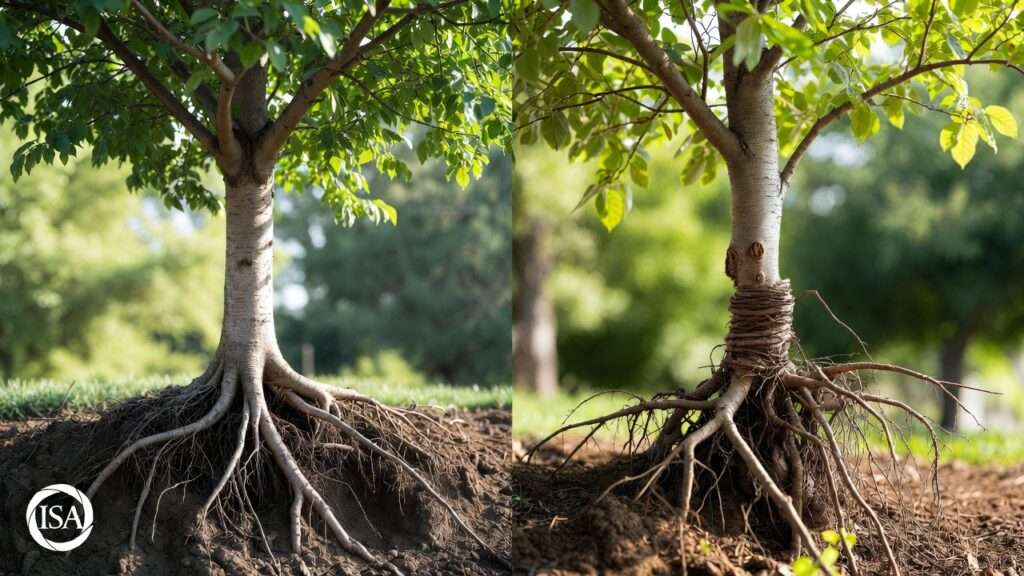
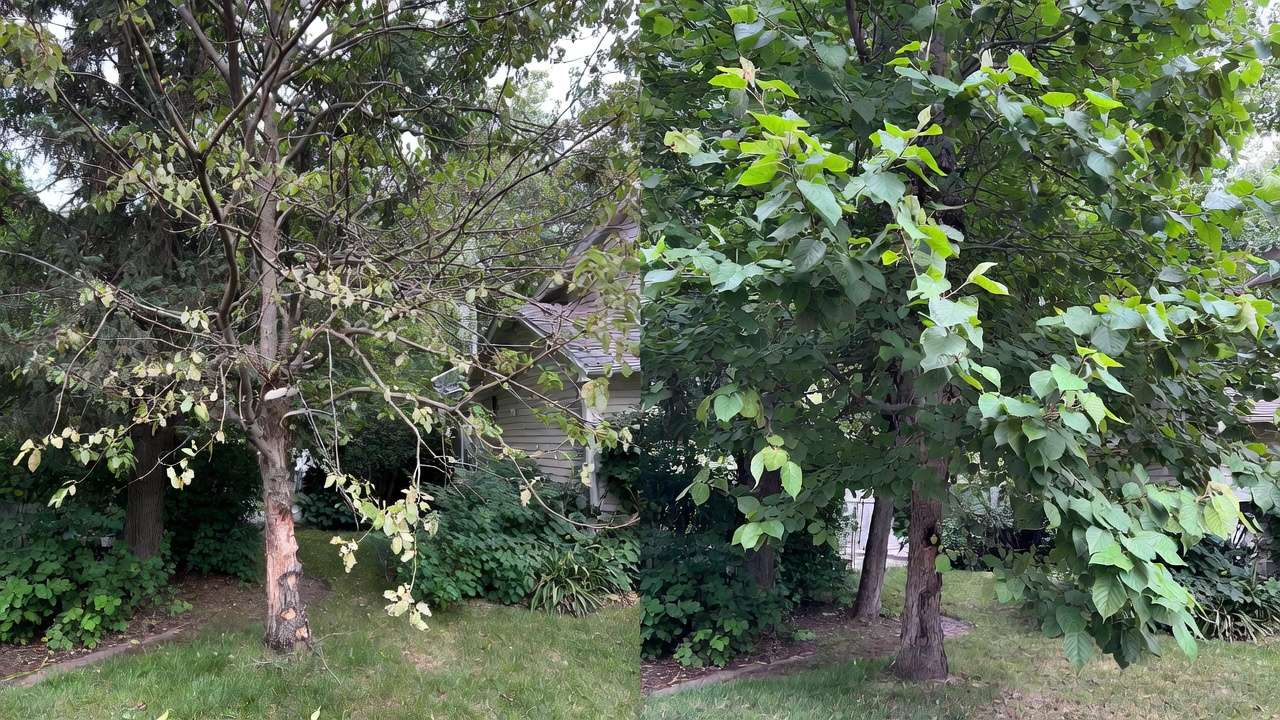
Imagine planting a stunning red maple or graceful linden in your yard, watching it grow beautifully for years… only to notice one day that its leaves are smaller, turning yellow early, and branches are dying from the top down. 😱 No obvious pests, no disease, no drought stress. The real culprit? A hidden enemy silently strangling your tree from below: girdling roots.
These stem girdling roots (often called SGRs) wrap around the trunk base like a noose, slowly compressing the vital vascular tissues that transport water, nutrients, and sugars. Over time — typically 5–20 years — this restriction starves the canopy, weakens structure, and can lead to premature death or sudden failure during a storm. 😔
The good news? If caught early, many trees can recover dramatically with proper intervention. As a tree care expert drawing from arborist best practices (including guidance from the International Society of Arboriculture, university extensions like UMD and Missouri Botanical Garden, and decades of field experience), this comprehensive guide will walk you through everything: spotting the subtle signs, safe treatment options (DIY for minor cases, pro for serious ones), recovery support, and — most crucially — prevention so you never face this nightmare again. 🌿
Whether you’re a homeowner worried about a declining landscape tree, a new gardener, or a landscaper aiming to protect client investments, you’ll find actionable steps here to potentially save your tree and add decades to its life. Let’s dive in and rescue that strangled beauty before it’s too late!
What Are Girdling Roots and Why Do They Form? 🤔
Girdling roots are woody roots that grow laterally or circularly around the base of a tree’s trunk (or sometimes other major roots), eventually pressing inward and constricting the phloem and cambium layers. This choking effect disrupts downward sugar transport from leaves and upward water/nutrient flow from roots — essentially starving and dehydrating the tree from the inside out. 🌲🚫
Unlike surface roots that girdle each other harmlessly, stem girdling roots (the dangerous kind) target the trunk flare area, where the tree transitions from stem to root system. Over years, the compression can flatten the trunk base, eliminate natural flare, and create instability.
Common causes include:
- Improper planting depth — burying the root flare too deep (a top culprit!) forces roots to grow upward and circle in search of oxygen.
- Nursery issues — container-grown trees often develop circling roots; if not corrected at planting, they continue the pattern.
- Poor planting technique — narrow holes, volcano mulching (piling mulch against the trunk), or soil compaction encourage roots to turn inward instead of spreading outward.
- Mechanical injury or environmental stress that redirects root growth.
Certain species are far more prone due to their root habits and growth patterns: red and sugar maples, Norway maples, lindens (especially ‘Greenspire’), crabapples, cherries, pears, beeches, pines, oaks, dogwoods, and elms top the list. Maples and lindens are especially notorious — if your tree is one of these and showing decline, girdling roots should be your first suspect! 📊
Left unchecked, effects compound: reduced vigor, increased susceptibility to pests (like borers), diseases (fungal entry via stressed tissue), thinner canopies, and higher windthrow risk. Early intervention is key to breaking this cycle.
Early Warning Signs: How to Spot Girdling Roots Before It’s Too Late 🔎
Girdling roots are sneaky — they often show no dramatic symptoms until significant damage occurs. But catching them in years 5–15 (when most become problematic) gives your tree the best recovery odds. Look for these progressive red flags:
Above-ground symptoms (canopy clues):
- Smaller-than-normal leaves, often pale or scorched at edges 🌿🔥
- Early spring leaf-out (or delayed), followed by early fall color change/drop
- Twig and branch dieback starting at the top (stagheading)
- Overall thinning canopy, stunted growth compared to similar nearby trees
- One-sided decline or leaning if compression is uneven
Trunk/base clues:
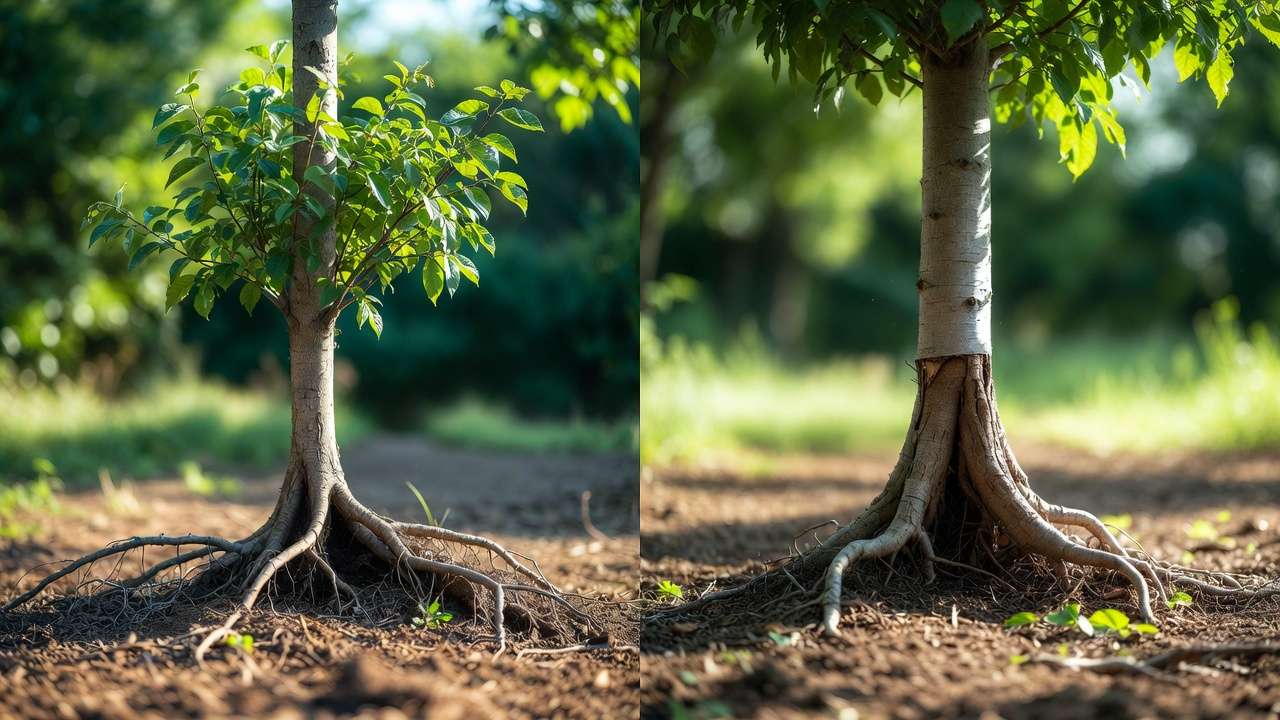
- No visible root flare — trunk enters soil straight like a telephone pole instead of widening naturally
- Flat or pinched appearance on one or more sides of the lower trunk
- Visible small roots circling or emerging above soil line near base
- Mulch/soil piled high hiding the flare (common “volcano” mulching culprit)
These signs mimic drought, poor soil, or pests, so many homeowners treat symptoms instead of the root cause. Pro tip: If your tree shows multiple canopy issues without clear explanation, gently investigate the base! ⚠️
When to act urgently: Trees over 10–15 years showing progressive decline, or any young tree (under 10 years) with no flare visible. Early detection can turn a doomed tree into a thriving one.
Step-by-Step: How to Identify and Confirm Girdling Roots
Confirmation requires exposing the root flare safely — never guess!
DIY inspection for small/young trees (under 10–12 inches trunk diameter):
- Remove mulch/soil pile around base in a 2–3 foot radius (use hands, trowel, or soft brush first).
- Gently excavate soil downward until root flare is visible — aim to see where trunk widens into main roots.
- Tools: Gloves, hand trowel, brush, possibly small shovel or air spade rental for tougher soil.
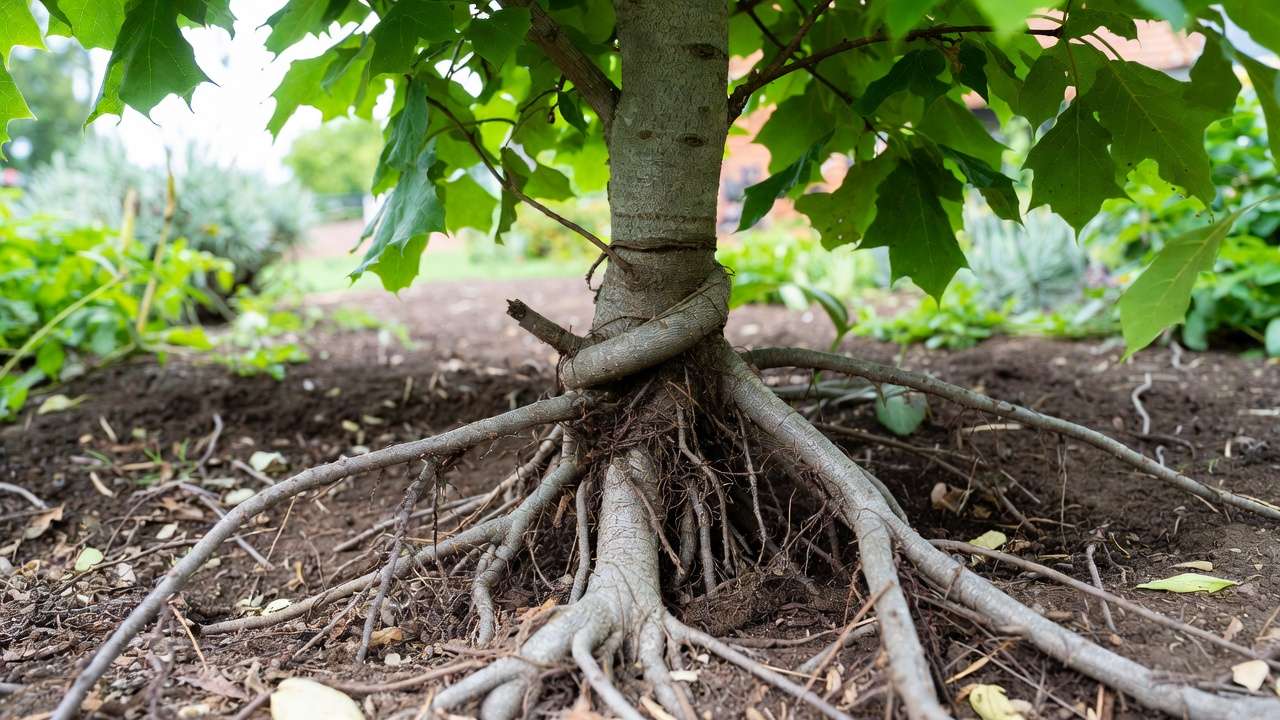
- Look for: Roots >1 inch thick wrapping >1/3–1/2 around trunk, embedded deeply, or compressing bark.
Red flags during inspection:
- Root crossing over or hugging trunk tightly
- Compression creating indent/flattening
- Multiple layers of circling roots
When to stop DIY and call a pro:
- Trunk >12–15 inches diameter
- Large roots (>2 inches) involved
- Deep embedding or structural concerns
- Soil too compacted/hard
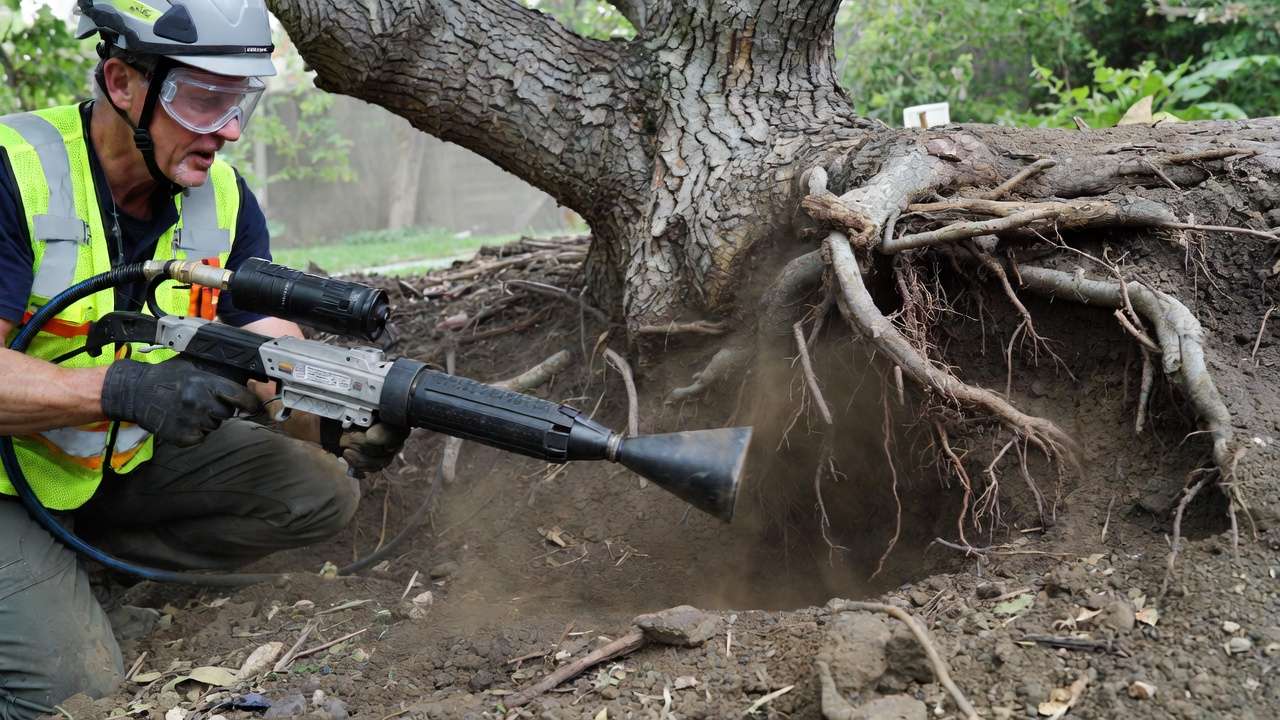
Certified arborists (ISA-board certified recommended) use compressed-air tools like AirSpades to expose roots non-invasively, minimizing damage. This is gold-standard for accurate diagnosis and safe planning. 🌟
Always check for utilities first (call 811 in many regions)!
Treatment Options: Can You Save a Tree with Girdling Roots? 🛠️ (continued)
Advanced professional techniques Many certified arborists now prefer air spading (using compressed air to gently remove soil) combined with root pruning. This method:
- Exposes roots with almost zero mechanical damage
- Allows precise assessment of compression depth and angle
- Minimizes soil compaction compared to shovels
- Enables root surgery under better visibility
Cost range (2025–2026 estimates, varies by region):
- Basic inspection + minor root removal: $150–$400
- Air spade diagnosis + major root work: $500–$1,800+
- Full treatment on large specimen trees: $2,000–$5,000 (if multi-session or high-risk)
Always request an ISA Certified Arborist™ — they follow ANSI A300 standards for tree care and can provide written reports for insurance or documentation.
When treatment is NOT recommended If girdling roots encircle more than 50–60% of the trunk circumference, are deeply embedded (creating major trunk deformation), and the tree already shows >30% canopy dieback — removal risk often exceeds benefit. The tree may become unstable or fail to recover even if roots are cut. In these cases, proactive removal (before it becomes a hazard during storms) is safer and more economical long-term. 💔
Real-world example: A 25-year-old red maple in a suburban yard showed 40% canopy thinning. After air-spade inspection revealed three major girdling roots compressing ~45% of the base, the arborist removed them gradually over two seasons. By year three, leaf size normalized, new leader growth appeared, and the tree regained full vigor — a textbook success! 🌟
Aftercare and Recovery: Helping Your Tree Heal Post-Treatment ❤️
Treatment is only half the battle — proper aftercare determines whether your tree bounces back or continues declining.
Immediate post-treatment steps (first 1–2 weeks):
- Water deeply but infrequently: 10–20 gallons per session, 2–3 times/week depending on soil and weather (aim for moist, not soggy).
- Avoid heavy fertilization — it can shock a stressed tree. Wait until next spring for a balanced, slow-release product if needed.
- Do NOT apply wound dressings or paint — modern research shows trees compartmentalize better naturally.
Long-term recovery support (1–5 years):
- Maintain proper mulch: 2–4 inches deep, extended to drip line, kept 4–6 inches away from trunk (no volcanoes!). Organic mulch like shredded hardwood retains moisture and moderates soil temperature.
- Deep-root watering during dry spells: Use a soaker hose or drip system for 45–60 minutes every 7–10 days.
- Monitor for secondary pests/diseases: Stressed trees attract borers, scale, anthracnose, etc. Early intervention (horticultural oil, beneficial insects) prevents compounding issues.
- Annual root flare checks: Gently brush away mulch each spring to ensure no new girdling begins.
- Prune sparingly: Only remove dead/diseased wood for first 2–3 years to reduce stress.
Signs your tree is recovering
- Larger, darker green leaves by second spring
- New terminal bud growth and branch extension
- Reduced or halted dieback
- Return of normal seasonal color timing
Most successfully treated trees show noticeable improvement within 2–3 growing seasons and near-full recovery by year 5. Patience is key — trees heal slowly! 🌱⏳
Prevention: Stop Girdling Roots Before They Start (The #1 Strategy) 🛡️
The absolute best “treatment” is prevention — especially since girdling roots usually trace back to planting mistakes made 5–30 years earlier.
Best practices at planting time
- Choose quality stock — Inspect container trees: Gently slide out root ball. If roots circle tightly, tease them apart, make 3–4 vertical slices 1–2 inches deep to encourage outward growth, or wash soil away and spread roots horizontally.
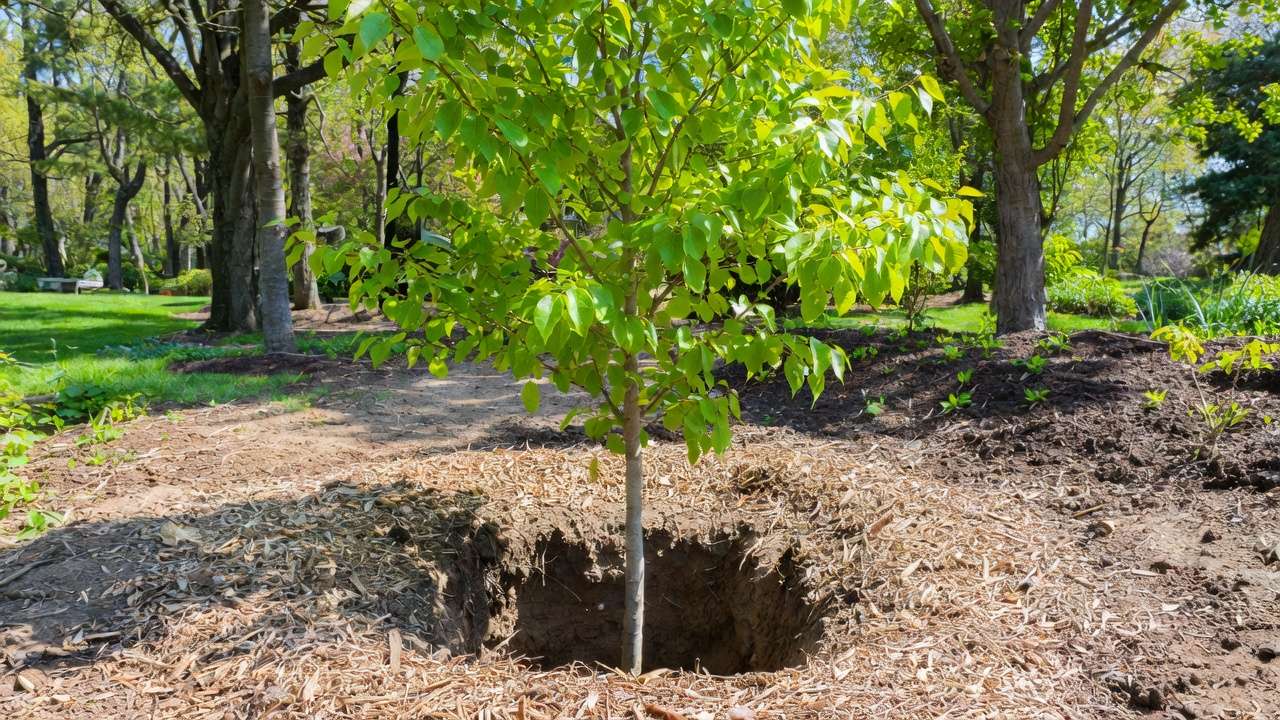
- Dig the right hole — 2–3 times wider than root ball, same depth or slightly shallower. Never plant deeper than original nursery soil line.
- Expose the root flare — Ensure the point where trunk widens into main roots sits at or slightly above final soil grade.
- Backfill properly — Use native soil (amend only if extremely poor); avoid pure compost pockets that cause settling.
- Stake minimally — Only if necessary for wind protection, and remove after 1 year. Over-staking forces unnatural movement and can encourage circling roots.
Ongoing maintenance habits
- Mulch correctly forever: Wide ring, flat top, no trunk contact.
- Avoid soil piling or grade changes near base.
- Periodically (every 3–5 years) check young trees for early circling roots and correct gently.
- Select less susceptible species when possible: Honey locust, ginkgo, red oak, and Kentucky coffeetree show lower girdling root incidence than maples or lindens.
Following these steps dramatically reduces risk — many municipal planting specifications now mandate root-flare exposure and circling-root correction precisely because of widespread girdling failures.
Common Questions About Girdling Roots (FAQ) ❓
Can girdling roots kill a tree? Yes — slowly but surely if left untreated. They’re one of the top non-obvious causes of premature tree death in landscapes.
How do I know if it’s too late to save my tree? If >50% canopy is dead, trunk is severely deformed, and major roots encircle most of the base — prognosis is poor. A certified arborist’s stability assessment is essential.
Is air spading worth the extra cost? Absolutely for valuable or mature trees. It provides accurate diagnosis with minimal root/soil damage — often saving money long-term by avoiding unnecessary tree loss.
Will cutting large girdling roots kill my tree immediately? Not usually — but sudden removal of multiple large roots can cause severe shock. Gradual removal over years is safer.
What’s the best time of year to address girdling roots? Late fall through early spring (dormant season) minimizes stress and pest entry risk. Avoid mid-summer heat or early spring bud-break.
Can mulch cause girdling roots? Yes — “volcano mulching” (piling mulch against trunk) encourages adventitious roots to grow upward and circle. Always keep mulch away from bark.
Do girdling roots affect tree value or safety? Yes — reduced vigor lowers property value, and compressed trunks increase windthrow risk. Early action protects both.
Final Thoughts & Expert Takeaway 🌟
Girdling roots are a silent, progressive threat — but they’re far from a death sentence when caught early. By learning to spot the subtle signs (no flare, thinning canopy, early leaf drop), safely confirming via careful inspection or professional air spading, applying targeted treatment, and committing to excellent aftercare, you can give many trees a second chance at a long, healthy life.
Prevention remains king: Plant properly from day one, maintain correct mulch, and check young trees periodically. These small habits prevent huge future headaches.
This weekend, grab a trowel and gently check the base of your maples, lindens, crabapples, or cherries. You might just discover — and stop — a problem before it becomes tragic. 🌳
Have questions about your specific tree? Drop a comment with species, age, and symptoms (or photos if possible) — or better yet, contact a local ISA Certified Arborist for hands-on help. Your trees deserve every chance to thrive!
Thank you for reading this in-depth guide. Share it with fellow tree lovers — together we can keep our landscapes healthy and beautiful for generations. 🌲💚











