
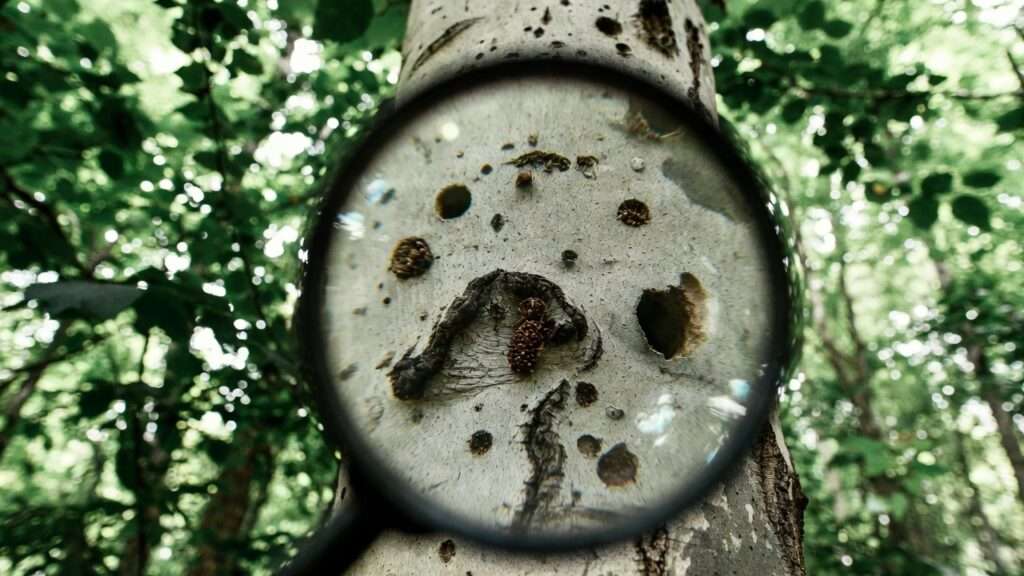
Imagine walking through your yard one sunny afternoon and noticing a strange dusting of fine sawdust at the base of your favorite oak or pine tree. At first, it might seem like harmless debris from recent pruning or wind. But as you look closer, you spot tiny holes in the bark, some oozing sticky resin like tiny popcorn blobs, and the upper branches looking thinner than usual. 😱 Could your tree be under attack from hidden invaders? Unfortunately, yes — these are classic signs of insect infestation in tree bark, and if caught early, you can often intervene to save the tree.
Bark-infesting insects, such as borers and beetles, are stealthy threats that tunnel beneath the protective outer layer of tree bark. They target the vital cambium and phloem layers — the tree’s circulatory system for water, nutrients, and sugars — effectively girdling the trunk or branches and starving the canopy. In many regions, pests like bark beetles have killed millions of trees during drought or stress periods, turning once-vibrant landscapes into brown skeletons. The good news? Early detection through visual clues like frass (boring dust), exit holes, pitch tubes, and canopy changes gives homeowners, gardeners, and tree lovers the power to act before irreversible damage occurs.
In this comprehensive guide, we’ll explore why these insects strike, the most common culprits, detailed early warning signs, a step-by-step inspection routine, progression timelines, treatment options, real-world examples, and prevention strategies. Drawing from arborist best practices, university extension resources (like those from USDA Forest Service and state extensions), and years of practical tree care experience, this article goes beyond basic lists to provide actionable, in-depth advice that can truly protect your landscape trees. Let’s dive in so you can spot trouble fast and keep your trees thriving! 🌿💚
Why Insects Target Tree Bark — Understanding the Threat 🪲
Tree bark isn’t just armor — it’s a living barrier protecting the cambium layer, where cell division happens, and the phloem, which transports sugars downward from leaves. When boring insects (primarily larvae of beetles or moths) tunnel into this zone, they disrupt nutrient and water flow, leading to decline, dieback, and eventual death if the tree is girdled (fully encircled damage).
Most infestations target stressed trees first. Common triggers include:
- Prolonged drought or irregular watering, weakening natural defenses like resin production in conifers.
- Poor soil conditions, compaction, or nutrient deficiencies.
- Mechanical wounds from lawn equipment, storms, or improper pruning.
- Transplant shock in newly planted trees.
- Extreme weather events, like late frosts or heat waves.
Healthy, vigorous trees often resist attacks by drowning larvae in sap (pitch) or compartmentalizing damage. But once overwhelmed — especially during mass outbreaks of bark beetles — even strong trees can succumb. Prevention starts with reducing stress: proper mulching, deep infrequent watering, and avoiding over-fertilization that promotes soft growth attractive to pests. As one certified arborist insight puts it: “A stressed tree is an invitation; a healthy one is a fortress.” 💪
Most Common Insect Pests That Infest Tree Bark 🐛
Knowing your enemy helps you recognize the battlefield. Here are the top bark attackers, their preferred hosts, and hallmark damage:
- Bark Beetles (e.g., Ips engraver beetles, Southern pine beetle, Mountain pine beetle) 🪲 Tiny (2–8 mm), cylindrical reddish-brown to black beetles. They prefer stressed conifers like pines, spruces, and firs. Mass attacks overwhelm trees, creating reddish frass and pitch tubes (small popcorn-like resin blobs, often white or brown). Galleries under bark are simple or J-shaped.
- Wood-Boring Beetles / Borers (e.g., Emerald Ash Borer, Flatheaded borers like bronze birch borer, Longhorned beetles) Adults often metallic (EAB is bright green). Larvae create serpentine (S-shaped for EAB) or winding galleries packed with frass. Exit holes are D-shaped (EAB, ~1/8 inch) or round/oval. Common hosts: ash, birch, oak, maple.
- Clearwing Borers / Moth Borers (e.g., Peachtree borer, Dogwood borer, Lilac/ash borer) Day-flying moths resembling wasps. Larvae tunnel shallowly, expelling coarse brown frass mixed with oozing sap/gum. Pupal skins may protrude from holes. Hosts: fruit trees, dogwood, ash.
- Scale Insects & Related (e.g., Pine bark adelgid, woolly aphids, armored scales) Small, immobile sucking pests appearing as white cottony masses, armored bumps, or fuzzy coverings on bark. They weaken trees via sap removal, often leading to sooty mold from honeydew. Not true borers but cause bark-related decline.
Regional note: In North America, Emerald Ash Borer has devastated ash populations since its introduction, while pine bark beetles surge after droughts. Always check local extension services for prevalent threats in your area. 📍
Early Visual Signs of Insect Infestation in Tree Bark (H2) — Core Section
This is the heart of the guide — the part most readers search for when they suspect trouble. Learning to read these clues accurately can mean the difference between saving a tree and losing it. We’ll break it down into clear categories with descriptions, what to look for, and visual examples.
Physical Damage on the Bark Surface (H3)
The most obvious and diagnostic signs appear right on (or just under) the bark:
- Small exit/entry holes — These are the calling cards of adult insects emerging or larvae entering.
- Bark beetles often leave tiny round holes (1/16–1/8 inch, like pinpricks).
- Emerald Ash Borer creates distinctive D-shaped holes (about 1/8 inch wide, flat on one side).
- Longhorned borers produce larger round or oval holes (1/4–1/2 inch). Spotting these early, especially clustered on the trunk or major branches, is a red flag.
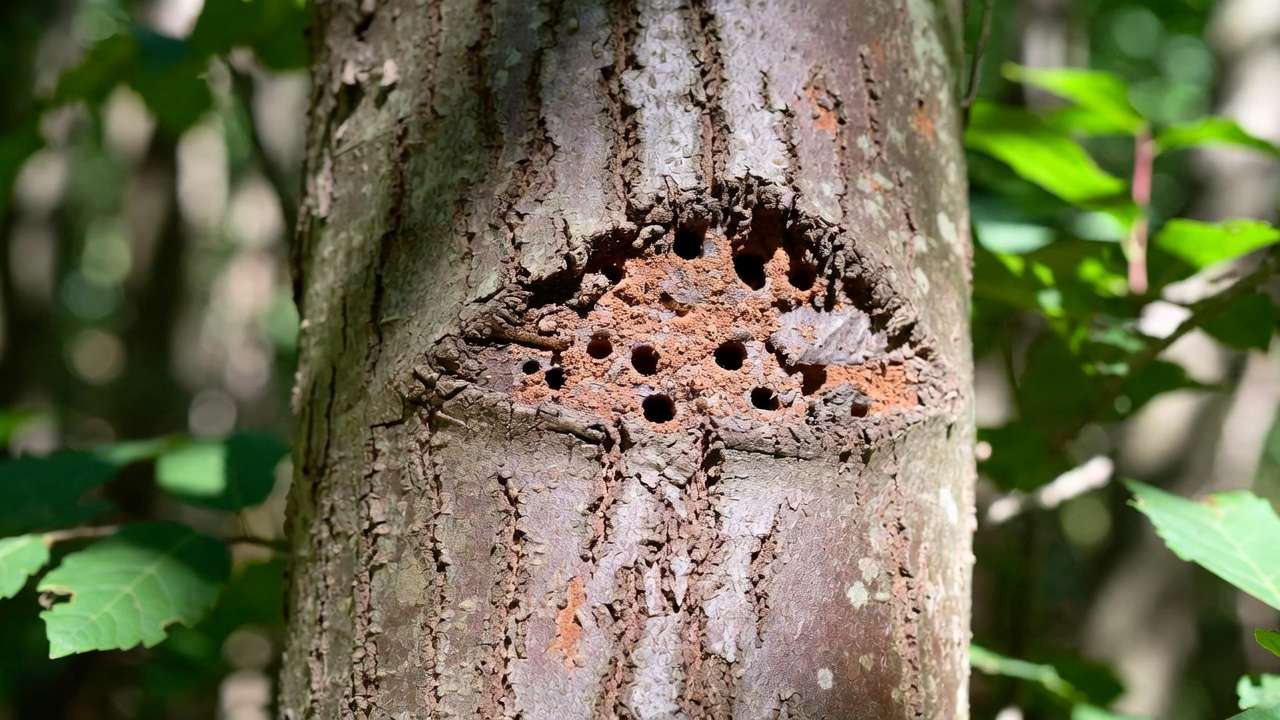
(Above: Classic D-shaped exit holes from Emerald Ash Borer on ash tree bark — note the flat side.)
- Frass (boring dust or sawdust-like material) — This is the fine powder or granular excrement pushed out by tunneling larvae.
- Color varies: reddish-brown for pine bark beetles, white/tan for some borers, coarse brown for moth borers.
- Look for piles at the base of the trunk, in bark crevices, or caught in spider webs. Heavy accumulations often signal advanced infestation.
(Above: Frass accumulation at the base of an infested tree — a telltale sign of active boring activity.)
- Pitch tubes / popcorn-like resin blobs — Conifers (pines, spruces, firs) defend themselves by exuding resin to drown invaders.
- These appear as small (cotton-ball to popcorn-sized), whitish, pinkish, or brownish resin masses protruding from the bark.
- Fresh ones are soft and sticky; old ones harden and darken. Abundant pitch tubes often indicate a successful mass attack by bark beetles.
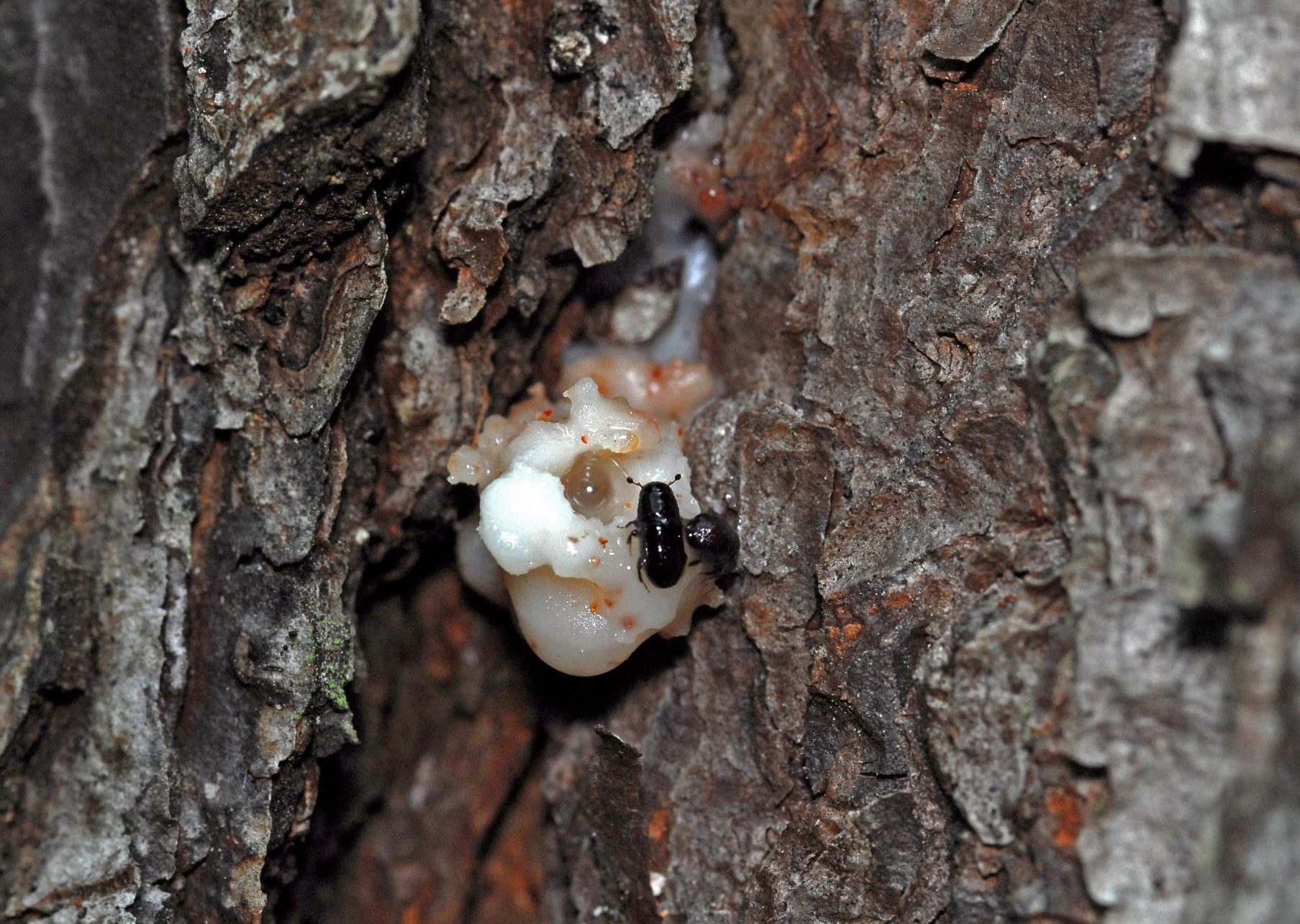
(Above: Pitch tubes on pine trunks — the tree’s desperate attempt to fight off bark beetles.)
- Cracks, peeling bark, sunken areas, or cankers — These develop as galleries expand and kill tissue underneath, causing bark to loosen, split, or slough off.
Oozing, Discoloration & Texture Changes (H3)
- Sap bleeding or gummy exudate — Especially in hardwoods and fruit trees; often mixed with frass in moth borer cases.
- Wet, dark stains running down the trunk signal active tunneling.
- Bark discoloration — Yellowing, reddish, or grayish patches where underlying tissue dies. Bark may become brittle, flaky, or unusually rough.
- Visible galleries when bark is gently lifted — If you suspect damage, carefully peel a small loose section (never strip healthy bark!). You may see winding tunnels packed with frass or sawdust.

Secondary Clues & Animal Activity (H3)
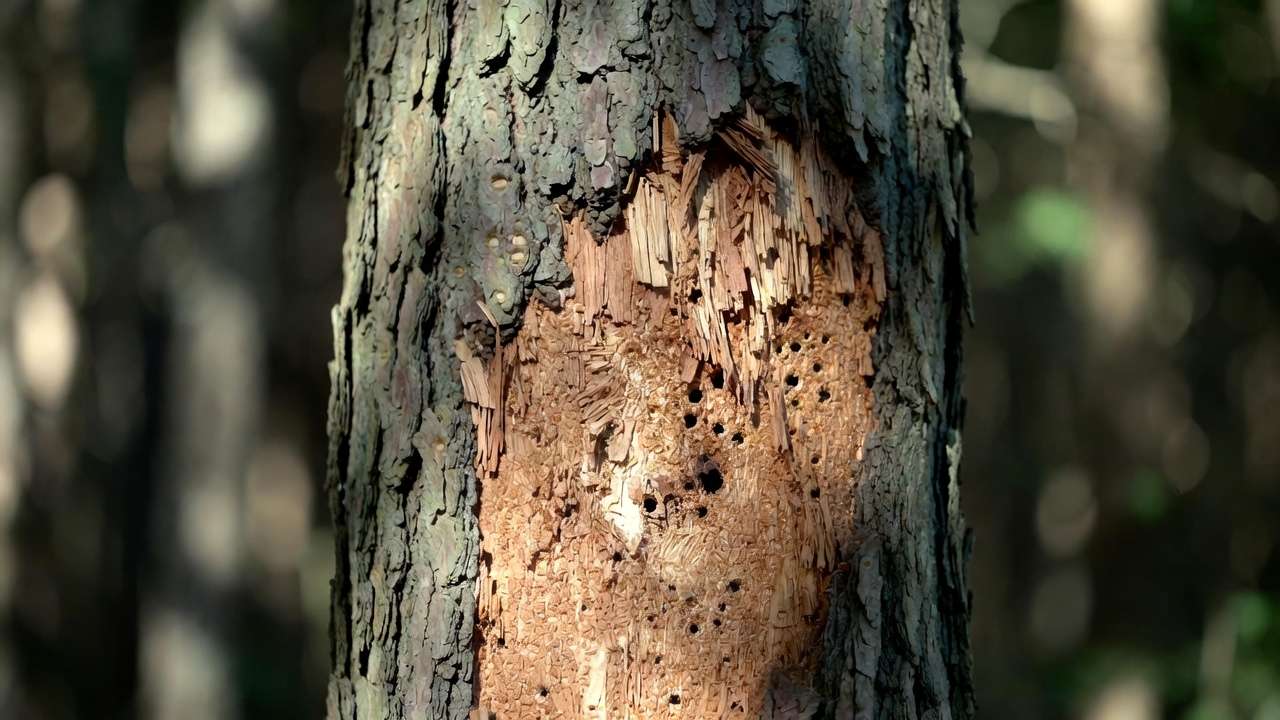
- Woodpecker damage — Birds love to feast on larvae beneath bark, creating clusters of small, shallow peck marks or shredded bark strips (called “flecking”). Heavy woodpecker activity is often a strong indicator of borers or beetles inside.
(Above: Woodpecker flecking and damage — birds targeting hidden larvae under the bark.)
- Increased insect activity — Ants farming honeydew from scales/aphids, or wasps/bees around oozing sap.
- Pupal cases or skins — Empty translucent moth pupal skins sticking out of holes.
Quick Monthly Inspection Checklist ✅
- Walk around the full trunk and major branches.
- Look for holes, frass piles, pitch tubes, oozing, or color changes from ground level to eye height (use binoculars for higher areas).
- Check the base for sawdust accumulation.
- Note any canopy thinning or dieback.
- Take clear photos of anything suspicious for later comparison or expert consultation.
Mastering these signs turns you into your trees’ first line of defense!
How Symptoms Progress — From Early to Advanced (H2)
Infestations follow a predictable timeline, especially in borers and bark beetles:
- Weeks 1–8 (Early stage): Subtle holes, light frass, a few pitch tubes, minor sap ooze. Canopy still looks normal.
- Months 2–6 (Moderate): More holes/frass, bark cracking/peeling, upper canopy starts thinning or yellowing (needles/leaves drop from top down). Branches may wilt.
- 6–18 months (Advanced): Extensive dieback, large areas of dead bark sloughing off, major canopy loss. Tree may be partially or fully girdled → death inevitable without intervention.
Visual timeline tip: Early signs are trunk-focused; later ones show in the crown. Acting in the first 1–3 months gives the best recovery odds.
Step-by-Step: How to Inspect Your Trees for Bark Infestation (H2)
Regular inspections are your best tool for catching problems early — ideally every 4–6 weeks during the growing season (spring through fall). Here’s a practical, beginner-friendly routine that takes only 10–20 minutes per tree but can save years of growth.
- Prepare safely and smartly ⚠️ Wear gloves, long sleeves, and eye protection. Choose calm, dry days (avoid after heavy rain when bark is slippery). Bring: a small hand lens or magnifying glass, pruning shears (for minor deadwood), binoculars, smartphone camera, and a notebook/app for notes and photos.
- Start at the base and work upward Begin at ground level and slowly circle the entire trunk. Examine the lower 6–10 feet (most borers and beetles attack here first). Use binoculars or a step ladder for higher areas on larger trees.
- Systematically scan all sides
- Look for exit holes, frass piles, pitch tubes, oozing sap, bark cracks/peeling, discoloration, or woodpecker damage.
- Gently probe suspicious loose bark with a small knife or your fingernail — if it lifts easily and reveals sawdust-filled tunnels underneath, that’s a strong sign of active infestation. Never peel large healthy sections!
- Check branch unions and major limbs Many borers target branch crotches where bark is thinner or wounds exist. Inspect where large branches meet the trunk.
- Observe the canopy from a distance Step back 20–30 feet. Look for: thinning foliage at the top, yellowing or bronzing needles/leaves (especially from the crown downward), wilting branch tips, or dead twigs. These are secondary symptoms caused by bark damage blocking nutrients.
- Document everything 📸 Take clear, well-lit photos of any suspicious areas (include a coin or ruler for scale). Note date, tree species, location on trunk, and what you see. This record helps track progression and is invaluable if you later consult an arborist.
Seasonal Inspection Calendar 🌦️
- Early spring (March–April): Look for overwintering adult emergence holes and first frass.
- Late spring–summer: Peak activity for many borers and beetles — check weekly during outbreaks.
- Fall: Assess overall health before dormancy; treat preventively if needed.
- Winter: Inspect for woodpecker damage and old pitch tubes (signs of previous season’s attack).
If you spot multiple signs or aren’t sure, don’t guess — contact a certified arborist or your local cooperative extension service for accurate identification.
What to Do If You Spot Signs — Treatment & Prevention (H2)
Finding signs doesn’t always mean the tree is doomed. Quick, appropriate action can stop or slow many infestations.
Immediate Response (H3)
- Confirm the pest — Take close-up photos and collect small frass/pitch samples if possible. Use free resources like:
- Your state’s university extension website (search “[your state] tree pest identification”).
- Apps like iNaturalist or PictureThis (upload photos for community/expert ID).
- Local arborist or forest service office.
- Contain the spread 🚫 Never move infested firewood — many borers and beetles spread this way. Chip or burn (where permitted) infested material on-site.
Management Options (H3)
Treatment success depends on timing, pest type, tree species, and health. Always prioritize non-chemical methods first.
- Cultural & mechanical controls (best for prevention and mild cases)
- Deep, infrequent watering during drought (soaking root zone 12–18 inches deep every 7–14 days).
- Apply 2–4 inches of organic mulch in a wide ring (keep it away from trunk).
- Fertilize only if soil test shows deficiency — excess nitrogen can attract pests.
- Prune out dead or heavily infested branches (sanitize tools between cuts with 10% bleach or alcohol).
- Install trunk traps or lure traps for certain beetles (consult local experts first).
- Chemical controls (use as last resort, follow label exactly)
- Systemic insecticides (e.g., imidacloprid soil drench or trunk injection) — Effective against borers like Emerald Ash Borer if applied preventively or very early. Timing is critical (often spring before adult emergence).
- Contact sprays — Rarely effective on bark borers once inside.
- Always hire a licensed professional for injections or large-scale treatments.
- Biological & natural controls
- Encourage woodpeckers, parasitic wasps, and predatory beetles by avoiding broad-spectrum pesticides.
- Some beneficial nematodes target certain borer larvae (research species-specific options).
Key Rule: If >30–50% of the trunk is girdled or the canopy is >50% dead, removal may be the safest choice to prevent falling hazards and pest spread.
Real-Life Examples & Case Studies (H2)
- Case 1: Emerald Ash Borer in Midwest USA A homeowner noticed D-shaped holes and canopy thinning on a 35-year-old ash in 2018. Early systemic treatment saved 70% of the tree; neighbors who waited lost theirs within two years. Lesson: Early holes + slight thinning = act immediately.
- Case 2: Pine Bark Beetle after Drought (Southeast US) During a 2022–2023 dry spell, many loblolly pines showed pitch tubes and frass. Trees with abundant fresh pitch tubes often survived because resin drowned larvae; those with minimal resin died quickly. Proactive watering and mulching helped unaffected neighbors.
- Case 3: Dogwood Borer in Northeast Oozing gum + coarse frass at branch bases on a flowering dogwood. Pruning infested areas + improving soil drainage reversed decline within one season.
These stories show the same pattern: vigilance + prompt action = higher survival rates.
Frequently Asked Questions (FAQ) (H2)
What do bark beetle holes look like? Usually tiny round pinprick holes (1/16–1/8 inch), often clustered. Frass and pitch tubes are usually present nearby.
Can my tree recover from borer damage? Yes — if <25–30% of the circumference is girdled and the canopy is still mostly green. Full girdling is usually fatal.
Are there natural ways to repel bark insects? Improve tree vigor (water, mulch, proper care) is the strongest defense. Some gardeners use neem oil or insecticidal soap on scales/adelgids, but borers inside bark need systemic approaches.
When should I call a professional arborist? If you see extensive holes/frass, major canopy dieback, or suspect an invasive pest like Emerald Ash Borer. Also call before any trunk injections.
Do all holes in bark mean infestation? No — old exit holes from previous seasons, sapsucker bird damage, or natural lenticels can mimic pest holes. Look for fresh frass, active oozing, or progression to confirm.
Conclusion — Take Action Today to Protect Your Trees (H2)
Spotting signs of insect infestation in tree bark early isn’t just good gardening — it’s an act of stewardship for your landscape, property value, and local ecosystem. Those tiny holes, piles of frass, or popcorn-like pitch tubes are quiet alarms you can answer with observation, care, and timely help.
This weekend, grab your phone, walk your property, and give each tree a quick once-over using the checklist above. Document what you see, and if anything looks concerning, reach out to your local extension office or a certified arborist right away. With a little vigilance and the right knowledge, most trees can fight back and thrive for decades to come.
Your trees are counting on you — happy (and proactive) tree caring!











