
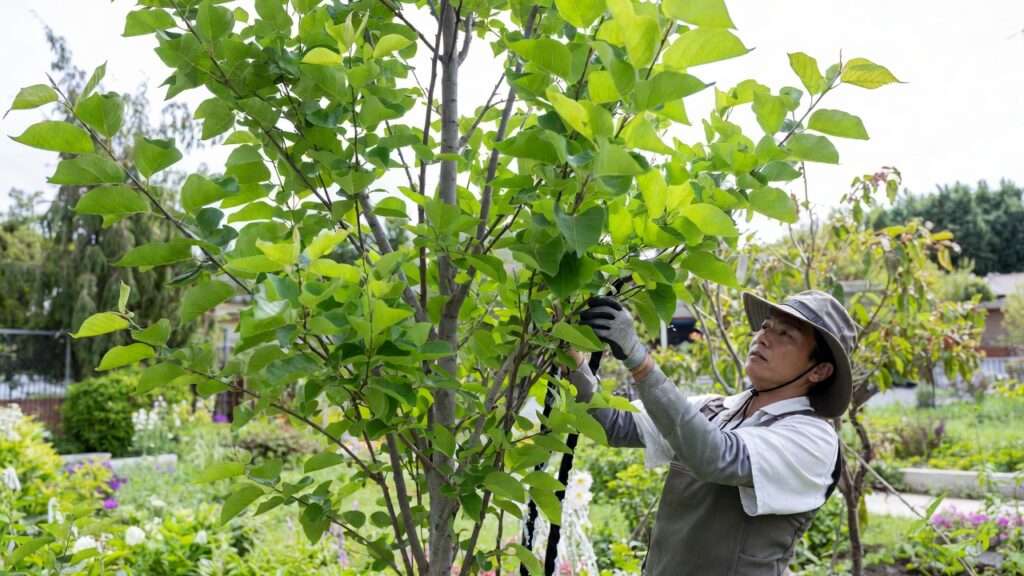
Watching a beloved tree slowly fade away is heartbreaking. The tree that once provided shade for summer picnics, a home for birds, or a beautiful focal point in your yard now shows wilting leaves, bare branches, and a general look of despair. Many homeowners feel helpless, assuming it’s too late — but the good news is that how to revive a dying tree often comes down to early detection and the right actions. According to arborist consensus from organizations like the International Society of Arboriculture (ISA) and university extensions, 30–70% of stressed or declining trees can recover if the underlying issues are addressed promptly, before irreversible damage sets in.
In this comprehensive guide, we’ll walk you through everything you need to know: spotting the signs early, diagnosing common causes, following proven revival steps, knowing when professional help is essential, and preventing future decline. Whether your tree is showing early stress or advanced symptoms, these expert-backed strategies can give it a fighting chance. Let’s bring your tree back to life — one careful step at a time! 🌱
Is Your Tree Really Dying? Signs to Look For Before It’s Too Late 🕵️♂️
Before jumping into rescue mode, determine if your tree is stressed (often salvageable) or truly dying (may require tough decisions). Early intervention dramatically improves success rates.
Early Warning Signs You Can Still Save It 🍂
- Sparse or discolored leaves: Yellowing, browning edges, wilting outside normal fall season, or leaves smaller than usual. This often signals stress from water issues, nutrients, or root problems.
- Premature leaf drop or lack of new growth: Leaves falling in spring/summer, or no buds/new shoots appearing.
- Dead or dying branches starting from the tips inward: Brittle twigs with no buds; dieback progressing toward the trunk.
- Thinning canopy or one-sided growth: The tree looks “lopsided” as parts stop producing leaves.
These signs mean the tree is struggling but has living tissue left — perfect timing for revival efforts!
Advanced Red Flags – Act Fast or Call an Expert 🚨
- Peeling, cracking, or loose bark: Exposed wood underneath, vertical cracks, or bark sloughing off in sheets.
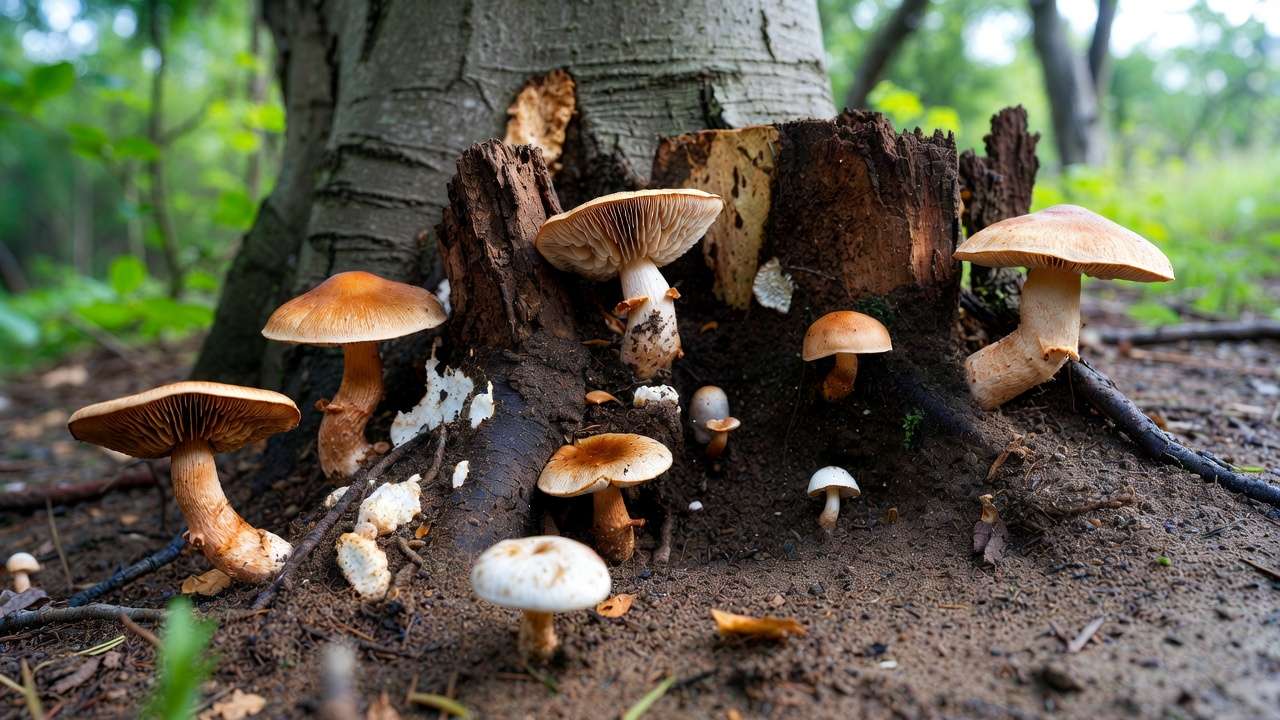
- Fungal growth or mushrooms at the base: Indicators of root rot or internal decay 🍄.
- Major lean, large cavities, or extensive deadwood: Structural instability.
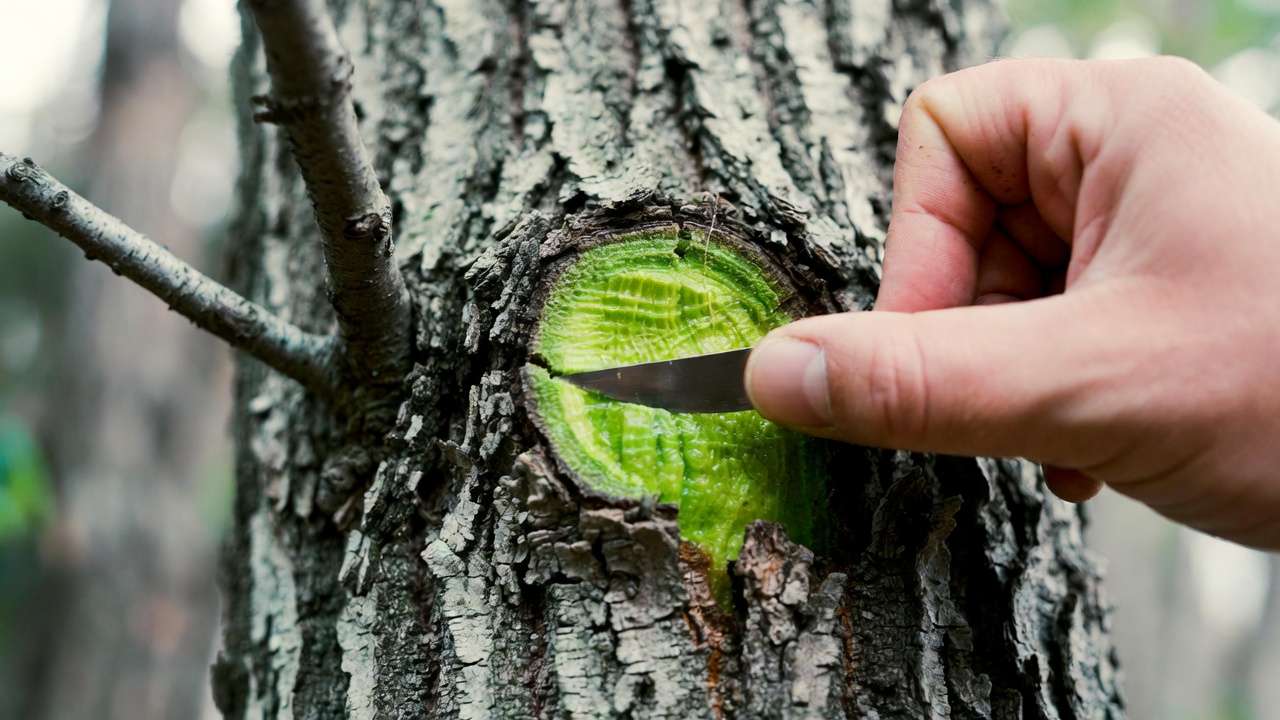
- Scratch (or cambium) test: Gently scratch the bark on a twig or branch with your thumbnail or a knife. If the layer underneath is green and moist — the tree is alive in that area. Brown, dry, or brittle means that section is dead. Test multiple spots!
Quick At-Home Vitality Checklist (use this table to assess):
| Sign Checked | Present? (Yes/No) | Severity (Mild/Moderate/Severe) | Action Priority |
|---|---|---|---|
| Discolored/wilting leaves | |||
| Premature leaf drop | |||
| Dead branches (tips inward) | |||
| Thinning canopy | |||
| Peeling bark/fungi | |||
| Scratch test: green/moist? | |||
| Major lean or cavities |
If most boxes show “mild” issues with green cambium in several places — high revival potential! Severe widespread death may need expert evaluation.
Common Causes – Why Trees Start Dying (And Which Are Fixable) 🔍
Tree decline is rarely from one single villain — it’s often a combination of stress factors that weaken defenses, allowing pests/diseases to finish the job. Understanding the root cause (pun intended!) is key to targeted revival.
Environmental Stress (Most Common & Reversible) 💧
- Drought or improper watering: Shallow roots dry out quickly in hot weather; overwatering leads to oxygen-starved roots and rot.
- Soil compaction: From foot traffic, vehicles, or construction — roots can’t breathe or expand.
- Extreme weather/transplant shock: Recent planting, heat waves, floods, or sudden exposure changes.
These are highly fixable with cultural adjustments!
Soil & Nutrient Problems
- Poor pH or deficiencies: Iron chlorosis shows as yellow leaves with green veins; common in alkaline soils.
- Planting too deep: Buried root flare causes girdling roots that strangle the tree over time 🚫.
A simple soil test (from your local extension service) reveals pH and nutrients.
Pests & Diseases (Often Secondary but Deadly) 🐛
- Insects like borers, aphids, or scale weaken trees.
- Fungal issues: Root rot (Phytophthora), anthracnose, verticillium wilt.
- Bacterial/viral problems.
Stressed trees attract these — fix the stress first, treat second.
Mechanical & Human Damage
- Lawn mower/string trimmer wounds at the base.
- Improper pruning or storm breakage.
Avoid “mulch volcanoes” (piled mulch against trunk) — they trap moisture and invite rot.
Step-by-Step Guide – How to Revive Your Dying Tree 🛠️
Now the actionable part! Follow these steps in order — skipping diagnosis often wastes time and resources.
Step 1: Diagnose & Assess Thoroughly (Don’t Skip!)
Perform the scratch test on multiple branches/twig tips. Check the root flare (where trunk widens at base — should be visible). Probe soil gently with a screwdriver for compaction (hard to push in = compacted). Feel soil moisture 6–12 inches deep.
Step 2: Immediate First Aid – Stop Further Decline ✂️
Remove only clearly dead/diseased branches using proper cuts (just outside branch collar). Clear weeds/grass competition around base. Never remove more than 20–25% of live canopy at once on stressed trees — it adds shock!

Step 3: Deep, Correct Watering Techniques 💦
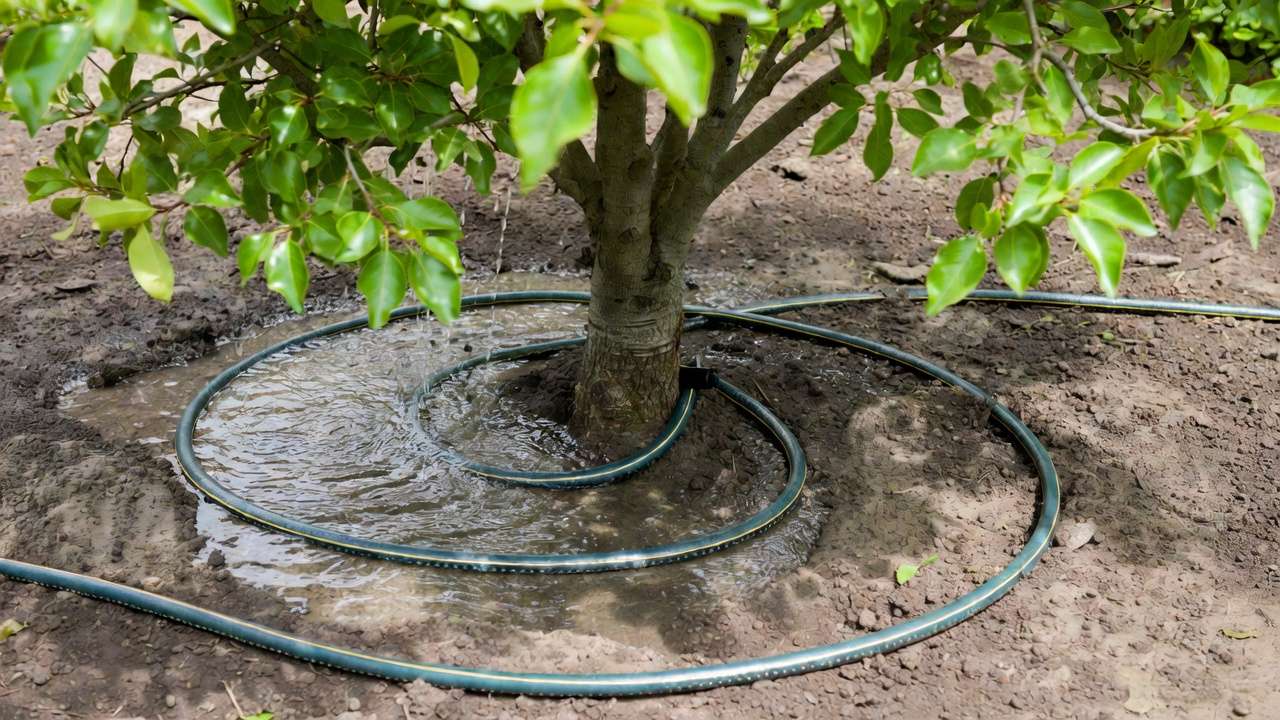
Deep, infrequent watering encourages deep roots. Use soaker hose or slow-drip for 30–60 minutes, 1–2 times per week (adjust for rain/soil type). Aim to wet soil 12–18 inches deep under the drip line. For a 10-inch trunk diameter tree: ~50–100 gallons per session. Avoid daily shallow sprinkles — they promote weak surface roots.
Step 4: Improve Soil Health & Add Mulch the Right Way 🌿
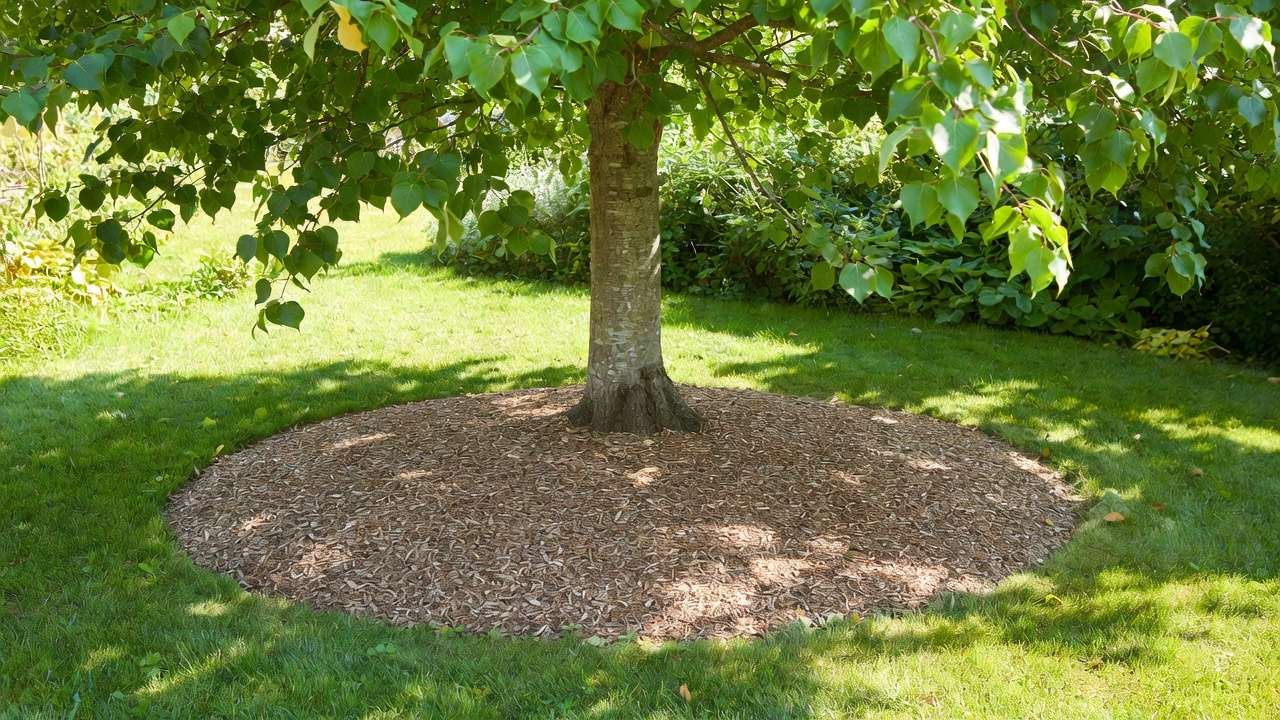
Apply 2–4 inches of organic mulch (wood chips, bark) in a wide ring to the drip line — but keep it 3–6 inches away from trunk (no volcanoes!). Mulch retains moisture, moderates temperature, and adds nutrients slowly. Aerate compacted soil carefully (avoid damaging roots) with a garden fork.
Get a soil test before adding amendments — stressed trees hate fertilizer shock. Use slow-release or compost tea only after initial recovery.
Step 5: Targeted Pest & Disease Treatment
Correctly identify first (take photos, consult extension services or apps). Start with cultural/IPM: improve health, prune affected parts. Use horticultural oil/neem for insects; fungicides only if diagnosed (many issues resolve with stress reduction).
Step 6: Support & Protect During Recovery
Stake only if tree is newly planted or severely leaning (remove after 1 year). Monitor monthly for new growth — signs of revival include buds, leaves, callus formation. Be patient: full recovery can take 1–3 seasons.
Expert Insight: Certified arborists (ISA-certified) prioritize “right tree, right place” and avoid over-intervention on stressed trees — focus on supporting natural defenses first.
When You Can’t Save It – Honest Signs It’s Time to Let Go 😔
Sometimes, despite your best efforts, a tree has passed the point of no return. Knowing when to stop fighting and start planning removal (and replacement) protects your property, safety, and emotional energy.
Look for these definitive red flags that indicate revival is unlikely:
- Total canopy death — No green tissue remains after thorough scratch tests on trunk, major limbs, and smaller branches.
- More than 50% of major structural limbs are dead or extensively decayed — The tree can no longer safely support itself.
- Extensive internal decay or hollowing visible through large cavities, especially if accompanied by fungal brackets or conks.
- Severe root loss or instability — Major lean toward structures/roads, heaving soil around base, or large sections of root plate detached.
- Safety hazard status — Tree threatens people, buildings, power lines, or driveways.
Why removal can be the healthier choice Dead or dying trees become breeding grounds for pests and diseases that can spread to nearby healthy trees. They also lose storm resistance dramatically. Professional removal (by certified arborists using proper rigging and stump grinding) is far safer and more economical than waiting for a catastrophic failure.
Once removed, consider planting a more suitable replacement — ideally a native species matched to your soil, light, and space conditions. This “right tree, right place” philosophy prevents repeating the same decline cycle.
Prevention – Keep Your Trees Thriving for Decades 🌳✨
The best revival is the one you never need. Adopt these long-term habits to keep your trees strong and resilient:
- Inspect annually — Early spring and late fall are ideal times to check for early stress signs, pest activity, and structural issues.
- Plant correctly from the start — Never bury the root flare. Dig the hole 2–3× wider than the root ball but only as deep. Backfill with native soil (amend lightly if needed).
- Water deeply during establishment — Newly planted trees need consistent deep watering for the first 2–3 years, especially during dry spells.
- Maintain a proper mulch ring — 3–4 inches deep, extending to the drip line, refreshed every 1–2 years, never touching the trunk.
- Prune proactively but sparingly — Remove only dead, damaged, or crossing branches. Follow the 25% rule — never remove more than 25% of live canopy in one season.
- Avoid mechanical injury — Use tree guards on young trunks, keep mowers/string trimmers away from the base, and never attach anything (nails, wires, lights) directly into bark.
- Choose species wisely — Match trees to your site conditions (soil type, drainage, sun exposure, mature size). Native or well-adapted species suffer far fewer problems.
Healthy, well-sited trees can live for decades — or even centuries — with minimal intervention.
Frequently Asked Questions (FAQs) ❓
Can a half-dead tree be saved? Yes — very often! If at least 30–50% of the canopy still shows living tissue (green under scratch test) and the trunk/structural branches remain viable, revival is realistic with prompt, correct care.
How long does it take to revive a dying tree? Improvement signs (new buds, leaf production) can appear in 4–12 weeks during the growing season. Full recovery usually takes 1–3 growing seasons, depending on species, age, and severity of decline.
Is it okay to fertilize a stressed tree? Usually no during the first year of stress recovery — high-nitrogen fertilizers can force weak top growth while roots are still compromised. Wait until you see strong new growth, then use slow-release or organic options sparingly.
Should I use tree spikes or Miracle-Gro on a dying tree? Avoid quick-release synthetic spikes and liquid Miracle-Gro on stressed trees — they often cause more harm than good. If nutrients are needed (confirmed by soil test), choose compost tea, well-rotted manure, or slow-release granular formulated for trees.
My tree has mushrooms growing at the base — is it doomed? Not necessarily — but it’s a serious warning. Mushrooms often indicate root rot or internal decay. Have a certified arborist evaluate promptly. Some surface mushrooms are harmless saprophytes, but many signal major trouble.
Can overwatering kill a tree? Yes — very commonly. Constantly soggy soil suffocates roots by depriving them of oxygen, leading to root rot. Always check soil moisture 6–12 inches deep before watering.
Will my tree recover after losing all its leaves? It depends. If it’s mid-summer defoliation from severe drought, insects, or disease, many trees can push out new leaves the same season or next spring — if roots and trunk are still alive.
Should I paint or seal tree wounds? No — modern arboriculture strongly advises against wound dressings or pruning paint. Trees compartmentalize wounds naturally. Sealants can trap moisture and encourage decay.
Conclusion – Your Tree’s Second Chance Starts Today 🌱❤️
Reviving a dying tree is equal parts science, patience, and love. By catching problems early, addressing the true cause (not just symptoms), providing thoughtful care, and knowing when to call in certified professionals, you give your tree the best possible chance to recover and thrive again.
Start small: Grab a coin or your thumbnail, do the scratch test on a few branches this weekend, and assess where your tree stands. Then follow the steps outlined here — one at a time. Even small improvements in watering, mulching, and stress reduction can make a dramatic difference over the coming months.
Healthy trees clean our air, cool our homes, support wildlife, increase property value, and bring joy for generations. If you’re unsure about any step or your tree is near structures/power lines, reach out to a local ISA-certified arborist — they’re worth every penny for accurate diagnosis and safety.
You’ve got this. Your tree isn’t doomed yet — and neither is your yard’s future shade. 🌿











