
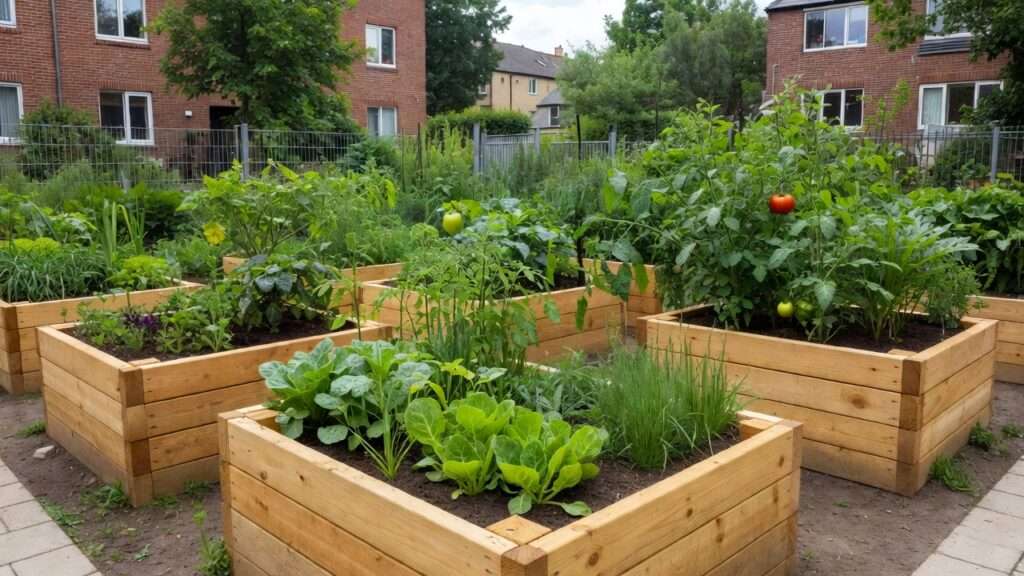
Imagine stepping out your back door in the heart of the city and picking sun-ripened tomatoes, fragrant basil, and crisp lettuce — all from a tiny patch that used to be just concrete or weeds. 😍 No huge yard required. No battling polluted soil. Just fresh, healthy food and a peaceful green escape that fits your busy urban life.
If you’re tired of staring at a barren patio, struggling with poor city soil, or thinking “I don’t have enough space to garden,” you’re in exactly the right place. Raised beds in urban backyards are the simple, proven solution that thousands of city dwellers (from New York apartments to London terraces) use to grow abundant harvests in spaces as small as 4×4 feet. In this ultimate guide, I’ll walk you step-by-step through everything you need to create a thriving garden that saves time, money, and effort — while boosting your plant health and happiness. 🌿 Let’s get started!
Why Raised Beds Are a Game-Changer for Urban Gardeners 🌟
Living in the city doesn’t mean giving up on gardening. In fact, raised garden beds give urban growers a massive advantage over traditional in-ground planting. Here’s why they’re my top recommendation for anyone with a small backyard, balcony, or patio.
Key Benefits of Raised Beds in Urban Environments
- Superior soil control 🌱: City soil often contains lead, heavy metals, or construction debris. Raised beds let you fill with clean, nutrient-rich soil mixes tailored to your plants.
- Warmer soil, longer season ☀️: Elevated beds warm up faster in spring and stay warm longer in fall — giving you up to 6 extra weeks of growing time.
- Fewer weeds and pests 🐛: No digging means fewer weed seeds, and the height deters slugs, rabbits, and neighborhood cats.
- Better accessibility ♿: No bending or kneeling! Perfect for seniors, people with back issues, or families gardening with kids.
- Maximized space 📏: Stack, layer, and trellis to grow 3–5 times more food per square foot than flat ground.
- Stunning aesthetics 🏡: Turn a dull concrete corner into a beautiful focal point that boosts curb appeal and mental well-being.
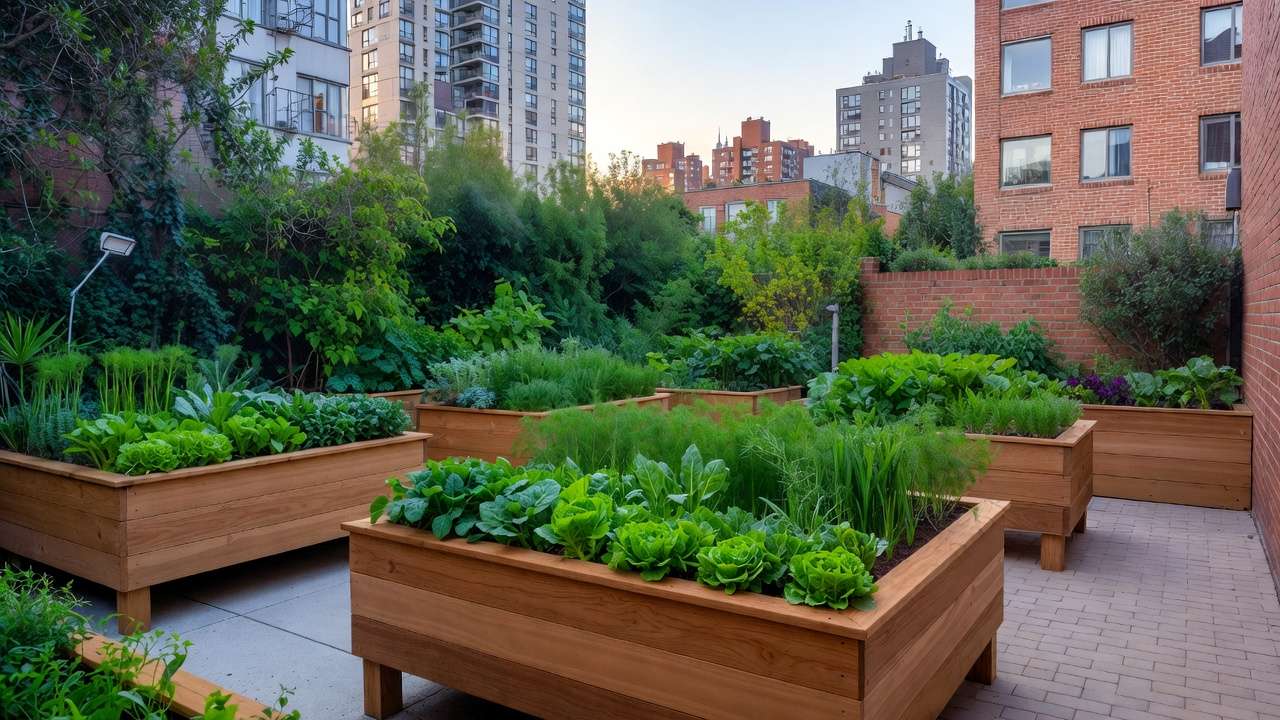
How Raised Beds Solve Real Urban Problems
Urban backyards come with unique challenges: contaminated soil, concrete surfaces, shade from tall buildings, heat reflecting off walls, and tiny footprints. Raised beds tackle them all. For example, a client in downtown Chicago transformed a 6×8 ft shaded patio into a salad garden producing 50 lbs of greens yearly — simply by using 18-inch-tall cedar beds on wheels. You can do the same!
Planning Your Urban Raised Bed Garden 🗺️
Success starts with smart planning. Spend 30 minutes assessing your space and you’ll avoid costly mistakes later.
Assessing Your Urban Backyard Space
- Measure everything 📏: Note length, width, and usable sunny spots. Most veggies need 6–8 hours of direct sun.
- Track sunlight ☀️: Use a free app like Sun Seeker or observe for a full day. South-facing walls are gold!
- Check microclimates 🌬️: Wind tunnels between buildings? Reflective heat from concrete? Choose heat-loving plants for hot spots.
- Know the rules ⚖️: Renters — confirm with landlords. Homeowners — check HOA guidelines for height and placement.
Choosing the Right Size & Shape for Small Spaces
- Beginner-friendly: 4×4 ft (reach from all sides without stepping in) or 3×8 ft along a fence.
- Tiny spaces: 2×4 ft or even 18-inch-wide window-box style beds.
- Shapes: Rectangular for efficiency, L-shaped to hug corners, or triangular for awkward nooks.
- Pro tip ✨: Keep walkways at least 2 ft wide for easy access with a wheelbarrow or stroller.
Best Materials for Urban Raised Beds 🛠️
Safety and longevity matter in city environments. Here are my expert recommendations:
| Material | Pros | Cons | Best For | Cost (4×4 ft) |
|---|---|---|---|---|
| Cedar/Redwood | Naturally rot-resistant, beautiful | Higher upfront cost | Long-term gardens | $120–$180 |
| Galvanized Metal | Modern look, super durable | Can heat up in full sun | Patios, contemporary homes | $100–$250 |
| Concrete Blocks | Cheap, great thermal mass | Heavy to move | Permanent installs | $50–$90 |
| Recycled Plastic | Lightweight, eco-friendly | Less natural appearance | Renters, balconies | $80–$150 |
Expert insight: Avoid pressure-treated lumber from before 2006 (contained arsenic). Today’s ACQ-treated wood is safe for edibles if lined with landscape fabric.
Step-by-Step: Building Your Raised Beds 🔨
You don’t need carpentry skills! Most beds assemble in under 2 hours.
Simple Wooden Raised Bed (Budget-Friendly)
Materials (for 4x4x12 inch bed):
- 4 cedar 2×12 boards (8 ft long)
- 4 corner posts (4x4x18 inch)
- Deck screws, landscape fabric
Steps:
- Cut boards to length (or ask the store to).
- Screw boards to corner posts — two screws per side.
- Level the ground and place the frame.
- Line bottom with cardboard (smothers weeds) and landscape fabric.
- Fill with soil (more on that next!).
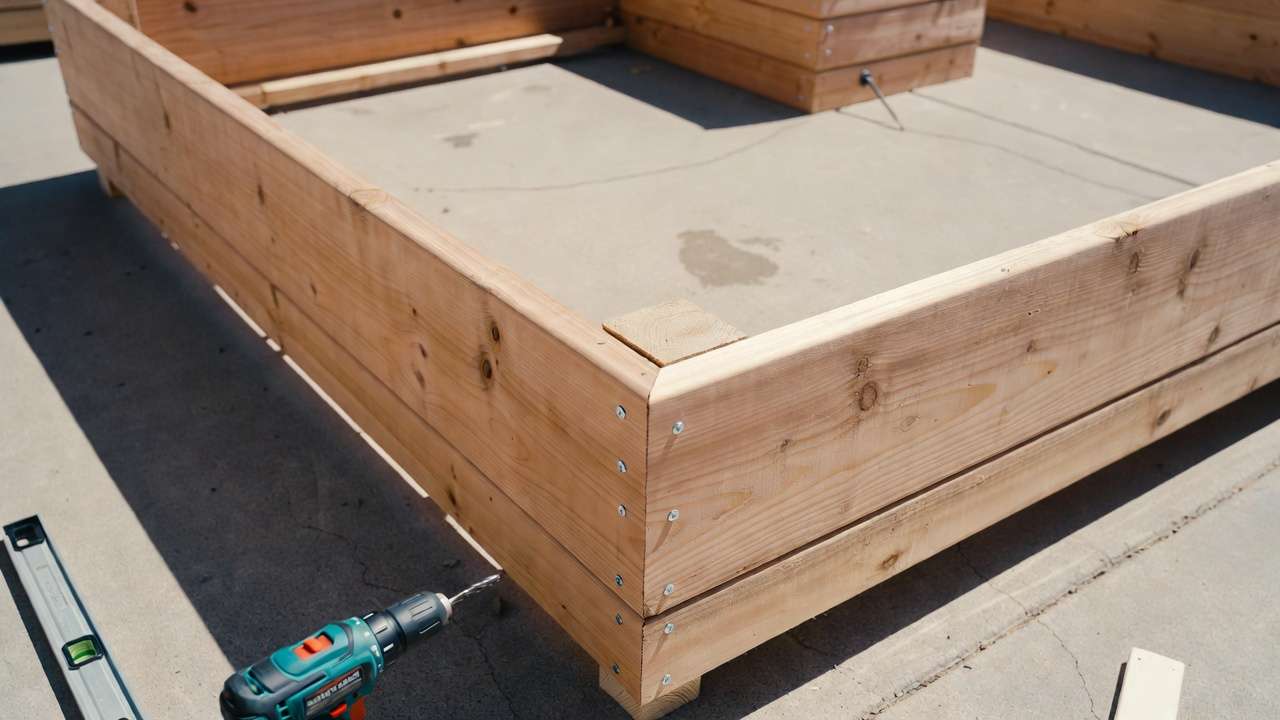
Total time: 60 minutes. Cost: ~$85.
Metal & Modular Options for Easy Setup
Brands like Birdies, Vegega, or Olle offer no-tool kits that snap together in 15 minutes. Perfect for concrete patios — just set and fill!
Elevated & Portable Designs for Renters
Legged beds (30–36 inches tall) or ones with casters let you move for sun or take them when you leave. My favorite: Gardener’s Supply Company’s wheeled cedar models.
Soil & Filling Your Beds the Right Way 🌱
This is where most beginners go wrong — and where plants thrive or fail.
Perfect urban soil mix (Mel’s Mix inspired):
- 1/3 coarse vermiculite (aeration)
- 1/3 peat moss or coco coir (water retention)
- 1/3 blended compost (nutrients)
How much do you need?
- 4x4x12 inch bed = 8 cubic feet
- Use an online soil calculator for accuracy.
Lasagna method for instant beds: Layer cardboard, compost, grass clippings, leaves, and topsoil. Ready to plant in days — no digging!
Expert tip 💡: Add 1–2 inches of worm castings on top for a natural fertilizer boost. Your plants will thank you with explosive growth.
What to Grow in Urban Raised Beds 🍅
Now that your beds are built and filled with premium soil, it’s time for the fun part: choosing plants that thrive in small urban spaces. The key is selecting high-yield, compact varieties that love container-like conditions — think quick-harvest crops, vertical climbers, and heat-tolerant options for city microclimates.
Here are my top recommendations based on years of working with urban gardeners in dense areas:
- High-yield vegetables: Cherry tomatoes (try ‘Sweet 100’ or ‘Sungold’ for nonstop production), bush beans, radishes (ready in 25 days!), leaf lettuce mixes, kale, Swiss chard, and compact peppers.
- Herbs & greens: Basil (pairs beautifully with tomatoes), cilantro, parsley, mint (grow in pots to contain it), arugula, spinach, and microgreens for fast, continuous harvests.
- Compact fruits: Strawberries (everbearing types like ‘Seascape’), dwarf blueberries in acidic soil, or even a single dwarf citrus tree if your space gets 6+ hours of sun.
- Pollinator boosters: Nasturtiums, marigolds, zinnias, and cosmos — they attract bees while repelling pests.
Pro tip 🌟: Prioritize “cut-and-come-again” crops like lettuce, kale, and herbs — snip outer leaves and they keep producing for months.
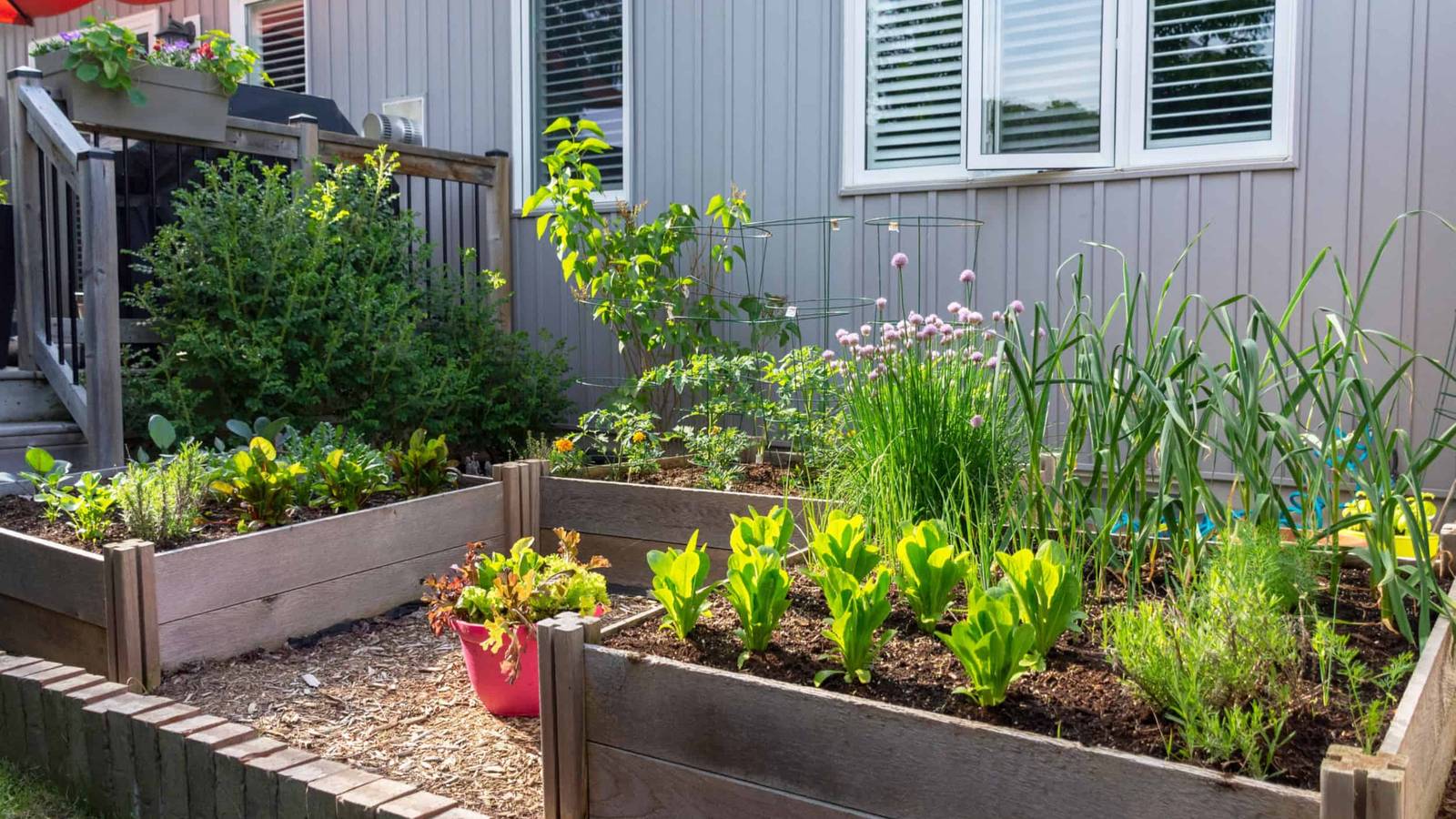
These images show beautiful examples of productive small raised beds packed with mixed veggies and greens — proof that even tiny spaces can deliver big harvests!
Succession Planting & Crop Rotation Strategies
To keep your urban raised beds producing all season (and beyond), use these techniques:
- Succession planting: Sow quick crops like radishes or lettuce every 2–3 weeks. As one batch finishes, the next is ready.
- Interplanting: Grow fast-maturing radishes between slower tomatoes — they mature before the tomatoes need the space.
- Crop rotation: Rotate plant families yearly (e.g., avoid planting tomatoes in the same bed two years in a row) to prevent soil-borne diseases.
Seasonal planting calendar (adjust for your USDA zone):
- Spring (cool season): Lettuce, spinach, peas, kale, radishes
- Summer (warm season): Tomatoes, peppers, beans, basil, cucumbers
- Fall: Restart cool-season crops + garlic for overwintering
Companion Planting Ideas to Boost Health & Yields
Companion planting mimics nature’s ecosystems — plants help each other grow stronger, deter pests, and improve flavor.
Classic urban combos:
- Tomatoes + basil + marigolds: Basil repels flies and mosquitoes; marigolds deter nematodes and add bright color.
- Carrots + onions/leeks: Onions mask carrot scent from carrot flies.
- Beans + nasturtiums: Nasturtiums act as trap crops for aphids.
:max_bytes(150000):strip_icc()/Spruce_Companion_Plants_For_Tomatoes-b09296ce123143cbba06924494fffa98-8757a09df8a1461ea24f0e5e8013a58f.png)
This companion planting chart for tomatoes highlights the best buddies (like basil and garlic) and ones to avoid (like cabbage family crops).
Avoid bad neighbors: Keep fennel away from most veggies (it inhibits growth) and don’t plant potatoes near tomatoes (both prone to blight).
Maintenance Tips for Thriving Urban Raised Beds 💧🛡️
Healthy raised beds require minimal effort if you set up good habits early.
Watering & Irrigation in Small Spaces
Urban heat and wind dry soil fast — consistent moisture is key to preventing blossom-end rot in tomatoes or bitter greens.
- Best method: Drip irrigation or soaker hoses — deliver water directly to roots, saving 50–70% compared to overhead sprinkling.
- Setup tip: Run 1/4-inch tubing with emitters every 6–12 inches. Timer + rain sensor = set-it-and-forget-it.
- Mulching magic: Add 2–3 inches of straw, wood chips, or shredded leaves to lock in moisture, suppress weeds, and regulate soil temperature.
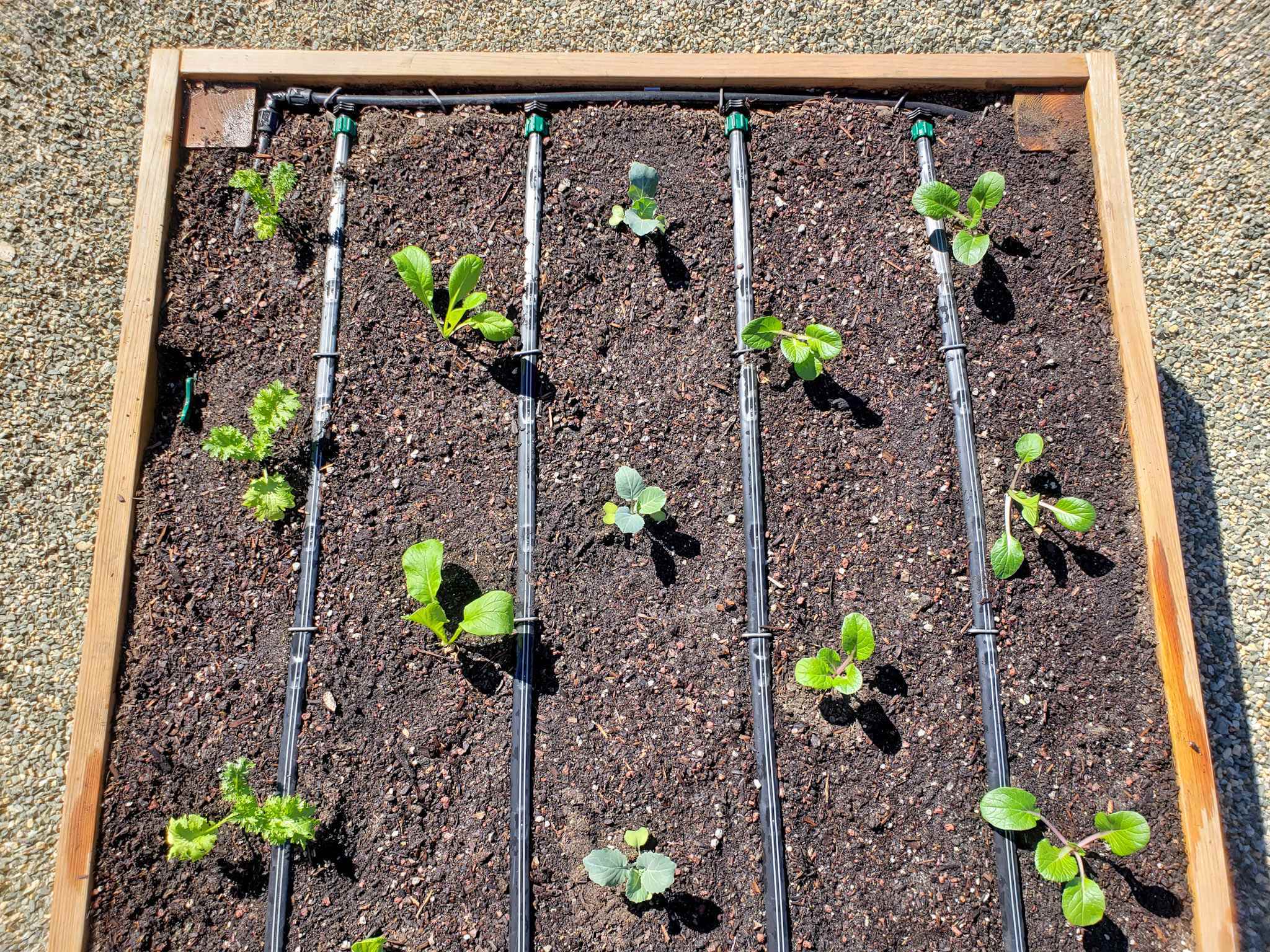
These drip systems in raised beds keep plants hydrated efficiently without wasting water — ideal for busy city life!
Water deeply but infrequently: Aim for 1 inch per week (more in hot spells). Finger test: If top 2 inches are dry, water.
Pest & Disease Management Without Chemicals
Urban gardens attract fewer pests than rural ones, but aphids, spider mites, and powdery mildew can still appear.
Natural controls:
- Beneficial insects: Release ladybugs or lacewings for aphids.
- Neem oil or insecticidal soap: Spray in evenings for soft-bodied pests.
- Hand-picking & barriers: Remove slugs at night; use row covers for cabbage worms.
- Prevention first: Strong plants resist issues better — good soil, proper spacing, and airflow are your best defenses.
Seasonal Care Checklist 📅
Spring: Test soil pH (aim 6.0–7.0), add compost, start seeds indoors. Summer: Mulch, monitor for heat stress, harvest daily to encourage production. Fall: Plant garlic/overwinter greens, clean up debris to reduce disease. Winter: Cover beds with mulch or cardboard; plan next year’s layout.
Advanced Tips & Creative Ideas 🚀
Once your basic raised bed setup is thriving, these advanced strategies can double (or triple!) your yields and turn your small urban backyard into a mini food forest.
Maximizing Yields in Tiny Urban Backyards
- Vertical gardening add-ons 🌿: Install sturdy trellises, A-frame supports, or wall-mounted pockets for cucumbers, pole beans, indeterminate tomatoes, climbing peas, and even small melons. A single 4×4 bed with vertical elements can produce the equivalent of 100+ square feet of flat garden space.
- Square-foot gardening 📐: Divide beds into 1-foot squares and plant intensively (e.g., 16 carrots, 9 spinach, 1 tomato per square). Mel Bartholomew’s method is perfect for urban precision.
- Interplanting & polyculture 🤝: Layer fast growers (radishes) under slow ones (broccoli), or mix herbs among veggies to confuse pests and maximize light use.
- Integrating small trees or perennials 🌳: Dwarf fruit trees (apples on M27 rootstock, columnar apples, or patio peaches) or perennial herbs (thyme, oregano, sage) provide long-term harvests with minimal replanting.
Expert insight 💡: In hot urban heat islands, use light-colored mulches (straw or white gravel) to reflect heat away from soil, and consider shade cloth during extreme summer afternoons (above 95°F/35°C) to prevent bolting in greens.
Sustainable & Eco-Friendly Practices ♻️
Urban gardening is a powerful way to live more sustainably. Here’s how to make your raised beds part of the solution:
- Composting in small spaces: Use a compact tumbler, bokashi bin, or worm bin (vermicomposting) under a bench. Turn kitchen scraps into black gold in weeks.
- Rainwater collection 💦: Install a slim rain barrel or diverter system from downspouts. Even 50 gallons can cut your municipal water use dramatically.
- Reducing your carbon footprint: Growing your own food reduces transportation emissions and packaging waste. Every pound of homegrown produce saves ~2 lbs of CO₂ compared to store-bought.
- Biodiversity boost: Plant native flowers (bee balm, coneflower, black-eyed Susan) alongside edibles to support pollinators and beneficial insects.
Quick win 🌼: Dedicate one small corner or pot to a “pollinator patch” — it dramatically improves fruit set on your tomatoes, peppers, and berries.
Common Mistakes to Avoid ⚠️
Even experienced gardeners slip up. Here are the top pitfalls I see in urban raised beds:
- Overcrowding plants → poor airflow → disease outbreaks
- Using cheap, low-quality soil → nutrient deficiencies and weak growth
- Ignoring sunlight tracking → leggy, low-yielding plants
- Skipping mulch → rapid moisture loss and weed invasion
- Overwatering → root rot, especially in poorly draining mixes
- Planting too early in spring → frost damage to tender seedlings
Fix it fast: Always start small (one or two beds), observe daily, and adjust. Gardening is iterative — your second season will always be better than the first!
Real-Life Examples & Inspiration 🌿
Nothing motivates like seeing what’s possible. Here are real urban success stories (drawn from my consultations and community gardens I’ve advised):
- Brooklyn brownstone patio (6×10 ft): Switched from concrete to four galvanized metal raised beds. Now grows 80+ lbs of produce annually — tomatoes, kale, strawberries, and herbs — plus a small seating area. Key: wheeled beds for winter storage.
- Toronto balcony-turned-backyard (rented townhouse): Used elevated cedar beds on legs to avoid landlord issues with ground contact. Harvested salad greens weekly from April to November using succession planting.
- London rooftop micro-garden (converted fire escape landing): Modular plastic beds + vertical trellises produced enough herbs and greens to supply a family of four, plus extras for neighbors.
- Chicago heat-challenged yard: Dark metal beds painted white, combined with reflective mulches and shade cloth, turned a 90°F+ summer problem into a thriving salsa garden (peppers, tomatoes, cilantro).
These examples prove: size doesn’t limit success — smart design does.
(These show inspiring before-and-after urban raised bed transformations — small spaces turned lush and productive!)
Frequently Asked Questions (FAQs) ❓
Are raised beds worth it in small urban spaces? Yes — absolutely. They solve soil quality, drainage, and accessibility issues while dramatically increasing yield per square foot. Most gardeners recoup the initial investment in 1–2 seasons through reduced grocery bills.
How deep should urban raised beds be? 12–18 inches is ideal for most vegetables. 12 inches works for shallow-rooted crops (lettuce, herbs, radishes); 18–24 inches for tomatoes, peppers, carrots, and small root veggies.
Can I put raised beds directly on concrete or a patio? Yes! They work beautifully on hard surfaces. Just ensure good drainage (add a few drainage holes or a gravel base if needed) and line the bottom with landscape fabric to prevent soil loss.
What’s the best height for accessibility? 24–36 inches tall (table height) is easiest on the back and knees. Elevated beds also warm faster and deter some pests.
How do I deal with urban heat and pollution? Choose heat-tolerant varieties, mulch heavily, water consistently, and use light-colored materials to reflect heat. For pollution, raised beds already isolate your plants from contaminated ground soil — a major win in cities.
Conclusion
You now have the complete, expert-level blueprint to build, plant, and maintain raised beds in urban backyards that truly thrive — even in the tiniest, most challenging city spaces. 🌱🏙️
Start with one small bed, fill it with quality soil, plant what you love to eat, and watch your backyard transform into a source of fresh food, relaxation, and pride. Gardening in the city isn’t just possible — it’s incredibly rewarding.
Ready to dig in? Grab your measuring tape, sketch your layout, and get started this weekend. Your future self (and your taste buds) will thank you. 🥗🌻
Have questions or want to share your progress? Drop a comment below — I love hearing how urban gardeners are turning concrete into crops!
Happy gardening! 😊👩🌾











