
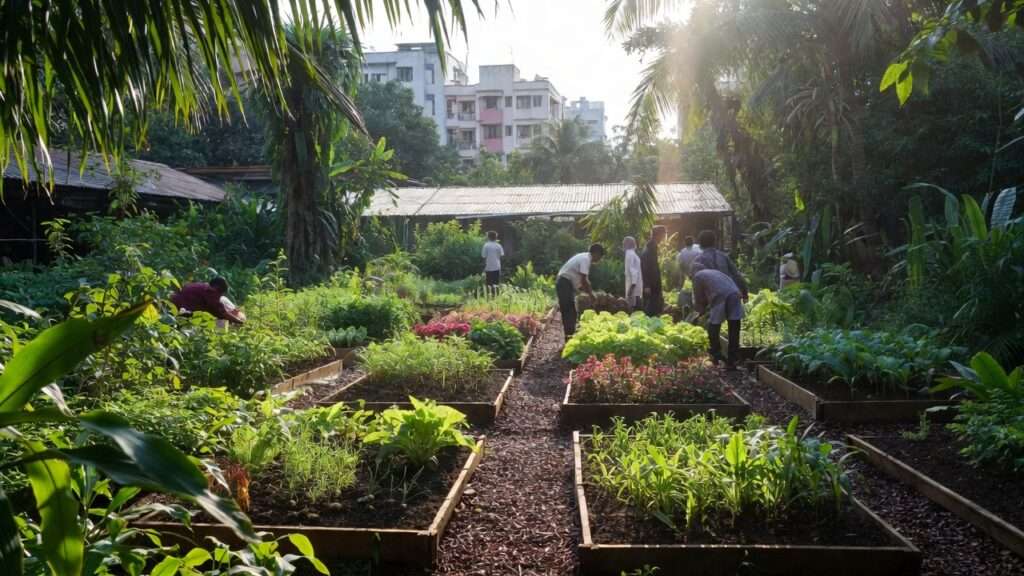
Imagine stepping into your own little patch of earth in a bustling community garden, harvesting crisp okra pods or juicy tomatoes that taste like sunshine, all while chatting with neighbors and feeling that deep sense of accomplishment 😊. But then reality hits: weeds creep in, plants wilt under the tropical heat, or a misunderstanding with a fellow gardener turns awkward. Sound familiar? If you’re a beginner in Dhaka or any urban spot facing hot, humid conditions, community gardening can feel overwhelming at first.
The good news? Community garden plot best practices make all the difference. This complete 2025 guide draws from years of hands-on experience, extension service recommendations, and real-world adaptations for tropical climates like Bangladesh’s. Whether your plot is a modest 10×10 ft shared space or a raised bed in a local community initiative, you’ll learn step-by-step how to turn challenges into thriving, productive gardens. By the end, you’ll avoid common pitfalls, boost your yields sustainably, and enjoy the mental and physical perks of growing your own food — even as food prices rise and urban heat intensifies.
Community gardens aren’t just about veggies; they’re proven to increase fresh produce intake, reduce stress, and build stronger neighborhoods. In 2025, with climate trends pushing hotter, wetter seasons in Dhaka, focusing on resilient, low-effort practices is key. Let’s dive in and get your plot flourishing! 🚀
1. Understanding Community Garden Plots in 2025: What You’re Really Signing Up For 🤝
Community garden plots come in different flavors, and knowing yours sets you up for success.
- Plot-style (individual): You get your own defined space (often 4×8 ft raised beds or 10×10–15×15 ft in-ground) to plant what you like, following garden rules.
- Shared beds: Everyone contributes to collective growing — great for beginners but requires more teamwork.
- Cooperative models: Group decisions on crops and maintenance.
In Dhaka and similar tropical urban areas, plots often face intense sun, monsoon rains, and water access limits. 2025 trends include stricter water rules due to urban shortages, emphasis on no-till methods to preserve soil, pollinator-friendly planting, and climate-resilient varieties (heat-tolerant, flood-resistant crops).
Here’s a quick pros & cons checklist:
| Aspect | Pros | Cons |
|---|---|---|
| Individual Plots | Full control, personal harvests | Must handle all maintenance alone |
| Shared Models | Shared tools/water/knowledge | Scheduling conflicts, uneven effort |
| Tropical Challenges | Abundant growth potential year-round | High humidity pests, heavy rains erosion |
Start small — many gardens limit first-timers to one plot to build habits without burnout 🌿.
2. Choosing & Evaluating Your Perfect Plot Location 🗺️
Location is everything in community gardening.
- Sunlight: Aim for 6–8+ hours daily. In Dhaka’s heat, partial afternoon shade from trees can prevent scorching, but too much shade stunts veggies.
- Soil basics: Community soils vary — test for pH (ideal 6.0–7.0) and heavy metals if near roads (many extensions recommend basic kits or lab checks).
- Water access: Proximity to a tap or hose is crucial; look for drip-friendly setups.
- Proximity & safety: A short walk (under 20–30 min) means you’ll visit more often. Check for good lighting and community feel.
Red flags 🚩: Poor drainage (monsoon puddles), heavy tree shade, weedy neighbors (weeds spread fast!), or isolated spots.
Pro tip: Visit at different times of day to map sun patterns — use your phone’s compass app!
3. Mastering the Rules & Etiquette: Your Fast-Track to Good Neighbor Status 😊
Rules keep the peace — and your plot safe.
Top 10 common rules (based on global and local gardens):
- Keep plots weeded and tidy (prevents pests spreading).
- Stay within boundaries — no encroaching.
- Organic methods only in many spots (no synthetic pesticides).
- Water only your plot (follow schedules to conserve).
- No invasive plants (mint, aggressive vines banned).
- Clean tools after use; share nicely.
- Harvest promptly; don’t let produce rot.
- Contribute to communal tasks (compost turning, paths).
- No permanent structures without approval.
- Respect hours (often dawn to dusk).
Etiquette tips: Say hello, offer extras (a tomato here, advice there) 🍅. If issues arise (e.g., shading), use polite scripts: “Hi neighbor, my plants are getting a bit shaded — any chance we could adjust the trellis?”
Building relationships turns a plot into a community — many gardeners credit friendships as the best harvest!
4. Soil Preparation: The #1 Secret to Long-Term Success 🌿
Healthy soil = thriving plants, especially in nutrient-leached tropical rains.
Step-by-step takeover:
- Clear weeds/debris (hand-pull or smother with cardboard).
- Test soil (pH, nutrients — add lime if acidic).
- Amend generously: Compost, aged manure, leaf mold, worm castings (free/cheap sources abound in Dhaka markets).
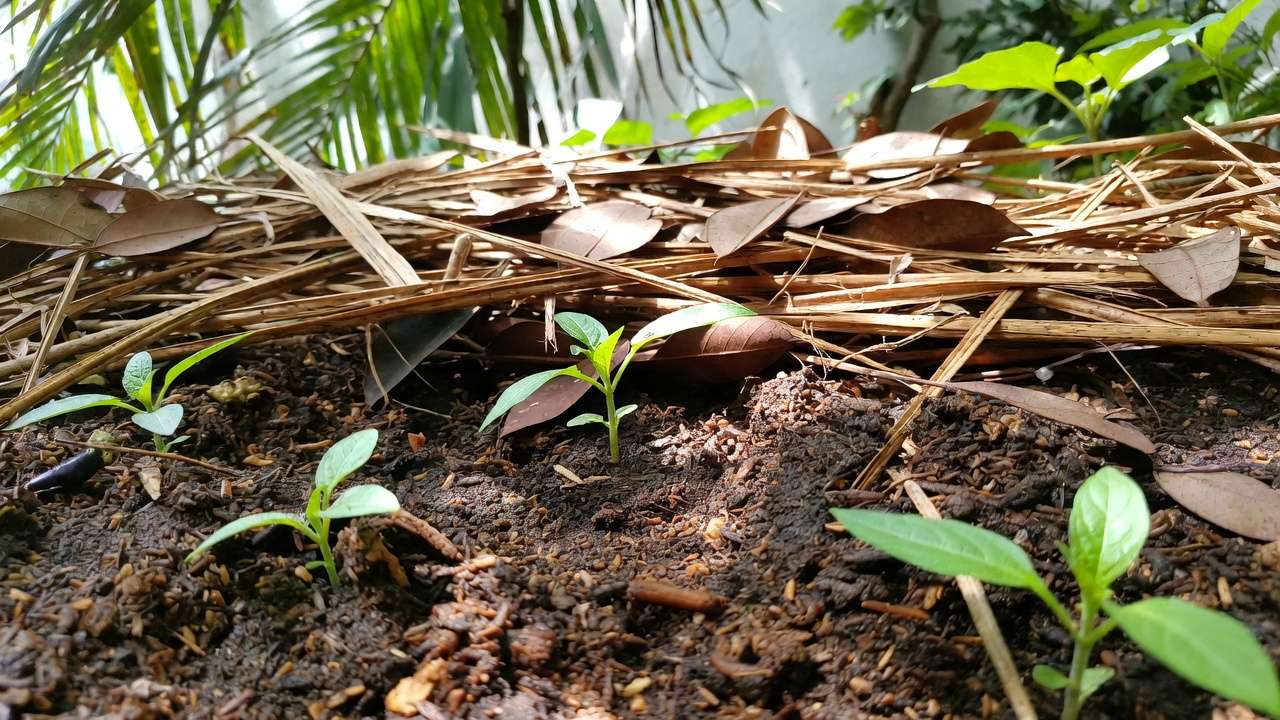
- Prefer no-dig methods: Layer compost/mulch to build soil biology without disturbing structure.
- Off-season cover crops: Quick options like mung beans or cowpeas fix nitrogen and prevent erosion.
In humid climates, focus on organic matter to improve drainage and water retention.
5. Planning Your Layout Like a Pro (Even in a Tiny Plot) 📐
Maximize space without chaos.
- Zone wisely: Tall plants (trellised beans, okra) north; short (lettuce, herbs) south.
- Companion planting chart for tropical plots:
| Main Crop | Great Companions | Benefits |
|---|---|---|
| Tomatoes | Marigolds, basil, garlic | Pest repellent, flavor boost |
| Okra | Beans, cowpeas | Nitrogen fix, shade tolerance |
| Leafy greens | Nasturtiums, radishes | Trap crops, quick harvest |
- Intensive spacing: Adapt square-foot style — e.g., 16 radishes per sq ft.
- Vertical hacks: Portable trellises, cages, A-frames (check rules for permanence).
- Succession planting: Follow early greens with heat-lovers.
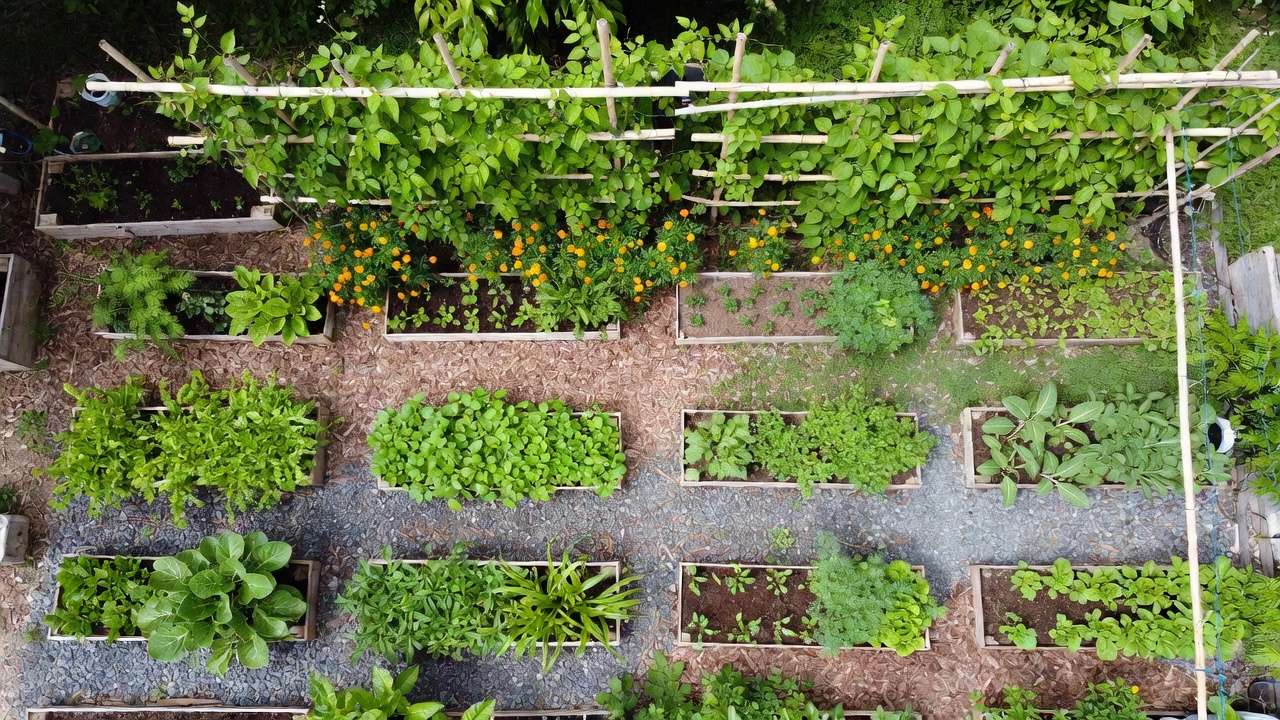
Sample beginner 10×10 ft map: North — okra/trellised beans; Center — tomatoes/peppers; South — herbs/lettuce; Edges — marigolds for beauty + pest control.
6. Best Crops for Community Garden Beginners in 2025 🥕
In Dhaka’s hot, humid tropical climate, choose resilient, fast-growing, high-yield crops that handle heat, heavy monsoon rains, and occasional water stress. Beginners thrive with forgiving plants that give quick wins and don’t demand constant babying.
Top 12 foolproof, high-reward vegetables & herbs (adapted for Bangladesh community plots):
- Okra (Bhindi/Dherosh) — Heat-loving superstar; productive even in 35–40°C summers. Pick young pods regularly for non-stop harvest.
- Eggplant (Brinjal/Begun) — Ubiquitous in Bangladeshi kitchens; many local varieties resist common pests.
- Tomatoes (especially heat-tolerant hybrids) — Start with cherry or small-fruited types; provide support and good airflow to avoid fungal issues in humidity.
- Beans (Yardlong beans/Barbati or Bush beans) — Nitrogen-fixers; quick climbers or bush types for small plots.
- Leafy greens: Spinach (Palong), Red amaranth (Lal shak), Malabar spinach (Pui shak) — Fast-growing, cut-and-come-again; perfect for succession planting.
- Radishes — Super quick (20–30 days); great confidence booster.
- Cucumbers & gourds (Cucumber/Kira, Bottle gourd/Lao, Ridge gourd/Jhinga) — Vining but trellisable; love humidity.
- Chili peppers (Kancha morich) — Prolific and low-maintenance once established.
- Herbs: Basil, Coriander (Dhania), Mint (in pots to contain) — Easy, aromatic, and pest-repelling.
- Bitter gourd (Korola) — Thrives in heat; bitter flavor prized locally.
- Sweet potatoes — Ground cover + edible tubers; very forgiving.
- Mung beans or Cowpeas — As cover crops or edibles; improve soil.
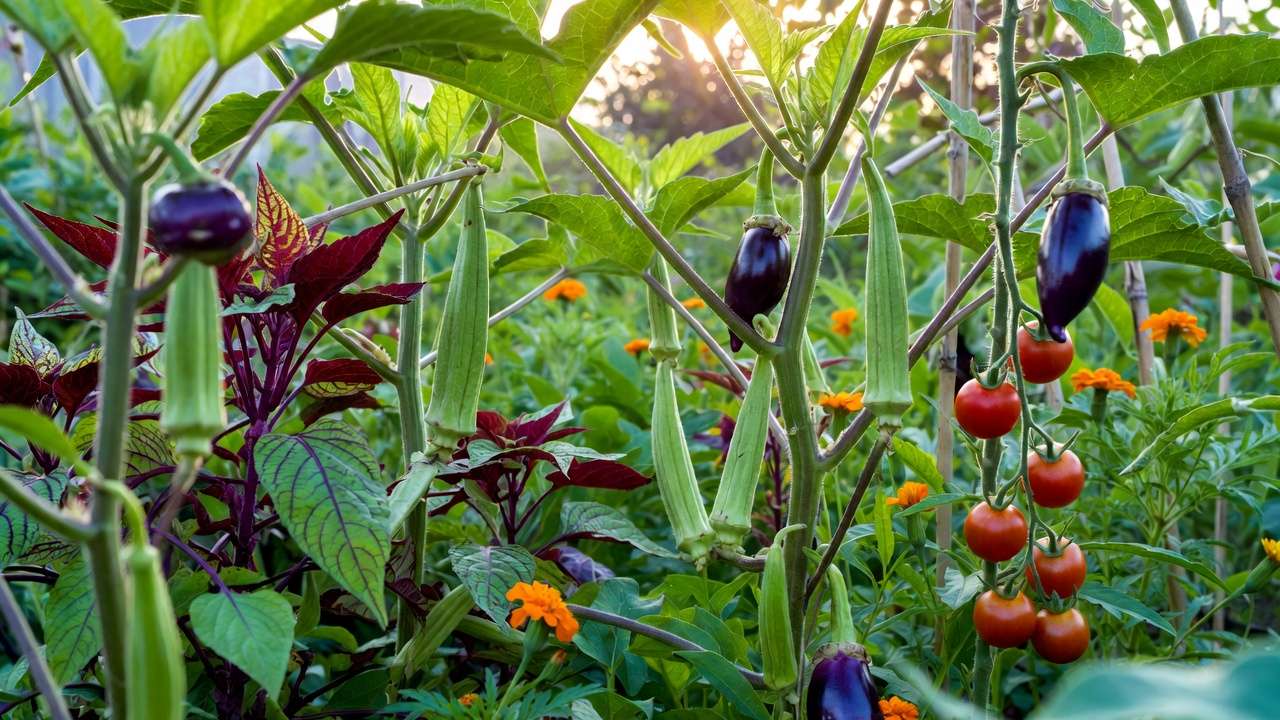
Low-maintenance superstars vs. “show-off” crops to avoid year 1:
- Superstars: Okra, beans, leafy greens, radishes (minimal fuss, high output).
- Avoid initially: Cauliflower, cabbage (prone to pests/diseases in humidity), large melons (space hogs).
Heat-tolerant & drought-resistant picks for hotter 2025 seasons: Local okra varieties, yardlong beans, amaranth, Malabar spinach.
Quick-harvest crops to build confidence: Radishes (3–4 weeks), coriander (leaves in 3–4 weeks), amaranth.
What NOT to plant in most community plots: Invasive mint (spreads wildly), aggressive vines without trellises, or anything banned by rules (check your garden’s list!).
Start with 4–6 types max — diversity helps with pests but prevents overwhelm 😊.
7. Watering, Mulching & Weeding: The Daily/Weekly Rhythm That Wins 🌧️
In hot, humid Dhaka, overwatering causes rot while underwatering stresses plants. Balance is key.
Deep vs. frequent watering:
- Aim for deep, infrequent soaks (1–2 inches per week, more during dry spells).
- Check soil: Stick finger 2–3 inches down — water if dry.
- Morning watering preferred (reduces fungal risk in humidity).
Mulch masterclass (essential in tropics!):
- Use free/cheap options: Dry leaves, rice straw, grass clippings (dried), shredded newspaper/cardboard under organic layer.
- Apply 2–4 inches thick after soil warms; keeps soil cool, retains moisture (can reduce watering by 50–75%), suppresses weeds.
- In monsoons, lighter mulch prevents rot; replenish after heavy rains.
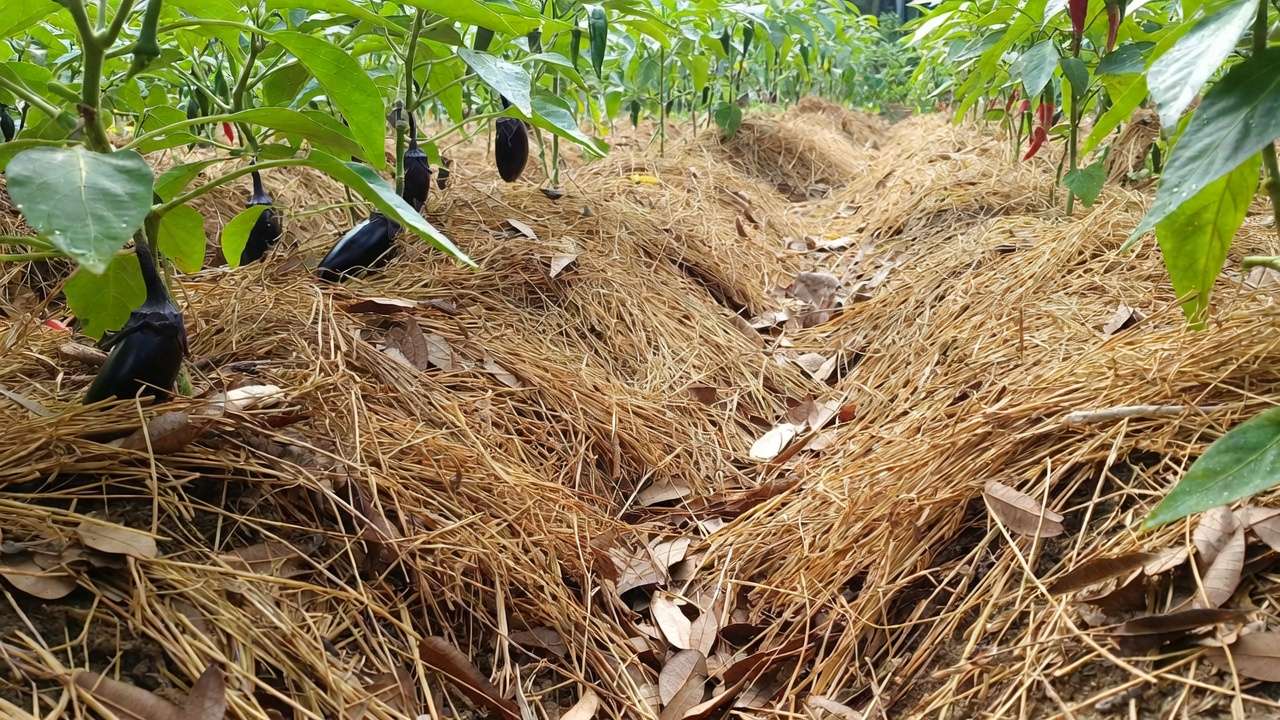
Weed prevention hierarchy:
- Thick mulch (best defense).
- Hand-pull early (before seeding).
- Tools: Hoe for shallow weeds.
- Avoid chemicals — most gardens are organic-only.
Time-saving routine (15-min weekly checklist):
- Check soil moisture & water deeply if needed.
- Pull visible weeds.
- Harvest ripe produce.
- Inspect for pests.
- Refresh mulch edges.
Consistency turns a plot from struggle to success 🌟.
8. Pest & Disease Management Without Drama 🐞
Tropical humidity = pest paradise, but prevention beats cure.
Prevention-first approach:
- Healthy soil + crop diversity = stronger plants.
- Good airflow (space properly, trellis vines).
- Remove debris to break pest cycles.
Early warning signs table:
| Symptom | Likely Culprit | Action |
|---|---|---|
| Holes in leaves/fruit | Fruit & shoot borer (eggplant) | Hand-pick, neem spray |
| Sticky leaves, curling | Aphids, whitefly | Soap spray, ladybugs attract |
| Wilting despite water | Bacterial wilt, fusarium | Remove affected plants, rotate crops |
| Powdery spots | Powdery mildew | Improve airflow, milk spray |
| Yellowing, stunted | Nutrient issue or nematodes | Test soil, add compost |
Organic, community-approved fixes:
- Neem oil (diluted) — broad-spectrum.
- Insecticidal soap for soft bugs.
- BT (Bacillus thuringiensis) for caterpillars/borers.
- Row covers for young plants.
- Companion plants: Marigolds, garlic, basil repel many pests.
Beneficial insects to attract: Ladybugs (eat aphids), lacewings, predatory wasps — plant flowers like marigolds, cosmos.
When to ask for help: Severe infestations — chat with experienced gardeners or local extension (BARI resources helpful).
Focus on observation — catch issues early!
9. Season-Long Timeline: Your Month-by-Month 2025 Roadmap 📅
Dhaka’s tropical climate gives you nearly year-round growing, but monsoons, heat peaks, and short cooler spells create distinct phases. Here’s a realistic, beginner-friendly timeline adjusted for Bangladesh conditions in 2025.
Late Winter / Early Spring (January–February)
- Clean and prepare plot: Remove old plant debris, lightly turn topsoil if needed, add compost.
- Start seeds indoors or in trays: Tomatoes, brinjal, chilies, okra (use small pots or recycled containers).
- Plant cool-season quick crops: Radishes, coriander, spinach, lettuce, red amaranth.
- Test & amend soil now — easier before heat arrives.
Pre-Monsoon / Hot Summer (March–May)
- Transplant warm-season seedlings: Okra, brinjal, tomatoes, yardlong beans, cucumbers.
- Direct sow: Mung beans, cowpeas, bitter gourd, ridge gourd.
- Heavy mulching begins — critical as temperatures climb to 35–40°C.
- Install trellises early for climbers.
- Water deeply in evenings; watch for early aphids/whiteflies.
Monsoon Season (June–September)
- Succession plant leafy greens every 2–3 weeks (amaranth, Malabar spinach, kangkong/water spinach thrive in wet conditions).
- Focus on drainage: Raise beds slightly if waterlogging occurs.
- Harvest regularly — many crops produce heavily now.
- Reduce watering frequency; rain does most of the work.
- Scout for fungal diseases (powdery mildew, leaf spot) — improve airflow, avoid overhead watering when possible.
Post-Monsoon / Late Autumn (October–November)
- Replant fast crops: Radishes, coriander, spinach, beans.
- Start second round of tomatoes, brinjal, chilies if space allows.
- Clean up spent plants; add compost layer for next cycle.
Early Winter (December)
- Enjoy cooler-weather greens and herbs.
- Plan next year: Order seeds, note what worked/didn’t.
- Plant garlic or onions if your garden allows (small space-friendly).
Quick Cheat Sheet Table – Best Planting Windows (Dhaka Approx.)
| Crop | Best Sowing/Transplant Month(s) | Harvest Window |
|---|---|---|
| Okra | Feb–May | Apr–Aug |
| Brinjal | Feb–Apr | May–Sep |
| Tomatoes | Jan–Mar | Apr–Jul |
| Leafy greens | Year-round (succession) | 25–50 days |
| Yardlong beans | Feb–Jun | May–Sep |
| Radish | Oct–Feb | 20–35 days |
Adapt slightly each year based on early/late rains or heat waves.
10. Harvesting, Preserving & Enjoying Your Bounty 🍓
Knowing when and how to harvest maximizes flavor and encourages more production.
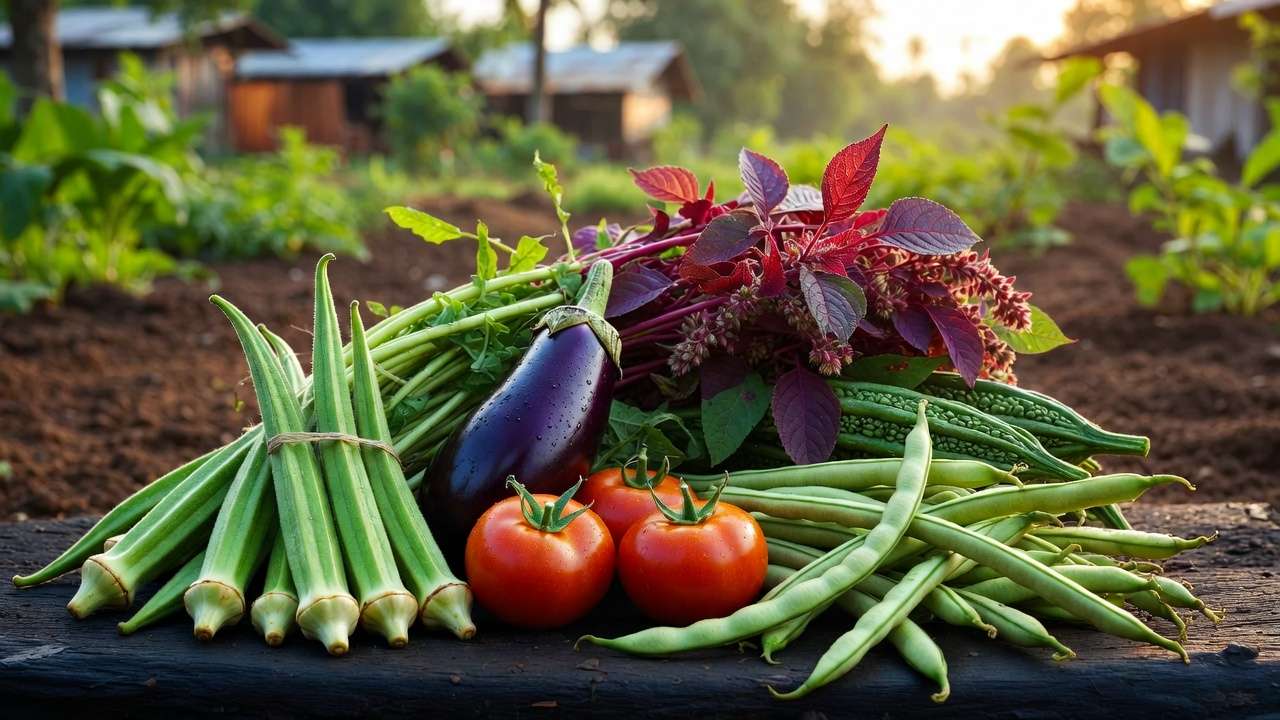
- Okra: Pick every 2–3 days when pods are 3–4 inches long (larger = tough & fibrous).
- Brinjal: Shiny, firm, before seeds harden inside.
- Tomatoes: Full color + slight give when gently squeezed.
- Leafy greens: Harvest outer leaves regularly (cut-and-come-again method).
- Beans & gourds: Young and tender — daily checks during peak.
Sharing etiquette — many gardens love the “take some, leave some” culture. A small basket of extras left at the entrance or offered to neighbors builds goodwill 🍅🥒.
Simple preservation for small-plot yields (no fancy equipment needed):
- Sun-drying: Chilies, okra slices, amaranth leaves.
- Pickling: Green chilies, small brinjals in vinegar + spices.
- Freezing: Blanched beans, okra, leafy greens (portion in bags).
- Fresh use: Daily curries, bharta, shak, salads — the Bangladeshi way!
The real joy? Eating something you grew — and sharing stories with fellow gardeners.
11. Common Beginner Mistakes & How to Dodge Them (Expert Warnings) ⚠️
From coaching dozens of new community gardeners in tropical cities:
- Overplanting year 1 → crowded, diseased, exhausted gardener. Start with 4–6 crop types.
- Ignoring garden rules → warnings or loss of plot. Read them twice!
- Planting too close → poor airflow = fungal explosion in humidity. Follow spacing guides.
- Watering at wrong time → evening watering + humidity = mildew city. Morning is safer.
- Skipping mulch → weeds win, soil dries fast in heat.
- Not harvesting promptly → over-mature crops stop producing; attracts pests.
- Bringing diseased plants from home → introduces problems to everyone. Quarantine new plants.
- Giving up during monsoon → it’s actually peak production time for many crops!
- Poor record-keeping → forget what worked. Use a simple notebook or phone notes.
- Isolation — not talking to neighbors → miss tips, shared tools, friendships.
Biggest mindset shift: Treat mistakes as tuition — every seasoned gardener paid it 😅.
12. Sustainability & Climate-Smart Upgrades for 2025 🌍
With hotter, wetter, more unpredictable weather:
- Water saving: DIY ollas (buried clay pots), drip bottles, or rain barrels (if allowed).
- Soil health: Keep adding organic matter; practice no-dig to store carbon and build resilience.
- Pollinator support: Plant marigolds, zinnias, basil — bees & butterflies help yields.
- Biodiversity: Mix flowers + veggies + herbs = fewer pest outbreaks.
- Heat adaptation: Shade cloth (30–40% during peak summer), reflective mulch, heat-tolerant local varieties.
Small changes compound — your plot becomes part of the climate solution.
Conclusion: Your First Season Success Checklist + Next-Level Goals 🎯
You did it! Here’s your quick-start checklist:
☑ Read & follow garden rules ☑ Map sunlight & choose smart location ☑ Prepare soil with compost + mulch ☑ Start small: 4–6 easy crops ☑ Water deeply, mulch thick, weed early ☑ Harvest often & share generously ☑ Observe daily — catch problems fast ☑ Talk to neighbors — they’re your best resource
Next-level goals: Expand to two plots, try seed-saving, teach a friend, or start a composting corner.
Community gardening isn’t just growing food — it’s growing connection, resilience, and joy. Your first harvest is waiting. Get your hands dirty and enjoy every minute 🌿❤️











