
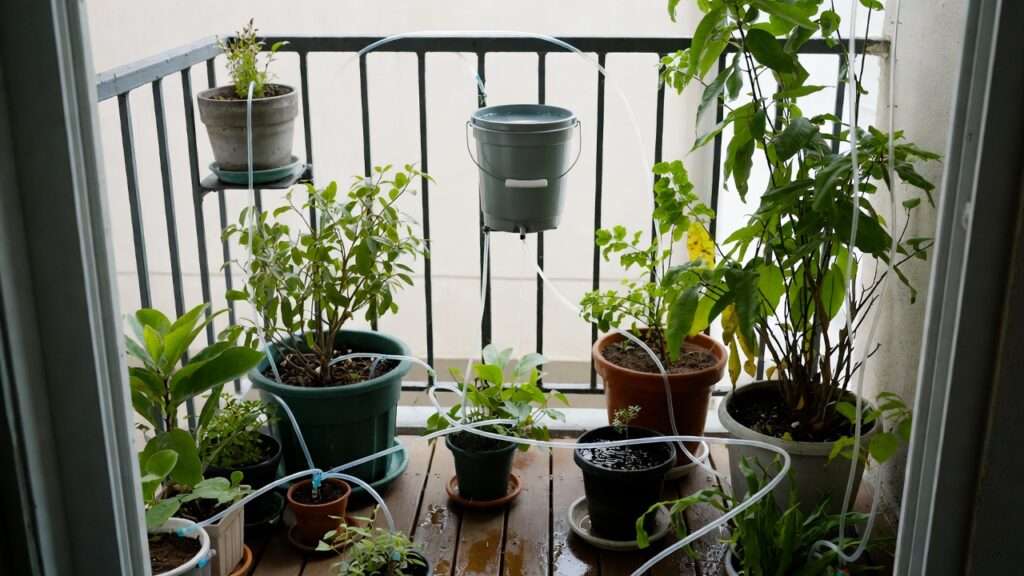
Imagine stepping onto your cozy balcony in Dhaka after a hectic day, only to find your potted herbs, tomatoes, and that precious mango sapling looking vibrant and happy — no wilted leaves, no rushed evening watering routine, and no guilt over wasted water during dry spells. For many urban gardeners like you, limited space means relying on containers, rail planters, or tiny patios, where hand-watering becomes a daily chore that’s easy to skip when life gets busy. Inconsistent moisture leads to stressed plants, root rot from overwatering, or crispy tips from underwatering, not to mention skyrocketing water bills in a hot, humid climate.
That’s where DIY drip irrigation in small spaces shines as a game-changer. This low-pressure, targeted watering method delivers moisture directly to plant roots, slashing water use by 50–70% compared to hand watering or sprinklers (based on efficiency stats from sources like EPA and Rain Bird guidelines), while giving you back precious time. Whether you’re in an apartment with no outdoor faucet or a compact patio, a simple DIY setup can make your green oasis vacation-proof, healthier, and far more sustainable. 🌱
As a plant care specialist who’s helped countless urban gardeners in tropical cities like Dhaka transform cramped balconies into thriving micro-gardens, I’ve seen firsthand how drip systems prevent common issues like fungal diseases from wet foliage and promote deeper, stronger roots. In this comprehensive guide, we’ll walk through everything you need: from planning and budget-friendly materials to step-by-step builds (including gravity-fed options for no-faucet spots), customization tips, maintenance, and real troubleshooting. By the end, you’ll have the confidence to set up a reliable system that saves water, time, and effort — all tailored for small-space container gardening. Let’s dive in and turn your limited area into a lush, low-maintenance paradise! 🚀
Why Choose DIY Drip Irrigation for Small Spaces? 🌿
In tiny urban setups like balconies, patios, and container gardens, traditional watering methods fall short. Hand watering is time-consuming and imprecise — you might drench some pots while others stay dry. Overhead sprinklers waste water through evaporation (up to 50% loss in hot weather) and wet leaves, inviting pests and diseases.
DIY drip irrigation solves these pain points perfectly for small spaces:
- Massive Water Savings 💦: Drip systems achieve 90%+ efficiency by delivering water slowly right at the root zone, minimizing evaporation and runoff. Studies and real-world use show 30–70% less water than sprinklers or hand methods, ideal for water-conscious gardeners in regions with variable rainfall.
- Time Freedom ⏰: Once set up, it’s largely “set-it-and-forget-it.” Add a timer, and you can go away for days without worry.
- Healthier Plants 🌱: Consistent, even moisture prevents stress, root rot, and fungal issues common in containers. Roots grow deeper, leading to stronger growth and better yields — think bushier basil or juicier cherry tomatoes!
- Space-Smart Design 🏙️: Thin tubing hides easily along rails or under pots; no bulky hoses cluttering your balcony.
- Eco-Friendly Bonus ♻️: Less water waste means lower bills and a smaller environmental footprint — perfect for sustainable urban living.
Here’s a quick comparison:
- Hand Watering: 50–70% efficient; daily effort; uneven results.
- Soaker Hoses: Better than sprinklers but still lose to evaporation; harder to control in pots.
- DIY Drip: 90%+ efficient; minimal maintenance; customizable for 5–50+ containers.
If you’re a busy professional, frequent traveler, or just tired of babysitting plants, this is the upgrade your small space needs.
Understanding Drip Irrigation Basics for Limited Areas 📏
Drip irrigation works by slowly releasing water through small emitters (drippers) directly to the soil, mimicking natural rainfall but with precision. For small spaces, focus on micro or low-flow systems using 1/4-inch tubing — perfect for pots, hanging baskets, and rail planters.
Key components (keep it simple for beginners):
- Emitters/Drippers: Control flow (0.5–2 gallons per hour); adjustable or fixed.
- Tubing: 1/4-inch micro-tubing branches from main lines to pots.
- Connectors/Fittings: Barbed tees, elbows, goofs plugs for leaks.
- Filter: Essential to prevent clogs from sediment.
- Pressure Regulator (if pressurized): Keeps flow even (25–30 PSI ideal).
- Timer (optional): Mechanical, battery, or solar for automation ☀️.
- End Caps/Flush Valves: For cleaning lines.
For balconies without faucets (common in apartments), gravity-fed systems rule — elevate a bucket or barrel 2–4 feet above plants for natural pressure. No pump needed!
Types suited for small spaces:
- Micro-tubing with individual drippers: Most flexible.
- Adjustable drippers: Customize per plant (thirsty veggies vs. drought-tolerant succulents).
- Bottle/wick hacks: Ultra-cheap starter for renters.
Master these basics, and you’re ready to plan your custom setup.
Planning Your Small-Space DIY Drip System 🗺️
Good planning prevents headaches later. Start by assessing your space:
- Measure your balcony/patio and count containers (pots, grow bags, rails).
- Note plant types and water needs: Tomatoes/cucumbers need more; herbs/succulents less.
- Map sun exposure and wind — hotter spots dry faster.
- Sketch a layout: Group similar plants; run main tubing along edges.
Water source options for urban spots:
- Faucet-connected (easiest if available): Hose bib adapter.
- Gravity-fed bucket/rain barrel 🪣: Ideal for no-faucet balconies — elevate on a stand.
- Solar timer + battery pump (if needed): For advanced no-outlet setups.
Calculate needs roughly:
- Small pot (5–10L): 0.5–1 GPH emitter, 10–20 min daily.
- Larger container (20L+): 1–2 GPH, longer run.
- Total: Aim for 1–2 emitters per pot; test and adjust.
Budget tiers:
- Low-cost ($20–50): Basic gravity bucket + tubing/emitters.
- Mid-range ($50–150): Timer, filter, quality fittings.
Pro tip: Start with 5–10 pots to test, then expand.
Materials You’ll Need: Budget-Friendly Shopping List 🛒
Putting together a small-space drip system doesn’t have to break the bank. Many urban gardeners in Dhaka start with local hardware shops (like those in New Market or online via Daraz) or basic garden supply stores. Here’s a realistic list for a starter setup covering 10–20 containers:
Essentials (Core for any system):
- 1/4-inch black micro-tubing (50–100 ft roll) – flexible, UV-resistant, hides easily.
- Adjustable or fixed drippers/emitters (10–30 pieces) – 0.5–2 GPH flow; adjustable ones let you fine-tune per plant 🌱.
- Barbed connectors: tees, elbows, straight couplers (10–20 pack).
- Goof plugs (for fixing accidental holes or unused spots).
- Inline filter (screen or disc type) – prevents clogs from tap water sediment or dust.
- End caps or figure-8 clamps to seal tubing ends.
- Hole punch tool (for inserting emitters into tubing).
For Gravity-Fed (No-Faucet Balconies) 🪣:
- 20–50L plastic bucket or jerry can with lid (drill holes for tubing).
- Optional: Small stand or bricks to elevate 2–4 ft for pressure.
Optional Upgrades for Convenience:
- Battery-operated or solar-powered timer (highly recommended for automation ☀️⏰) – brands like Orbit or cheap Chinese models work well.
- Pressure regulator (if using faucet) – 25–30 PSI.
- Mainline tubing (1/2-inch) if expanding beyond micro-tubing.
Total Cost Estimate:
- Basic gravity setup: BDT 1,500–3,000 (~$15–30 USD).
- Faucet + timer version: BDT 3,000–8,000.
Shop tip: Buy a pre-made container drip kit online if you want simplicity, then customize. Always choose food-grade or UV-stabilized parts for longevity in our sunny, humid climate.
Here are some visual examples of typical materials and setups:

These show real-world tubing, emitters, and gravity reservoirs in action!
Step-by-Step: How to Build Your DIY Drip Irrigation System 🔧
This is the heart of the guide — detailed, beginner-proof instructions. We’ll cover three options so you can pick what fits your balcony best.
Option 1: Basic Gravity-Fed Bucket System (Best for apartments with no faucet) 🪣💧
- Prepare the reservoir: Take a clean 20–50L bucket. Drill 2 holes near the bottom — one for the main outlet tubing, one for an overflow/air vent if desired.
- Insert fittings: Push a barbed connector into the outlet hole (seal with silicone if needed). Attach 1/2-inch or 1/4-inch tubing.
- Elevate it: Place the bucket on bricks, a stool, or balcony rail 2–4 ft above your highest pot. Higher = better pressure.
- Run main line: Extend tubing along the balcony edge or rail, securing with zip ties or clips.
- Punch & insert emitters: Use the hole punch to make openings in the tubing near each pot. Insert adjustable drippers (stake type works great for pots).
- Place emitters: Position 1–2 per container, buried slightly in soil near the stem for root-zone delivery.
- Cap ends: Seal the tubing end with a figure-8 clamp or end cap.
- Fill & test: Fill bucket, open flow, check for even dripping. Adjust emitters as needed (e.g., more flow for large tomato pots 🍅).
Pro tip: Add a simple valve or clamp on the outlet for easy on/off control.
Option 2: Faucet-Connected Micro-Tubing Setup (For patios with hose access)
- Connect to source: Attach a faucet adapter (hose bib connector) to your tap.
- Add essentials: Install inline filter + pressure regulator (25–30 PSI) right after the faucet.
- Run main tubing: Use 1/2-inch main line from faucet, then branch to 1/4-inch micro-tubing.
- Add timer: Insert a battery timer after the regulator for scheduled watering.
- Branch & emitters: Same as above — punch holes, insert drippers, place in pots.
- Flush & test: Run water briefly to flush lines, then set timer (start with 10–20 min daily, adjust based on plant needs).
Option 3: Ultra-Simple Bottle/Wick Hack (For renters or super-small budgets) 🍾
- Use recycled 1–2L plastic bottles.
- Poke small holes in cap or bottom.
- Fill bottle with water, invert and bury neck slightly in soil (wick-style slow release).
- Or: Thread cotton string/rope through cap as a wick from bottle to soil.
- Place 1 bottle per pot; refill every 2–4 days.
Great starter before upgrading to full drip!
Here are some real installation visuals to inspire you:

Customizing for Different Plants & Containers 🌿🍅
One of the biggest advantages of DIY drip irrigation is how easily you can tailor it to the unique needs of your plants — something hand watering rarely achieves with consistency.
- Thirsty vegetables & fruiting plants (tomatoes, chilies, cucumbers, eggplants, dwarf fruit trees like mango or guava in large pots): Use 1–2 emitters per container at 1–2 GPH. Place them 2–4 inches from the stem to encourage wide root spread. Run time: 15–30 minutes daily in peak summer heat.
- Herbs & moderate drinkers (basil, mint, coriander, parsley): One 0.5–1 GPH emitter per 8–12 inch pot. Shorter cycles (10–15 min) prevent soggy soil that invites root rot.
- Drought-tolerant & succulents (cacti, aloe, jade, snake plants): Use the lowest flow (0.5 GPH or less) or even skip emitters on some days. Many thrive with infrequent deep watering.
- Hanging baskets & vertical gardens: Run micro-tubing along rails or trellises. Use in-line drippers or micro-sprayers for even coverage across multiple levels.
- Large grow bags or raised beds on patios: Space emitters every 8–12 inches in a grid pattern for uniform moisture.
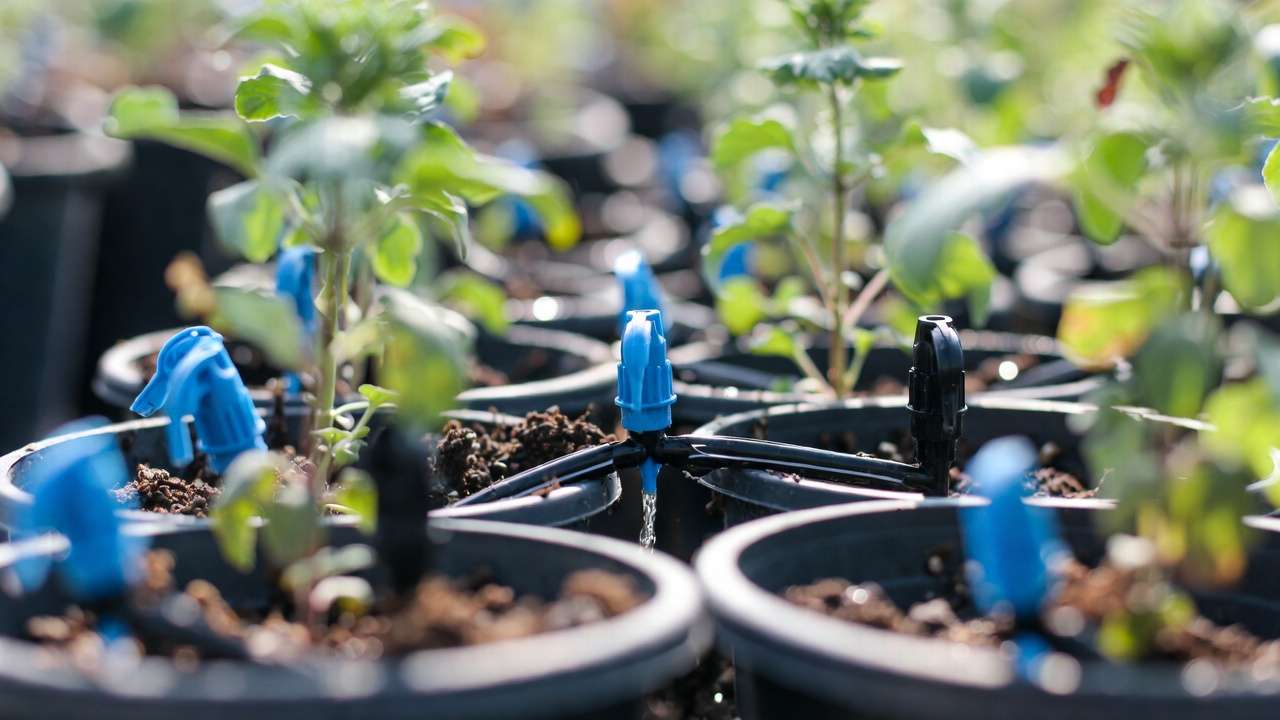
Real-world Dhaka example: On a typical 6×4 ft balcony, one gardener runs a main line with 12 adjustable drippers — 2 per tomato pot, 1 per herb, and minimal for succulents. Result? Even growth despite 35–40°C afternoons and irregular rain.
Pro customization tip: Label emitters or use colored tubing sections to remember which plants get higher flow. Adjust seasonally — more in dry March–May, less during monsoon.
Maintenance & Troubleshooting: Keep It Running Smoothly 🛠️
A well-maintained drip system can last 3–5+ years with minimal effort. Here’s your realistic maintenance schedule and fixes for common small-space issues.
Routine Care:
- Weekly: Glance at drippers — ensure all are dripping evenly.
- Monthly: Flush the entire system — open end caps, run water for 2–3 minutes to clear sediment.
- Every 3–6 months: Clean or replace inline filter (soak in vinegar solution if clogged with minerals).
- Annually: Check tubing for brittleness from sun exposure; replace if cracked.
Common Problems & Easy Fixes:
- Clogged emitters — White mineral buildup or algae is the usual culprit in hard water areas. Fix: Remove dripper, soak in white vinegar 30 min, rinse, reinstall. Prevent with periodic vinegar flushes (1 cup per 20L reservoir every 2 months).
- Uneven watering (some pots dry, others soggy) Fix: Use pressure-compensating emitters if on faucet; for gravity systems, elevate reservoir higher or add inline flow adjusters.
- Leaks or bursts Fix: Patch small holes with goof plugs; replace damaged sections with barbed couplers. Always keep spare fittings handy.
- Low/no flow in gravity system Fix: Raise reservoir another 1–2 ft or reduce tubing length. Clean outlet screen.
- Algae growth in lines (green slime) Fix: Switch to opaque black tubing (blocks light); flush with diluted hydrogen peroxide monthly.
- Overwatering signs (yellow leaves, moldy soil) Fix: Shorten timer cycles or reduce emitter flow; ensure pots have drainage holes.
Seasonal notes for tropical climates: During monsoon (June–September), turn off or reduce frequency drastically. In winter (December–February), slightly increase run time if nights are cooler and evaporation drops.
Advanced Upgrades & Smart Features ⏰☀️
Once your basic system is humming, consider these upgrades to make it truly hands-free:
- Timers: Start with a simple mechanical hose timer (~BDT 800–1,500), then upgrade to digital battery models or solar-powered ones (no outlet needed — perfect for balconies).
- Soil moisture sensors: Cheap Bluetooth or Wi-Fi versions (~BDT 1,000–3,000) can connect to smart timers and only water when soil is dry.
- Rain sensors: Skip watering after heavy rain — some timers have built-in rain delay.
- Zoning: Split into 2–3 zones (e.g., veggies vs. herbs) using manual valves or multi-outlet timers.
These additions can reduce water use another 10–20% while giving peace of mind during travel.
Real Results: Case Studies & Reader Examples 📸
- Shuvo’s 8-Pot Balcony (inspired by real Dhaka setups): Started with hand watering → daily 30 min chore, inconsistent moisture. Installed gravity-fed bucket + 12 drippers + solar timer. Result: Water use dropped ~60%, plants (tomatoes, chilies, basil) doubled in vigor, zero wilt during 10-day trips. Maintenance: 10 min/month.
- Apartment Rail Garden: 20 hanging pots + herbs. Bottle-wick starters → upgraded to micro-drip. Outcome: Saved ~45L water/week, healthier foliage, no more overwatering deaths.
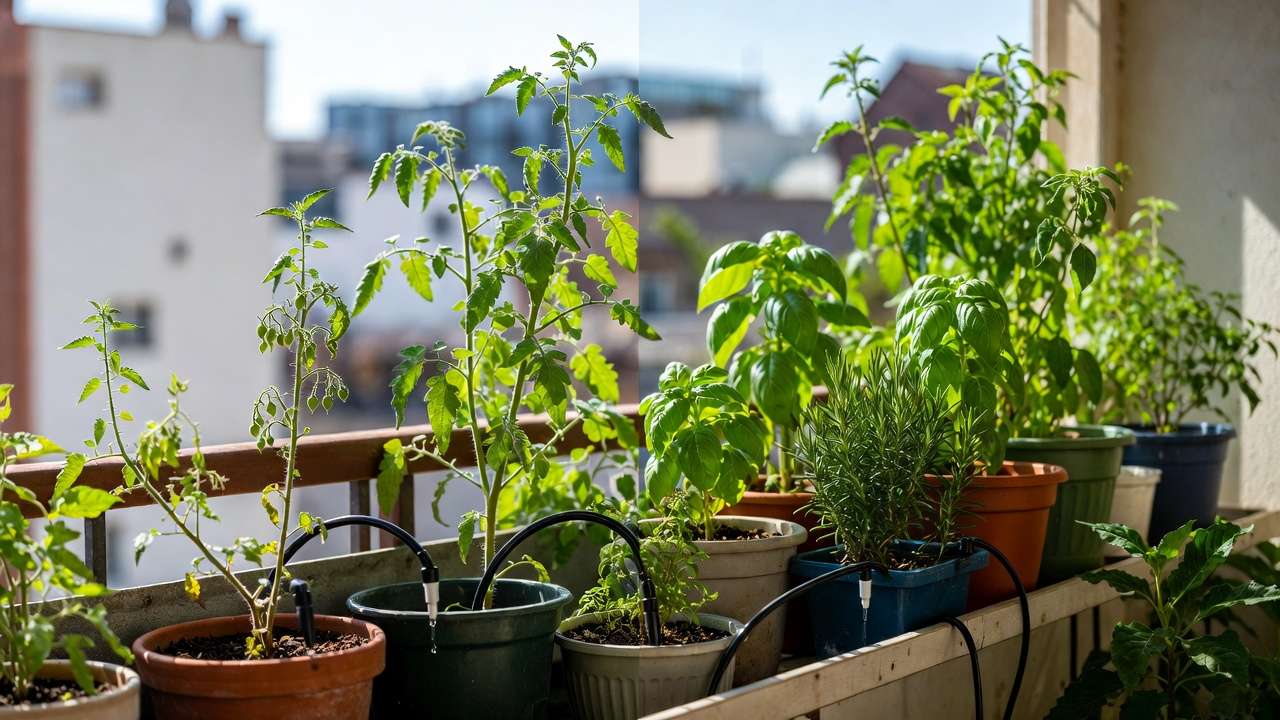
These transformations are common among urban gardeners who adopt drip — healthier plants, less guilt, more enjoyment.
Conclusion 🌱
Setting up DIY drip irrigation in small spaces is one of the smartest moves any balcony, patio, or container gardener can make. It solves the core frustrations of urban plant care: time scarcity, water waste, and inconsistent results. With the options covered here — from ultra-simple bottle hacks to timer-automated gravity or faucet systems — you can start small, see quick wins, and scale up confidently.
Grab a bucket or faucet adapter, pick up some affordable tubing and drippers, and give it a try this weekend. Your plants (and your schedule) will thank you! Have questions or want to share your setup? Drop a comment below — I’d love to help refine it for your exact space.
Happy gardening! 💚🌿
FAQs
Is DIY drip irrigation worth it for just 5–10 pots? Absolutely — even a small system pays for itself in 1–2 months through water savings and healthier plants. Start basic and expand later.
Can I set it up without a hose bib on my apartment balcony? Yes! Gravity-fed bucket or jerry can systems work beautifully. Elevate 2–4 ft and you’ll get reliable flow without electricity.
How much water does it save compared to hand watering? Typically 50–70% less, depending on setup and climate. Direct root delivery eliminates evaporation and overspray.
What if emitters clog — are there easy fixes? Very common and fixable. Soak in vinegar, flush lines regularly, and use an inline filter from day one.
Best emitters for containers? Adjustable drippers (stake or button style) give the most control. Start with 1 GPH and tweak as you observe your plants.
How to make it pet/child-safe? Use low-pressure gravity systems (safer than high-pressure faucets), secure tubing with clips, and place reservoirs out of reach.











