
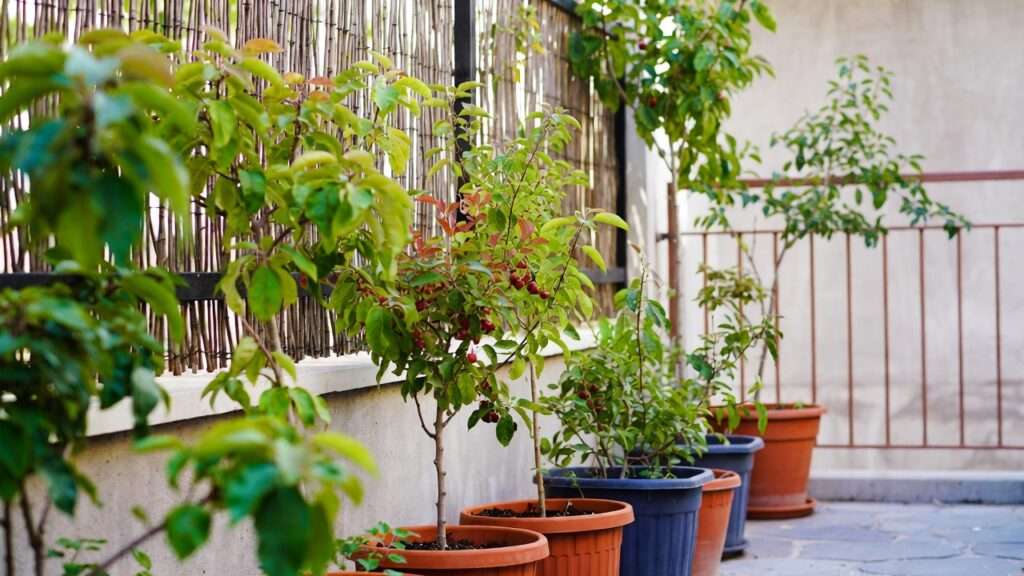
Imagine stepping onto your tiny patio, balcony, or backyard and plucking a sun-warmed peach, a crisp apple, or a juicy plum right from a tree that fits in a space smaller than your dining table. 🍑 Yes — even if your yard is postage-stamp sized or you only have a few containers to work with, you can enjoy the magic of a small space orchard!
In today’s world of urban living, rising food costs, and a desire for fresh, homegrown produce, more people are turning to dwarf fruit trees, container orchards, and clever space-saving techniques like espalier and columnar planting. The good news? Modern dwarfing rootstocks and breeding advancements mean these compact trees deliver full-sized, flavorful fruit without overwhelming your limited area. 🌟
Whether you’re dealing with a 10×10 ft backyard, a sunny balcony in an apartment, or a narrow side yard, this comprehensive guide shows you how to create your own mini orchard. We’ll cover the best varieties for 2025–2026, creative layouts that maximize every inch, step-by-step planting and care, common pitfalls to avoid, and real success stories from fellow gardeners. By the end, you’ll have the confidence to start growing your own fruit — sustainably, deliciously, and beautifully — no matter how small your space. Ready to turn limitation into abundance? Let’s dig in! 🌱
Why a Small Space Orchard Is Easier (and More Rewarding) Than You Think 🌟
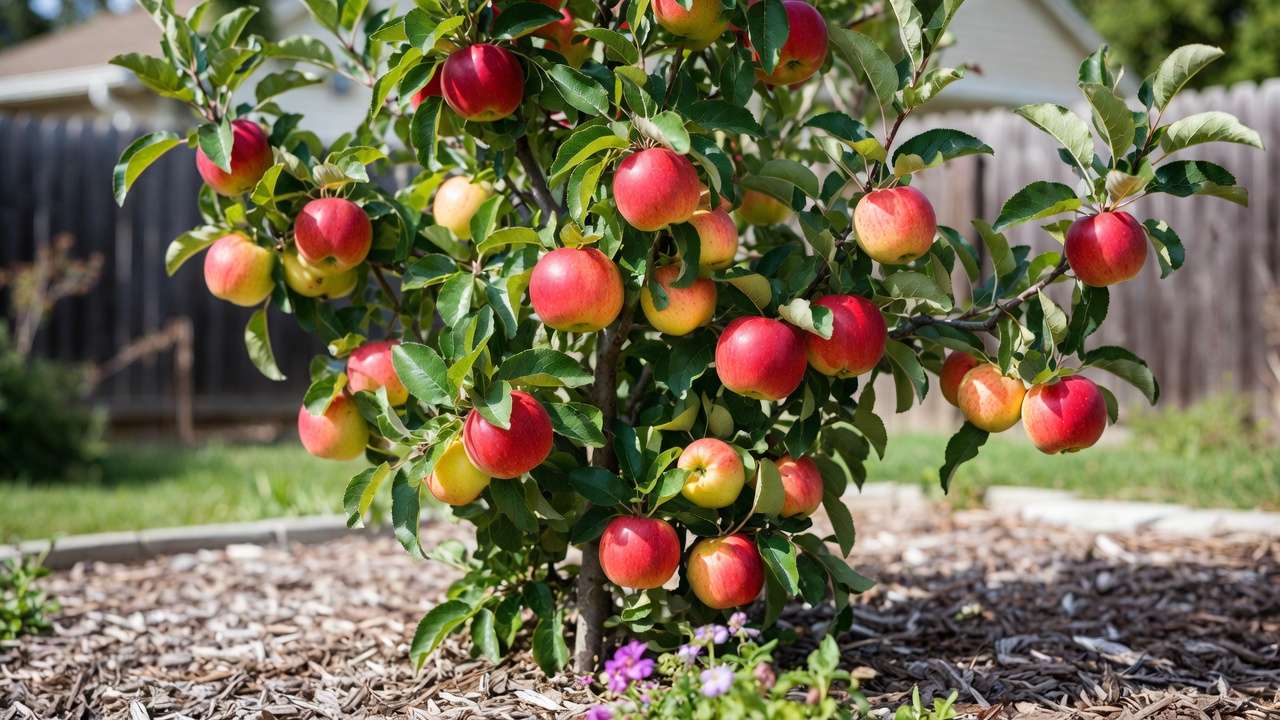
Many gardeners assume fruit trees require acres of land, but that’s simply not true anymore. Thanks to innovative rootstocks and training methods, you can harvest dozens (even hundreds) of pounds of fruit from just a few square feet.
The Power of Dwarf, Semi-Dwarf, and Columnar Rootstocks Dwarf trees (on rootstocks like M27 or M9 for apples) stay 6–10 ft tall and wide, while semi-dwarfs reach 10–15 ft. Columnar varieties grow tall and narrow (8–12 ft high, only 2–4 ft wide), perfect for tight rows or pots. These produce full-sized fruit — often earlier than standard trees — because energy goes into fruiting rather than excessive vegetative growth. 🍏
How Modern Fruit Trees Fit Tiny Yards Without Sacrificing Harvests A single dwarf apple can yield 20–50 lbs annually; multiply that by 4–6 trees in high-density planting, and you’re looking at family-supplying harvests. Plus, many are self-fertile, so one tree is enough for beginners!
Benefits Beyond Fruit: Biodiversity, Shade, and Beauty in Small Spaces Your mini orchard supports pollinators 🐝, provides natural shade, improves air quality, and boosts mental well-being through hands-on gardening. Espaliered trees against walls add stunning architectural interest, turning bland fences into living art.
Assessing Your Space — The First Step to Success 📏
Before buying a single tree, evaluate what you have.
Measuring Yards, Patios, Balconies & Containers Sketch your area: note dimensions, pathways, and obstacles. For containers, aim for at least 15–25 gallons (larger for long-term health). Balconies need sturdy railings and weight limits checked.
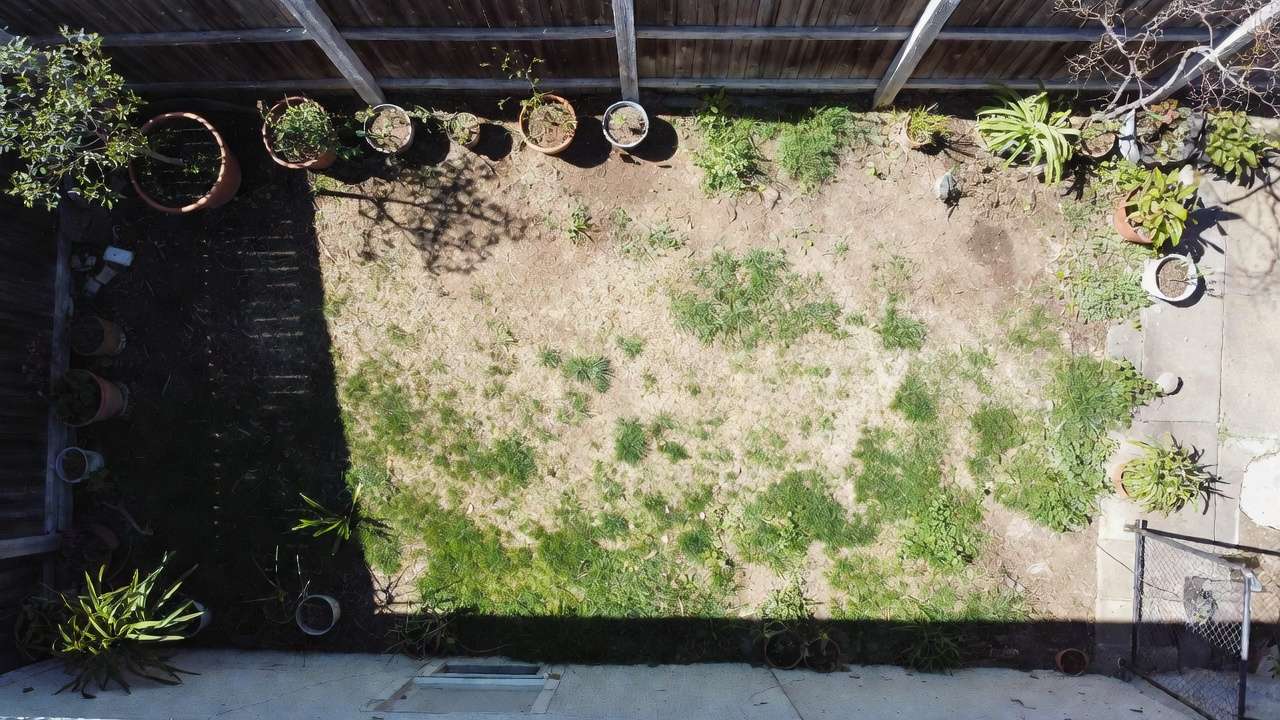
Sunlight, Soil, and Microclimate Checklists Fruit trees crave 6–8+ hours of direct sun daily ☀️. Track sun patterns seasonally. Test soil pH (most prefer 6.0–7.0) and drainage — poor drainage kills roots fast. Urban heat islands can extend growing seasons but increase watering needs.
USDA Zone Considerations & Climate Challenges In warmer zones (9–11), citrus and figs thrive; cooler zones (4–8) suit apples, pears, and cherries. For subtropical fruits in marginal areas, use pots for winter mobility.
Best Fruit Trees & Varieties for Small Spaces (2025–2026 Recommendations) 🍒
Here are top picks based on recent nursery trends, extension service advice, and real gardener feedback.
Top Dwarf Apple Trees
- ‘Cameron Select’ — Fire blight resistant, crisp fruit, great for zones 4–8.
- ‘Honeycrisp’ on dwarf rootstock — Iconic sweet-tart flavor.
- Columnar options like ‘Scarlet Sentinel’ or ‘Tangy Green’ — Narrow form ideal for rows or pots.
Compact Pears, Peaches, Plums & Cherries
- Dwarf pear ‘Moonglow’ or ‘Seckel’ — Sweet, self-fertile.
- ‘Starkrimson’ dwarf peach — Early ripening, juicy.
- ‘Stella’ dwarf cherry — Self-pollinating sweet cherries.
- ‘Santa Rosa’ plum — Reliable producer.
Citrus & Tropical Options for Pots
- Meyer lemon — Sweet-tart, prolific indoors/outdoors 🍋.
- Dwarf avocado (e.g., ‘Little Cado’) — Creamy fruit in containers.
- Calamondin orange or kumquat — Compact, ornamental, and edible.
Berries & Bush Fruits to Underplant Blueberries, raspberries, and gooseberries make excellent living mulch under trees, adding extra harvests without extra space.
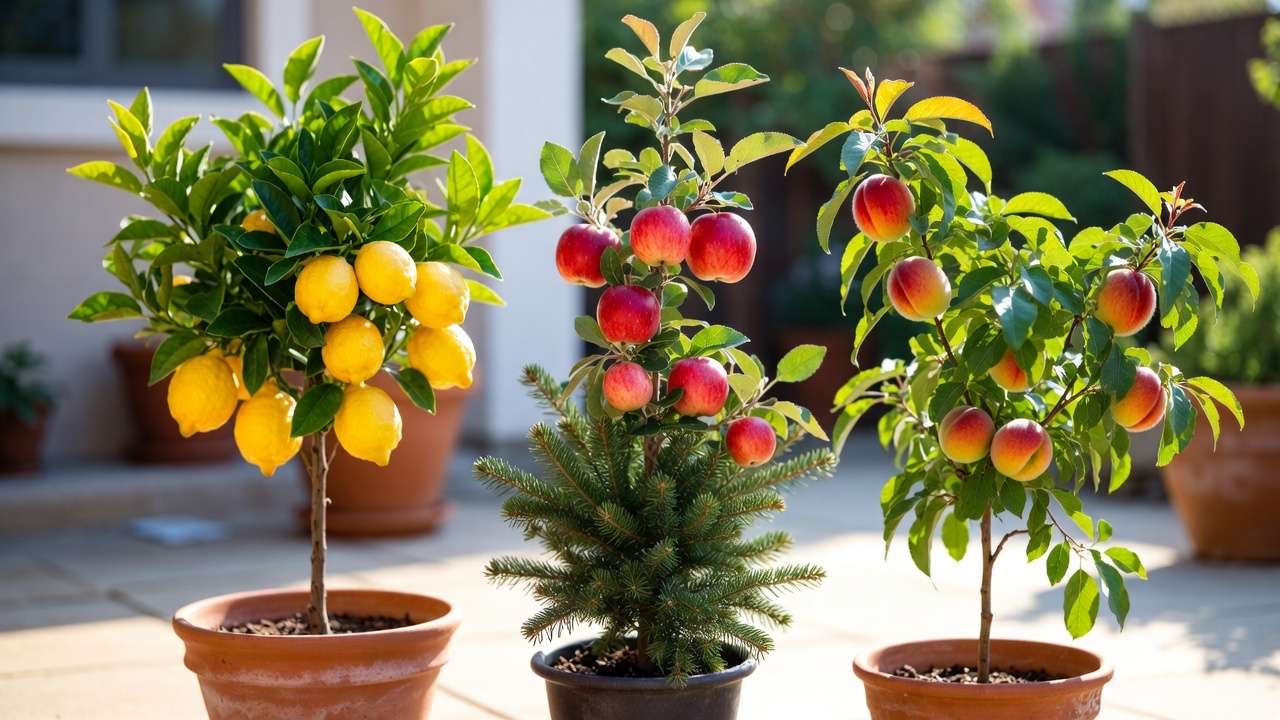
Expert Pick: 5–7 Must-Have Varieties for Maximum Harvest in Under 200 sq ft
- Meyer Lemon (container star)
- ‘Cameron Select’ Apple
- ‘Stella’ Cherry
- ‘Moonglow’ Pear
- Dwarf Peach (‘Bonanza’ or ‘Garden Gold’)
- Columnar Apple (‘North Pole’ or ‘Scarlet Sentinel’)
- Fig (‘Chicago Hardy’ for cold tolerance)
Creative Layout Ideas to Maximize Every Inch 🎨
High-Density Backyard Orchard Culture Plant semi-dwarfs 5–8 ft apart, prune aggressively in summer to keep trees 8–10 ft tall. This Dave Wilson Nursery-inspired method yields massive production.
Espalier, Cordon & Fan Training Against Walls/Fences Train apples/pears into flat patterns — saves space, increases sun exposure, creates beautiful screens.
Container & Patio Orchard Designs Use large pots on casters for mobility. Group 3–5 trees for a mini grove 🪴.
Vertical & Tiered Orchards Trellises, raised beds, or balcony rails support cordons or espaliers.
Meadow-Style & Polyculture Layouts Mix fruit trees with herbs/flowers for pest control and aesthetics.
Real Example Layouts
- 10×10 ft Plot: 4 columnar apples in corners + central dwarf peach.
- Balcony/Micro-Orchard: 3 large pots with Meyer lemon, fig, and columnar apple.
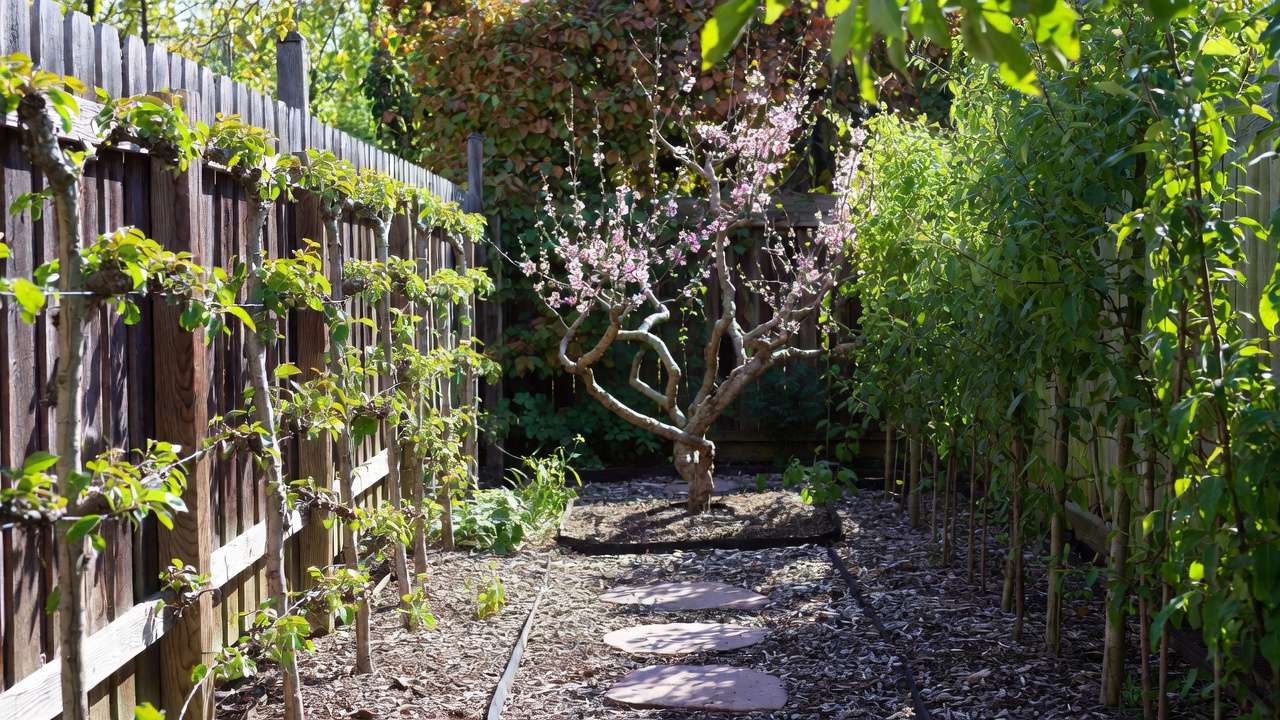
(Imagine a simple diagram here: rows of narrow columnar trees along a fence, or a circular container grouping — visuals make planning so much easier!)
Step-by-Step Planting Guide for Small Space Success 🛠️
Choosing Healthy Trees & Rootstocks Buy from reputable nurseries; look for strong grafts, healthy roots, and disease resistance.
Soil Preparation & Amendments Use well-draining potting mix (for containers) or amend native soil with compost.
Planting Techniques Plant bare-root in late winter/early spring; potted anytime. Water deeply after planting.
Initial Pruning & Training Cut back to encourage strong structure — crucial for size control.
Essential Care Tips to Keep Your Mini Orchard Thriving 💧
Watering & Mulching Strategies Deep, infrequent watering; mulch to retain moisture and suppress weeds.
Pruning Schedules Winter structural prune + summer maintenance to keep small & fruitful ✂️.
Fertilization & Organic Nutrient Plans Balanced organic fertilizer in spring; compost tea for boost.
Pest & Disease Prevention Companion planting (marigolds, garlic), neem oil, and monitoring.
Pollination Hacks Plant multiple varieties, add bee hotels, or hand-pollinate citrus.
Harvesting, Storing & Enjoying Your Bounty 🥭
The moment you’ve been waiting for — your first harvest! Small space orchards often surprise new growers with how quickly and abundantly they produce.
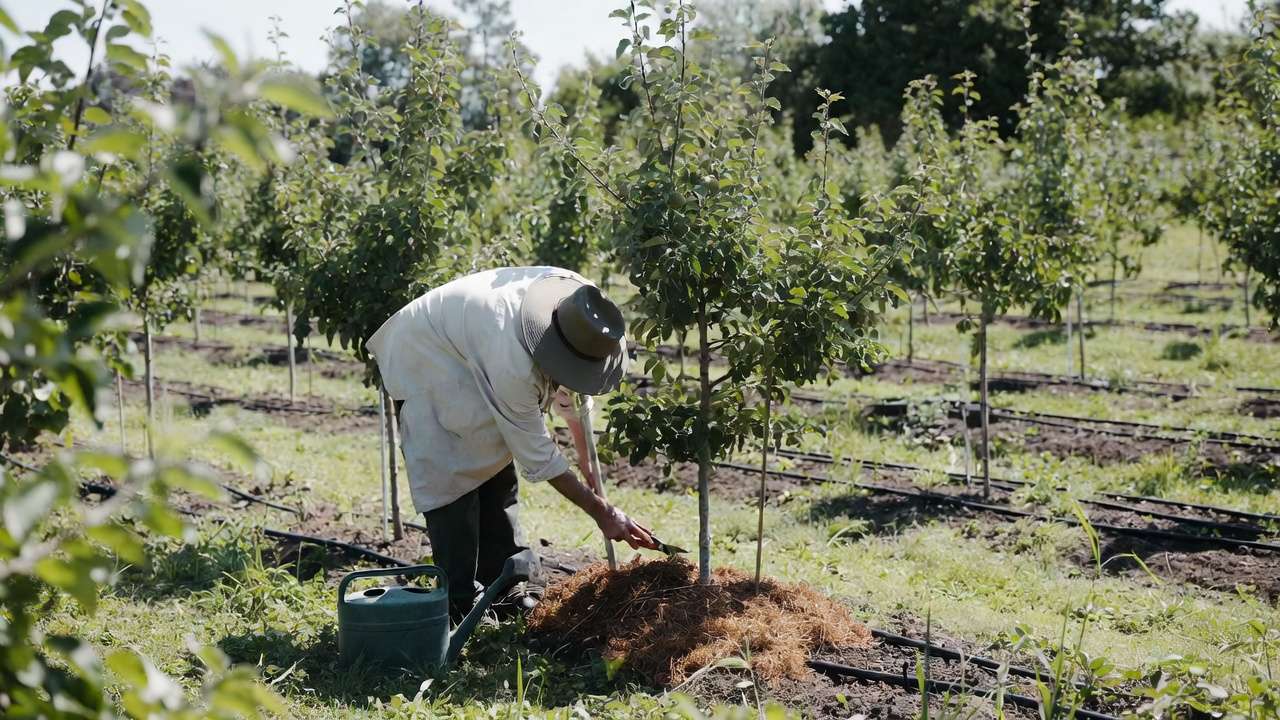
When & How to Pick for Peak Flavor Most fruits are ready when they easily twist off the stem or show full color and a slight give when gently squeezed.
- Apples: Background color changes from green to yellow/red; seeds turn brown.
- Peaches & nectarines: Develop full fragrance and background color shifts from green to cream/yellow.
- Pears: Pick when still firm (they ripen off the tree); harvest when the neck yields slightly to pressure.
- Citrus: Color is the best indicator (Meyer lemons turn bright yellow-orange), but taste one to confirm sweetness. Harvest in the morning after dew dries for best flavor and longest storage life.
Staggered Harvest Planning (Early, Mid, Late Season Varieties) To extend your fresh-fruit season from spring through fall (and even winter with stored apples/pears), plant a mix of ripening times:
- Early (June–July): ‘Starkrimson’ peach, ‘Moonglow’ pear, early plums
- Mid (August–September): Most apples (‘Honeycrisp’, ‘Cameron Select’), ‘Santa Rosa’ plum
- Late (October–November): Late apples (‘Fuji’ on dwarf rootstock), Asian pears, some figs This strategy can give you fresh fruit for 5–7 months straight — a huge win in small spaces!
Simple Preservation Ideas
- Freezing: Slice peaches, apples, or berries; toss with lemon juice or ascorbic acid, freeze flat on trays, then bag.
- Jamming & Canning: Turn excess plums, peaches, or berries into low-sugar jams.
- Drying: Use a dehydrator or oven for apple chips, fig halves, or pear slices.
- Cold Storage: Store late-season apples and pears in a cool (32–40°F), humid spot (garage fridge or root cellar setup) wrapped in perforated plastic bags — they can last 3–6 months!
Common Mistakes to Avoid in Small Space Orchards ⚠️
Even experienced gardeners slip up in tight spaces — here are the pitfalls I see most often (and how to dodge them).
Overcrowding, Wrong Varieties, Poor Pollination Partners Planting too close without aggressive pruning leads to tangled, diseased trees and poor air circulation. Always follow recommended spacing for the rootstock. Choose at least two compatible varieties for cross-pollination unless the tree is clearly labeled self-fertile.
Ignoring Pruning & Letting Trees Get Too Big The #1 killer of small-space dreams! If you skip summer pruning, dwarf trees can quickly outgrow their space and revert to vigorous growth. Set a calendar reminder for late June/early July light pruning to remove upright shoots and keep the tree compact.
Neglecting Containers (Root-Bound Issues, Drainage) Potted trees suffer silently from circling roots, poor drainage, or nutrient depletion. Repot every 2–3 years into a slightly larger container, refresh soil, and ensure pots have multiple large drainage holes. Elevate pots on feet to prevent root rot.
Real-Life Success Stories & Case Studies 🌱
Urban Balcony Citrus Grove (Seattle Apartment, Zone 8b) Sarah transformed her 6×12 ft balcony into a year-round citrus haven: three 25-gallon pots with Meyer lemon, dwarf key lime, and calamondin orange. She wheels them indoors near a sunny window each winter. Annual yield: 40–60 fruits per tree. Key to success: Liquid seaweed fertilizer monthly and hand-pollination with a small brush during bloom.
1/10-Acre Backyard Mini-Orchard (Suburban Texas, Zone 9a) Mike planted a high-density layout of 8 semi-dwarf trees (apples, peaches, plums, figs) in just 400 sq ft using Dave Wilson’s backyard orchard culture method. Aggressive summer pruning keeps everything under 9 ft. Last year he harvested over 180 lbs of fruit — enough to share with neighbors and preserve for winter.
Front-Yard Espalier Design (Small City Lot, Zone 6) Lisa trained four apple varieties (‘Honeycrisp’, ‘Liberty’, ‘Enterprise’, ‘GoldRush’) into a flat cordon pattern along her south-facing fence. The 4 ft deep, 25 ft long bed now produces 60–80 lbs of apples annually while adding stunning curb appeal. Bonus: The flat shape makes netting for birds much easier.
These stories prove that small space orchards aren’t just possible — they’re thriving in real homes just like yours.
FAQs About Small Space Orchards ❓
Can I grow fruit trees in pots year-round? Yes! Choose large containers (20+ gallons), excellent drainage, and winter protection (move indoors, wrap pots, or mulch heavily depending on your zone).
How many trees can realistically fit in a 15×15 ft yard? You can comfortably fit 6–9 dwarf or columnar trees using high-density planting (5–8 ft spacing), plus underplanting with berries.
Do dwarf trees produce less fruit than standard trees? No — they produce the same quality and often comparable quantity per tree, just on a smaller, more manageable scale. A mature dwarf apple can still yield 30–60 lbs.
What if I only have 4–6 hours of sun? You’ll get reduced yields and smaller fruit, but some shade-tolerant options (certain cherries, currants, gooseberries, or figs) can still work. Prioritize the sunniest spot possible.
How long until my first harvest? Most dwarf fruit trees on good rootstock bear lightly in year 2–3 and reach good production by year 4–5 — much faster than standard trees.
Are columnar fruit trees worth it? Absolutely for ultra-tight spaces! They’re perfect for fences, patios, or narrow side yards and often need little pruning beyond tip trimming.
What’s the easiest fruit tree for complete beginners in small spaces? Meyer lemon in a pot — forgiving, self-fertile, beautiful foliage, and productive even when young.
Conclusion 🍏
Creating a small space orchard transforms limitation into abundance. Whether you start with one potted Meyer lemon on your balcony or a clever high-density layout in your backyard, every tree you plant brings fresh flavor, beauty, pollinator support, and the deep satisfaction of growing your own food.
You don’t need a big property — you just need the right varieties, smart design, consistent care, and a little patience. Start small, learn as you grow, and watch your tiny space become a productive, joyful mini paradise.
Ready to get started? Grab a notebook, sketch your space, and pick your first 1–3 trees. Share your small space orchard plans, photos, or questions in the comments below — I’d love to cheer you on and answer any follow-ups!
For more seasonal tips, pruning guides, and variety deep-dives, subscribe to our newsletter or check out these related articles:
- The Ultimate Guide to Pruning Dwarf Fruit Trees
- Best Container Citrus Varieties for Beginners
- How to Protect Fruit Trees from Birds & Pests Organically
Happy planting — here’s to baskets overflowing with homegrown fruit, no matter how small your yard! 🌿🥝🍐











