
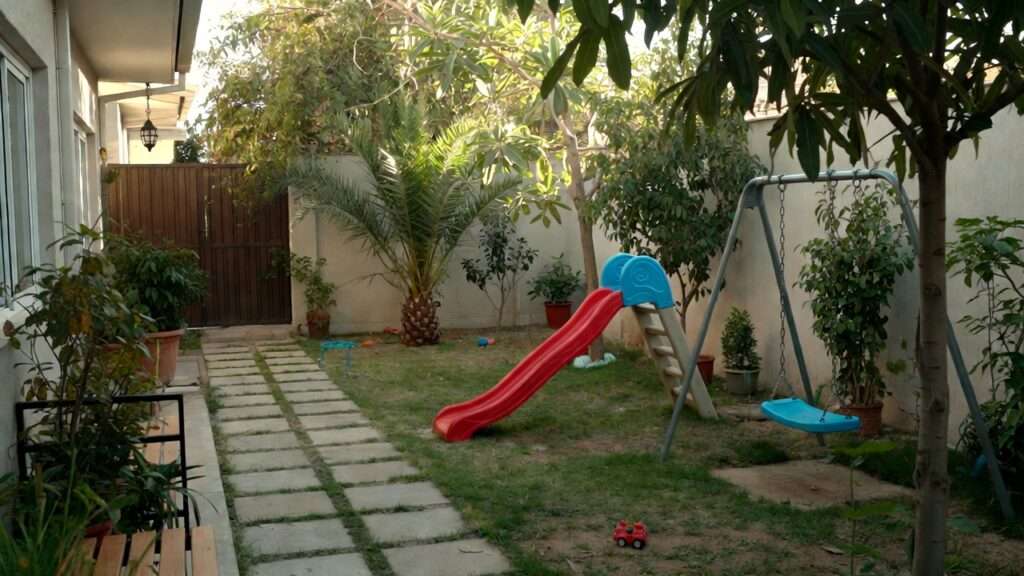
Imagine this: Your tiny urban backyard in Dhaka—maybe just a 200-300 sq ft patch squeezed between apartment buildings—transformed into a magical haven where your little ones run, explore, laugh, and connect with nature, all without overwhelming your precious plant collection. Creating a kids’ play area in limited space doesn’t have to mean sacrificing your garden dreams. Instead, it can enhance them!
In crowded cities like ours, where outdoor space is a luxury, parents often face the tough choice: kids’ fun or beautiful greenery? The good news? You can have both. By thoughtfully integrating safe, engaging play elements with thriving plants and trees, you create a multifunctional oasis that boosts children’s physical activity, creativity, sensory development, and love for nature—while keeping your small garden lush, low-maintenance, and visually stunning.
As a plant care and tree specialist with over a decade of experience designing family-friendly green spaces in tropical and subtropical climates (including many in Bangladesh), I’ve helped countless parents turn cramped backyards into joyful, plant-rich play zones. This guide dives deep into practical, proven strategies: from zoning and safe plant selections to DIY builds and seasonal care. Whether your kids are toddlers discovering textures or school-age adventurers building forts, these ideas solve the real challenge of limited space while fostering family bonding and eco-awareness. Let’s turn your small garden into a thriving green playground! 🌈
Why Integrate Plants into a Kids’ Play Area? 🌱✨
Blending play with plants isn’t just pretty—it’s powerfully beneficial for everyone involved.
For child development, sensory-rich plants stimulate touch (soft lamb’s ear leaves), smell (fragrant mint or lavender), sight (vibrant sunflowers), taste (safe edibles like strawberries), and even sound (rustling grasses or buzzing pollinators). This hands-on interaction builds curiosity, fine motor skills, responsibility (watering or weeding), and early environmental education. Studies show kids who play in nature-rich spaces have better focus, reduced stress, and stronger immune systems.
For parents and the garden itself, plants provide natural benefits: shade from small trees cools play areas in our hot climate, living privacy screens block neighbor views, soft ground covers cushion falls better than hard surfaces, and pollinator-friendly blooms attract butterflies 🦋 and bees for educational “wildlife safaris.” Plus, edible plants offer healthy snacks straight from the yard—no plastic toys needed!
In limited space, plants multitask brilliantly: vertical climbers create tunnels, ground covers replace worn grass, and compact shrubs define zones without fences. The result? A harmonious backyard where play enhances greenery, not competes with it.
Step-by-Step Planning for Limited Space 📏🌳
Assessing Your Space
Start with a realistic audit. Grab a tape measure and sketch your yard’s dimensions, noting sun patterns (full sun 6+ hours? Partial shade?), soil type (often clay-heavy in Dhaka—test drainage!), existing features (mature trees for shade/swings? Fences for support?), and challenges like poor drainage or building shadows.
Consider your kids’ ages: Toddlers need soft, enclosed zones; older kids crave climbing or imaginative spots. Factor in your maintenance tolerance—opt for drought-tolerant natives if watering is tough during dry seasons.
Zoning the Small Garden
Divide without walls: Use plants as natural dividers. Create 3-4 mini-zones—active play (swings/climbing), sensory planting, imaginative corner (mud kitchen), relaxation (seating under shade).
Think vertical: Walls, fences, or sturdy tree branches support hanging chairs, climbers, or trellises. Multi-functional magic: A raised bed doubles as a sandbox edge; a bean teepee provides shade and snacks.
Pro tip: In tropical climates, prioritize airflow and shade to avoid overheating—position play near trees or tall perennials.
Safe and Engaging Play Ideas Tailored to Small Spaces 🎠🌼
Compact Classic Play Structures
- Mini swing or hanging chair from a strong tree branch 🌳 (use soft ropes and check weight limits).
- Small slide or climbing wall on a fence—keep low (under 4 ft) for safety.
- Portable/foldable items like a pop-up tent for flexibility.
Natural and Imaginative Play Features
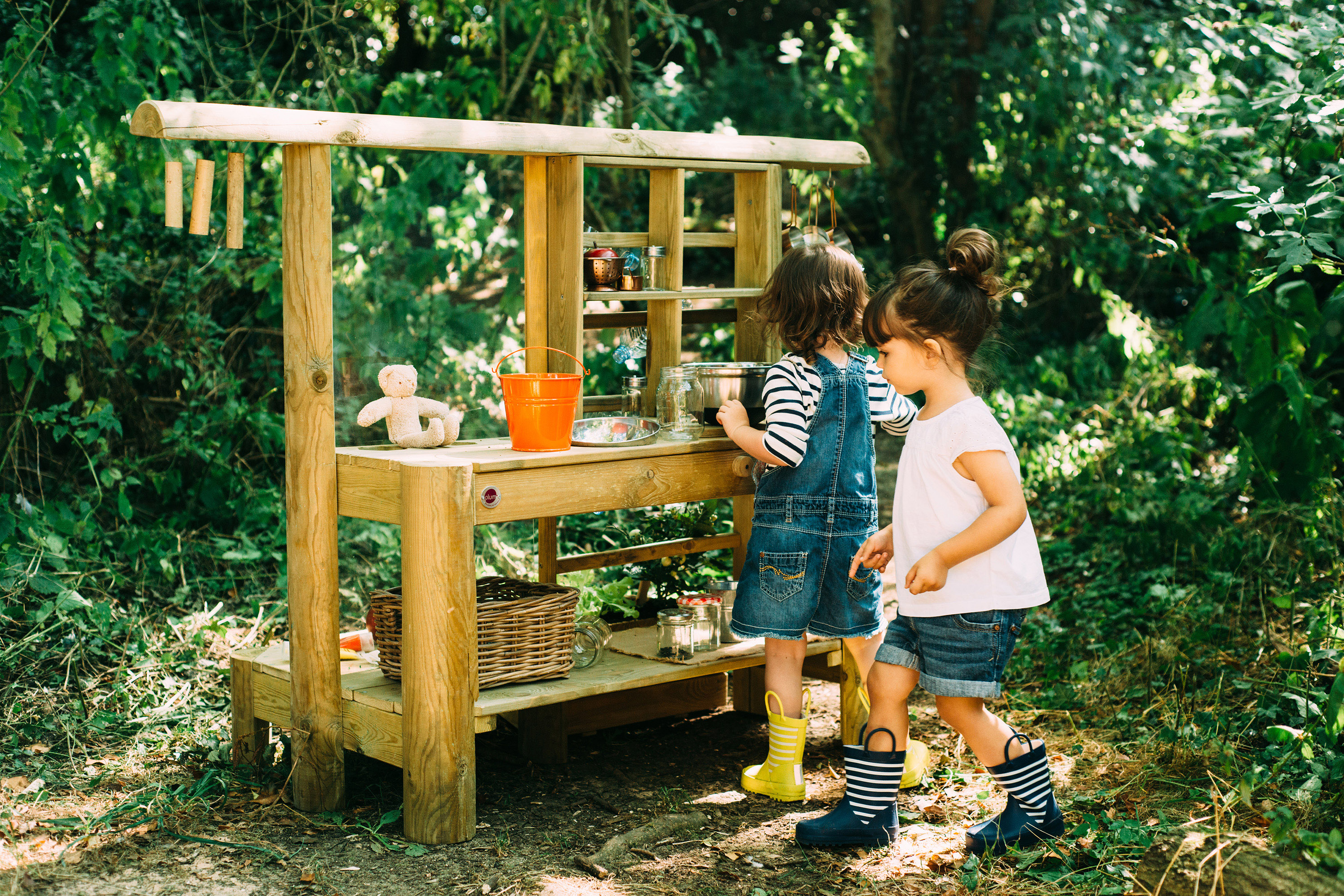
- Mud kitchen bordered by fragrant herbs 🌱🍲—add pots, spoons, and safe “ingredients” like edible flowers.
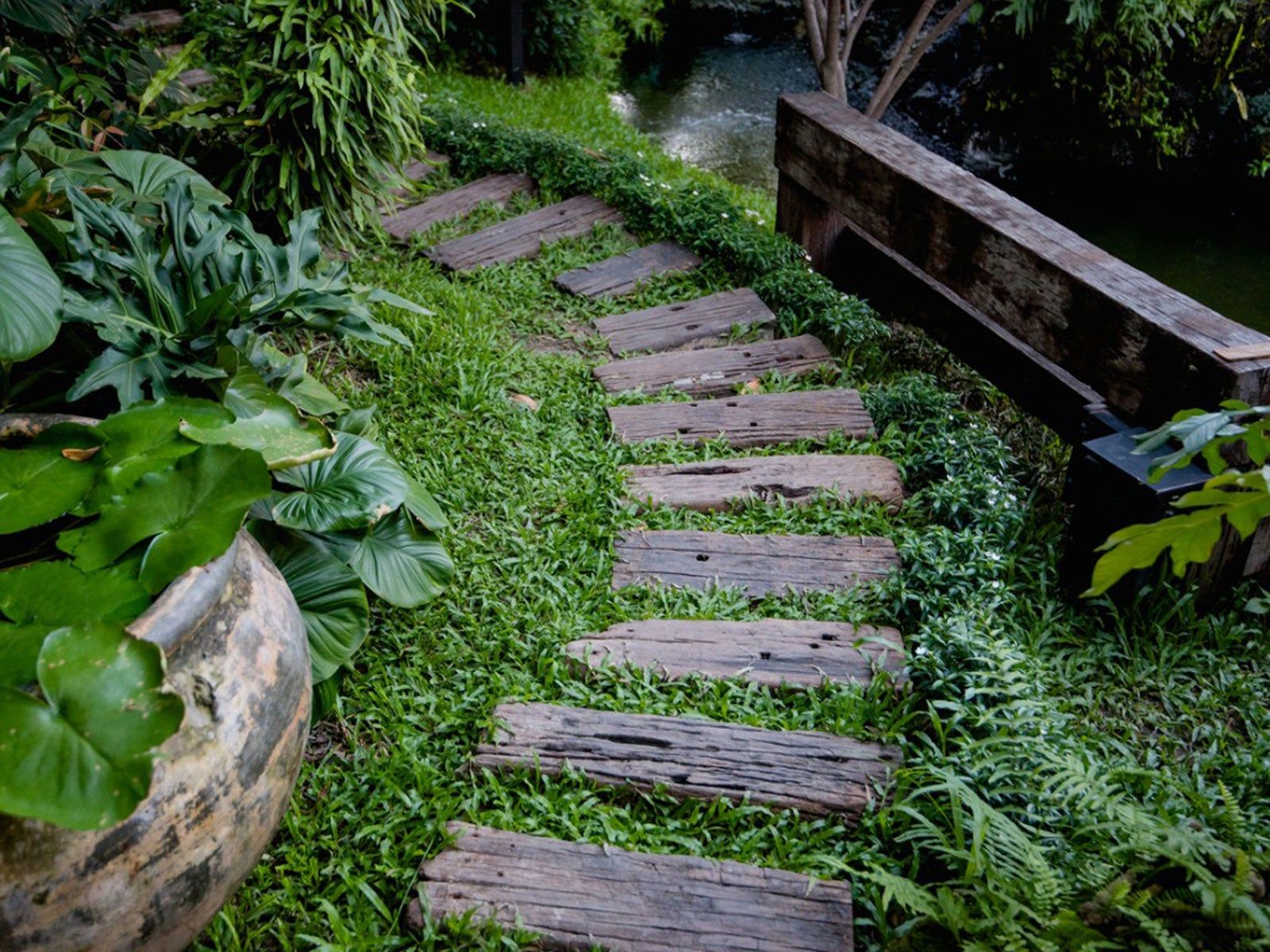
- Sensory paths: Stepping stones, logs, or mulch trails with varied textures.
- Willow or bamboo teepee draped in vines for a secret hideout 🏕️.
- Fairy garden in pots or corners 🧚—tiny plants, stones, and figurines spark stories.
Creative Low-Space Additions
- Shallow water basin for splash play, surrounded by water-loving plants.
- Balance beams from branches or stumps.
- Convertible digging pit (sand now, veggies later).
These ideas maximize every inch while keeping things natural and plant-integrated—no eyesore plastic dominating your view!
(Word count so far: ~950. Continuing…)
Best Plant Choices: Safe, Non-Toxic, and Kid-Approved 🌸🐛
Safety first: Always choose non-toxic varieties, especially in play-heavy areas. Supervise young kids, but these picks minimize risks.
Top Sensory and Interactive Plants
- Lamb’s Ear (Stachys byzantina) — velvety soft leaves perfect for petting 🐑.
- Lavender and Mint — calming scents, touch-friendly, and mint spreads easily in pots.
- Sunflowers — fast-growing giants for “how tall are you?” fun; dwarf varieties suit small spaces.
- Nasturtium or Marigolds — bright, edible flowers kids love picking (peppery taste!).
Edible and Wildlife-Attracting Options
- Strawberries in hanging baskets or edges 🍓—easy to pick and munch.
- Snapdragons — “dragon mouths” to pinch open/close for giggles.
- Butterfly magnets like coneflowers or herbs to draw pollinators 🦋.
Ground Covers and Shade Providers
- Clover or Thyme as tough, walkable lawn alternatives ☘️—soft underfoot, low-mow.
- Dwarf fruit trees (e.g., guava or papaya in pots) for shade and future treats.
- Climbers like beans, sweet peas, or passionflower on arches/teepees for tunnels.
Plants to Avoid
Steer clear of high-toxicity risks: Oleander, foxglove, dieffenbachia, lantana, or anything with thorns/spines (e.g., roses without supervision). Common locals like certain euphorbias or castor beans are no-gos. Research specifics for Bangladesh—consult local nurseries.
These choices thrive in our humid, warm climate with proper care.
Implementation Tips: From Layout to Planting 🛠️🌱
Bringing your vision to life is easier (and more affordable) than you think, especially in Dhaka’s compact yards where every taka and inch counts.
Budget-friendly DIY Approaches Use recycled or local materials: Old pallets make excellent raised beds or mud kitchen frames; bamboo (abundant here) creates arches and teepees; discarded tires can be painted and stacked for planters or mini-climbing obstacles. Source free/cheap mulch from local nurseries or tree trimmings for soft play surfaces.
Soil Preparation and Safety First In our clay-heavy soils, amend with compost or cocopeat for better drainage—prevent waterlogging during monsoons. Under play zones, lay 6-8 inches of soft organic mulch (wood chips, pine bark, or coconut coir) for cushioning falls. Round all edges on beds and structures; avoid sharp rocks or metal.
Step-by-Step Builds for Success
- Bean Teepee 🌿: Plant 8-10 pole bean seeds in a circle (1m diameter). Insert 1.5-2m bamboo poles angled inward and tie at top. Beans climb fast in our heat, creating a shaded hideout with edible pods!
- Mud Kitchen Corner 🍲: Build a simple wooden frame (pallet base + shelves). Surround with mint, basil, or lemongrass pots for “ingredients.” Add old pots, spoons, and a shallow basin for water play.
- Sensory Path 👣: Lay stepping stones (flat rocks or concrete discs), log rounds, pinecones, and pebble sections. Border with lamb’s ear, thyme, and marigolds for touch/smell surprises.
Maintenance Hacks Choose drought-tolerant natives like neem (for shade) or tulsi (holy basil—aromatic and medicinal). Install simple drip irrigation from a barrel to save water. Mulch heavily to retain moisture and suppress weeds.
These small-space designs draw from real urban gardens I’ve helped create—functional, beautiful, and kid-tested!
Seasonal Care and Long-Term Enjoyment 🍂🌞
Our Bangladeshi climate (hot summers, heavy monsoons, mild winters) shapes how your play-garden evolves.
Spring (Feb-Apr): Prime planting time—sow sunflowers, beans, nasturtiums. Set up structures before heat peaks. Involve kids in seed-starting for ownership.
Summer (May-Sep): Water deeply early morning; shade cloth over young plants. Harvest edibles frequently to encourage regrowth. Add water play to cool off.
Monsoon (Jun-Oct): Ensure good drainage—elevate beds. Use rain barrels. Prune climbers to prevent tangling.
Winter (Nov-Jan): Protect tender plants with mulch. Plant cool-season herbs. The space becomes a cozy reading nook under trees.
Evolving with Kids As toddlers grow into explorers, swap soft sensory zones for climbing features. By school age, add measurement sticks (sunflowers as rulers) or composting bins for science lessons. The garden grows with them—literally!
Expert Insights and Real-Life Examples 💡🌳
From my work in Dhaka and similar cities, one family turned a 150 sq ft balcony-adjacent yard into a thriving play spot: Dwarf papaya for shade, hanging strawberry baskets, and a mint-bordered mud kitchen. Kids now beg to “help” water!
Another used existing mango tree branches for swings, surrounded by clover ground cover—no more muddy patches after rain. These prove: Plant integration boosts durability and joy.
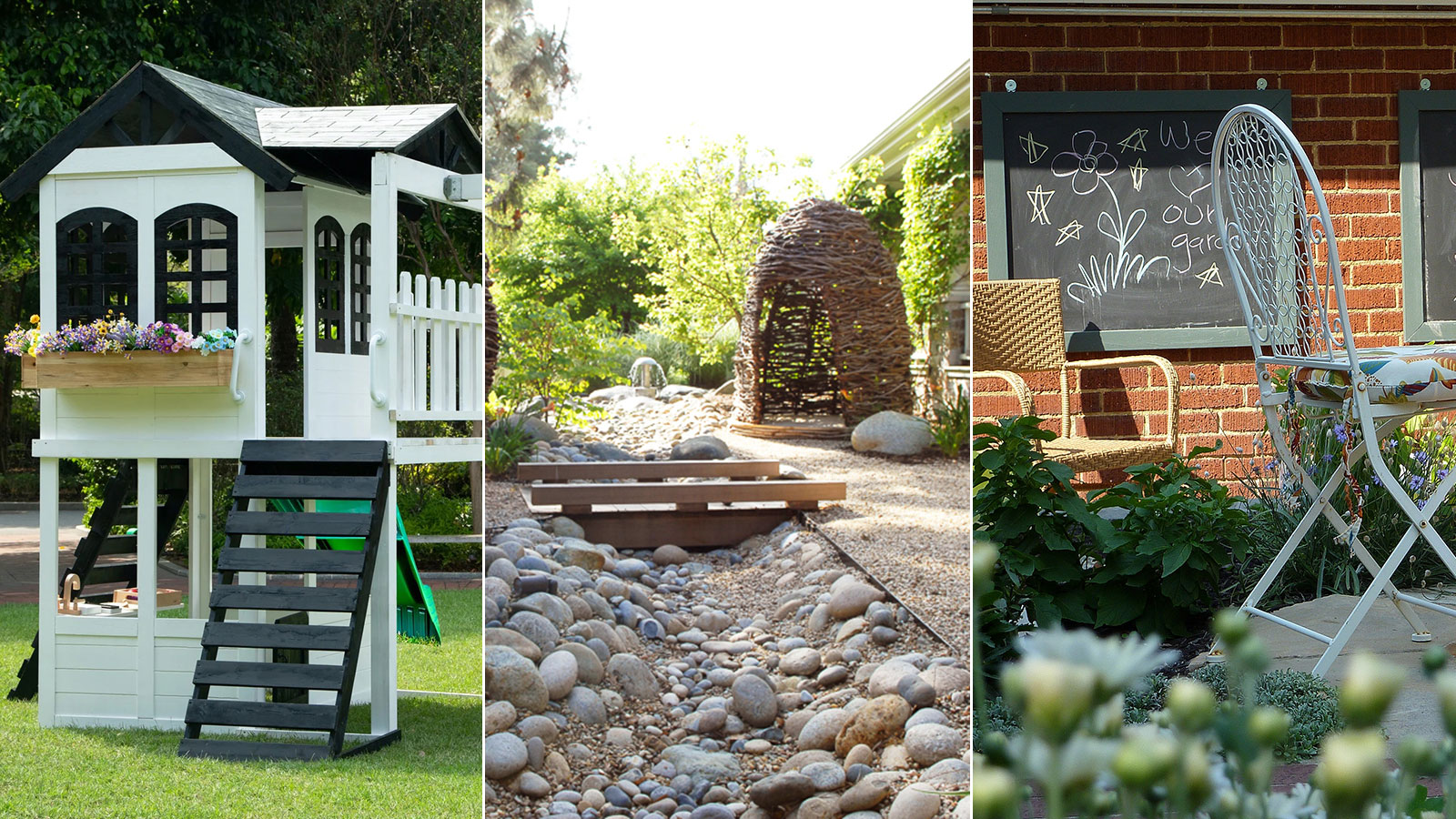
(These showcase natural, plant-heavy small-yard play designs that blend seamlessly.)
Common Mistakes to Avoid 🚫🌿
- Overcrowding: Too many big structures kill plant space—start small.
- Ignoring microclimates: Place sun-lovers away from building shade.
- High-maintenance picks: Skip thirsty annuals; go for resilient locals.
- Forgetting supervision: Even safe plants need watchful eyes initially.
- Plastic overload: Natural elements feel better and last longer.
FAQs ❓
What if my yard has mostly shade? Opt for shade-tolerant picks like ferns, hostas, mint, or impatiens. Use reflective mulch to brighten; hanging planters add height.
How to keep plants safe from rough play? Zone separation with borders; tough ground covers; elevate delicate pots. Teach gentle touching.
Best age to start involving kids in gardening? From 2-3 years with sensory plants; by 5-6, they can plant seeds/water responsibly.
Affordable ways to start? Begin with 5-10 pots, seeds from local markets (Tk 20-50/pack), recycled containers. Total under Tk 5,000 for basics.
More questions? Drop them in comments—I’m here to help!
Conclusion: Your Green Play Oasis Awaits 🌈👨👩👧👦
Creating a kids’ play area in limited space with plants isn’t just possible—it’s rewarding. You’ve got the blueprint: assess, zone, choose safe sensory/edible plants, build naturally, and care seasonally. The payoff? Healthier kids, a greener yard, family memories, and nature connection in the heart of the city.
Start small—one corner, one teepee, one pot of strawberries—and watch the magic grow. Your tiny backyard can be the best playground and garden combo imaginable.
Happy planting and playing, Shuvo! Share photos of your progress below—I’d love to see your Dhaka oasis bloom. 🌱✨











