
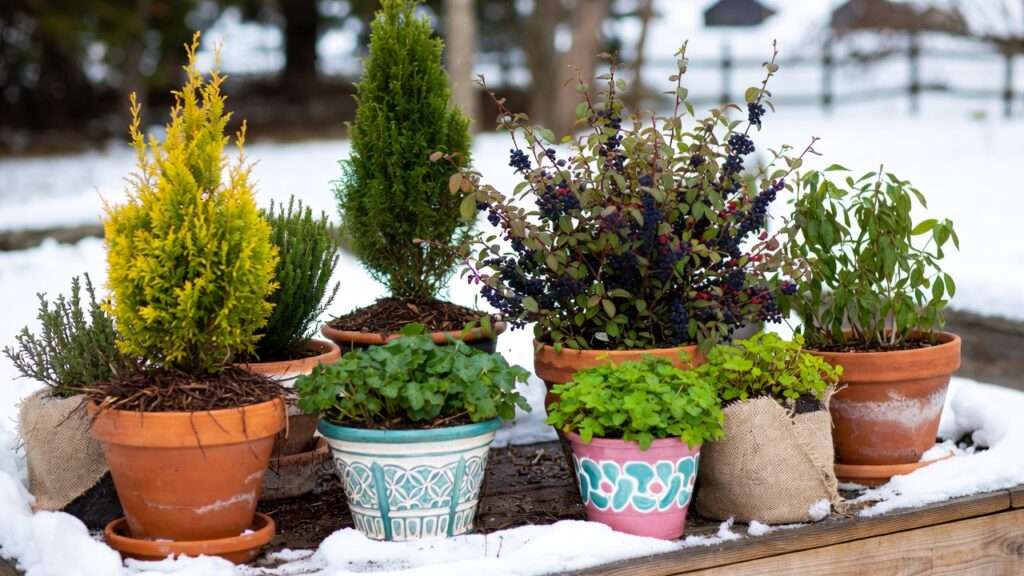
Imagine stepping onto your porch or balcony in the depths of winter and being greeted by vibrant evergreens, pops of color from hardy berries, or even fresh greens ready for harvest—while your neighbors’ pots sit empty and cracked. ❄️✨ Winter container gardening isn’t just about surviving the cold; it’s about thriving year-round, extending your growing season, preventing costly pot damage, and adding curb appeal when everything else looks bleak.
Many gardeners assume containers must be emptied or moved indoors once frost hits, but with the right winter container gardening tips, you can keep plants alive, pots intact, and your outdoor space beautiful through the harshest months. In this in-depth guide, we’ll share proven strategies drawn from university extension services, professional horticulturists, and years of hands-on experience in cold climates. We’ll cover everything from selecting cold-hardy plants and insulating roots to creative designs and common pitfalls to avoid—helping you solve real problems like root freeze damage, cracked terracotta, and winter desiccation. Whether you’re in USDA zone 5, 7, or somewhere in between, these actionable overwintering techniques and care tips will transform your containers into four-season stars. Ready to keep your garden glowing all season? Let’s dive in! 🌱💚
Understanding Winter Challenges for Container Plants ❄️⚠️
Containers expose plant roots to much harsher conditions than garden beds. In-ground soil acts as a natural insulator, but potted roots can drop to the same temperature as the surrounding air—often feeling like 2 USDA hardiness zones colder than your actual zone. This leads to frequent freeze-thaw cycles that heave soil, damage roots, and crack pots.
Common winter woes include:
- Root freeze damage and plant death from prolonged sub-zero temps
- Pot cracking (especially in porous materials like terracotta or glazed ceramic) due to expanding ice
- Desiccation from drying winds, low humidity, and frozen soil that blocks water uptake
- Over- or under-watering — too much causes rot in cool, damp conditions; too little stresses evergreens
Pro Expert Insight (from sources like Penn State Extension and Proven Winners): Always select plants rated at least 2 zones hardier than yours for reliable container survival. For example, in zone 6, aim for zone 4 hardy varieties. Larger pots (18+ inches diameter) provide better root insulation naturally, and excellent drainage is non-negotiable to avoid ice buildup. 📊❄️
Choosing the Right Containers for Winter Survival 🪴💪
Your pot choice can make or break winter success. Frost-sensitive materials absorb water and shatter when it freezes, while hardy ones shrug off the cold.
- Best winter-resistant materials: Fiberglass, heavy plastic, metal, stone, concrete, or thick wooden barrels — these flex slightly or resist cracking
- Avoid or protect: Thin terracotta, ceramic, or lightweight pottery — wrap them heavily or move indoors if possible
- Size matters: Go big! Pots 12–24 inches wide hold more soil volume for insulation and stability against wind
- Drainage is key: Multiple large holes prevent waterlogging; add a layer of gravel or pot shards at the bottom
- Pro tip — Use inexpensive plastic nursery pots inside decorative ones as liners for crack protection, or place pots on pot feet/bricks to elevate them off cold, wet ground. This simple step reduces freeze-thaw contact dramatically! 🛡️
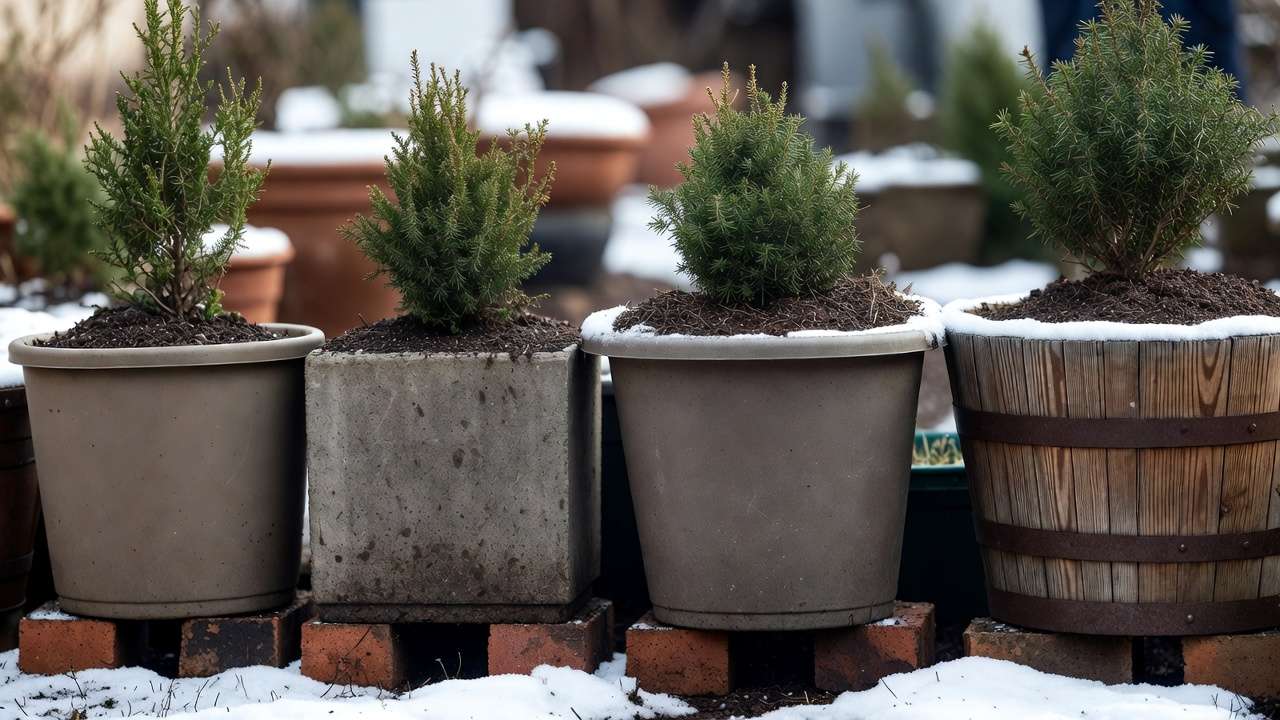
By prioritizing durable, well-draining containers, you’ll save money on replacements and keep your displays intact season after season.
Best Plants for Winter Container Gardening 🌲🍓
The foundation of successful winter containers is choosing plants that laugh at cold. Focus on hardy evergreens for structure, cold-tolerant flowers for color, and edibles for function.
Hardy Evergreens and Structure Plants
These provide year-round backbone and wind protection:
- Dwarf conifers like juniper (‘Blue Star‘), spruce, or cedar
- Boxwood (Buxus), holly (Ilex), or euonymus for dense green texture
- Ornamental grasses (e.g., blue fescue) or heuchera for movement
Cold-Hardy Flowers and Foliage
Add pops of interest even in short days:
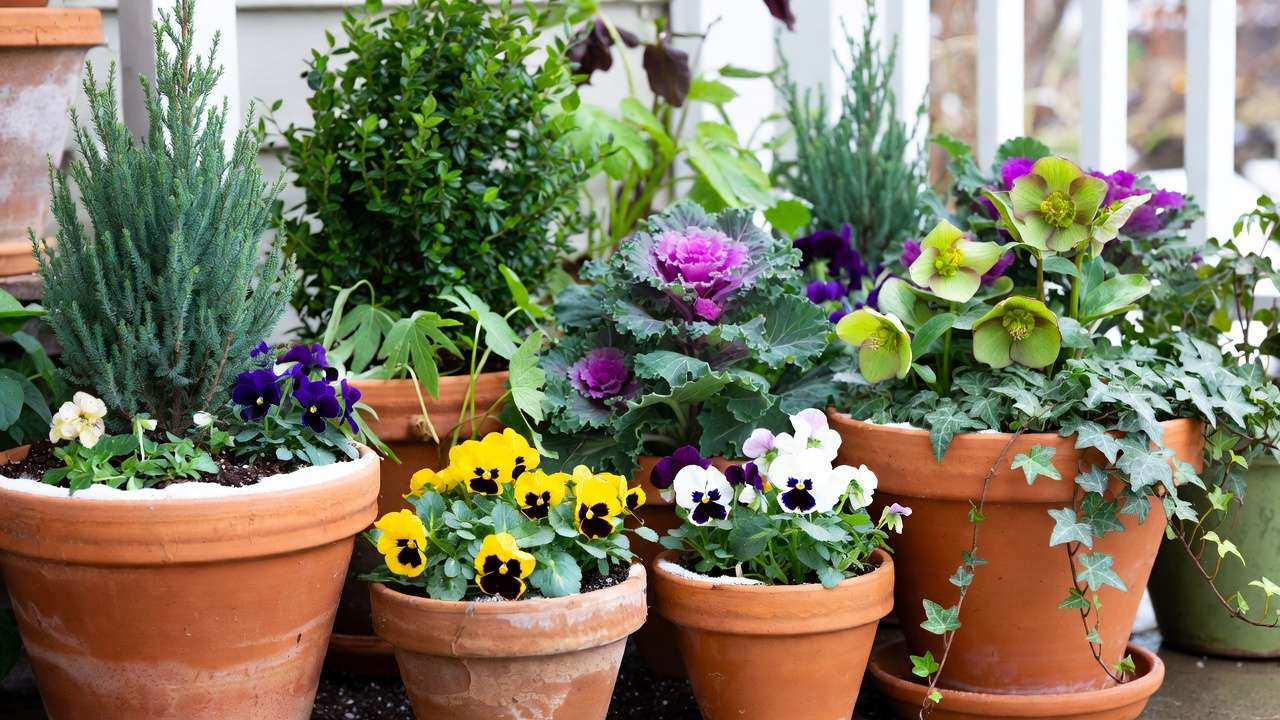
- Pansies, violas, and winter cyclamen for cheerful blooms 🌸
- Ornamental kale/cabbage or dusty miller for bold texture and color
- Hellebores (Lenten rose) for subtle winter flowers that bloom through snow
Edible Winter Options
Grow your own fresh produce:
- Kale, spinach, Swiss chard, lettuce, and microgreens
- Hardy herbs: parsley, cilantro, thyme, rosemary (protect in zones 6+)
- Green onions or cold-tolerant brassicas
Quick Plant Selection Table (Top performers by category):
| Category | Plant Examples | Hardiness Boost | Why It Works in Containers |
|---|---|---|---|
| Evergreen Structure | Dwarf Juniper, Boxwood | Zone 4+ | Year-round color, wind-resistant |
| Color Pops | Pansies, Ornamental Kale | Zone 5+ | Blooms/texture in cold |
| Edibles | Kale, Spinach, Thyme | Zone 5+ | Harvestable through winter |
| Flowering | Hellebores, Cyclamen | Zone 5+ | Subtle blooms when little else flowers |
Choose a mix for thriller (tall focal), filler (mid-level), and spiller (trailing) designs to keep pots looking full and balanced.
Step-by-Step: Overwintering Living Plants in Containers 🌱🛡️
Overwintering isn’t about hoping for the best—it’s about smart, layered protection. Follow this proven sequence, backed by experts from Penn State Extension, Proven Winners, and Gardening Know How, to give your container plants the highest survival odds.
- Assess and Prepare in Fall — Before the first hard frost, prune away dead or diseased growth to reduce stress and improve air circulation. Apply a light, slow-release fertilizer one last time in early fall (avoid heavy feeding close to dormancy). Water deeply to ensure the soil is moist going into winter—this helps prevent desiccation when roots can’t absorb frozen water. 🌱
- Insulate Roots Effectively — Wrap pots with insulating materials like bubble wrap, burlap, horticultural fleece, or old blankets (secure with twine or tape). For extra protection, line the inside of pots with rigid foam board or even packing peanuts (non-biodegradable) before planting next season. Add a 2–4 inch layer of mulch (straw, shredded bark, or pine needles) on top of the soil to moderate temperature swings and retain moisture. This simple step can raise root zone temps by 5–10°F! ❄️🛡️
- Group for Shared Warmth — Cluster pots together in a sheltered spot, ideally against a south- or east-facing wall, fence, or building corner. The collective mass traps heat from the sun and reduces wind exposure. Elevate them on bricks, pot feet, or foam blocks to avoid direct ground contact (cold concrete conducts chill upward). Grouping also makes it easier to cover multiple pots with a single tarp during extreme cold snaps.
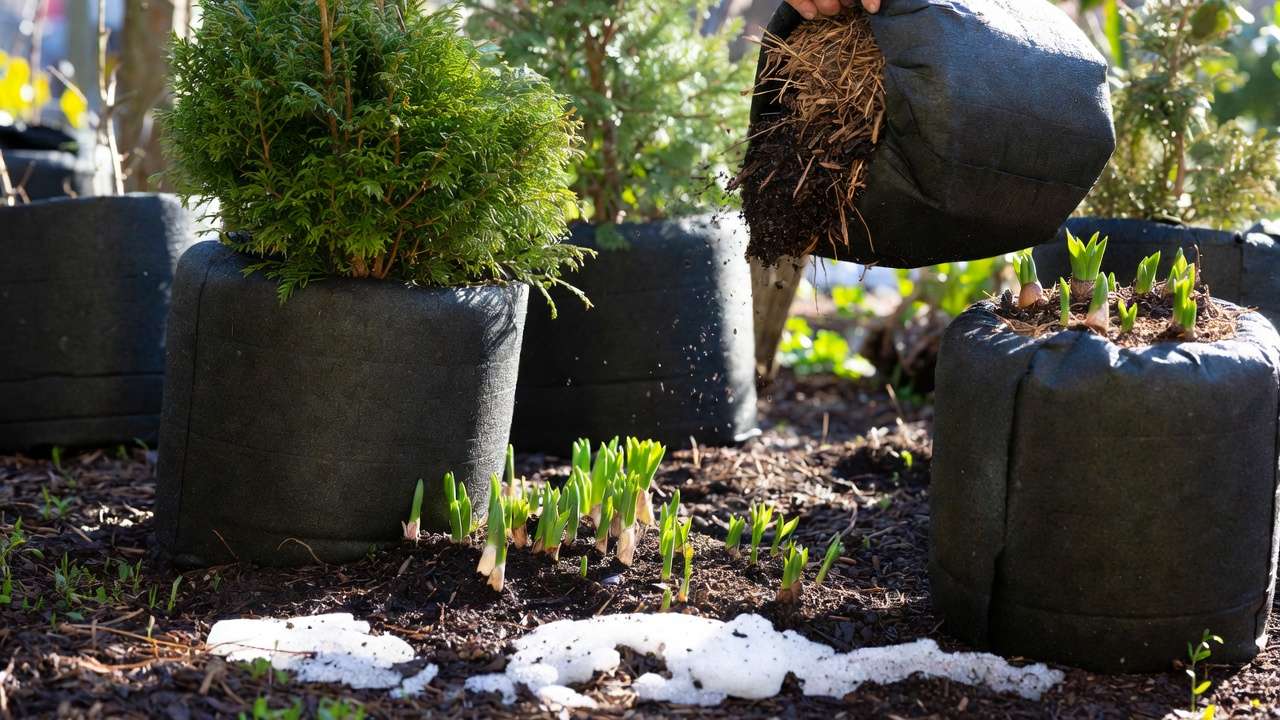
- Elevate, Bury, or Move Strategically — For ultimate insulation, bury pots up to their rims in the garden soil or a deep mulch pile—the surrounding earth acts as a natural buffer. In milder zones, this works wonders; in harsher ones, combine with wrapping. For very tender plants, relocate to an unheated garage, shed, or cool basement (ideally 35–50°F) where they stay dormant without freezing solid. Check periodically for moisture.
- Watering in Winter — Water sparingly—only when the top 2 inches of soil thaw and feel dry (often every 2–4 weeks, or less in very cold/dry conditions). Overwatering in winter is a top killer, leading to root rot in cool, stagnant soil. Use room-temperature water to avoid shocking roots, and never water when soil is frozen solid. Evergreens especially need occasional deep soaks to combat wind desiccation.
- Wind, Snow, and Extreme Protection — Apply an anti-desiccant spray (available at garden centers) to evergreens in late fall to reduce moisture loss from needles/leaves. Brush heavy snow off branches to prevent breakage, but leave a light blanket for insulation. For blasts of arctic air, use windbreaks like burlap screens or move pots temporarily to a porch/garage. In zones 4–5, a mini hoop house or floating row cover over grouped pots can extend survival dramatically. 🏠❄️
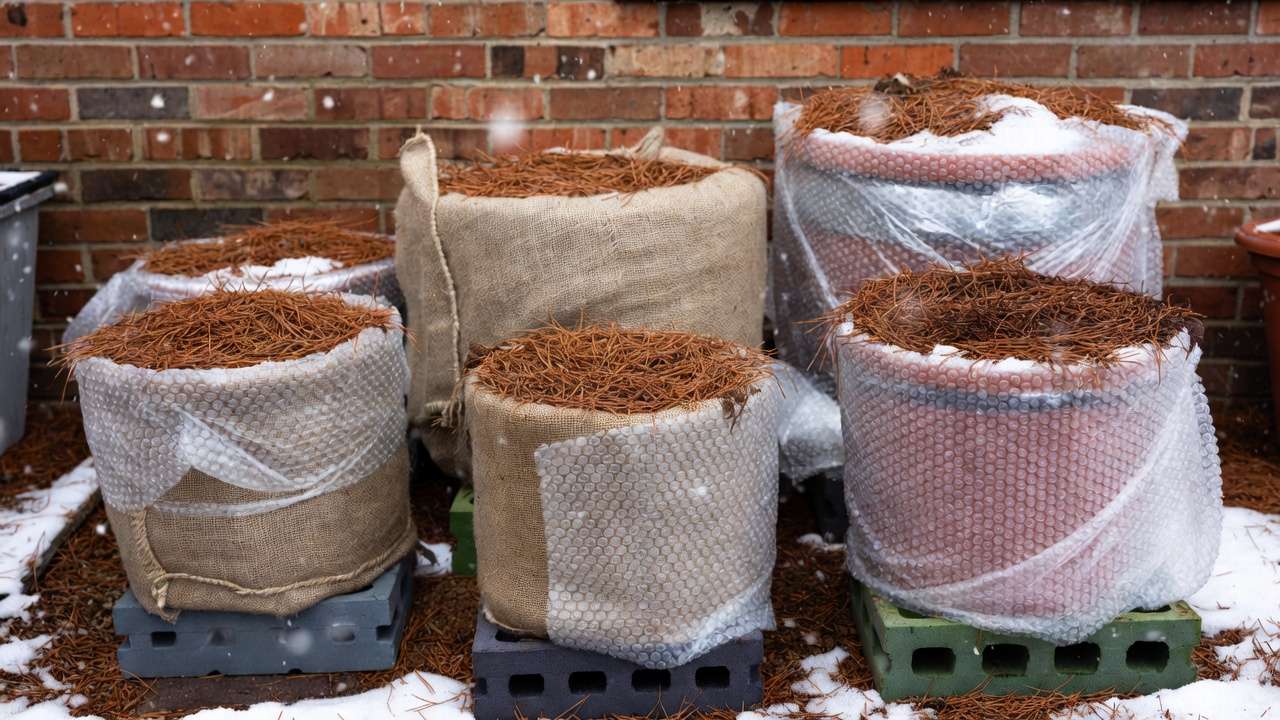
Bonus Expert Tip — From Proven Winners and extension pros: Always prioritize plants hardy to 2 zones colder than yours (e.g., zone 6 → choose zone 4 hardy). Combine methods—group + wrap + mulch—for the best results in marginal zones.
Creating Stunning Decorative Winter Containers 🎄✨
Winter containers don’t have to be bare! Use the classic thriller-filler-spiller formula for eye-catching, long-lasting displays that brighten dull days.
- Thriller (Tall Focal): Vertical elements like curly willow branches, red-twig dogwood, birch poles, or tall dwarf evergreens for height and drama.
- Filler (Mid-Level): Dense evergreens (boxwood, juniper), ornamental kale, heuchera, or hellebores for bulk and texture.
- Spiller (Trailing): Ivy, winter creeper, or hardy trailing herbs/berries that cascade over edges.
Popular Theme Ideas:
- Classic Evergreen + Berry Combo: Dwarf Alberta spruce thriller, boxwood fillers, red winterberry or holly spillers for festive red-green vibes.
- All-White Wonder: Silver dusty miller, white-twig branches, variegated euonymus, and snow-white pansies for a serene, frosty look.
- Edible & Ornamental Mix: Kale and Swiss chard with thyme and rosemary—beautiful and harvestable! 🥬
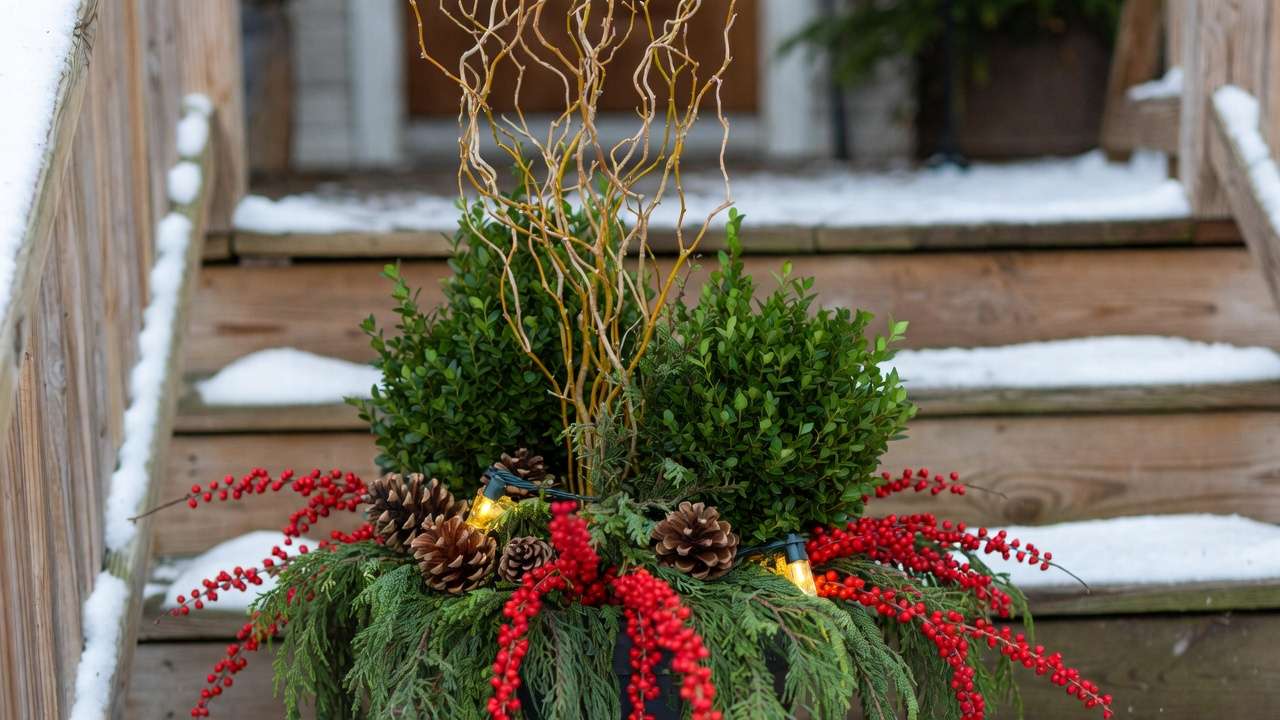
Add solar fairy lights woven through branches for evening sparkle, pinecones, or dried hydrangea blooms for natural texture. Refresh in late fall for peak holiday appeal that lasts through early spring. These designs provide structure, color, and wildlife interest (birds love berries!) when most gardens are asleep. ✨🌲
Special Tips for Growing Vegetables and Herbs in Winter Containers 🥬🌶️
Yes, you can harvest fresh produce from pots even in snow! Focus on ultra-hardy, fast-maturing crops suited to short days and cool temps.
- Top Cold-Tolerant Veggies: Kale, spinach, Swiss chard, lettuce (winter varieties like ‘Winter Density’), arugula, microgreens, radishes, and green onions. Start seeds indoors in late summer/early fall for established plants by frost.
- Hardy Herbs: Parsley, thyme, sage, rosemary (protect in zone 6+), chives, and cilantro (bolt-resistant types). These often survive light freezes and regrow from crowns.
- Protection Boosts: Use cloches, row covers, or mini hoop tunnels over pots for 5–10°F warmer microclimates. Position in the sunniest south-facing spot—even 4–6 hours of winter sun adds up. Harvest outer leaves regularly to keep plants compact and productive.
- Water & Fertilize Smart: Water less frequently but deeply when soil thaws. Use a diluted organic liquid fertilizer monthly if growth continues (avoid heavy N in cold).
With these tweaks, many gardeners in zones 5–7 enjoy salads and garnishes straight from the porch through February or longer! 🌱🥗
Common Mistakes to Avoid (and How to Fix Them) 🚫❌
Even experienced gardeners slip up—here’s what to watch:
- Watering too much → Root rot in soggy, cold soil. Fix: Check soil before watering; err on dry side.
- Using non-hardy plants without backup → Death in deep freezes. Fix: Stick to 2-zone-harder rule or have garage space ready.
- Ignoring pot material → Cracked terracotta/ceramic. Fix: Wrap or switch to fiberglass/plastic.
- Exposing to relentless wind → Desiccation (brown tips on evergreens). Fix: Shelter + anti-desiccant spray.
- Forgetting spring transition → Sudden shock. Fix: Gradually uncover/fertilize as temps rise.
Avoid these, and your success rate soars!
Spring Transition: Bringing Your Containers Back to Life 🌷
As days lengthen and soil thaws (usually March–April in most zones), ease plants out of protection:
- Remove mulch/insulation gradually over 1–2 weeks to avoid sunscald.
- Prune any winter damage; repot if roots are circling.
- Fertilize lightly with balanced organic feed to kickstart growth.
- Move to full sun spots and transplant hardy perennials into garden beds for permanent homes.
This gentle reawakening prevents shock and sets up vibrant spring displays.
FAQs: Your Winter Container Gardening Questions Answered ❓
- Can I leave terracotta pots outside? Only if heavily wrapped (bubble wrap + burlap) and in milder zones—otherwise, store empty indoors to prevent cracking.
- How often should I water in winter? Every 2–4 weeks, or when soil thaws and top feels dry—less in very cold/dry weather.
- What if my area gets heavy snow? Gently brush excess off branches/pots to avoid weight breakage; mulch helps insulate.
- Are winter containers worth it in zone 5 or colder? Absolutely—with 2-zone-harder plants, large pots, and layered protection (group + wrap + mulch), many succeed beautifully!
By mastering these winter container gardening tips, you’ll protect precious plants, save on replacements, prevent pot damage, and enjoy beauty + harvests when others think gardening stops. Your porch could become the neighborhood winter highlight! Share photos of your setups in the comments—we’d love inspiration. Stay warm and keep growing! ❄️🌿✨











