
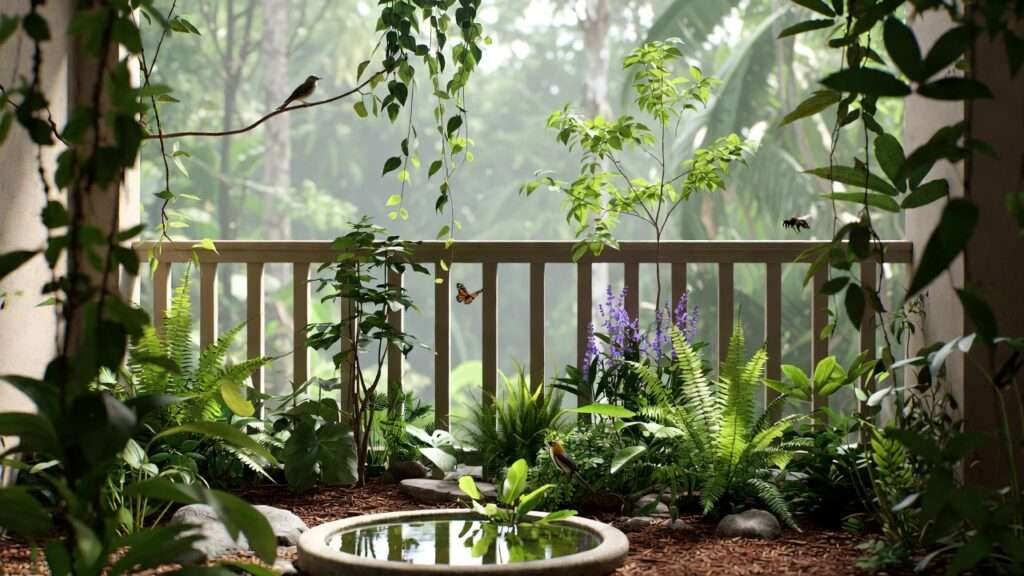
Imagine stepping onto your balcony or tiny patio in the heart of Khulna, coffee in hand, as colorful butterflies flutter by, bees hum happily among vibrant blooms, and a cheerful bird perches nearby to sip from a shallow dish. 😍 All this magic happening in just a few square meters! In our increasingly urban world, natural habitats are shrinking fast, but even the smallest spaces—like balconies, patios, and compact yards—can become vital oases for wildlife. Creating wildlife habitats in small spaces isn’t just possible; it’s surprisingly easy and incredibly rewarding when you focus on thoughtful plant and tree choices tailored to your environment.
As someone deeply passionate about plant care and tree care (with years of hands-on experience helping urban gardeners in tropical regions like Bangladesh turn limited spots into thriving ecosystems), I’ll walk you through proven, low-effort strategies. These draw from principles endorsed by organizations like the National Wildlife Federation (NWF) and local biodiversity insights. You’ll learn how to provide the four essentials—food, water, shelter, and places to raise young—using native or well-adapted plants that thrive in hot, humid climates. The result? A buzzing, chirping mini-haven that supports declining pollinators, birds, and beneficial insects while bringing joy and nature connection right to your doorstep. 🌍 Let’s turn your small space into a big win for wildlife!
Why Small Spaces Matter for Wildlife – Why This Works Even in Urban Areas 🏙️🌱
Urban areas like Khulna face rapid habitat loss due to development, leaving wildlife fragmented and struggling. Yet small, connected patches—your balcony included—can form vital corridors. Research shows even a single square meter of native plants can support dozens of insect species, while layered greenery helps combat urban heat islands and stores carbon.
The secret lies in native plants (or region-adapted equivalents): they’re perfectly suited to local soils, rainfall patterns, and pests, requiring less water and care. In tropical Bangladesh, natives host far more caterpillars, bees, and birds than exotic ornamentals. For example, a small grove of fruiting trees or flowering shrubs can feed migratory birds and resident pollinators year-round. Plus, these mini-habitats reduce stress for us humans—studies link nature views to lower anxiety! By focusing on layered planting and the habitat basics, your tiny space becomes part of the solution. 🌡️
Assessing Your Small Space: Balconies, Patios, and Tiny Yards 🔍
Before planting, evaluate your spot for success:
- Sun exposure: Full sun (6+ hours) suits flowering perennials; partial shade works for many climbers and understory plants. In Khulna’s hot climate, morning sun with afternoon shade prevents scorching.
- Wind and weight: Balconies need lightweight pots (plastic, fiberglass) and secure rail planters. Check weight limits!
- Soil and drainage: Use well-draining potting mix with compost; add perlite for humidity-loving tropicals.
- Water access: Proximity to a tap helps during dry spells.
Common challenges? Limited floor space (solve with vertical gardening), strong winds (use windbreaks like dense shrubs), and heat/humidity (choose drought-tolerant natives once established). Grab a notebook: note your space type, light hours, and challenges—this quick checklist sets you up for thriving results! ☀️
Essential Principles for Wildlife-Friendly Small-Space Design 🏗️
Layered Planting: Mimic Nature in Miniature 🌳
Nature thrives in layers—copy it! Start with a “canopy” (small trees or tall shrubs in large pots), add a mid-layer (shrubs/climbers on trellises), and finish with groundcover (perennials, grasses in lower pots). Vertical elements like wall pockets, hanging baskets, and rail troughs multiply space exponentially. This creates micro-habitats: tall plants offer shelter, mid-levels provide nesting, and low growers feed ground insects. In humid tropics, this layering also improves airflow and reduces fungal issues.
Focus on Native Plants First 🌼
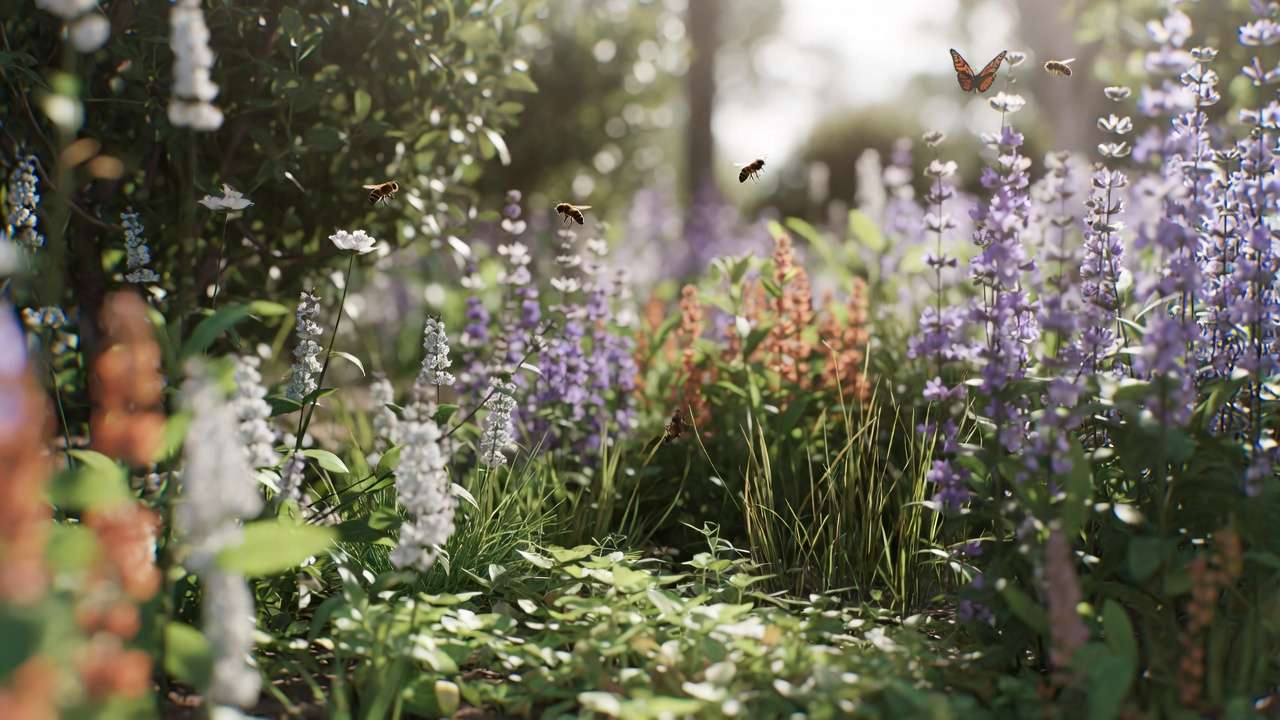
Prioritize natives—they support 10–50x more wildlife than non-natives. In Bangladesh’s southwest (Khulna region), look for species adapted to monsoon rains and heat: holy basil (tulsi), curry tree, jungle geranium, and climbers like passionflower relatives. Use local nurseries or apps to find zip-code-appropriate plants. Aim for 70%+ natives per NWF guidelines for certification potential.
Provide the Four Essentials: Food, Water, Shelter, Nesting 🐦💧
- Food: Nectar/seed-rich blooms + berries/fruits.
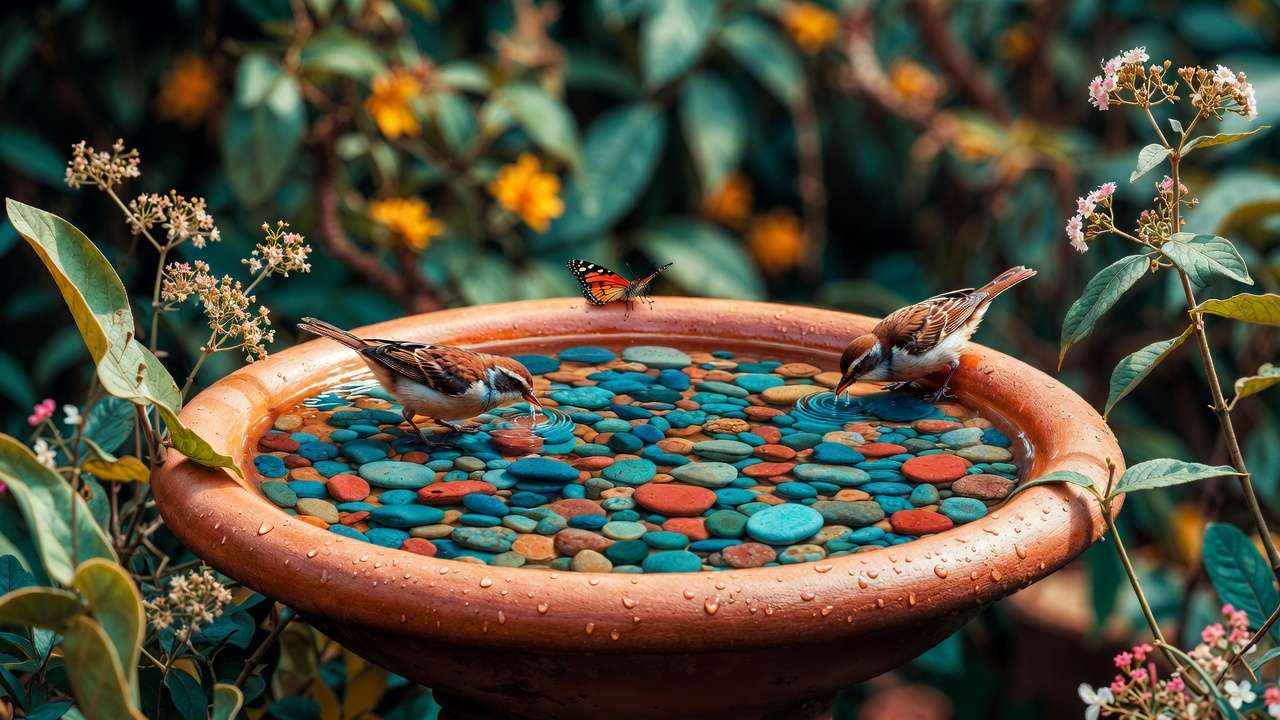
- Water: Shallow dishes with pebbles (birds love safe perches).
- Shelter: Dense foliage, brush piles (twigs in a corner pot).
- Nesting: Bee hotels, small bird boxes, uncut seed heads.
Integrate these seamlessly—no extra space needed!
Best Plants and Trees for Small Wildlife Habitats – Top Picks by Category 🌿 (Table-Friendly List)
Here’s a curated selection for tropical small spaces—easy-care, wildlife magnets with plant/tree care tips:
Small Trees & Large Shrubs in Containers (dwarf varieties for pots 40–60cm+):
- Curry Tree (Murraya koenigii) – Aromatic leaves, white flowers attract bees; berries for birds. Prune to 1–2m; full sun.
- Dwarf Date Palm (Phoenix acaulis) – Compact, fronds shelter insects; fruits draw birds. Well-drained soil; tolerant of humidity.
- Crape Myrtle (Lagerstroemia indica, dwarf types) – Stunning blooms feed butterflies; exfoliating bark adds interest. Prune lightly.
Pollinator Powerhouse Perennials & Annuals:
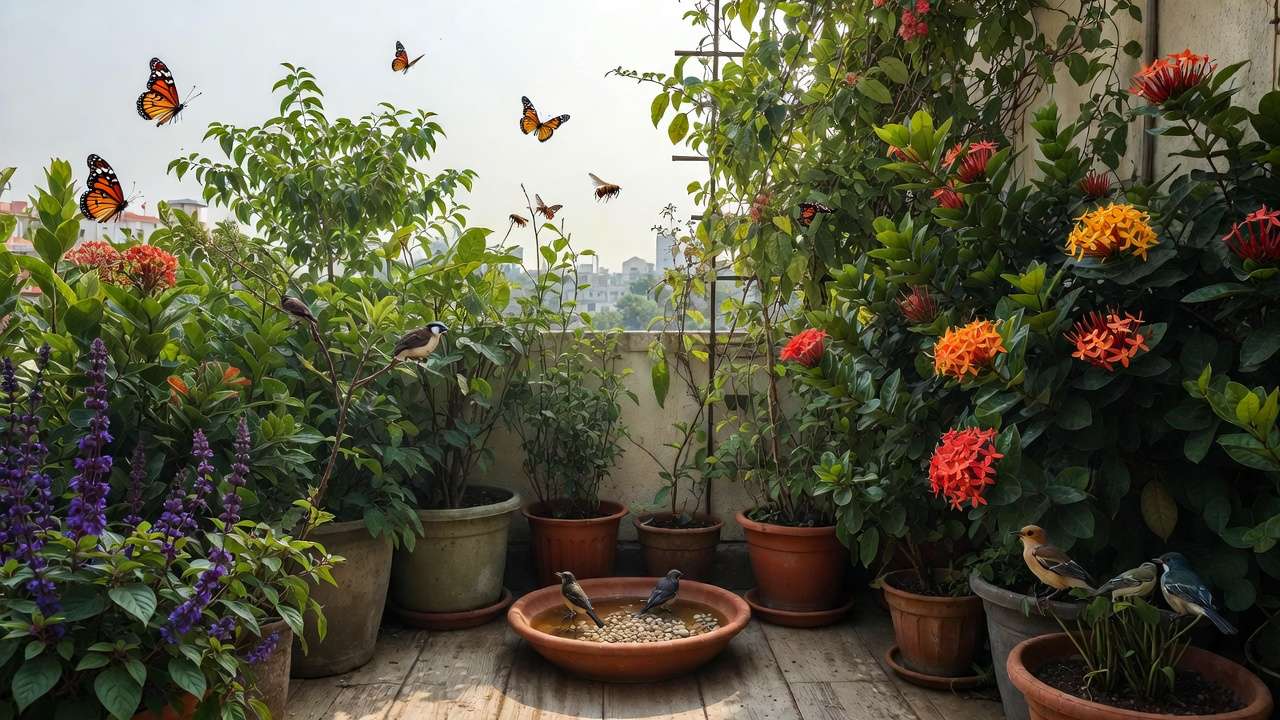
- Holy Basil (Ocimum tenuiflorum) – Purple/white flowers buzz with bees; medicinal bonus!
- Jungle Geranium (Ixora coccinea) – Year-round red/orange blooms for butterflies; prune for bushiness.
- Butterfly Pea (Clitoria ternatea) – Stunning blue flowers; nectar for pollinators; climbs vertically.
Climbers & Vertical Stars:
- Passionflower (Passiflora spp., local varieties) – Exotic blooms attract butterflies; fruits for birds.
- Orange Jasmine (Murraya paniculata) – Fragrant flowers; dense cover for nesting.
Groundcovers & Grasses:
- Creeping Thyme or local mints – Low-growing nectar; insect habitat.
- Vetiver Grass (Chrysopogon zizanioides) – Erosion control in pots; roots stabilize; seeds for birds.
10 Must-Have Beginners’ Plants Table (visualize as table in full article):
| Plant | Wildlife Benefit | Height | Sun Needs | Care Tip |
|---|---|---|---|---|
| Holy Basil | Bees, butterflies | 0.5–1m | Full/Part | Pinch tops for bushiness 🌿 |
| Ixora (Jungle Geranium) | Butterflies, hummingbirds | 1–2m | Full | Acidic soil, regular blooms |
| Curry Tree | Birds (berries), bees | 1–3m | Full | Prune annually |
| Butterfly Pea | Pollinators | Vine | Full | Trellis support |
| Dwarf Date Palm | Shelter, fruits | 1–2m | Full | Good drainage |
Choose succession bloomers for constant food!
Step-by-Step: Building Your Wildlife Habitat – Easy Implementation Guide 🛠️
Now that you’ve assessed your space and chosen plants, let’s build it! This process is straightforward and can be completed over a weekend or spread out.
- Plan Your Layout ✏️ Sketch a simple diagram (even on paper or your phone). Place taller elements (dwarf trees/shrubs) toward the back or center for stability. Use vertical space: attach trellises to walls/railings, hang baskets from ceilings, and line rails with trough planters. Group pots in clusters for micro-climates—drier spots for sun-lovers, shadier for ferns or climbers.
- Choose Containers & Soil 🪴 Opt for lightweight, durable pots (15–60 liters depending on plant size) with drainage holes. For balconies, fiberglass or fabric pots reduce weight. Use a high-quality potting mix blended with compost (for nutrients) and perlite/vermiculite (for drainage in humid Khulna conditions). Add slow-release organic fertilizer for natives that prefer low-input care.
- Plant in Layers + Add Hardscape 🌱 Start bottom-up: groundcovers first, then perennials, mid-shrubs, and finally small trees. Plant densely but leave breathing room—natives fill in quickly. Incorporate natural elements: small rocks or logs for insect shelter, a shallow saucer (filled with pebbles) as a birdbath. Position water features in partial shade to prevent algae in hot weather.
- Install Water Features 💦 Birds and insects need clean water. A simple terracotta saucer (10–15 cm deep) with stones for perching works wonders—refresh every few days. For hummingbirds (if present in your area), add a small hanging feeder with sugar water (1:4 ratio, change frequently). Avoid deep bowls to prevent drowning.
- Add Nesting Aids 🐝🏠 Hang a bee hotel (bamboo or drilled wood blocks) for solitary bees. For birds, install a small nest box (sized for sparrows or mynas common in Khulna) high up and sheltered. Create mini brush piles: stack twigs in a corner pot for cover. Leave seed heads on plants over winter for food.
- Final Touches & Maintenance Mulch with organic matter (coconut coir or leaf litter) to retain moisture and feed soil life. Avoid pesticides—hand-pick pests or encourage ladybugs. Water deeply but infrequently once established; natives adapt well to monsoon cycles.
Follow these steps, and your space will start buzzing within weeks!
Seasonal Care and Year-Round Success Tips 📅
Khulna’s tropical climate means hot, humid summers, heavy monsoons, and mild winters—perfect for year-round growth with smart timing.
- Spring (March–May): Plant new additions after last cool spells. Clean up lightly, add compost. Focus on blooming perennials like Ixora for early pollinators. 🌸
- Summer/Monsoon (June–October): Ensure excellent drainage to prevent root rot. Water less during rains; deadhead spent blooms to encourage more nectar. Watch for fungal issues—space plants for airflow.
- Fall (November–December): Plant bulbs or climbers. Leave seed heads on coneflowers/holly basil for winter food. Prune lightly to shape. 🍂
- Winter (January–February): Mild enough for activity—add evergreen elements like dwarf palms for shelter. Birds appreciate berries from curry tree or similar. ❄️ (rare frost, so most plants stay green!)
Troubleshooting: Yellow leaves? Check drainage/overwatering. Few visitors? Add more variety and patience—wildlife finds good habitats!
Expert Insights & Real-Life Examples 📖
Organizations like the National Wildlife Federation promote the “Certified Wildlife Habitat” program, requiring food, water, cover, and places to raise young—your small space can qualify! While no direct Bangladesh equivalent exists widely, local groups (e.g., via Bangladesh Forest Department or biodiversity NGOs) recognize similar efforts. Track sightings with apps like iNaturalist—many Khulna users log butterflies, birds, and bees, contributing to citizen science.
Real example: A Khulna apartment balcony gardener started with just holy basil and Ixora pots. Within a season, she added a curry tree and bee hotel—now spotting 10+ butterfly species and regular myna visits. Small actions add up!
Common Mistakes to Avoid in Small Wildlife Gardens ⚠️
- Using too many non-natives or hybrids—stick mostly to locals for maximum benefit.
- Over-tidying: Leaving some leaf litter and dead stems provides winter shelter and insect food.
- Pesticides/chemicals: They kill beneficials—use natural alternatives.
- Ignoring water safety: Deep containers can drown insects/birds; always add pebbles.
- Planting too sparsely: Dense layers create better habitat; overcrowding is rare with natives.
- Forgetting balcony weight/wind: Secure everything and use stable pots.
Avoid these, and your habitat thrives safely!
Frequently Asked Questions (FAQ) – Quick Answers for Readers ❓
Can I do this on a rental balcony? Yes! Use removable pots, no-drill trellises, and lightweight materials. Most landlords allow plant-friendly setups.
How much maintenance is required? Low—once established, natives need minimal watering/fertilizing. Weekly checks for water and occasional pruning keep it easy.
Best budget starters? Holy basil, Ixora, and curry tree from local nurseries—under 500–1000 BDT total for impact!
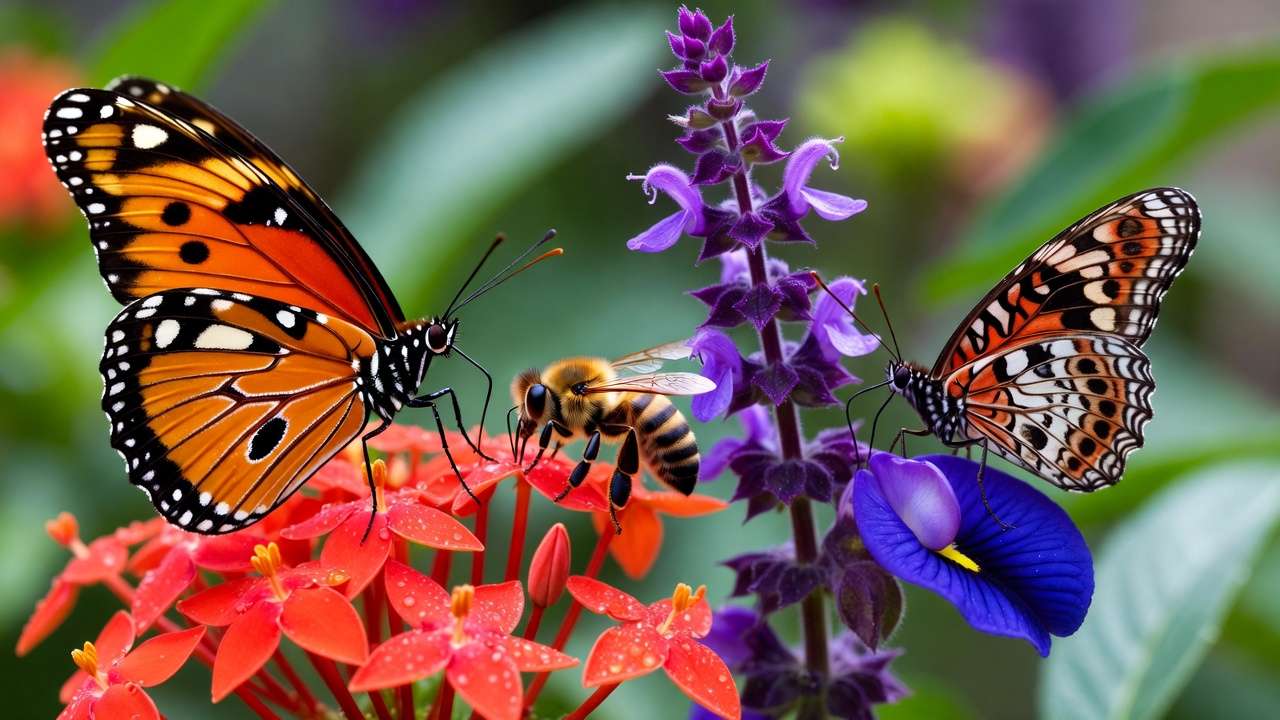
How to attract specific animals? Butterflies: nectar-rich Ixora/butterfly pea. Birds: berry/seed plants like curry tree. Bees: open-faced flowers like basil.
Conclusion: Start Small, Make a Big Impact! 🌟
You’ve got the blueprint: assess, layer natives, provide essentials, and maintain mindfully. Creating wildlife habitats in small spaces transforms balconies, patios, and tiny yards into buzzing, chirping refuges—supporting pollinators, birds, and your own well-being.
Start today: plant one native like holy basil or add a shallow water dish. Your tiny corner becomes part of a larger network healing our planet. Share photos, track visitors, and inspire others in Khulna!
You’re not just gardening—you’re nurturing life, one pot at a time. Happy planting! ❤️🐦🦋











