
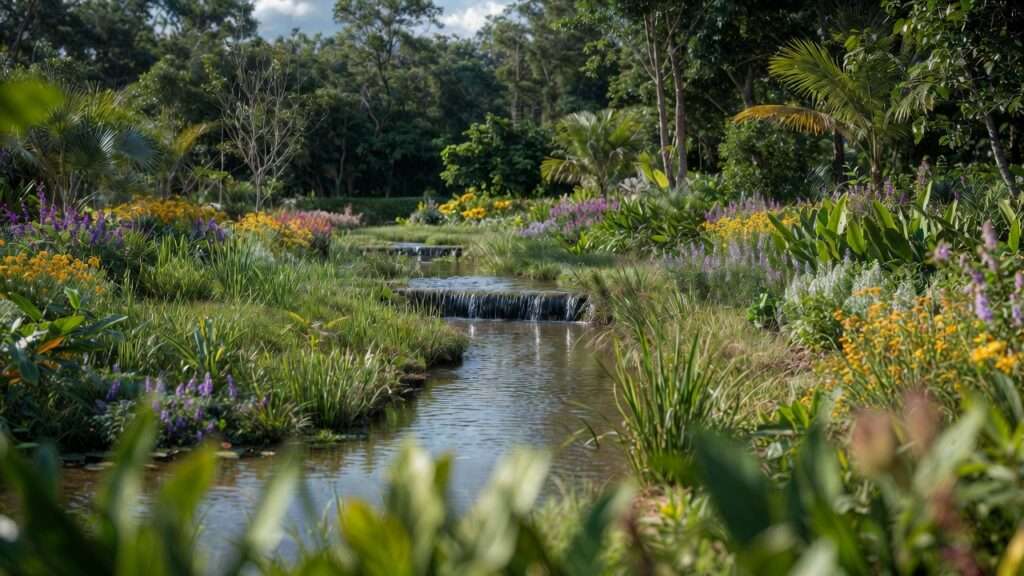
Imagine this: it’s been raining steadily for two days. You step outside expecting to enjoy your garden, only to find water pooling around your favorite perennials, small rivers carving ugly channels through the lawn, and the roots of young trees sitting in soggy misery. 😩
You’re not alone. Poor drainage is one of the most common — and most frustrating — problems faced by homeowners who love plants and trees. Traditional solutions like French drains, rigid pipes or re-grading the entire yard are expensive, disruptive and often visually unappealing.
Fortunately, there’s a more beautiful, more ecological and often more effective alternative: bioswales for improved drainage.
A well-designed bioswale doesn’t just solve your water problems — it turns a chronic headache into one of the most attractive, wildlife-friendly and environmentally valuable features in your entire landscape. Using carefully selected native plants, strategic grading and simple soil science, bioswales capture, slow, clean and infiltrate stormwater right where it falls… while creating habitat, supporting pollinators 🐝 and dramatically improving the health of your trees and garden beds.
In this in-depth guide you will learn:
- Exactly what a bioswale is (and how it differs from rain gardens and ordinary swales)
- How to determine whether your yard would benefit from one
- Step-by-step planning and construction advice suitable for DIY homeowners
- The very best native plants for bioswales in different regions and conditions
- Realistic maintenance expectations and long-term success strategies
Whether you’re dealing with chronic puddling, basement seepage, dying lawn patches, or simply want to make your property more climate-resilient and pollinator-friendly, a thoughtfully designed bioswale using native plants can be a game-changer.
Let’s dive in. 🌱
Understanding Bioswales: Nature’s Smart Drainage Solution
What Exactly Is a Bioswale?
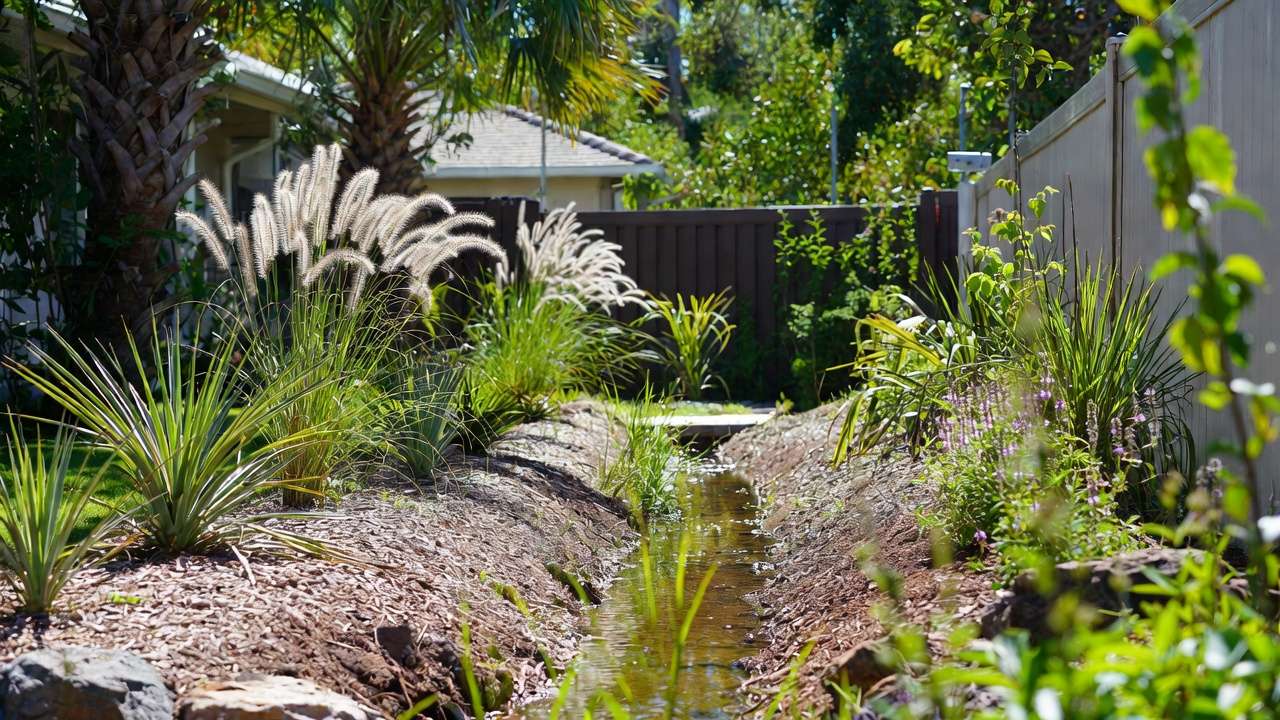
A bioswale is a shallow, vegetated channel or depression designed to capture, convey, filter and infiltrate stormwater runoff.
Unlike a conventional drainage ditch or pipe system, a bioswale is alive. It relies on:
- specially engineered soil media
- layered vegetation (especially deep-rooted native plants)
- gentle slopes and check dams (when needed)
…to slow water movement, increase infiltration into the ground, and remove pollutants before the water reaches storm drains, streams or groundwater.
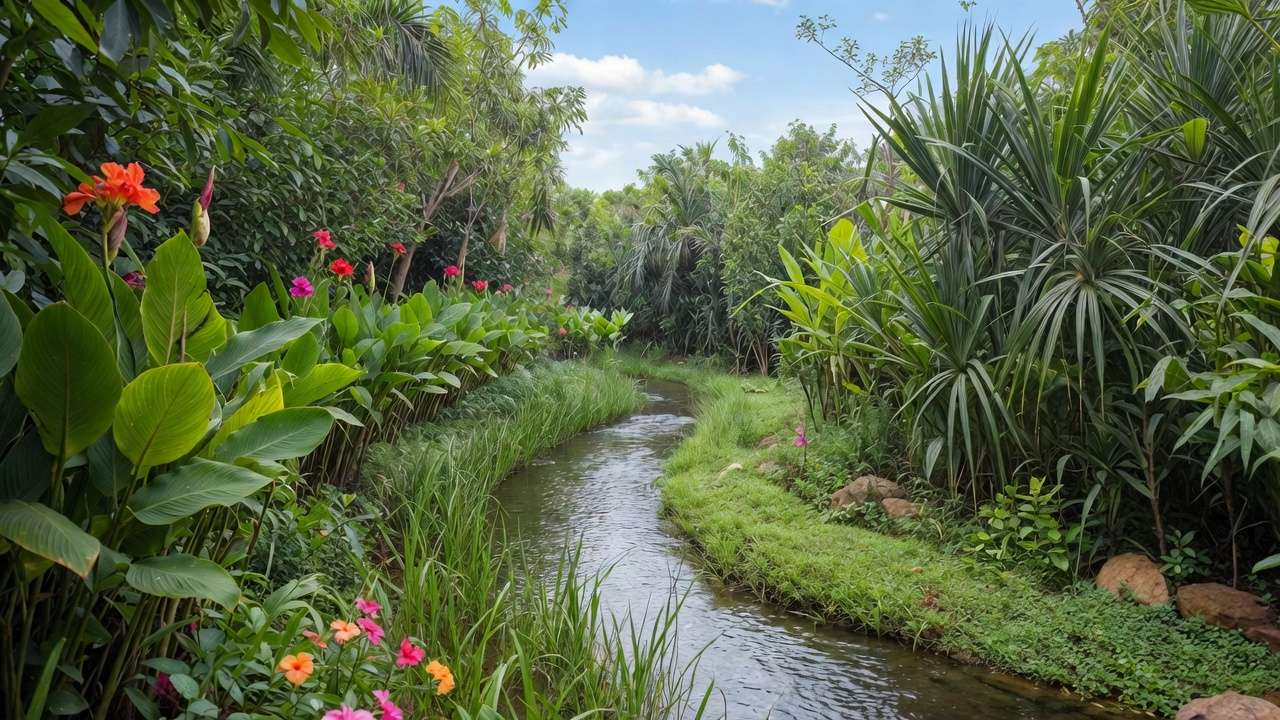
Bioswale vs. Regular Swale vs. Rain Garden — Key Differences
| Feature | Regular Swale | Bioswale | Rain Garden |
|---|---|---|---|
| Primary purpose | Convey water quickly | Convey + treat + infiltrate | Infiltrate / temporary ponding |
| Vegetation | Often grass or none | Dense native plants & grasses | Diverse perennials & shrubs |
| Shape | Long & narrow | Long & gently sloped | Bowl-shaped / wider |
| Typical location | Along roads, property edges | Yards, near downspouts, low areas | Flat or slightly depressed areas |
| Ponding time | Very short | Short (hours) | Longer (12–48 hours) |
| Pollutant removal | Minimal | High (filtration + biological) | High |
Quick takeaway: If you need to move water across a distance while cleaning and soaking in as much as possible → bioswale is usually the best choice.
If you want a stationary infiltration feature in one specific low spot → a rain garden is often more appropriate.
How Bioswales Actually Improve Drainage
The magic happens in several layers:
- Surface ponding & slowing — 5–15 cm deep temporary ponding spreads water out and reduces peak flow velocity
- Vegetation & thatch layer — traps sediment, slows water even more, adds organic matter over time
- Engineered soil media — higher sand content (often 50–70% sand) creates excellent infiltration rates even in moderately compacted native soils
- Deep root systems — native perennials, grasses and sedges create macropores that dramatically improve long-term infiltration
- Underdrain (optional) — perforated pipe + gravel layer provides an escape route when native soils are very heavy clay
Well-designed residential bioswales commonly achieve infiltration rates of 50–200 mm/hour — many times faster than most lawns on clay soils.
Why Bioswales Are Especially Valuable in Home Landscapes
- They handle sheet flow from roofs, driveways and lawns very effectively
- They can be beautifully integrated into ornamental borders, woodland edges or lawn transitions
- They support tree health by delivering filtered water deeper into the soil profile instead of letting it run off
- They are significantly less expensive than re-grading large areas or installing extensive underground drainage systems
Why Choose Bioswales for Improved Drainage?
1. They Permanently Solve Soggy Yards, Pooling & Surface Erosion
Instead of water sitting on the surface or carving gullies, it is gently guided into the bioswale, spread out, and soaked in. Many homeowners report that low-lying lawn areas that were unusable for half the year become perfectly walkable after one growing season with a properly functioning bioswale.
2. They Filter Pollutants & Protect Local Waterways
Rain picks up motor oil, tire particles, lawn fertilizer, pet waste, sediment and more. Bioswales remove:
- 80–95% of total suspended solids
- 40–80% of nitrogen & phosphorus
- 50–90% of heavy metals & hydrocarbons
…through filtration, plant uptake, microbial activity and adsorption to soil particles.
3. They Create Habitat & Feed Pollinators, Birds & Beneficial Insects 🦋🐦
A well-planted bioswale becomes one of the most productive parts of your yard for wildlife. Native plants provide:
- nectar & pollen from spring through fall
- larval host plants for butterflies & moths
- seeds & nesting material for birds
- overwintering sites for beneficial insects
4. They Usually Increase Long-Term Property Value & Curb Appeal
Sustainable landscaping features — especially ones that visibly solve a problem — are increasingly valued by buyers. A thoughtfully designed bioswale often becomes a “landscape jewel” rather than an eyesore.
5. They Build Climate Resilience
As rainfall becomes more intense in many regions, conventional drainage systems frequently become overwhelmed. Bioswales are naturally forgiving: when they receive more water than they can infiltrate, they simply convey it slowly downstream instead of failing catastrophically.
That’s the end of Part 1 🌿
The next part will continue with:
- Assessing Your Yard: Do You Need a Bioswale?
- Step-by-Step: How to Design & Build Your Own Bioswale
Assessing Your Yard: Do You Need a Bioswale? 🔍
Before you grab a shovel, take time to evaluate whether a bioswale is the right fit for your property. Not every soggy spot needs one — but if you’re in a region like Khulna, Bangladesh, where heavy monsoon rains (often 300–500 mm in a single event) overwhelm outdated drainage systems, bioswales can be a game-changer. 😓
Signs You Have Serious Drainage Problems
Look for these red flags during or right after rain:
- Water pools in low spots for more than 24–48 hours
- Surface erosion creates mini-rivers or gullies across your lawn or garden paths
- Tree and shrub roots are exposed or plants show signs of root rot (yellowing leaves, wilting despite moisture)
- Basement seepage or damp crawl spaces after storms
- Lawn patches turn into mud pits, killing grass and inviting weeds
- Runoff from roofs, driveways or neighbors carries silt, oil or fertilizer into your yard
In Khulna and many tropical coastal areas, waterlogging is exacerbated by high groundwater tables, tidal influences, clay-heavy soils and clogged urban drains — making natural solutions like bioswales especially valuable.
Site Evaluation Checklist (Step-by-Step)
Grab a tape measure, a soil probe (or long screwdriver), and observe during the next rain. Ask yourself:
- Where does water flow? — Walk your yard during light rain. Note sheet flow from roofs, impervious surfaces and slopes. Bioswales work best along natural low points or flow paths.
- Soil type & infiltration test — Dig a 30 cm hole in potential spots, fill with water and time how fast it drains. Ideal: 25–150 mm/hour. Very slow (<5 mm/h) may need an underdrain or more sand amendment. Khulna soils are often silty-clay — good for holding shape but slow to infiltrate without help.
- Slope — Bioswales need gentle longitudinal slope (1–5%) for slow conveyance without erosion. Cross-slope should be flat or very gentle.
- Setbacks & safety — Keep at least 3–5 m from house foundations, septic systems, wells or utilities. Avoid placing under large tree canopies where roots could be damaged.
- Sunlight & space — Full sun to partial shade is best for most native plants. Minimum length: 3–5 m for small residential swales; wider (1–3 m) is better for infiltration.
- Overflow path — Plan where excess water will go during extreme monsoons (e.g., to a street drain, pond or lower yard area).
If your site has very heavy clay, high groundwater or steep slopes (>8%), consider a hybrid: bioswale + underdrain pipe or combine with a rain garden at the end.
Pro tip: Take photos during rain events — they’re invaluable for planning and showing before/after results! 📸
Step-by-Step: How to Design & Build Your Own Bioswale 🛠️
Building a residential bioswale is very achievable for a motivated homeowner — especially a small one (5–15 m long). Here’s a realistic, DIY-friendly process tailored for tropical yards.
Planning & Sizing Your Bioswale
- Calculate contributing area — Measure the impervious + lawn area that drains toward your low spot (e.g., roof + driveway + uphill lawn).
- Determine volume — In monsoon-heavy areas, aim to capture at least the first 25–50 mm of rain from that area. Basic rule: 1 m³ of bioswale volume per 100–200 m² of contributing area.
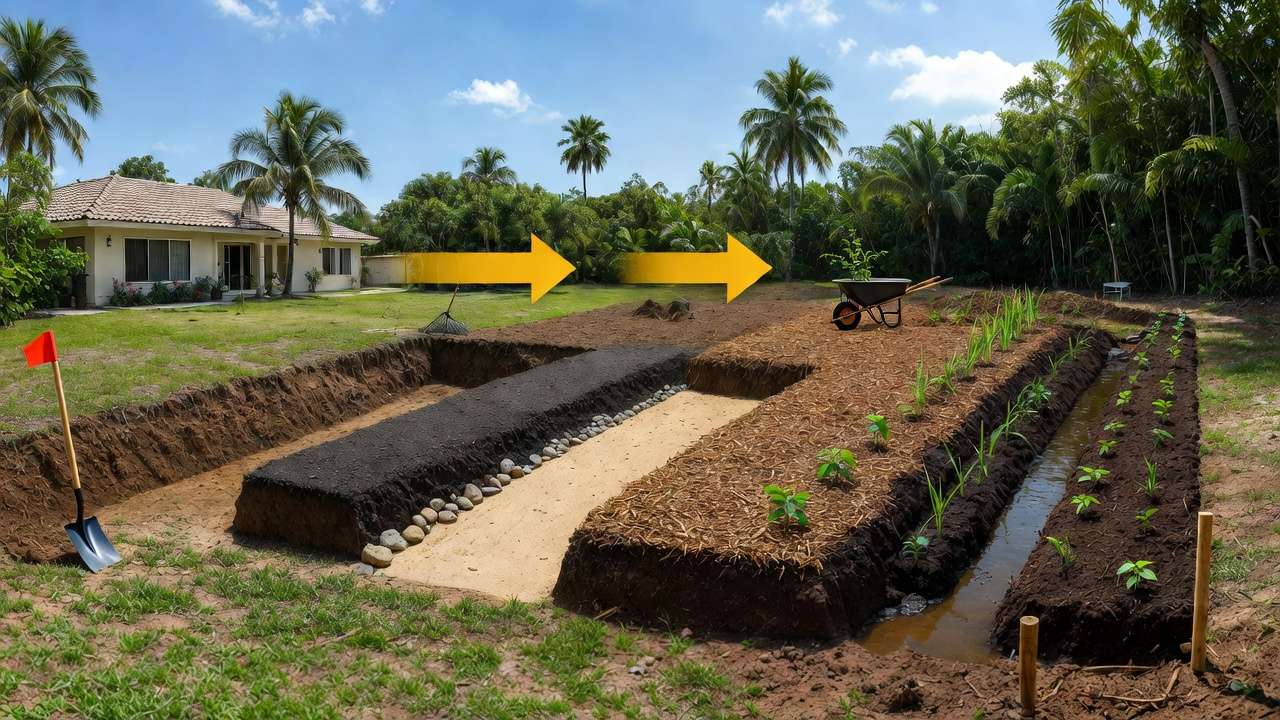
- Shape & dimensions —
- Length: 3–20 m (longer = better infiltration)
- Bottom width: 0.5–2 m
- Depth: 15–30 cm ponding + 10–15 cm freeboard
- Side slopes: 3:1 or gentler for stability and mowing
- Check dams (small rock or log barriers) every 3–5 m to slow water in steeper sections
Sketch it out — many free online tools or simple graph paper work great.
Materials You’ll Need
- Shovel, rake, wheelbarrow
- Sand (coarse builder’s sand) + compost + existing topsoil (aim for 50–70% sand for infiltration)
- Mulch (wood chips or shredded bark, 5–8 cm layer)
- Native plants (see next section)
- Optional: landscape fabric, perforated underdrain pipe (10 cm diameter) + gravel, small rocks for check dams/inlet protection
- Stakes & string for marking
Budget estimate (small 10 m swale): ৳15,000–40,000 depending on plant sourcing and soil amendments.
Step-by-Step Installation
- Mark & excavate — Outline with stakes/string. Dig to desired depth, sloping gently (1–5%). Stockpile topsoil separately.
- Amend soil — Mix excavated soil with sand/compost (test small batches for drainage). Backfill to create a concave channel.
- Install underdrain if needed — For slow soils: lay perforated pipe wrapped in fabric in a gravel trench at bottom, sloped to safe outlet.
- Add check dams — Place small rock or log barriers to create mini-pools and prevent gullying.
- Mulch — Apply 5–8 cm mulch layer (keep away from plant stems).
- Plant — Install plugs or small pots immediately after mulching. Water deeply.
- Stabilize inlet/outlet — Add rocks or gravel to prevent erosion where water enters/exits.
Work in dry weather if possible — monsoons make digging messy! 🌧️
Common Mistakes to Avoid ⚠️
- Making it too deep → creates mosquito habitat and drowns plants
- Ignoring overflow → water finds its own (damaging) path
- Using non-native or lawn grass → poor filtration and high maintenance
- Planting too densely at first → allow space for growth
- Skipping mulch → weeds take over quickly
That’s the end of Part 2! 🌱
Next up:
- Native Plants: The Heart of a Thriving Bioswale
- Caring for Your Bioswale Year-Round
Native Plants: The Heart of a Thriving Bioswale 🌸🐝
The plants you choose determine whether your bioswale becomes a high-performing drainage feature… or just another muddy ditch that needs constant weeding.
Native plants are almost always the superior choice because:
- They have deep, fibrous root systems that improve infiltration long-term
- They tolerate alternating wet-dry cycles (critical in monsoon climates like Khulna)
- They require minimal fertilizer or pesticides once established
- They provide year-round structure, food and shelter for local wildlife
- They resist most local pests and diseases better than exotic ornamentals
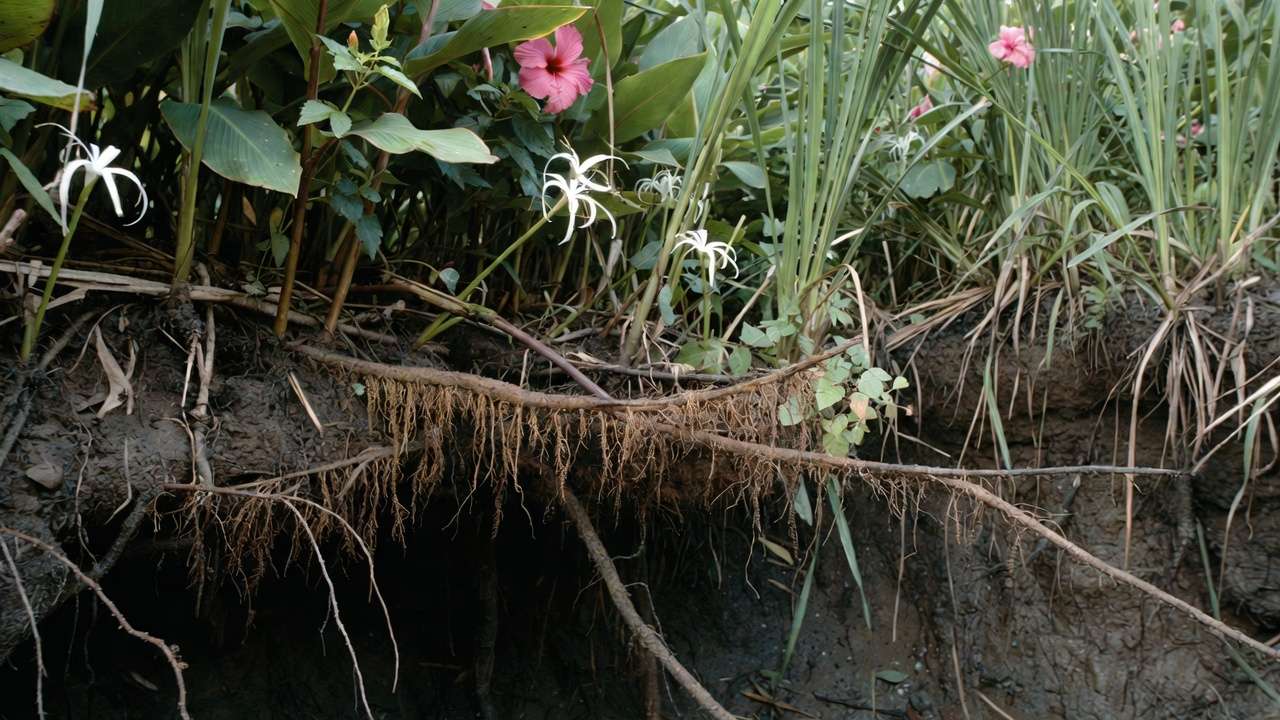
Why Non-Native Plants Often Fail in Bioswales
Many people try turf grass, exotic flowers or generic “pond plants” — only to see them drown, rot, or get washed away in the first big rain. Native species have evolved with your exact rainfall patterns, soil chemistry and seasonal flooding — giving them a huge survival advantage.
Top Native Plant Recommendations for Bioswales in Tropical / Subtropical South Asia (especially Khulna region)
Here are reliable, beautiful performers suited to periodic inundation, full sun to partial shade, and clay-loam to silty soils common in Khulna Division.
Tall Grasses & Sedges (structural backbone + excellent filtration)
- Vetiver grass (Chrysopogon zizanioides) — legendary for soil stabilization and extremely deep roots (up to 3–4 m). Slows water dramatically.
- Kans grass / Wild sugarcane (Saccharum spontaneum) — tall, tough, excellent for edges and check-dam areas.
- Nut grass / Motha (Cyperus rotundus) — very flood-tolerant sedge; use selectively as it can spread.
- Pani marich / Water pepper (Persicaria hydropiper) — fast-growing, good for quick coverage.
Flowering Perennials & Wildflowers (pollinator magnets + color)
- Shapla / Water lily (Nymphaea spp. native types) — for very wet bottom zones (if ponding is longer).
- Keshordam / Marsh glory (Hibiscus mutabilis) — beautiful large flowers, tolerates wet feet.
- Dhol kolmi / Pink morning glory (Ipomoea aquatica – wetland form) — edible leaves too! Fast coverage.
- Bhui champa / Spider lily (Hymenocallis littoralis) — elegant white flowers, loves moisture.
- Kana / Canna indica (wild forms) — bold tropical look, very flood-tolerant.
Shrubs & Small Trees (vertical interest + habitat)
- Panikola / Marsh betel (Piper sarmentosum) — low-growing, edible, excellent groundcover in moist shade.
- Karabi / Oleander (Nerium oleander) — surprisingly tolerant of periodic flooding when established; use cautiously (toxic).
- Hijal / Indian oak (Barringtonia acutangula) — perfect for larger swales near edges; beautiful pompom flowers.
- Kewra / Screwpine (Pandanus odorifer) — iconic Khulna plant; tolerates saline and wet conditions.
Regional Bonus Picks (very common & effective in southwest Bangladesh)
- Nolkhagra / Common reed (Phragmites karka) — classic wetland grass, superb filtration
- Hogla / Typha (Typha angustifolia / Typha domingensis) — if you want a cattail look (use sparingly — spreads)
- Amloki / Aonla young plants — can handle edges of swales in slightly better-drained spots
Quick Planting Guide by Zone
- Bottom (wettest): Vetiver, kans, shapla, hogla, canna
- Mid-slopes: hibiscus, spider lily, keshordam, water pepper
- Upper banks / drier edges: kewra, hijal, native grasses, low shrubs
Plant in staggered clusters (not straight rows) for natural look and better coverage. Space 30–60 cm apart depending on species.
Caring for Your Bioswale Year-Round 🧑🌾
A common myth is that bioswales are “set and forget.” While they are low-maintenance compared to lawns, the first 1–2 years require attention to help plants establish strong roots.
First-Year Establishment Care
- Watering — Keep soil consistently moist (not flooded) for first 6–8 weeks after planting, especially in dry season (Nov–Mar in Khulna).
- Weeding — Hand-pull invasives aggressively in year one (especially ipomoea carnea, water hyacinth if they appear).
- Mulch refresh — Add more mulch mid-year if it breaks down quickly.
- Monitor during first monsoon — Watch for erosion at inlets/outlets; add rocks if needed.
Ongoing Seasonal Maintenance Checklist
Pre-monsoon (March–May)
- Cut back last year’s dead growth to 15–20 cm (leave stems for insect habitat if possible)
- Lightly rake out accumulated debris
- Check mulch depth → top up to 5–8 cm
Monsoon (June–October)
- Observe during heavy rains → note any gullying or overflow issues
- Remove trash / plastic that collects at inlets
- Minimal weeding — most natives outcompete weeds once established
Post-monsoon / Winter (Nov–Feb)
- Light cleanup of dead leaves if thick
- Divide overcrowded clumps if desired
- Observe plant health — yellowing may indicate too much shade or nutrient issues (rare)
Annual Tasks (every 1–2 years)
- Inspect check dams and underdrain outlets
- Re-level small erosion spots with soil/sand mix
- Replant any gaps with new native plugs
Most well-designed bioswales need only 3–8 hours of maintenance per year after establishment — far less than mowing a lawn of the same area.
That’s the end of Part 3! 🌱
Next (final part):
- Real-Life Examples & Case Studies
- Frequently Asked Questions
- Conclusion & Call to Action
Bioswales in Action: Homeowner Success Stories 📖
While large-scale bioswales often make headlines in urban stormwater projects, residential versions deliver some of the most satisfying transformations — especially in water-challenged areas like Khulna and coastal South Asia.
Example 1: Backyard Turnaround in a Monsoon-Prone Yard A Khulna homeowner with a low-lying backyard that flooded every monsoon (turning grass to mud for weeks) installed a 12-meter curved bioswale along the side boundary. Using vetiver grass as the backbone, native canna and water pepper for color, and kewra along the upper edges, the swale captured roof and driveway runoff. After one full monsoon season:
- No more standing water in the main yard
- Healthier mango and coconut trees (deeper moisture without root rot)
- Pollinators noticeably increased — butterflies and bees returned in force 🦋
- The family now uses the area as a small seating nook with natural screening
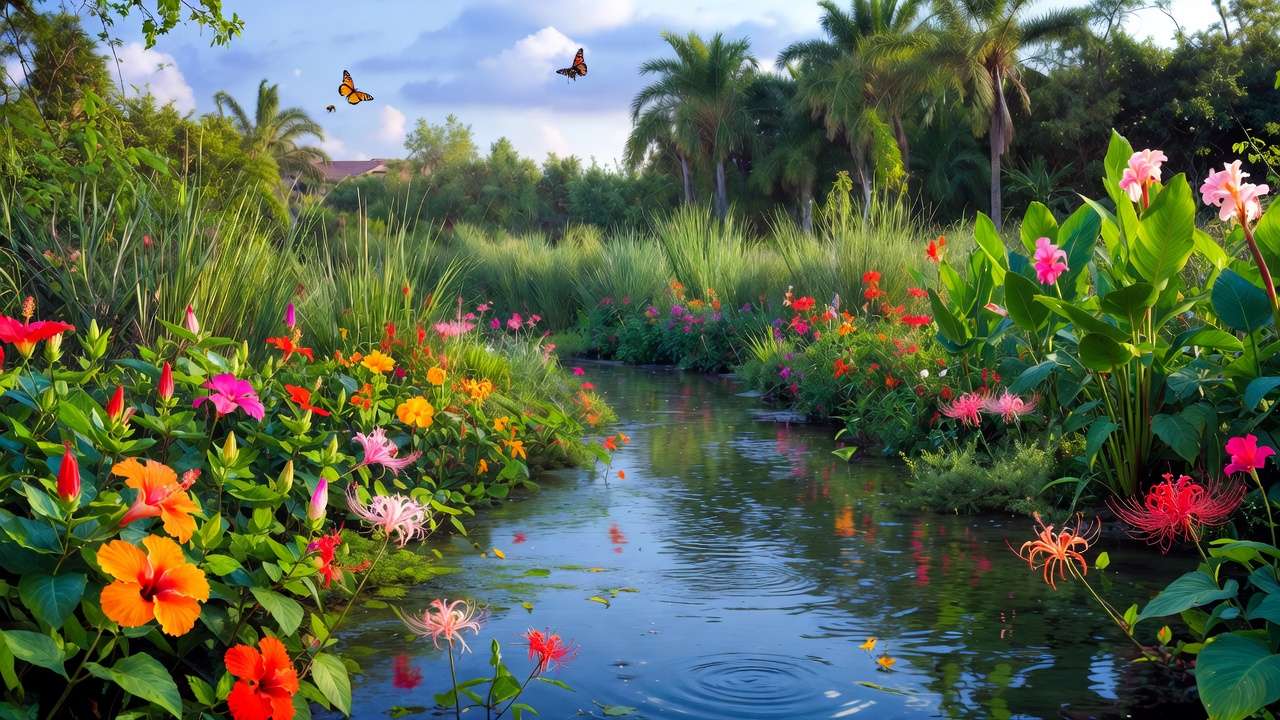
Before: Muddy, unusable lawn patches after rain. After: Lush, green channel that looks intentional and beautiful.
Example 2: Front-Yard Retrofit with Curb Appeal Boost Another residential case involved a narrow front-yard bioswale parallel to the street, handling runoff from the house roof and driveway. Planted with kans grass, hibiscus mutabilis, and spider lily, it replaced a soggy lawn strip. Neighbors initially worried about “looks,” but within a year:
- Reduced basement dampness during heavy rains
- Filtered oily driveway runoff before it reached the roadside drain
- Added vibrant seasonal blooms that drew compliments
- Property felt more resilient during cyclones and intense downpours
These real-world adaptations show that even small bioswales (5–15 m long) create outsized benefits when native plants are prioritized.
Visual Inspiration Imagine gentle curves of deep-green vetiver waving in the breeze, punctuated by pink hibiscus blooms and white spider lilies — all thriving where water once pooled. Many homeowners report that their bioswale becomes the favorite feature of the yard!
Frequently Asked Questions About Bioswales for Improved Drainage ❓
How much does a home bioswale cost? For a small residential one (8–15 m long, DIY install), expect ৳15,000–50,000 depending on soil amendments, plants, and optional underdrain. Professional help adds ৳30,000–80,000+. Long-term savings come from reduced flooding damage, lower irrigation needs, and healthier plants/trees.
Can I install one myself? Yes — especially smaller versions. Basic digging, soil mixing, mulching, and planting are DIY-friendly if you follow site assessment and avoid utilities. For larger or complex sites (high groundwater, steep slope), consult a local landscaper or agricultural extension officer.
Will it attract mosquitoes? Properly designed bioswales drain within 24–48 hours (ideally faster), so standing water is minimal. Avoid overly deep ponding (>20 cm) and keep vegetation open (no thick overhanging cover). In Khulna’s climate, vetiver and grasses help aerate soil and reduce breeding spots. If concerned, add small fish to any temporary pools or use Bti larvicide sparingly (only if needed).
How long until it works? You’ll see reduced pooling during the first monsoon after planting. Full plant establishment and maximum infiltration take 1–2 growing seasons as roots deepen. Patience pays off — year two is usually dramatically better.
Are permits required? In most rural or suburban Khulna areas, small residential bioswales don’t need formal permits if they stay on your property and don’t connect to public drains or alter major drainage patterns. However, check with your local union parishad or city corporation if near roads, wetlands, or if excavation is large (>50 m³ soil moved). Always call before digging to locate utilities.
Will it freeze or fail in extreme weather? In Bangladesh’s tropical climate, freezing isn’t an issue. Monsoon overload is managed by gentle slopes and overflow paths. Native plants are resilient to cyclones and saline influences (especially kewra, hijal).
Conclusion & Call to Action 🌟
Poor drainage doesn’t have to mean constant frustration, dying plants, or expensive fixes. Bioswales for improved drainage, built around tough, beautiful native plants, offer a natural, sustainable way to turn water problems into landscape assets.
You gain:
- Drier, more usable yard space
- Healthier trees and garden beds
- Cleaner runoff for local waterways
- A thriving mini-habitat for birds, bees, and butterflies
- Greater climate resilience in an era of heavier rains
Start small: Observe your yard during the next rain, sketch a simple flow path, pick 3–5 native species from the list above, and test a pilot section. You’ll likely wonder why you didn’t do it sooner.
Ready to transform your yard? Share your drainage challenges, photos, or progress in the comments below — I’d love to hear from fellow plant lovers in Khulna and beyond! 💬🌱 Or explore more tree care, native gardening, and sustainable landscaping tips right here on the site.
Happy planting — and drier feet ahead! 😊











