
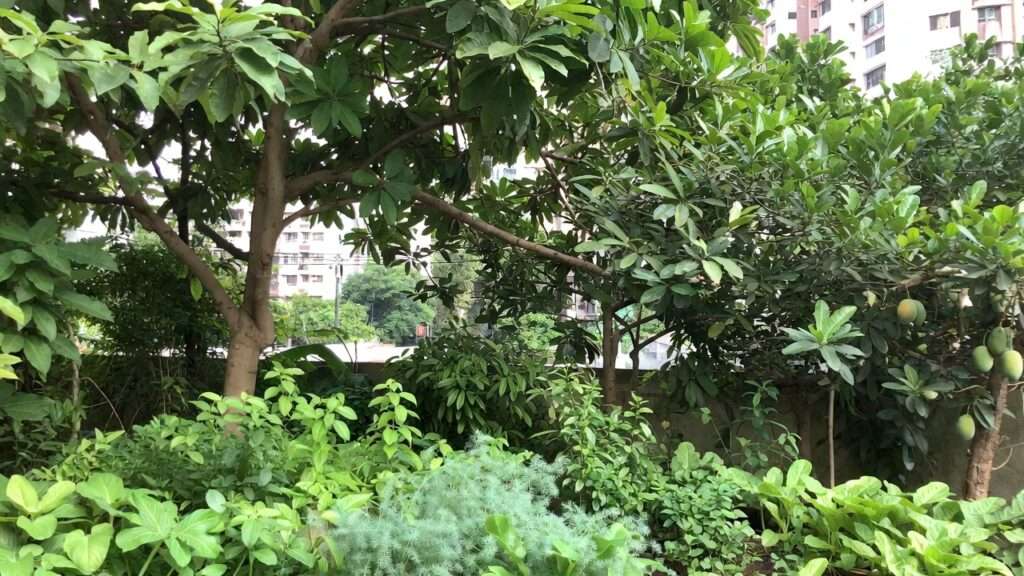
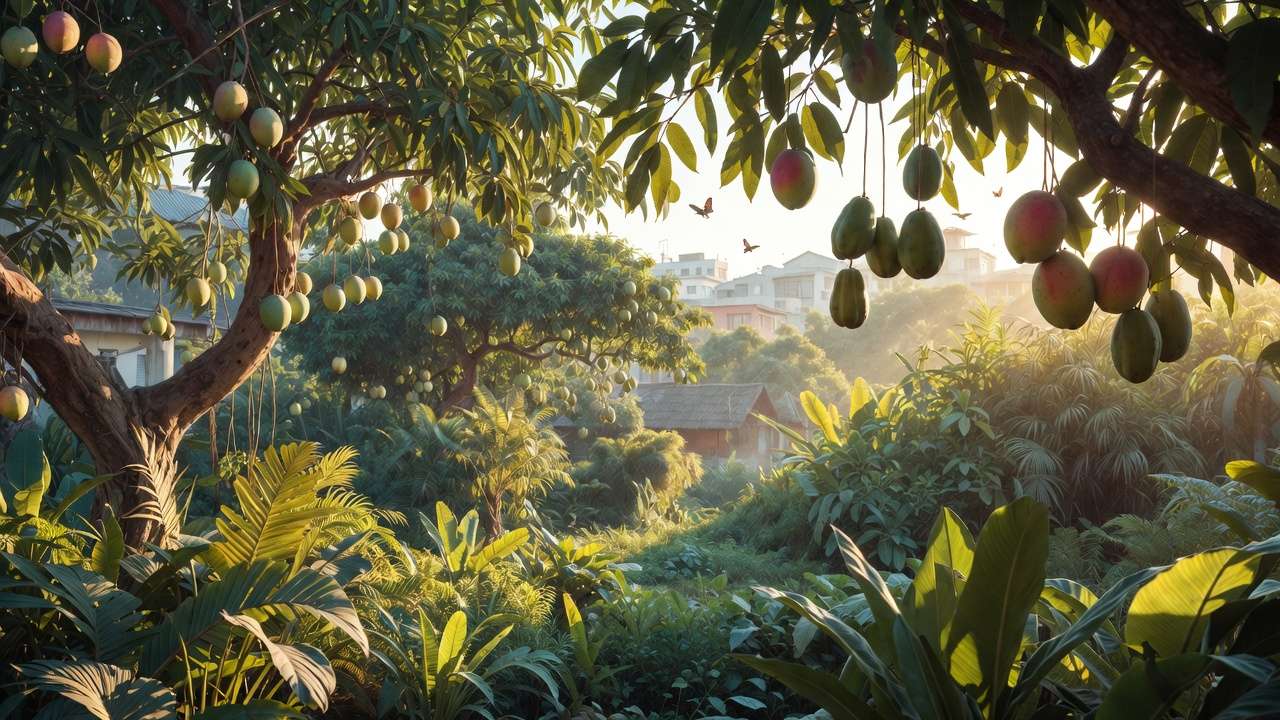
Imagine stepping out your door in a bustling city like Khulna, where concrete dominates and heat waves make summers unbearable, only to enter your own lush, green oasis. Fresh mangoes, papayas, or juicy berries hang within reach, bees buzz happily among flowers, birds flit through the branches, and the air feels noticeably cooler. No daily weeding, no constant watering, no chemical fertilizers—just nature doing its thing. This isn’t a fantasy; it’s the promise of urban forest gardening concepts put into practice. 🌳🍓
In crowded urban areas across Bangladesh and beyond, traditional gardening often feels impossible: tiny plots, poor soil, pollution, and limited time. Yet, more city dwellers are discovering a smarter way—urban forest gardening, also known as urban food forests or edible forest gardens. This approach mimics natural young woodlands, stacking multiple layers of mostly perennial plants to create self-sustaining, productive ecosystems that require far less maintenance than conventional vegetable patches or lawns.
Whether you have a small backyard, balcony containers, rooftop space, or access to a community plot, these concepts deliver real solutions: homegrown food to combat rising prices and food insecurity, natural cooling to fight urban heat islands, improved biodiversity in concrete jungles, and a peaceful retreat for mental well-being. In this comprehensive guide, we’ll explore the essential urban forest gardening concepts, from foundational principles to practical design, plant choices suited to subtropical climates like Khulna’s humid, tropical conditions, and long-term care tips. By the end, you’ll have the knowledge to start transforming your urban space into a thriving, low-effort green haven. 🌱💚
What Is Urban Forest Gardening? Understanding the Basics 🌳🏙️
Urban forest gardening adapts the ancient practice of forest gardening—pioneered in modern times by figures like Robert Hart in the UK and inspired by Indigenous land stewardship worldwide—to city environments. At its core, it’s a form of permaculture (permanent agriculture) that designs multi-layered, edible landscapes mimicking natural forests rather than monoculture rows.
Unlike traditional annual vegetable gardens that demand tilling, replanting, and heavy inputs each season, urban food forests emphasize perennials (plants that live for years), polycultures (diverse species together), and closed-loop systems where waste from one element feeds another. The result? A garden that builds soil fertility over time, resists pests naturally, and produces food, medicine, fiber, and habitat with minimal ongoing work.
In cities, this method shines because it maximizes vertical space, tolerates compacted or poor urban soils once established, mitigates pollution through plant filtration, and combats climate challenges like heat and flooding. Studies on urban green infrastructure highlight how such systems enhance biodiversity, sequester carbon, manage stormwater, and provide cultural benefits like community engagement and education—making them ideal for sustainable urban living. 🌍🐝
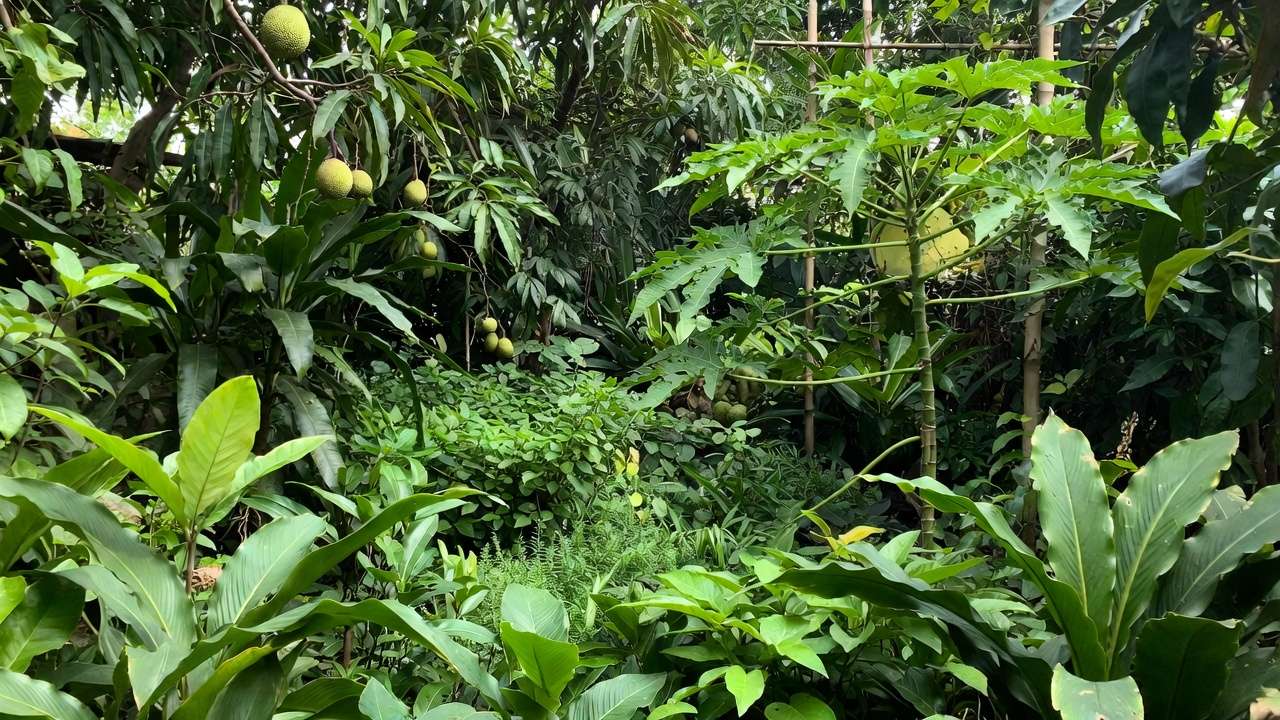
Core Urban Forest Gardening Concepts & Principles 🔑🌍
1. Mimicking Natural Forest Succession & Structure 🌲
Natural forests develop in layers over time, creating stability and productivity. Urban forest gardens replicate this “young woodland” edge phase—full of light, diversity, and rapid growth—rather than a mature dark forest.
The classic model features seven layers (sometimes expanded to nine in tropical/subtropical zones):
- Canopy layer — Tall trees (e.g., mango, jackfruit in Khulna-like climates) for shade, fruit, and structure.
- Low-tree / large shrub layer — Smaller trees or large bushes (e.g., guava, citrus).
- Shrub layer — Berry bushes and medium shrubs (e.g., papaya, mulberry).
- Herbaceous layer — Perennial herbs, vegetables, and flowers (e.g., turmeric, ginger, lemongrass).
- Rhizosphere / root layer — Root crops and tubers (e.g., arrowroot, yam).
- Ground cover layer — Low-spreading plants to suppress weeds and retain moisture (e.g., sweet potato vines, peanuts).
- Vertical / vine layer — Climbers using supports or trees (e.g., passionfruit, beans).
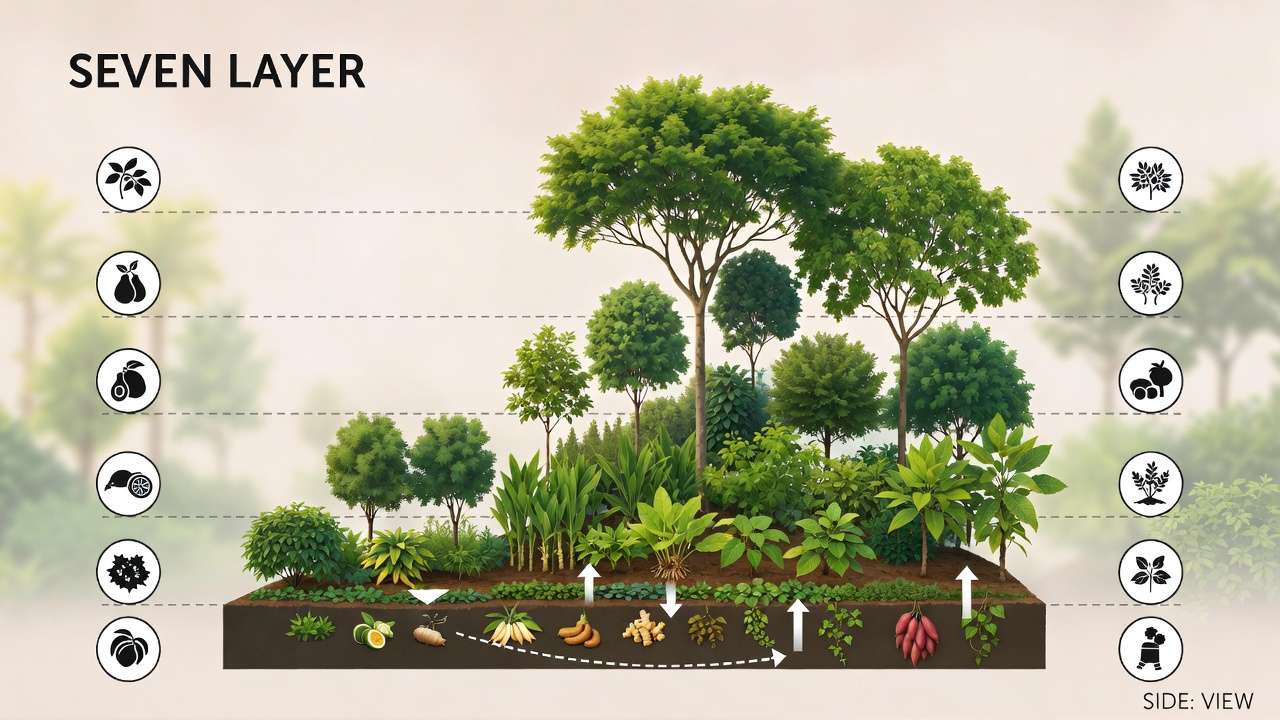
In hotter, humid subtropical areas like Bangladesh, add emphasis on heat-tolerant, fast-growing species and consider a fungal/mycelial layer for soil health.
2. Perennial Polycultures & Biodiversity 🐝
Monocultures invite pests and disease; diversity builds resilience. Plant guilds—groups of mutually supportive species around a central plant (often a tree). A guild might include nitrogen-fixers (e.g., pigeon pea), dynamic accumulators (e.g., comfrey for mulch), pollinator attractors (e.g., marigold), insectaries (e.g., yarrow), and ground covers.
Biodiversity ensures natural pest control, better pollination, soil improvement, and stable yields year after year.
3. Soil Health & Closed-Loop Systems 🌱
Healthy soil is the foundation. Urban sites often have compacted, nutrient-poor dirt, so start with observation and build living soil: heavy mulching, chop-and-drop (cutting plants to drop as mulch), composting in place, and cover cropping. Avoid tilling to preserve mycelial networks.
4. Low-Maintenance & Regenerative Mindset ♻️
Permaculture ethics guide everything: Earth care, people care, fair share. Observe first (patterns in sun, wind, water), intervene minimally, and let nature take over. Once established (2–5 years), these systems need far less work than lawns or annual beds.
5. Urban-Specific Adaptations 🏙️
Cities bring challenges: heat islands, pollution, shade from buildings, limited space, and regulations. Solutions include vertical growing, container adaptations, pollution-tolerant natives, microclimate tweaks (e.g., windbreaks), and community involvement to navigate HOAs or public land rules.
Step-by-Step Guide: Designing Your Urban Forest Garden 🗺️🛠️
Ready to turn theory into action? Designing an urban forest garden follows a permaculture-inspired process: observe, plan, implement, and evolve. Here’s a practical, step-by-step roadmap tailored for city dwellers in humid subtropical climates like Khulna, where heavy monsoon rains, high humidity, and temperatures from 20–35°C dominate.
- Observe and Analyze Your Site ☀️💧 Spend at least a few weeks (ideally a full season) watching your space. Note:
- Sun patterns (full sun 6+ hours for fruit trees, partial shade for understory)
- Wind direction and intensity (common in coastal Khulna—use windbreaks like bamboo or tall shrubs)
- Water flow (monsoon flooding? Create swales or raised beds)
- Soil type (often clay-heavy or compacted urban fill—test pH, ideally 6.0–7.0 for most edibles)
- Existing plants, pollution sources, and microclimates (buildings create shade and heat pockets). Pro tip: Sketch a base map and overlay zones (Zone 1 = daily access near door; Zone 5 = wilder edges).
- Set Clear Goals 🎯 What do you want most? Year-round food (mango, guava, papaya), shade and cooling, biodiversity for birds/butterflies, low water use after establishment, or a mix? Prioritize 2–3 goals to avoid overwhelm in small urban plots.
- Map and Zone Your Layout Use “sun trap” shapes (semi-circles facing south for max light in Northern Hemisphere equivalents) or linear windbreaks. Place tallest canopy trees north/back to avoid shading lower layers. In tiny spaces (e.g., 50–200 m²), go vertical: use trellises, walls, or dwarf/rootstock trees.
- Select Plants 🌿🍎 Choose climate-adapted, mostly perennial species. For Khulna’s tropical monsoon:
- Canopy: Mango (Mangifera indica), Jackfruit (Artocarpus heterophyllus), Coconut (if space allows), Neem (for shade + pest control).
- Low-tree/Shrub: Guava (Psidium guajava), Citrus (lime, lemon, pomelo), Papaya (Carica papaya—fast-growing pioneer), Mulberry (Morus spp.).
- Herbaceous: Turmeric (Curcuma longa), Ginger (Zingiber officinale), Lemongrass (Cymbopogon citratus), Perennial basil or holy basil (Tulsi).
- Ground cover: Sweet potato (Ipomoea batatas), Peanuts (Arachis hypogaea—nitrogen fixer), Centella asiatica (Thankuni—medicinal ground cover).
- Vines: Passionfruit (Passiflora edulis), Beans (perennial yardlong), Malabar spinach. Include nitrogen-fixers (pigeon pea, Sesbania) and dynamic accumulators (comfrey if available, or local alternatives like moringa). Prioritize natives or well-adapted species for resilience.
- Build Guilds 🤝 Example guild around a mango tree:
- Center: Dwarf mango
- Nitrogen fixer: Pigeon pea or moringa
- Pollinator attractor: Lemongrass, marigold
- Ground cover: Sweet potato or peanuts
- Dynamic accumulator: Turmeric or ginger
- Pest confuser: Neem or holy basil nearby This creates synergy—plants support each other.
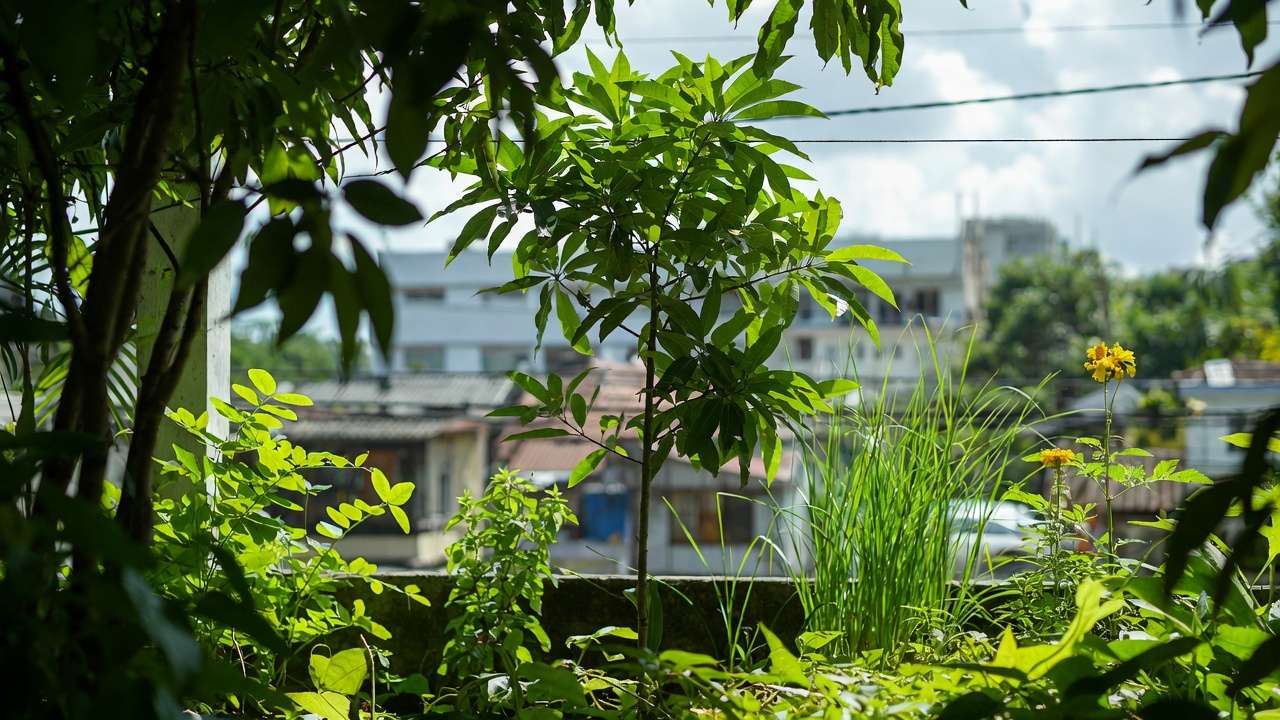
- Implementation Timeline 📅
- Year 0–1: Soil building (sheet mulching, compost, green manures), plant canopy + pioneers (fast growers like papaya, banana).
- Year 2: Add shrubs, herbs, vines; mulch heavily.
- Year 3+: Fill lower layers, observe, adjust. Yields increase exponentially as roots establish.
Plant Selection & Examples for Urban Settings 🌿🍓
In humid subtropical/monsoon climates like Bangladesh, focus on flood-tolerant, heat-loving perennials that thrive in high rainfall (1500–3000 mm/year). Avoid waterlogged roots with raised beds if needed.
Top Picks for Khulna-Style Urban Forests:
- Canopy (dwarf varieties for small spaces): Mango (Amrapali or Mallika dwarf), Guava (Allahabad Safeda), Jackfruit (if space).
- Shrubs: Papaya, Banana/Plantain (Musa spp.—fast shade + fruit), Citrus (Kagzi lime), Mulberry.
- Herbs/Perennials: Turmeric, Ginger, Lemongrass, Moringa (drumstick—nutritious leaves/pods), Holy basil.
- Ground Covers: Sweet potato vines, Peanuts, Centella asiatica (medicinal, thrives in shade).
- Vines: Passionfruit, Betel leaf (Piper betle—cultural favorite).
Pollution-tolerant bonuses: Neem, Moringa, and certain figs handle urban stress well. Start small—plant 5–10 species first, then expand.
Maintenance & Care: Keeping It Low-Effort & Thriving 🧑🌾🔧
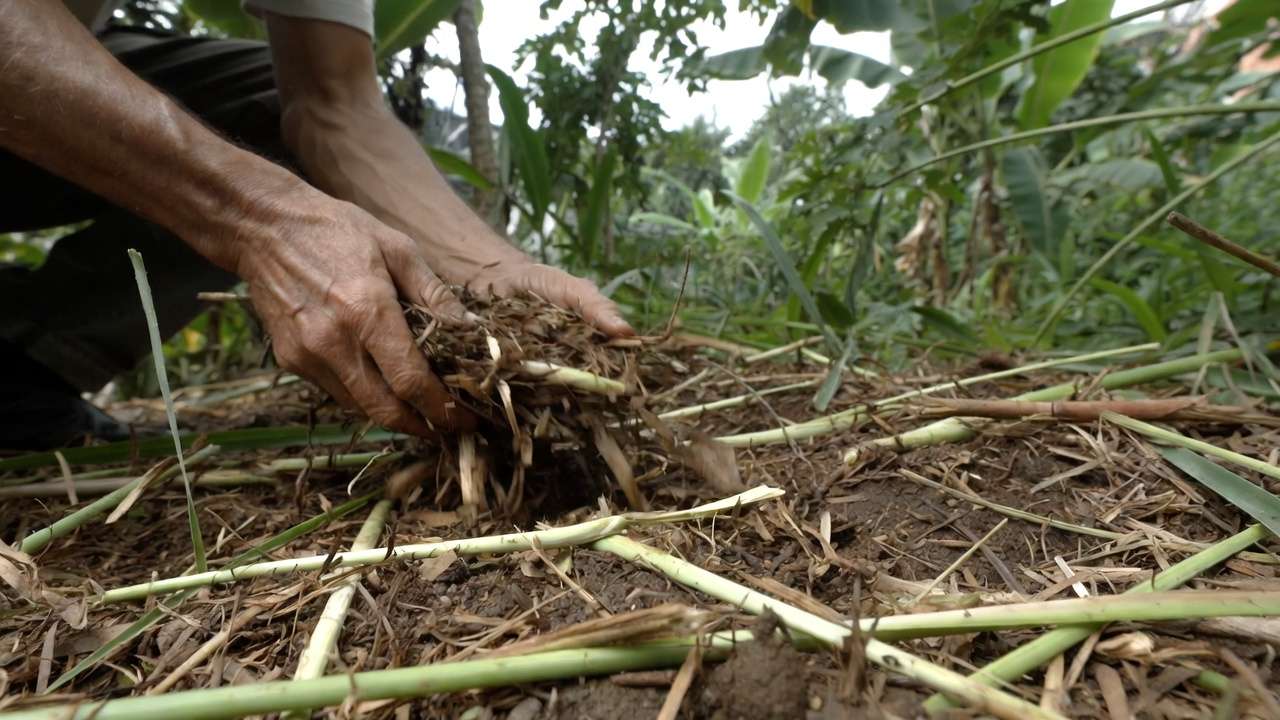
One of the biggest attractions of urban forest gardening is how dramatically maintenance decreases after the establishment phase. While the first 1–3 years require thoughtful effort, a well-designed system eventually becomes almost self-regulating — exactly what busy city residents need.
Yearly Maintenance Calendar (Humid Subtropical / Monsoon Climate)
Pre-Monsoon (March–May)
- Heavy mulching (10–15 cm layer of dry leaves, straw, chopped green waste)
- Prune fruit trees lightly to open canopy and improve air circulation
- Plant or divide fast-growing pioneers if gaps appear
- Apply compost tea or diluted seaweed extract for micronutrients
Monsoon (June–September)
- Minimal intervention — nature waters and grows vigorously
- Monitor for waterlogging; redirect excess water if needed
- Harvest early fruits (papaya, banana, guava) and chop-and-drop excess growth as mulch
- Check vines and train them onto supports
Post-Monsoon / Early Dry Season (October–December)
- Harvest main crops (mango, jackfruit, citrus)
- Prune dead or crossing branches
- Add fresh mulch layer as monsoon growth dies back
- Plant any new perennials during cooler months
Dry Winter (January–February)
- Irrigate deeply but infrequently if rainfall is low (drip systems or ollas work beautifully)
- Protect young plants from occasional cold snaps with light covers
- Observe and plan next season’s tweaks
Key Low-Effort Maintenance Practices
- Mulching religiously — suppresses weeds, retains moisture, feeds soil life
- Chop-and-drop — cut back vigorous herbs and legumes, drop them right where they grew
- Minimal pruning — only remove dead, diseased, or crossing branches; avoid heavy shaping
- Natural pest management — encourage birds, frogs, lizards; use neem oil or chili-garlic spray only when absolutely necessary
- Watering strategy — establish deep roots first (first 1–2 years), then rely mostly on rainfall
Troubleshooting Common Urban Challenges
- Compacted soil → Sheet mulch heavily and plant deep-rooted dynamic accumulators (moringa, pigeon pea)
- Too much shade from buildings → Choose shade-tolerant understory plants (turmeric, ginger, holy basil, centella)
- Pollution stress → Prioritize tough species (neem, mulberry, moringa) and wash leaves occasionally during dry season
- Monsoon root rot → Plant on slight mounds or raised beds; choose flood-tolerant species
With these habits, most urban forest gardens need only 1–3 hours of care per month once mature.
Real-World Success Stories & Case Studies 🌟🏡
- Tiny 30 m² backyard in Dhaka suburb A family transformed a former concrete parking area into a layered food forest. Year 1: planted 2 dwarf mangos, 4 papayas, pigeon pea, and sweet potato ground cover. Year 3: harvesting mangoes, guava, turmeric, ginger, holy basil, and passionfruit — saving ≈30–40% on fruit & vegetable purchases.
- Community rooftop forest in Khulna A group of apartment residents created 120 m² of shared edible landscape on a flat roof. Key species: drumstick (moringa), guava, lemongrass, turmeric, and Malabar spinach climbers. The project reduced building heat, provided weekly harvests for 12 families, and became a local educational site.
- Balcony micro-forest (5 m²) A single mother in Chittagong used large containers and wall trellises to grow: 1 dwarf guava, 2 papayas in big pots, lemongrass, holy basil, peanuts, and passionfruit vine. Produces enough fresh herbs, fruit, and greens for daily family use.
These examples show that scale is flexible — results are possible even with very limited space.
The Bigger Picture: Benefits for You, Your City & the Planet 🌍💚
Personal benefits:
- Regular access to ultra-fresh, nutrient-dense food
- Significant reduction in grocery bills (especially fruits & herbs)
- Therapeutic gardening experience with lower stress than traditional plots
Environmental benefits:
- Urban cooling (studies show food forests can reduce local temperatures 2–5°C)
- Carbon sequestration in perennial roots and biomass
- Stormwater absorption and reduced runoff during monsoons
- Increased urban biodiversity (pollinators, birds, beneficial insects)
Social benefits:
- Strengthened community bonds through shared harvests or knowledge exchange
- Enhanced food security in times of price spikes or supply disruptions
Common Mistakes to Avoid & Pro Tips from Experts ⚠️💡
Mistakes
- Planting everything at once → overcrowding and competition
- Skipping soil building → poor establishment and slow growth
- Choosing thirsty annuals over adapted perennials
- Ignoring observation phase → wrong plant placement
- Start with 3–5 strong pioneer species (papaya, banana, pigeon pea, moringa)
- Always plant nitrogen-fixers early — they accelerate everything
- Use “stacking functions” — choose plants that serve 2–4 purposes (food + shade + soil building + medicine)
- Take weekly photos — progress is slow but very visible over years
- Join local permaculture or gardening groups for cuttings and advice
Frequently Asked Questions (FAQs) ❓
Can I create an urban forest garden in an apartment with only a balcony? Yes! Use large containers (50–100 L), vertical trellises, and dwarf varieties. Focus on high-yield compact plants like papaya, guava, holy basil, lemongrass, and climbing beans.
How long until I get meaningful harvests? Pioneers (papaya, banana, pigeon pea) can produce in 6–18 months. Main canopy fruits (mango, guava) usually start significantly in years 3–5.
Is it expensive to start? Not necessarily. Many plants can be propagated from cuttings, seeds, or local swaps. Biggest costs are initial soil amendments and mulch — often under 5,000–15,000 BDT for a small plot.
What about pests, diseases or allergies? Diverse polycultures reduce pest outbreaks dramatically. Choose low-allergen species if needed (avoid too many flowering plants if pollen-sensitive).
How does urban forest gardening compare to regular vegetable gardening? Much lower long-term maintenance, higher resilience, perennial food supply, better soil improvement, and superior climate adaptation — though initial yields are slower.
Conclusion: Start Your Urban Forest Journey Today 🚀🌱
Urban forest gardening concepts offer one of the most powerful, beautiful, and practical ways to bring abundance, resilience, and joy back into city living. You don’t need a huge yard or endless free time — just thoughtful design, patience during establishment, and trust in nature’s patterns.
Your first step can be beautifully simple:
- Choose one small area or large container
- Plant a pioneer tree or shrub + 2–3 supportive companions
- Cover the soil thickly with mulch
- Observe and enjoy the journey
Over time, that tiny beginning will grow into a living, breathing, food-producing ecosystem that nourishes you, your family, and the city around you.
Ready to begin? 🌿 Share your progress, ask questions in the comments, or connect with local urban gardening groups. Together, we can turn concrete jungles into edible oases — one layer at a time. 💚🌳











