
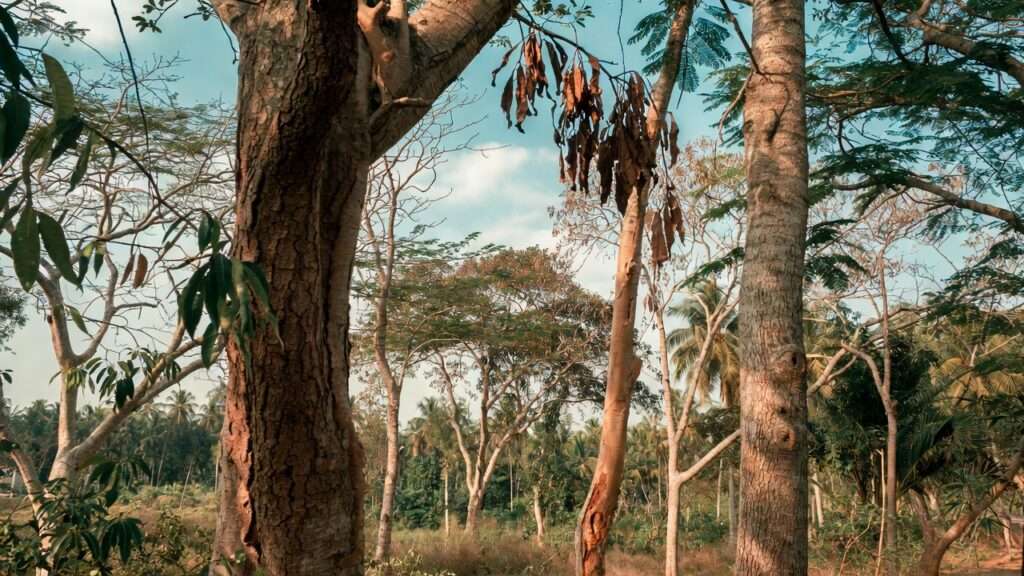
Imagine stepping into your yard in Khulna during a hot, dry spell—when the monsoon has passed and the sun beats down relentlessly—and seeing lush green canopies providing cool shade, birds flitting among branches, and perhaps even some homegrown fruit ready to pick, all without turning on the hose every day. 😍🌳
In Khulna’s tropical monsoon climate—with its scorching summers, high humidity, occasional prolonged dry periods, and growing climate challenges like erratic rainfall and increasing drought risk—traditional high-water gardens are becoming harder to maintain. Water bills rise, wells run low, and plants struggle. But there’s a smart, beautiful solution: native xeric trees for your region. These drought-tolerant, low-water trees are adapted to local conditions, thrive with minimal irrigation once established, and deliver shade, fruit, ecological benefits, and resilience against climate shifts. 🌞💦
As someone passionate about plant care and tree care in Bangladesh (especially the southwest), I’ve seen firsthand how planting the right native or well-adapted species transforms homesteads, urban yards, and community spaces. They save water, support local wildlife 🐦, stabilize soil against erosion, and even provide medicinal or edible yields. This in-depth guide shares expert-recommended native xeric trees tailored for Khulna and southwest Bangladesh—drawing from ethnobotanical studies, local observations, and research like Alam & Furukawa’s work on drought-tolerant species—to help you build a resilient, low-maintenance landscape that looks stunning and works with nature, not against it. Ready to go low-water and high-impact? Let’s dive in! 🚀
What Are Native Xeric Trees and Why Choose Them for Your Region? 🤔
Understanding Xeric Landscaping in a Tropical Monsoon Context Xeric landscaping means designing with plants that need little supplemental water—true drought-tolerant or xeric trees survive and thrive on rainfall alone after their first 1–2 years of establishment. In Khulna, our “tropical wet and dry” climate brings heavy monsoon rains (often 1500–2000 mm annually), but dry seasons stretch longer with rising temperatures and variable patterns due to climate change. Saline intrusion near the coast adds another challenge for many species.
Native xeric trees are locally evolved or long-adapted champions: deep root systems tap groundwater, waxy or small leaves reduce evaporation, and they handle heat and periodic drought like pros. Choosing them means:
- Massive water savings 💧 (no daily watering after establishment)
- Lower maintenance and costs
- Boosted biodiversity—pollinators, birds, and beneficial insects thrive
- Better soil health and erosion control in flood- or drought-prone areas
- Cultural and practical value: many provide timber, fuel, medicine, or fruit 🍋
How Climate Change Is Affecting Tree Choices in Khulna & Bangladesh Climate models and local reports show rising temperatures, erratic monsoons, more intense dry spells, and worsening salinity in coastal Khulna. Studies highlight how prolonged droughts stress non-adapted trees, while native drought-tolerant ones maintain growth. In southwest Bangladesh, saline intrusion already affects agriculture and homesteads—planting resilient species like Acacia nilotica or Azadirachta indica helps counter this. By choosing xeric natives, you’re future-proofing your landscape against these shifts. 🌍🔥
Key Traits of True Xeric Trees Look for:
- Deep, extensive roots for drought access
- Reduced leaf surface or adaptations (thick cuticles, shedding in extreme dry)
- Slow but steady growth in low water
- Tolerance to heat, poor soils, and sometimes salinity
These traits make them ideal for Khulna’s silty-clay to saline soils and variable moisture.
Top Native & Adapted Xeric Trees for Khulna and Southwest Bangladesh 🌴
Our Top Drought-Tolerant Tree Recommendations Here are standout picks—native or well-naturalized in Bangladesh, proven drought-hardy from research (e.g., Alam & Furukawa’s 19-species list from drought-prone areas, plus coastal studies). I’ve prioritized those suiting Khulna’s conditions, with details on size, benefits, and care.
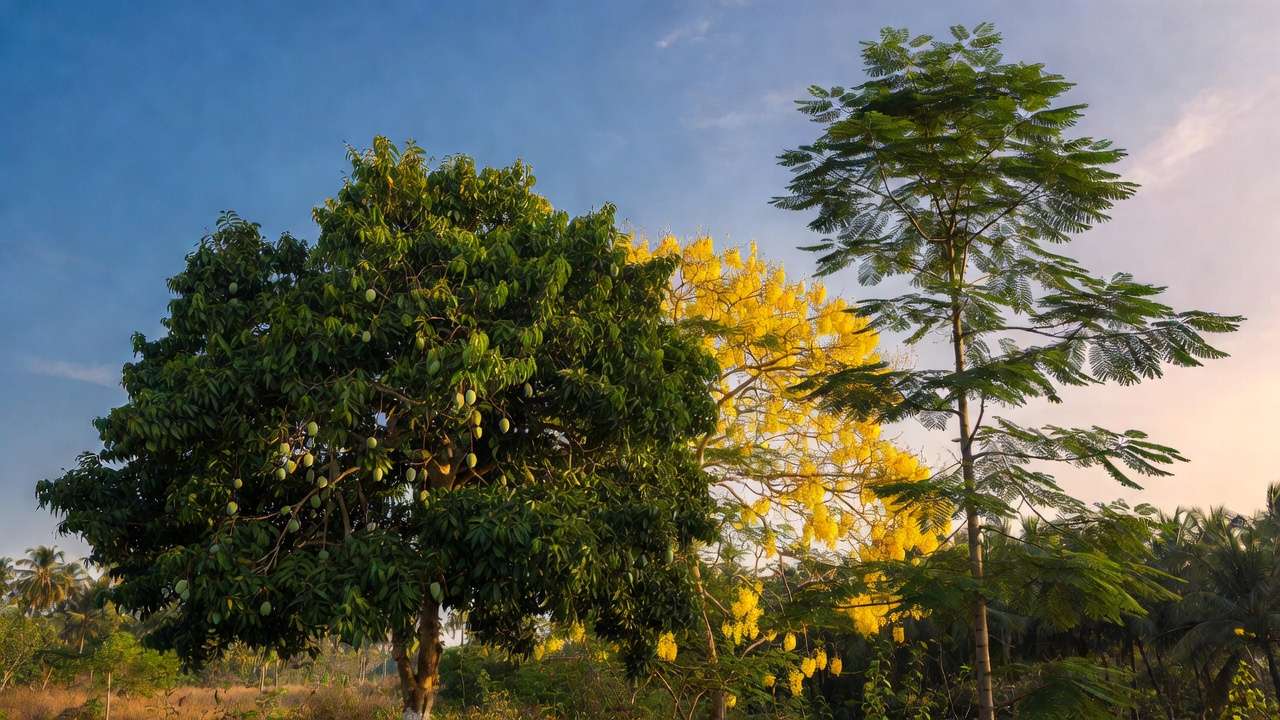
Mango (Mangifera indica) 🥭 The king of Bangladeshi trees! Native and ultra-common, mangoes are remarkably drought-tolerant once established—deep roots handle dry spells well. Mature size: 10–30m tall, broad canopy for excellent shade. Growth: moderate to fast. Fruits: delicious, seasonal bounty. Pros: cultural icon, wildlife attractor, medicinal leaves. Cons: needs space; fruit drop can be messy. Perfect for homesteads.
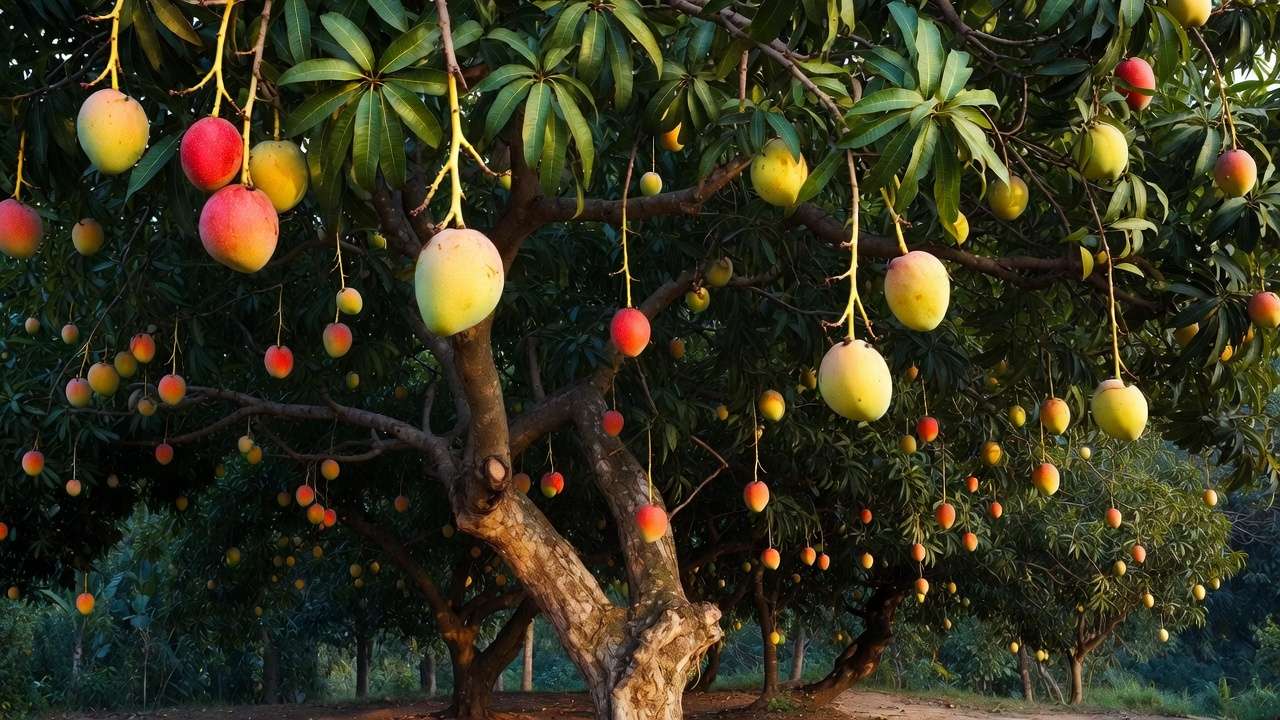
Neem (Azadirachta indica) 🌿 A legendary survivor—highly drought-resistant, thrives in poor soils, and repels pests naturally. Mature size: 15–20m. Growth: moderate. Features: medicinal (leaves, oil), air-purifying, shade provider. Pros: extremely hardy, low pest issues. Cons: bitter taste if used wrong. Coastal studies show good salinity tolerance too.
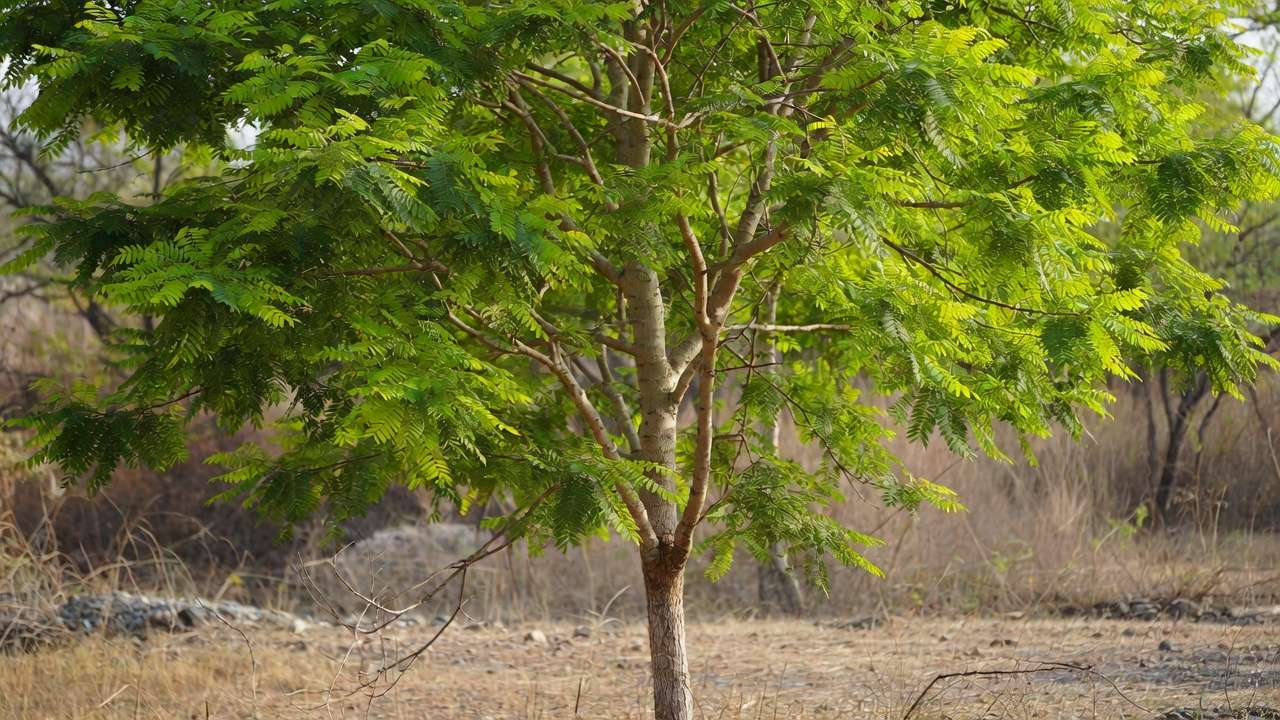
Golden Shower Tree (Cassia fistula) 🌸 Striking yellow flower cascades in summer—very drought-hardy. Mature size: 10–15m. Growth: moderate. Pros: ornamental beauty, medicinal pods, attracts butterflies. Cons: deciduous in dry periods. Ideal for visual impact in low-water yards.
Babul / Babla (Acacia nilotica) Nitrogen-fixing powerhouse—excellent in dry, saline areas (coastal Khulna favorite). Mature size: 5–10m. Growth: fast. Features: thorny (good fence), fuelwood, gum. Pros: superb drought + salinity tolerance, soil improver. Cons: thorns. Research highlights it as top for arid zones.
Bel / Wood Apple (Aegle marmelos) 🍎 Sacred tree, highly resilient to drought. Mature size: 6–10m. Growth: slow-moderate. Fruits: nutritious, medicinal. Pros: shade, wildlife food, cultural value. Cons: thorny branches. Thrives in variable moisture.
Date Palm (Phoenix sylvestris) 🏜️ Wild date palm—iconic, low-water palm for tropics. Mature size: 10–20m. Growth: slow. Fruits: sweet sap/toddy. Pros: extreme drought tolerance, cultural significance. Cons: slow to fruit. Great for coastal saline spots.
Additional Strong Picks
- Jackfruit (Artocarpus heterophyllus): Huge fruit, shade; drought-tolerant once rooted.
- Jamun (Syzygium cumini): Purple fruit, medicinal; handles dry spells.
- Arjun (Terminalia arjuna): Bark medicinal, good for heart health; resilient.
- Palash / Flame of the Forest (Butea monosperma): Fiery red blooms; excellent dry-condition performer. 🔥
- Others from studies: Khair (Acacia catechu), Pithecellobium dulce (drought-hardy in trials).
These species draw from ethnobotanical research showing rural reliance on them for timber, fruit, and fuel in drought-prone homesteads. Studies like Mahbubul Alam and Yasushi Furukawa’s work on drought-tolerant tree species in Bangladesh highlight 19 such adapted natives, many overlapping with Khulna’s practical choices—emphasizing homestead-friendly, multi-purpose trees that perform well even when rainfall dips.
For Khulna specifically (with its silty-clay soils, occasional salinity near the Sundarbans influence, and tropical heat), prioritize species like Neem, Babul, Date Palm, and Mango for their proven resilience in coastal and variable-moisture zones. Local observations and agroforestry trials confirm Acacia nilotica (Babul) and Pithecellobium dulce excel under water stress, while common fruit trees like Mango and Jackfruit establish deep roots quickly.
How to Select the Right Xeric Tree for Your Specific Site 🗺️
Matching Trees to Your Khulna Landscape Choosing the perfect tree means assessing your plot’s unique conditions—don’t just pick the prettiest one! Here’s how to match species smartly:
Soil Types in Khulna (Silty Clay to Saline) Khulna’s soils range from fertile silty-clay in inland areas to saline-affected near rivers/coast. Opt for:
- High salinity tolerance: Babul (Acacia nilotica), Date Palm (Phoenix sylvestris), Neem.
- Neutral/fertile: Mango, Jackfruit, Jamun, Bel. Test your soil pH (aim 6–7.5 for most); add organic matter if heavy clay compacts.
Sun Exposure & Space Considerations Full sun (6+ hours) suits nearly all xeric picks—essential for drought tolerance.
- Small/medium yards: Bel (6–10m), Golden Shower (10–15m), Neem (if pruned).
- Large homesteads: Mango (broad canopy), Banyan (massive spread), Date Palm (tall but narrow). Avoid planting under power lines or too close to foundations—roots spread wide!
Purpose: Shade, Fruit, Ornamental, or Erosion Control?
- Max shade 🌳: Mango, Banyan, Neem.
- Edible yields 🍎: Mango, Jackfruit, Jamun, Bel, Date Palm.
- Ornamental blooms 🌸: Golden Shower, Palash.
- Erosion/soil fix: Babul (nitrogen-fixer), Arjun (riverbank stabilizer). Multi-purpose winners like Neem offer shade + medicine + pest control.
Planting & Establishment Guide for Success 🌱
Step-by-Step Planting for Maximum Drought Tolerance Success starts with smart planting—get this right, and your tree becomes truly xeric fast.
- Best time: Post-monsoon (October–November in Khulna) for root establishment before dry season, or early monsoon (May–June) for natural rain help. Avoid peak summer heat.
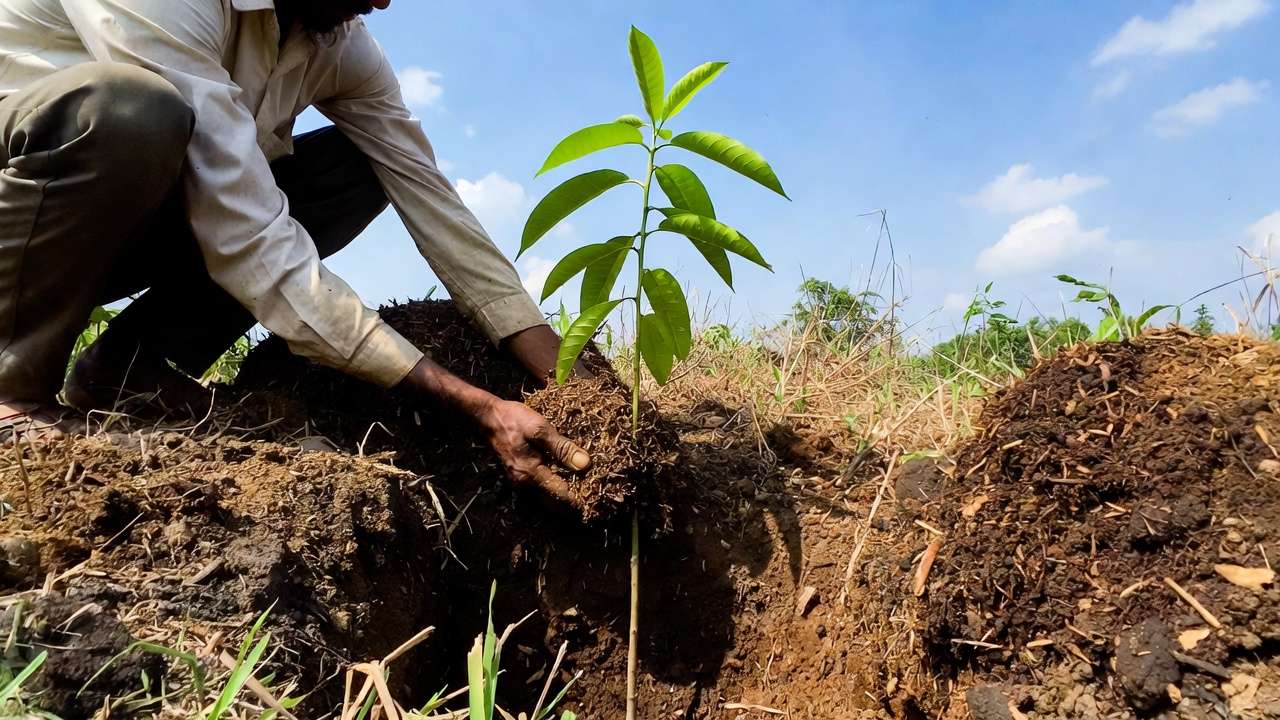
- Site prep: Clear weeds, dig a hole 2–3x wider than root ball, same depth. Mix compost/organic matter into backfill for better drainage.
- Planting technique: Place tree so root flare is at soil level (not buried). Backfill gently, tamp to remove air pockets. Create a small berm around the edge to direct water.
- Initial watering strategy: Deep soak weekly for first 6–12 months (more in dry spells)—encourage deep roots. Reduce gradually in year 2. Mulch 5–10 cm thick (rice straw, leaves) to retain moisture and suppress weeds. ☔
- Expert tip: In saline areas, plant slightly raised mounds to improve drainage. Stake only if windy—remove after 1 year to avoid weak stems.
Common Mistakes to Avoid
- Overwatering early → shallow roots, less drought tolerance later.
- Planting too deep → rot risk.
- Skipping mulch → faster evaporation, weed competition.
- Ignoring spacing → competition for water later.
Follow these, and most trees need little to no extra water by year 2–3!
Ongoing Care & Maintenance Tips for Low-Water Success 🛠️
Keeping Your Xeric Trees Thriving with Minimal Effort Once established, these trees are low-maintenance superstars. Focus on smart habits:
- Watering after year 1–2: Only during extreme dry spells (e.g., >2 months no rain)—deep, infrequent soaks beat daily sprinkles.
- Pruning: Light annual trim post-monsoon to shape, remove deadwood, improve airflow. For fruit trees like Mango, prune to encourage branching.
- Pest management: Neem’s natural repellence helps! Monitor for borers or aphids; use organic neem oil if needed. Most xeric natives resist pests well.
- Mulching & soil improvement: Renew mulch yearly; add compost occasionally for nutrients without extra water.
- Monitoring for climate stress: Watch for leaf drop or wilting in prolonged heat—provide temporary shade cloth if young.
Enhancing Resilience Against Drought & Salinity
- Plant companions: Understory drought-tolerant herbs/shrubs (e.g., vetiver grass for erosion).
- Fertilize sparingly: Organic once/year in monsoon; avoid excess nitrogen.
- Salinity strategy: Flush soil with rain/monsoon water; choose tolerant species first.
These practices keep maintenance under 2–3 hours per tree annually—perfect for busy homesteaders!
Bonus: Design Ideas & Combinations for Stunning Low-Water Gardens 🎨
Creating a Beautiful, Resilient Landscape Low-water doesn’t mean boring—combine trees for layered beauty:
- Homestead agroforestry style: Mango + Neem center shade; surround with Bel, Jamun, Jackfruit for fruit diversity. Add Babul as living fence.
- Urban yard oasis: Golden Shower for color + Date Palm accent + underplanted with drought-hardy groundcovers.
- Coastal resilient plot: Babul + Date Palm frontline (salinity fighters); Mango/Neem inland for shade.
- Wildlife-friendly: Mix figs (Banyan) + Palash blooms to attract birds/butterflies.
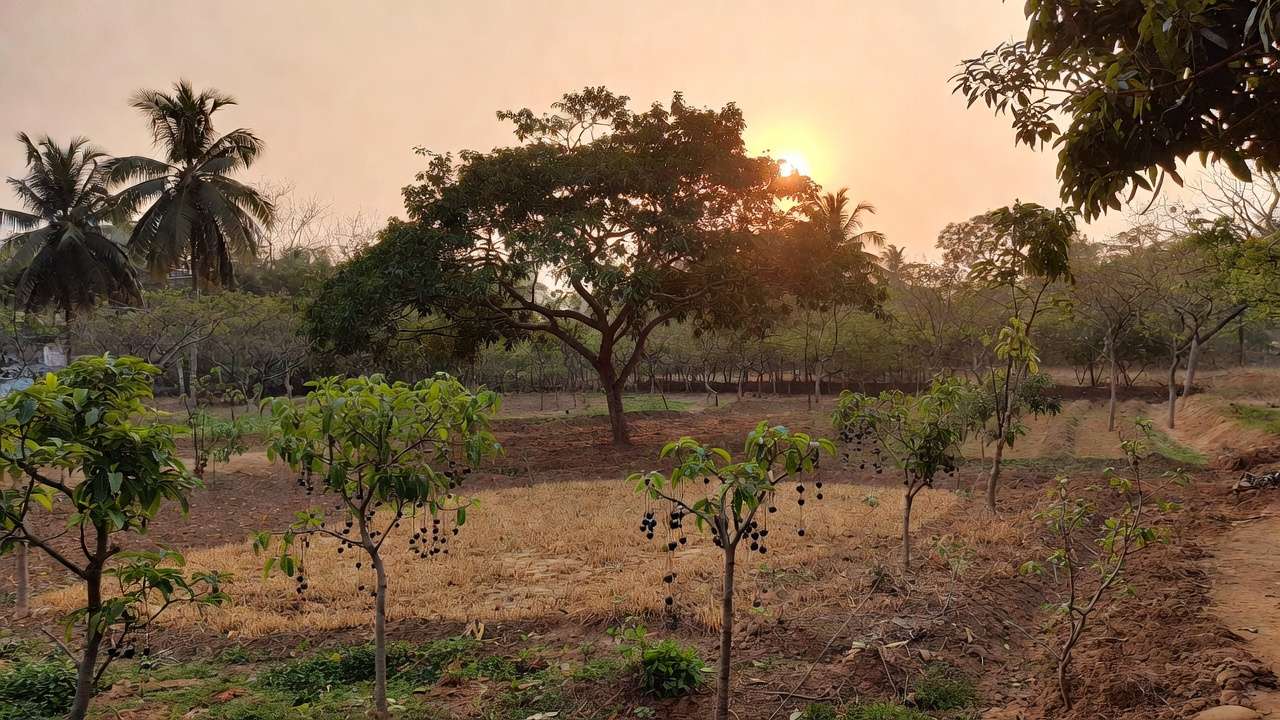
Group 3–5 trees for microclimate cooling and shared root benefits. Add paths, benches—your yard becomes a cool retreat even in dry months! 🌴✨
FAQs About Native Xeric Trees in Khulna 🌟
Frequently Asked Questions
Which tree needs the least water long-term? Neem and Babul top the list—extremely hardy once rooted.
Are these trees salt-tolerant for coastal Khulna? Yes—Babul, Date Palm, Neem handle salinity well; Mango and Jackfruit prefer inland/less saline spots.
How fast do they grow? Fast: Babul, Mango (moderate-fast). Moderate: Neem, Golden Shower. Slow: Date Palm, Bel.
Best for small yards? Bel, Golden Shower, or pruned Neem—compact canopies.
Do they need fertilizer? Minimal—organic compost yearly suffices; natives adapt to local soils.
Will they survive Khulna’s occasional floods? Most yes (e.g., Mango, Neem); avoid low-lying spots for best drought performance.
Can I grow them from seed? Yes—many (Mango, Neem, Babul) germinate easily; buy saplings for faster results.
Any medicinal benefits? Plenty! Neem (skin/pest), Bel (digestion), Arjun (heart health).
How to protect young trees from heat? Mulch heavily, shade cloth first summer, consistent initial watering.
Where to source saplings in Khulna? Local nurseries, forest department, or community plant fairs—ask for healthy, region-adapted stock.
Conclusion & Call to Action
Planting native xeric trees for your region is one of the smartest moves you can make in Khulna today. They combat water scarcity, beautify your space, feed your family, support wildlife, and build climate resilience—all with far less effort than thirsty exotics. Start small: pick 1–3 from this list that match your yard’s needs, plant properly, and watch them thrive.
Your low-water landscape isn’t just sustainable—it’s a legacy for future generations. 🌍💚 Have you planted any of these? Share your experiences in the comments—I’d love to hear what works best in your Khulna corner!
Ready to get planting? Grab those saplings and let’s grow a greener, tougher tomorrow together. 🚀🌳











