
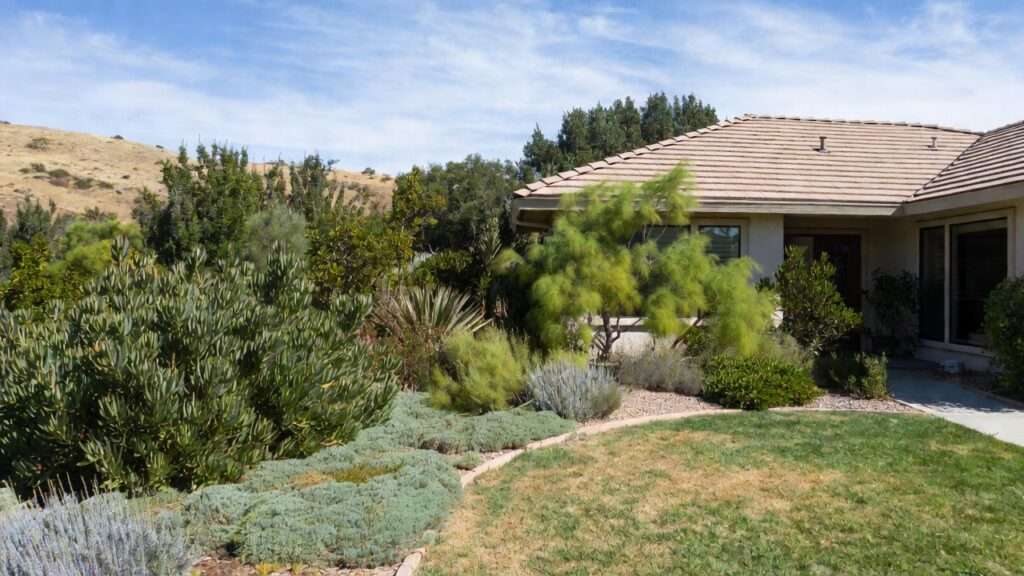
Imagine this: Wildfires are raging closer to your neighborhood than ever before, fueled by dry conditions and climate change. Your heart races as you think about your home—your sanctuary—and the beautiful garden you’ve nurtured for years. But what if your landscaping could actually help protect it instead of becoming fuel for the flames? 😟🏡
With wildfires becoming more frequent and intense across the United States, creating a fire-resistant landscaping is one of the smartest steps any homeowner can take. Fire-resistant landscaping plants are key—they won’t make your yard completely fireproof (no plant is truly fireproof), but the right choices, placed thoughtfully and maintained properly, can dramatically slow fire spread, reduce ember ignition risks, and give firefighters a better chance to defend your property.
In this comprehensive guide, we’ll dive deep into the science of what makes plants fire-resistant, explain defensible space zones, share the absolute best plant recommendations (more than 40 options, categorized for ease), provide expert maintenance tips, and highlight plants to avoid. Drawing from trusted sources like CAL FIRE, Oregon State University Extension, Colorado State University, and UC Agriculture experts, this article goes beyond basic lists to offer actionable, region-specific advice that truly safeguards your home while keeping your garden vibrant and beautiful. Let’s build a safer, greener landscape together! 🌱💪
What Makes a Plant Truly Fire-Resistant? The Science Explained 🔬
Understanding the biology behind fire resistance is crucial—no plant is immune to burning under extreme conditions, but certain traits make some far less likely to ignite or carry flames.
Key Fire-Resistant Plant Traits
- High moisture content 💦: Plants with succulent, watery leaves and stems (like succulents and many perennials) stay hydrated and resist ignition. High moisture acts like a natural fire suppressant.
- Low oils, resins, waxes, or volatile compounds: Avoid plants high in flammable oils (e.g., aromatic herbs in dry conditions). Fire-resistant ones have sap with soap-like or pectin content that slows burning.
- Minimal dead material accumulation 🍂: Open branching and slow-growing habits prevent dry twigs and leaves from building up as fuel.
- Deciduous over evergreen 🌳🍃: Deciduous plants drop leaves in winter, reducing year-round fuel load; evergreens can hold more dry material.
- Growth structure 🏗️: Low-growing, compact forms produce less flame height and spread fire slower than tall, dense plants.
Common Myths Debunked
Myth: “Native plants are always fire-resistant.” Reality: Many natives (like chamise or sagebrush) are highly flammable due to oils and resins—maintenance and placement matter more than origin. Myth: “Fire-resistant means fireproof.” Even the best plants burn if neglected, stressed by drought, or surrounded by dead debris. Healthy, irrigated plants are your best defense!
Understanding Defensible Space Zones: Where to Plant What 🗺️
Defensible space—typically 100 feet (or more on slopes)—is divided into zones based on guidelines from CAL FIRE, OSU Extension, and CSU. The goal: Create barriers that slow fire and protect your home.
- Zone 0 (0–5 feet from structures): Ember-resistant zone—use non-combustible hardscape like gravel, pavers, or concrete. No plants or mulch here!
- Zone 1 (5–30 feet): Lean, clean, and green—low plants, well-spaced, irrigated, pruned. Focus on groundcovers and succulents.
- Zone 2 (30–100 feet): Reduce fuel—wider spacing, taller shrubs/trees pruned to eliminate ladder fuels (branches connecting ground to canopy).
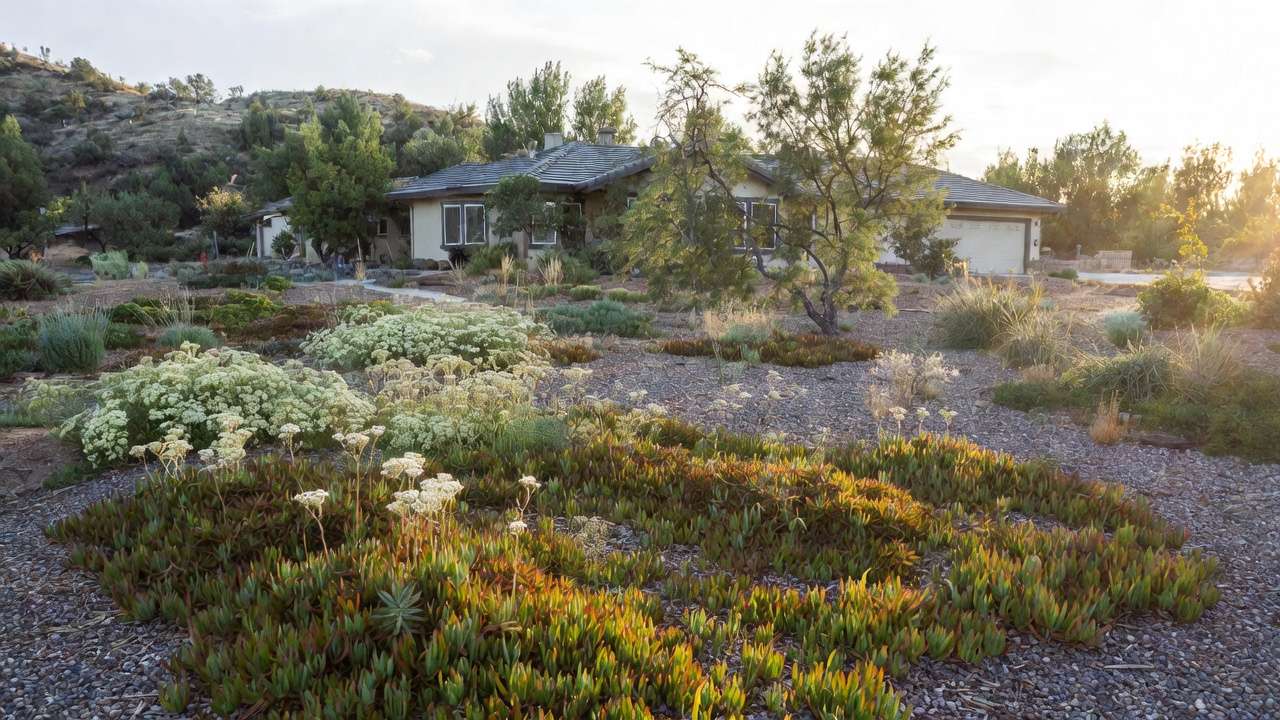
Proper irrigation keeps plants moist, boosting resistance. On slopes, extend zones further. Always check local fire codes!
The Best Fire-Resistant Landscaping Plants: Top Recommendations 🌸🌳
Here are expanded, expert-curated lists with 40+ options. Prioritize natives for ecology and resilience. Include height/spread, sun/water needs, and wildlife perks.
Groundcovers & Low Plants (Zone 0–1 – Highest Priority)
These stay low, moist, and spread slowly—perfect for ember defense!
- Sedum (various species): Succulent, low-maintenance, full sun, drought-tolerant once established. Attracts pollinators 🐝.
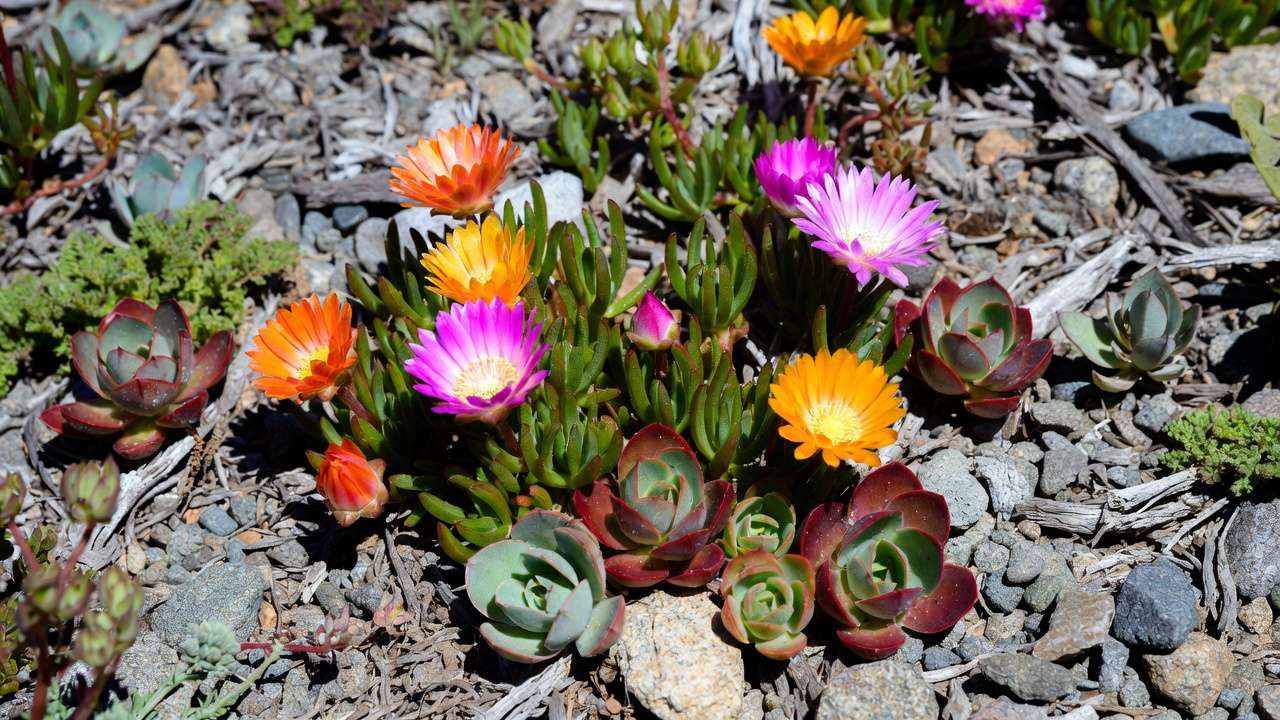
- Delosperma (Ice Plant): Bright flowers, high moisture, excellent for slopes.
- Aeonium: Rosette succulents, dramatic look, minimal water.
- Yarrow (Achillea millefolium): Native, pollinator magnet, tolerates poor soil.
- Coreopsis: Cheerful blooms, low-growing, deer-resistant.
- Creeping Thyme: Fragrant, evergreen groundcover, low water.
- Ajuga (Bugleweed): Shade-tolerant, spreads gently.
- Snow-in-Summer (Cerastium tomentosum): Silvery foliage, white flowers.
Perennials & Flowering Plants
Add color while staying fire-smart!
- Lavender (well-maintained): Aromatic but low-resin varieties, pollinator favorite.
- Penstemon (Beardtongue): Tubular flowers for hummingbirds, drought-tolerant.
- Daylily (Hemerocallis): Tough, colorful, minimal dead material.
- Echinacea (Coneflower): Native, long-blooming, medicinal benefits.
- Iris: Sword-like leaves, moist soils preferred.
- Gaillardia (Blanket Flower): Vibrant, attracts butterflies.
Shrubs for Structure & Screening
Great for privacy without high risk.
- Ceanothus (prostrate varieties): Native, blue blooms, low-growing forms.
- Manzanita (low forms): Beautiful bark, evergreen, wildlife food.
- Rockrose (Cistus): Showy flowers, drought-tolerant.
- Potentilla: Yellow blooms, compact, hardy.
- Spirea: Spring flowers, fall color.
- Oregon Grape (Mahonia): Evergreen, berries for birds.
Trees for Shade & Long-Term Protection
Deciduous options shine here!
- Maple (Bigleaf, Red): High moisture, beautiful fall color.
- Oak (select species like Coast Live Oak): Thick bark, majestic.
- Redbud: Heart-shaped leaves, early blooms.
- Cherry (flowering): Moderate size, spring show.
- Strawberry Tree (Arbutus unedo): Evergreen standout, red fruit.
Regional Spotlight: Tailored Picks
- California Natives: California Fuchsia, Common Buckwheat, Prostrate Coyote Brush.
- Colorado/Rockies: Prickly Pear Cactus, Yucca, Pawnee Buttes Sand Cherry.
- Pacific Northwest: Sword Fern, Western Redbud, Vine Maple.
Many overlap with drought-tolerant needs—win for water conservation! 🌵💧
Maintenance Tips to Maximize Fire Resistance 🛠️💧
Even the most fire-resistant plant loses its advantage if neglected. Here are the non-negotiable practices recommended by wildfire agencies and university extension experts:
- Prune regularly — Remove all dead, dying, or diseased branches immediately. Create space between plants and eliminate “ladder fuels” (low branches that connect ground-level fire to tree canopies).
- Water deeply and infrequently — Keep soil consistently moist (not soggy) during the dry season. Drip irrigation or soaker hoses are ideal because they avoid wetting foliage.
- Mulch wisely — Use non-flammable inorganic mulch (gravel, decomposed granite, river rock) in Zone 0–1. In Zone 2, organic mulch is acceptable if kept moist and no more than 2–3 inches deep. Keep mulch 12–18 inches away from structures.
- Seasonal checklist
- Spring — Deep clean: remove last year’s dead leaves, prune heavily, fertilize lightly.
- Summer — Monitor irrigation, mow grass short, clear any debris under plants.
- Fall — Final cleanup before fire season peaks in many regions.
- Winter — Use downtime to plan expansions and plant new fire-resistant additions.
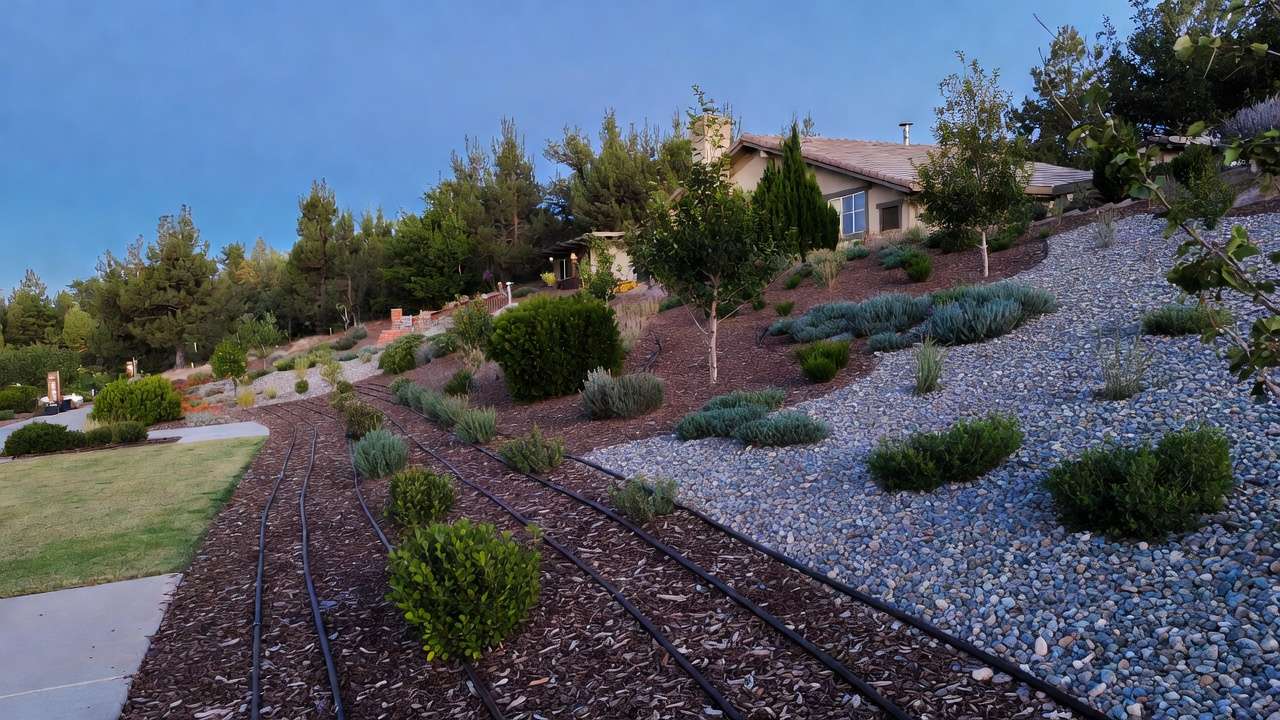
Expert Insight 💡: A stressed, drought-hit plant—even one considered fire-resistant—can become more flammable than a well-cared-for specimen of a moderately flammable species. Maintenance is the real superpower.
Plants to Avoid or Use with Caution 🚫🔥
These common landscape plants are notorious for high flammability and should be removed from Zones 0–2 or used only very sparingly in Zone 3+ with extreme maintenance:
- Juniper (all varieties) — Extremely high oil content, often called “gasoline on a stick” by firefighters.
- Eucalyptus — Volatile oils in leaves and bark create explosive crown fires.
- Pine (especially Monterey, Aleppo, Ponderosa) — Resin-rich needles and cones are ember bombs.
- Bamboo — Dry culms become torches; running types spread aggressively.
- Fountain Grass and other ornamental grasses with dry seed heads.
- Leyland Cypress, Italian Cypress — Dense growth traps dead material, creates ladder fuels.
- Rosemary and Sage (in hot, dry conditions) — Highly aromatic oils.
Rule of thumb: If the plant smells strongly of turpentine, pine, or camphor when crushed, treat it with caution.
Bonus: Combining Beauty, Ecology, and Safety 🌼🐝
The best fire-smart landscapes don’t look like sterile firebreaks—they look intentional, colorful, and full of life.
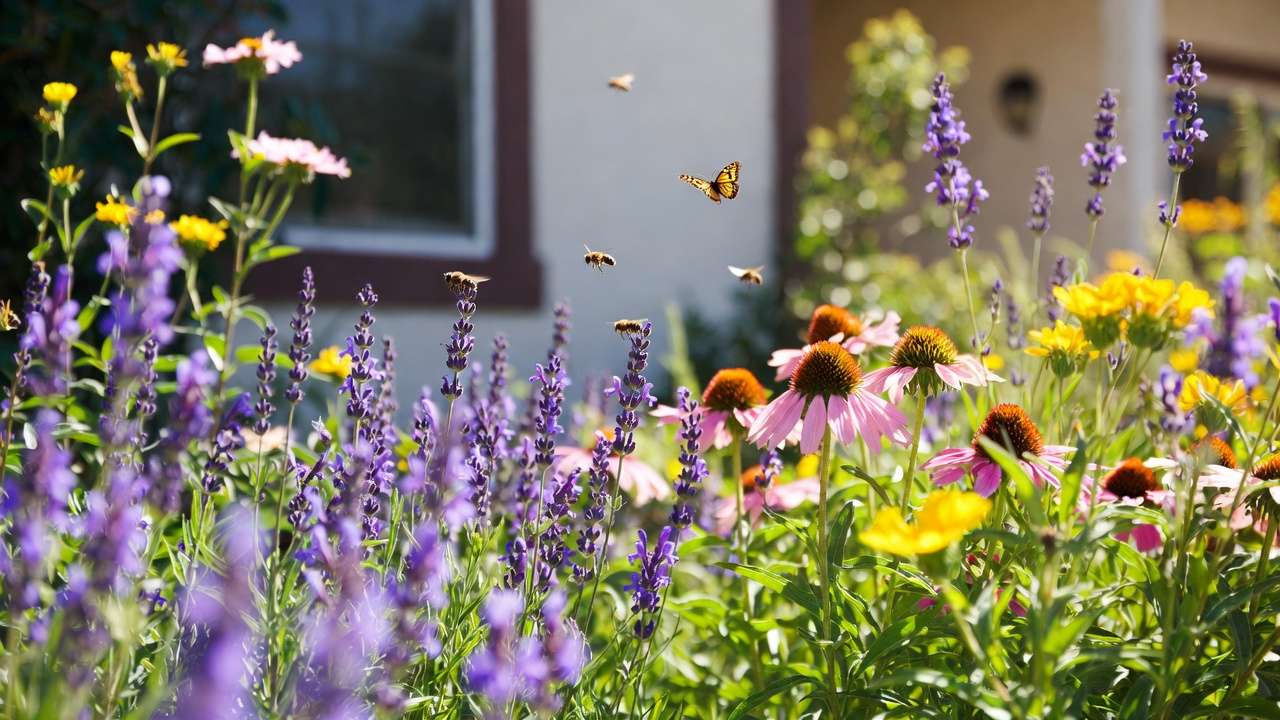
- Pollinator power — Many top fire-resistant plants (yarrow, coneflower, penstemon, ceanothus, lavender) are also butterfly, bee, and hummingbird magnets.
- Native-first approach — Natives are adapted to local climate extremes, require less water and fertilizer, and support beneficial insects and birds.
- Design inspiration
- Layer low succulents and groundcovers → mid-height flowering perennials → structured shrubs → carefully placed shade trees
- Use curves and color blocks instead of straight rows for a natural, garden-like appearance
- Create “green islands” of irrigated, low-fuel plants around structures
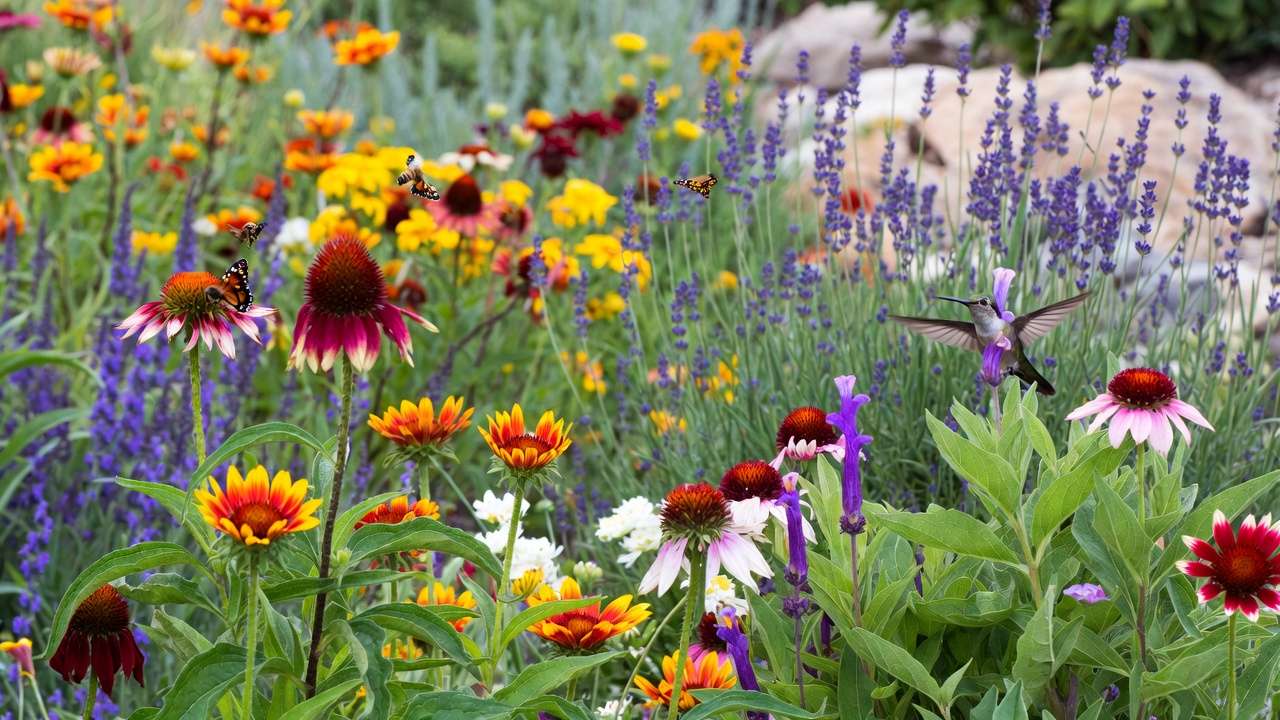
You can have a wildfire-defensible yard that still feels like a sanctuary.
Frequently Asked Questions (FAQs) ❓
Are native plants always fire-resistant? No. Many natives (chamise, manzanita, certain sages) are actually quite flammable due to natural oils and resins. Choose low-flammability natives and maintain them well.
Can fire-resistant plants work in non-wildfire areas? Absolutely! These plants are almost always drought-tolerant, low-maintenance, and attractive—perfect for water-wise, sustainable gardens anywhere.
How much maintenance is really required? Moderate but consistent. Plan for 3–5 major clean-up/pruning sessions per year plus regular watering and spot checks during fire season.
Do succulents work in cold-winter climates? Many hardy sedums, sempervivum, and ice plants survive Zone 5–6 winters beautifully. Check your USDA zone and choose cold-hardy varieties.
Are these plants also good for drought conditions? Yes! Most of the top recommendations are naturally xeric or drought-tolerant once established—excellent for regions facing both fire and water restrictions.
Conclusion: Take Action to Protect What Matters Most 💪🏡
A thoughtful, fire-resistant landscape isn’t just about survival—it’s about peace of mind, beauty that lasts, and doing your part to live more safely alongside nature in a changing climate.
Start small:
- Walk your property and identify Zone 0–2 areas.
- Remove or relocate high-risk plants.
- Add 5–10 new fire-resistant plants this season.
- Set up a simple irrigation plan.
- Connect with your local fire department or cooperative extension for a free home assessment.
Your garden can be both a joy and a shield. You’ve got this! 🌱🔥











