
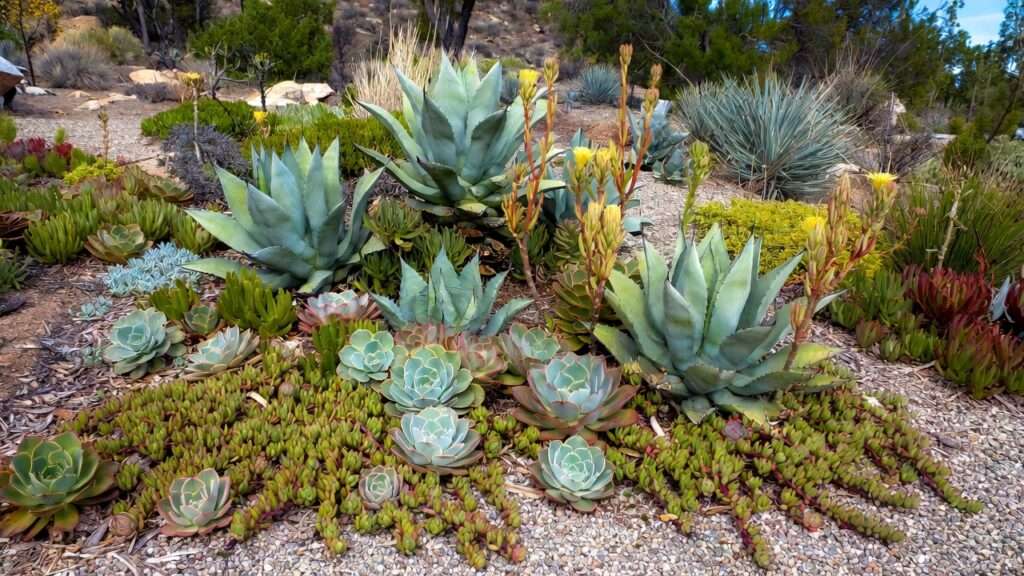
Imagine slashing your water bill by up to 60% while transforming your yard into a vibrant, sculptural oasis that thrives through heatwaves, droughts, and even water restrictions. In an era of rising temperatures and increasing water scarcity, more gardeners are turning to xeriscape landscaping—beautiful, sustainable designs that use minimal irrigation. And at the heart of the most eye-catching xeriscapes? Using succulents in a xeriscape stands out as one of the smartest, most rewarding choices you can make. These resilient plants store water in their fleshy leaves and stems, require little upkeep, and offer endless textures, colors, and forms to create jaw-dropping landscapes.
Whether you’re battling dry soil in a hot climate, aiming for eco-friendly yard upgrades, or simply tired of thirsty lawns, this ultimate guide draws from decades of hands-on experience in drought-tolerant gardening. As a plant care specialist who’s designed and maintained countless succulent xeriscapes, I’ll walk you through everything: debunking myths, selecting the best varieties, step-by-step design and planting, irrigation realities, maintenance calendars, stunning inspiration ideas, and fixes for common pitfalls. By the end, you’ll have the confidence to create a low-water garden that’s not just surviving—it’s thriving and turning heads. Let’s dive in! 🌿💧
1. What Is True Xeriscape Gardening? (Stop Believing These 7 Myths!) 🚫
Xeriscape (from the Greek “xeros” meaning dry) is a smart, water-efficient approach to landscaping, not a barren rock pile or “zero plants” yard. The concept was developed in the 1980s by Denver Water and is built on seven core principles:
- Planning and Design – Start with a thoughtful layout based on your site’s sun, slope, soil, and water needs.
- Soil Improvements – Amend soil for better drainage and water retention where needed.
- Efficient Irrigation – Use targeted systems like drip to deliver water only where required.
- Appropriate Plant Selection – Choose drought-tolerant, climate-adapted plants (hello, succulents!).
- Mulching – Apply organic or inorganic mulch to conserve moisture and suppress weeds.
- Limited Turf Areas – Minimize or eliminate high-water grass lawns.
- Proper Maintenance – Prune, weed, and adjust as plants establish.
Common myths that hold people back:
- Myth #1: Xeriscape means only gravel and cacti. Reality: It can include colorful flowers, grasses, and lush-looking succulents.
- Myth #2: It’s ugly or boring. Many award-winning xeriscapes are vibrant and artistic.
- Myth #3: No water at all. Most need some during establishment (first 1–2 years) and occasional deep soaks.
- Myth #4: Only for deserts. Xeriscaping works in any climate by matching plants to local conditions.
- Myth #5: Zero maintenance. It reduces effort dramatically but isn’t completely hands-off.
- Myth #6: Kills biodiversity. Well-planned xeriscapes support pollinators better than lawns.
- Myth #7: Expensive upfront. Long-term savings on water, mowing, and fertilizers make it cost-effective.
Embracing these truths sets the foundation for success with succulents.
2. Why Succulents Are the Superstars of Xeriscape Design 🌟
Succulents excel in xeriscape because of their built-in adaptations:
- Water Storage Superpower – Thick leaves, stems, and roots hold moisture like natural reservoirs, allowing weeks or months without rain.
- Extremely Low Maintenance – No frequent mowing, fertilizing, or deadheading for most varieties.
- Drought Tolerance Once Established – After rooting in, many survive on rainfall alone in suitable climates.
- Visual Drama – Rosettes, spikes, trailing forms, blue-greens, purples, reds, and variegation create year-round interest.
- Cost Savings – Lower water use (often 50–75% less than traditional gardens), reduced labor, and longevity (many live 10–30+ years).
- Pollinator & Wildlife Support – Flowers attract bees, butterflies, and hummingbirds; some provide habitat.
- Versatility – Work in ground beds, rock gardens, slopes, containers, or as accents.
- Climate Resilience – Handle heat, poor soil, and full sun better than many perennials.
In short, succulents turn water-wise gardening into an art form rather than a compromise. 🎨
3. Best Succulents for Xeriscape Gardens – Ultimate Recommendation List 📋
Here’s a curated selection based on reliability, beauty, and performance in xeriscape settings.
3.1 Top 12 Most Reliable & Beautiful Landscape Succulents
- Agave ‘Blue Glow’ or Parryi – Striking blue-green rosettes with glowing edges; architectural focal points.
- Sedum ‘Autumn Joy’ or ‘Angelina’ – Easy groundcover; changes colors seasonally with pink blooms.
- Sempervivum (Hens and Chicks) – Cold-hardy, spreading rosettes in endless colors.
- Echeveria ‘Lola’ or ‘Perle von Nürnberg’ – Rosy-purple rosettes; stunning in groups.
- Aloe vera or striata – Medicinal bonus; spiky form adds texture.
- Senecio mandraliscae (Blue Chalksticks) – Trailing blue-gray fingers for spill-over.
- Crassula ovata (Jade Plant) – Shrub-like; great structure.
- Aeonium ‘Zwartkop’ – Dark purple-black rosettes for contrast.
- Opuntia (Prickly Pear) – Edible pads/fruit; bold pads.
- Yucca rostrata – Tree-like with pom-pom top; dramatic height.
- Portulacaria afra (Elephant Bush) – Lush green; can be pruned as hedge.
- Graptopetalum – Ghostly rosettes in pastels.
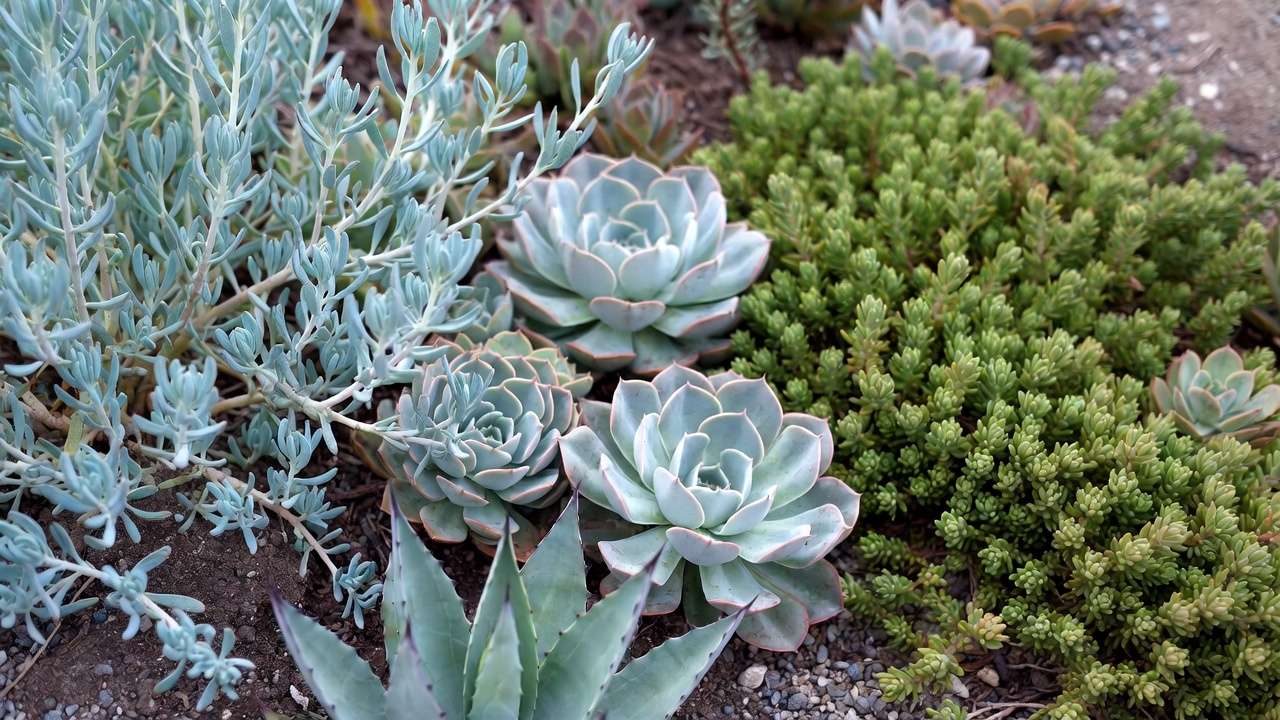
3.2 Best Cold-Hardy Succulents (Zones 5–7) ❄️ Sempervivum, Sedum spurium, Opuntia humifusa, Delosperma (Ice Plant).
3.3 Best Heat & Full-Sun Loving Varieties 🔥 Agave americana, Aloe ferox, Dasylirion, most Echeveria in protected spots.
3.4 Best Groundcover Succulents Sedum reflexum, Senecio serpens, Delosperma cooperi.
3.5 Best Tall / Architectural / Statement Succulents Agave ovatifolia, Yucca filamentosa, Beaucarnea recurvata.
3.6 Succulents You Should Actually AVOID in Most Xeriscapes Tender tropicals like some Kalanchoe (frost-sensitive), over-water lovers like Haworthia in full sun.
4. Designing a Gorgeous Succulent Xeriscape – Step by Step 🎨
The magic of a succulent xeriscape lies in thoughtful design that feels intentional, not random. Start with these proven steps drawn from real-world installations.
4.1 Planning & Site Analysis (The Most Important Step!)
Assess your yard honestly:
- Sun exposure: Full sun (6+ hours) suits most succulents; partial shade works for softer varieties like some Echeveria or Haworthia.
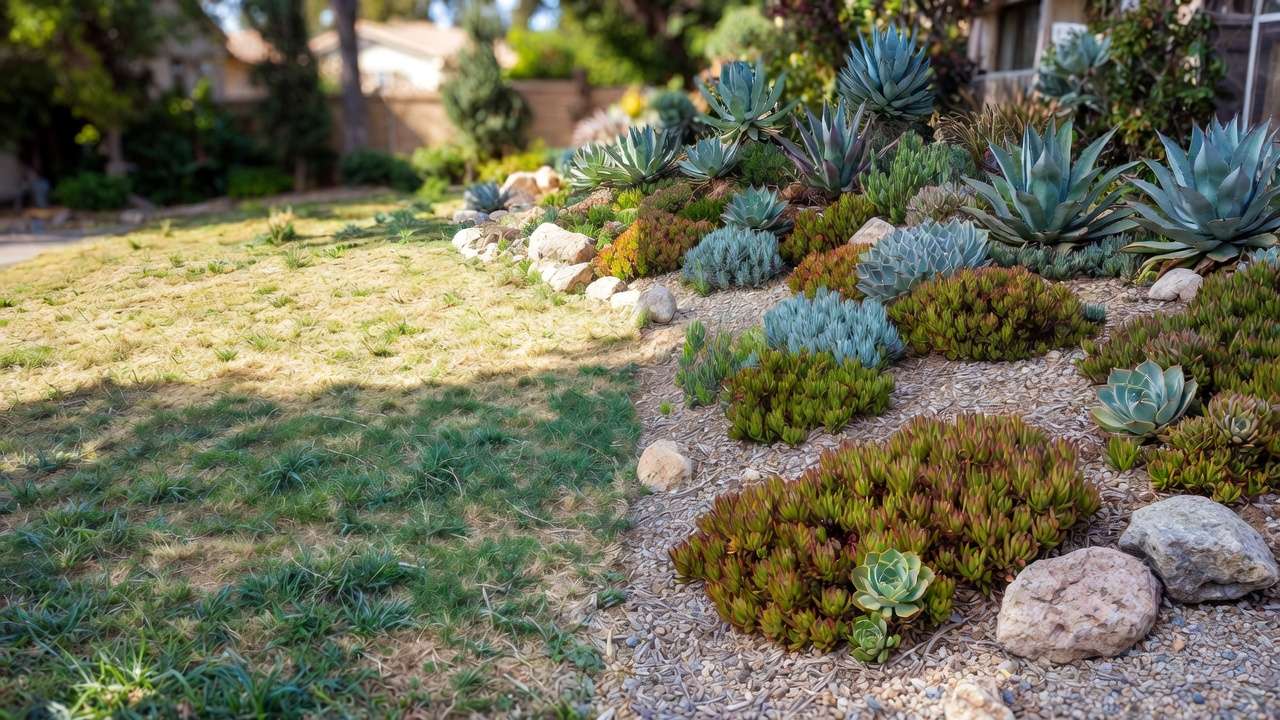
- Slope & drainage: Slopes are perfect for succulents—they prevent water pooling. Low spots need raised beds or amended soil.
- Soil test: Check pH (most prefer 6.0–7.5) and texture. Heavy clay? Amend heavily.
- Microclimates: Note wind, reflected heat from walls, or frost pockets.
- Water source: Plan irrigation zones early.
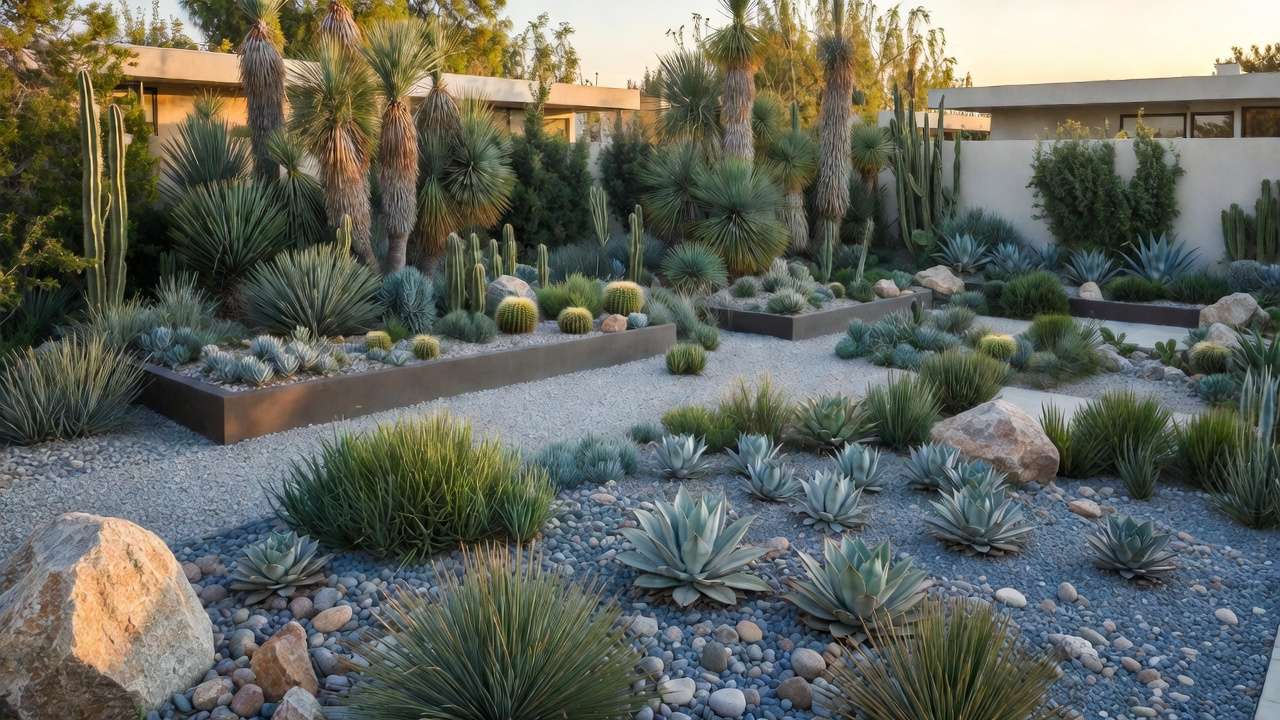
Sketch a rough map, mark focal points (e.g., entryway, windows), and group plants by water needs (hydrozoning).
4.2 Creating Beautiful Zones & “Rooms” in Xeriscape
Divide your space into functional areas:
- Entry focal zone: Bold Agave or Yucca rostrata as statement pieces.
- Groundcover zones: Low Sedum or Senecio serpens for erosion control on slopes.
- Pathway borders: Trailing Senecio mandraliscae or Delosperma for soft edges.
- Seating/viewing areas: Mix textures—spiky, rosette, columnar—for interest.
Use repetition (plant in drifts of 3–7) for cohesion.
4.3 Color, Texture & Shape Play – How the Pros Do It
- Color schemes: Blue-greens (Agave ‘Blue Glow’, Blue Chalksticks) + purples (Aeonium ‘Zwartkop’) + silvers + pops of red/orange blooms.
- Texture contrast: Smooth Echeveria rosettes against spiky Yucca or rough Opuntia pads.
- Height layering: Tall Yucca or Agave americana at back, mid-height Crassula ovata, low groundcovers in front.
4.4 Modern Styles vs Naturalistic Styles – Which Suits You?
- Modern: Clean lines, gravel mulch, geometric groupings, bold focal plants like Agave ovatifolia.
- Naturalistic: Organic curves, mixed boulders, native grasses interplanted, softer transitions.
Both work beautifully with succulents!
4.5 Very Popular Layout Patterns People Love in 2024–2025
- Rock garden with succulents nestled among boulders.
- Succulent-only border with repeating color blocks.
- Slope cascade: Trailing varieties spilling down.
- Container accents integrated into ground beds.
These patterns create visual flow and reduce perceived maintenance.
5. Practical Planting Guide: How to Actually Plant Succulents in Xeriscape 🌱
Success starts below ground.
Soil – The #1 Make-or-Break Factor
Succulents hate wet feet. Use fast-draining soil to prevent rot.
Best Soil Mix Recipes (3 Formulas)
- Basic Xeriscape Ground Mix (most common): 50% native soil + 30% coarse sand/gravel + 20% pumice or perlite.
- Heavy Clay Amendment Mix: 40% existing soil + 40% decomposed granite + 20% pumice.
- Super-Draining Slope Mix: 30% native soil + 40% coarse sand + 30% crushed rock or lava rock.
Topdress with 2–3 inches of gravel mulch to retain moisture, suppress weeds, and look polished.
Planting Depth – Very Common Deadly Mistake
Plant at the same depth as in the nursery pot—never bury the crown. For rosettes, keep leaves above soil. Burying invites rot.
Spacing Guide – How Far Is Too Close / Too Far?
- Groundcovers (Sedum, Sempervivum): 6–12 inches apart for quick fill.
- Medium rosettes (Echeveria): 12–18 inches.
- Large architectural (Agave, Yucca): 3–6 feet (they spread!).
- Allow room for growth—overcrowding causes competition and poor air flow.
When & How Much to Water the First 1–2 Years
- Weeks 1–4: Water deeply every 5–7 days to establish roots.
- Months 2–6: Every 10–14 days.
- After year 1: Transition to rainfall + occasional deep soak (every 3–4 weeks in dry spells).
- Always check soil 2–4 inches down—dry before watering.
6. Zero to Minimal Irrigation – Real Systems That Actually Work 💧
Once established (1–2 years), many succulent xeriscapes need little supplemental water.
Most Efficient Irrigation Methods Ranked
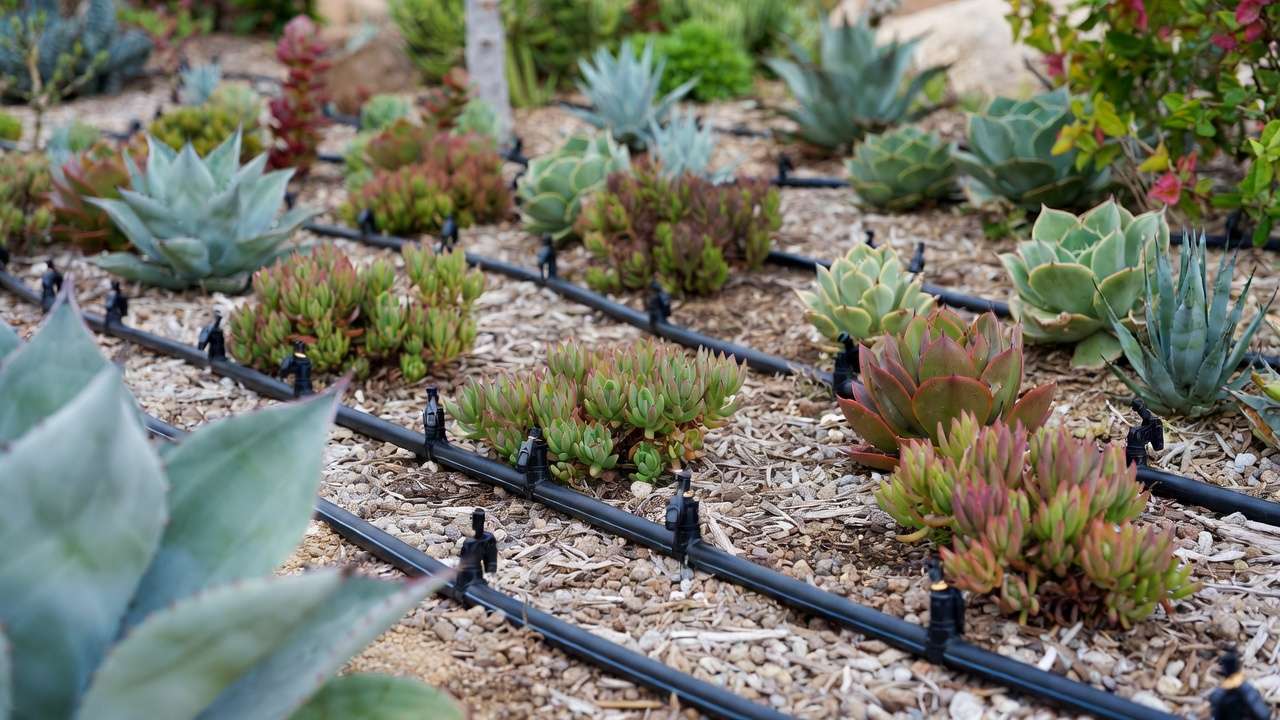
- Drip irrigation (top choice): Emitters at base of plants; low evaporation, targeted delivery.
- Micro-sprayers: Good for groundcovers but can wet foliage (risk of rot).
- Hand watering/deep soaking: Ideal for small yards or spot checks.
- Soaker hoses: Budget option but less precise.
How Long Can You Really Go Without Any Watering? (Climate Zone Chart)
- Arid zones (e.g., Southwest US): 4–8 weeks+ after establishment.
- Mediterranean climates: Rainfall-dependent; supplemental every 4–6 weeks in summer.
- Humid/temperate: Rely mostly on rain; occasional soak in prolonged dry spells.
Smart Irrigation Controller Recommendations
Use weather-based smart timers (e.g., Rachio, Orbit B-hyve) that skip watering after rain. Set zones separately for succulents vs. any thirstier accents.
7. Maintenance That Takes Almost No Time ⏰
One of the biggest draws of using succulents in a xeriscape is how little ongoing care they demand once established. Here’s a realistic, zone-agnostic yearly care calendar and the few tasks that actually matter.
Yearly Care Calendar
- Spring (March–May)
- Remove winter debris and dead leaves from rosettes.
- Lightly top-dress with fresh gravel if mulch has shifted.
- First deep soak (if no rain for 4+ weeks).
- Check for new offsets/pups and separate overcrowded plants.
- Summer (June–August)
- Monitor during extreme heat waves → one deep watering every 3–5 weeks if no rain.
- Spot-weed around young plants.
- Enjoy peak bloom season (many Sedum, Delosperma, Agave, Aloe flower spectacularly).
- Fall (September–November)
- Last deep watering before cooler weather.
- Prune any leggy or damaged growth.
- Collect offsets for propagation or gifting.
- Winter (December–February)
- In cold zones (5–8): Minimal to no watering.
- Protect borderline-hardy varieties with frost cloth or burlap if temperatures drop below expected lows.
- In mild zones: Rely almost entirely on rainfall.
Pruning & Cleaning – When and How
Most succulents need very little pruning.
- Remove spent flower stalks at the base (Agave, Aloe, Yucca after bloom).
- Cut off damaged or rotting leaves with clean, sharp shears.
- For bushy types (Crassula ovata, Portulacaria afra): Tip-prune in spring to encourage bushiness.
- Clean debris from rosette centers to prevent rot (especially after rain).
Dealing with Common Succulent Problems in Landscape Settings
- Mealybugs / Aphids → Blast with strong hose spray or apply insecticidal soap/neem oil. Ladybugs are excellent natural predators.
- Root Rot → Usually from poor drainage or overwatering during establishment. Dig up, trim rotten roots, replant in drier mix.
- Sunburn → Rare once acclimated, but sudden full-sun exposure on shade-grown plants can cause scarring. Gradually introduce to brighter light.
- Frost Damage → Blackened tips on tender varieties. Prune back in spring; most recover.
Winter Protection Cheat Sheet by Zone
- Zones 9–11: No protection needed for most.
- Zones 7–8: Mulch base of borderline plants; cover during rare hard freezes.
- Zones 5–6: Choose only cold-hardy selections (Sempervivum, hardy Sedum, Opuntia humifusa); grow others in pots to overwinter indoors.
8. 12 Jaw-Dropping Succulent Xeriscape Design Ideas & Combinations 🌟
Here are real-world-inspired concepts that homeowners and designers love right now.
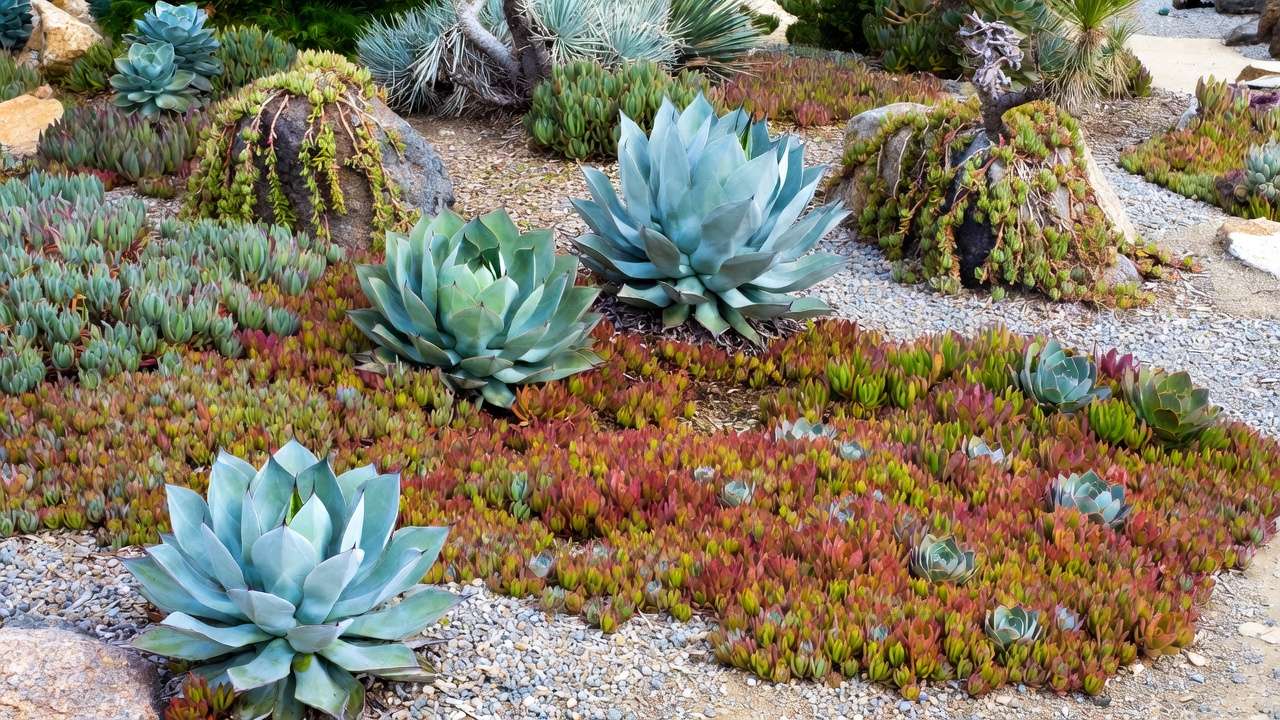
- Blue & Silver Moonscape Key plants: Agave ‘Blue Glow’, Senecio mandraliscae, Echeveria ‘Blue Atoll’, Sempervivum collection Difficulty: Easy Best for: Full sun, modern front yards Mood: Cool, serene, sculptural
- Desert Sunset Border Key plants: Agave ‘Firecracker’, Echeveria ‘Afterglow’, Sedum ‘Dragon’s Blood’, Portulacaria afra Mood: Warm reds, oranges, purples
- Hillside Waterfall Effect Trailing Senecio serpens + Delosperma cooperi spilling down slope with Agave ovatifolia accents Best for: Erosion-prone hills
- Black & White Drama Aeonium ‘Zwartkop’ + Echeveria ‘Lola’ + white variegated Agave americana Mood: High-contrast, modern gothic
- Pollinator Paradise Meadow Mix Sedum ‘Autumn Joy’, Delosperma, Sempervivum with native grasses and low-water perennials Best for: Wildlife-friendly yards
- Japanese Zen Rock Garden Large Agave or Yucca focal + raked gravel + moss-like groundcover Sedum Mood: Tranquil, minimalist
- Rooftop / Balcony Xeriscape Container clusters of Echeveria, Crassula, Senecio with lightweight pumice soil Best for: Urban small spaces
- Edible Xeriscape Corner Opuntia pads, Aloe vera, Portulacaria afra (edible leaves) mixed with ornamental succulents Mood: Functional beauty
- Firewise Defensible Space Wide gravel zones + low, non-resinous succulents (Agave, Yucca, Sedum) away from structures Popular in wildfire-prone regions
- Color-Blocked Pathway Repeating blocks of blue, purple, green, and red succulents along walkway edges
- Architectural Statement Entry Symmetrical large Agave americana or Yucca rostrata flanking door with low Echeveria underplanting
- Four-Season Interest Bed Winter structure (evergreen Yucca, Agave) + spring/fall blooms (Sedum, Delosperma) + summer texture
9. Common Mistakes That Ruin Succulent Xeriscapes (and How to Fix Them) ⚠️
- Planting too deep → Crown rot. Fix: Replant at correct depth.
- Overwatering after establishment → Root rot. Fix: Improve drainage, reduce frequency.
- Ignoring hydrozoning → Uneven growth/death. Fix: Group by water needs.
- Using rich garden soil → Poor drainage. Fix: Amend heavily with grit.
- Crowding plants → Disease & weak growth. Fix: Give proper spacing.
- No mulch → Weed invasion, moisture loss. Fix: Apply 2–3″ gravel.
- Skipping establishment watering → Poor rooting. Fix: Consistent deep soaks first year.
- Choosing tender varieties in cold zones → Winter kill. Fix: Select hardy cultivars.
- Flat, boring layout → Looks sparse. Fix: Use height, color, texture contrast.
- Never pruning dead growth → Looks messy. Fix: Clean up seasonally.
This is Part 3 (Sections 7–9). The final part will include the detailed FAQ section, conclusion, bonus elements, and wrap everything up for maximum value.
10. FAQ – Quick Answers to the Questions Everyone Asks ❓
Here are the most common questions I receive from gardeners just starting (or struggling) with succulent xeriscapes — answered clearly and practically.
Q: How much water do succulent xeriscapes really save? A: Once established (usually after 1–2 years), most well-designed succulent xeriscapes use 50–75% less water than a traditional lawn or mixed perennial border. In arid and semi-arid climates, many mature landscapes survive almost entirely on rainfall with only 2–4 supplemental deep soaks per year during extreme dry spells.
Q: Can I use succulents in a xeriscape if I live in a rainy/humid climate? A: Yes — focus on excellent drainage and choose varieties that tolerate occasional wet periods (e.g., Sedum, Sempervivum, Delosperma, hardy Opuntia). Avoid overwatering and plant on slopes or raised beds. In very humid regions, succulents work best as accents rather than the dominant plant type.
Q: Will succulents survive winter in my area? A: Depends on your USDA zone:
- Zones 9–11 → Almost all landscape succulents thrive year-round.
- Zones 7–8 → Choose cold-hardy types (Sempervivum, hardy Sedum, Opuntia humifusa, Agave parryi); protect borderline ones during hard freezes.
- Zones 5–6 → Stick to very hardy selections and mulch heavily; grow tender varieties in movable containers.
Q: Do I really need to amend the soil if my yard already drains well? A: If your native soil is sandy or gravelly and drains quickly, you can often plant directly with just a light top-dressing of gravel. But if it’s clay or holds water after rain, amending with coarse sand, pumice, or decomposed granite is essential to prevent root rot.
Q: How do I stop weeds without using chemicals? A: Layer 2–3 inches of gravel, decomposed granite, or lava rock mulch after planting. This blocks light to weed seeds and retains soil moisture. Hand-pull any that appear early on — once the succulent canopy fills in, weeds have much less chance.
Q: Are succulents safe around pets and children? A: Most are non-toxic (Sedum, Sempervivum, Echeveria, Senecio mandraliscae, etc.), but a few have irritating sap or spines:
- Avoid: Some Euphorbias (milky sap can irritate skin/eyes).
- Use caution with: Agave and Yucca (sharp tips), Opuntia (glochids). Place spiny varieties away from play areas and paths.
Q: How fast will my xeriscape look full? A: Groundcovers (Sedum, Delosperma, Senecio serpens) can fill in within 1–2 seasons. Rosette types (Echeveria, Sempervivum) take 2–4 years to form nice drifts. Large architectural plants look impactful immediately but need space to mature.
Q: Can I mix succulents with other drought-tolerant plants? A: Absolutely! Great companions include: lavender, salvia, Russian sage, yarrow, gaura, native bunchgrasses, and Mediterranean herbs. Just match water needs (hydrozone) so nothing gets over- or under-watered.
Q: What’s the biggest mistake beginners make? A: Overwatering during the first year or planting too deeply. Both lead to rot — the #1 killer of landscape succulents.
Conclusion + Your Next Action Step 🌿
Using succulents in a xeriscape isn’t just about saving water — it’s about creating a resilient, beautiful, low-stress garden that looks better with less effort and adapts beautifully to our changing climate.
You now have the complete roadmap: from busting myths and choosing superstar varieties, to smart design, proper planting, minimal irrigation, easy maintenance, inspiring ideas, and avoiding every common pitfall.
Your very first small step this week: Walk around your yard (or look at photos of your space) and identify one area that gets full sun and drains reasonably well. Jot down:
- How much space you want to start with
- Your USDA zone
- Whether you prefer modern, naturalistic, or colorful style
Then pick just 3–5 succulent varieties from the lists above that match your conditions and vibe. Order a few small plants (or check local nurseries) and begin your xeriscape journey with confidence.
Your future self (and your water bill) will thank you. 💚
If you create your succulent xeriscape, I’d love to hear how it turns out — drop a comment or share your progress!
Bonus Quick Reference: Succulents at a Glance (save or screenshot!)
- Fast groundcover → Sedum reflexum, Senecio serpens, Delosperma
- Cold-hardy superstar → Sempervivum, Opuntia humifusa
- Architectural drama → Agave ovatifolia, Yucca rostrata
- Color & bloom power → Echeveria ‘Afterglow’, Sedum ‘Autumn Joy’
- Beginner-proof → Crassula ovata, Portulacaria afra, Aloe striata
Thank you for reading this in-depth guide! 🌵✨











