
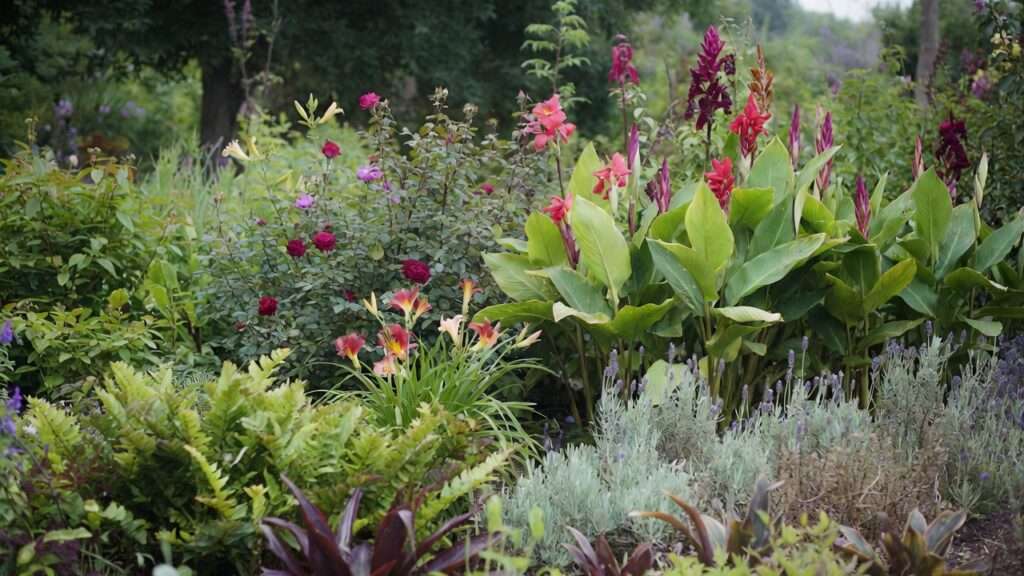
Imagine this: You step into your garden every morning with excitement, only to find your prized hibiscus wilting dramatically while the lavender next to it looks suspiciously over-watered and leggy. 😩 You’ve spent hours watering, yet half your plants suffer — some drowning, others thirsty — and your water bill keeps climbing. Sound familiar?
If you’re like most home gardeners in subtropical or tropical climates like ours in Dhaka and similar regions, mismatched watering is one of the top reasons plants struggle or die prematurely. The good news? There’s a simple, powerful solution: grouping plants by water needs (also known as hydrozoning). This smart gardening technique organizes your plants into zones based on how much moisture they truly require, leading to healthier growth, dramatically lower water usage, far less maintenance, and a more beautiful, resilient garden year-round.
In this comprehensive guide, you’ll discover exactly how to implement hydrozoning step by step — from identifying plant water categories to redesigning beds, choosing perfect plant companions, and avoiding common pitfalls. Whether you have a spacious backyard, a small balcony setup, or container garden in an urban space, these strategies will save you time, money, and frustration while promoting sustainable gardening. Let’s turn your garden into a thriving, water-wise oasis! 🌱✨
1. What Does “Grouping Plants by Water Needs” Actually Mean? 🧪
At its core, grouping plants by water needs — or hydrozoning — means placing plants with similar moisture requirements together so they can be watered efficiently as a group. Instead of giving everything the same amount of water, you create intentional zones tailored to each plant’s natural preferences.
The Simple Science Behind Plant Water Requirements
Plants evolved in different habitats: some in rainforests with constant humidity, others in arid deserts with rare rainfall. Their root systems, leaf structures, and transpiration rates reflect this. Overwatering stresses drought-tolerant plants (causing root rot), while underwatering high-moisture lovers leads to wilting and stunted growth.
Most experts divide plants into three primary categories (with a fourth for extreme cases):
- High-water lovers: Need consistently moist soil (think ferns, impatiens, tropical foliage).
- Medium / average water users: Thrive with regular but not excessive watering (most common ornamentals, many perennials).
- Low-water / drought-tolerant plants: Survive and even prefer periods of dry soil once established (succulents, lavender, many natives).
Bonus terms you’ll encounter: hydrozoning, water-wise gardening, xeriscape principles (low-water landscaping), and plant factors (a percentage of reference evapotranspiration, or ETo, that a plant uses).
2. The Real Costs of NOT Grouping Plants by Water Needs 😔
Ignoring water needs isn’t just inconvenient — it has serious consequences:
- Wasted water and higher bills 💸: Studies show inefficient watering can waste 50% or more of outdoor water use. Hydrozoning alone can reduce landscape water consumption by 20–50%, and when combined with drought-tolerant plants, savings reach 50–75% in many regions.
- Plants that die or stay weak: Overwatered succulents rot; underwatered tropicals drop leaves and fail to bloom.
- More pests and diseases: Stressed plants attract aphids, fungal issues, and root problems.
- Wasted time and money: Constant replacements, extra fertilizers, and endless watering chores.
- Environmental impact: In water-stressed areas, over-irrigation contributes to runoff pollution and strains municipal supplies.
By contrast, a hydrozoned garden uses resources smarter — healthier plants mean fewer interventions and a lower carbon footprint. 🌍
3. How to Identify the Water Needs of Any Plant 🔍
Figuring out a plant’s category is easier than you think.
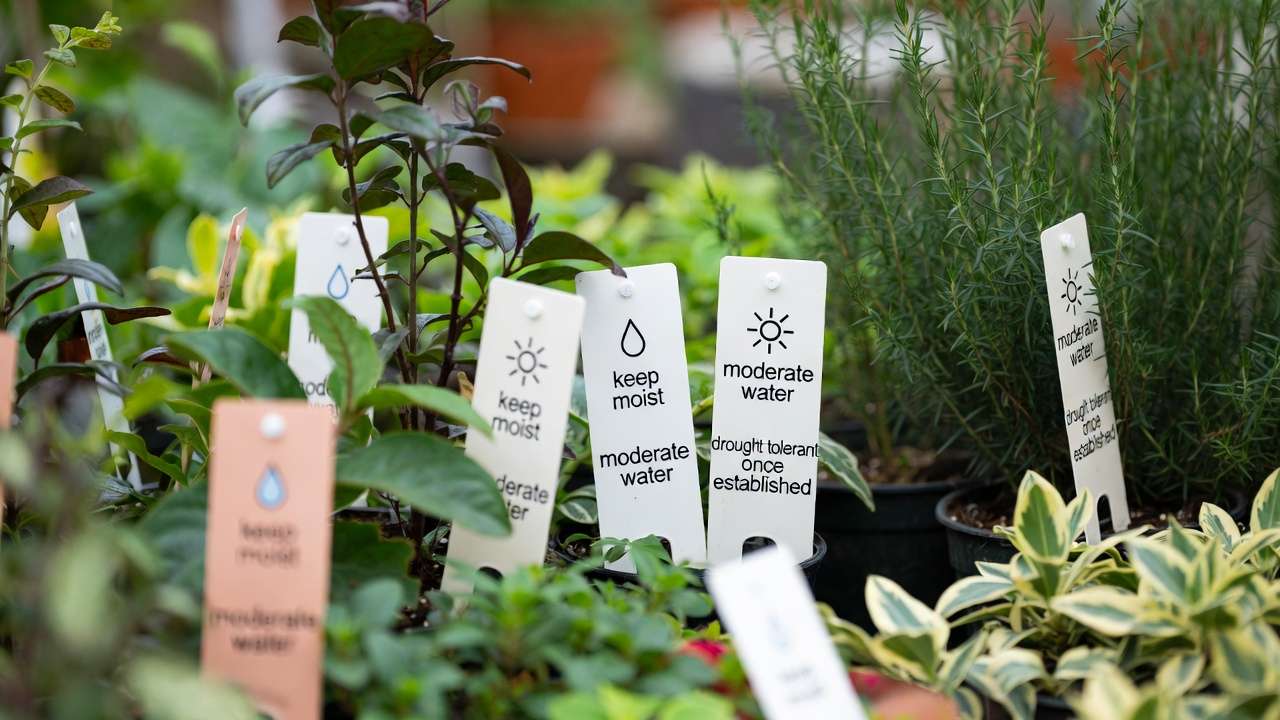
Reading Plant Tags and Nursery Labels
Look for phrases like:
- “Keep soil moist” or “regular watering” → High
- “Moderate water” or “allow soil to dry slightly between waterings” → Medium
- “Drought tolerant once established” or “low water” → Low
Key Indicators
- Soil moisture preference: Moist, well-drained, or dry.
- Drought tolerance rating: Often listed as low, medium, high.
- Native habitat clues: Rainforest/tropical = high; Mediterranean/arid = low.
Quick-Reference Symbols & Phrases
- High: Ferns, hydrangeas, impatiens, canna lilies.
- Medium: Roses, many perennials like daylilies, most veggies.
- Low: Lavender, succulents, agave, bougainvillea (once established).
Reliable resources: Local nursery experts, university extension sites (e.g., adapted for subtropical climates), or apps like PictureThis or PlantSnap. For plants you already own, observe: Does the soil stay soggy? Does it wilt quickly in heat? Adjust accordingly.
Fast Assessment for Existing Plants
Dig gently near the root zone after a week without rain — if soil is bone-dry yet the plant looks happy, it’s low-water. If it’s wilting fast, high-water.
4. The Best Way to Classify Plants into Water Zones 🗺️
Most home gardens thrive with just three practical water zones — this keeps things simple yet highly effective. (In true xeriscape setups, a fourth ultra-dry zone can be added, but three is plenty for tropical/subtropical climates like Dhaka’s hot, humid, and rainy-then-dry pattern.)
- Zone 1: High-water / lush zone — Consistently moist soil, like a mini rainforest pocket. Ideal near water features, shady spots, or high-use areas.
- Zone 2: Moderate / average-water zone — Regular watering that lets the top inch or two dry out between sessions. This is where most everyday ornamentals and edibles live.
- Zone 3: Low-water / drought-tolerant zone — Deep, infrequent watering once established. Perfect for sunny, exposed areas or water-saving designs.
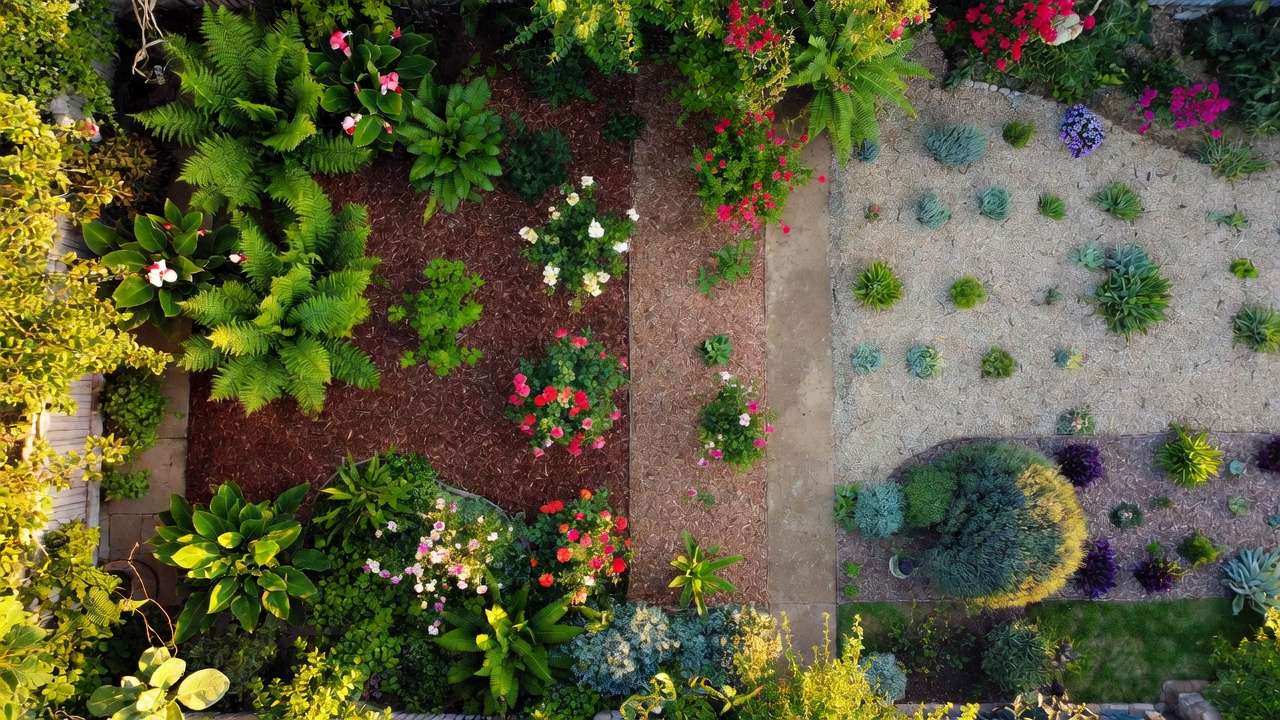
(Optional Zone 4: Very dry / xeric zone — Minimal to no supplemental water after establishment, suited for succulents, cacti, and true desert-adapted species — great if you’re pushing sustainability in drier pockets.)
Mapping Water Zones in Your Yard, Balcony, or Terrace
Don’t guess — observe your space like a pro:
- Distance from hose/irrigation source → Closer = easier for high-water plants.
- Sun exposure and heat → Full sun dries soil faster → low-water plants do best here.
- Soil type and drainage → Clay holds moisture longer (good for high/medium); sandy drains quickly (better for low).
- Slope and runoff patterns → Low spots collect water naturally → high-water zone; higher ground dries out → low-water zone.
Pro tip: Use the “watering radius” method many overlook. Stand with your hose and note where water naturally reaches easily vs. areas that require dragging hoses or extra effort. Place high-water lovers in the easy-reach radius and low-water plants farther out. 🌧️
5. Step-by-Step: How to Group and Reorganize Your Plants 🔄
Ready to implement? Follow this practical roadmap.
5.1 Planning your zones on paper or phone app Sketch your garden (or use free apps like Garden Planner or iScape). Mark existing plants and shade/sun patterns. Color-code zones: blue for high, green for medium, yellow for low.
5.2 Grouping existing plants (the easy audit method) Walk your garden/container area with a notebook. List each plant and assign its category (from Section 3). Group similar ones mentally — you’ll often find clusters already half-zoned!
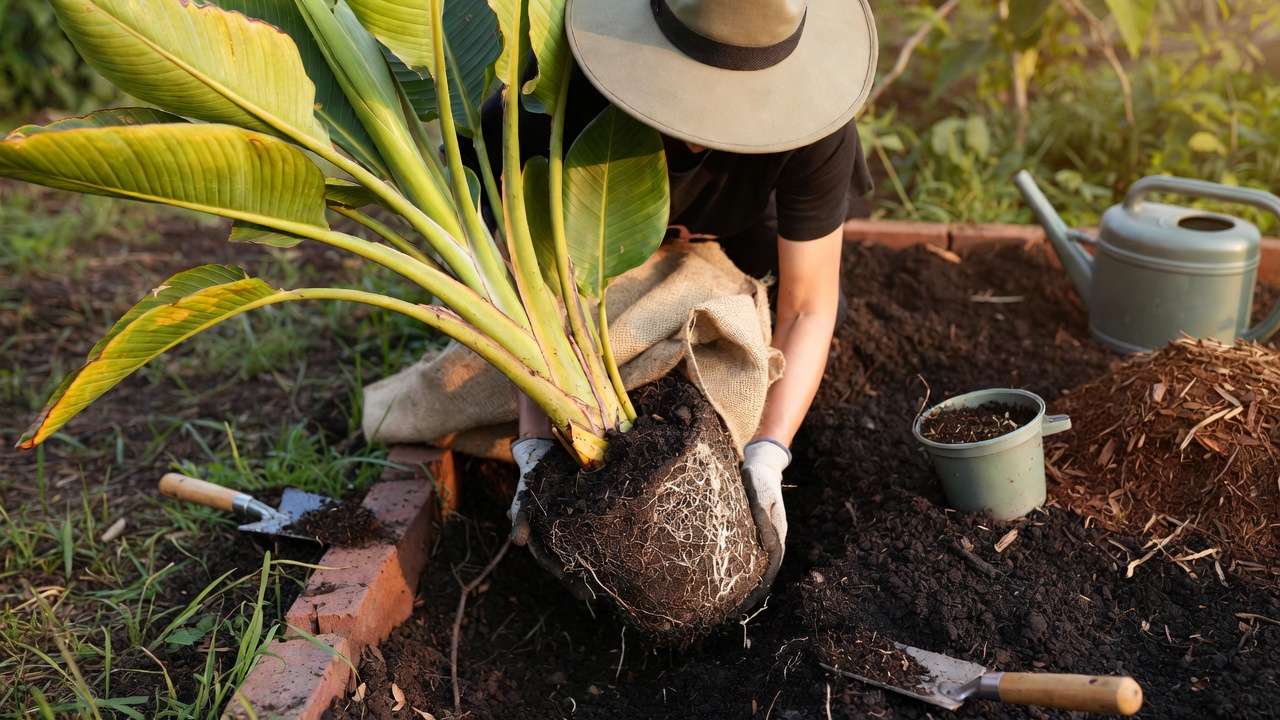
5.3 Moving plants safely
- Best time: Early morning or evening in cooler months (avoid peak summer heat in Dhaka).
- Dig wide root balls, keep soil attached.
- Water deeply before and after transplanting.
- Add compost to the new spot for quick establishment.
- Mulch immediately to retain moisture.
5.4 Designing new beds or containers from scratch Start with soil prep: Amend for drainage in high zones (add organic matter), improve retention in low zones if needed. Plant tallest at back, shortest in front — within the same zone for harmony.
5.5 Container gardening version Group pots by water needs on the same balcony shelf or tray. Use saucers for high-water pots to hold extra moisture; elevate low-water ones for better drainage. Rotate seasonally as sun patterns shift.
5.6 Balcony & small-space adaptations Urban gardeners in Dhaka love this! Cluster high-water ferns/impatiens near shaded walls; medium herbs/veggies in central pots; drought-tolerant succulents/lavender on sunny railings. Use self-watering pots for high zones to reduce daily chores. 🏙️
6. Plant Examples by Water Zone (with Real-World Recommendations) 🌸🏜️
Here are regionally relevant examples for hot, humid tropical/subtropical areas like Bangladesh, India, and similar climates — plants that perform beautifully when grouped correctly.
6.1 High-water plants (keep soil consistently moist — think lush, tropical vibes)
- Hibiscus (gorgeous blooms, loves humidity)
- Canna lilies (vibrant tropical flowers and foliage)
- Elephant ear (Colocasia) — massive dramatic leaves
- Ferns (Boston, maidenhair) — perfect for shady moist corners
- Impatiens and begonias — colorful shade fillers
- Banana plant (Musa) — adds height and drama
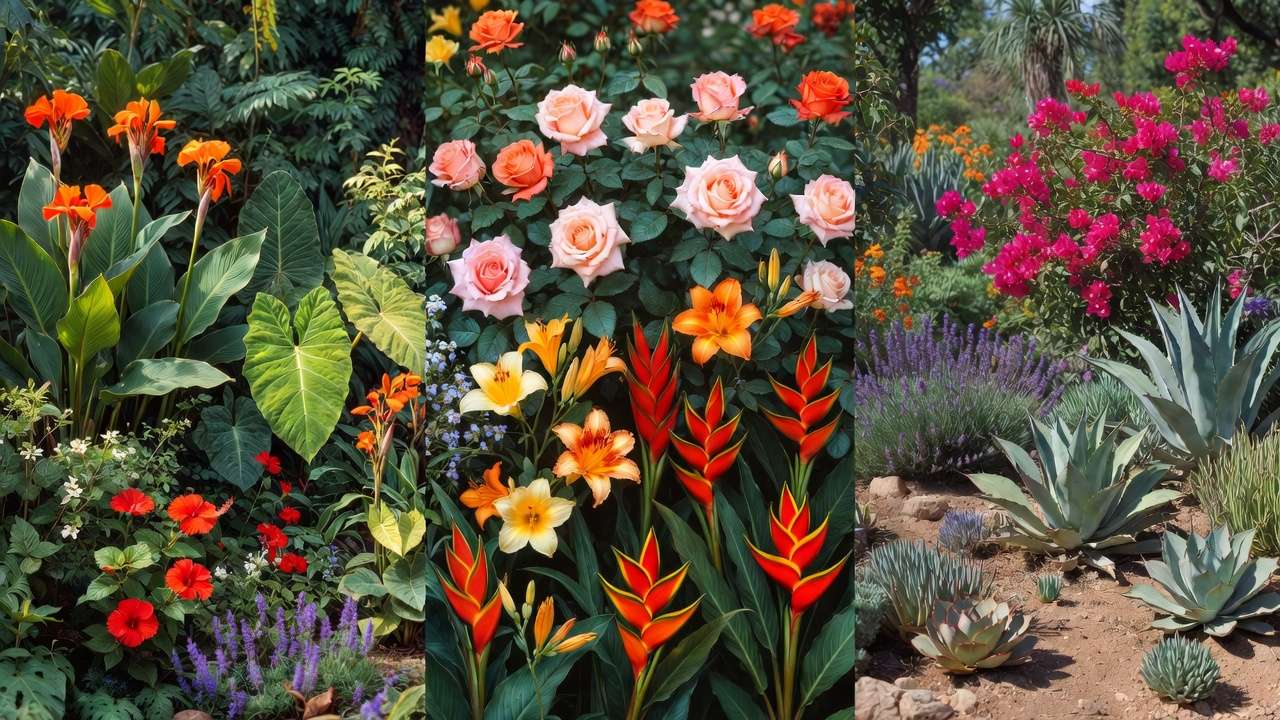
Care note: These thrive near ponds, shaded patios, or rainy-season spots.
6.2 Medium-water plants (regular but not constant watering — most versatile group)
- Roses (many varieties handle our climate well)
- Daylilies and many perennials
- Most vegetables (tomatoes, brinjal/eggplant, okra)
- Bird of paradise (Strelitzia) — striking flowers
- Plumeria (frangipani) — fragrant blooms
- Heliconia — exotic lobster-claw flowers
Care note: Water deeply 2–3 times/week in dry spells; these bridge lush and low-maintenance areas.
6.3 Low-water plants (drought-tolerant once established — water-saving heroes)
- Bougainvillea (vibrant cascades, loves heat)
- Lavender (aromatic, Mediterranean feel)
- Succulents (aloe vera, agave, echeveria)
- Lantana (colorful, attracts butterflies)
- Oleander (tough shrub with flowers)
- Many cacti and desert roses (Adenium)
Care note: These excel in full sun, poor soil, and dry periods — perfect for rooftops or sunny borders.
6.4 Tropical & subtropical climate favorites Mix natives/adapted plants like water spinach (for moist areas), Malabar spinach (Basella), or roselle for edibles that fit zones naturally.
6.5 Compact trees & large shrubs grouped by water needs
- High: Mango (young trees), jamun
- Medium: Guava, lemon
- Low: Neem, moringa (once established)
6.6 Pollinator-friendly plants in each water zone 🐝 High: Canna, hibiscus Medium: Lantana (yes, medium-low crossover), zinnias Low: Salvias, butterfly bush varieties adapted to heat
7. Smart Watering Strategies for Each Zone 💦
Tailor your approach to maximize efficiency.
7.1 How often and how deeply
- High: Every 2–4 days, keep topsoil moist (1–2 inches deep).
- Medium: Every 4–7 days, deep soak (to 6–8 inches).
- Low: Every 10–21 days once established, very deep soak.
7.2 Best irrigation methods
- Drip systems & soaker hoses — ideal for grouped beds (target roots, minimize evaporation).
- Hand watering efficiently — use a wand for precision.
- Rainwater harvesting — collect monsoon water for high zones.
7.3 Mulching differences by zone Thick organic mulch (coconut coir, dried leaves) for all — but heavier in high/medium to retain moisture; lighter gravel for low to prevent rot.
7.4 Seasonal adjustments Monsoon: Reduce/supplemental only for high zones. Dry winter/summer: Increase frequency slightly for medium/high, hold off on low.
8. Common Mistakes and How to Avoid Them 🚫
Even experienced gardeners slip up on hydrozoning. Here are the top mistakes I see most often (and how to sidestep them):
- “I’ll just water everything the same” trap The most common error. Solution: Commit to at least separating high-water from low-water plants — even if you start with just two zones.
- Mixing succulents with high-water annuals in the same bed Classic combo fail: cactus next to impatiens. The cactus rots; the impatiens wilts when you cut back watering. Fix: Keep them in separate containers or distant zones.
- Ignoring microclimates A shady corner under a tree stays moist much longer than the same soil 3 meters away in full sun. Always observe how long soil stays damp in different spots.
- Forgetting to update zones as plants grow A young bougainvillea may need medium water the first year but becomes low-water once established. Reassess every 1–2 years.
- Over-mulching low-water plants Thick organic mulch holds too much moisture for succulents and cacti → root rot risk. Use thin gravel or decomposed granite instead.
- Planting high-water lovers in poor-draining clay without amendment They drown. Add plenty of compost, sand, or perlite to improve drainage.
- Transplanting during peak heat without aftercare Stress doubles. Always move in cooler hours and water deeply for the first 2–3 weeks.
- Expecting instant results Some plants take 6–12 months to fully adapt to their new zone. Be patient — the payoff is huge.
- Skipping mulch altogether Mulch reduces evaporation by up to 70% and stabilizes soil temperature. It’s one of the easiest ways to make hydrozoning work better.
- Not labeling or mapping your zones After a few months, you forget which area is which. Keep a simple sketch or use garden tags/stakes.
Avoid these, and your garden will thank you with stronger growth and fewer headaches! 😅
9. Beautiful Design Ideas That Make Hydrozoning Look Amazing 🎨
The best part? Hydrozoning doesn’t mean a boring, utilitarian garden — it can look stunning.
9.1 Color, texture & height combinations within the same water zone High zone example: Layer tall canna lilies (red/orange), mid-height elephant ears (huge green leaves), and low impatiens (pink/purple pops). Low zone example: Mix silver-gray agave, purple lantana, and golden barrel cactus for dramatic contrast.
9.2 Transition zones – how to make them look natural Use medium-water plants as gentle buffers between high and low zones. Example: A row of daylilies or salvias softens the shift from moist fern pocket to dry bougainvillea border.
9.3 Creating “water-smart” focal points
- A lush high-water corner with a small water feature or birdbath (doubles as humidity source).
- A bold low-water succulent rock garden as a centerpiece on a sunny slope.
- Vertical gardening: Hang high-water ferns on shaded walls, place drought-tolerant trailing succulents on sunny trellises.
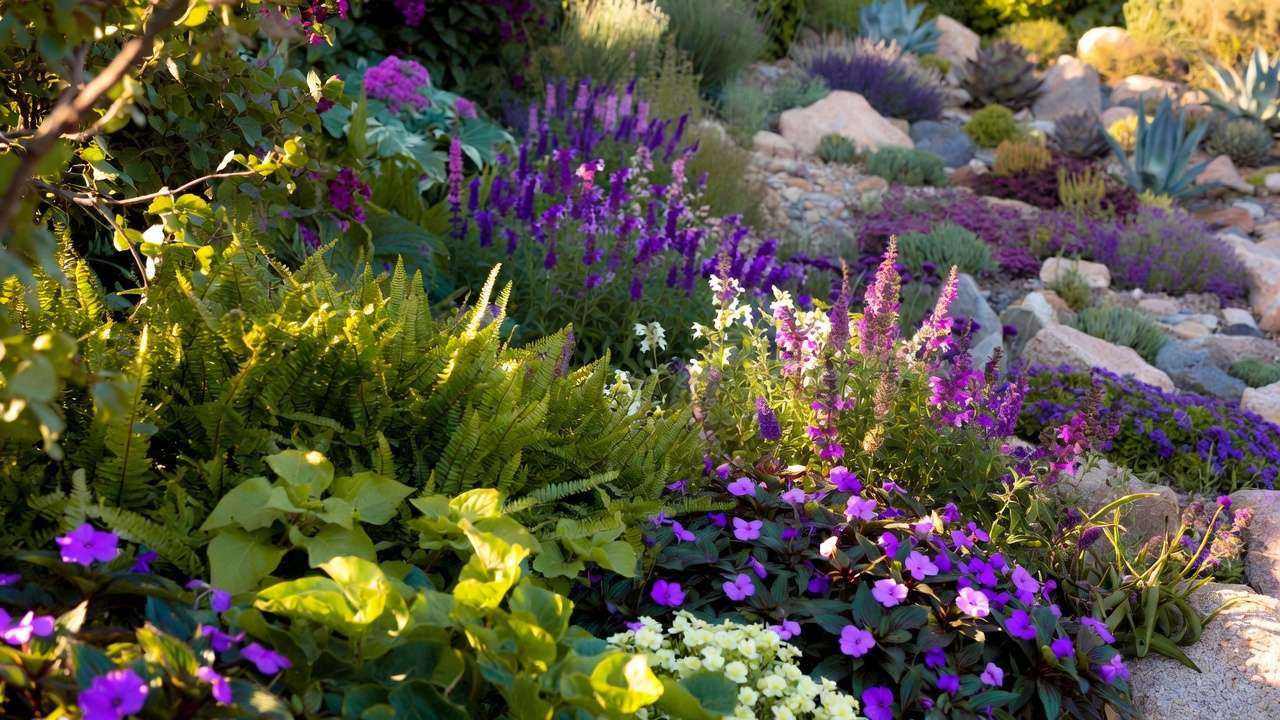
9.4 Before & after inspiration examples Before: Random mixed bed — everything watered the same, patchy look, lots of dead spots. After: Clearly zoned areas — vibrant high-water oasis near the patio, colorful medium perennial border, tough low-water display along the fence. The garden feels intentional, lush where it should be, and effortless overall.
Pro tip: Use repeating shapes and colors across zones (e.g., purple flowers in all three) to tie the whole design together visually. Your garden will look cohesive even though watering is radically different.
10. FAQs – Grouping Plants by Water Needs ❓
Can I mix plants with slightly different needs? Yes — but only within reason. Medium plants can sometimes handle slightly drier or wetter conditions. Avoid mixing true high-water lovers with true drought-tolerant ones.
What if I have very clay soil / very sandy soil? Clay: Great for high/medium zones (holds moisture), but add grit for low-water plants to prevent rot. Sandy: Excellent drainage for low zones; amend heavily with compost for high/medium plants.
Is hydrozoning worth it for small balconies? Absolutely! Even 4–6 pots grouped by water needs save huge time and water. High-water cluster near the wall (shadier), low-water succulents on the sunny edge.
How much water can I actually save? Real-world results: 30–60% reduction in outdoor water use is common after full hydrozoning + mulch + efficient irrigation. In water-restricted areas, some gardeners report cutting usage by half or more.
Do I need to redo my whole garden at once? No! Start with one bed, one border, or one container group. Each successful zone builds confidence and momentum.
Conclusion 🌱✨
Grouping plants by water needs isn’t just a technique — it’s a mindset shift that transforms your gardening experience. Healthier plants, dramatically lower water bills, far less daily maintenance, and a garden that actually looks better because every plant is thriving in its ideal spot.
You don’t need a complete landscape overhaul to start seeing benefits. Pick one area — maybe that struggling mixed border or your balcony herb collection — and create your first water zone this weekend. Use the steps, plant examples, and design ideas in this guide as your roadmap.
A garden that matches plants to their true water needs isn’t just easier to care for — it’s more beautiful, more sustainable, and honestly more alive. You’ll spend less time fighting nature and more time enjoying the blooms, fragrance, and wildlife your thoughtful design attracts.
Ready to get started? Grab a notebook, walk your space, and begin mapping your zones today. Your future self (and your plants) will thank you! 🌸💚
If you implement any of these ideas, I’d love to hear how it goes — drop a comment or share your before/after photos. Happy hydrozoning!











