
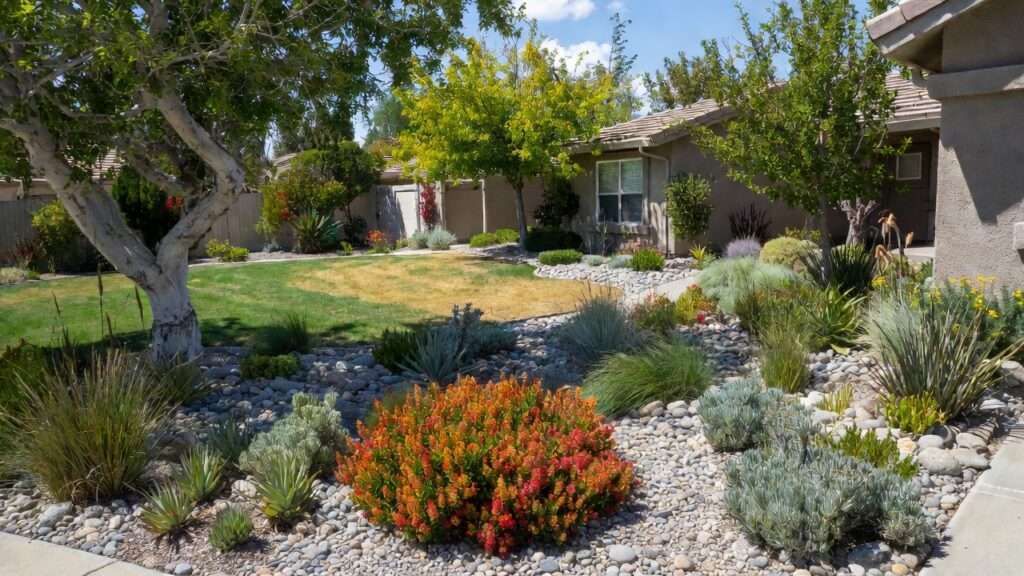
Tired of sky-high water bills, endless weekend mowing, and watching your front yard turn brown during dry spells? Imagine stepping outside to a vibrant, welcoming landscape that’s lush with color, texture, and life—yet slashes your outdoor water use by up to 75% and cuts maintenance time dramatically. That’s the real magic of xeriscape front yard design ideas — creating beautiful, sustainable spaces that thrive with minimal irrigation while boosting curb appeal and supporting local pollinators. 💧🌿
As plant and tree care specialists, we’ve helped countless homeowners transition from thirsty lawns to resilient, eco-friendly yards. Xeriscaping isn’t about barren rocks or a “desert” look; it’s smart, water-wise landscaping that uses drought-tolerant plants, efficient design, and thoughtful tree placement to deliver year-round beauty with far less effort. In this comprehensive guide, you’ll find step-by-step planning advice, proven design ideas, detailed plant and tree recommendations with care tips, and practical maintenance strategies to make your front yard transformation a success.
Whether you’re in a drought-prone region or simply want to save money and be more environmentally conscious, these xeriscape front yard design ideas will help you solve common problems like high utility costs, time-consuming upkeep, and lackluster curb appeal. Let’s dive in and turn your front yard into a stunning, low-water oasis! 🌺
Why Choose Xeriscape for Your Front Yard? 🌍
Xeriscaping addresses real homeowner frustrations head-on. Traditional lawns can guzzle 30–50% of household water, especially in hot summers, leading to restrictions, brown patches, and frustration. Xeriscape flips the script by working with your local climate rather than against it.
Key benefits include:
- Massive water savings — Often 50–75% less than conventional landscapes, directly lowering bills and easing pressure on municipal supplies.
- Lower maintenance — No weekly mowing, less weeding (thanks to mulch), and fewer pest issues with adapted plants.
- Enhanced curb appeal & property value — Modern xeriscapes look intentional and elegant, not neglected. Studies show water-efficient landscapes can increase home values in water-conscious markets.
- Environmental perks — Supports pollinators 🐝, reduces runoff pollution, and builds climate resilience.
- Myth-busting — Xeriscape can be colorful and lush — think blooming perennials, silvery foliage, and sculptural trees — far from the “all-rock” stereotype.
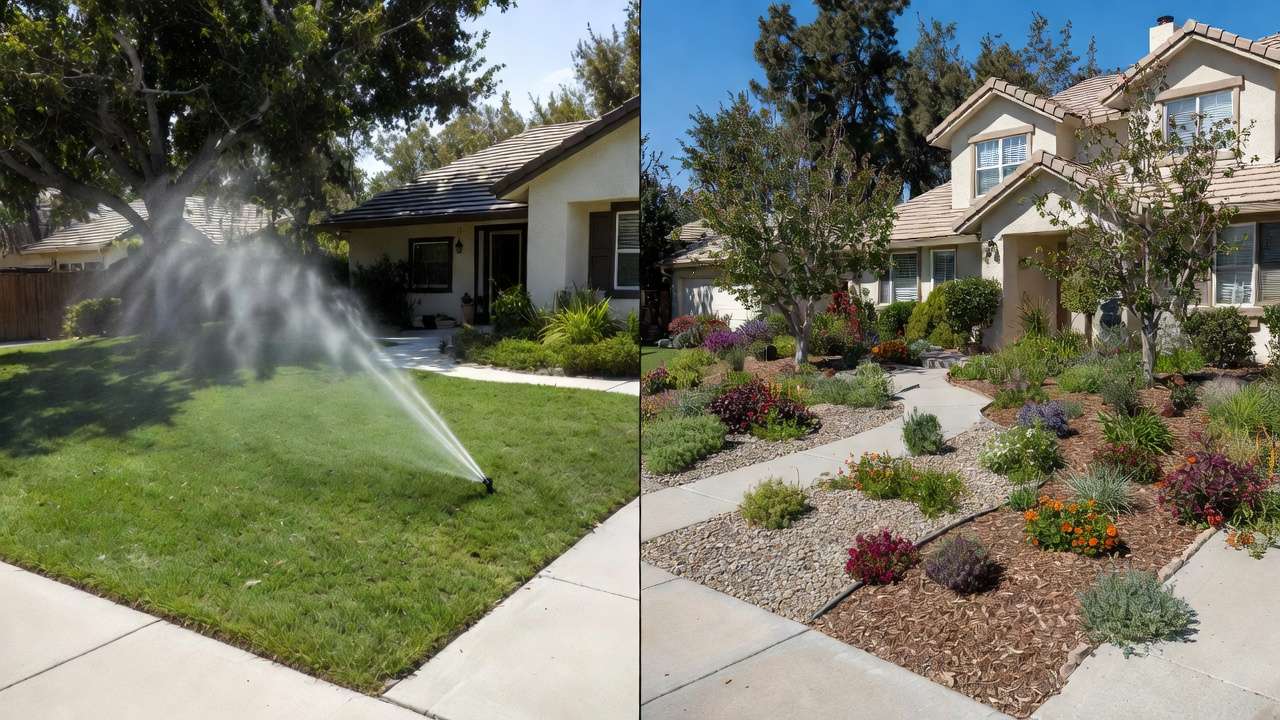
In short, it’s a practical upgrade that saves resources while making your home more inviting and sustainable. 🌟
Step-by-Step Guide to Planning Your Xeriscape Front Yard 🗺️
Success starts with thoughtful planning. Skip this, and even the best plants struggle.
Assess Your Site & Zone Evaluate sun exposure (full sun vs. shade pockets), soil type (test drainage!), slope (for erosion control), and microclimates. Check local HOA rules or water restrictions. Note wind patterns and existing features like sidewalks or driveways.
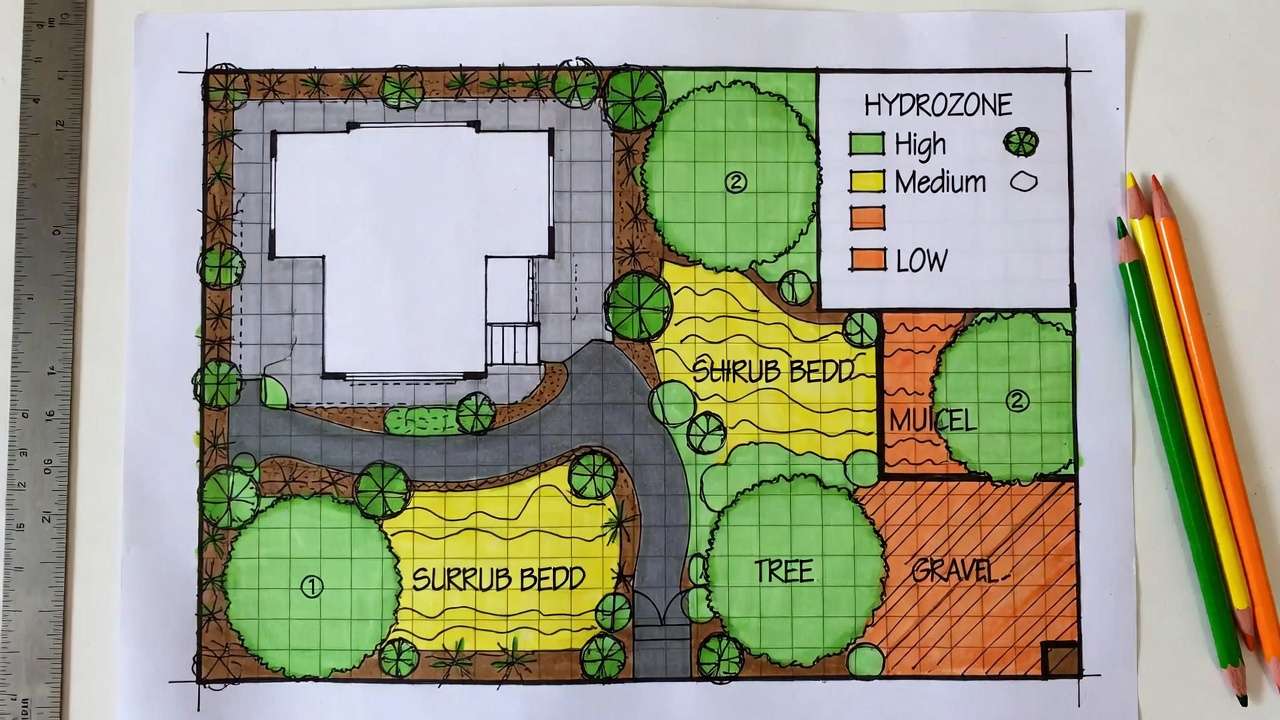
Create a Base Map & Zones Sketch your yard to scale. Use hydrozoning — group plants by water needs: high-water near the house (if any), moderate in transition areas, low-water in outer zones. This efficient grouping prevents over- or under-watering.
Choose a Style Theme Pick one that fits your home and personality:
- Modern minimalist (clean lines, gravel, succulents)
- Mediterranean oasis (lavender, olives, warm tones) 🌿
- Native prairie (grasses, wildflowers for natural flow)
- Rock garden chic (boulders, yucca for drama)
Budget & Timeline Tips Start small — convert one section first. Phase it: remove lawn → improve soil → add hardscape → plant trees/shrubs → fill with perennials. Expect $5–15 per sq ft depending on scale; DIY saves big!
Pro tip: Plant trees first for instant structure and shade — they anchor the design and provide long-term benefits. 🌳
Essential Elements of Stunning Xeriscape Front Yards 🪨
Great xeriscapes layer elements for depth and interest.
- Mulch mastery — Organic (bark) or inorganic (gravel, decomposed granite). Mulch retains moisture, suppresses weeds, moderates soil temperature, and looks polished. Apply 2–4 inches deep, keeping it away from plant stems.
- Hardscaping — Paths, boulders, low walls, or edging add structure and define spaces. Permeable options like gravel or stepping stones allow rainwater infiltration.
- Focal points — A sculptural tree, dry creek bed (for drainage charm), birdbath, or entry arbor draws the eye.
- Layering — Tall trees for backbone → medium shrubs → low perennials/groundcovers → creeping fillers. This creates visual interest and covers soil to reduce evaporation.
These elements turn a plain yard into an artistic, functional space. 🎨
Top Drought-Tolerant Plants & Trees for Front Yard Xeriscape 🌳🌸
Plant selection is key — choose natives or adapted species for your region. Here’s a curated list with care insights from our expertise.
Best Drought-Tolerant Trees for Shade & Structure Trees provide instant impact, shade, and habitat.
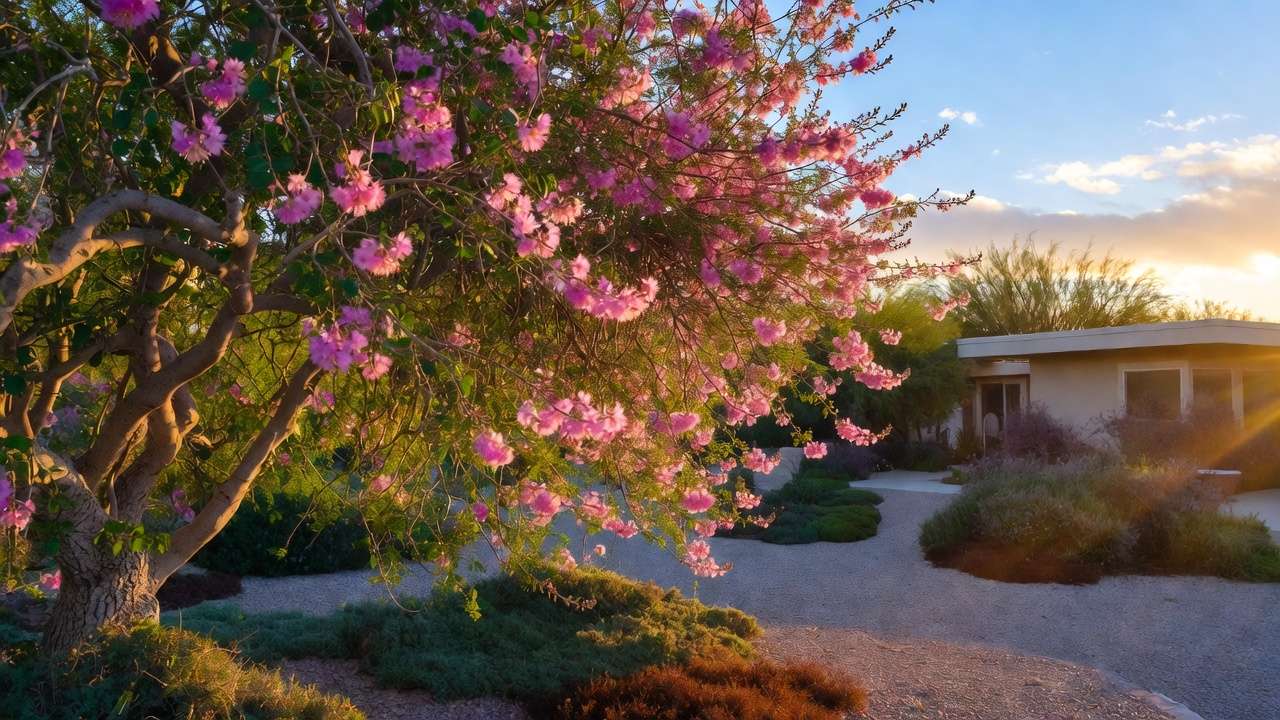
- Desert Willow (Chilopsis linearis) — Pink orchid-like blooms, 15–30 ft, fast-growing, attracts hummingbirds. Prune lightly in late winter.
- Eastern Redbud (Cercis canadensis) — Heart-shaped leaves, purple-pink spring flowers, 20–30 ft. Tolerates drought once established; mulch well.
- Bur Oak (Quercus macrocarpa) — Majestic, long-lived, excellent shade, very drought-hardy in many zones.
- Olive Tree (Olea europaea) — Mediterranean vibe, silvery foliage, 20–30 ft. Needs good drainage; prune for shape.
- Redbud or Hackberry — Adaptable, tough options for varied climates.
Plant in fall/spring; water deeply but infrequently to establish roots.
Show-Stopping Shrubs & Perennials These add color and pollinator appeal.
- Lavender — Fragrant purple spikes, silver foliage, deer-resistant.
- Russian Sage (Perovskia atriplicifolia) — Airy blue blooms summer–fall, 3–4 ft.
- Yarrow (Achillea) — Flat-topped flowers in yellow/pink, tough as nails.
- Coneflower (Echinacea) — Daisy-like blooms, butterfly magnet.
- Salvia & Penstemon — Tubular flowers for hummers.
Groundcovers & Grasses That Replace Lawns Ditch turf with these low-mow alternatives.
- Sedum/Stonecrop — Succulent mats, colorful varieties.
- Blue Fescue or Buffalo Grass — Ornamental grasses for texture.
- Creeping Thyme or Ice Plant — Low, spreading, fragrant/bloomy.
| Plant Name | Height | Water Needs (Established) | Sun | Bloom Season | Care Notes |
|---|---|---|---|---|---|
| Desert Willow | 15–30 ft | Very Low | Full | Summer | Prune after bloom |
| Lavender | 2–3 ft | Very Low | Full | Summer | Shear after flowering |
| Russian Sage | 3–4 ft | Low | Full | Summer–Fall | Cut back in spring |
| Yarrow | 1–3 ft | Low | Full | Summer | Divide every 3–4 years |
| Sedum | 6–12 in | Very Low | Full/Part | Summer | Excellent groundcover |
(Regional adaptations: Check local extension services for best varieties!)
12+ Xeriscape Front Yard Design Ideas to Inspire You 🌟
Here are detailed, actionable ideas — each with plant pairings and why they work.
- Modern Gravel Symmetry with Agave Focal Points — Symmetrical beds of gravel, bold agave/yucca centers, lavender borders. Clean, contemporary curb appeal for small–medium yards. Low maintenance. 🪴
- Pollinator Paradise Pathway — Curved stepping-stone path lined with coneflower, salvia, bee balm. Milkweed for monarchs. Welcoming and wildlife-friendly. 🐝
- Mediterranean Entry with Olive Trees & Lavender — Flanking olives, lavender drifts, gravel mulch. Warm, elegant vibe; great scent at the door. 🌿
- Layered Native Prairie Look — Mix native grasses, black-eyed Susan, yarrow. Natural, meadow-like flow; excellent for larger yards.
- Rock Garden Drama with Yucca & Boulders — Large rocks, sculptural yucca/agave, low succulents. Striking focal point; minimal plants needed.
- Low-Profile Curb Appeal for Small Yards — Groundcovers like sedum/thyme, compact shrubs, one small tree. Neat and space-efficient.
- Shade Oasis with Drought-Tolerant Trees — Bur oak or redbud canopy, underplanted with shade-tolerant perennials. Cooling effect for entry.
- Color-Blocked Zones for Visual Pop — Group by color (purples, yellows) in hydrozones. Artistic and organized.
- Curved Dry Creek Bed Feature — Rock-lined “stream” for drainage, edged with grasses/penstemon. Adds movement and function.
- Container-Enhanced Entry — Pots with succulents/lavender on porch/steps for flexibility and instant color.
- Year-Round Interest Mix — Evergreens (junipers), seasonal bloomers, ornamental grasses. Beauty in every season.
- Pet-Friendly & Kid-Safe Options — Non-toxic plants like thyme, fescue “lawn,” soft grasses. Safe play space with low water.
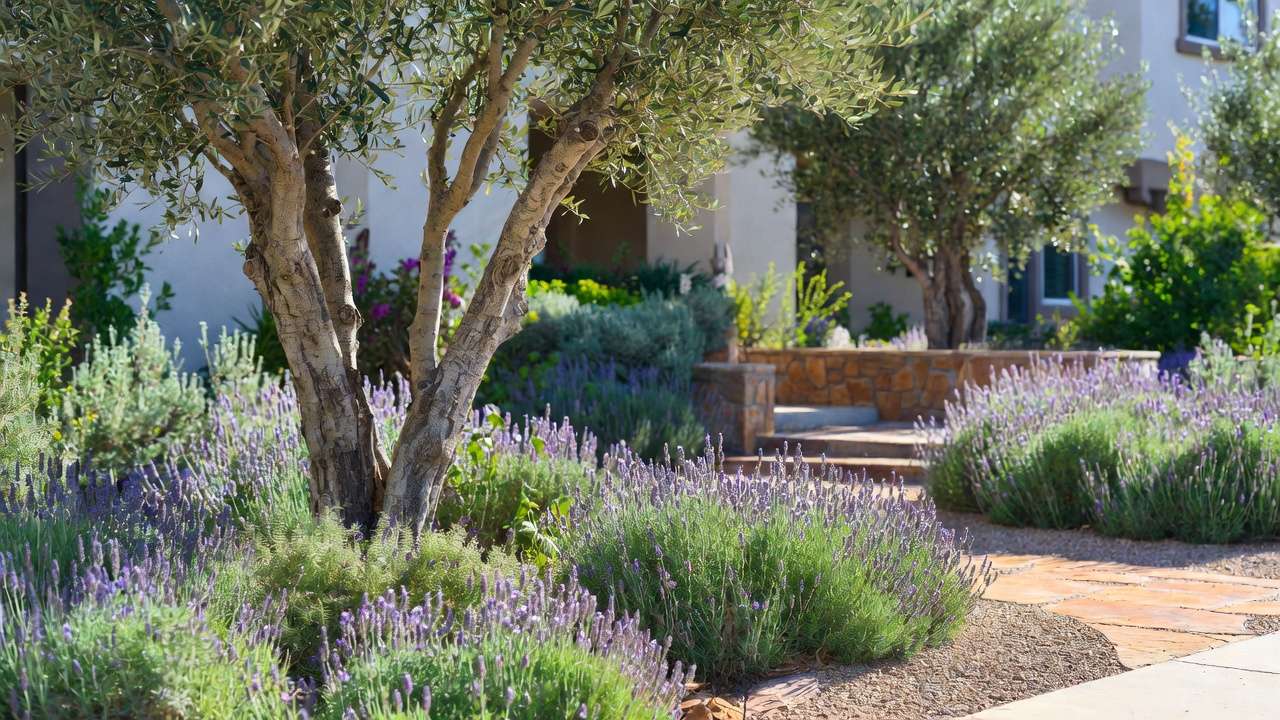
Each idea emphasizes low-water success while maximizing beauty and usability.
Irrigation & Maintenance Tips for Long-Term Success 💦🛠️
Once your xeriscape is planted, the focus shifts to smart, efficient watering and minimal upkeep. The goal? Deep, infrequent watering to encourage strong roots while avoiding waste.
Efficient Irrigation Systems Drip irrigation reigns supreme in xeriscapes — it delivers water slowly and directly to root zones through tubing and emitters, achieving 90–95% efficiency by minimizing evaporation and runoff. Place emitters near trees, shrubs, and perennials; avoid wetting large bare areas. For larger yards, combine drip for beds with low-volume sprays or rotors for any small turf patches.
Upgrade to a smart irrigation controller — these weather-based or soil-moisture-sensor systems automatically adjust schedules using local ET (evapotranspiration) data, rain sensors, and forecasts. They can cut overwatering by 20–50% compared to traditional timers. Install rain shut-off devices and check for leaks seasonally.
Pro tip: During establishment (first 1–2 years), water new plants deeply 1–2 times per week. Once rooted, many drought-tolerant species need only occasional deep soaks during extreme dry spells — often just 1 inch every 2–4 weeks in summer. 🌧️
Maintenance Tips & Seasonal Care Calendar Xeriscapes are low-maintenance but not zero-maintenance. Here’s a practical yearly guide:
- Spring 🌷: Prune dead wood, refresh mulch (2–4 inches), apply pre-emergent if needed for weeds, fertilize lightly with slow-release organic if soil tests show deficiency.
- Summer ☀️: Deep water as needed, hand-pull weeds early, monitor for pests (usually minimal in dry-adapted plants).
- Fall 🍂: Cut back spent perennials, plant new trees/shrubs, mulch refresh.
- Winter ❄️: Minimal — enjoy sculptural shapes of dried grasses and evergreens.
- Overwatering new plants (kills more than drought!).
- Skipping mulch or letting it pile against stems (causes rot).
- Poor hydrozoning (mixing high- and low-water plants).
- Removing all topsoil instead of amending it.
- Neglecting early weeding — aggressive invaders steal resources from young plants.
Regular but light tasks like occasional pruning and mulch topping keep everything thriving with far less effort than a traditional lawn. Your yard will reward you with resilience and beauty!
Real-Life Xeriscape Transformations & Expert Insights 📸🌱
Real examples inspire confidence. Here are a few standout transformations we’ve seen or drawn from homeowner stories:
- From Thirsty Lawn to Pollinator Haven (Colorado-style example) — A Boulder homeowner replaced a flat grass front yard with berms, a dry stream bed, native perennials like blanket flower and salvia, and clustered yarrow. Before: plain green turf. After 18 months: vibrant blooms attracting bees 🐝, 60% less water use, and compliments from neighbors. Key insight: Layering heights and textures made it look full and intentional.
- Texas Front Yard Overhaul — One family ditched outdated grass and added magenta-flowering shrubs, ornamental grasses, and drought-hardy trees like desert willow. The once-dated facade now feels modern and welcoming. They reported halved water bills and almost no mowing. Lesson: Strategic tree placement provided instant shade and structure.
- Succulent & Rock Success Story — A homeowner’s barrel-and-rock xeriscape evolved beautifully over 1 year 8 months — succulents and low-water plants thrived with minimal care. Before: sparse and barren. After: colorful, textured oasis that “really is thriving.” Pro tip from experts: Start with good soil prep and patience during establishment.
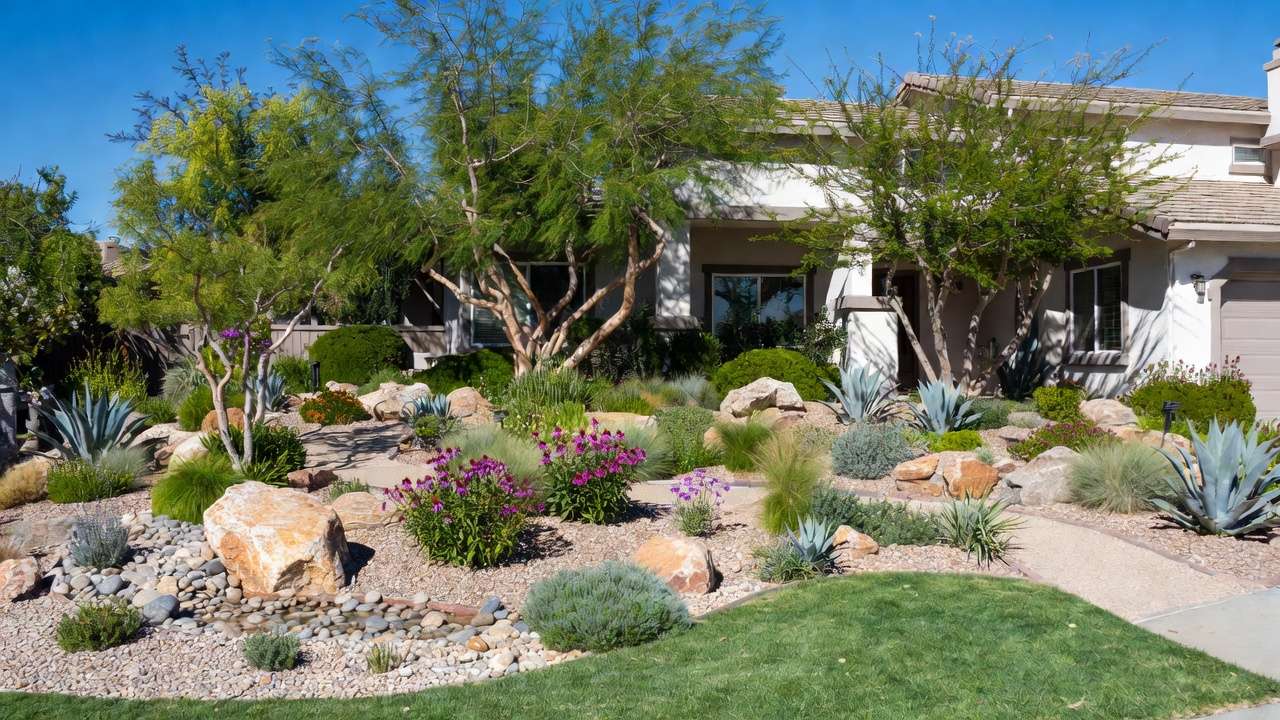
As plant and tree care specialists, our top insight: Plant trees first — they provide immediate impact, long-term shade (cooling your home too!), and habitat. Choose regionally adapted varieties for best success. These real transformations show xeriscape isn’t sacrifice — it’s an upgrade in beauty, savings, and sustainability. 🌟
Conclusion 🌍
Xeriscape front yard design ideas offer the perfect solution: stunning, low-water landscapes that feature drought-tolerant plants and trees while solving high bills, heavy maintenance, and environmental concerns. By planning thoughtfully, layering elements, choosing the right species, and maintaining smartly, you can create a front yard that’s vibrant, welcoming, and resilient year-round.
Start small — perhaps convert a strip near the sidewalk or add a focal tree — and build from there. Consult your local cooperative extension for region-specific plant lists and rebate programs. Your yard can become a showcase of beauty that saves resources and supports wildlife.
Ready to begin? Grab a sketchpad, assess your site, and let these ideas spark your vision. Share your progress — we’d love to hear how your low-water oasis turns out! 💚
FAQs ❓
What is the difference between xeriscape and zeroscape? Xeriscape (pronounced “ZEER-i-scape”) uses drought-tolerant plants, mulch, and efficient design for beauty with minimal water. Zeroscape (often a mispronunciation) typically means mostly gravel/rocks with little to no plants — more barren and less eco-friendly. True xeriscape prioritizes lush, living landscapes.
How much can xeriscaping reduce my water bill? Many homeowners see 50–75% savings on outdoor water use (sometimes up to 80% in arid areas). This translates to $20–$100+ monthly depending on yard size and local rates — plus lower maintenance costs (no mower fuel, less fertilizer).
Are xeriscape yards pet-friendly? Absolutely! Choose non-toxic plants like creeping thyme, buffalo grass, or fescue for soft, safe surfaces. Avoid sharp agaves near play areas. Many designs include gentle groundcovers perfect for dogs and kids.
Can xeriscape work in non-desert climates? Yes! Adapt principles anywhere — use native or regionally adapted drought-tolerant plants. In wetter areas, focus on reducing turf and improving drainage rather than extreme dryness.
What are the best beginner plants/trees? Start easy: Lavender or Russian sage (shrubs/perennials), yarrow or coneflower (color), sedum or thyme (groundcover), and desert willow or redbud (trees). They’re forgiving, beautiful, and widely adaptable.











