
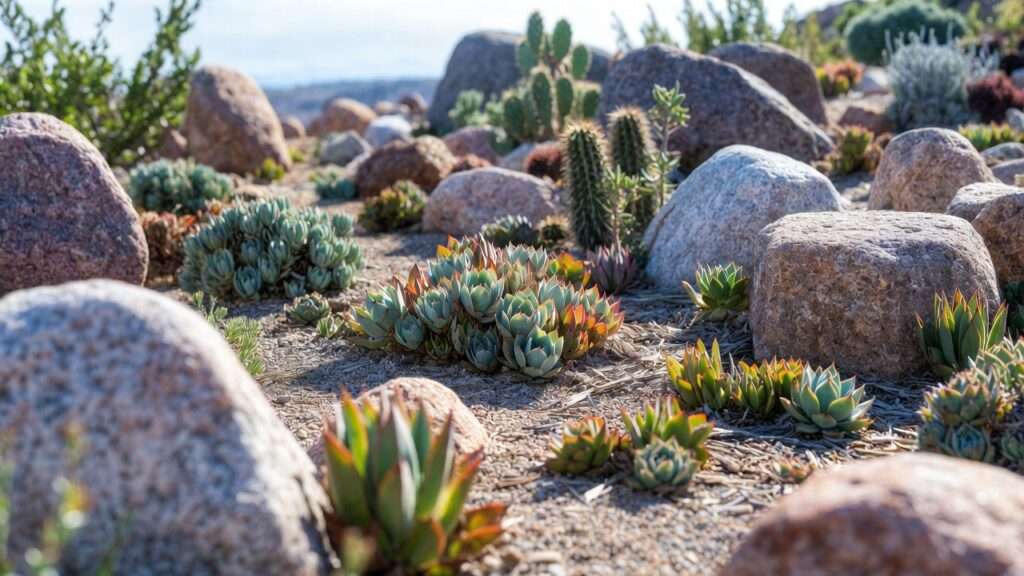
Imagine stepping into your yard on a scorching summer day and seeing not a wilted, thirsty lawn begging for water, but a vibrant tapestry of textured rocks, colorful succulents, and hardy perennials that look effortlessly beautiful — all while your water bill stays refreshingly low. 😍💧 If you’re tired of high maintenance gardens, constant watering, or watching plants struggle in dry spells, a xeric rock garden could be the game-changer you’ve been searching for.
Rock garden techniques for xeric design combine strategic hardscaping with drought-tolerant plants to mimic nature’s resilient dry landscapes — think alpine slopes, desert outcrops, or dried riverbeds. These gardens excel in water conservation (often reducing outdoor water use by 50-75%), require minimal upkeep, suppress weeds naturally, and boost biodiversity by attracting pollinators like bees and butterflies. 🌼🐝 Whether you’re in an arid region, facing water restrictions, or simply want a sustainable, eye-catching yard that thrives with little effort, this comprehensive guide shares proven, expert-level techniques to help you build one from scratch.
As a horticulture enthusiast with years of experience designing low-water landscapes (including transformations in challenging climates similar to semi-arid zones), I’ve seen firsthand how intentional rock placement, smart soil prep, and the right plant choices turn ordinary spaces into stunning, resilient oases. Let’s dive in and create your low-water paradise! 🚀
What Is a Xeric Rock Garden? Understanding the Basics 🪨
A xeric rock garden (from the Greek “xeros” meaning dry) is a purposefully designed landscape that minimizes irrigation needs while maximizing beauty and ecology. Unlike traditional gardens that rely on frequent watering, xeric designs follow seven core principles popularized by Denver Water in the 1980s: planning and design, soil analysis/improvement, practical turf areas (or none!), appropriate plant selection, efficient irrigation (often drip or none after establishment), mulching, and proper maintenance.
When rocks take center stage, the magic happens. Rocks provide:
- Superior drainage — preventing root rot in heavy rains or poor soils.
- Moisture moderation — large boulders create cool, shaded microclimates under and around them, trapping condensation and reducing evaporation.
- Weed suppression — when paired with gravel mulch.
- Visual drama — varying sizes, shapes, and colors add texture and year-round interest without flowers.
Common misconceptions? No, it’s not “just rocks” or a barren desert look — well-executed xeric rock gardens can feel lush, colorful, and inviting, blending succulents, ornamental grasses, and flowering perennials for seasonal pops. 🌈
Planning Your Xeric Rock Garden: Site Assessment & Design Principles 📐
Success starts before you touch a shovel. Assess your site honestly:
- Sun exposure — Most xeric plants crave full sun (6+ hours), but boulders can create partial shade pockets.
- Soil type — Test for drainage (dig a hole, fill with water — it should drain in 1-2 hours). Amend clay-heavy soils with grit, sand, or decomposed granite.
- Slope & microclimates — Slopes aid natural drainage; low spots collect water (avoid planting thirsty species there).
- USDA hardiness zone — Choose plants suited to your zone for long-term success.
Design styles to inspire:
- Naturalistic alpine — Mimic mountain scree with angular rocks and low-growing cushions.
- Dry riverbed (arroyo) — Curving gravel “streams” with larger rocks along “banks.”
- Modern minimalist — Clean lines, large boulders, sparse planting.
- Hell strip/curb appeal — Narrow front-yard strips transformed with tough groundcovers.
Use hydrozoning: Group plants by water needs (very low, low, moderate) for efficiency. Sketch on paper or use free apps — aim for 60-70% hardscape/mulch and 30-40% plants for balance. Focal points like a specimen boulder or dramatic agave draw the eye. 🎨
Essential Rock Garden Techniques for Xeric Success 🛠️
1. Soil Preparation & Drainage Mastery (The True Foundation)
Poor drainage kills more xeric plants than drought! Start by:
- Removing sod/weeds (solarize with black plastic for 4-6 weeks in summer if needed).
- Loosening soil 12-18″ deep.
- Amending with 30-50% inorganic grit (coarse sand, pumice, or decomposed granite) for fast-draining “scree” mix.
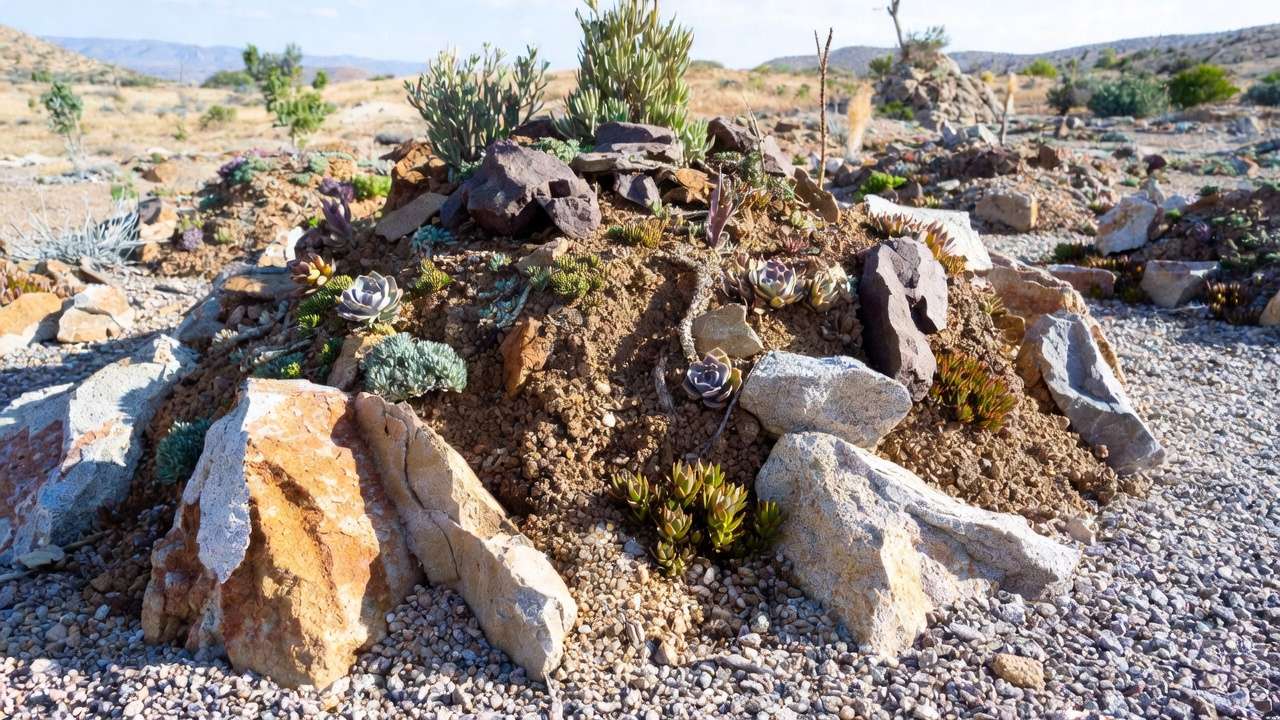
- Building raised mounds/berms (12-24″ high) — these improve aeration, create visual interest, and prevent water pooling.
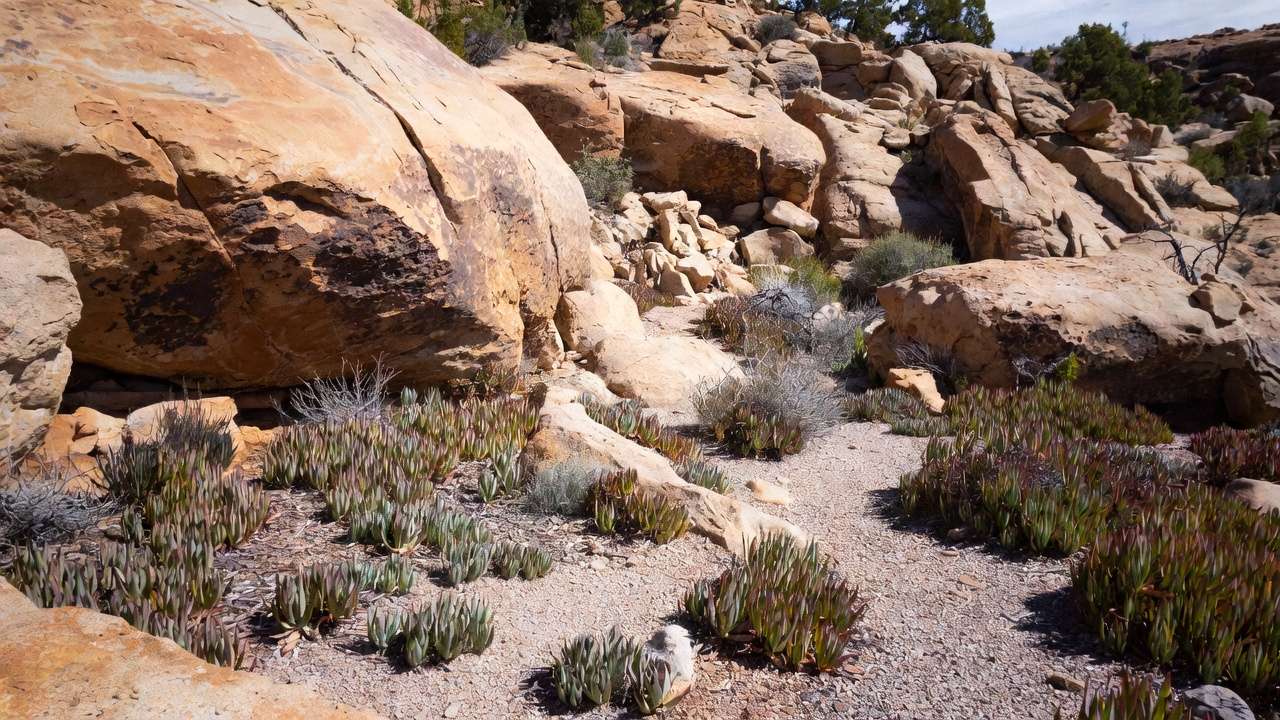
Pro tip: Bury organic matter sparingly — xeric plants prefer lean, mineral-rich soil over rich compost. 🏞️
2. Rock Selection, Placement & Arrangement Techniques
Rocks are the backbone — choose locally sourced for sustainability and natural fit.
- Types: Boulders (focal points), flagstone (layered outcrops), river rock (smooth accents), gravel/pea stone (mulch), decomposed granite (pathways).
- Placement rules: Bury large rocks 1/3 to 1/2 deep for a “grown-in” look — this anchors them and keeps roots cool/moist.
- Vary sizes, shapes, and colors — group odd numbers (3, 5) for natural asymmetry.
- Create “seams” and “outcrops” — stack smaller rocks to look like they’ve eroded from larger ones.
- Expert insight: Mimic nature — rocks should appear as if they’ve always belonged there, not “floating” on top. 🌄
3. Mulching & Ground Cover Strategies
Mulch is essential for moisture retention and weed control.
- Inorganic options: 2-4″ layer of gravel, crushed stone, or decomposed granite — excellent for xeric vibes.
- Benefits: Reduces evaporation by up to 70%, moderates soil temperature, suppresses weeds.
- Avoid thick organic mulches (they retain too much moisture and can rot roots in dry designs).
Choosing & Planting Drought-Tolerant Stars for Rock Gardens 🌺
Select plants adapted to lean soil, full sun, and infrequent water. Prioritize natives for best results and pollinator support.
Top categories & examples (adapt to your zone):
- Succulents/Cacti: Sedum ‘Angelina’, Sempervivum (hens and chicks), Agave, Opuntia (prickly pear), Aloe — low-growing, architectural.
- Perennials: Penstemon, Salvia (e.g., Russian Sage), Yarrow (Achillea), Lavender, Echinacea (coneflower), Gaura.
- Ornamental Grasses: Blue grama, Mexican feather grass, Little bluestem — add movement and texture.
- Groundcovers: Creeping thyme, Ice plant (Delosperma), Sedum varieties — fill gaps and soften edges.
- Shrubs/Small Trees: Rabbitbrush, Fernbush, Yucca, Potentilla — provide structure.
Planting techniques:
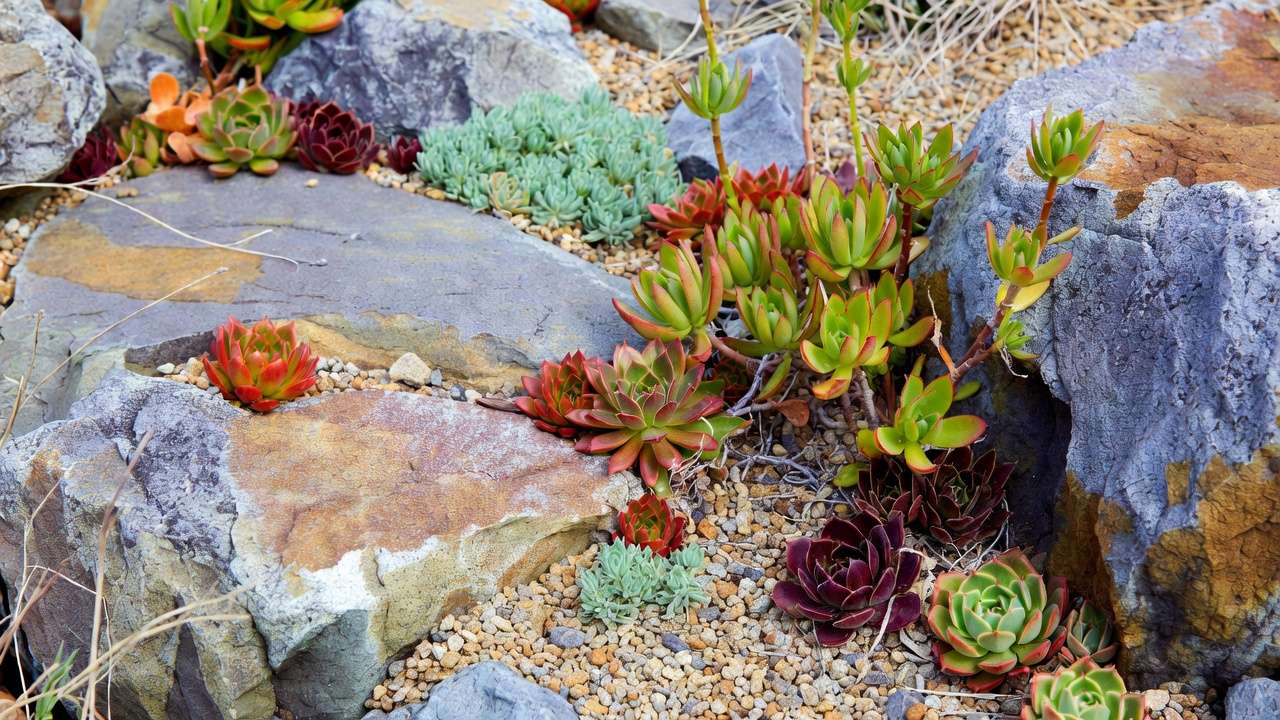
- Crevice planting — tuck small plants between rocks for natural look.
- Pocket planting — dig small holes in mounds, backfill with gritty soil.
- Protect roots — Plant under boulder edges for extra shade/moisture.
Step-by-Step: How to Build Your Xeric Rock Garden (DIY Guide) 🔨
Materials: Rocks/boulders, gravel mulch, gritty soil amendments, drought-tolerant plants, tools (shovel, rake, gloves).
- Clear & prep site — Remove turf/weeds, level roughly.
- Install edging — Use metal, stone, or plastic for clean borders.
- Amend soil & create contours — Build mounds, mix in grit.
- Place rocks — Start with largest boulders, bury partially, arrange naturally.
- Add mulch layer — Spread 2-4″ gravel evenly.
- Plant — Dig holes, tease roots, water deeply once.
- Establish — Deep water weekly for first season, then taper off.
Maintenance Tips to Keep It Thriving Year-Round 🧹
The beauty of a well-designed xeric rock garden is how little ongoing care it demands after the first establishment year. Here’s a realistic maintenance calendar and best practices:
- Watering Year 1: Deep, infrequent watering (1–2 inches every 7–10 days, depending on rainfall and heat) to encourage deep roots. Year 2+: Reduce to supplemental water only during extreme drought (many plants survive on rainfall alone once established). Use drip irrigation or soaker hoses hidden under gravel for precision if needed. Always water early morning to minimize evaporation. 💦
- Weeding Thanks to thick gravel mulch and dense planting, weeds are rare. Hand-pull any that appear — they’re easiest when young. A quick pass every 4–6 weeks keeps things pristine.
- Pruning & Cleanup Cut back perennials and grasses in late winter/early spring before new growth. Remove spent blooms on salvias and yarrows to encourage reblooming. Clear fallen leaves from succulents in autumn to prevent rot.
- Seasonal Tasks Spring: Lightly rake gravel to refresh appearance, divide overcrowded perennials if desired. Summer: Monitor for heat stress (rare in true xeric plants). Fall: Plant new additions — cooler temperatures reduce transplant shock. Winter: Most plants go dormant; no action needed except protecting tender succulents in colder zones with burlap if temperatures drop below their hardiness.
- Fertilizing Almost never! Xeric plants thrive in lean soil. If growth seems weak after several years, apply a light top-dressing of slow-release, low-nitrogen granular fertilizer in early spring — but sparingly.
Inspiring Xeric Rock Garden Design Ideas & Examples 🎨
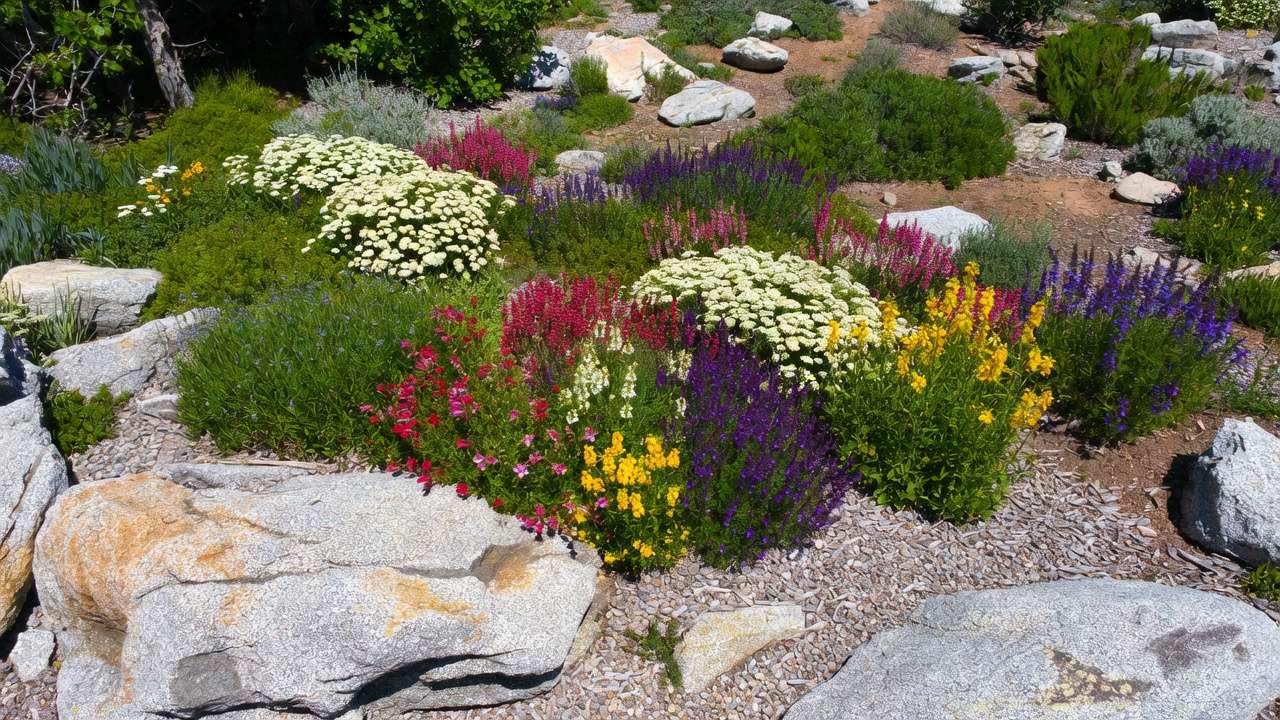
Here are proven styles to spark your creativity:
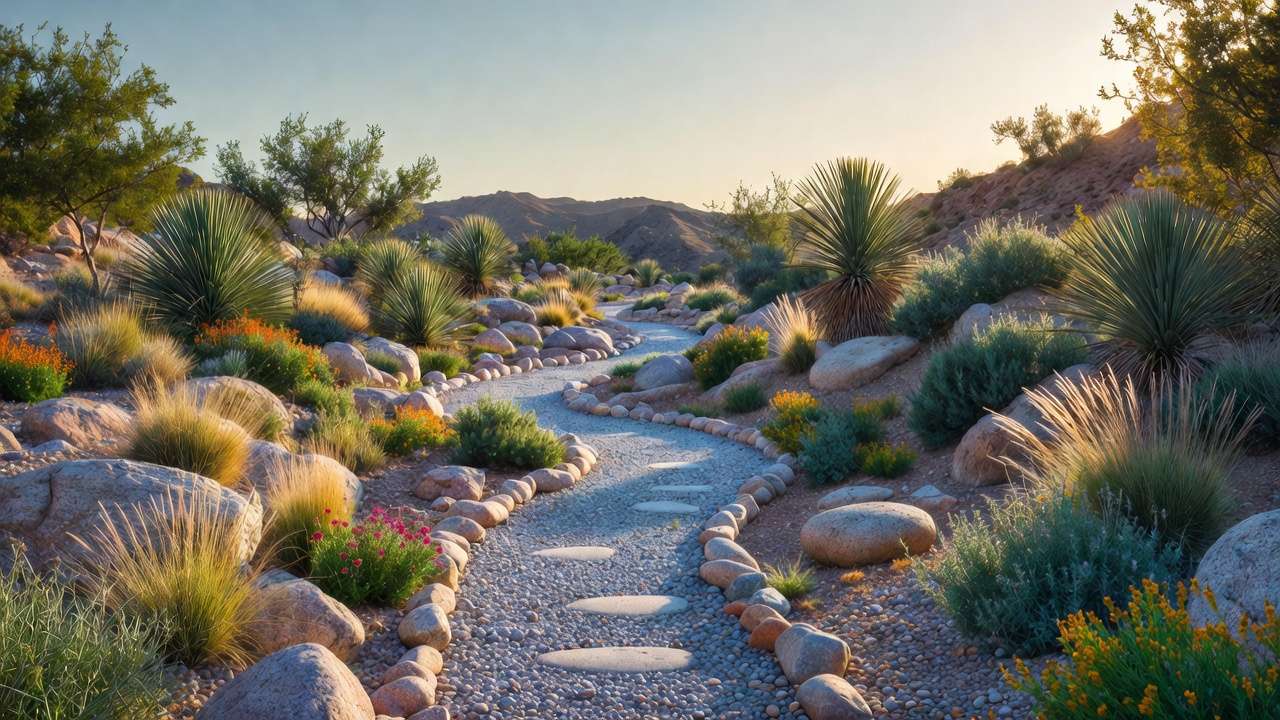
- Desert Oasis Large agaves and yuccas as dramatic focal points, surrounded by drifts of blue oat grass, purple Russian sage, and golden sedum. Smooth river rock paths wind through for a serene, Southwest-inspired feel.
- Zen-Inspired Minimalist Few large boulders placed asymmetrically on a sea of decomposed granite, accented with a single sculptural yucca or dwarf Japanese black pine. Perfect for small urban yards.
- Mediterranean Slope Terraced with flagstone retaining walls, planted with lavender, rosemary, santolina, and ice plant cascading over edges. Great for hilly properties.
- Hell Strip / Curb Appeal Makeover Narrow strip between sidewalk and street transformed with low-growing creeping thyme, sedum carpets, and tough penstemon — colorful, tough, and zero lawn to mow.
- Dry Riverbed Feature Curved “stream” of larger cobbles and gravel, bordered by taller grasses and rabbitbrush, with occasional stepping stones. Excellent for directing rainwater and creating flow in flat yards.
Before-and-after transformations often show 60–80% water savings and dramatically improved curb appeal — homeowners frequently report compliments from neighbors and even increased property value.
Common Mistakes to Avoid in Xeric Rock Gardens ❌
Even experienced gardeners slip up. Steer clear of these pitfalls:
- Overplanting or crowding — Give plants room to spread; overcrowding leads to competition and disease.
- Floating rocks — Always bury at least 1/3 of larger stones for stability and realism.
- Using rich garden soil or heavy mulch — Leads to rot in succulents and cacti.
- Ignoring microclimates — Planting full-sun lovers in shade pockets (or vice versa) causes failure.
- Overwatering after establishment — The #1 killer of xeric plants. When in doubt, wait longer.
- Choosing non-drought-tolerant “lookalikes” — Some nurseries sell thirsty varieties mislabeled as drought-tolerant.
Expert Insights & Pro Tips from Landscape Pros 💡
After designing and installing dozens of xeric landscapes, here are hard-earned lessons:
- “Bury rocks generously — the part underground is what makes them look ancient and natural.” — Xeriscape designer, Colorado
- Use warm-toned rocks in hot climates to reflect less heat onto plants; cooler grays/blues work better in milder zones.
- Incorporate “nurse rocks” — small stones placed around new transplants to shield them from sun and wind during the first summer.
- Support local ecology: Choose at least 50–70% native plants to feed native bees, butterflies, and birds.
- Sustainability bonus: Xeric rock gardens reduce stormwater runoff (rocks and gravel allow slow infiltration), helping prevent erosion and protect waterways.
Frequently Asked Questions (FAQs) ❓
How much does a xeric rock garden cost to install? DIY: $5–15 per square foot (mostly rock and plant costs). Professional install: $15–40 per square foot depending on region, rock sourcing, and labor.
Can I convert an existing lawn into a xeric rock garden? Absolutely! Remove sod (rent a sod cutter or solarize), amend soil, and build up mounds. Many homeowners do this in phases to manage effort and budget.
What are the best beginner-friendly plants? Sedum ‘Angelina’ or ‘Dragon’s Blood’, Sempervivum, creeping thyme, yarrow, blue fescue grass, and penstemon — all forgiving and widely available.
How drought-tolerant is it really? After establishment (1–2 years), many xeric rock gardens survive on natural rainfall in zones 5–10, with only occasional deep watering during prolonged dry spells.
Is maintenance really lower than a traditional garden? Yes — typically 70–90% less time spent watering, mowing, and weeding once mature.
Conclusion: Start Your Low-Water Paradise Today 🌟
You now have a complete roadmap of rock garden techniques for xeric design — from site planning and rock placement mastery to plant selection, step-by-step building, and long-term care. These methods don’t just save water; they create resilient, low-stress, beautiful landscapes that look intentional and artistic year-round.
Start small if you’re nervous: Convert a 10×10 ft section, experiment with a few key boulders and tough plants, and expand as you gain confidence. Your yard — and the planet — will thank you. 🌍
Ready to begin? Grab a notebook, walk your yard at different times of day, sketch your vision, and gather a few rocks and plants. Your stunning, thriving, low-water oasis awaits! 🚀











