
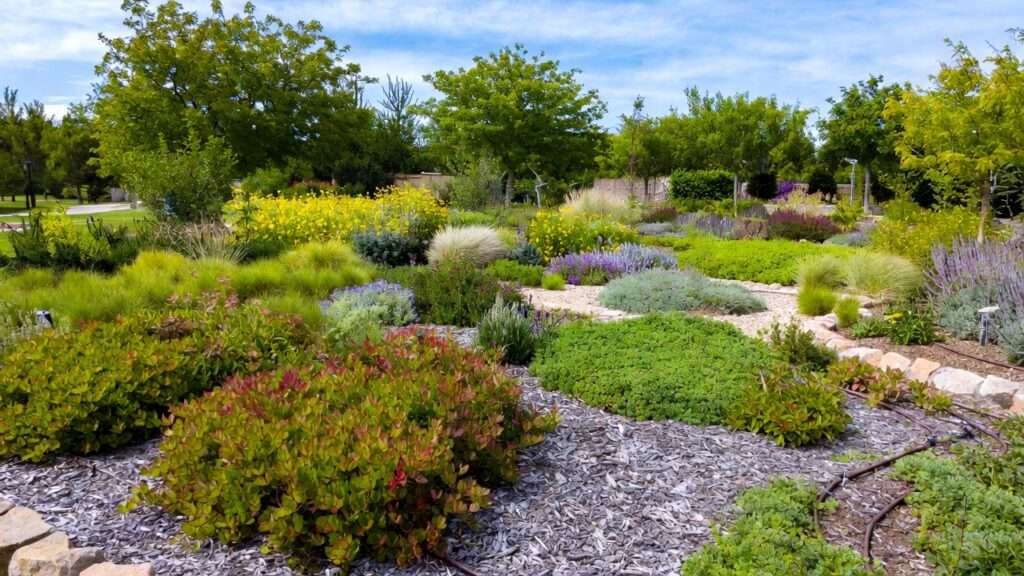
Imagine this: Your garden looks lush and beautiful from the street, but every time you turn on the sprinkler, guilt creeps in. Half the plants are drowning while the others beg for a drink, your water bill climbs higher each month, and those once-vibrant leaves start yellowing or wilting. 😩 If you’re in a drought-prone area, facing rising water costs, or simply want a more sustainable yard, you’re not alone—millions of homeowners struggle with inefficient watering that wastes resources and stresses plants.
The good news? Plant zoning in waterwise landscapes (also known as hydrozoning) changes everything. This smart, expert-recommended technique groups plants with similar water needs into distinct zones, allowing you to deliver exactly the right amount of water where it’s needed—no more, no less. 🌱
As a passionate advocate for sustainable plant and tree care with years of hands-on experience designing low-water gardens, I’ve seen this approach transform thirsty, high-maintenance yards into thriving, eco-friendly oases. Homeowners often cut outdoor water use by 50-75% (sometimes up to 80% in arid regions, according to water district reports and studies from places like California and Arizona), enjoy healthier plants with deeper roots, slash maintenance time, and create stunning landscapes that support pollinators and wildlife. ✨
In this comprehensive guide, we’ll cover everything you need to master plant zoning in waterwise landscapes: what it really means, the essential water zones, a foolproof step-by-step implementation process, top plant and tree recommendations, pitfalls to avoid, pro tips, real examples, savings estimates, and long-term care advice. By the end, you’ll have the tools to design (or redesign) a garden that’s beautiful, resilient, and kind to your wallet and the planet. Ready to get started? Let’s dive in! 💚
What Is Plant Zoning in Waterwise Landscapes? (The Complete Guide)
Plant zoning, or hydrozoning, is the cornerstone of xeriscaping and waterwise landscaping. It involves strategically grouping plants based on their water requirements, sun exposure, soil preferences, and microclimates—ensuring each area gets tailored irrigation instead of a one-size-fits-all approach.
Understanding Hydrozoning vs. Traditional Landscaping
Traditional gardens often treat the entire yard the same: same sprinkler schedule, same watering depth. This leads to overwatering drought-tolerant species (causing root rot) and underwatering thirsty ones (leading to stress or death). Hydrozoning flips the script by creating “hydrozones” where plants with matching needs thrive together. It’s efficient, reduces runoff and evaporation losses, and promotes deeper, healthier root systems that make plants more drought-resilient over time.
Why Plant Zoning Is the Foundation of Every Successful Xeriscape
Xeriscape isn’t about barren rocks and cacti—it’s about smart, beautiful, low-water design using the seven principles (planning, soil prep, efficient irrigation, appropriate plants, mulch, limited turf, and maintenance). Hydrozoning ties them together: it maximizes water savings while keeping your landscape vibrant and functional. Studies from university extensions (like Colorado State and Utah State) show properly zoned landscapes use far less supplemental water after establishment, especially when paired with natives and adapted species.
The Core Principle: Right Plant, Right Place, Right Water Zone
The golden rule is simple: Match plants to their natural preferences and your site’s conditions. Consider USDA hardiness zones, local rainfall patterns, slope, and exposure. This prevents common failures and builds a resilient garden that looks great year-round.
The 4 Main Water Zones in a Waterwise Landscape
Most experts divide landscapes into four hydrozones based on irrigation frequency after plants are established (typically 1-2 years post-planting). Adjust for your climate—arid areas lean drier, while moderate regions allow slightly more water.
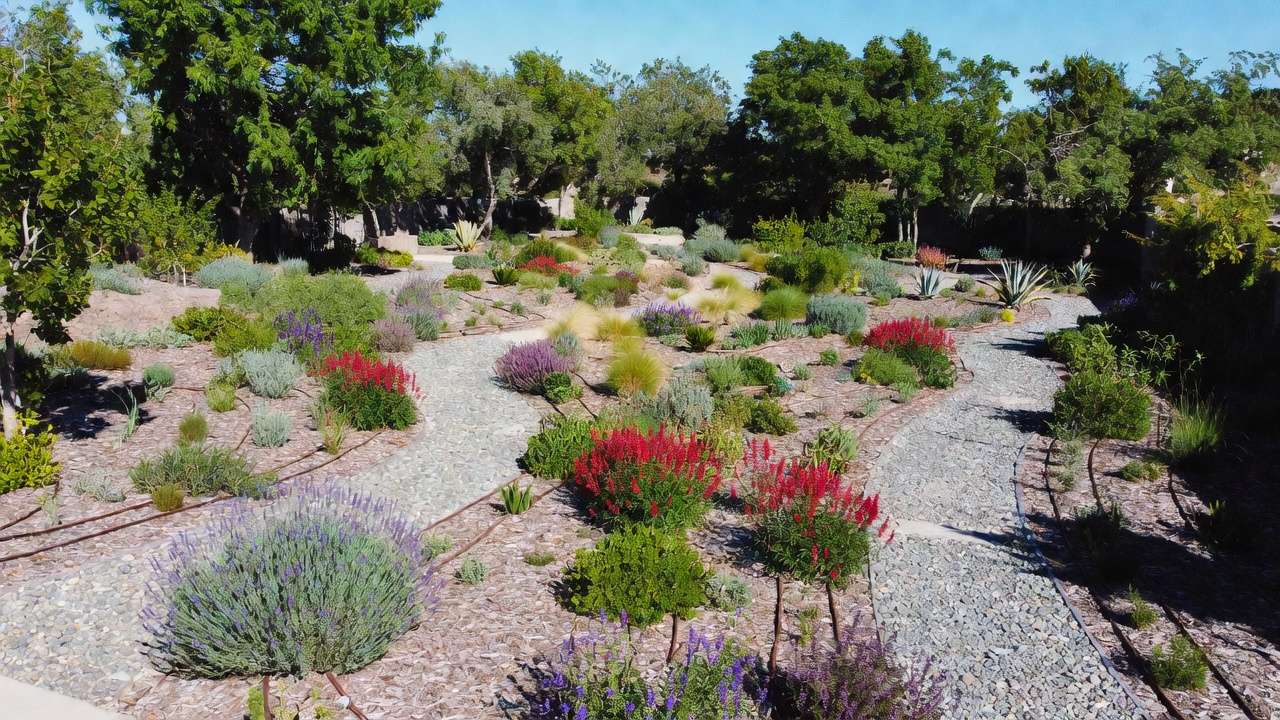
Zone 1 – Oasis Zone (High Water Use) 🌊
This small, high-visibility area gets the most water—think twice-weekly deep soaks. Place it near patios, entrances, or seating spots for maximum enjoyment. Examples:
- Flowering annuals/perennials like impatiens or hydrangeas (in shade)
- Fruit trees (e.g., citrus in warm climates)
- Lush shrubs like roses or viburnum Keep this zone compact (10-20% of yard) to minimize waste.
Zone 2 – Moderate Water Zone (Transitional)
Water every 1-2 weeks. A bridge between high and low zones—great for blending aesthetics. Examples:
- Medium-water perennials (daylilies, coneflowers)
- Ornamental grasses (fountain grass)
- Trees like red maple or dogwood (in cooler zones) Position near Zone 1 for smooth transitions.
Zone 3 – Low Water Zone (Drought-Tolerant Core) ☀️
Water monthly or less once established. This forms the bulk of many waterwise yards. Examples:
- Native wildflowers (black-eyed Susan, blanket flower)
- Lavender, salvia, yarrow
- Drought-tolerant trees (oak, pine species adapted to your area) Ideal for sunny slopes or large beds.
Zone 4 – Very Low/No Water Zone (Xeric) 🏜️
Rainfall only after establishment—perfect for true xeriscapes. Examples:
- Succulents (agave, sedum)
- Cacti and desert natives
- Gravel gardens with yucca or prickly pear Use for distant views, buffers, or hard-to-reach spots.
Step-by-Step Guide: How to Create Plant Zones in Your Yard
Implementing plant zoning in waterwise landscapes is straightforward when broken down into manageable steps. Follow this proven process (drawn from university extension guides like those from Colorado State, Utah State, and EPA WaterSense resources) to achieve professional-level results. 🌱
Step 1: Map Your Existing Landscape & Microclimates
Grab graph paper, a tablet app, or even a simple sketch. Walk your yard and note:
- Sun exposure (full sun 6+ hours, partial shade, deep shade)
- Slopes (water runs downhill—great for lower zones)
- Wind patterns, hot spots near pavement, cool shady corners
- Existing plants, structures, and hardscaping Mark “found water” sources like roof downspouts or low spots that collect rainwater. This creates natural hydrozones. Pro tip: Observe during different times of day and after rain to spot true microclimates. 📍
Step 2: Assess Soil Type, Sun Exposure & Drainage
Test your soil (pH, texture—sandy drains fast, clay holds water). Amend with compost to improve structure without adding excess fertility that encourages thirsty growth. Poor drainage? Build berms or swales to direct water. Good drainage? Perfect for low-water zones. Match plants to soil—many drought-tolerant species hate wet feet!
Step 3: Group Plants by Water Needs (The Golden Rule!)
Categorize plants into the 4 zones we discussed earlier. Use plant tags, nursery info, or reliable sources like your local cooperative extension for water needs ratings (often low/medium/high). Group like with like: High-water near the house for enjoyment, low-water in outer areas. Avoid mixing a thirsty rose with a xeric agave—they’ll both suffer. This is where most savings happen!
Step 4: Design Efficient Irrigation Zones
Plan separate irrigation lines for each hydrozone:
- Zone 1: Frequent emitters or bubblers
- Zone 2–3: Drip lines or soaker hoses on timers
- Zone 4: Hand watering only or none Install a smart controller that adjusts based on weather. Group emitters by plant type for even coverage.
Step 5: Install & Adjust Drip Systems or Soaker Hoses
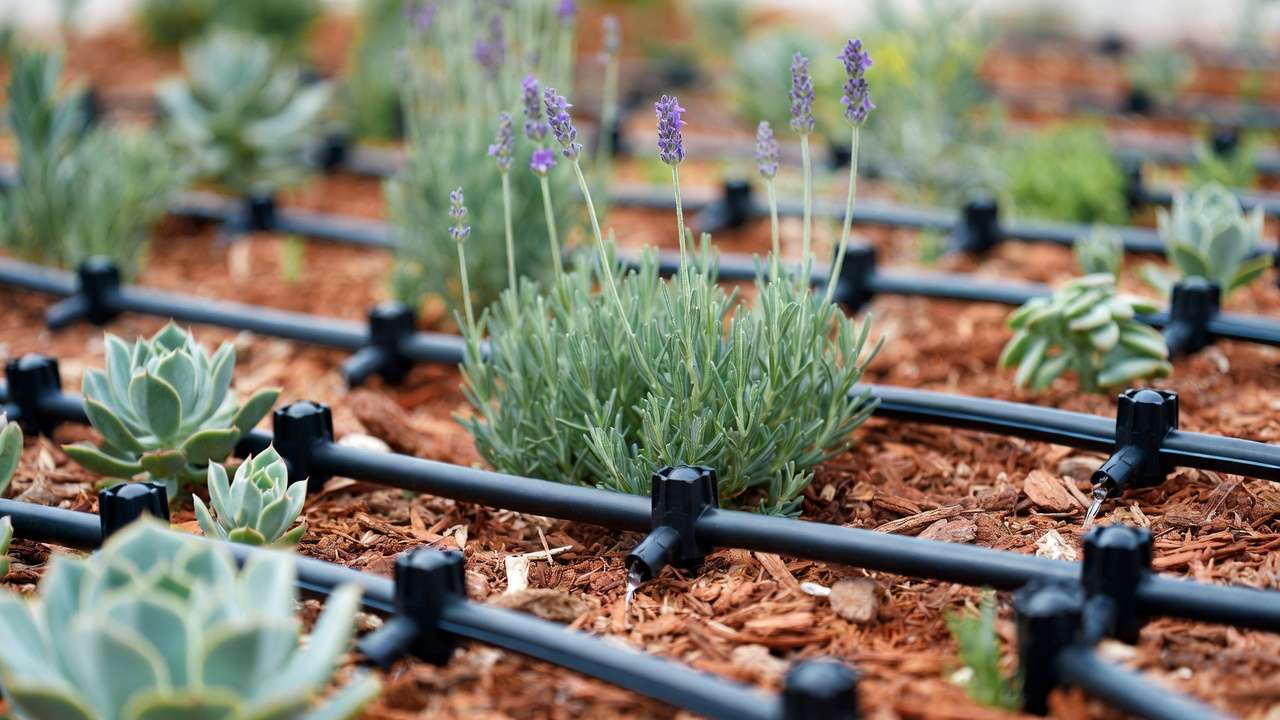
Drip irrigation is king for waterwise gardens—delivers water directly to roots, reducing evaporation by up to 50–70%. Start with:
- Main line → valves for each zone → tubing → emitters (0.5–2 GPH depending on plant) Test for leaks, adjust flow, and mulch over lines to hide and protect.
Step 6: Mulch Like a Pro (The #1 Water-Saving Hack) 🌿
Apply 2–4 inches of organic mulch (bark, wood chips, straw) or inorganic (gravel for xeric zones). Benefits:
- Retains soil moisture (cuts evaporation 20–50%)
- Suppresses weeds
- Moderates soil temperature
- Improves soil over time (organic types) Replenish annually. Avoid volcano mulching around tree trunks—keep it away from stems to prevent rot.
Best Plants & Trees for Each Water Zone (Regional Recommendations)
Plant choices vary by USDA hardiness zone, but here are reliable, widely adaptable examples. Focus on natives and adapted species for best results—they support local ecosystems too! Always check your exact zone and consult local nurseries.
Zone 1 – Oasis Zone (High Water Use) 🌊
- Perennials: Hydrangeas, impatiens, hostas (shade)
- Shrubs: Roses, azaleas (acid-loving areas)
- Trees: Citrus (warm zones 9–11), flowering dogwood (zones 5–9)
- Use sparingly—near doors/patios for impact.
Zone 2 – Moderate Water Zone
- Perennials: Coneflowers (Echinacea), daylilies, black-eyed Susan
- Grasses: Fountain grass, switchgrass
- Trees: Red maple (zones 3–9), serviceberry
- Great transitional plants—bloom heavily with occasional deep watering.
Zone 3 – Low Water Zone (Drought-Tolerant Core) ☀️
- Perennials: Lavender, salvia, yarrow, catmint
- Grasses: Blue fescue, little bluestem
- Shrubs: Russian sage, butterfly bush (some varieties)
- Trees: Bur oak (zones 3–8), honey locust (zones 4–9), redbud (zones 4–9)
- Bulk of the yard—thrives on monthly water once established.
Zone 4 – Very Low/No Water Zone (Xeric) 🏜️
- Succulents: Agave, sedum, yucca
- Perennials: Blanket flower (Gaillardia), ice plant
- Shrubs: Texas sage, manzanita (West Coast)
- Trees: Olive (zones 8–10), palo verde (Southwest, zones 8–11), mesquite (zones 8–11)
- Ideal for hot, dry spots—minimal care.
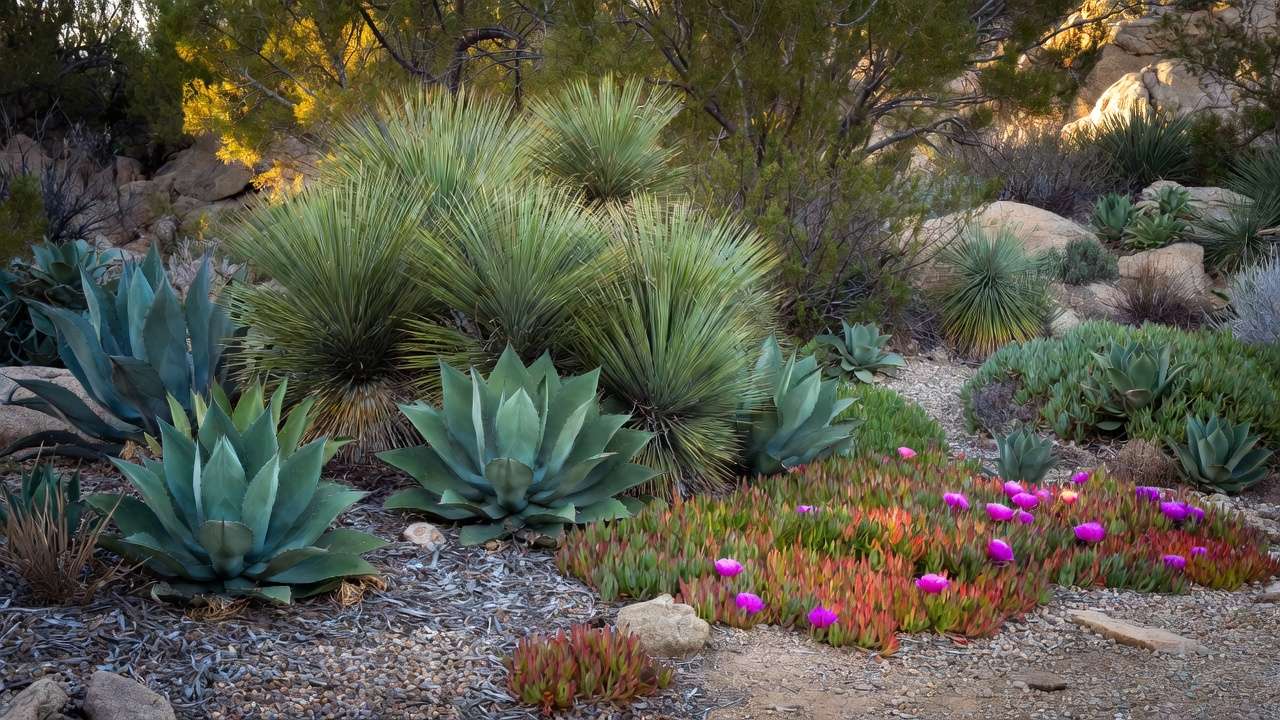
For colder zones (4–6): Prioritize hardy natives like oaks, junipers. Warmer zones (9+): Add Mediterranean herbs (rosemary, thyme) and desert natives.
Common Mistakes to Avoid When Implementing Plant Zoning
Even experienced gardeners can slip up on hydrozoning—here are the most frequent pitfalls I’ve seen (and fixed) in real landscapes, plus how to dodge them:
- Watering everything the same way — The #1 killer of waterwise success. Solution: Install separate valves or zones from day one.
- Mixing high- and low-water plants in the same bed — A thirsty hydrangea next to a xeric yucca spells disaster for one (or both). Always group strictly by mature water needs.
- Ignoring microclimates and soil variations — A shady north-facing slope holds moisture longer than a sunny south slope. Map carefully and adjust zones accordingly.
- Overlooking mulch and irrigation maintenance — Mulch disappears over time; drip emitters clog or break. Schedule annual refresh and monthly checks.
- Planting too densely at first — Young plants need space to establish roots. Follow mature spacing guidelines even if the bed looks sparse initially.
- Forgetting establishment watering — New plants need regular deep watering (2–3 times/week) for the first 1–2 seasons, regardless of their eventual zone. Reduce gradually.
Avoid these and your zoned landscape will thrive instead of struggle. 😊
Advanced Tips from Professional Landscapers
Here are pro-level strategies that take waterwise zoning from good to exceptional:
- Use berms & swales for natural water zoning Create gentle mounds (berms) and shallow channels (swales) to direct rainwater exactly where you want it—into Zone 2 or 3 beds—while keeping Zone 1 naturally damper. This passive harvesting can reduce supplemental irrigation by another 20–30%.
- Integrating edible plants into waterwise zones Many fruits and veggies fit beautifully: figs, pomegranates, and olives in Zone 3; herbs like rosemary, thyme, oregano, and sage in Zone 3–4; grapes on a sunny trellis in Zone 2. You get food + beauty + water savings.
- Creating wildlife-friendly hydrozones Add nectar-rich natives (salvia, penstemon, milkweed) in Zone 3, berry-producing shrubs (serviceberry, elderberry) in Zone 2, and a small birdbath or shallow dish in Zone 1. Pollinators and birds will thank you—and your garden becomes a certified wildlife habitat. 🐝🪶
- Seasonal adjustments for year-round beauty In winter-rainfall climates, turn off irrigation entirely for Zone 4 and reduce Zone 3. In summer-rainfall areas, rely more on natural precipitation. Smart controllers with seasonal adjustment settings make this effortless.
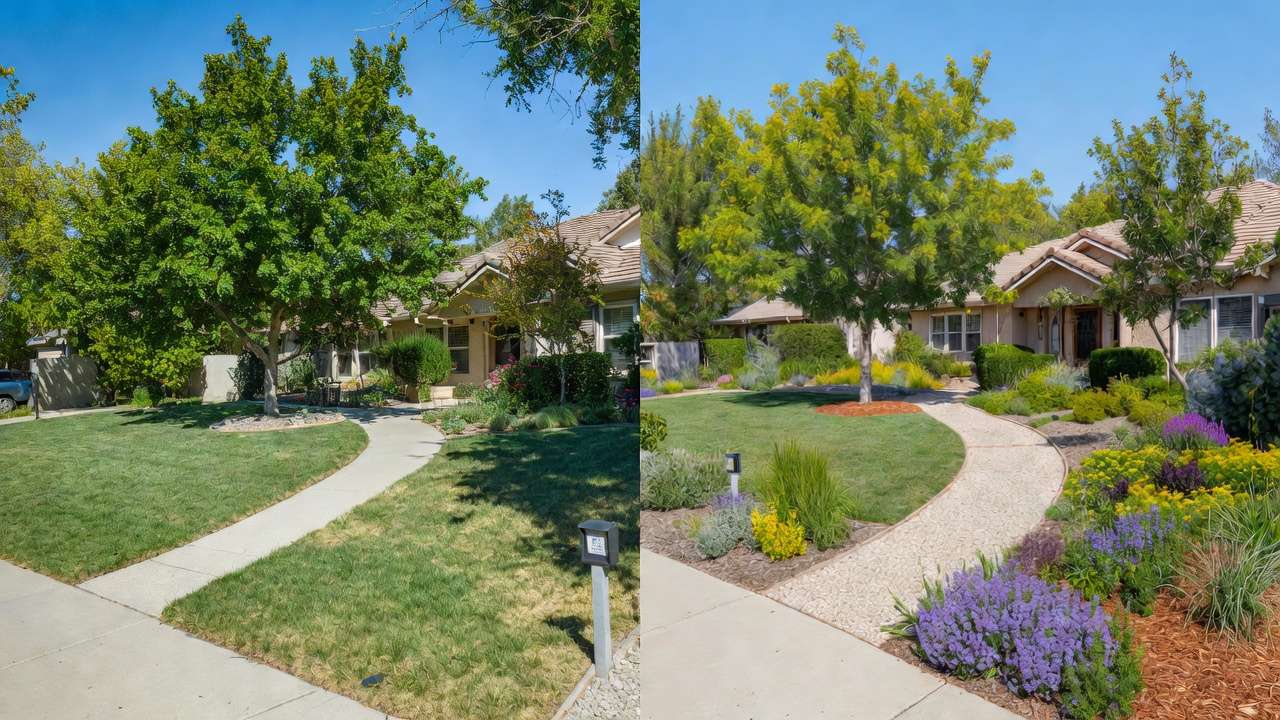
Real-Life Case Studies & Before-and-After Examples
- Small Urban Backyard Transformation (≈200 sq ft, Zone 7b) Before: Lawn + mixed thirsty perennials, weekly sprinkler watering, $120/month summer bill. After: Zone 1 patio pocket with dwarf citrus & roses (drip), Zone 2 border with coneflowers & fountain grass, Zone 3 core with lavender & Russian sage on gravel mulch. Water use dropped ~65%, bill fell to $35–45, and yard now supports bees & hummingbirds. Maintenance: 1–2 hours/month vs. 6–8 before.
- Large Suburban Front Yard Xeriscape (≈1,200 sq ft, Zone 9a) Before: High-water turf & annuals, daily watering, constant weeding. After: Zone 1 entry with bougainvillea & succulents in pots, Zone 3 main bed with agave, yucca, Texas sage, and desert willow tree, Zone 4 gravel paths & very-low buffers. Saved ~80% water, cut mowing/weeding to near zero, increased property curb appeal (neighbors asked for the designer!).
- Balcony & Patio Waterwise Designs Even tiny spaces work: Use self-watering pots in “Zone 1” for herbs & cherry tomatoes, Zone 3 succulents and grasses in larger containers with excellent drainage, and minimal watering. One client reduced balcony watering from daily to once every 10–14 days.
How Much Water Can You Really Save with Plant Zoning?
Real-world data varies by climate, soil, and starting point, but here are credible benchmarks:
- California Water District studies: Properly hydrozoned landscapes use 40–70% less supplemental water after establishment.
- Colorado State University Extension: Xeriscapes with zoning save 50–75% compared to traditional turf-heavy yards.
- EPA WaterSense & Arizona case studies: Up to 80% savings in arid regions when combining zoning + drip + mulch + natives.
Quick savings estimator:
- Measure your current outdoor water use (look at bills or meter).
- Assume 50–60% average reduction for most moderate-to-dry climates after 1–2 years.
- Example: If you currently use 10,000 gallons/month outdoors in summer, expect 4,000–5,000 gallons after zoning → hundreds of dollars saved annually.
Maintenance Tips for Long-Term Success
A waterwise zoned landscape isn’t “set it and forget it”—but it does become dramatically lower-maintenance than traditional gardens. Follow these seasonal and ongoing practices to keep your plants healthy and your water savings high:
-
Seasonal Watering Schedules by Zone
- Spring (establishment & growth): Water Zones 1–3 deeply 1–2 times/week; Zone 4 as needed only.
- Summer (peak demand): Zone 1: 2–3 times/week; Zone 2: weekly; Zone 3: every 10–14 days; Zone 4: rainfall only.
- Fall: Gradually reduce frequency as temperatures drop and rains return.
- Winter: Most zones need little to no supplemental water (especially in winter-rain climates). Turn off automatic systems unless there’s prolonged dry spells.
Use a rain sensor or smart controller to skip watering after good rainfall.
-
Pruning, Fertilizing & Pest Control
- Prune in late winter/early spring for most perennials and shrubs—remove dead wood and shape lightly. Avoid heavy shearing on natives; they prefer natural forms.
- Fertilize sparingly: Use slow-release organic or low-nitrogen formulas once in spring for Zones 1–2 only. Zones 3–4 often need none—over-fertilizing encourages weak, thirsty growth.
- Pests: Healthy, properly zoned plants resist most issues. Hand-pick aphids, use neem oil for outbreaks, and encourage beneficial insects with diverse plantings.
-
When & How to Adjust Irrigation Over Time After 1–2 years, test soil moisture with a screwdriver (should penetrate easily when dry enough to water). Many plants will need 30–50% less water than in year one as roots deepen. Dial back timers gradually—watch for wilting as your cue, not the calendar.
With these habits, your zoned garden will look better and require less effort every year. 🌿
Frequently Asked Questions (FAQs)
Is plant zoning only for dry climates? No! Hydrozoning works anywhere water conservation or plant health matters—coastal areas, humid regions with sandy soils, or places with high water costs. Even in wetter climates, it prevents overwatering and reduces fungal issues.
Can I convert an existing lawn into zoned beds? Absolutely. Remove turf in sections, solarize or sheet-mulch to kill grass roots, amend soil, then plant in hydrozones. Many homeowners do this gradually over 1–3 years to manage effort and cost.
What’s the best mulch for waterwise landscapes? Organic: Wood chips, bark, or shredded leaves for Zones 1–3 (enriches soil). Inorganic: Gravel, decomposed granite, or river rock for Zone 4 (excellent drainage, low maintenance). Avoid fine bark near succulents—it holds too much moisture.
How do I transition thirsty plants to lower-water zones? You usually can’t force a high-water plant into a low zone without stress. Instead, replace gradually with adapted alternatives. If keeping favorites, confine them to Zone 1 or 2 and accept higher local water use there.
Do I still need to water in winter? In most climates, no—especially Zones 3–4. In arid winter-dry regions, occasional deep watering (once/month) prevents desiccation. Check soil before watering.
Conclusion
Plant zoning in waterwise landscapes is one of the simplest yet most powerful ways to create a garden that saves water, supports healthier plants and trees, cuts your maintenance time, lowers bills, and looks beautiful year after year. By grouping plants smartly according to their true needs, you’re not just gardening—you’re designing with nature instead of fighting it. 🌱💧
The best part? You don’t have to overhaul everything at once. Start small: Pick one corner of your yard, map the microclimates, group a few compatible plants, add mulch and drip, and watch the difference. Within a season or two, you’ll see deeper greens, more blooms, fewer problems, and real water savings.
If you’re ready to take the next step, grab a notebook (or your phone), sketch your yard, and begin zoning today. Your future self—and the planet—will thank you.
Have you tried hydrozoning in your garden yet? Share your progress, favorite low-water plants, or any questions in the comments—I love hearing real stories from fellow gardeners! For more tips on drought-tolerant trees, mulch mastery, drip irrigation setups, and sustainable plant care, check out our related guides.
Happy gardening.











