
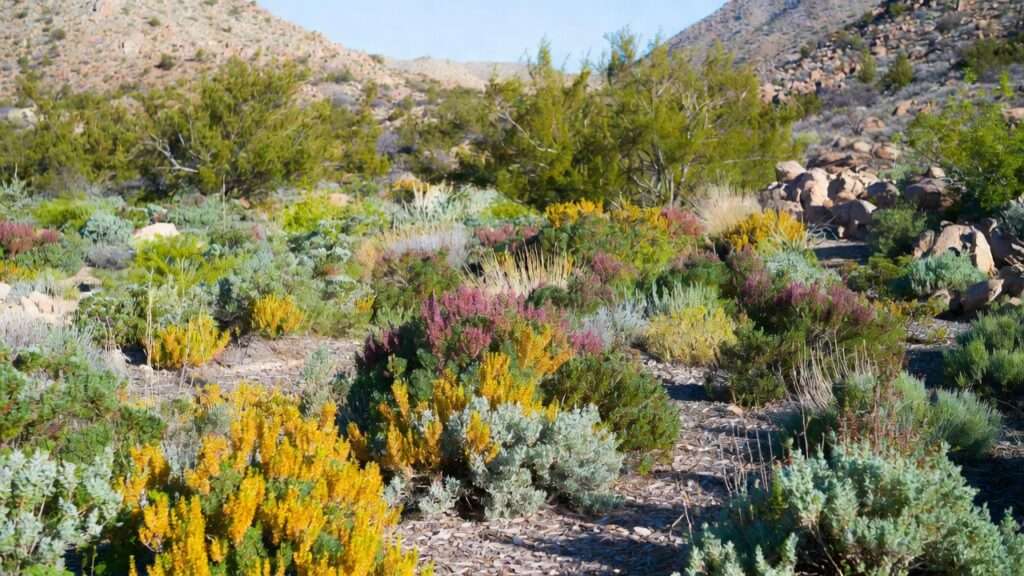
Imagine stepping into your backyard and seeing a vibrant, colorful landscape bursting with blooms, swaying grasses, and healthy trees — all thriving with almost no supplemental water or feeding. No constant mowing, no bags of fertilizer piling up in the garage, and no guilt over high water bills or chemical runoff. Sounds like a dream? It’s the reality of a well-designed xeriscape, and the secret to keeping it thriving long-term often comes down to one simple rule: fertilizing minimally — or sometimes not at all. 🌵
In xeriscapes, fertilizing minimally in xeriscapes isn’t about neglect; it’s about working with nature. Drought-tolerant and native plants have evolved in lean, low-nutrient soils, developing deep root systems and partnerships with beneficial mycorrhizal fungi to access what they need naturally. Over-fertilizing disrupts this balance, leading to weak, water-hungry growth that defeats the entire purpose of water-wise gardening. As a plant care specialist with years of hands-on experience in sustainable landscaping and native plant restoration, I’ve seen countless gardens transformed — and sometimes damaged — by the common temptation to “feed” plants like traditional lawns. In this comprehensive guide, we’ll explore why less fertilizer truly means more resilience, beauty, and ease in your xeriscape.
Whether you’re converting a thirsty lawn, starting fresh with drought-resistant plants, or troubleshooting an existing low-water garden, this article delivers actionable, expert-backed strategies to solve the real problem many gardeners face: how to maintain plant health without excess inputs that increase water use, invite pests, or harm the environment. Let’s dive in and unlock the full potential of your xeriscape! ✨
What Is Xeriscaping and Why Does Fertilizer Matter? 📚
Xeriscaping (from the Greek “xeros” meaning dry) is a thoughtful landscaping approach built on seven core principles: thoughtful planning and design, soil analysis and improvement (when needed), practical turf reduction, appropriate plant selection, efficient irrigation, mulching, and appropriate maintenance. The goal? Create beautiful, functional outdoor spaces that minimize water use while supporting local ecosystems. 🌍
At the heart of xeriscaping is plant selection: native and adapted drought-tolerant species like agave, yucca, salvia, lavender, desert marigold, Russian sage, and ornamental grasses. These plants are naturally suited to low-water, often nutrient-poor conditions. They form symbiotic relationships with mycorrhizal fungi in the soil, which extend root reach and improve nutrient and water uptake — essentially acting as a free, natural fertilizer system. 🔬
Traditional high-fertilizer habits clash here. Excess nitrogen pushes fast, lush foliage growth that demands more water and frequent pruning, while shallow roots struggle in dry spells. Many extension services and native plant experts (including those from Colorado State University Extension and University of Arizona) emphasize that desert-adapted plants perform best in “lean” soils — mimicking their natural habitats. Over-enriching the soil can reduce drought tolerance, decrease blooms (as energy goes to leaves instead of flowers), and even increase susceptibility to pests and diseases. The result? A garden that looks great for a season but fails the long-term low-maintenance test.
The Risks of Over-Fertilizing in Xeriscapes 😱
It’s easy to fall into the “more is better” trap, especially when plants look a bit lackluster after transplanting. But over-fertilizing in xeriscapes creates a cascade of problems:
- Weak, leggy growth and shallow roots — High nitrogen spurs rapid top growth, but roots don’t develop deeply enough to access moisture during droughts. Plants become dependent on frequent watering and prone to toppling in wind.
- Reduced flowering and pollinator value — Excess nutrients shift energy from blooms to foliage, meaning fewer flowers for bees, butterflies, and hummingbirds.
- Increased pest and disease pressure — Lush, succulent tissues attract aphids, spider mites, and fungal issues that tougher, slower-growing plants resist naturally.
- Nutrient imbalances and “fertilizer burn” — Symptoms include yellowing or browning leaf tips/margins, wilting despite moisture, stunted growth, or even plant death from salt buildup in the root zone.
- Environmental harm — Runoff carries excess nutrients into waterways, fueling algae blooms and harming aquatic life. Plus, you’re wasting money on products your plants don’t need!
In my experience restoring native landscapes, I’ve seen over-fertilized xeriscapes turn into high-maintenance patches within a couple of years — the opposite of what gardeners want.
Why Minimal (or Zero) Fertilizing Leads to Thriving Xeriscapes 🌟
The beauty of xeriscaping lies in embracing adaptation. Native and drought-tolerant plants thrive in low-nutrient conditions because:
- Lean soils encourage deep, extensive root systems that seek out water far below the surface.
- Natural nutrient cycling from fallen leaves, mulch breakdown, and mycorrhizal networks provides steady, slow-release nutrition.
- Plants invest energy in resilience — thicker cell walls, better drought/heat tolerance, and more prolific blooms over time.
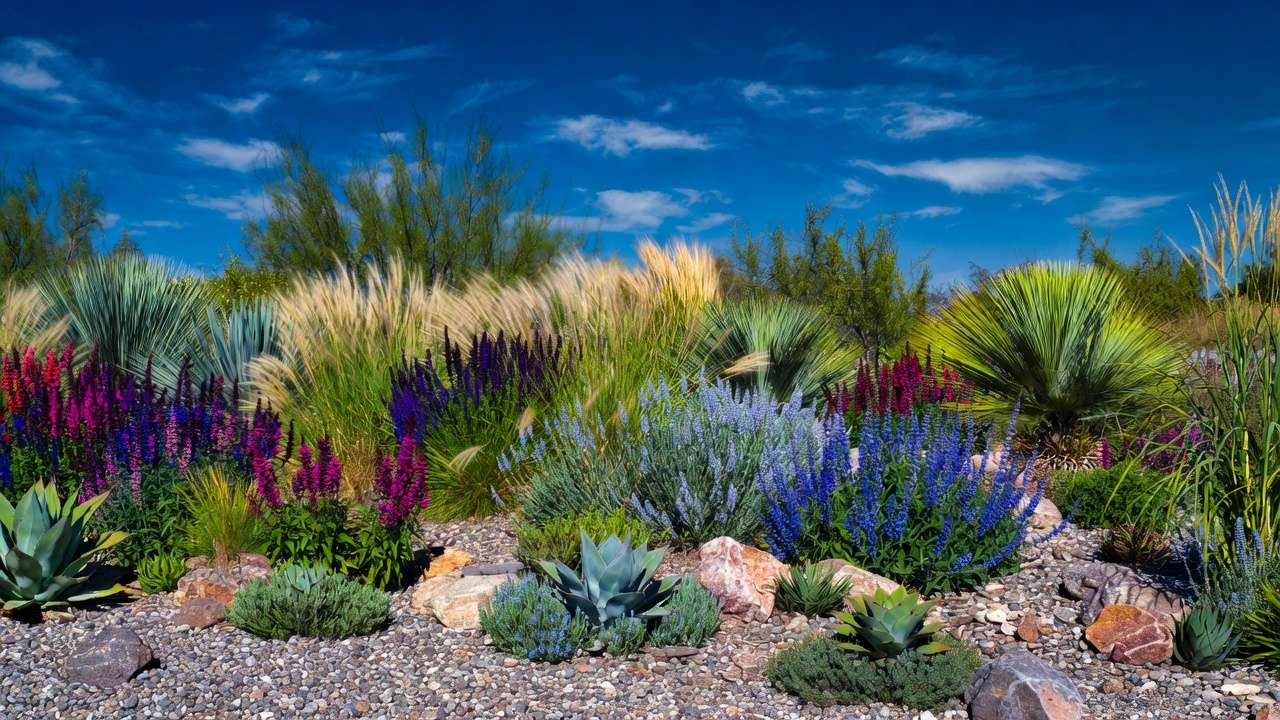
Studies and real-world observations from sources like university extensions confirm: many established xeriscapes need zero supplemental fertilizer. Once plants are rooted (usually after 1–2 years), the soil microbiome takes over. The payoff? Vibrant color, wildlife attraction, lower costs, and true sustainability. Your garden becomes a living ecosystem, not a fertilized lawn in disguise. 🌼🐝
Building a Strong Foundation: Soil Preparation Before Planting 🛠️🌱
The single most important step toward successful fertilizing minimally in xeriscapes happens before you even put a plant in the ground: preparing the soil thoughtfully. Healthy, well-draining soil sets the stage for drought-tolerant plants to establish strong roots and rely on natural nutrient cycles rather than repeated feedings.
Start with a soil test — this is non-negotiable for serious xeriscapers. Collect samples from several spots in your planned garden area (top 6–8 inches of soil), mix them, and send to a reputable lab (your local cooperative extension service often provides affordable kits). The results will reveal pH, nutrient levels (N-P-K), organic matter content, and texture. Most native and drought-tolerant plants thrive in slightly alkaline to neutral soils (pH 6.5–7.5) with low to moderate fertility. If your soil is overly rich in nitrogen or phosphorus from past lawn treatments, you may actually need to avoid amendments to prevent overfeeding issues later.
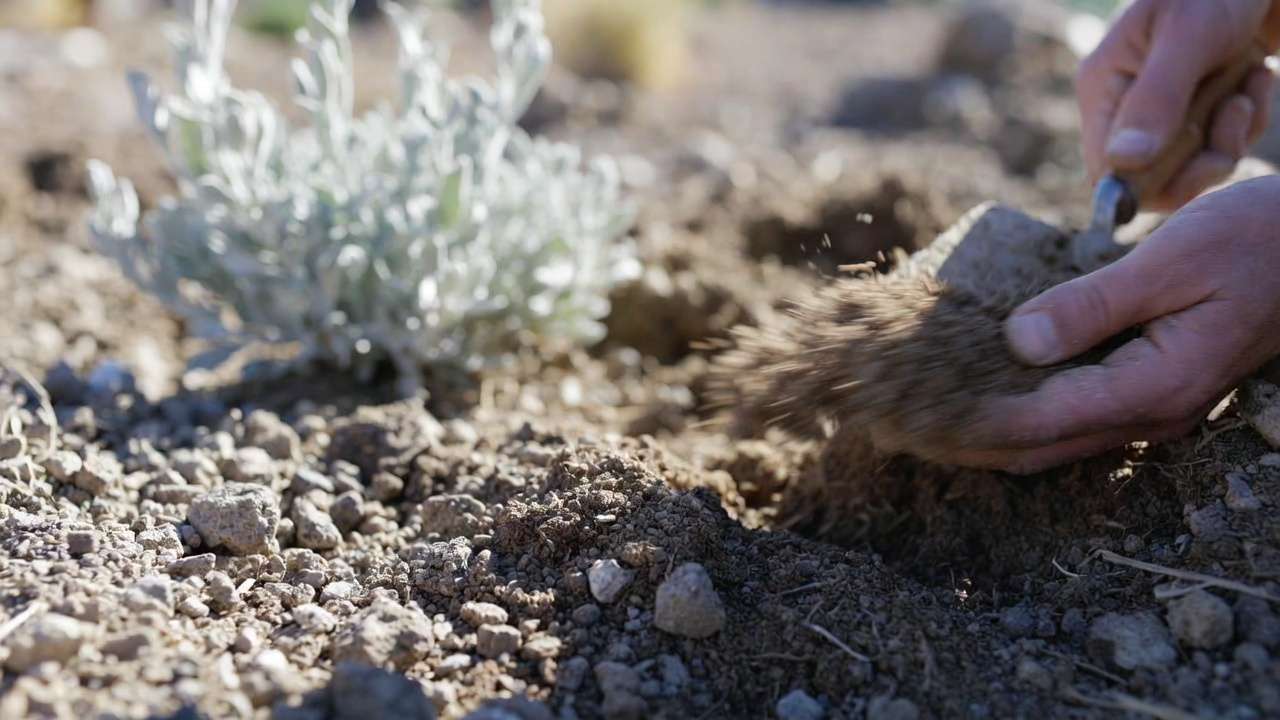
Amend sparingly and strategically:
- Focus on improving structure and drainage rather than boosting fertility. Heavy clay soils benefit from adding coarse sand, gravel, or expanded shale to prevent waterlogging — xeriscape plants hate “wet feet.”
- Incorporate a thin layer (1–2 inches) of well-composted organic matter (like leaf mold or aged manure) only if the soil is extremely compacted or depleted. Mix it into the top 6–12 inches. Avoid heavy applications of rich compost or topsoil — these can create nutrient hotspots that encourage shallow roots.
- For truly lean-loving species (e.g., many California natives, agaves, or cacti), some experts recommend planting directly into native soil with minimal disturbance to preserve existing mycorrhizal networks.
One game-changing addition? Mycorrhizal fungi inoculants. These beneficial fungi form partnerships with plant roots, dramatically improving water and nutrient uptake — especially phosphorus — without synthetic inputs. Sprinkle granular mycorrhizae into planting holes or mix into backfill soil during installation. In my landscape projects, this single step has reduced the need for any follow-up fertilizer in most cases.
Finally, mulch generously right after planting. Apply 2–4 inches of inorganic mulch (gravel, decomposed granite, or river rock) or organic options (shredded bark, pine needles) around plants, keeping it away from stems to prevent rot. Mulch conserves soil moisture, moderates temperature, suppresses weeds, and slowly releases trace nutrients as it breaks down — all supporting minimal fertilizing long-term.
By building this lean, well-drained foundation, your xeriscape plants get off to the right start: deep-rooted, resilient, and naturally nutrient-efficient.
When and How to Fertilize Minimally: A Practical Guide 📅
The golden rule for fertilizing minimally in xeriscapes? Most established xeriscapes — especially those dominated by true natives and extreme drought-tolerant species — require zero supplemental fertilizer after the first 1–2 years. University extension services (including Arizona Cooperative Extension and Colorado State) and native plant organizations consistently report that overfeeding disrupts natural adaptations, leading to dependency and reduced hardiness.
That said, there are smart exceptions and best practices when a light boost makes sense:
When to consider fertilizing:
- During establishment (first 1–2 growing seasons) for transplants stressed by nursery conditions or poor transplant soil.
- In severely nutrient-depleted soils (confirmed by test) showing clear deficiency symptoms (e.g., pale leaves, stunted growth).
- For non-native but drought-tolerant ornamentals (e.g., certain lavenders, rosemary, or hybrid perennials) that may respond positively to modest feeding.
- Rarely for young trees/shrubs in very sandy or rocky sites.
Timing is critical:
- Early spring (just as new growth emerges) or late fall (for root development before dormancy). Avoid summer applications — they promote soft, water-demanding growth right when heat stress peaks.
- Never fertilize during drought, transplant shock, or extreme heat.
What to use:
- Opt for low-nitrogen, slow-release, organic or natural options: compost tea (diluted), worm castings, well-rotted manure, or balanced low-NPK granular organics (e.g., 4-6-6 or 5-10-10 formulas).
- Avoid high-nitrogen synthetics (anything 20-10-10 or higher) — they push foliage at the expense of roots and blooms.
- Phosphorus-focused products can help root establishment in poor soils, but only if a soil test shows deficiency.
How to apply (step-by-step):
- Water the area lightly the day before to reduce stress.
- Use half (or even quarter) strength of the label recommendation — xerics need far less.
- Apply around the drip line (outer edge of the canopy), not against the trunk/stem.
- Scratch lightly into the top inch of soil or top-dress and water in gently.
- For liquids: Dilute heavily and apply as a soil drench.
- Always follow with deep, infrequent watering to move nutrients down to roots.
Examples in action:
- For a newly planted desert willow tree: Apply a light handful of slow-release organic granules in spring of year 1 and year 2 only.
- For perennial beds with salvia and penstemon: Top-dress with ½ inch of compost in early spring every 2–3 years if growth seems weak.
- For agave or yucca: Skip entirely unless severe deficiency appears.
Follow these restrained methods, and your xeriscape stays true to its low-input promise.
Plant-Specific Fertilizing Tips for Xeriscape Success 🌺🌳
Different plants have evolved different nutrient tolerances, so a one-size-fits-all approach rarely works in xeriscapes. Here’s a practical breakdown of fertilizing needs (or lack thereof) for common categories and species, based on observations from regional extension services, native plant nurseries, and my own landscape installations across arid and semi-arid zones.
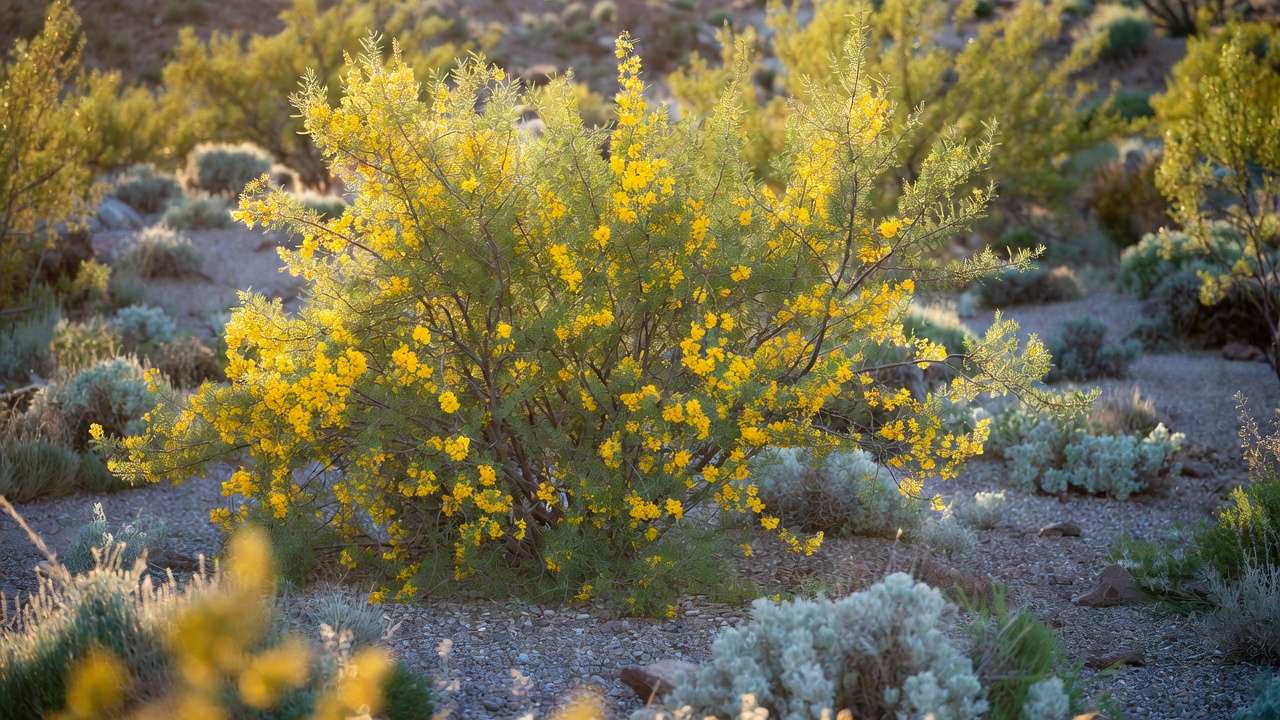
True xerics and extreme drought-tolerant natives (e.g., agave, yucca, cacti, ocotillo, barrel cactus, prickly pear) These plants almost always need zero supplemental fertilizer — ever.
- They thrive (and often look best) in very lean, rocky, or sandy soils.
- Any added nutrients can cause rapid, soft growth that’s prone to rot during monsoons or winter rains.
- Exception: Only if a soil test shows severe deficiency (rare) and symptoms like chlorosis appear — then use a very dilute, phosphorus-focused organic product once, at planting only. Tip: Focus on excellent drainage and minimal disturbance instead of feeding.
Perennial flowers and sub-shrubs (e.g., salvia, penstemon, gaura, Russian sage, desert marigold, lantana, verbena, coreopsis) Most require minimal to none after establishment.
- Year 1: A light application (half-strength low-N organic) in spring can help transplants settle.
- Year 2+: Top-dress with ¼–½ inch of compost or worm castings every 2–3 years only if blooming noticeably declines or foliage pales.
- Key: These plants reward lean conditions with more prolific flowers and better drought tolerance. Overfeeding shifts energy to foliage, reducing the colorful displays gardeners love.
Ornamental grasses (e.g., blue grama, buffalo grass, muhly grass, deer grass, little bluestem) Typically zero needed.
- Many are native prairie or desert species adapted to nutrient-poor soils.
- A single light feeding in the establishment year (if growth is very slow) is usually the maximum.
- Excess nitrogen causes floppy, rank growth that requires more frequent cutting back and looks untidy.
Drought-tolerant trees and large shrubs (e.g., desert willow, Texas mountain laurel, manzanita, palo verde, mesquite, chitalpa, hop bush) Light and infrequent at most.
- Young trees (first 2–3 years): Apply a balanced low-N slow-release organic (e.g., 5-10-10) at half rate in early spring around the drip line.
- Mature specimens: Almost never. Deep roots access natural subsurface nutrients; added fertilizer often promotes surface roots that dry out quickly.
- Pro tip: Mulch widely (to 3–4 times the canopy width) to support mycorrhizal activity and natural fertility.
Regional considerations
- In the arid Southwest (low rainfall, alkaline soils): Stick closest to zero-fertilizer protocols.
- In transitional or adapted zones (e.g., parts of Texas, California foothills, or higher-elevation areas with more winter rain): Slightly more tolerance for occasional light organic top-dressing.
- Always defer to local soil test results and observe your plants — they’ll tell you what they need far better than a calendar.
Quick-reference table of examples (for easy scanning):
| Plant Type | Typical Fertilizer Need | Recommended Action (if any) |
|---|---|---|
| Agave, Yucca, Cacti | None | None — lean soil is ideal |
| Salvia, Penstemon | Minimal | Compost top-dress every 2–3 years if needed |
| Ornamental grasses | None to very light | Half-strength at planting only |
| Desert willow, Mesquite | Light in years 1–2 | Low-N organic, once/year max during establishment |
| Lavender, Rosemary | Very light | Phosphorus boost at planting; rare thereafter |
By matching inputs to each plant’s natural habits, you keep the entire xeriscape balanced, blooming, and truly low-maintenance.
Complementary Practices That Reduce Fertilizer Needs Even More 🔄
Fertilizing minimally works best when paired with these supporting strategies — they create a self-sustaining system:
- Deep, infrequent watering — Trains roots to grow downward, accessing natural soil nutrients far below the surface. Shallow, frequent watering keeps roots high and dependent.
- Proper mulching — As mentioned earlier, thick mulch layers moderate soil temperature, retain moisture, and foster microbial life that cycles nutrients slowly.
- Judicious pruning — Remove only dead or crossing branches; avoid heavy shearing that stimulates soft regrowth needing more resources.
- Biodiversity and companion planting — Mix nitrogen-fixing natives (e.g., mesquite, lupine, or certain acacias where appropriate) with heavy feeders to create natural nutrient sharing.
- Leave the leaves — Let fallen foliage and spent blooms decompose in place (or under mulch) to return nutrients gradually.
- Monitor and observe — Walk your garden weekly. Yellowing? Check watering first, then soil pH, then pests — jump to fertilizer last.
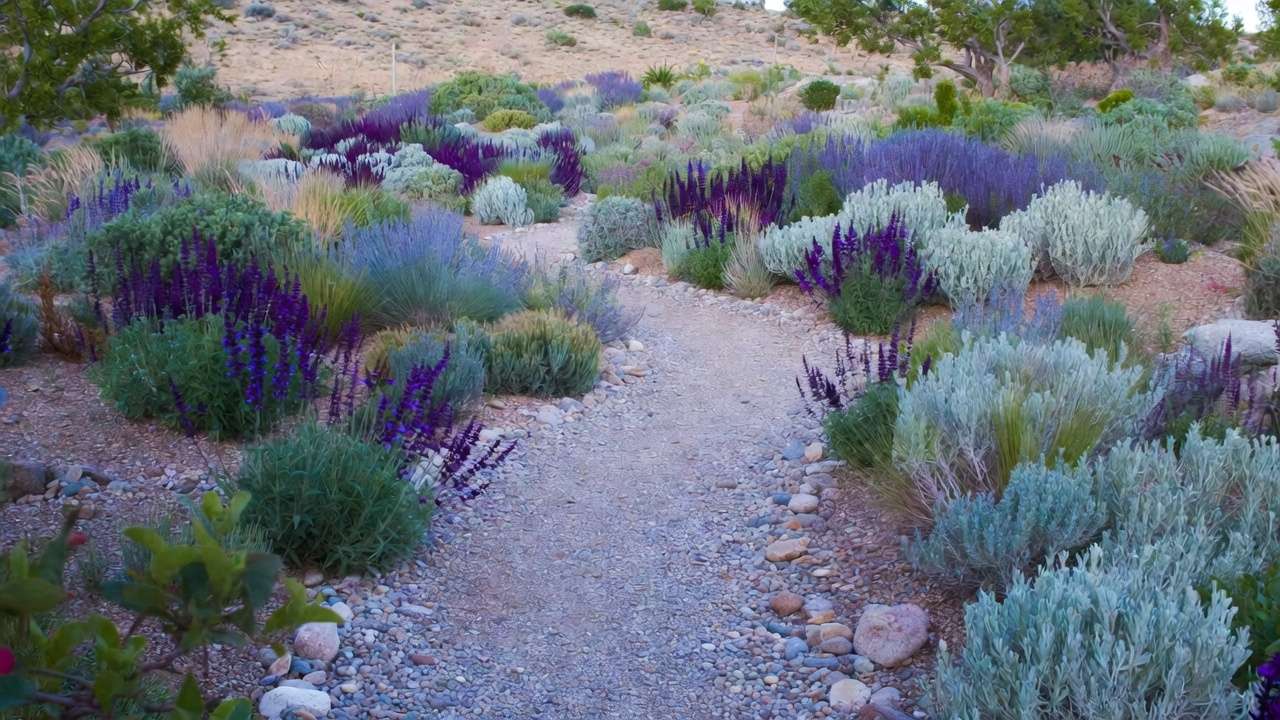
These habits turn your xeriscape into a closed-loop ecosystem where supplemental feeding becomes unnecessary.
Common Myths Debunked About Fertilizing Xeriscapes ❌
Myth 1: “All plants need regular feeding to bloom well.” Reality: Many drought-tolerant species bloom better in lean conditions — excess nitrogen prioritizes leaves over flowers.
Myth 2: “Organic fertilizer is always safe, even in large amounts.” Reality: Even organics can build up salts, alter pH, or feed weeds if over-applied. Moderation remains key.
Myth 3: “More fertilizer = faster establishment.” Reality: Overfed transplants often develop shallow roots and struggle when irrigation is reduced — slower, lean establishment usually yields tougher, longer-lived plants.
Myth 4: “Yellow leaves always mean ‘feed me’.” Reality: In xeriscapes, yellowing is far more often caused by overwatering, poor drainage, pH imbalance, or compaction than nutrient lack.
Busting these myths prevents common pitfalls and keeps gardeners confident in the “less is more” approach.
FAQs: Your Top Questions Answered ❓
Here are the most common questions I receive from gardeners starting or maintaining xeriscapes, along with clear, practical answers based on real-world experience and recommendations from trusted sources like university extension programs and native plant societies.
1. Do xeriscape plants really need zero fertilizer forever? In most cases, yes — especially once established (typically after 2–3 years). True native and extreme drought-tolerant species (agaves, yuccas, many cacti, desert-adapted perennials) often perform best with no supplemental feeding at all. They rely on natural soil processes, mycorrhizal fungi, and minimal organic matter cycling. Occasional light top-dressing (e.g., thin compost layer every few years) is fine for transitional or slightly richer soils, but “zero forever” is realistic and often ideal for sustainability and plant health.
2. What if my plants look yellow or stunted — isn’t that a sign they need fertilizer? Not usually in a xeriscape. Yellowing (chlorosis) or slow growth is far more commonly caused by:
- Overwatering or poor drainage → root rot or oxygen deprivation
- Alkaline soil locking up iron/manganese (common in arid regions)
- Transplant shock or establishment stress
- Compaction or extreme heat/drought First troubleshoot watering, drainage, and soil pH. Only after ruling those out — and ideally confirming a deficiency via soil test or tissue analysis — consider a very light, targeted application (e.g., chelated iron for chlorosis or low-N organic for general weakness).
3. Can I use compost as fertilizer in xeriscapes? Yes, but sparingly and strategically. Well-aged, low-nitrogen compost (e.g., leaf-based or municipal compost that’s fully broken down) can be used as a thin top-dressing (¼–½ inch) every 2–4 years to improve soil structure and provide slow-release trace nutrients. Avoid fresh manure, rich garden compost, or heavy applications — these can over-enrich and encourage weeds or lush, thirsty growth.
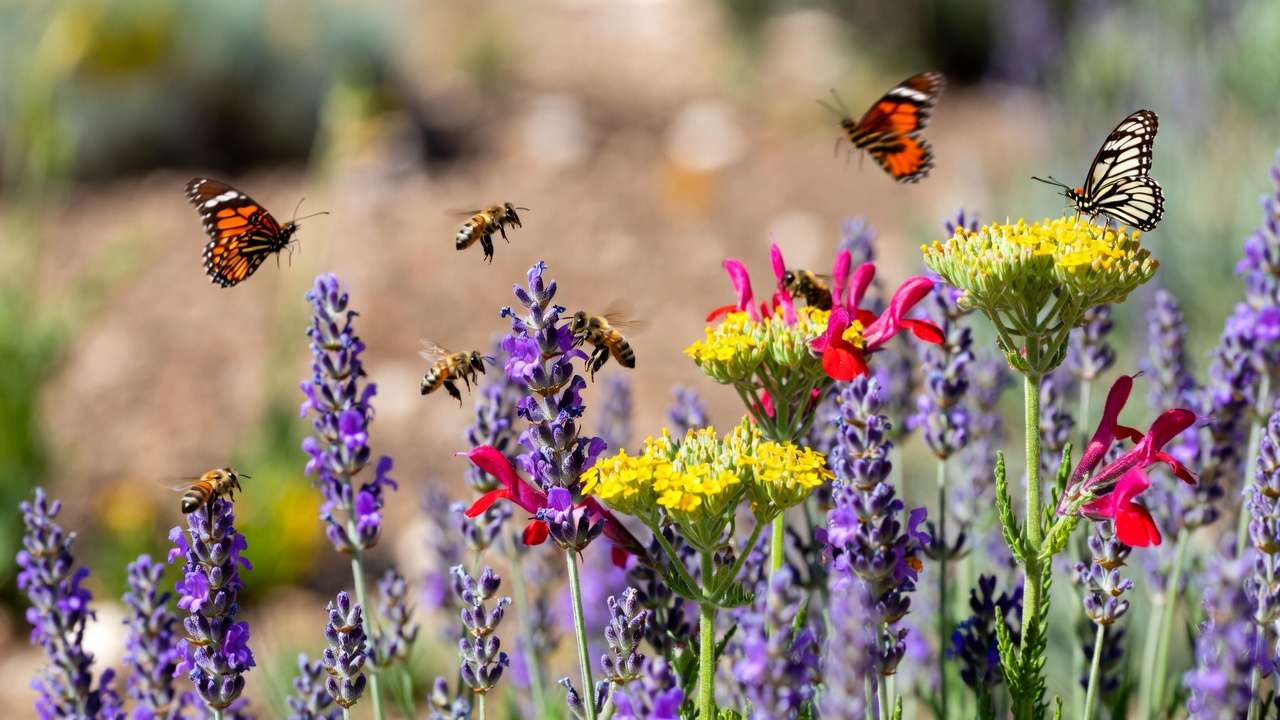
4. How does fertilizing minimally (or not at all) help pollinators and wildlife? Lean conditions promote more flowers over foliage, which is exactly what bees, butterflies, hummingbirds, and other pollinators need. Over-fertilized plants often produce fewer blooms and shorter flowering periods. Plus, avoiding synthetic fertilizers reduces chemical runoff that harms aquatic insects, birds, and soil organisms — creating a healthier habitat overall. A truly minimal-input xeriscape becomes a powerful wildlife corridor.
5. What are the best beginner-friendly organic options if I feel I must fertilize something?
- Diluted compost tea (steep compost in water for a few days, strain, dilute 1:10)
- Worm castings (sprinkle lightly around drip line)
- Low-NPK slow-release organics like Espoma Plant-tone, Dr. Earth, or similar balanced formulas (use at ¼–½ strength)
- Mycorrhizal inoculants (apply at planting for long-term nutrient efficiency) Always start small, observe response, and err on the side of under-applying.
6. Will my xeriscape look “poor” or bare without fertilizer? Quite the opposite! Well-designed, minimally fertilized xeriscapes often look lush and vibrant because plants invest energy in flowers, seed heads, and interesting textures rather than excessive leafy growth. Over time, they develop character — silver foliage, colorful blooms, sculptural forms — that feels intentional and beautiful, not sparse.
These answers address the hesitation many gardeners feel when shifting to low-input methods. Trust your plants and the process — observation beats routine feeding every time.
Conclusion: Embrace the Power of Less for a Resilient Garden 🌍✨
Fertilizing minimally in xeriscapes isn’t about deprivation; it’s about respect — respect for the incredible adaptations that allow native and drought-tolerant plants to thrive in harsh conditions with little human intervention. By choosing appropriate plants, preparing lean but well-drained soil, mulching generously, watering deeply and infrequently, and resisting the urge to over-feed, you create a garden that:
- Uses dramatically less water
- Requires almost no chemical inputs
- Supports pollinators, birds, and beneficial soil life
- Saves time, money, and effort year after year
- Looks more beautiful and authentic as it matures
The “less is more” philosophy transforms xeriscaping from a water-saving compromise into a celebration of resilience and natural beauty. Start small: test your soil, plant a few well-adapted natives or drought-tolerants, apply mulch, and watch. Within a season or two, you’ll likely find yourself reaching for the fertilizer bag less — and smiling at your thriving, low-maintenance oasis more.
Your xeriscape isn’t just landscaping; it’s a living, breathing contribution to a more sustainable world. Less truly is more — and your garden will prove it every day. 🌵💚











